If a bird is stuck in your house right now, your first call should almost always be to a local wildlife rehabilitation center. If the bird is injured, that call is urgent. If it's just trapped and otherwise healthy, you may be able to guide it out yourself before you need to phone anyone. The decision comes down to three things: whether the bird is hurt, whether it's a protected species, and how long it's been stuck.
Who to Call When a Bird Is Stuck in a House
Maya Carver
28 May 2026
Do these things before you pick up the phone
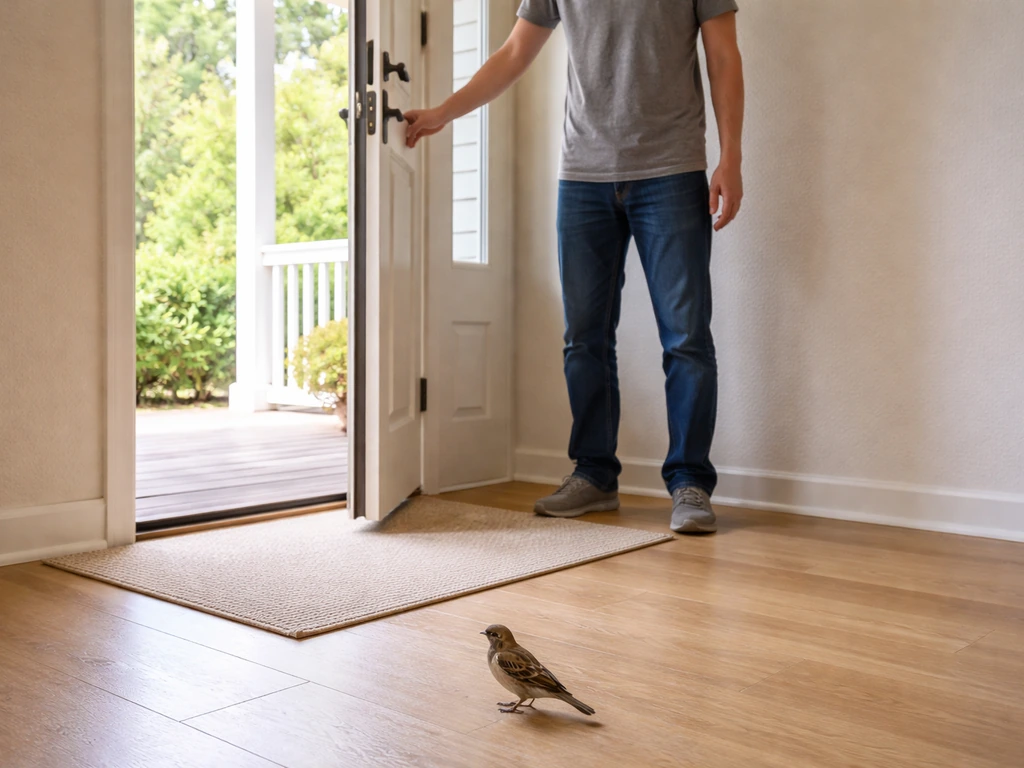
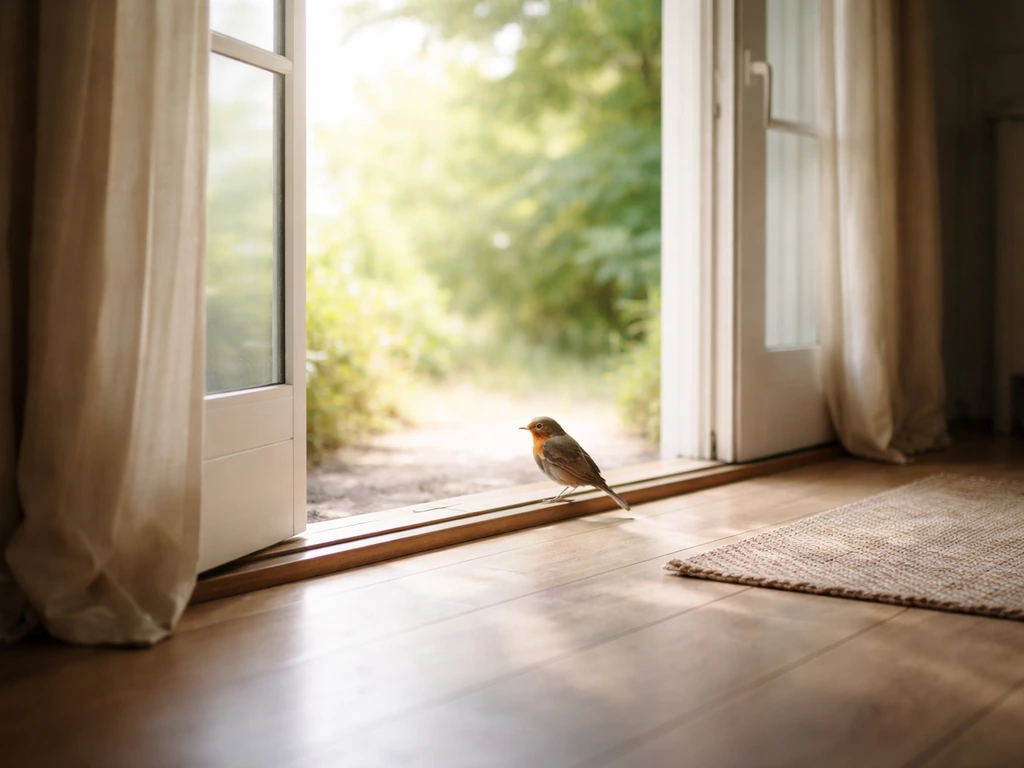
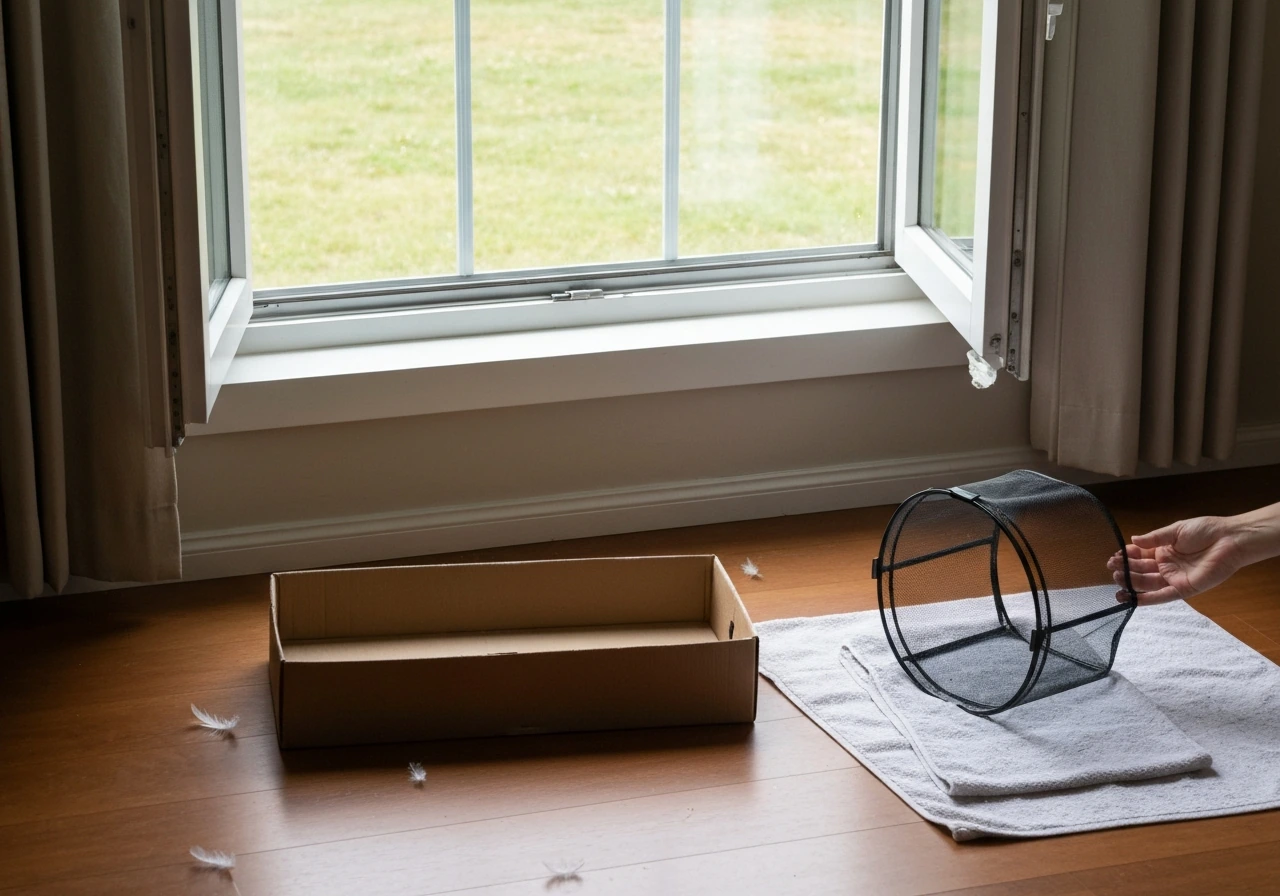
Before you call anyone, spend two minutes doing calm containment. The biggest mistake people make is chasing the bird around the room. That spikes the bird's stress enormously, risks it flying into windows repeatedly, and can cause fatal injury from exhaustion or impact alone. Close doors to other rooms so the bird can't spread further into the house. Get pets out. Send kids to another room. Then quietly open the largest window or exterior door in the room and step back. Dimming the room (closing blinds on windows the bird isn't meant to exit) often guides it toward the one open escape point.
If the bird hit a window and is stunned but alive, don't leave it loose on the floor. Gently cover it with a lightweight cloth or scoop it into a shoebox or paper bag, punch a few small air holes, and place it somewhere dark, quiet, and away from pets and direct sun. This is standard Audubon-recommended protocol for window-collision birds. Darkness calms the bird and prevents it from repeatedly throwing itself at glass. Set a 30-minute timer. Many birds recover on their own and can be released outside once they're upright and alert.
- Close interior doors to contain the bird to one room
- Remove or confine all pets immediately
- Open the largest window or exterior door as the intended exit
- Dim other light sources so the open exit is the brightest point
- Do not chase, grab, or corner the bird unless it's clearly injured
- For stunned birds: place in a dark, ventilated shoebox for up to 30 minutes
- Wear thin gloves if you must handle the bird (for your protection, not the bird's)
Figure out what you're actually dealing with
Not every bird-in-house situation is the same, and the right call depends on correctly reading the situation. If you still cannot locate it, use the steps in this guide to figure out what to do next when a bird is stuck indoors how to find a lost bird in your house. Take 60 seconds to assess before you dial.
Trapped but healthy adult bird
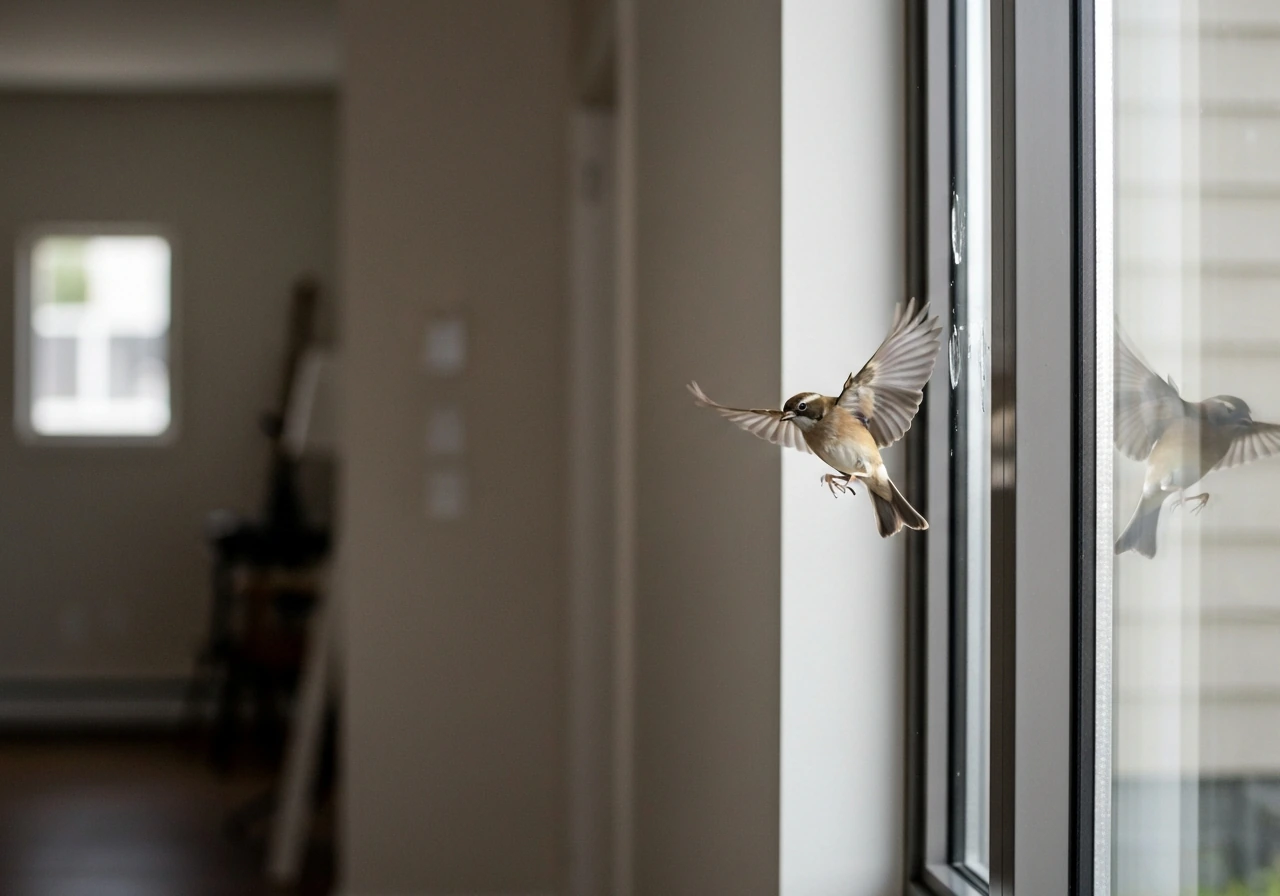
The bird is flying normally, hitting windows or ceiling, and is clearly trying to escape. No blood, no dragging wing, no lying on the floor. This is the most common scenario and often resolves without any phone call at all. Attempt the open-door/window method first. If the bird has been flying around for more than an hour without finding the exit, or if you physically cannot guide it out, then call for help.
Window-collision or injured bird
Signs of injury include: the bird is on the ground and not attempting to fly, one wing is held lower than the other or dragging, it's bleeding, it can't hold its head up, or it's been 30 minutes in the dark box and it's still not alert. Any of these mean you need a wildlife rehabber, not just a patient wait. Audubon notes that a blank" rel="noopener noreferrer">small adult bird that hit a window may need time to regain its senses, and you should contact a wildlife rehabber if it doesn’t recover or fly. Call immediately.
Nestling or fledgling indoors
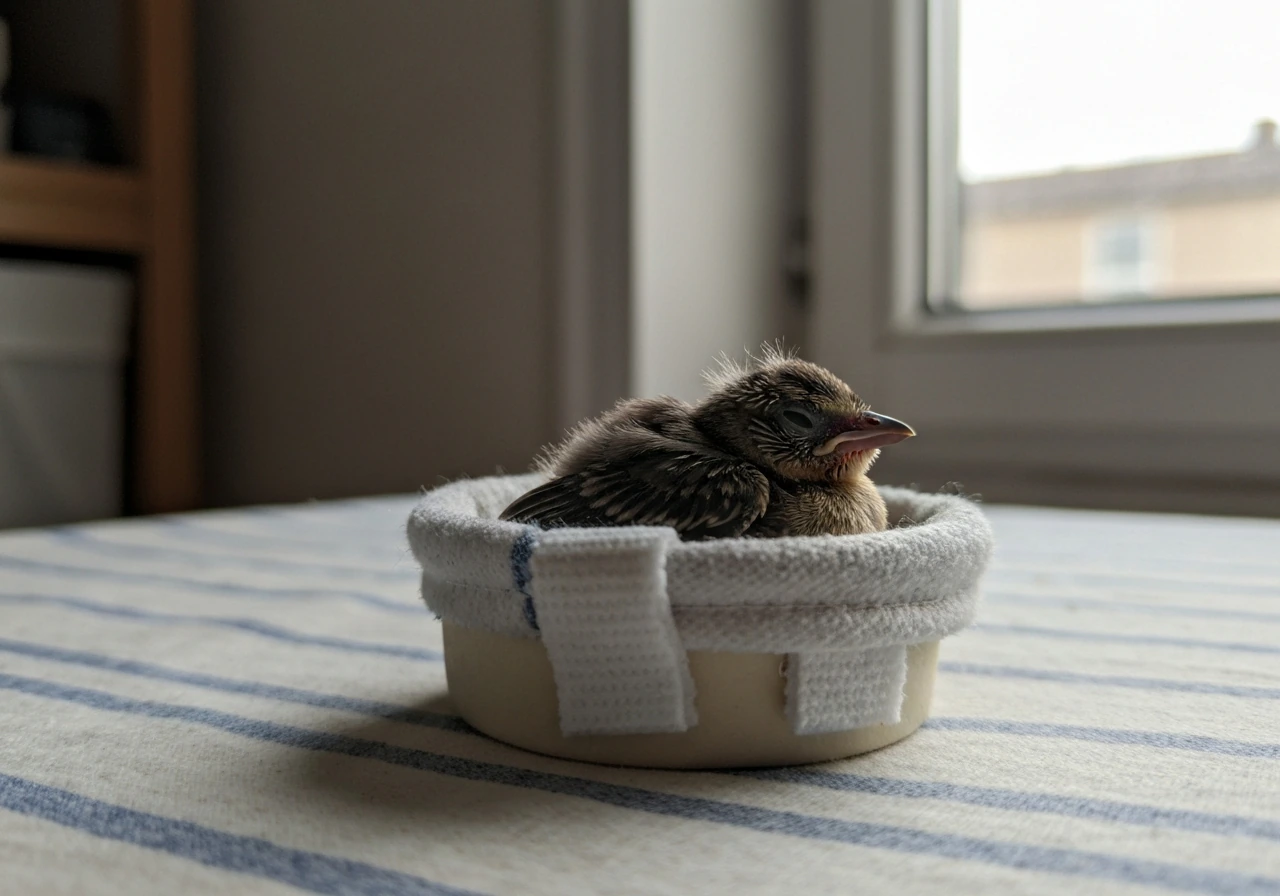
A nestling is tiny, featherless or only partially feathered, and clearly not a flying bird. A fledgling is fully feathered but may look clumsy and hop rather than fly. If a nestling is indoors, it likely came from a nest built inside the structure (in a vent, wall cavity, or attic). If a nest is active and accessible, you can gently return the bird to it. Wildlife rehabbers can advise you by phone. Don't assume handling the bird will cause the parents to abandon it. That's a myth.
Repeated entry or a bird living in the structure
If the same bird (or birds) keeps getting in, or you're finding evidence of nesting inside a wall, attic, or vent, this is a structural problem, not a rescue situation. You'll need a nuisance-wildlife contractor or bird-proofing specialist rather than a rescue line.
Who to actually call, and when
Here's the straightforward breakdown of who handles what, because calling the wrong service wastes time during an urgent situation.
| Who to call | Best for | What they do | Cost |
|---|---|---|---|
| Wildlife rehabilitation center | Injured birds, window-collision victims, nestlings you can't return | Medical care, stabilization, release when recovered | Usually free or donation-based |
| Animal control (local government) | Bird trapped in a public space, aggressive bird, or situation posing a safety risk | May assist with capture or refer you to a rehabber; varies a lot by county | Free (tax-funded) |
| Licensed nuisance-wildlife contractor | Birds nesting inside structure, repeated entry, vent/attic infestations | Humane exclusion, entry-point sealing, ongoing proofing | Paid service, typically $150–$600+ depending on scope |
| Pest control company | Not recommended for birds | Most pest companies lack bird-specific training and may not legally handle protected species | Paid but often not the right tool |
Wildlife rehab is the right first call for any bird that appears hurt. Animal control is useful when you genuinely can't locate a rehabber, or if the situation involves a public area or a safety risk to people. Nuisance-wildlife contractors are the right call when birds are actively nesting inside your home's structure, because removing an active nest often requires permits and proper timing around protected-species laws. Pest control companies are generally not equipped for birds and should be your last option, not your first.
How to find the right number fast
The fastest way to find a licensed wildlife rehabber in your area is to go to the Wildlife Rehabilitation Information Directory (WRID) at tc.wildlife-rehab.org, or search 'wildlife rehabilitator near me' along with your city or county name. The Humane Society's website also maintains a searchable database. If you're in the U.S., many states have a wildlife hotline run through the state fish and wildlife agency, which can connect you directly to a certified facility.
For animal control, search your county or municipality name plus 'animal control' or look on your local government's website. Don't call the non-emergency police line first. Many police dispatchers will redirect you to animal control anyway, and it takes longer.
What to say when you call
Have this information ready before you dial. It speeds up the call and gets you a more useful answer.
- Your location (city/county and zip code)
- Type or approximate description of the bird (size, color, markings if you can see them)
- What the bird is doing right now: flying, sitting on floor, lying still, bleeding
- How long it's been inside or since you found it
- Whether it hit a window or how you think it got in
- Whether there's an active nest visible
- Whether you have pets or children in the home
Ask the rehabber or dispatcher directly: 'Can I bring the bird to you, or will someone come to me?' Most wildlife rehabbers operate drop-off only and won't dispatch to your home. Confirm the address and hours before you drive anywhere.
If help isn't coming quickly: what to do in the meantime
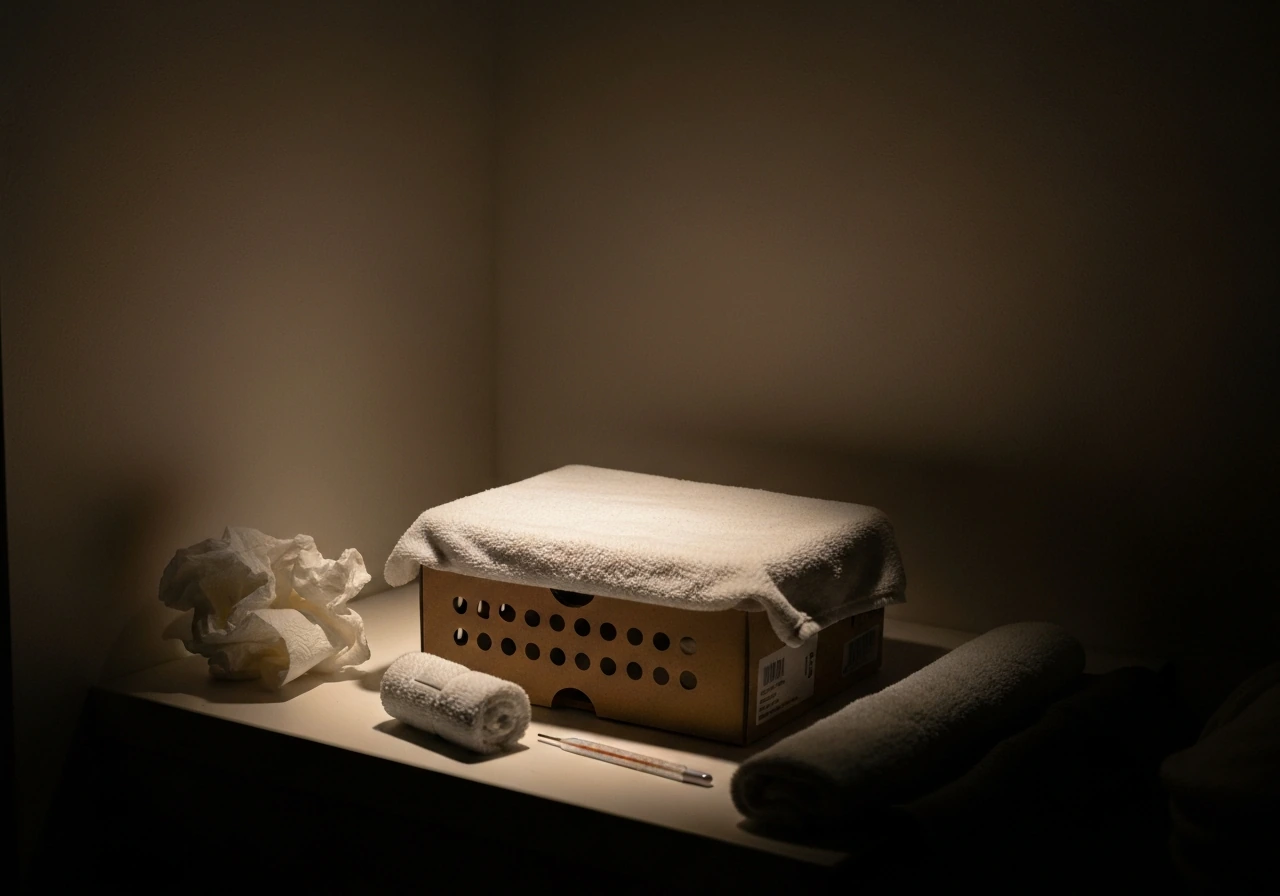
Wildlife rehab centers can have wait times, especially on weekends or during spring nesting season (roughly March through July in most of the U.S.). If you're waiting for a callback or a transport window, here's how to keep the bird stable and, if it's healthy, give it the best shot at guiding itself out.
For an injured or stunned bird
- Place the bird in a ventilated shoebox or paper bag. No cotton balls, no fluffy bedding that can tangle feet or feathers.
- Keep the container in a warm (not hot), quiet, dark space. Room temperature around 70–75°F is fine.
- Do not offer food or water. A stunned or injured bird cannot swallow safely and may aspirate.
- Do not handle the bird beyond what's necessary. Repeated handling adds stress.
- Check every 30 minutes. If the bird becomes alert and is trying to get out of the box, it may be ready for release outside.
- If you see labored breathing, seizures, or no movement at all, escalate your call urgency.
For a healthy but trapped bird
- Choose one room as the 'exit room' and move the bird there if possible by gently guiding it with a broom or towel held flat (not swatted).
- Open one window or door fully. Cover or close all other windows with blinds or towels so the bird isn't confused by light from multiple directions.
- Leave the room and wait quietly for 10–15 minutes. Most birds will find the exit without you present.
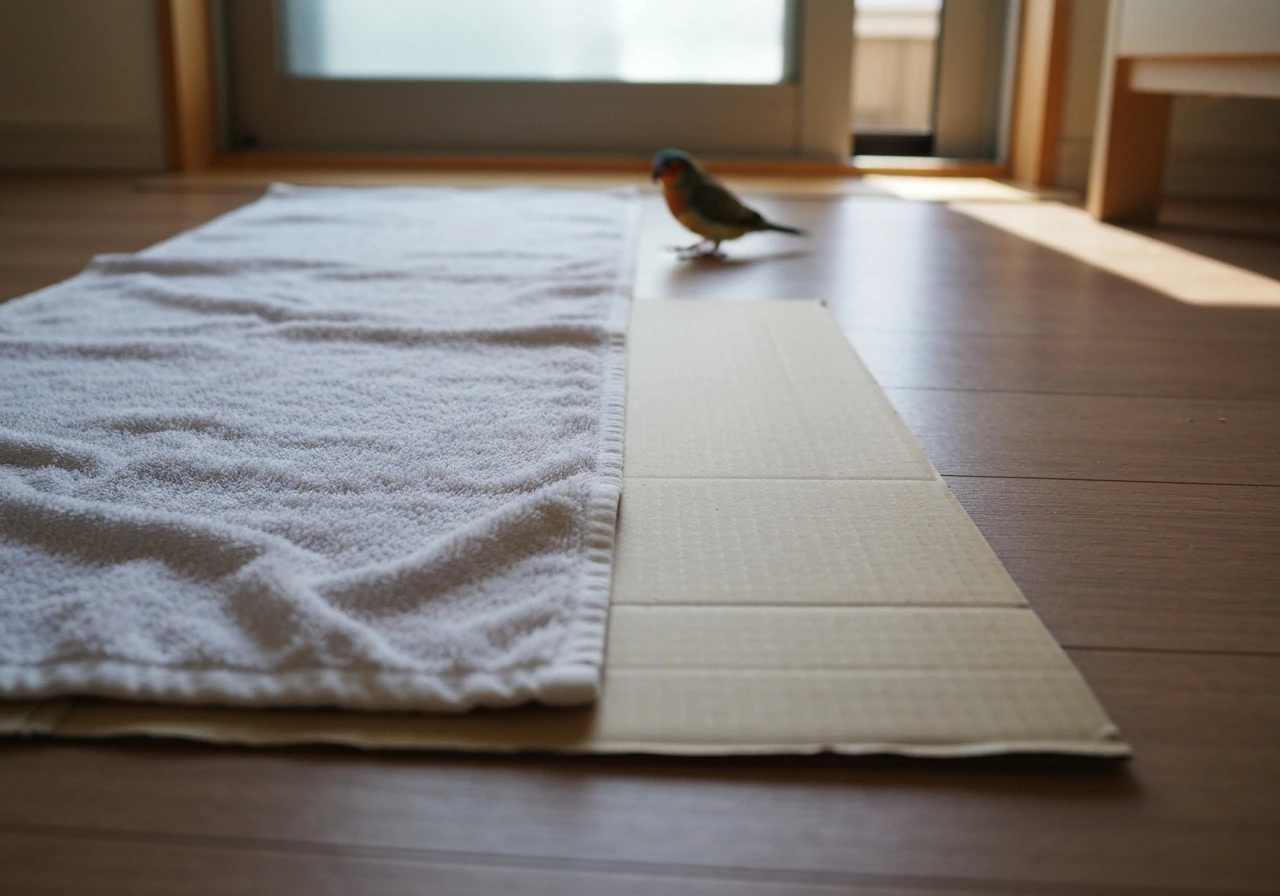
- If the bird is near the floor and exhausted, use a large bowl or box to loosely cover it, slide a piece of cardboard underneath, and carry it outside.
- Release outside away from busy roads or areas with outdoor cats.
After the bird is out: stop this from happening again
Once the immediate situation is resolved, spend 20 minutes doing a quick audit of how the bird got in. If you are trying to figure out where would a bird hide in a house, start by checking closets, behind curtains, and quiet corners near doors and windows. Understanding how can a bird get in your house helps you check the most likely entry points and stop repeats. This is especially worth doing if it happens more than once, or if you suspect a nest inside the structure. Recurring incidents almost always point to a gap, a damaged vent cover, or an unsealed soffit that needs fixing.
Common entry points to check
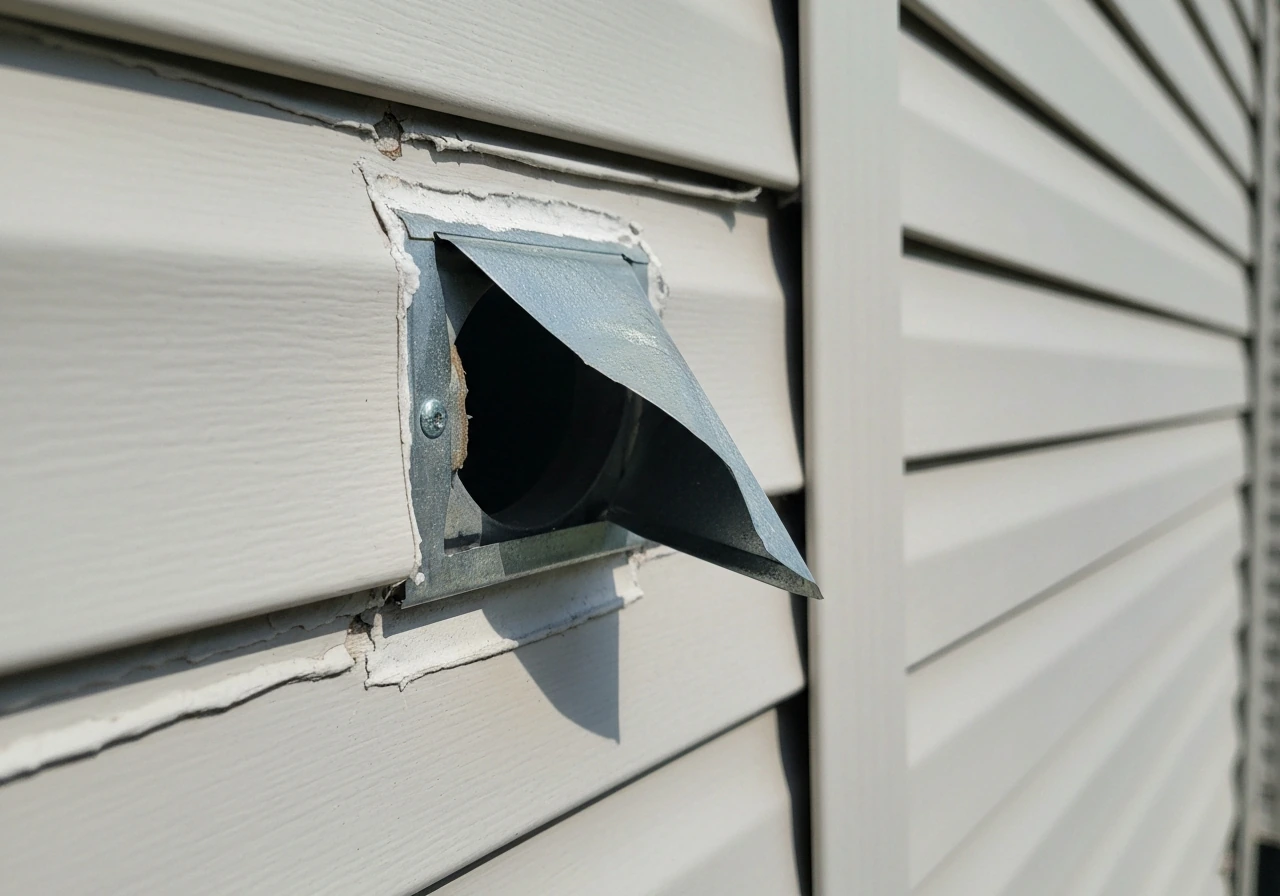
- Dryer vents and bathroom exhaust vents with missing or damaged covers
- Gaps in soffits, fascia boards, or where rooflines meet walls
- Chimneys without spark-arrestor caps
- Uncapped pipes or open crawlspace vents
- Gaps around cable or conduit penetrations through exterior walls
- Roof vents with deteriorated or missing wire mesh backing
Fix damaged vent covers with hardware cloth (1/4-inch galvanized wire mesh) or replace them with commercially available vent covers that have built-in screens. Chimney caps are inexpensive and easy to install yourself. Larger soffit or roofline gaps may need a contractor. If birds are nesting inside an active vent or wall cavity, don't seal the opening until the nest cycle is complete and the birds have left. Sealing an active nest can trap birds inside or create a legal issue if the species is protected.
Window-collision prevention
If the bird got in because it was chasing its own reflection or because a door or window was left open, that's a different fix. For windows that regularly attract collisions, apply window alert decals, UV-reflective tape in a grid pattern spaced no more than 2 inches apart vertically and 4 inches horizontally, or external screens. Moving bird feeders to within 3 feet of windows (so birds can't build up speed) or beyond 30 feet (far enough that they're not in window-reflection territory) also reduces strikes significantly.
Seasonal planning
Spring is peak season for birds entering homes, because they're actively searching for nesting sites. Do a walk-around inspection of your home's exterior in late February or early March before nesting activity begins. Check all vent covers, soffits, and chimney caps before birds establish nests, because once nesting starts, your options narrow significantly due to legal protections on most native species.
Legal protections, liability, and pet safety
Almost every wild bird in the United States is protected under the Migratory Bird Treaty Act (MBTA). This means it's illegal to harm, kill, capture, or possess most wild birds without a federal permit. It also means you cannot remove an active nest with eggs or chicks without going through proper channels. House sparrows, European starlings, and rock pigeons (common city pigeons) are not protected under the MBTA, which is why pest-control companies often target these species specifically. For any other bird, do not attempt DIY removal of an active nest or attempt to treat an injured bird yourself beyond basic stabilization.
Liability matters for facility managers especially. If a bird is stuck in a commercial or multi-unit building, document the incident: note the date, time, species description, how it entered if known, and what actions were taken. This creates a record in case of damage, employee exposure, or regulatory questions. If you're dealing with a colony situation (starlings or pigeons nesting in a building), a licensed nuisance-wildlife contractor with proper permitting is essential, not optional.
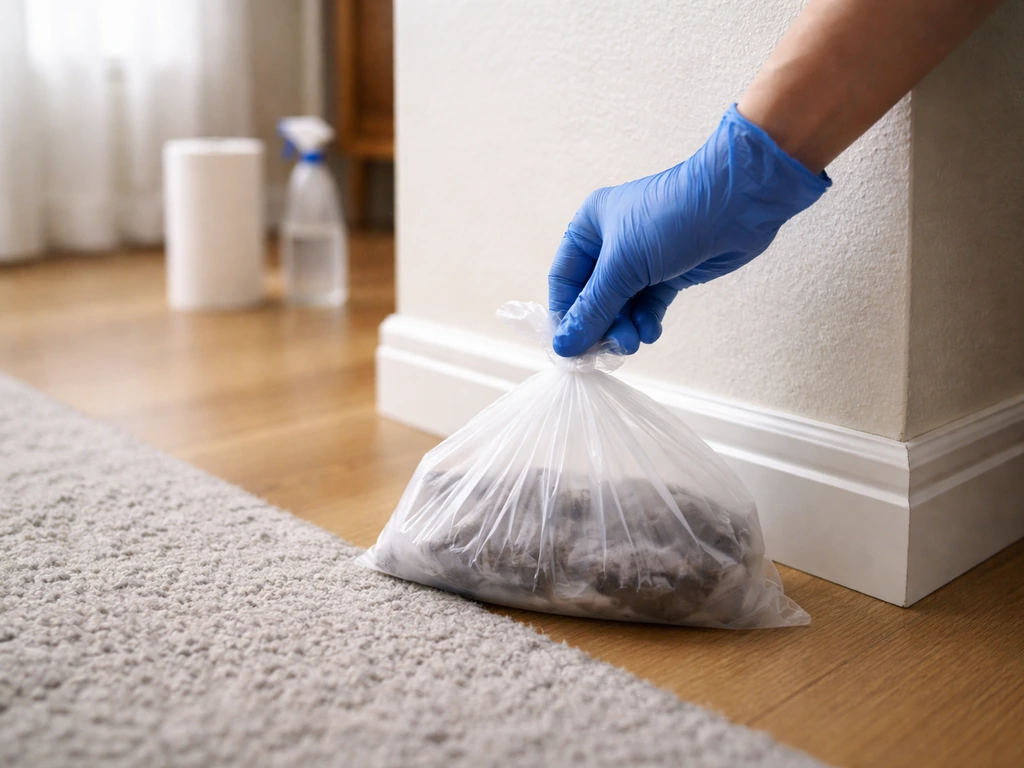
For pet and child safety: a trapped bird can scratch and peck if cornered, and wild birds can carry external parasites like mites. Keep cats and dogs out of the area until the bird is gone. If you need to handle the bird directly, wear thin work gloves. Wash your hands thoroughly afterward. This isn't a reason to panic, but it's basic hygiene worth following. If a bird dies in your house, you can still follow safe cleanup steps and contact the appropriate local wildlife agency for guidance what to do if a bird dies in your house.
FAQ
How fast should I call “who to call when bird stuck in house” services?
If the bird shows injury signs (bleeding, dragging wing, can’t hold head up, repeated window hits with worsening condition) call right away. If it looks healthy, you can do 2 minutes of containment and try the open-door/window method first, but if it has not escaped within about an hour, switch to calling a wildlife rehabilitator or animal control.
What if I cannot tell whether the bird is injured or just exhausted?
Use the 30-minute dark recovery check you already started (shoebox or paper bag, dark and quiet). If it is still not alert, still on the ground, or you see asymmetry like one wing held lower, treat it as injured and contact a wildlife rehabber.
Should I give the bird food or water while waiting for the rehabber?
Do not offer food or water. Many injured or stressed birds cannot swallow safely, and giving anything can worsen aspiration risk. Keep it in a dark, quiet container and follow the rehabber’s instructions when you reach them.
Can I release the bird outside if it seems calmer after being in a box?
You can only release when it is upright and alert and can move normally, then in the direction of safety. If it still wobbles, can’t perch, or appears unusually weak, keep it contained and contact a wildlife rehabber for guidance.
What should I say when I call a wildlife rehabber?
Have a quick summary ready: species or best description (color, size, markings), whether there is blood or dragging, where in the house you found it, how long it has been inside, and whether it is flying normally. Also ask if they take drop-offs only or dispatch, and confirm hours and address.
Do I call animal control first if the bird is in my apartment or office?
Usually no. Wildlife rehab centers handle most injured or trapped birds. Call animal control only when you genuinely cannot locate a rehabber, or when the situation involves an immediate public safety issue or you need help quickly in a public or multi-unit setting.
What if the bird keeps getting in through the same spot?
Recurring entries are typically an exclusion problem, not an ongoing rescue. After the bird is out, inspect and repair entry points like damaged vent screens, soffits, chimney caps, and roofline gaps, and consider a bird-proofing specialist if you find evidence of a nest.
What if I discover a nest or nestlings while trying to “catch” the bird?
Stop treating it like a general rescue. If it is a nest with active birds that is accessible, rehabbers can advise what is safest to do. Do not remove an active nest or seal an access point while birds are still using it, especially if the species is protected.
Are there species I should treat differently when deciding who to call?
Yes. In the U.S., most wild birds are protected, so avoid DIY nest removal for any species other than common non-protected examples. If you suspect starlings, pigeons (rock pigeons), or house sparrows, pest-control pathways may apply, but injured or trapped birds of other species should still go to a rehabber.
What if the bird is in a ceiling, wall cavity, or vent and I cannot reach it?
If you cannot locate it in a way that allows safe containment, do not keep searching endlessly. Contact a wildlife rehabber for guidance, but if it appears to be nesting in structural spaces, plan for a nuisance-wildlife contractor with proper permitting rather than treating it like a rescue-only situation.
Should I cover the bird with a towel or pick it up immediately?
Only pick up if needed for injury handling or containment. Use a lightweight cloth for gentle coverage or a shoebox/paper bag with air holes. Avoid prolonged chasing, and keep pets and kids away first. If you must handle it, use thin work gloves and wash hands afterward.
What if my cat or dog got to the bird?
Treat it as a higher-risk case. Call a wildlife rehabber promptly and keep the pet separated. There is a greater chance of injuries and parasite exposure, and the rehabber can advise on how to handle the bird and when to bring it in.
What if I find a dead bird after trying to help?
Use safe cleanup and prevent contact with pets and people. Then contact the appropriate local wildlife agency for disease and disposal guidance. This is also important if you suspect a colony or repeated nesting where additional control or reporting may be needed.