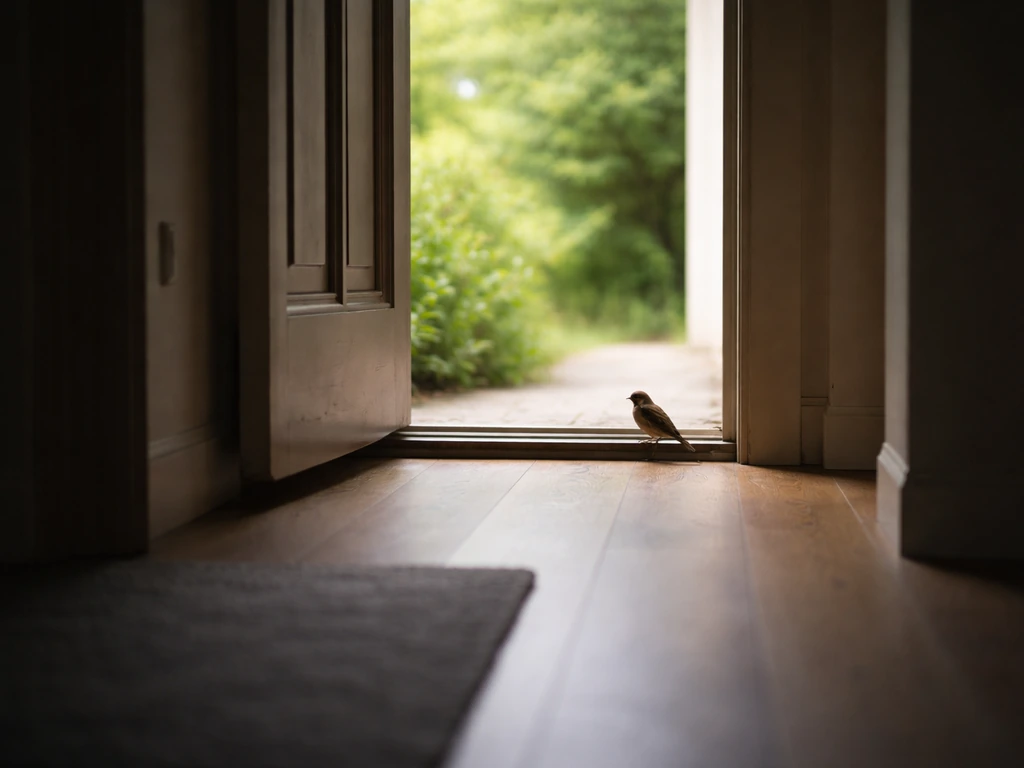
Stay calm, close the doors to other rooms, open one exterior window or door to the outside, turn off every interior light, and let the bird find its own way out. That single setup works for most birds in most situations, and you can have the bird out of your house in under 10 minutes if you do it right.
What to Do If a Bird Is in Your House: Steps to Get It Out
Maya Carver
26 Apr 2026
What to do in the first 5–10 minutes
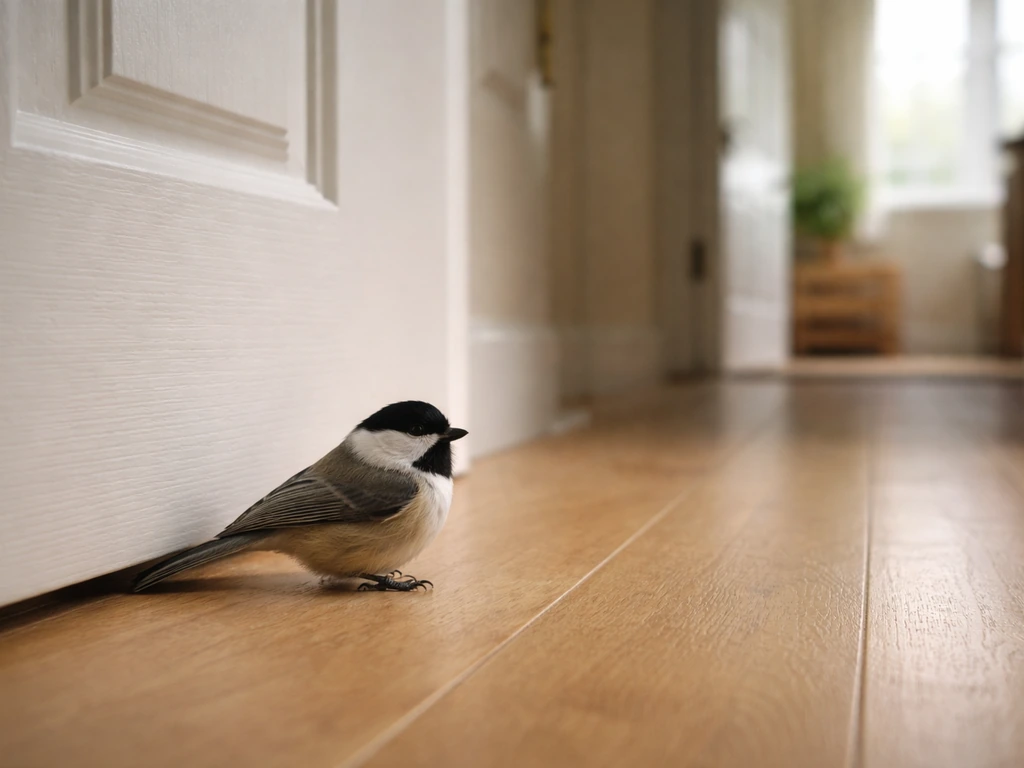
The moment you spot a bird inside, your instinct might be to chase it or shoo it out fast. If you are stuck with a bird in house situation, follow the quick escape-route steps and avoid chasing it until it flies out the moment you spot a bird inside. Resist that. A panicked bird flying around your living room is stressed, and a stressed bird makes bad decisions.
Your job in the first few minutes is to set up an obvious escape route and get out of the way. If you want a step-by-step approach, start by setting up an obvious escape route and keeping the room calm while the bird finds its way out. If the bird keeps coming back in, you can focus on how to find a lost bird in your house and guide it to the right exit.
- Close every interior door between the bird and the rest of your house. Confine it to one room if at all possible.
- Remove or secure pets (cats, dogs) from the area immediately.
- Close all windows and doors in that room except for one exterior exit. Pull curtains or blinds on the closed windows so the bird doesn't fly into the glass.
- Open that one exterior window or door as wide as it will go. This is the bird's target.
- Turn off all interior lights in the room. Birds are drawn toward light, so the bright outdoors through that single opening becomes the obvious destination.
- Cover any skylights if you can — multiple light sources confuse the bird and slow the process.
- Leave the room quietly and give the bird 10–15 minutes to find its way out on its own.
In larger spaces like open-plan living areas or facility hallways, making the interior as dark as possible is even more important. The darker the room, the more strongly the bird is pulled toward that one lit exit. Don't hover in the doorway watching, your presence adds stress and slows things down. If it is still in the house after you set up the exit route, you can call the right help using who to call when bird stuck in house as your next step.
How to guide a bird out when it won't leave on its own
If the bird is still inside after 15 minutes, it's time to gently help it along. A broom works well here, not to swat at the bird, but to use as a slow, sweeping motion to nudge it toward the open exit. Move slowly, keep your motions smooth, and never lunge or rush. Sudden movement causes the bird to fly away from the exit rather than toward it.
Do not throw anything at the bird. Do not try to grab it with your bare hands unless it's clearly injured and on the ground (more on that below). Do not open multiple windows hoping it will find one, that just creates confusion. Stick with the single-exit setup and use the broom only to redirect the bird when it's heading the wrong direction.
If the bird lands on a surface and seems calm, you can try placing an open cardboard box or a light towel over it gently to contain it, then carry it outside and release it. This works best for small birds that have stopped moving. For larger or more agitated birds, the broom-and-single-exit method is safer for both you and the bird.
When the bird won't leave, is stressed, or appears injured
Reading the signs
A bird that's panting with its beak open, holding one wing away from its body, hissing, or making repeated alarm calls is under serious stress or may be injured. Open-mouth breathing and panting are also signs of heat stress. If the bird is sitting on the floor and can't take off, or if you can see an obvious injury like a drooping wing or blood, don't keep trying to herd it outside.
Temporary containment for injured or unresponsive birds
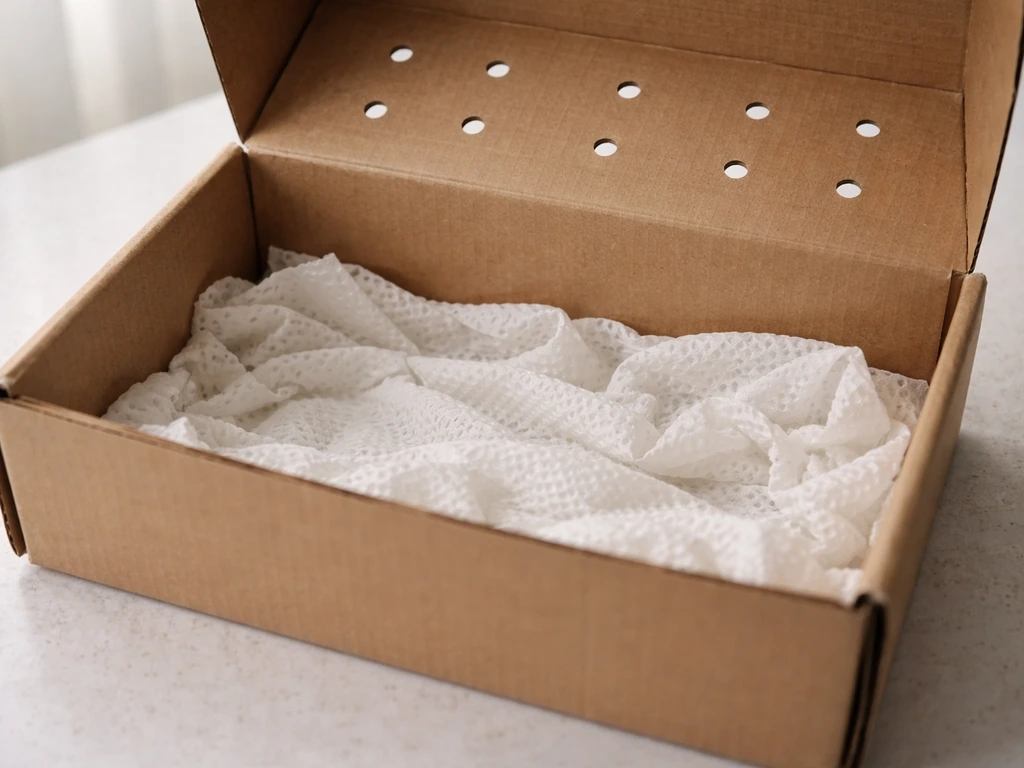
- Get a cardboard box with a lid. Put a few crumpled paper towels on the bottom for grip and cushioning. Poke several air holes in the lid.
- Wearing gloves, gently pick up the bird and place it in the box. Handle it as little as possible.
- Close the lid and move the box to a quiet, dark, room-temperature location away from pets and noise.
- Take the box outside and open it. If the bird is only mildly stunned (common after window strikes), it may fly off within 30 minutes.
- If it does not fly away, call a licensed wildlife rehabilitator.
Do not offer water or food unless directed by a rehabilitator. Do not keep a wild bird inside overnight. A dark, quiet box reduces stress while you arrange the next step, but it's not a long-term solution. If a bird has blank" rel="noopener noreferrer">obvious injuries, bleeding, or a broken wing, Audubon recommends securing it in a box or bag with air holes and contacting a local wildlife rehabilitator. For injured birds, Tufts Wildlife Clinic recommends using a blank" rel="noopener noreferrer">ventilated box or crate lined with towels and minimizing handling, then contacting a local wildlife rehabilitator for next steps.
When a bird just won't leave and seems healthy
If the bird looks physically fine but keeps looping back inside rather than taking the exit, it may be disoriented or may have found something it perceives as shelter. In many cases, a bird will choose a quiet hiding spot in corners, vents, closets, or other sheltered areas where would a bird hide in a house. Try fully darkening the room again and waiting another 10 minutes.
If that still doesn't work, your best move is to contact a local wild bird rehabilitation center. They deal with this regularly and can advise over the phone or send someone if needed. You can also find guidance on who to call when a bird is stuck in your house, since different situations call for different types of help.
If you need step-by-step help, this guide on what to do if a bird dies in your house walks you through safe options.
If a bird has nested inside your house
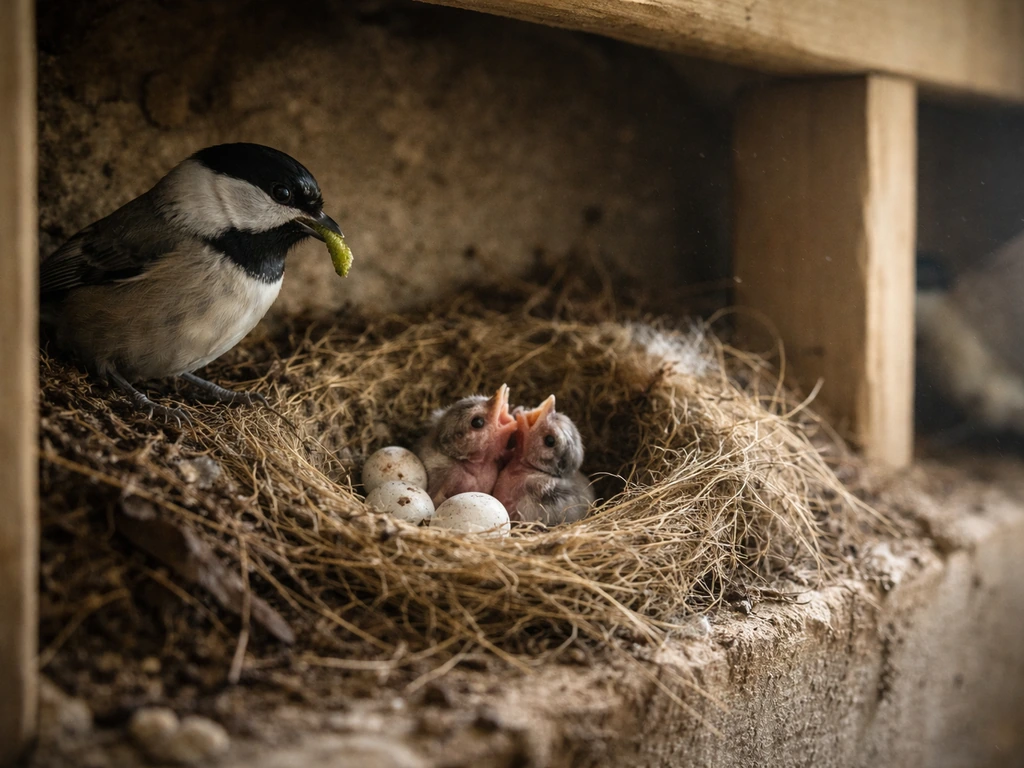
A single bird flying in is a one-day problem. A bird that has built a nest inside your attic, wall cavity, dryer vent, or chimney is a different situation entirely, and you need to approach it carefully. The most important thing to know upfront: in the United States, most bird nests are protected under the Migratory Bird Treaty Act (MBTA). Disturbing, moving, or destroying an active nest (one with eggs or chicks in it) without a federal permit is illegal. This covers the vast majority of common songbirds, swallows, sparrows, starlings (with some exceptions), and other migratory species.
How to tell if a nest is active
- You can see eggs or chicks inside the nest.
- Adult birds are making repeated trips to and from the nest site.
- You hear chick vocalizations (cheeping) coming from inside a wall, vent, or attic space.
- There is fresh nesting material (grass, twigs, feathers, moss) recently added.
If the nest is active, your legal and humane path is to leave it alone until the nesting cycle is complete. Most songbirds fledge within 2–3 weeks of hatching, so the wait is not long. Once the nest is confirmed empty and the season is over, you can remove it and seal the entry point. An inactive nest (no eggs, no birds, off-season) has different legal treatment and is generally safe to remove, but when in doubt, call your local wildlife agency before touching anything.
Seasonal timing matters
Peak nesting season in most of the continental U.S. runs from roughly March through August, with some variation by region and species. If you discover a nest in late winter before activity begins, that's the best window to seal entry points and prevent nesting before it starts. Given that today is late April, nesting season is in full swing. If you have birds actively nesting inside, your priority right now should be limiting disturbance, monitoring from a distance, and planning your exclusion work for after the nest is vacated.
Clean-up and health safety after the bird is gone
Once the bird is out and you've confirmed the space is clear, don't skip the clean-up step. Bird droppings can carry fungal spores (Histoplasma capsulatum, which causes histoplasmosis) and bacterial pathogens like Chlamydophila psittaci (which causes psittacosis). Both are transmitted by breathing in dust from dried droppings or feathers, so the way you clean matters as much as the cleaning itself.
- Put on an N95 respirator (or better) before entering the contaminated area. Regular dust masks are not sufficient.
- Wear disposable gloves and, if there's significant accumulation, a disposable coverall.
- Never sweep or vacuum dry droppings. This aerosolizes the spores directly into your breathing zone.
- Lightly mist the droppings with a water-and-bleach solution (roughly 1 part bleach to 9 parts water) before cleaning. The moisture keeps spores from becoming airborne.
- Scoop or wipe up the dampened material with disposable paper towels or rags and seal them in a plastic bag.
- Disinfect the surface again with the bleach solution and allow it to air dry.
- Remove PPE carefully, bag it, and wash your hands thoroughly.
- If you find significant accumulation (such as in an attic with a long-standing colony), this is a job for a professional remediation service, not a weekend DIY project.
A single bird passing through a room typically leaves minimal mess. The health risk escalates with larger accumulations, enclosed spaces with poor ventilation, and extended occupancy. Use your judgment: a small splatter on a windowsill is a wipe-down job; an attic full of debris is not.
Finding entry points and bird-proofing your home
After you've dealt with the immediate problem, you need to find out how the bird got in. A bird doesn't walk through walls, there's an opening somewhere, and until you find and seal it, you'll be dealing with this again. After you've dealt with the immediate problem, you need to find out how the bird got in, which ties directly to the question of how can a bird get in your house. Understanding how birds commonly enter buildings is the first step to a real fix.
Where to look
- Unscreened or damaged attic vents and soffit vents
- Dryer vents, bathroom exhaust vents, and range hood vents with missing or broken flap covers
- Open or unscreened chimneys (chimney swifts and starlings are frequent culprits)
- Gaps around roof penetrations: pipes, conduit, and HVAC lines
- Weep holes in brick veneer (common entry point for house sparrows)
- Damaged fascia boards, rotted soffits, or gaps at roof-to-wall junctions
- Open windows or doors without screens, or screens with tears
DIY exclusion fixes
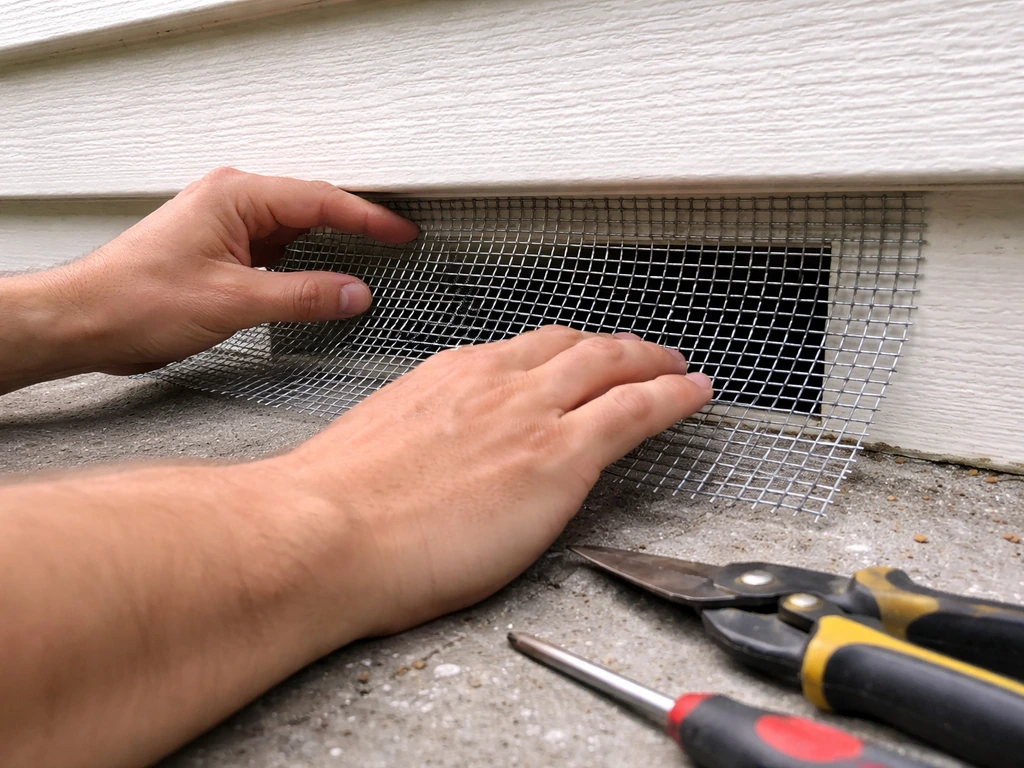
Hardware cloth (welded wire mesh) in quarter-inch or half-inch mesh is the go-to material for most vent and gap exclusions. Cut it at least 2 inches wider than the opening you're covering so you have enough overlap to fasten it securely on all sides. For vent openings specifically, keep in mind that mesh smaller than half-inch can noticeably reduce airflow, so choose the largest mesh that still blocks the target species. For small sparrows or finches, stick with quarter-inch.
| Entry Point | Recommended Fix | Notes |
|---|---|---|
| Attic/soffit vents | Replace with louvered vent covers with built-in hardware cloth backing, or staple quarter-inch mesh behind existing vent | Check for nests before sealing |
| Dryer/bath exhaust vents | Install a vent cover with a functional flap damper, replace broken units | Check flap opens freely to avoid lint/moisture buildup |
| Chimney (open flue) | Install a capped chimney cover/spark arrestor with mesh sides | Use a chimney sweep first to clear any existing nests |
| Weep holes in brick | Install retrofit weep-hole covers (plastic inserts with small slots) | Don't fully block weep holes — they serve a drainage function |
| Roof-to-wall gaps, fascia gaps | Fill with hardware cloth then caulk or foam backer rod; replace rotted wood | Inspect after winter — freeze-thaw cycles open new gaps |
| Window/door screens | Repair tears with patch kits or replace full screen panels | Check spline condition annually |
When you're inspecting for gaps, do a walk-around at dusk or dawn when birds are moving, you'll often see them entering and exiting directly, which removes the guesswork. For facility managers with large buildings, a systematic inspection by floor and elevation once per year (ideally late winter, before nesting season) is the most efficient approach.
When to call a professional instead of handling it yourself
Most single-bird-in-a-room situations you can handle yourself in under 30 minutes. But there are specific scenarios where calling a professional isn't optional, it's the right call for the bird, for you legally, and sometimes for your safety. If you are unsure you can handle it safely, look up who to call if a bird is in your house as your backup option before escalating the situation.
Call a licensed wildlife rehabilitator when:
- The bird is visibly injured (broken wing, bleeding, unable to stand or fly)
- The bird is a nestling or fledgling (young bird, limited or no flight capability)
- The bird remains inside after 30–45 minutes and all techniques have been tried
- The bird is showing severe stress signs and is not improving in the containment box
Call your state wildlife agency or a licensed nuisance wildlife control operator (NWCO) when:
- You have a nesting situation involving a protected species inside your structure during active nesting season
- You discover a colony (multiple birds nesting together) in your attic or walls
- You need a permit to legally disturb or relocate a nest or eggs
- You're unsure whether a species is protected under the MBTA or your state's wildlife laws
A note on the Migratory Bird Treaty Act
The MBTA makes it federally unlawful to pursue, capture, kill, or possess migratory birds, their nests, or their eggs without a permit. This isn't obscure law, it covers the birds most likely to end up in your house: sparrows, swallows, starlings (partial exemptions apply in some states), pigeons, chimney swifts, and most songbirds. The legal treatment of a nest also depends on whether it's active or inactive. An empty nest from last season sits in a different legal category than one with eggs in it right now. When in doubt, don't touch the nest and make a call first. The risk of a federal wildlife violation is not worth the 10 minutes it takes to get clarification.
To find a rehabilitator near you, contact your state fish and wildlife agency, search the National Wildlife Rehabilitators Association (NWRA) directory, or call your local humane society. When you call, be ready to describe the species if you know it, the bird's current condition, and whether you suspect a nest is involved. That information helps them triage your call and give you the most useful guidance immediately.
Handling a bird emergency well comes down to staying calm, limiting disturbance, and knowing where your DIY authority ends. Get the bird out safely, clean up properly, seal the entry point before next season, and call for backup whenever the situation involves an injury, a nest, or any legal uncertainty. That's the full plan.
FAQ
Can I just use a towel to catch the bird and pull it out right away?
It is usually better to avoid trapping or grabbing. Use a container only when the bird has settled and you can lift the whole box or towel outside with minimal handling. If the bird is panicked, flying erratically, or shows signs of injury, switch to the single-exit setup and gently redirect with a broom instead.
What if the bird is in a bathroom or kitchen with a fan running?
Turn off the fan first and avoid drafts while you set up the escape route. Also, check that the single exterior door or window you plan to use is actually open enough for the bird to pass, and keep other room doors closed so the airflow does not pull the bird away from the exit.
Is it okay to open all the windows to speed things up?
No, multiple exits often confuse the bird and prolong the flight. Choose one clearly visible exterior opening, darken the rest of the room (especially in open-plan spaces), then wait without hovering near the exit.
How long should I wait before helping if the bird keeps landing on furniture?
If it has not exited within about 15 minutes after you set up the escape route, then gently nudge it toward the open exit using slow, sweeping broom motions. If the bird seems calm on a surface, you can use a box or light towel containment only if you can do it smoothly without chasing.
What signs mean the bird might be injured or overheating, and what should I do then?
If you see open-mouth breathing, panting, hissing, a drooping wing, blood, or repeated alarm calls, assume serious stress or injury. Do not keep herding it outside, limit movement, and contact the right wildlife help promptly. Keep it in a dark, quiet place only as a short holding step.
The bird is flying in circles but always returns to the same corner, how do I fix that?
Re-darken the room to reduce alternative “shelter” cues, and wait about 10 more minutes. Common problem areas include closets, vents, or behind furniture. If it still will not commit to the exit, call a wildlife rehabilitator or local wildlife agency for guidance.
After I get the bird out, should I clean immediately or wait?
You can clean promptly, but do it carefully to reduce dust from dried droppings and feathers. Ventilate the area, avoid dry sweeping, and if there are significant droppings especially in enclosed spaces, consider protective gear and thorough wet-cleaning practices before you do anything that stirs dust.
What if I see a bird going in and out repeatedly, does that mean there is a nest?
Yes, repeated entry and exit usually indicates a potential active nest or consistent roosting. Do not seal openings right away because you could block an active nesting attempt. Instead, observe from a distance, then plan exclusion only after the nesting period is clearly over (and follow the legal guidance if a nest is active).
When can I seal the hole or gap after the bird is gone?
For a one-time indoor fly-in with no nesting activity, sealing the entry point can be done once you have identified and accessed the opening and the area is clear. If you suspect an active nest, do not seal until you confirm the nest is no longer active, and when in doubt contact your local wildlife agency first.
Do I need to wear gloves or a mask when dealing with bird mess?
For small mess, careful wiping and ventilation may be enough, but gloves and eye protection are a good idea if you are dealing with droppings or feathers that could contact your skin. A mask is especially important in enclosed areas or when there is debris, because cleanup can aerosolize contaminated dust.
Is it illegal to remove an empty nest?
It depends on whether it is truly inactive and on the species and timing. An inactive nest from the previous season is handled differently than an active nest, but legality can still be nuanced. If you are not sure, do not touch it and contact your local wildlife agency before removal or sealing work.
What information should I have ready when I call a rehabilitator or wildlife agency?
Be ready to describe the bird species (if known), where it is located in the house, whether it appears injured or overheated, how it is behaving (flying, grounded, panting, bleeding), and whether you suspect a nest or repeated entry. That helps them triage quickly and give you safer next steps.