Stay calm, move slowly, and get everyone out of the room. If you find yourself wondering what to do if a bird dies in your house, follow cleanup and health precautions before you touch the remains. Remove children, pets, and anything fragile, then turn off ceiling fans, darken the rest of the house, and open one large exit, a door or window, wide. Most birds fly toward light and will find that opening within a few minutes on their own. The less chaos in the room, the faster they leave.
Bird in House What to Do: Humane Removal and Prevention
Maya Carver
16 May 2026
Do this immediately to keep everyone safe
Your first job is damage control, for people and the bird. A panicking bird will flap hard, hit walls, and knock things over. A panicking human makes it ten times worse. These steps take about two minutes and set you up for a quick, safe removal.
- Move children, pets, and anyone with a compromised immune system out of the room immediately and close the door behind them.
- Turn off ceiling fans right away. A spinning fan blade can injure or kill a bird in seconds.
- Cover or move any open hazards: hot pots, candles, fish tanks without lids, open toilets.
- Stop making sudden movements or loud noises. Talk quietly if you need to communicate with someone else in the room.
- Do not try to grab, chase, or corner the bird yet. This triggers panic and causes injury to both of you.
- Wash your hands after any contact with surfaces the bird has touched, and avoid rubbing your eyes or face.
If the bird appears injured (it can't fly, holds one wing low, or is sitting stunned on the floor), don't attempt a standard removal. Skip ahead to the troubleshooting section and the guidance on when to call a professional.
Quick way to get the bird to leave (step-by-step)
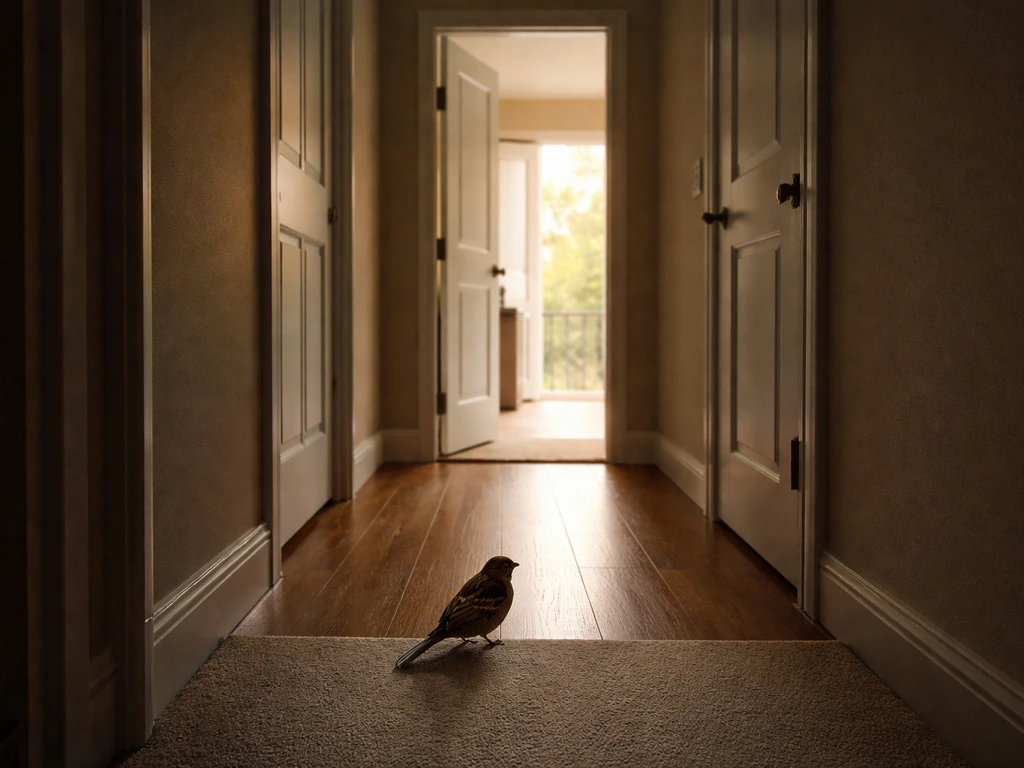
The core principle here is simple: birds fly toward light. Your job is to make one exit the brightest, most obvious option and eliminate every other tempting spot. This works for the vast majority of healthy birds in living rooms, kitchens, and bedrooms.
- Close all interior doors between the room and the rest of the house. You want to contain the bird to one space so it doesn't wander deeper into your home.
- Turn off every light in the room the bird is in.
- Draw curtains or blinds on any windows that don't open. Closed glass looks like an escape route to a bird but is a collision hazard.
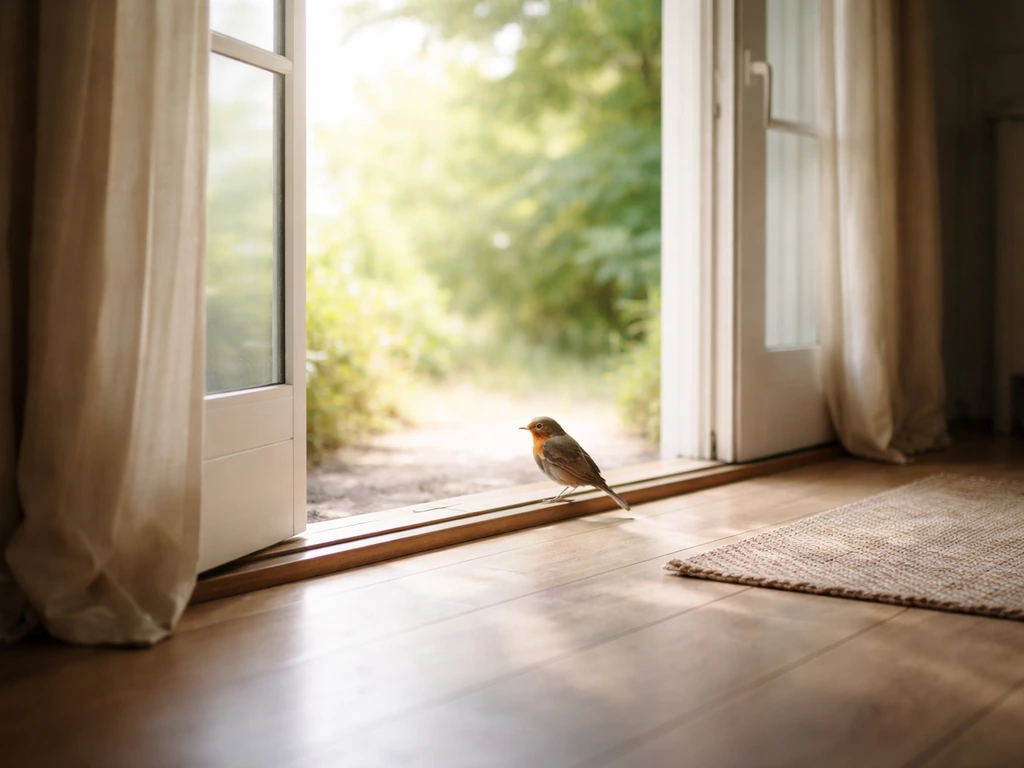
- Open one large exit — ideally an exterior door or a fully opened window — as wide as possible. Remove any screen if you can do it quickly and quietly.
- Step back, or better yet, leave the room and wait outside the door for 10 to 15 minutes.
- After 15 minutes, peek in quietly. If the bird is still there, gently wave a towel or sheet from behind it to encourage it toward the open exit. Do not rush at the bird.
- If the bird reaches the opening but hesitates, stop moving entirely and give it another few minutes. It will go.
- Once it's out, close the exit immediately so it can't come back in.
Basement and garage situations
Basements and garages need a slightly different approach because they often have more obstacles and limited natural light. For a basement: turn off the lights, open every window that can open, and cover any windows that don't open with cardboard or a dark cloth so the bird doesn't keep flying into glass. Close the door at the top of the stairs so the bird stays in the basement and not in your main living space. Then wait and let it find its own way out through an open window.
For a garage or shed, open the large garage door all the way. Cover any fixed side windows with a cloth or piece of cardboard so the bird doesn't mistake them for exits. Turn off the interior lights, then step away. The bird will see the large open door as the bright exit and fly toward it. This usually takes under 10 minutes.
Chimney and fireplace entry
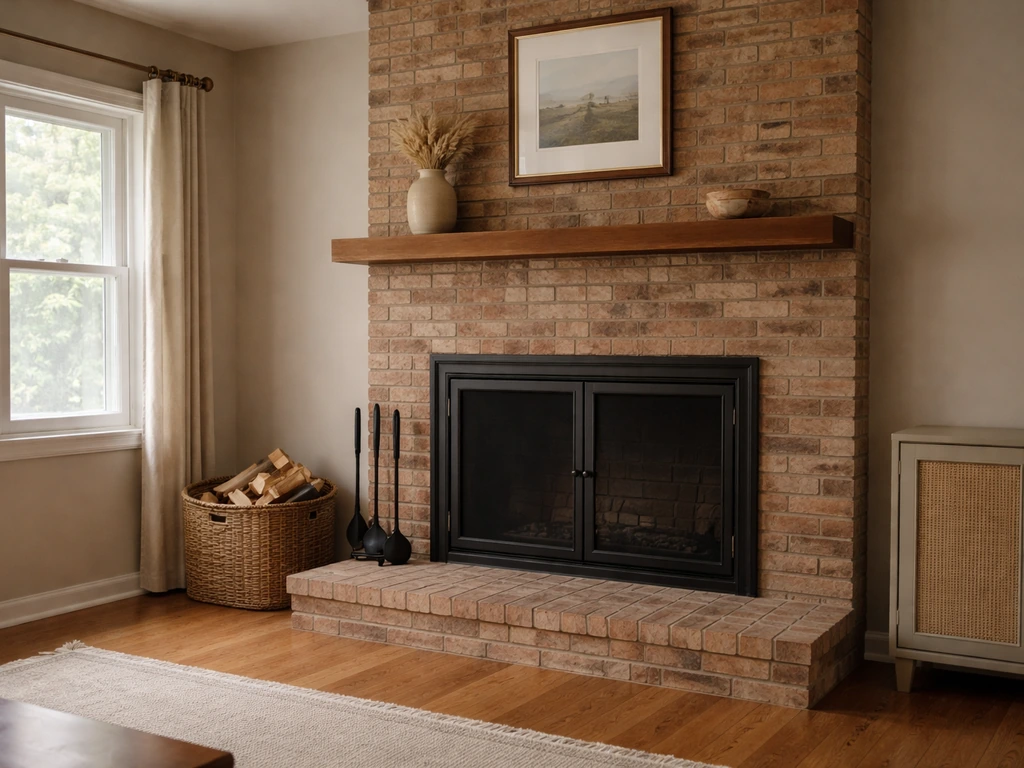
If a bird has come down the chimney and is now in the firebox (you can hear it flapping behind the damper), don't open the damper yet. First close all the doors and windows in the room, then open the damper slowly. The bird will usually fly into the room. From there, follow the standard steps above: darken the room, open one exit, and let it fly out. If you open the damper and let it into a fully lit room with multiple windows, it will be confused and stressed. Keep it simple.
Troubleshooting: common scenarios when it won't exit
The bird is hiding and you can't find it
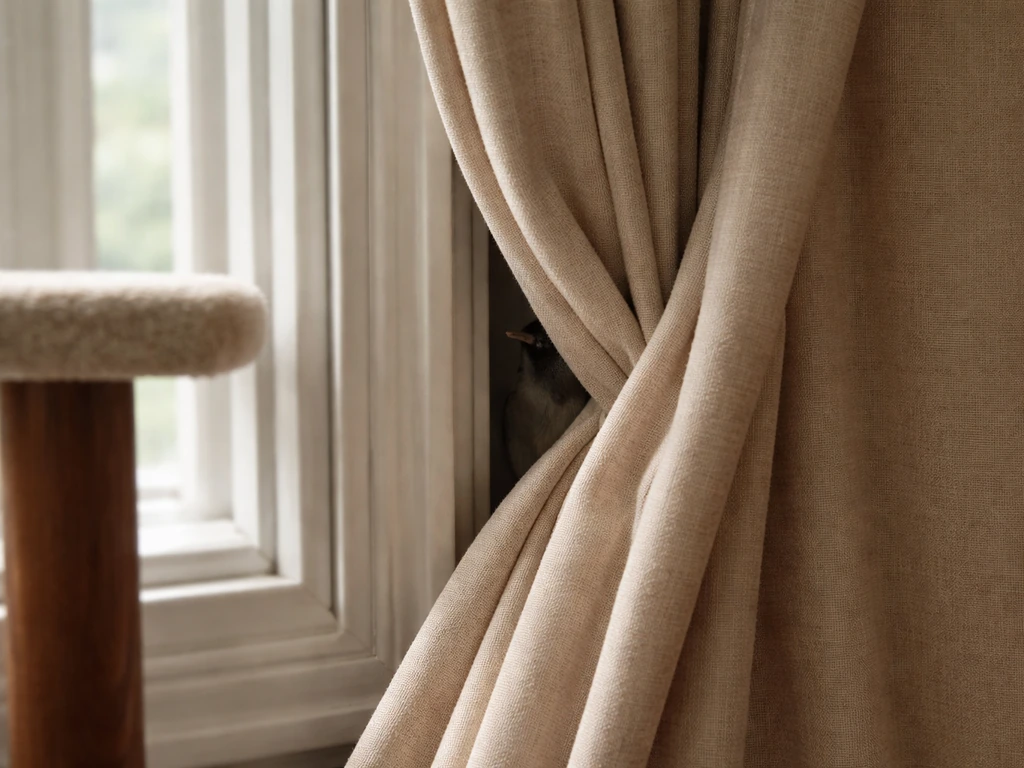
Birds hide behind curtains, inside chimneys, on top of tall furniture, behind appliances, and in tight spaces near the ceiling. Check these spots systematically and quietly. If you are dealing with a hidden or hard-to-reach bird indoors, the troubleshooting section on how to find a lost bird in your house is a helpful next step. Once you locate it, don't startle it into flight inside a small room. Instead, set up your exit point first, darken the space, then gently tap near its hiding spot to encourage it to move toward the light.
If you genuinely can't locate the bird after a thorough search, it may have already left through an opening you didn't notice, or it may be very still and quiet. Check all rooms systematically, listen for wing sounds or scratching, and look for fresh droppings as a clue to where it's been.
The bird won't approach the exit
If you've had the exit open for more than 30 minutes and the bird hasn't left, you have too many light sources competing with your exit. Double-check that every other window is covered or darkened and that no interior lights are on. The open exit should be the only bright spot in the room. If it still won't move, try using one large exit point rather than multiple open windows, multiple openings confuse the bird and reduce the contrast between inside and outside.
The bird is injured
Signs of injury include one drooping wing, the bird sitting on the ground and not flying when approached, visible blood, or obvious disorientation. Do not attempt to guide an injured bird to an exit. Instead, put on gloves, gently place the bird in a cardboard box or paper bag with air holes poked in the sides and a few crumpled paper towels for padding. Close the lid, place it somewhere quiet and dark, and contact a local wildlife rehabilitator.
If you are unsure who to call if a bird is in your house, contact your local animal control or a wildlife rehabilitator for guidance. Do not offer food or water unless instructed by a professional, incorrect care can cause more harm.
Multiple birds, or the same bird keeps returning
If more than one bird has entered, or you've had repeated incidents, you have an entry point that needs to be found and sealed. Follow the same removal steps for each bird, but treat this as a structural problem, not just a wildlife nuisance. Jump ahead to the prevention section below and start the inspection process right after the birds are out.
You can't reach or access the area where the bird is stuck
If a bird is stuck in a wall cavity, inside ductwork, or in an attic space you can't safely access, this is when DIY ends and professional help starts. Attempting to access tight, dark, or elevated spaces without proper equipment creates fall risk and may disturb a nest that's legally protected. Call a wildlife removal professional or animal control.
After it's out: cleanup, disinfection, and health precautions
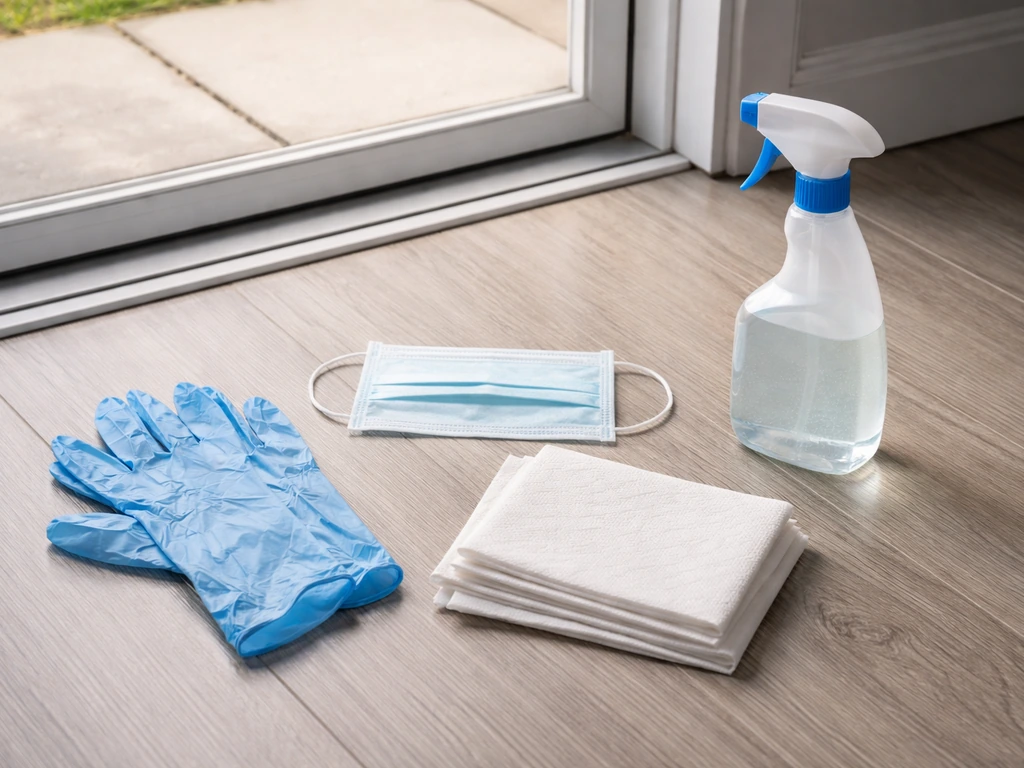
Once the bird is gone, don't just wipe things down and move on. Bird droppings can carry Histoplasma fungus spores (which cause histoplasmosis, a lung infection) as well as bacteria linked to psittacosis. The key risk is aerosolizing the material, dry sweeping, vacuuming, or blowing on droppings sends the particles airborne where you can breathe them in. Use wet methods instead.
- Put on disposable gloves and, if there's significant droppings, an N95 respirator or mask before you start cleaning.
- Ventilate the area: open windows and let fresh air circulate for at least 15 minutes before you begin.
- Do not dry sweep or vacuum droppings. Mist them lightly with a diluted bleach solution (1 part bleach to 10 parts water) or a disinfectant spray first.
- Wipe up the moistened droppings with paper towels and place them directly into a sealed plastic bag.
- Disinfect the surface again with your bleach solution and allow it to air dry.
- Bag and dispose of any feathers the same way.
- Remove your gloves without touching the outside surface, bag them too, and wash your hands thoroughly with soap and water for at least 20 seconds.
- Wash any clothing that had direct contact with the bird or its droppings separately in hot water.
If droppings are extensive (more than a small area, or the bird was present for more than a few hours), consider calling a professional cleaning service, especially if anyone in your household is immunocompromised, pregnant, elderly, or very young. Avoid disturbing large accumulations of droppings yourself. Per CDC guidance, preventing accumulation in the first place is the best protection.
Prevent repeat visits: proofing, sealing, and exclusion measures
A bird in your house means there's a gap, opening, or design feature that made entry possible. Fixing the immediate problem takes care of today. If you need quick guidance right now, follow the step-by-step approach for what to do if a bird is in your house before you focus on sealing entry points. Fixing the entry point takes care of every future incident. Start your inspection within a day or two of the incident while the entry route is still fresh in your mind.
Find and seal entry points
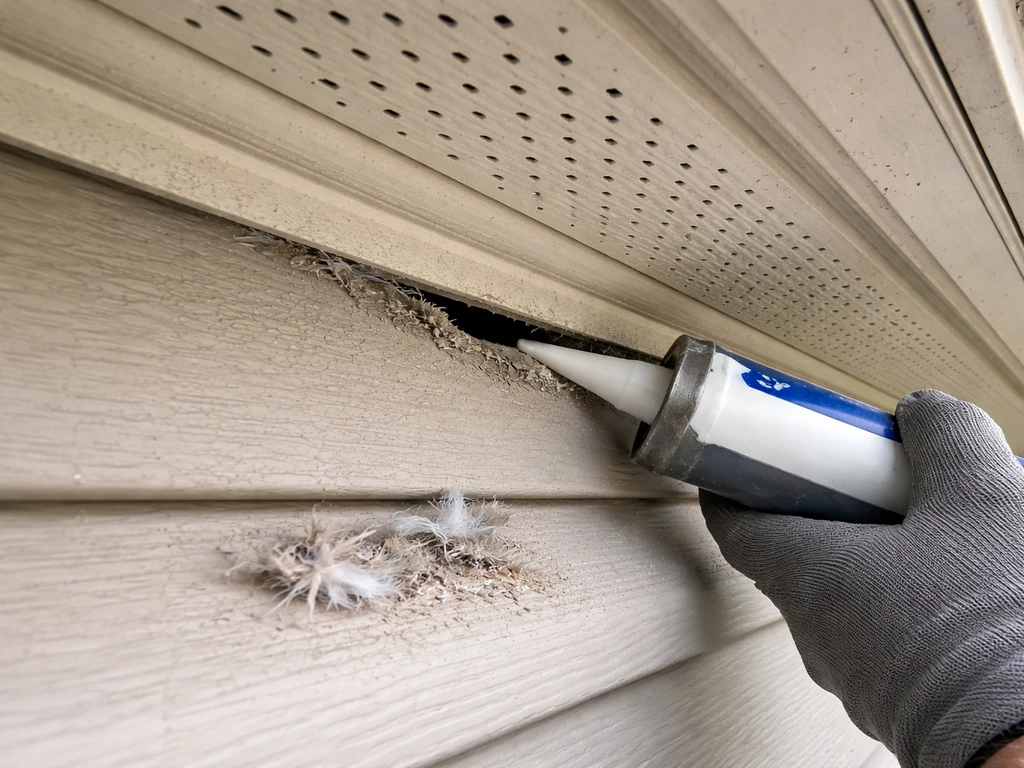
- Inspect the roofline, soffits, and fascia boards for gaps larger than half an inch. Birds (especially sparrows and starlings) can enter through surprisingly small openings.
- Check where utility lines, pipes, and vents pass through exterior walls. These gaps are among the most common entry points.
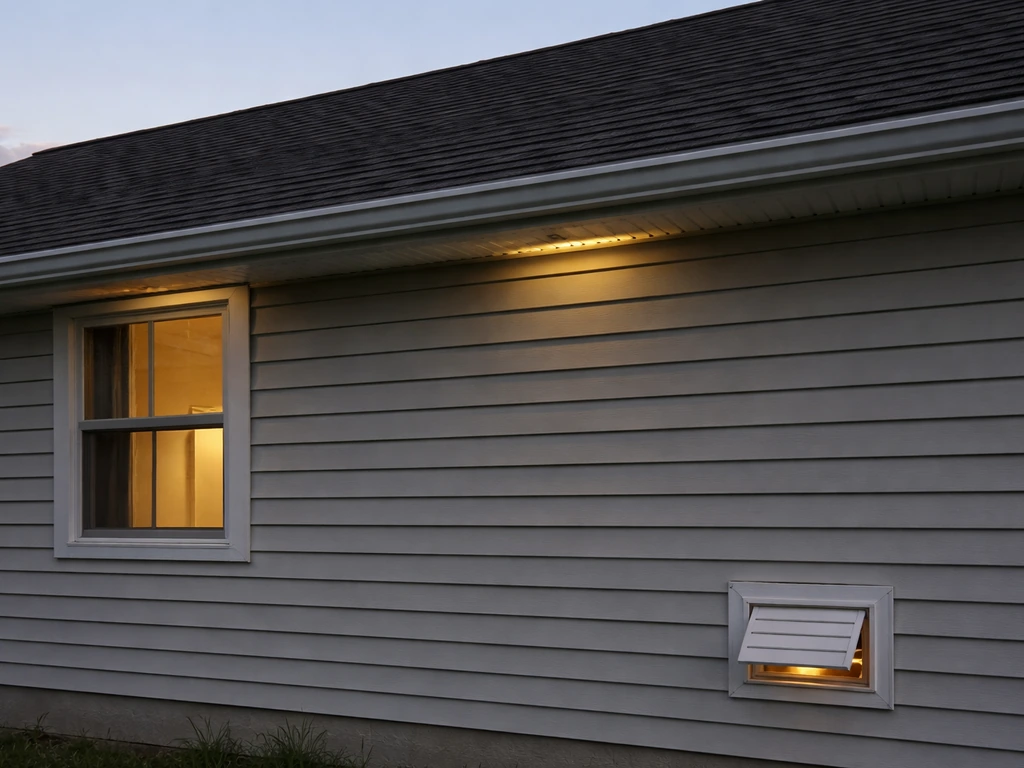
- Look at dryer vents, bathroom exhaust vents, and attic vents. All should have tight-fitting mesh covers or dampers.
- Inspect chimney flues for missing or damaged caps. A chimney cap with a metal mesh body and solid peaked top is the standard fix — it lets smoke out but keeps birds and other wildlife out.
- Check window screens for holes, bent frames, or screens that don't seat properly in the frame.
Exclusion measures that work
For vents and openings you can't permanently seal (like an active dryer vent), use heavy-gauge stainless steel or galvanized mesh with openings no larger than half an inch. For garages and sheds, make a habit of keeping large doors closed when you're not actively working in the space. For areas where birds are actively nesting and returning, one-way exclusion devices (funnel or cone-style systems) let birds exit but make re-entry very difficult. These are especially useful over a longer removal period when you can't seal an entry point while birds are inside.
Manage outdoor attractants too. Bird feeders placed close to windows and entry points significantly increase the likelihood of window collisions and accidental indoor entry. Move feeders at least 30 feet from the house, or relocate them to less than 3 feet from a window (close enough that a bird can't build up collision-force speed). Remove standing water sources near entry points if birds are repeatedly using them as a gathering spot near your home.
A simple proofing checklist
| Area to Inspect | What to Look For | Fix |
|---|---|---|
| Chimney | Missing or damaged cap | Install stainless mesh chimney cap with solid peaked top |
| Roof vents / soffit vents | Missing mesh, gaps at edges | Secure with half-inch galvanized hardware cloth |
| Dryer / bathroom vents | Broken flaps, open mesh | Replace with louvered vent cover or add mesh behind flap |
| Window screens | Holes, bent frames, loose fit | Repair or replace screen; check frame seal |
| Utility penetrations | Gaps around pipes/cables | Seal with expanding foam or caulk rated for exterior use |
| Garage / shed doors | Left open habitually | Establish habit of keeping closed; add a door sweep |
| Attic access points | Open ridge vents, fascia gaps | Install ridge vent covers; repair fascia boards |
Seasonal planning and when to call a wildlife professional
Timing your proofing work around bird nesting seasons
Spring and early summer (roughly March through July in most of the U. S. ) are peak nesting season. This matters for two reasons.
First, birds are actively looking for sheltered entry points to nest, so this is the highest-risk period for indoor entry. Second, once a nest with eggs or live chicks is established inside your home, you may be legally prohibited from disturbing or removing it. The Migratory Bird Treaty Act protects most wild bird nests that contain active eggs or chicks, and removing them without authorization is a federal offense.
The safest approach is to do your sealing and proofing work in late winter (February is ideal) before birds start scouting nesting sites, or in late summer and fall after nesting season ends.
If you discover an active nest inside your home during nesting season, don't remove it yourself. Call a wildlife professional who can advise on legal options or wait until the nest is empty and the young have fledged (usually 4 to 6 weeks) before sealing the entry point.
Maintenance schedule to stay ahead of problems
- Late winter (January to February): Inspect and seal all exterior gaps, replace damaged chimney caps, and check all vent covers before nesting season begins.
- Spring (March to May): Do a visual check of rooflines and soffits as birds start nesting. Don't disturb any active nests you find.
- Late summer (August to September): After nesting season, do a full exterior inspection. Seal any entry points you couldn't address in spring.
- Fall (October to November): Check weatherstripping on garage doors and large access points. Birds (and other wildlife) look for warm shelter as temperatures drop.
- Year-round: Keep garage and shed doors closed when not in use, and repair window screens promptly when damaged.
When to stop DIY and call a professional
Most healthy, uninjured birds will leave on their own with the steps described above. But some situations genuinely require professional help, and recognizing those early saves time, stress, and potential legal issues. If the bird won't leave or you need guidance on who to contact, reach out to local wildlife control or a wildlife rehabilitator who to call when bird stuck in house.
- The bird is visibly injured and can't fly: Contact a licensed wildlife rehabilitator. Audubon's website has a national rehabilitator finder.
- You can't safely access the area where the bird is stuck (attic, wall cavity, ductwork): Call a wildlife removal professional.
- There are signs of an active nest with eggs or chicks: Stop immediately. Contact a wildlife professional for guidance on legal options.
- The bird has been inside for more than 24 hours and hasn't left: It may be injured, exhausted, or trapped somewhere specific. Get professional help.
- Multiple birds are entering repeatedly: This is a structural exclusion problem. A professional bird-proofing or pest-control service can do a full building audit.
- You're dealing with a protected or unusual species (raptors, owls, waterfowl): Don't attempt handling. Contact your state wildlife agency or call 911 if it's an immediate public safety issue.
- Droppings are extensive or the bird was inside for a long time: Consider a professional cleaning service, especially in households with vulnerable individuals.
When you call for help, have this information ready: the species if you can identify it, where in the building it is, how long it's been inside, whether it appears injured, and whether there's any sign of a nest. This saves time and helps the professional come prepared. For immediate public safety situations, like a bird of prey inside a school or an injured bird in a high-traffic area, don't hesitate to call 911 or your local animal control dispatch.
FAQ
How long should I wait before I do something different if the bird won’t leave?
If the bird is still inside after 30 minutes, treat it as a “competing light” problem first. Confirm the exit is the only bright area, then cover every other window and turn off interior lights completely. If you still see no movement, switch to a single, large exit point (for example, one door) rather than multiple partially open windows.
What if the bird seems to be hiding and ignores the open door?
Avoid guiding with your hands or blocking paths. Instead, keep the room calm, darken it, and use a gentle cue like tapping near the hiding spot (near curtains or behind furniture) so it chooses the bright exit on its own. If it is injured, use the box-and-bag method and do not try to “walk it” to a door.
Can I use sprays, noise, or chasing to get the bird out faster?
Do not spray air fresheners, use loud noise, or chase the bird. Many common household sprays and aerosols can irritate the bird and worsen its stress, and chasing increases flapping and collisions. The safest approach is low light, slow movement, and one obvious exit.
What should I do if I can’t safely reach the bird (attic, ducts, or wall cavity)?
If it is still visible but you cannot reach it safely, pause the search and focus on creating the exit and reducing other light sources. For hard-to-reach areas like attic ceilings, ductwork, wall cavities, or tall shelves, DIY can create fall hazards and may disturb a protected nest. Call a wildlife removal professional for access.
Is it okay to clean droppings myself, or should I hire a cleaner?
If you find droppings in a large area, or the bird was present for more than a few hours, it is often safer to use professional cleaning, especially if anyone in the home is pregnant, elderly, has lung disease, is immunocompromised, or is very young. For extensive contamination, you want containment and proper wet cleaning to avoid aerosolizing dried material.
Should I feed or give water to the bird while I’m waiting for help?
Yes, but only as directed by a professional. In the moment, the safest choice is to avoid feeding or watering an unknown wild bird because it can be harmed by incorrect diet, unsafe handling, or delays in proper rehabilitation. Once it is contained for a call to a rehabilitator, follow their instructions.
What if I find a nest or eggs near the entry point?
If you suspect a nest, do not seal entry points right away during peak nesting season. Active nests can be legally protected, and sealing could trap adults or young. If a nest is present or you see eggs/chicks, call a wildlife professional to advise whether to wait and how to prevent re-entry afterward.
What changes if more than one bird enters the house?
If you have multiple birds, repeat the same “one bright exit” process for each one, but treat it as an entry-route issue. After the removal, inspect and seal the opening promptly, since repeated incidents usually mean the entry gap remains accessible.
How should I handle a bird in the fireplace or chimney area?
When the bird is stuck in or near a chimney with a damper, avoid opening the damper into a fully lit space with many exits. Close nearby doors and windows first, then open the damper slowly so the bird can fly into the room you’ve darkened and set up for a single exit.
In basements and garages, what are the most common setup mistakes that stop a bird from leaving?
For a basement or garage, time matters: if there is no change after setting up the room properly, keep other lights off and re-check that fixed windows are covered (basement) or interior lights are off (garage). Also verify that the exit opening is truly the brightest option compared to all other sources.
Next Article
How Can a Bird Get in Your House and What to Do Now
Find how a bird enters, locate it safely, stop panic, remove humanely, then seal entry points and prevent repeats.