If there are eggs or live chicks in that nest under your deck right now, you cannot legally remove it in the U.S. (or Canada or the UK) without a federal permit. The Migratory Bird Treaty Act prohibits destroying an active migratory bird nest, and "active" means from the first egg laid until the young no longer depend on the nest. Your job right now is to keep people and pets away, confirm what species you're dealing with, and wait it out. New Jersey Department of Environmental Protection guidance on wildlife watching similarly emphasizes keeping pets controlled or leashed and allowing wildlife space by not approaching an active nest blank" rel="noopener noreferrer">keep people and pets away from the active nest zone. Most nests wrap up in 3 to 6 weeks. Once the birds fledge and the nest is empty, you can remove it, clean up, and seal the deck so it never happens again. To prevent another nesting attempt in the same spot, learn how to seal the window opening and entry points so birds cannot get inside seal the deck so it never happens again. Once the nest is empty, you can follow the steps for how to remove bird nest from house legally and safely.
How to Get Rid of a Bird Nest Under a Deck Safely

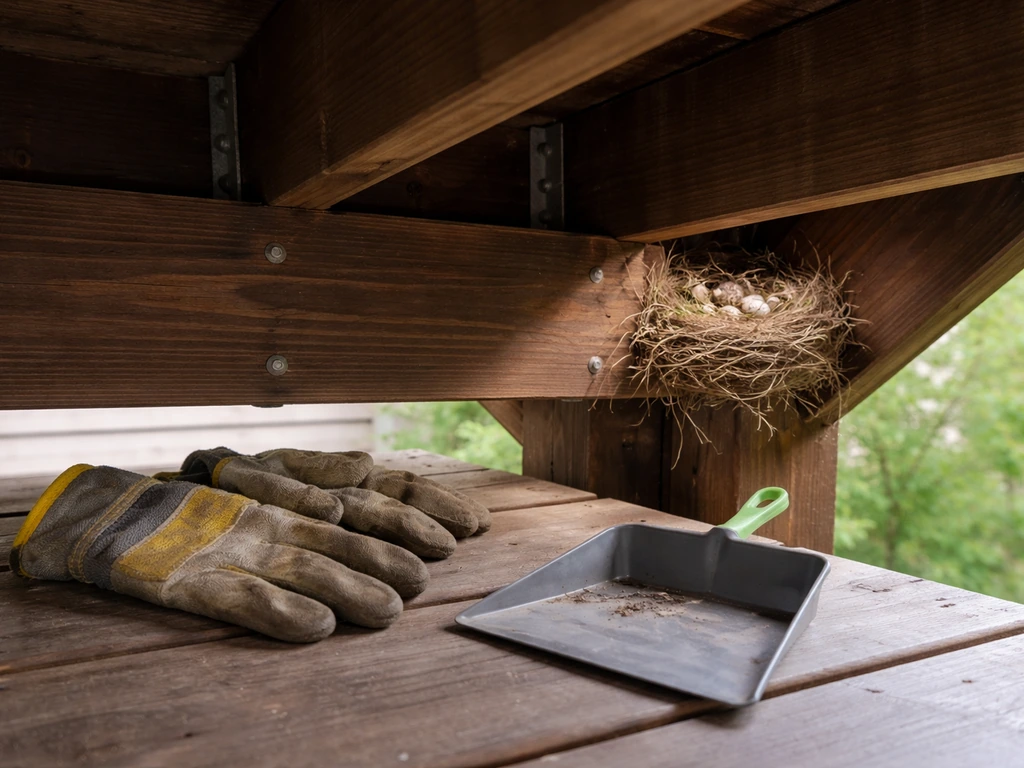
First things first: what to do right now if the nest is active
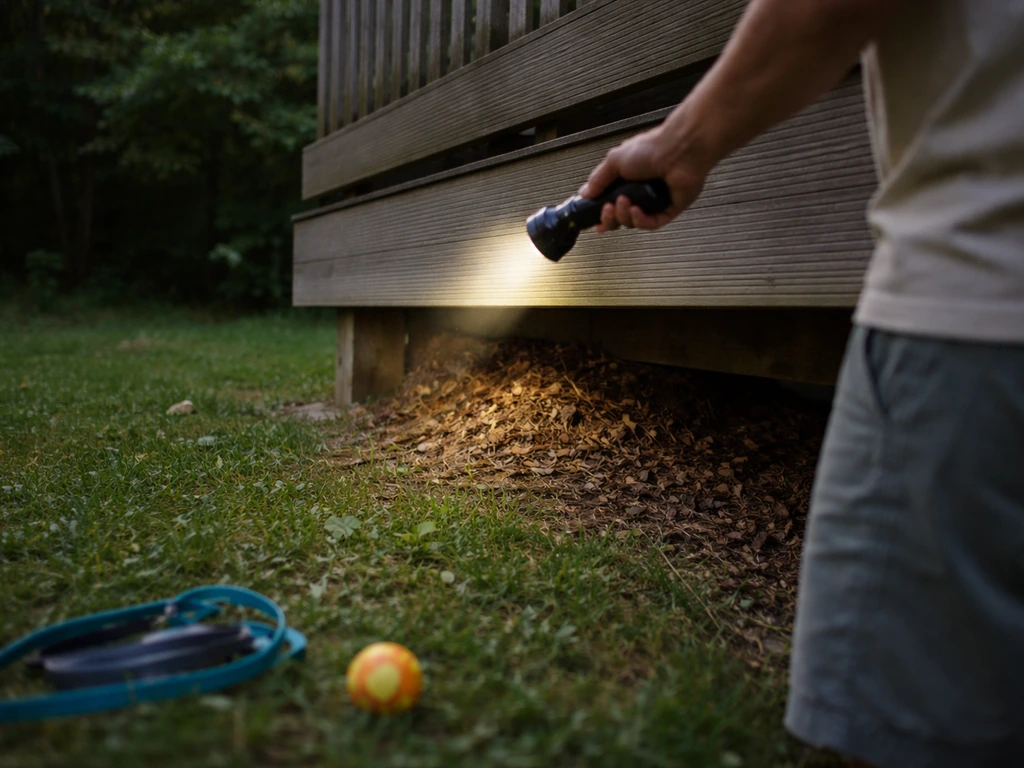
Before you touch anything, take 30 seconds to assess. Can you see eggs, chicks, or a parent bird sitting on the nest? If yes, treat it as active and protected. Here's what to do immediately.
- Keep people and pets away. Leash dogs, tell kids the area is off-limits, and avoid walking directly under the nest. Parent birds under stress will abandon eggs or chicks, and that's both a legal and ethical problem.
- Don't touch the nest, eggs, or chicks. Contact with human scent rarely causes abandonment (that's a myth), but physically moving an active nest can cause adults to desert it and may violate federal law.
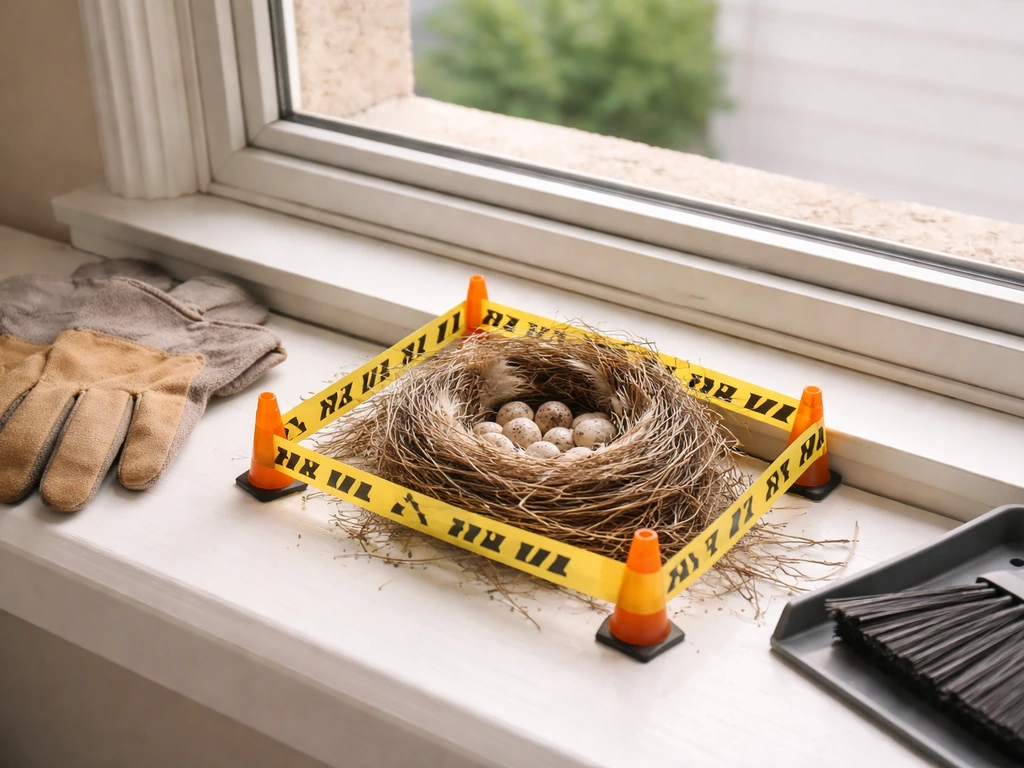
- Tape off the area if needed. A simple piece of tape across the deck steps or a traffic cone nearby signals to household members to stay clear.
- Check for hazards to the nest. If rain is pooling near it or a loose deck board is threatening to fall, note it but don't intervene yet. Call a wildlife professional if the structure poses an immediate danger to the birds.
- Document what you see. Take a quick photo from a distance. The species, egg count, and date will help you track the nest timeline and determine when it becomes inactive.
CDC guidance is clear that bird activity areas carry disease risk, including histoplasmosis from droppings and, in rare cases, avian influenza. Keeping everyone away from the immediate nest zone is good public health practice, not just legal compliance.
Identify the bird species and the legal picture
Not every bird under your deck has the same legal protection, but the vast majority of songbirds and common nesting species in the U.S. are covered by the MBTA. The practical default is: treat it as protected unless you have confirmed otherwise with your state wildlife agency. Here's how to figure out what you're dealing with.
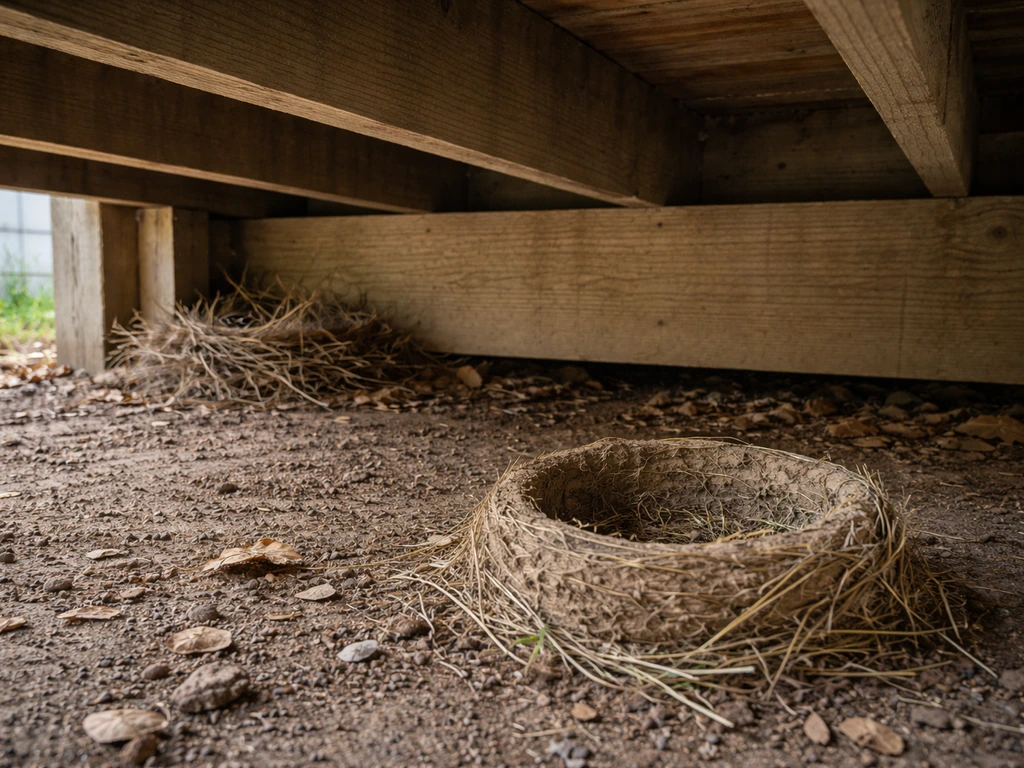
Common birds that nest under decks
| Species | Nest type | Egg-to-fledge timeline | MBTA protected? |
|---|---|---|---|
| American Robin | Cup of mud and grass | Eggs: 12–14 days incubation; chicks: 13–16 days as nestlings | Yes |
| House Sparrow | Loose, bulky grass/debris nest | Eggs: ~11 days; chicks: ~15 days | No (exempted from MBTA) |
| European Starling | Cavity nest with grass and feathers | Eggs: ~12 days; chicks: ~21 days | No (exempted from MBTA) |
| Barn Swallow | Mud cup on a ledge/beam | Eggs: ~15 days; chicks: ~20 days | Yes |
| Chimney Swift | Twig half-saucer attached to surface | Eggs: 16–21 days; chicks: 14–19 days after hatching | Yes |
| Mourning Dove | Flimsy twig platform | Eggs: ~14 days; chicks: ~15 days | Yes |
House sparrows and European starlings are not protected by the MBTA, which means their nests can technically be removed at any time. That said, many states have additional rules, so it's worth a quick check with your state wildlife agency before acting. For every other species on that list, you're waiting for the nest to go inactive.
What the law actually says
Under the MBTA, a nest is active from the first egg until fledged young are no longer dependent on it. Destroying or removing an active nest is a federal violation. The U.S. Fish and Wildlife Service can issue permits for removal when a nest poses a genuine human health or safety concern, but these are not quick or guaranteed. In Canada, the Migratory Birds Regulations 2022 follow a similar framework: you cannot remove a nest containing a live bird or viable egg without authorization, but once the nest is vacated, removal is generally permitted. Canada’s Migratory Birds Regulations, 2022 prohibit damaging, destroying, disturbing, or removing migratory bird nests that contain a live bird or viable egg, and nests may be removed once they are vacated Migratory Birds Regulations, 2022 prohibit damaging, destroying, disturbing, or removing nests with a live bird or viable egg. In the UK, the Wildlife and Countryside Act 1981 protects active nests during the nesting season.
The bottom line: if the nest is inactive (no eggs, no chicks, birds fully gone), you're free to remove it in most cases. If the nest is in a roof area instead of under a deck, the same active versus inactive timing matters, and you can follow a step-by-step approach for how to get rid of a bird nest in roof. If it's active, wait or call a professional to explore your permit options.
How to humanely remove the nest (and when)
When the nest is inactive
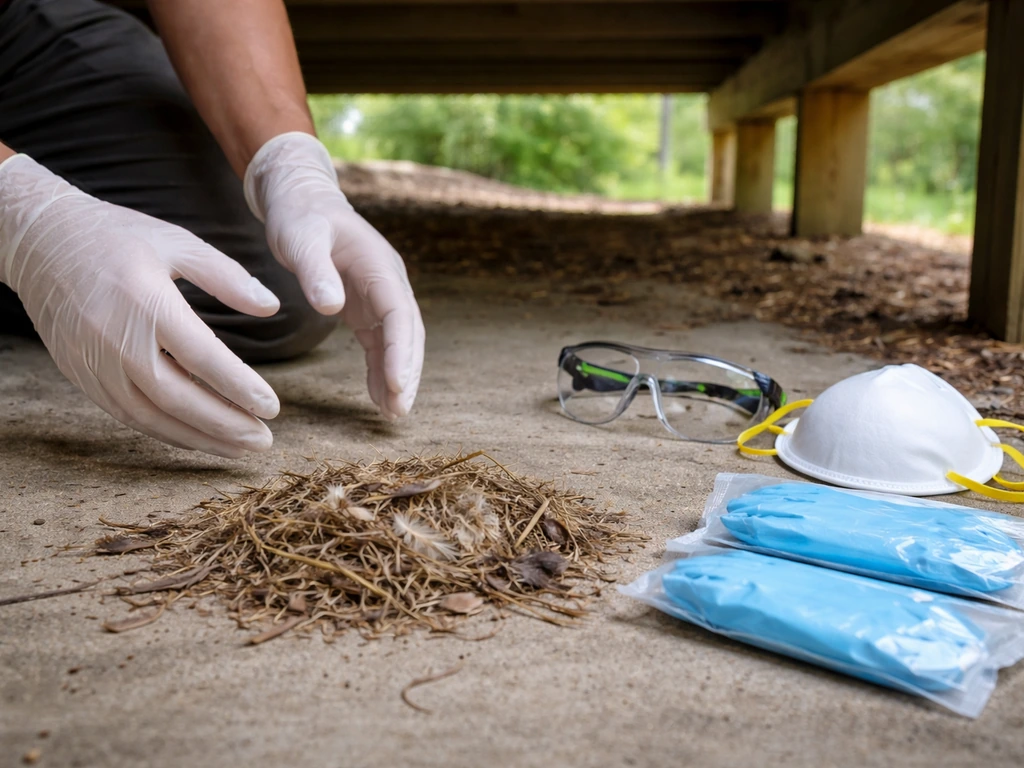
Once you're confident the nest is empty and birds are no longer returning to it, removal is straightforward. Here's the safest way to do it.
- Suit up with PPE before you touch anything. You need disposable gloves, a dust/nuisance respirator (N95 minimum), eye protection, and clothes you can wash or dispose of. Bird droppings can contain Histoplasma fungal spores, and you don't want to breathe the dust.
- Lightly dampen the nest with water from a spray bottle. This is the CDC/NIOSH recommended approach to suppress dust and aerosolized spores before you disturb any material.
- Place a plastic bag over your hand, grab the nest, and invert the bag around it. Seal it immediately.
- Double-bag the material and dispose of it in an outdoor trash bin.
- Spray the area with a disinfectant (a diluted bleach solution of 1 part bleach to 9 parts water works fine) and let it sit for several minutes before wiping down.
- Wash your hands thoroughly even after removing gloves.
When the nest is active but causing an urgent safety issue
If you have an active nest in a location that creates a genuine safety hazard, like directly above a deck stair handrail that must be used, your path is to contact the U.S. Fish and Wildlife Service or your state wildlife agency and explain the situation. FWS notes that nest removal permits are generally issued only when a nest poses a real human health or safety concern. A licensed wildlife rehabilitator can also assess whether eggs or chicks can be relocated to a foster nest nearby. Do not attempt this on your own.
What about deterrents while waiting?
If the nest is active, you cannot use deterrents or exclusion materials in a way that traps or harms birds or prevents adults from accessing eggs and chicks. Once the nest is vacated, deterrents become your best friend. More on that in the proofing section below.
Seal the deck so birds can't come back
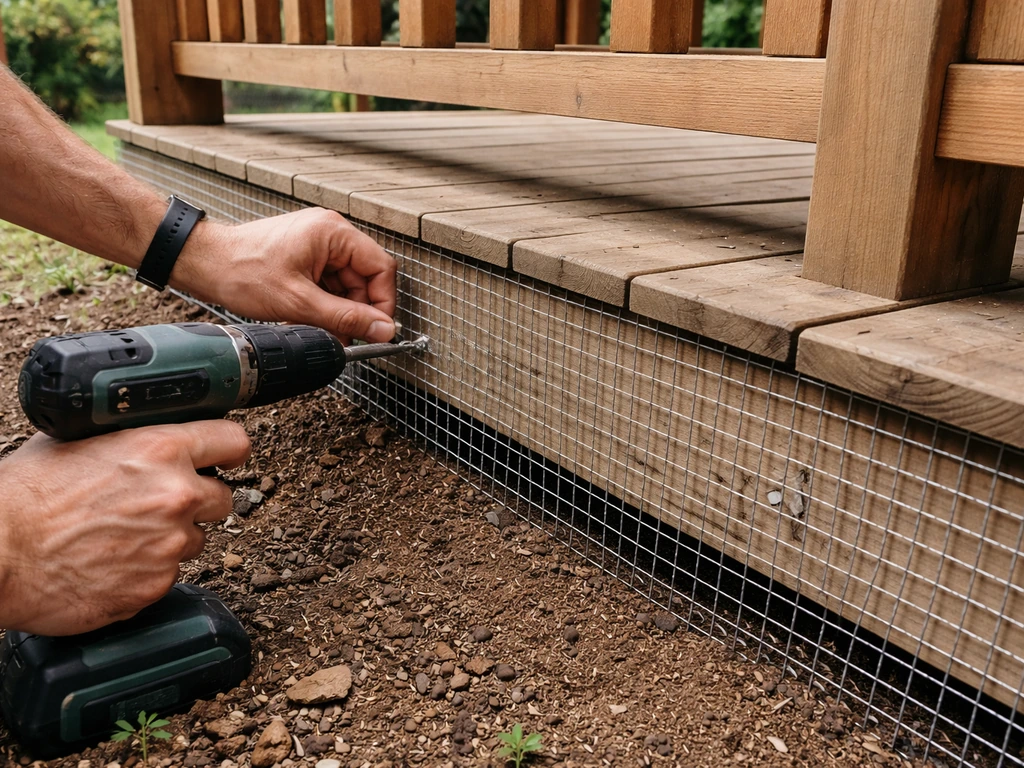
This is where you actually solve the problem long-term. If you're dealing with a bird nest on your porch, the same steps to wait for the nest to empty and then seal entry points will help you get rid of it safely how to get rid of bird nest on porch. Birds nest under decks because they find accessible gaps, ledges, and sheltered spaces. Your goal is to remove all of those opportunities before next nesting season, ideally in late fall or winter.
Find the entry and nesting points
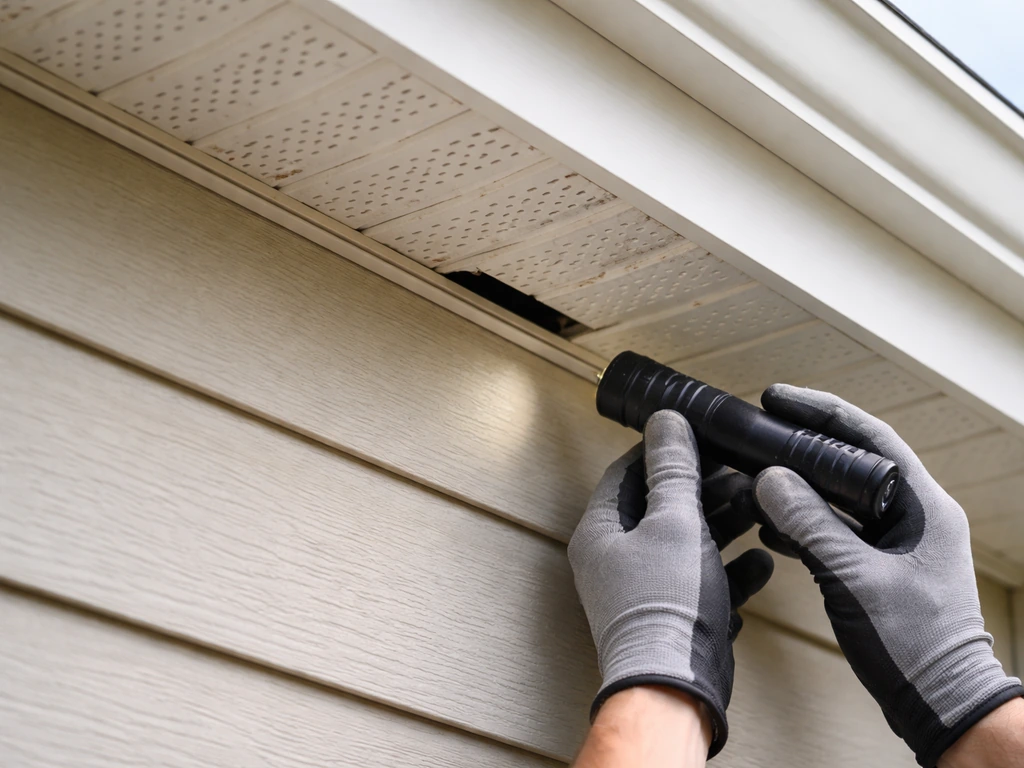
Get under or close to your deck and do a full inspection. You're looking for:
- Open gaps along the perimeter where the deck meets the house foundation or siding
- Spaces between deck boards and joists where birds can squeeze through to the underside
- Unscreened soffit vents or ventilation openings under the deck structure
- Gaps around pipes, conduit, or cables that penetrate the deck or house wall
- Horizontal ledges (beams, joists, rim boards) that provide a flat nesting surface
- Open lattice or decorative skirting with large enough gaps for birds to pass through
How to seal each problem area
| Problem area | Recommended fix | Materials to use |
|---|---|---|
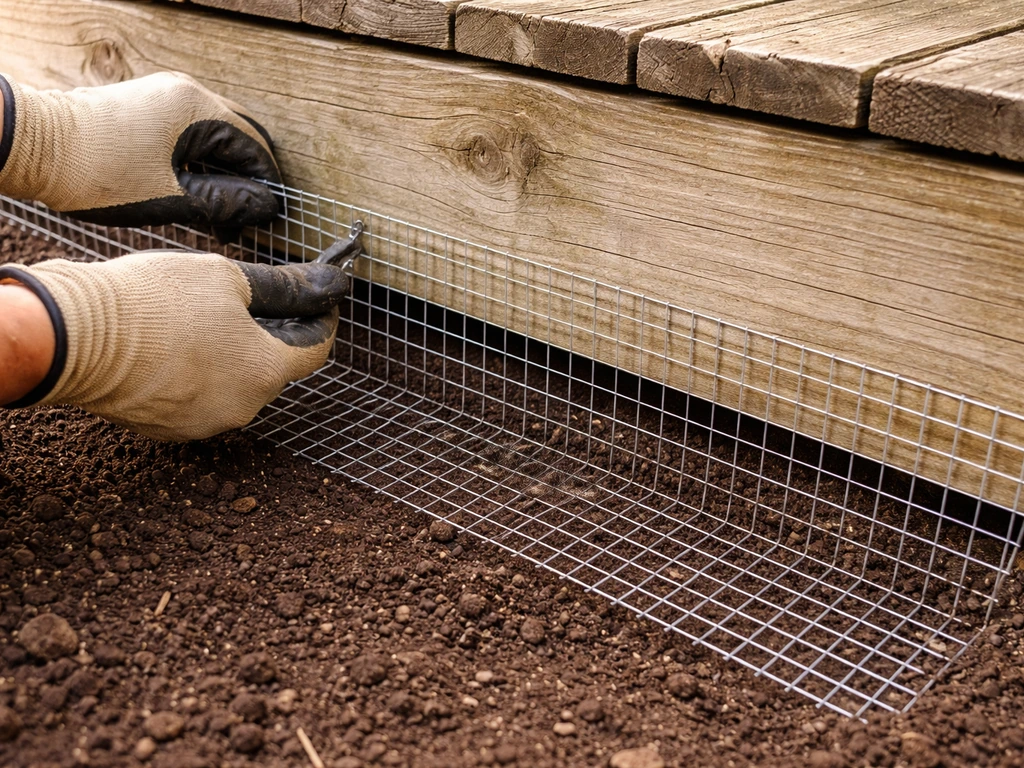
| Open perimeter gaps along the deck skirt | Install hardware cloth or welded wire mesh along the entire deck perimeter | 1/2-inch welded wire mesh (PVC-coated galvanized) stapled to framing |
| Soffit vents under the deck or eaves | Install fine-mesh vent screens rated for bird exclusion | 1/8-inch mesh soffit vent screens (e.g., HY-Guard or EZRvent style products) |
| Gaps around pipes and conduit | Fill with hardware cloth or heavy-gauge steel wool, then seal with exterior caulk | Galvanized hardware cloth + paintable exterior silicone caulk |
| Horizontal ledges and beam tops | Install physical deterrents to disrupt flat nesting surfaces | Bird spikes (for wide ledges), angle brackets to tilt surfaces, or bird slope panels |
| Open lattice skirting | Replace with smaller-mesh material or back the existing lattice with 1/2-inch bird barrier netting | Commercial bird barrier netting (1/2-inch mesh) |
| Gaps at the house wall/deck junction | Install a foam backer rod and exterior caulk for small gaps; use flashing + caulk for larger ones | Closed-cell foam backer rod, exterior-grade caulk or metal flashing |
For the perimeter mesh, dig a few inches into the soil and bend the mesh outward at a 90-degree angle before burying it. This L-footer design prevents birds (and other animals) from pulling the mesh back from the ground line. Secure the mesh to deck framing with galvanized staples or screws and washers every 6 inches.
A word on physical deterrents vs exclusion
Exclusion (closing off the space entirely) is always more effective than deterrents (making the space unpleasant). Visual deterrents like reflective tape, fake owls, and hanging CDs do deter birds temporarily, but birds adapt quickly. Physical exclusion with mesh or netting is the permanent solution. HY-C’s HY-GUARD EXCLUSION soffit vent screen uses tight mesh designed to exclude animals while still allowing ventilation. Use deterrents only as a supplement while you're completing the exclusion work.
Clean-up and repair after the birds are gone
Once the nest is removed and the area is sealed, you need to do a proper clean-up. Bird droppings under a deck can accumulate quickly, and the longer they sit, the greater the health risk from Histoplasma fungi and other pathogens.
Step-by-step clean-up
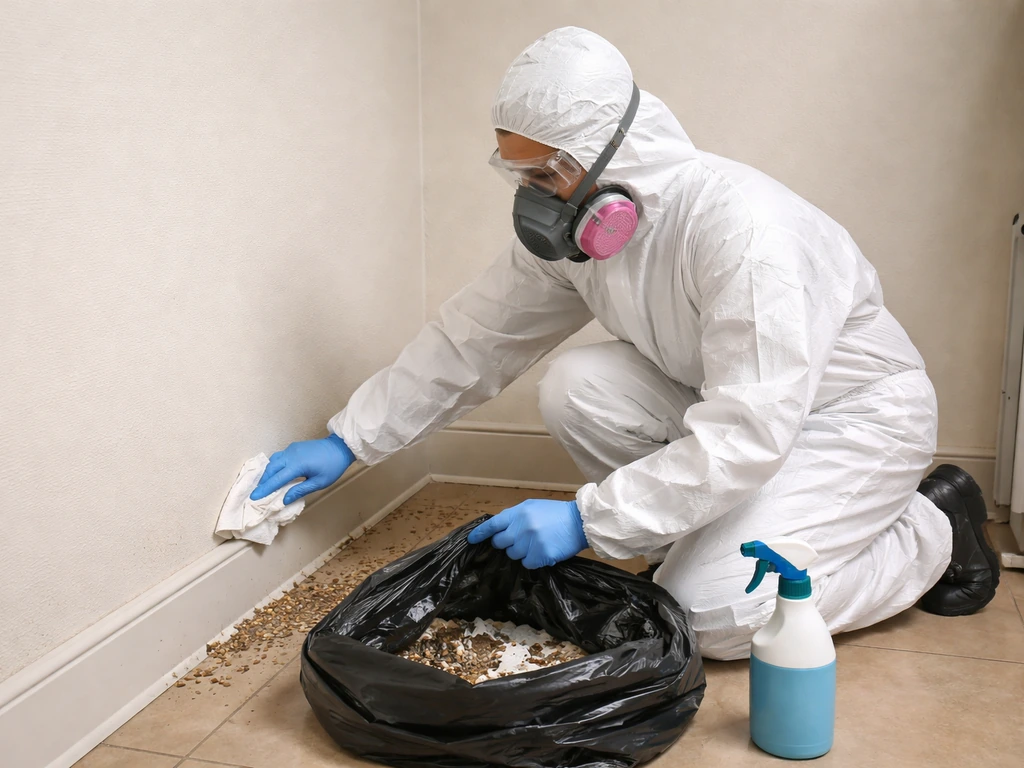
- Suit up again: N95 or P100 respirator, disposable gloves, eye protection, and old clothes or a disposable Tyvek suit. This is non-negotiable, especially for larger accumulations.
- Wet everything down with water or a diluted disinfectant spray before you start scraping or brushing. This prevents droppings from becoming airborne dust. NYSDOT guidance specifically recommends keeping scraped material wet throughout the process.
- Scrape or brush hardened droppings into a plastic bag. Work slowly and keep the material moist.
- Apply a disinfectant (1: 9 bleach solution or an EPA-registered disinfectant) to all soiled surfaces. Let it dwell for at least 10 minutes.
- Wipe or rinse surfaces and re-apply if the staining is heavy.
- For wood decking that has absorbed droppings, a deck cleaner containing oxalic acid or sodium percarbonate can help restore the surface. Rinse thoroughly after use.
- Check for any structural damage: rotted joists or framing caused by prolonged moisture from droppings. Probe the wood with a screwdriver. Soft spots need repair before you close up the perimeter.
- Bag all used PPE and soiled materials, double-bag, and dispose of in your outdoor trash.
For persistent odors from droppings or nesting material, an enzymatic odor eliminator (spray it on, let it soak in, and allow it to dry) works better than bleach alone. Bleach disinfects but doesn't break down the organic compounds that cause the smell. Products designed for pet odors work well here.
A long-term prevention plan so this doesn't repeat
Most birds start scouting nesting sites in late winter to early spring, often February through April depending on your region and the species. The single most effective thing you can do is complete your exclusion work in the fall or by late February, before scout birds arrive. If you wait until you see a bird carrying nesting material, you're already behind.
Seasonal maintenance checklist
| Season | Task |
|---|---|
| Fall (October–November) | Inspect all deck perimeter mesh and vent screens for damage or gaps. Repair or replace. Remove any old nesting material now while there's no risk of active nests. |
| Late winter (February) | Walk the perimeter again before birds return. Check that mesh is still secure and no new gaps have opened from frost heave or settling. |
| Early spring (March–April) | Watch for bird activity under the deck. If a bird is investigating but no nest is started yet, legal deterrents (reflective tape, physical barriers) can discourage nest site selection at this stage. |
| Late spring–summer | If nesting activity is detected despite your exclusion work, document species and dates. Do not disturb. Note entry points for post-season repair. |
| After nesting season (August–September) | Remove any nests that completed their cycle. Repair any exclusion materials that were bypassed. Upgrade mesh or barriers as needed. |
Some birds, like barn swallows and chimney swifts, are highly site-faithful, meaning they return to the exact same spot year after year. If your deck hosted a nest this year and you don't seal it before February, expect the same birds back in spring. Exclusion is the only reliable answer for repeat nesters.
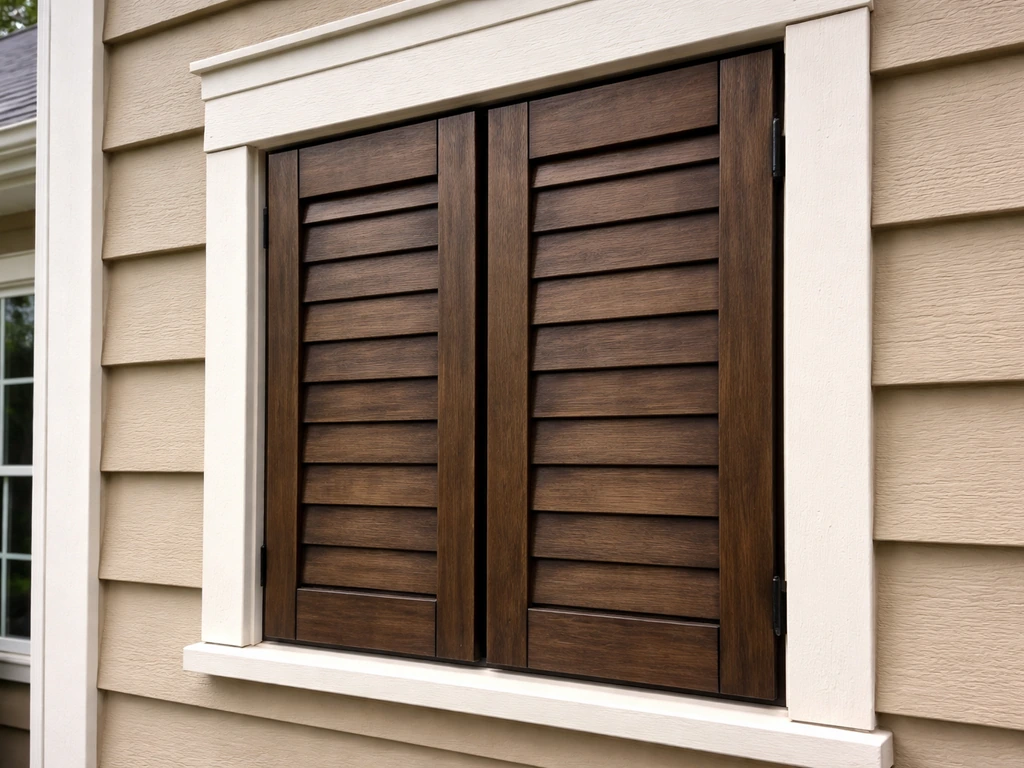
If you have nesting issues in other parts of your property, the approach for under-deck spaces is closely related to what works under porch eaves, behind shutters, in roof voids, and in wall cavities. If the nest is in a wall cavity instead of under a deck, the same principles apply for checking whether it is active, following the legal rules, and sealing the entry points afterward bird nest in wall. The same exclusion principles you use for under-deck gaps also apply when you’re dealing with how to prevent bird nests behind shutters. The exclusion materials and seasonal timing are largely the same across all of those locations.
When to stop DIYing and call a wildlife professional
Most under-deck nesting situations can be handled by a homeowner who's willing to follow the legal rules and do the exclusion work properly. But there are situations where you genuinely need professional help.
Call a professional if:
- You have confirmed a protected species with an active nest and it's creating a real health or safety problem that can't wait for fledging
- You're dealing with a large accumulation of droppings (more than a few square feet) that puts you at meaningful histoplasmosis risk without industrial PPE
- Birds have nested inside the deck structure itself (within the framing, not just under it) and accessing the nest requires demolition
- You've sealed the deck twice and birds keep finding new entry points, suggesting a structural problem you haven't located
- The nest is very high up or in a location that requires a ladder or fall protection equipment you don't have
- You suspect the nest belongs to a species with additional state-level protections beyond the MBTA
- The infestation involves dozens of birds (like a communal swallow colony), where individual removal is impractical
What to ask when you call
When you contact a licensed wildlife control operator or wildlife rehabilitator, have this information ready: the species (or your best guess), whether the nest is active, how long the birds have been there, and any photos you've taken. Then ask these questions directly:
- Are you licensed under state wildlife regulations and the MBTA for bird nest removal?
- Can you obtain an emergency FWS permit if the nest is active and a safety hazard?
- Do you offer exclusion work, or only removal? (You want both done in one visit.)
- What is the specific exclusion method you'll use under the deck, and what materials?
- Will you guarantee the work against re-entry for at least one season?
- What does the clean-up scope include, and do you use proper respiratory protection?
A good wildlife professional will be upfront about what they can and cannot legally do. Be wary of anyone who offers to remove an obviously active nest without mentioning the MBTA or a permit. That's a liability you don't want to share.
FAQ
How can I tell if the nest under my deck is active or already inactive before I do anything?
Look for eggs, chicks, or a parent bird repeatedly entering and leaving the exact opening. If you cannot confirm eggs or chicks but you see fresh droppings, new nesting material, or adults hovering at consistent times, treat it as active and wait. A nest that has been empty for several days and birds are no longer returning is more likely inactive, but you should confirm by observing from a safe distance.
What should I do if I find a nest with an egg but no birds are visible right now?
Do not assume it is abandoned. Viable eggs can be in a nest without a visible parent at every moment, especially if the bird is away for short periods. Keep people and pets away, wait, and reassess later. If you need to act quickly due to a safety hazard, contact your state wildlife agency or the appropriate federal authority to ask about a permit or supervised option.
Can I use deterrents like spikes, ultrasonic devices, or spraying repellents while the nest is occupied?
Avoid methods that could trap birds, block adult access to eggs or chicks, or harm wildlife when a nest is active. The article notes exclusion must wait until the nest is vacated, and deterrents should be only supplemental. If you are unsure whether a product could interfere with access, stop and proceed with observation and legal guidance instead.
Do I need to disinfect or clean the under-deck area after the nest is removed?
Yes, because droppings and nesting material can create health risks even after the birds leave. Use a thorough clean-up approach, not just removing the nest, and consider an enzymatic odor eliminator for persistent smells. Let treated areas dry fully and ventilate the space as much as possible.
How long should I wait after birds leave before removing the nest and sealing the area?
Do not seal immediately based on a single quiet day. Wait until you have clear evidence birds are no longer returning, then remove and clean, and only after that complete the sealing or install mesh. For site-faithful birds, a cautious “no returns for several days” approach is smarter than rushing, because they can quickly reoccupy if access remains.
What if the nest is near a deck stair, railing, or a doorway and I need access right away?
If it creates a real safety or access hazard, do not improvise exclusion while birds are active. Instead, contact the wildlife agency or the federal authority discussed in the article, explain the constraint, and ask whether a supervised removal or permit process is possible. A licensed wildlife rehabilitator can also advise on whether relocation is an option in your specific case.
Which birds are exempt, and can I remove nests year-round for those species?
House sparrows and European starlings are not protected under the Migratory Bird Treaty Act, so removal may be allowed at any time. Even so, some states add extra rules, so confirm locally before acting. Also, do not rely on exemption alone if you might be dealing with a protected species, since misidentification can create legal risk.
How do I prevent birds from nesting under the deck if the problem keeps returning?
Treat it as an exclusion and access problem, not a repellent problem. Inspect for all gaps, sheltered ledges, and entry points, then use the kind of mesh design described (including bending an L-footer section and securing it regularly) to stop animals from pulling materials back. Finish by sealing and completing exclusion before scout birds arrive, typically late winter to early spring.
Is it ever worth calling a pro, and what information should I have ready?
Call a licensed wildlife control operator or rehabilitator if the nest appears active, the location is hard to access safely, or you cannot confidently identify the species. Have your best guess of the species, whether the nest is active, how long it has been there, and photos showing the opening, nest placement, and any eggs or chicks. Also ask directly whether they will comply with the MBTA and permit requirements before they start.
What if the nest is in a shared or multi-unit property, like a townhouse or apartment deck?
Coordinate with the property manager or landlord before attempting any removal or repair. Shared structures often mean the entry points might be in common areas, and multiple parties may need to approve sealing work. Document what you see and request a wildlife-compliant plan, especially if the nest is active.