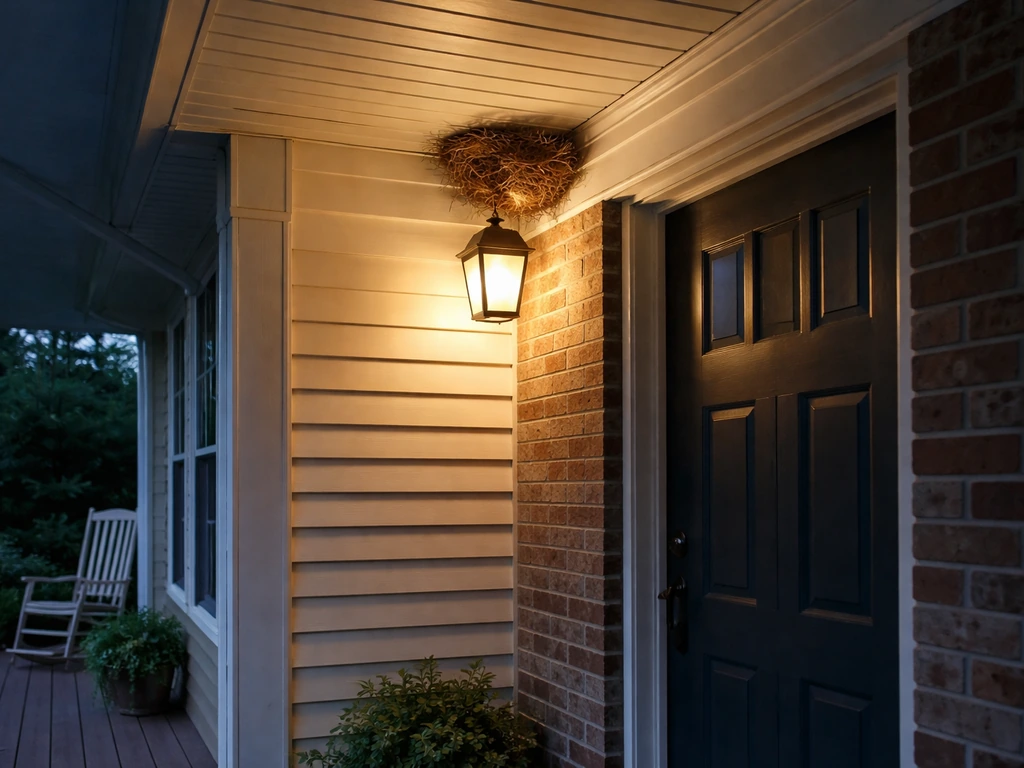
You can remove an abandoned bird nest from your roof or attic yourself, but only after confirming the nest is truly inactive and the species is not legally protected. If the nest is active (eggs or chicks present, or birds still coming and going), you almost certainly need to wait or get a permit before touching it.
How to Get Rid of a Bird Nest in Your Roof Safely

Maya Carver
26 Apr 2026
The Migratory Bird Treaty Act covers most common backyard and roof-nesting birds, making it illegal to disturb their nests, eggs, or chicks without authorization.
Get that part right first, then the physical removal is straightforward. To learn the safest, step-by-step way to get rid of a bird nest in a wall cavity, make sure the nest is inactive first and follow local legal requirements.
Quick safety check and immediate actions
Before you do anything else, run through this fast checklist. Roofs and attics carry real risks beyond the birds themselves: fall hazards, confined spaces, accumulated droppings, parasites, and sometimes structural damage that isn't obvious until you're standing on it.
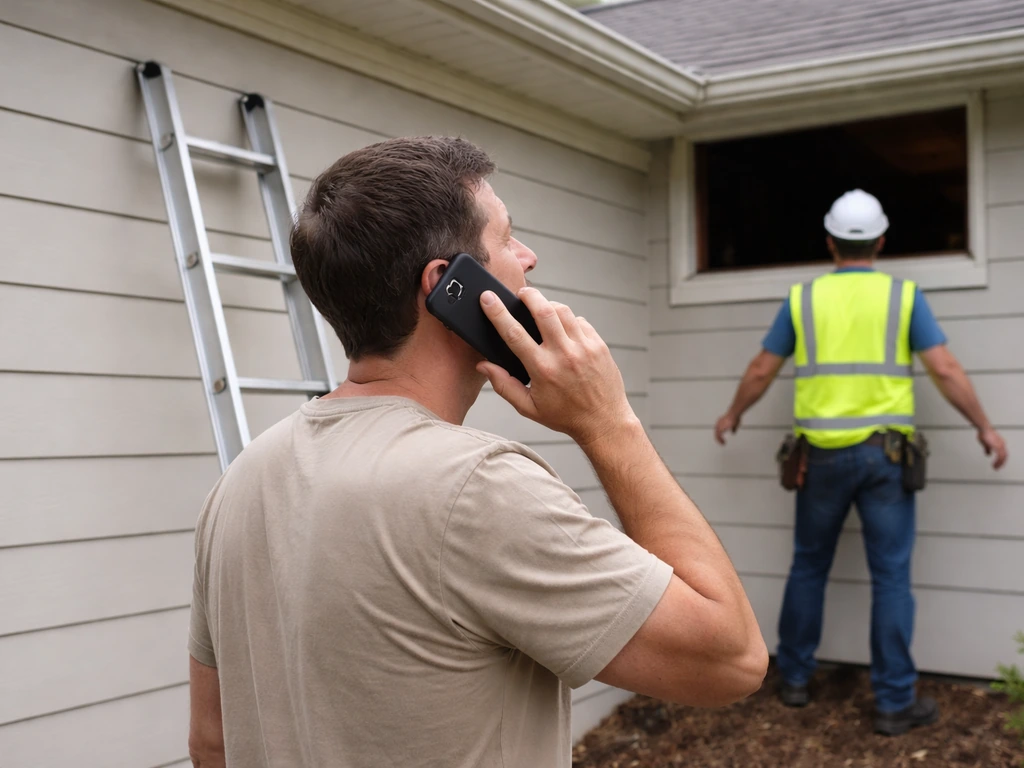
- Do not go on the roof alone. Have someone on the ground who can call for help.
- Wear slip-resistant footwear and use a properly rated ladder secured at the base.
- Put on an N95 or P100 respirator, nitrile gloves, and safety glasses before you get close to any nest or droppings.
- Do not disturb the nest yet. Just observe from a safe distance to figure out what you're dealing with.
- If birds are actively diving or defending the area, back off. A protective parent bird can cause you to flinch and lose balance on a roof.
- Block off ground-level entry points to your attic (vents, soffits) with a temporary mesh or board only if you're certain no birds are currently inside.
- If you see droppings piling up inside an attic space, close the HVAC registers in that zone temporarily to stop particles circulating through your home.
The goal of these first few minutes is to reduce your immediate exposure and gather information, not to solve the problem. Acting too fast is exactly how people end up on the wrong side of a federal wildlife law or in an emergency room.
Figure out what you're actually dealing with first
The single most important variable in this whole situation is whether the nest is active or abandoned. If you want to get rid of a bird nest on your porch, start by confirming whether it is active, then follow the same legal and safety steps before removal. Everything else flows from that answer.
Signs of an active nest
- Adult birds flying to and from the nest repeatedly (especially carrying food or nesting material).
- Visible eggs or chicks in the nest.
- Chirping or calling sounds coming from inside the nest structure.
- Fresh droppings directly below the nest that weren't there a few days ago.
- A parent bird sitting still on the nest for extended periods (incubating eggs).
Signs of an abandoned nest
- No bird activity near the nest for at least 2 weeks after the breeding season ends.
- The nest is visibly deteriorated, flattened, or weathered.
- No eggs or chicks present.
- Early spring (before nesting season begins) or late autumn through winter are the safest windows to act.
If you're unsure, wait and watch for a week. Take photos or short video clips from the same vantage point each morning. Pattern of activity (or no activity) will tell you what you need to know. When in doubt, contact your local wildlife agency before touching anything. In the U.S., most common roof-nesting birds (starlings, pigeons, house sparrows) have different protections than migratory songbirds, but never assume. The Migratory Bird Treaty Act covers a wide range of species, and heavy fines can apply for disturbing a protected nest.
Removing a nest from a roof: step by step
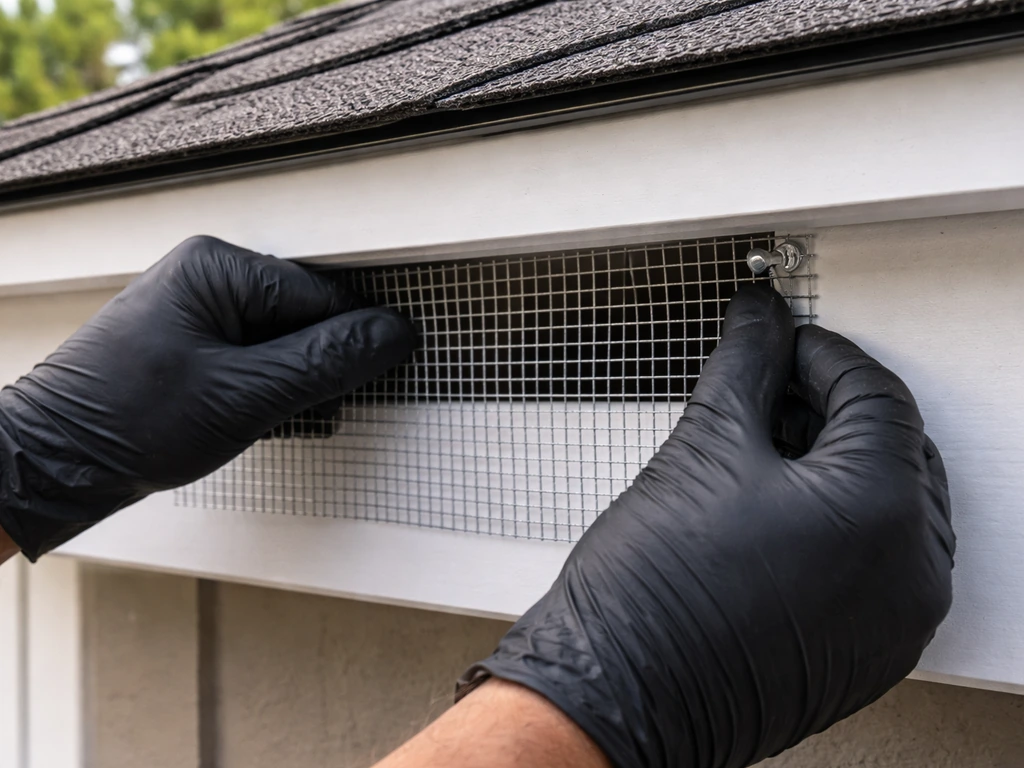
Once you have confirmed the nest is abandoned and the species is not protected (or you've received the appropriate authorization), here's how to do the removal safely and cleanly.
What you'll need
- N95 or P100 respirator
- Nitrile or heavy rubber gloves
- Safety glasses or goggles
- Disposable coveralls or clothes you can wash immediately afterward
- Heavy-duty garbage bags (double-bag the nest material)
- A stiff brush or small broom
- A spray bottle with a diluted bleach solution (1 part bleach to 10 parts water) or an enzyme-based cleaner
- A stable, properly rated extension ladder
- A helper on the ground
The removal process
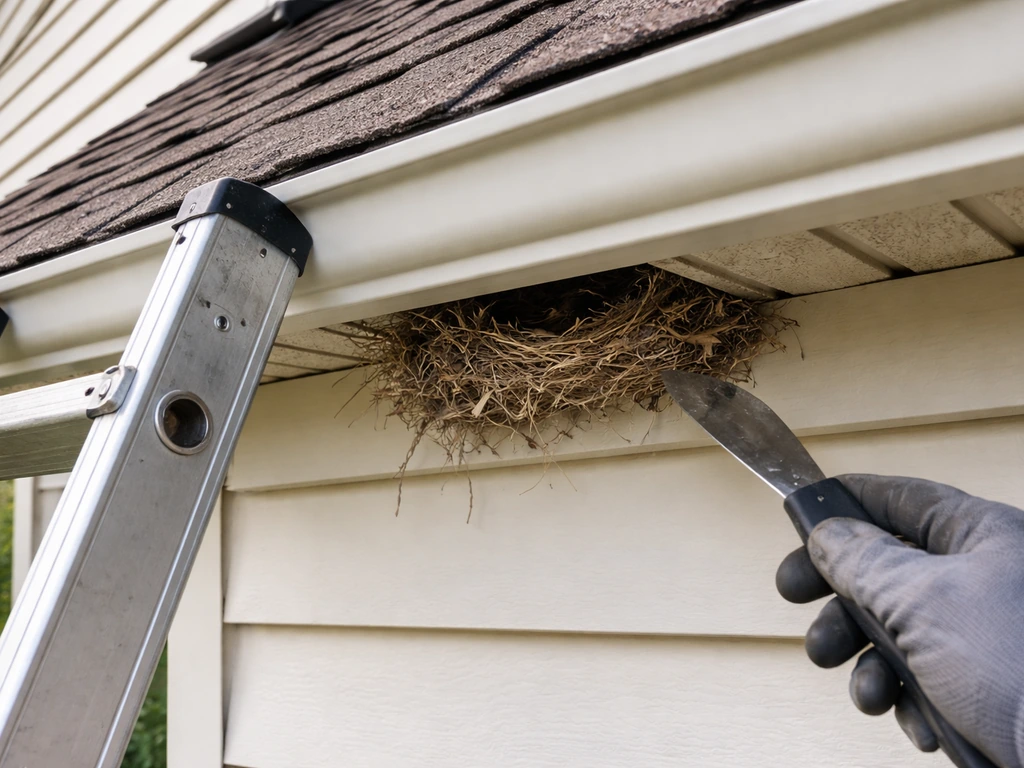
- Suit up fully before you climb. Gloves, respirator, and glasses go on before you touch the ladder.
- Approach the nest slowly and quietly. Even an apparently abandoned nest can occasionally have a late-season bird sheltering in it.
- Lightly mist the nest material with your diluted bleach or enzyme solution. This dampens the dust and reduces the amount of dried fecal matter and parasites that become airborne when you disturb the nest.
- Scoop or pick up the nest in one piece if possible and seal it immediately into the first garbage bag. Double-bag it and tie it off.
- Brush the surface where the nest sat, collecting any loose debris into the bag.
- Spray the area again with your cleaning solution and let it sit for at least 5 minutes before wiping or rinsing.
- Check the roof surface beneath and around the nest location for damage: soft spots in the decking, cracked or dislodged shingles, or gaps in flashing. Birds often exploit or create these vulnerabilities.
- Bag all brushes and any disposable equipment. Seal the bag and wash your hands thoroughly before removing your respirator.
Nests on gutters, under eaves, or in roof valleys follow the same basic process, but access can be trickier. If the nest is at a height or pitch where you need to lean out over the roof edge to reach it, stop and hire someone with the right equipment. A fall is not worth it.
Removing a nest from an attic: step by step
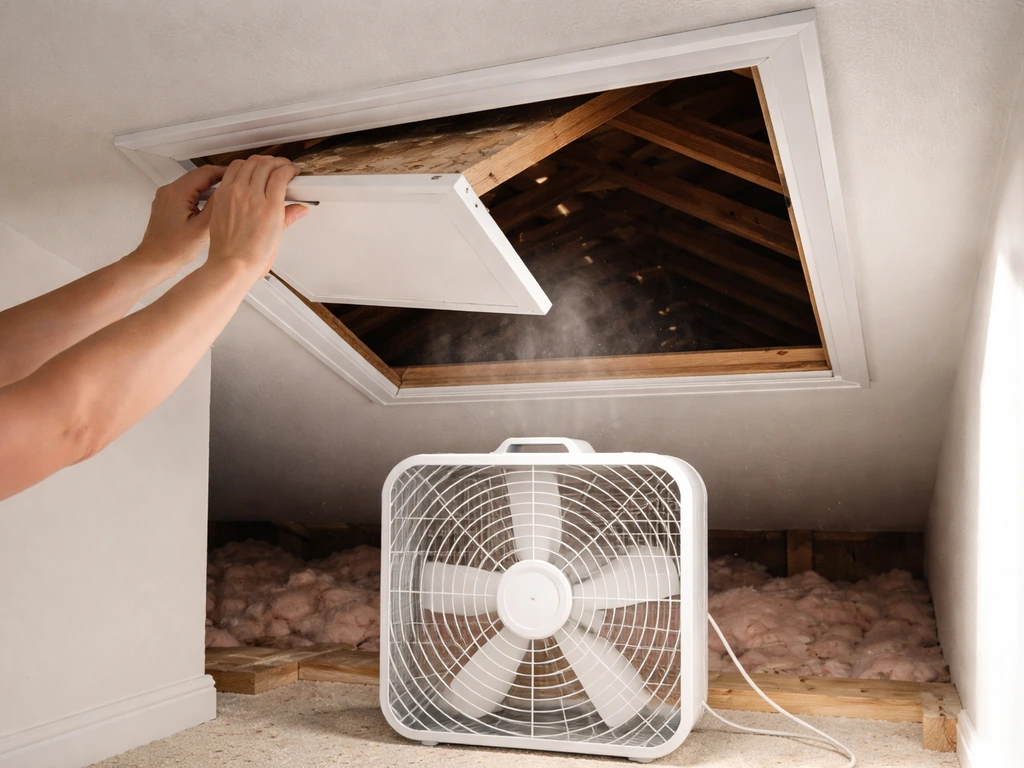
Attic nests come with extra complexity: limited light, confined spaces, insulation that traps contaminants, and sometimes a large accumulation of droppings from a colony that's been there for months. This is the scenario most likely to need professional help, but here's how to handle it if the situation is manageable.
Before you go in
- Open the attic access hatch and let fresh air move through for at least 15 minutes before you enter. Use a box fan at the opening to push air out, not in.
- Wear your full PPE including the respirator. Attic air with old droppings can carry Histoplasma capsulatum (histoplasmosis) and other fungal or bacterial hazards.
- Bring a high-lumen flashlight or headlamp, not just a phone light.
- Step only on joists or on a board spanning the joists. Never step on insulation between joists; you could go through the ceiling.
- Have someone wait below with a phone in case you need assistance.
The attic removal process
- Locate all nests and note the entry/exit points the birds used to access the attic. You need to seal these after removal.
- Mist each nest with diluted bleach or enzyme cleaner before touching it, just as you would on the roof.
- Remove the nests and bag them immediately. If there is heavy fecal accumulation on insulation, that contaminated insulation needs to come out too and should be bagged separately.
- Brush and spray the rafters and decking surfaces where nests were attached.
- Bag and remove all waste materials before you do anything else. Do not leave bags sitting open in the attic.
- Once the space is clear, assess the insulation. If it's heavily contaminated, plan for full replacement rather than just cleaning.
- Identify every gap, crack, or opening larger than about half an inch that birds could use to enter. Mark them with tape so you can seal them once you're back at ground level.
If you find droppings covering a large area (more than a few square feet) or the insulation is heavily saturated with waste, this job has crossed into professional remediation territory. Histoplasmosis is a real respiratory illness caused by fungal spores in bird droppings, and large-scale attic contamination is a genuine health hazard that a standard N95 is not enough to handle safely.
Cleaning up safely after removal
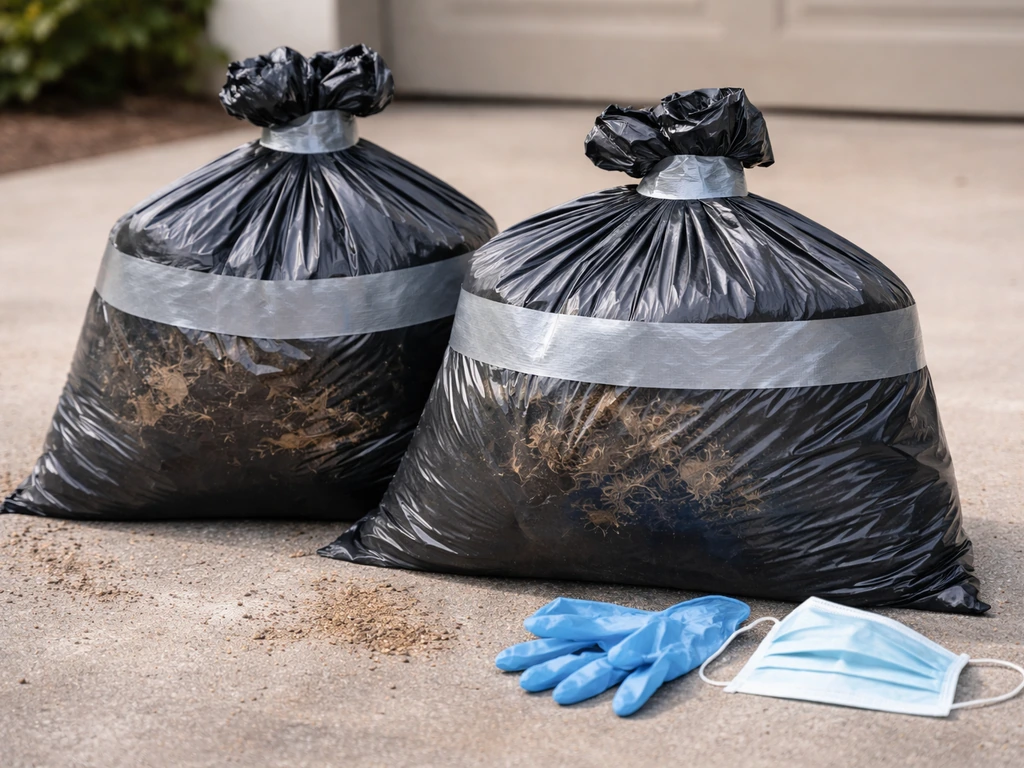
Cleanup is not optional and not just cosmetic. Bird nests and droppings carry mites, lice, ticks, bacteria (including Salmonella), and fungal spores. Do this right and you avoid bringing any of that into your living space.
- Double-bag all nest material and droppings and seal the bags. Dispose of them in your outdoor trash, not an indoor bin.
- Wash all reusable tools with hot water and a disinfectant solution. Let them dry completely.
- Strip off coveralls or contaminated clothing outside and place directly into a plastic bag or take straight to the washing machine on a hot cycle.
- Shower and wash your hair before sitting on furniture or handling food.
- Spray the removal area (roof surface, rafters, or gutter) with an enzyme-based cleaner or diluted bleach and let it air-dry. Enzyme cleaners are particularly good at breaking down organic material that can attract birds back to the same spot.
- Inspect for mites. Bird mites can migrate from an abandoned nest into your living space, especially through attic access points. If you notice tiny crawling insects near light fixtures or along walls in rooms below the attic, treat with a residual insecticide rated for mites.
Stop birds from coming back: proofing your roof and attic
Removing the nest without sealing the entry points is just an invitation for the birds to rebuild. If you want the specific process for getting rid of the nest, start by identifying whether it is active or abandoned Removing the nest. Birds are persistent and often return to the same location year after year. Here's how to make your roof and attic genuinely uninviting. Wildlife Illinois also recommends covering inside vents with 1/2-inch x 1/2-inch mesh hardware cloth as part of bird exclusion and home prevention measures blank" rel="noopener noreferrer">proofing your roof and attic.
Seal every gap and opening
- Cover all roof vents, ridge vents, and soffit vents with heavy-gauge galvanized hardware cloth (half-inch mesh or smaller). Plastic mesh degrades in UV light and birds can push through it.
- Repair or replace damaged fascia boards and soffits. Rotted wood is easy for birds to excavate.
- Seal gaps around pipes, conduit, and cables entering the roofline with copper mesh (steel wool rusts) packed tightly, then sealed with a durable caulk or foam rated for exterior use.
- Check the junction of the chimney and roofline. Gaps in flashing here are a common attic entry point.
- Install chimney caps on any uncapped flues.
Make flat and ledge surfaces less attractive
- Install bird spikes (stainless steel, not plastic) on horizontal surfaces, gutters, and ridgelines where birds perch or nest. These are humane deterrents that physically block landing.
- Use bird slope panels or angled ledge covers on flat ledges under eaves so birds cannot get a flat surface to build on.
- Bird netting stretched over open areas under eaves or over gutter runs prevents birds from accessing those spaces entirely. This is especially effective for swallows and sparrows.
- Reflective tape or predator decoys (owls, hawks) provide some short-term deterrence but lose effectiveness quickly as birds habituate to them. Use them as a temporary supplement, not a long-term fix.
Timing matters
The best time to do all of this exclusion work is late autumn through late winter, before nesting season starts. In most of the continental U.S., songbirds begin scouting nesting sites from late February onward, and pigeons and starlings can nest year-round in warmer climates. If you seal entry points before birds establish a nest, you avoid the legal complications of active nests entirely. Plan an annual roof and soffit inspection every February as a standing maintenance task.
Quick comparison of exclusion methods
| Method | Best for | Effectiveness | Cost range | Notes |
|---|---|---|---|---|
| Hardware cloth (half-inch mesh) | Vents, soffits, gaps | High | Low | Long-lasting; use galvanized or stainless |
| Stainless steel bird spikes | Ledges, ridgelines, gutters | High | Moderate | Humane; avoid cheap plastic versions |
| Bird netting | Large open areas, eaves, gutter runs | High | Moderate to high | Must be secured tightly or birds get underneath |
| Angled ledge covers / bird slopes | Flat surfaces under eaves | High | Moderate | Works well paired with netting |
| Reflective tape / predator decoys | Open perching areas | Low to moderate | Very low | Short-term only; birds habituate quickly |
| Exterior-grade caulk and copper mesh | Small gaps and pipe penetrations | High | Low | Copper mesh doesn't rust; do not use steel wool |
When to call a wildlife professional (and why the law matters here)
The Migratory Bird Treaty Act is federal law, and it's not something to take chances with. It makes it unlawful, without a permit, to take, possess, or disturb migratory birds, their nests, or their eggs. This covers a huge range of common species including robins, swallows, sparrows (native species), wrens, and many others. Pigeons (rock doves), European starlings, and house sparrows are generally not protected under the MBTA, but every other species you're likely to encounter on a roof or in an attic may be. Fines for violations can be significant.
Call a licensed wildlife removal professional or contact your state wildlife agency when:
- The nest is active (eggs or chicks present) and the species is protected. A professional can help you determine whether a depredation permit or an exception applies.
- You cannot safely access the nest location. Steep roofs, high peaks, or confined attic spaces with no safe footing are not DIY territory.
- The attic shows large-scale contamination (heavy droppings covering significant insulation area). This is a biohazard remediation job, not a cleanup job.
- You find a nest from a raptor (hawk, owl, osprey) or any bird you cannot positively identify as an unprotected species.
- The birds have caused structural damage (chewed wiring, compromised insulation, water intrusion) that requires professional repair alongside exclusion.
- Birds keep returning despite your exclusion efforts and you cannot find the entry point.
When you call, be ready to describe the bird species if you know it, the location of the nest (roof surface, under eave, inside attic, chimney), whether the nest is active or abandoned, and any visible structural damage. The more detail you give, the faster they can assess the situation and tell you what's possible.
If you're dealing with nests in other locations around the building, the access and legal considerations shift somewhat. Nests tucked behind shutters, on a porch, inside a wall cavity, or under a deck each come with their own access and exclusion challenges. For bird nests on a porch, follow the same active-versus-abandoned checks first, then remove only after you confirm it's safe and allowed. The legal rules are the same everywhere, but the physical approach differs.
If you are still trying to decide the right approach for your specific case, see this guide for how to remove bird nest from house safely and legally how to remove bird nest from house safely and legally, using the active versus abandoned checks first (related guide). Sorting out the attic or roof first makes sense before tackling those secondary locations, since birds entering through the roof often create nests in multiple spots.
What to do if problems keep coming back
If birds return to the same spot after you've removed a nest and done exclusion work, run through this troubleshooting checklist before calling for help.
- Check whether you missed an entry point. Birds finding a way back in almost always means there's a gap you didn't seal. Walk the roofline from ground level with binoculars before going up.
- Check whether your exclusion materials have failed. Hardware cloth can pull away from soffits if not properly fastened. Bird spikes can shift or fill with debris that gives birds a flat surface again.
- Confirm you eliminated residual scent. If nest material or droppings were left behind, the scent attracts birds back. Re-clean the area with an enzyme-based cleaner.
- Consider timing. If you're noticing renewed interest in the spring, birds may be scouting but not yet committed. Add deterrents now before they build.
- If you cannot find how they're getting in, hire someone to do a full roof and soffit inspection. A second set of eyes, especially from someone with a drone or thermal camera, often finds what ground-level inspection misses.
FAQ
How can I tell if a roof bird nest is truly abandoned, not just temporarily empty?
Before you remove anything, confirm you can see the birds using the site at least twice over different times of day. A nest that looks empty in the morning can still be active later, especially with house sparrows and pigeons that may come and go quickly. If there is any uncertainty, treat it as active and delay removal until you can verify inactivity.
What should I do if I find eggs or chicks in the roof nest?
If you find eggs or tiny chicks, do not attempt “relocation” or DIY removal. Your next step should be to contact your state wildlife agency or a licensed wildlife remover promptly, and ask whether a permit or specific exemption applies for that species and location. Moving eggs is often where violations happen.
Is it still safe to remove a roof nest if it is near a chimney, vents, or wiring?
If the nest is on or near a chimney, powered vents, or electrical runs, the risk often becomes more about safety and building systems than wildlife. Do not use ladder extensions or pressure washing to dislodge debris. Instead, arrange professional access, and ask them to include a debris containment and post-cleanup plan.
Do I remove the nest first, or should I seal entry points first?
If you need a quick decision aid, use this rule: if the site is active, wait or get authorization. If it is inactive, proceed with removal only when you can also complete exclusion (sealing entry points) right after removal. Stopping after the nest comes out but before sealing allows immediate reinfestation.
What’s the risk level if there is lots of droppings or droppings in insulation?
Do not rely on a basic paper mask, dust mask, or a loose-fitting respirator when there is heavy droppings. For large droppings areas, you need respiratory protection rated for fine particulates and a cleanup approach that minimizes dust. If the droppings cover more than a small patch or the insulation is saturated, treat it as remediation territory and call a professional.
What should I do if birds return to the same roof spot after removal?
If birds keep returning after you remove the nest, the most common cause is incomplete exclusion, not bird stubbornness. Re-check for small gaps around soffits, fascia, eaves, ridge vents, and roofline penetrations, then confirm no birds are still actively nesting in a hidden cavity nearby (like within soffit voids).
What if I cannot identify the bird species from my roof?
If you cannot identify the species confidently, do not proceed on “probably not protected” assumptions. Take clear photos from a safe distance and note size, color pattern, and the entrance location, then contact your local wildlife agency for guidance on legal status and next steps.
When is the best time to do exclusion work on a roof to prevent future nests?
For exclusion, the timing matters. The safest window is late fall through winter in many regions, but also ensure nesting season has not already started for the species you have. If you still see any courtship or carry-in activity, pause sealing and re-verify inactivity first.
What should renters do if they find a bird nest on the roof or in an attic?
If you have renters, share the location and photos with the landlord or property manager immediately, and do not attempt removal that could disturb an active nest. Many rental agreements require property owners to handle wildlife and exterior maintenance, and it also keeps you aligned with permit or professional remediation responsibilities.
Next Article
How to Get Rid of Bird Nest on Porch Safely
Humane, safe steps to remove an active or unwanted bird nest from your porch or porch light and prevent return.