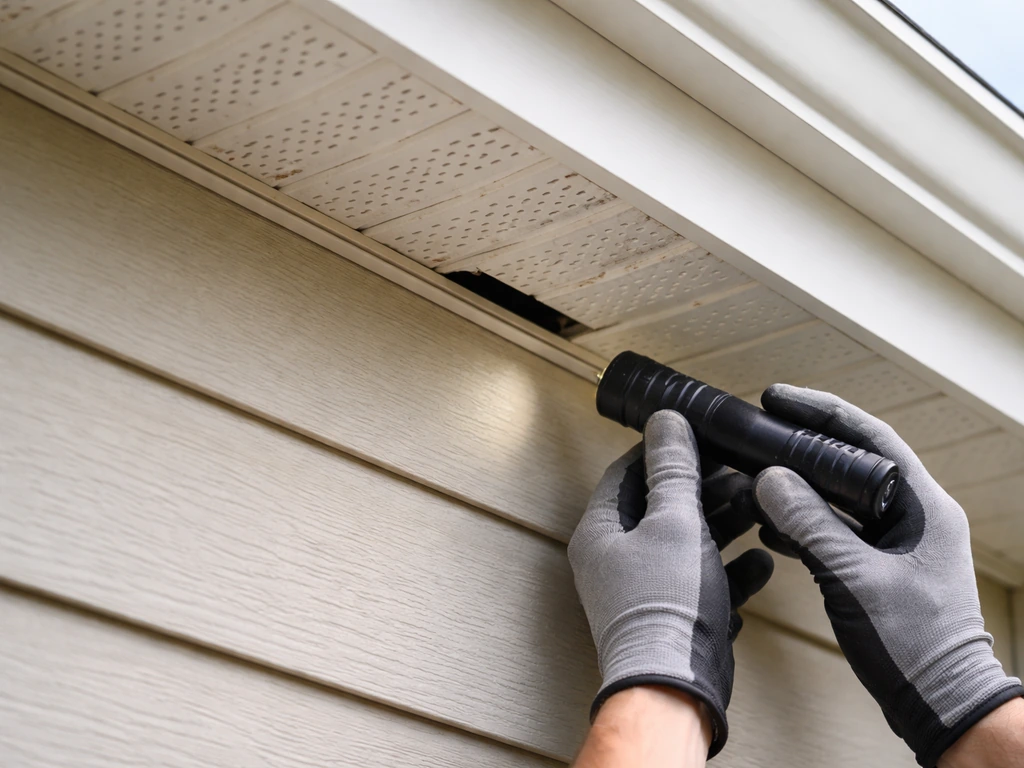
You can remove a bird nest from a window area, but only if it's inactive and contains no eggs or live chicks. If the nest is active, federal law in the U.S. (the Migratory Bird Treaty Act) makes it illegal to disturb or destroy it without a permit. So before you touch anything, take two minutes to confirm what you're dealing with. If the nest is empty and the season is over, removal is straightforward and something most homeowners can do safely with basic PPE and the right cleanup steps.
How to Get Rid of Bird Nest in Window Safely

Maya Carver
8 Jun 2026
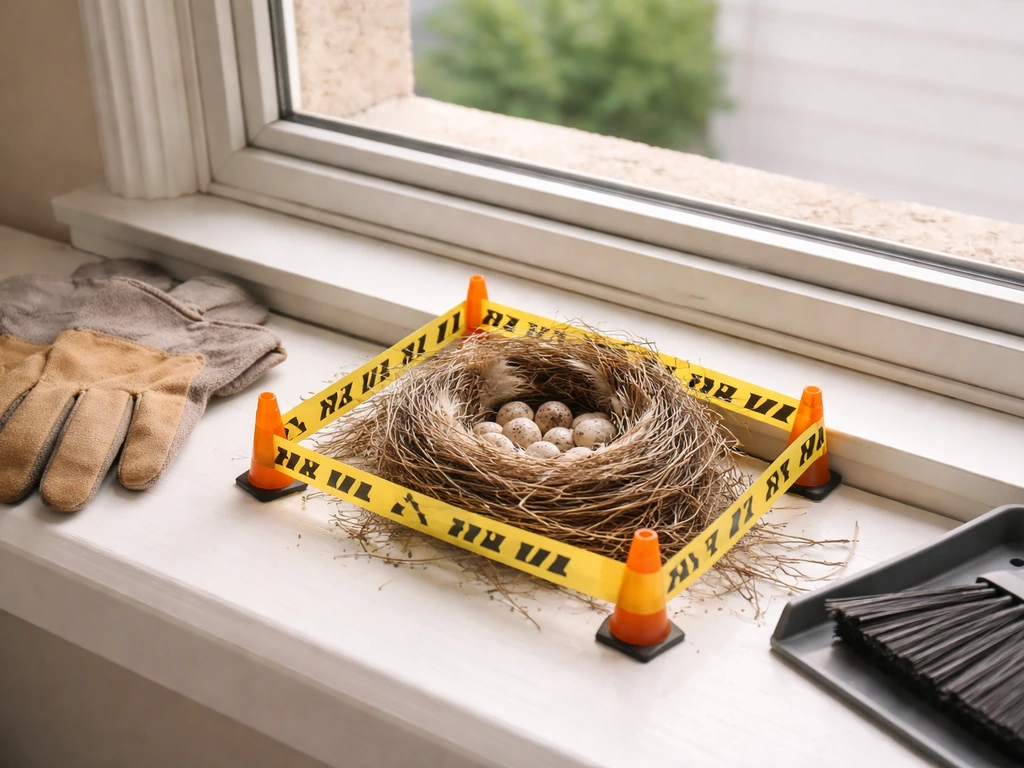
First: Handle the immediate risks
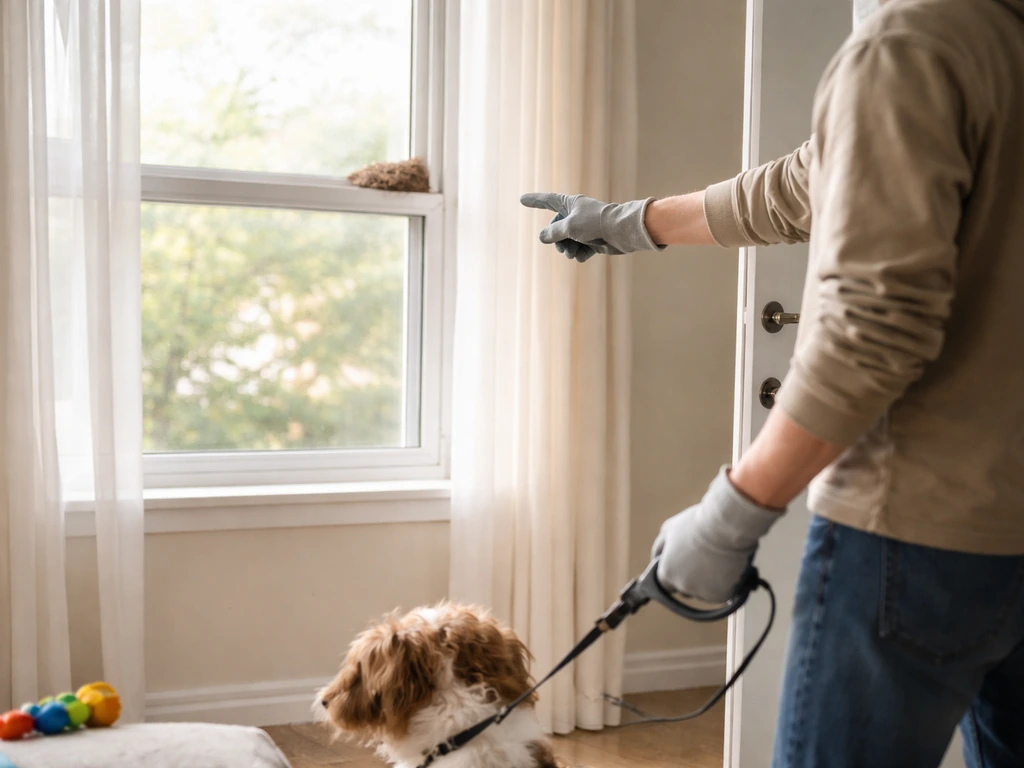
Whether you're dealing with a nest on a window sill, tucked into a window frame, or wedged into a track, a few hazards need your attention right away before any removal happens.
- Keep children and pets away from the window area until you've assessed the situation. Adult birds (especially robins, sparrows, and starlings) will dive-bomb anyone who gets close to an active nest.
- Don't open or close the window if a nest is inside or directly against the frame. Doing so can crush eggs, trap a bird, or dislodge the nest and scatter debris inside.
- Don't touch droppings barehanded. Bird droppings can carry pathogens including the fungus that causes histoplasmosis. Treat any accumulation as a biohazard until you've put on proper PPE.
- If the nest is blocking a window you need for ventilation or egress, document the situation and call a wildlife removal professional rather than forcing the issue.
- Note whether the nest is on an upper story window. Working at height adds fall risk on top of everything else. If you need a ladder, have a second person hold it.
Active nest or abandoned? How to tell before you act
This is the most important step in the whole process. Getting it wrong can mean breaking federal law or harming wildlife you didn't intend to disturb. The Migratory Bird Treaty Act protects the vast majority of wild bird species found in the U.S., and it explicitly covers nests that contain eggs or dependent young. Violation can mean serious penalties, so you need to be confident about the nest's status.
The tricky part is that a quiet nest doesn't mean an abandoned one. According to NestWatch (Cornell Lab of Ornithology), parent birds sometimes visit the nest only once a day, especially during incubation. If you've watched for an hour and seen no activity, that tells you almost nothing. You need to observe over a longer window, ideally across multiple days and at different times of day.
Here's how to assess the nest status reliably:
- Look for eggs or chicks without touching the nest. Use a flashlight or your phone camera if the nest is in a tight spot. Visible eggs or moving chicks mean the nest is active, full stop.
- Watch for adult bird activity over at least two to three days. If adults are regularly coming and going with food or nesting material, it's active.
- Check for structural decay. An old nest that has weathered through winter (dried out, matted, falling apart) is a stronger indicator of inactivity than simply not seeing a bird.
- Consider the season. During spring and summer (roughly March through August in most of the U.S.), assume any intact nest could be active unless you have clear evidence otherwise. Fall and winter nests with no eggs are much more likely to be abandoned.
- If you genuinely cannot tell, contact your local U.S. Fish and Wildlife Service office or a licensed wildlife rehabilitator for guidance before you do anything.
The nesting cycle runs through distinct stages: nest building, egg laying, incubation, nestling, and fledgling. The Fish and Wildlife Service advises treating a nest as active until you are confident it has reached a successful or failed endpoint, and that even then, some caution is warranted because species biology varies. When in doubt, wait it out.
Removing the nest safely and humanely
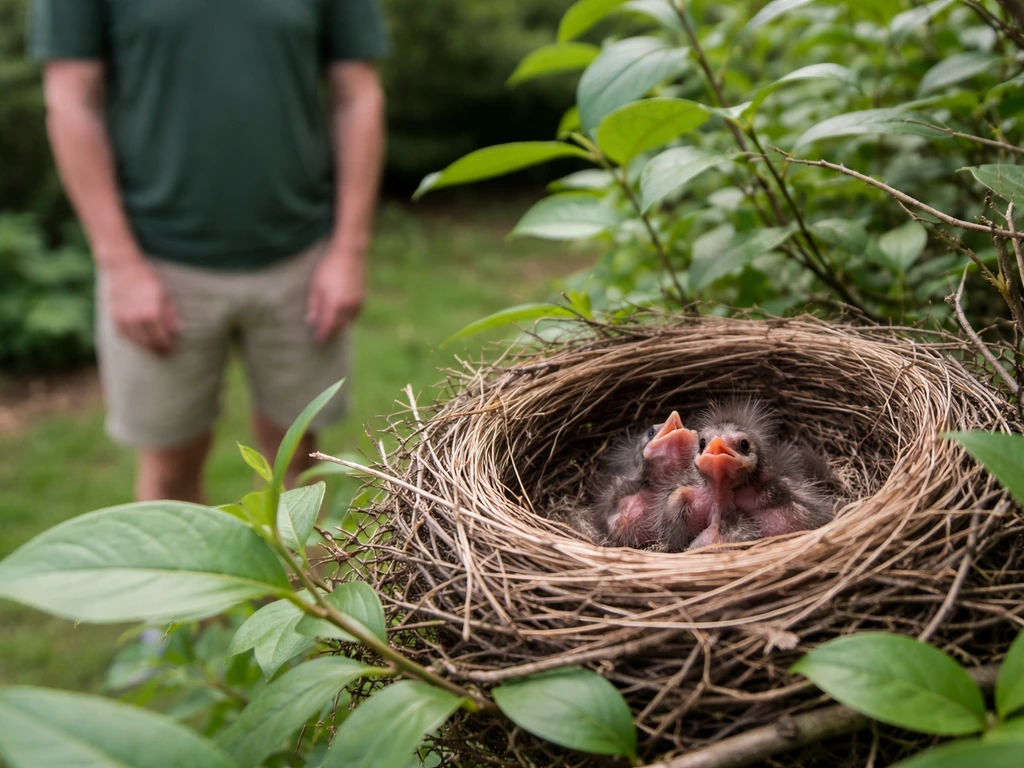
If the nest is active (eggs or chicks present)
Do not remove it. Wait. This is non-negotiable if you want to stay on the right side of the law and do right by the birds. Most songbird nesting cycles from egg-laying to fledging run about four to six weeks total. It will be over sooner than it feels like it will. Once the young have fledged and left, you can remove the nest and then immediately seal up the area so it doesn't happen again next season. Once the young have fledged and left, you can remove the nest and then immediately seal up the area so it doesn't happen again next season, which is the same practical approach behind most roof-focused guides like how to get rid of a bird nest in roof. If you are trying to figure out how to get rid of a bird nest in a wall, the same timing rules apply: wait until it is fully empty and then seal the area how to get rid of bird nest in wall.
If the nest is inactive (confirmed empty, season has ended)
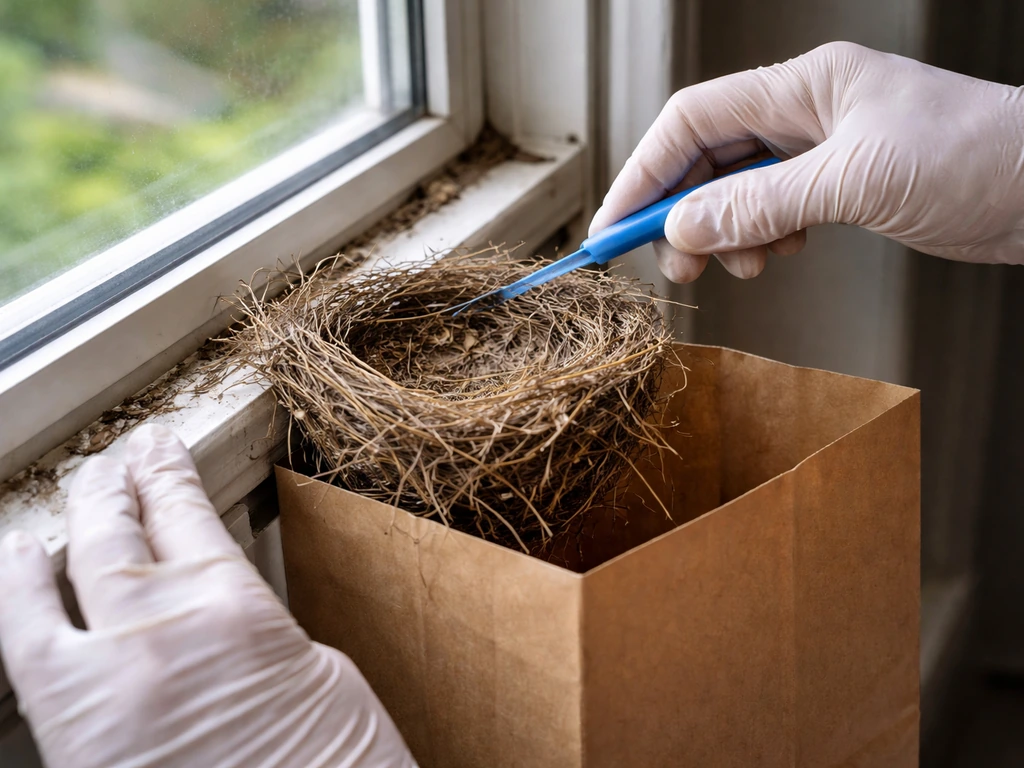
Mass Audubon recommends waiting until fall or winter to remove nests from buildings. This timing aligns well with legal requirements and practical safety: once leaves drop, you can also see nest locations much more clearly without risking disturbance. Here's how to remove the nest once you're confident it's safe to proceed: Once you have confirmed the nest is inactive, this is the part of the process that answers how to remove bird nest from house safely and humanely how to remove a bird nest from house.
- Put on your PPE before touching anything: disposable gloves, an N95 or P100 respirator, safety glasses, and clothes you can launder or bag afterward.
- Lightly mist the nest and surrounding area with water mixed with a small amount of disinfectant. Wetting the material before disturbing it drastically reduces the amount of dust and dried debris that becomes airborne.
- Use a stiff plastic scraper or disposable trowel to dislodge the nest. Work slowly so debris doesn't scatter into window tracks or inside the building.
- Place the nest directly into a heavy-duty plastic bag. Seal and double-bag it. Dispose of it in your outdoor trash, not compost.
- Wipe down the window sill, frame, and surrounding surfaces with a disinfectant appropriate for porous and non-porous materials. Rinse and allow to dry completely.
- Inspect the area for any remaining debris in tracks, weep holes, or gaps. Clean those out as part of the same session.
Cleaning up droppings safely
Bird droppings are a genuine health concern, not just a nuisance. The CDC warns that disturbing dried droppings can release fungal spores that cause histoplasmosis, a respiratory illness that can be serious in people with weakened immune systems. The same concern applies when cleaning up areas near nests in window locations.
For small to moderate accumulations (a typical window sill situation), you can manage cleanup yourself with the right protection. For large or heavily concentrated deposits, the CDC explicitly recommends hiring a professional hazardous waste removal company. If you're looking at years of buildup under eaves or in a deep window well, that's a call-a-professional situation. Follow the step-by-step droppings cleanup procedure used by an institutional EHS office, including appropriate controls and workflow practices blank" rel="noopener noreferrer">institutional EHS office droppings cleanup procedure. In some cases, can pest control remove bird nest safely? A professional pest control team can help with bird exclusion and cleanup planning professional hazardous waste removal company.
DIY cleanup: gear and process
- Wear an N95 respirator at minimum. A P100 half-face respirator offers better protection if you have one.
- Put on disposable nitrile or rubber gloves, safety glasses, and a disposable coverall or old clothing you'll wash immediately.
- Never dry-sweep or use compressed air on droppings. Both methods launch contaminated particles into the air.
- Wet the droppings thoroughly before touching them. Use a spray bottle with a 10% bleach solution or a commercial disinfectant.
- Scoop wet material into a sealed plastic bag using a disposable scraper or paper towels. Double-bag and dispose in outdoor trash.
- Wipe the surface again with disinfectant and let it air dry.
- Wash your hands thoroughly with soap and water after removing gloves. Launder any clothing worn during cleanup separately.
If the droppings have accumulated in a window track or behind a window frame and you can't reach them easily, don't dig around without proper airflow. Open adjacent windows or work from outside, and use the same wet-before-disturbing method even in tight spaces.
Dealing with lingering odor
After cleanup, a musty or ammonia-like smell can persist, especially in warmer months. An enzymatic cleaner (available at pet supply or janitorial supply stores) applied to the cleaned surface and left to dwell for 10 to 15 minutes before rinsing breaks down the organic compounds causing the odor. A second application a few days later usually handles any remaining smell. Avoid masking it with aerosol sprays, which don't fix the underlying issue.
How to stop birds from nesting there again
Removing the nest is only half the job. To get rid of a bird nest on a porch for good, focus next on making the area unattractive so birds stop returning Removing the nest is only half the job.. If the spot was attractive once, birds will find it again, often the same pair next season. The goal is to make the window area physically inhospitable for nesting before birds start scouting in late winter or early spring. Skedaddle’s FAQ emphasizes long-term wildlife-proofing after removal so birds do not re-enter, matching an exclusion-and-proofing approach rather than relying on removal alone blank" rel="noopener noreferrer">make the window area physically inhospitable for nesting. To prevent bird nests behind shutters, focus on sealing access points around the window frame and the shutter track before the next nesting season.
Physical deterrents that actually work
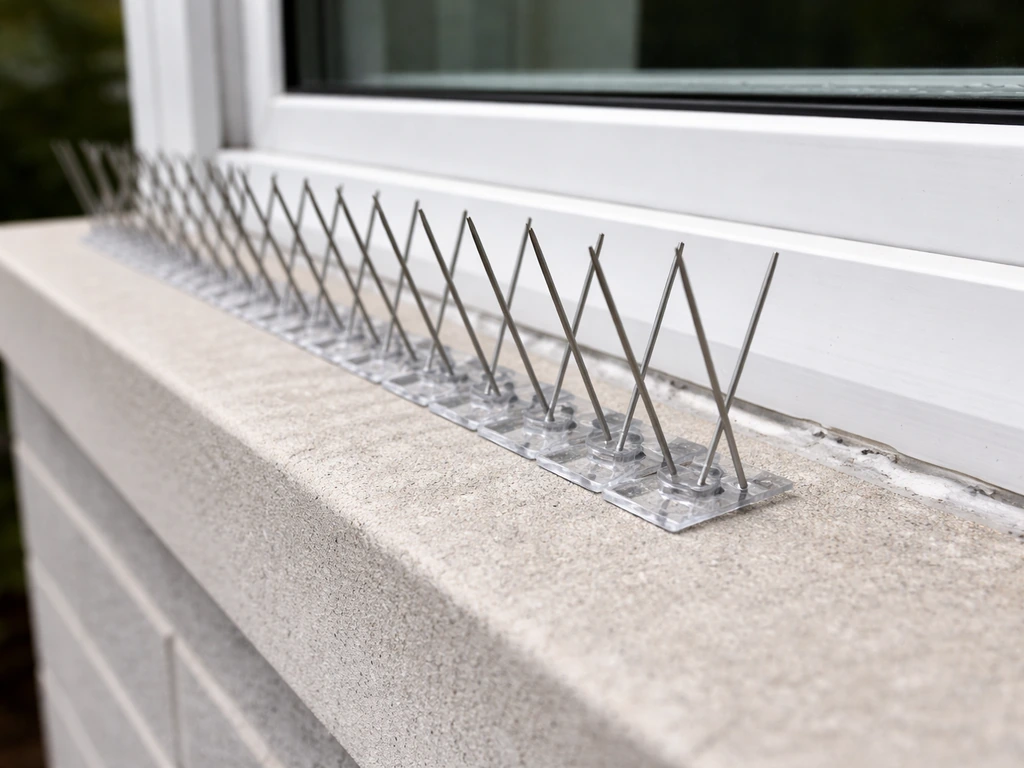
- Bird spikes: Install stainless steel or UV-resistant polycarbonate spikes along flat window sills and ledges. They don't harm birds but prevent landing and nest-building. Most systems are adhesive or screw-mounted. For window sills, narrow spike strips (about 3 to 4 inches wide) work well.
- Slope the surface: Mass Audubon notes that surfaces angled at 60 degrees or more cause nesting material to slide off. A simple wooden or foam wedge attached to a flat sill can achieve this without major construction.
- Bird netting: For window wells, larger recessed sill areas, or eaves just above a window, properly installed bird netting creates an exclusion barrier. Important: the netting must be taut and fully secured at all edges. Loose netting can trap birds, which can be fatal and may itself violate the MBTA. Follow manufacturer installation specs carefully.
- Reflective tape or visual deterrents: Hanging reflective tape, holographic ribbon, or commercial predator decoys near the window can deter birds in the short term, but birds often habituate to them within a few weeks. Use them in combination with physical exclusion, not as a standalone fix.
- Eliminate perches: Remove any hooks, ledge ornaments, or plant hangers near the window that give birds a place to land and assess the spot.
Sealing gaps and blocking access points
Birds don't need much of a gap to start building a nest, especially small species like house sparrows and wrens. A gap as small as an inch in a window frame, soffit, or eave can be enough. Cornell University's pest exclusion guidance makes the point clearly: preventing access is far more effective than any reactive measure. Seal the area while it's empty, not after birds have moved in.
Use paintable caulk for small frame gaps, expandable foam for larger voids in wood or masonry behind window frames, and hardware cloth (1/4-inch galvanized mesh) to block weep holes while still allowing drainage. Avoid using soft materials like foam tape alone in high-traffic spots since birds will pull it apart. The goal is permanent, bird-resistant sealing.
Window-area proofing checklist
Walk around each problem window and check every one of these points. Do this inspection in late fall (after nesting season ends) and again in late winter (before birds start scouting, usually February to March depending on your region).
- Window sill: flat, wide, or ledge-like? Install spikes or a slope board if yes.
- Window frame gaps: any separation between the frame and the wall, especially at the top or sides? Seal with exterior-grade caulk.
- Window tracks: debris or gaps at the ends of sliding window tracks? Clean and seal track end caps.
- Weep holes: small drainage holes at the bottom of window frames can be entry points. Cover with weep hole covers or fine mesh that still allows water drainage.
- Soffits and eaves directly above the window: any openings, rotted wood, or loose panels? Repair and seal these, as they're common nest sites that spill debris and droppings directly onto the window below.
- Window air conditioner units: the gap between the unit and the window frame is a classic nesting spot for sparrows. Use foam insulation kits made for AC units and check the seal every spring.
- Nearby pipes, conduits, or utility lines attached to the wall near the window: birds use these as perch points before moving to the sill. Install bird spikes on horizontal runs close to the building.
- Plant pots, window boxes, or shelves near the window: these are preferred nesting spots. Move them indoors or remove them during nesting season if you've had persistent problems.
- Shutters (if applicable): if your window has decorative shutters, the gap between the shutter and the wall is a prime nesting location, especially for house sparrows. Blocking issues behind shutters is closely related to the window exclusion problem.
Timing, legal protection, and when to call a professional
The right times to act
| Time of Year | What to Do |
|---|---|
| Late fall (Oct-Nov) | Remove old inactive nests, clean droppings, inspect for gaps |
| Winter (Dec-Feb) | Seal gaps, install deterrents, slope modifications, repair soffits |
| Late winter (Feb-Mar) | Final deterrent check before birds start scouting; do NOT wait until nesting begins |
| Spring-Summer (Mar-Aug) | Do not disturb any active nest; monitor only; plan exclusion for fall |
| Any time | Active nest with eggs or chicks: hands off, wait for fledging |
The legal picture
The Migratory Bird Treaty Act covers the vast majority of wild bird species in the U.S. It prohibits the take, possession, or destruction of protected bird nests that contain eggs or young birds. This isn't a technicality: enforcement is real and penalties can include fines. House sparrows, European starlings, and pigeons are not protected under the MBTA, which means nests from those species can generally be removed at any time. However, identifying species with certainty before acting is important. If you're not sure what species built the nest, treat it as protected and seek guidance.
The U.S. Fish and Wildlife Service's Living Around Birds program and your state's wildlife agency are both good starting points for species-specific guidance. Some states add additional protections beyond the MBTA, so local rules matter too.
When to stop DIYing and call a wildlife professional
- The nest is active with eggs or chicks and it's blocking critical access (a required egress window, for example). A licensed wildlife removal professional may be able to apply for an emergency depredation permit or advise on legal options.
- You cannot confirm the species and the nest appears to be from a protected bird. Don't guess: call a wildlife rehabilitator or your local Fish and Wildlife Service office.
- The droppings accumulation is large (more than a light coating on a small surface). CDC recommends professional hazardous waste removal for significant accumulations.
- The nest is inside the wall cavity, inside a vent, or in a location that requires opening the building envelope. This type of situation is also closely related to roof or wall nest removal scenarios, which carry their own structural and safety considerations.
- You've had repeat nesting in the same spot for multiple years and DIY deterrents haven't worked. A professional exclusion contractor can assess structural vulnerabilities you may have missed.
- A bird is injured or trapped inside your window area. Contact a licensed wildlife rehabilitator, not pest control, for live birds.
Ongoing seasonal maintenance
Once you've done the exclusion work, a simple annual routine keeps the problem from coming back. Each fall, walk the exterior of your building and check every window sill, frame, and adjacent soffit for new gaps, failed caulk, or damaged deterrents. Replace any spike strips that have shifted or degraded. Re-apply caulk where it has cracked. Clean any minor droppings accumulations before they build up. This 30-minute annual inspection prevents the multi-hour cleanup and removal job from recurring. Buildings with multiple windows or large eave overhangs benefit from adding this to a formal facility maintenance schedule, typically in October or November.
FAQ
What if I’m not sure whether the nest is active or just “quiet” on my window?
If you cannot confidently confirm the nest is inactive, do not remove it. The safest option is to wait and re-check at multiple times of day, ideally over several days, and keep people and pets away from the window area in the meantime. If you need help identifying whether eggs or dependent young are present, contact your state wildlife agency or a licensed wildlife professional.
Can I remove the bird nest right away if I think it’s from a non-protected species?
For protected species, removal is only appropriate after the birds have fully finished nesting (young have fledged and left). For non-protected species like house sparrows, European starlings, and pigeons, removal is generally allowed any time, but you still need to visually identify the species with reasonable certainty. If you cannot confirm, treat it as protected and wait.
After I take the nest out, how do I stop birds from rebuilding in the same window?
Yes. Even when you remove the nest, birds can still return if the access points are unchanged or if new gaps open as seals age. The practical fix is to seal entry gaps around the window frame, track, shutters, or adjacent eaves before the next nesting window, then inspect again in late winter to catch any new openings early.
When should I hire a professional instead of cleaning the droppings myself?
It depends on your ability to reach safely and the amount of droppings. If deposits are small to moderate on accessible surfaces, you can usually clean yourself with proper protective equipment and a wet-before-disturbing approach. If there is heavy buildup, deep staining, or years of accumulation in a hard-to-reach window well, hire a professional hazardous waste removal company rather than digging or power-scrubbing.
What’s the safest way to clean bird droppings in a tight window track or behind the frame?
Do not dry-scrape or use a leaf blower around dried droppings. Instead, open nearby windows for ventilation if you are cleaning from indoors or work from outside when possible, then apply water first to keep dust down. If you must clean the window track or tight corners, remove debris with minimal agitation and follow up with thorough wet cleaning to reduce aerosol risk.
My window still smells after cleanup. What should I do about lingering odor?
A persistent smell usually means organic residue is still present, not that “poison” is left behind. Use an enzymatic cleaner on the cleaned surface and let it dwell for the recommended time (often 10 to 15 minutes) before rinsing, then repeat a few days later if odor remains. Avoid masking sprays because they don’t remove the underlying residue that attracts birds.
What if birds are nesting in a window area with weep holes or drainage gaps I can’t easily seal?
If the nest is in a place you cannot fully block off, focus first on exclusion timing (do it when empty) and sealing. Use hardware cloth for weep holes and paintable caulk or proper expandable foam for gaps in frames or masonry, and make sure materials cannot be pulled away easily by birds. Soft, temporary materials alone often fail because birds can rip them out.
Do bird deterrents like spikes work, or should I focus only on sealing gaps?
Deterrents like spikes or visual repellents can fail when birds find a protected pocket to build in. The most reliable approach is permanent exclusion, sealing access points before birds start scouting. If you use deterrents, inspect them in late fall and again in late winter, because shifted or degraded deterrents create new footholds.
What should I do if I start cleaning and discover a nest I didn’t notice at first?
If the nest belongs to a protected species, disturbing it can create legal exposure and wildlife harm. If you are already cleaning droppings and a nest is discovered, stop and reassess, then wait until you can verify the nesting cycle has ended before removing anything that could contain eggs or dependent young.
Next Article
How to Get Rid of a Bird Nest in a Wall Safely
Step-by-step guide to safely remove a bird nest in a wall, exclude birds, clean droppings, and prevent return legally.