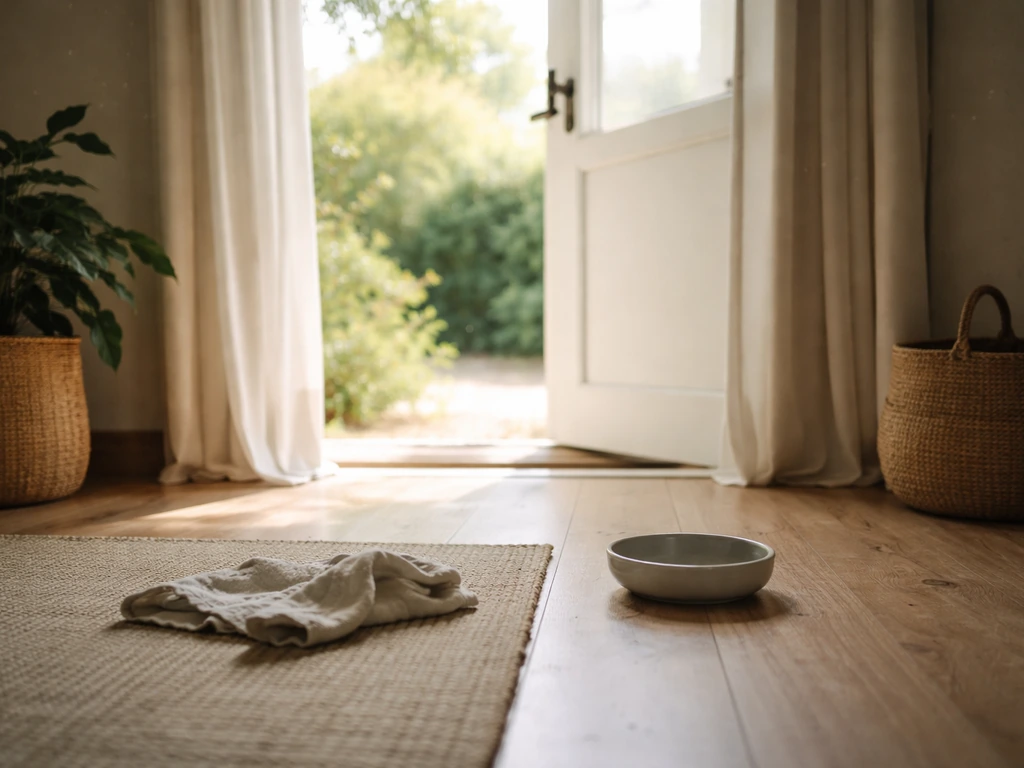
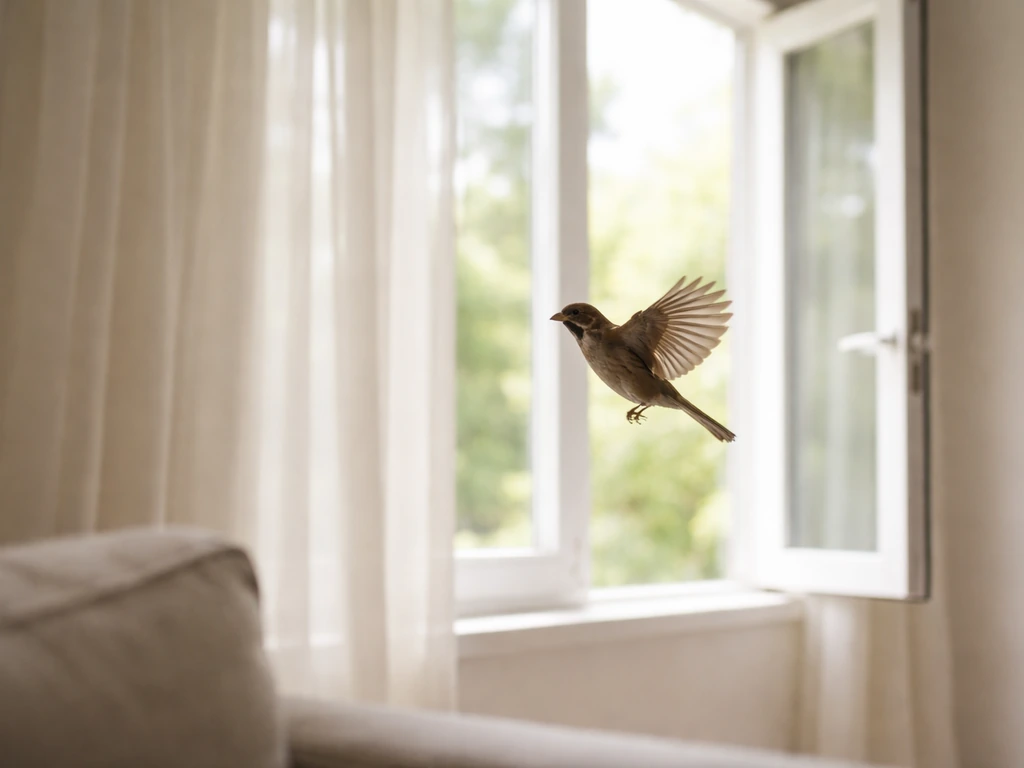
Stay calm, confine the bird to one room, and create a single clear exit to the outdoors. That combination alone solves the majority of bird-in-house situations within minutes. Close every door and window in the room except one that opens directly outside, dim or kill any competing interior lights, and then leave the room quietly. Most birds find the opening on their own once the panic settles.
How to Make a Bird Leave Your House Safely
Maya Carver
29 May 2026
Quick emergency steps to get the bird out safely
When a bird flies into your home, the instinct for most people is to chase it. That makes things worse. A frightened bird will exhaust itself crashing into windows, knock over breakables, and leave droppings across a wide area. The goal in the first two minutes is to slow everything down.
- Stop moving and lower your voice. Sudden noise and movement keep the bird in panic mode.
- Herd it toward one room by opening the door to that room and closing all others. A hallway works well because it naturally funnels toward an exit.
- Open one exit only: a door or large window that leads directly outside. Remove the screen if you can.
- Close or block every other opening in that room: other windows, fireplace dampers, interior doors, and pet doors.
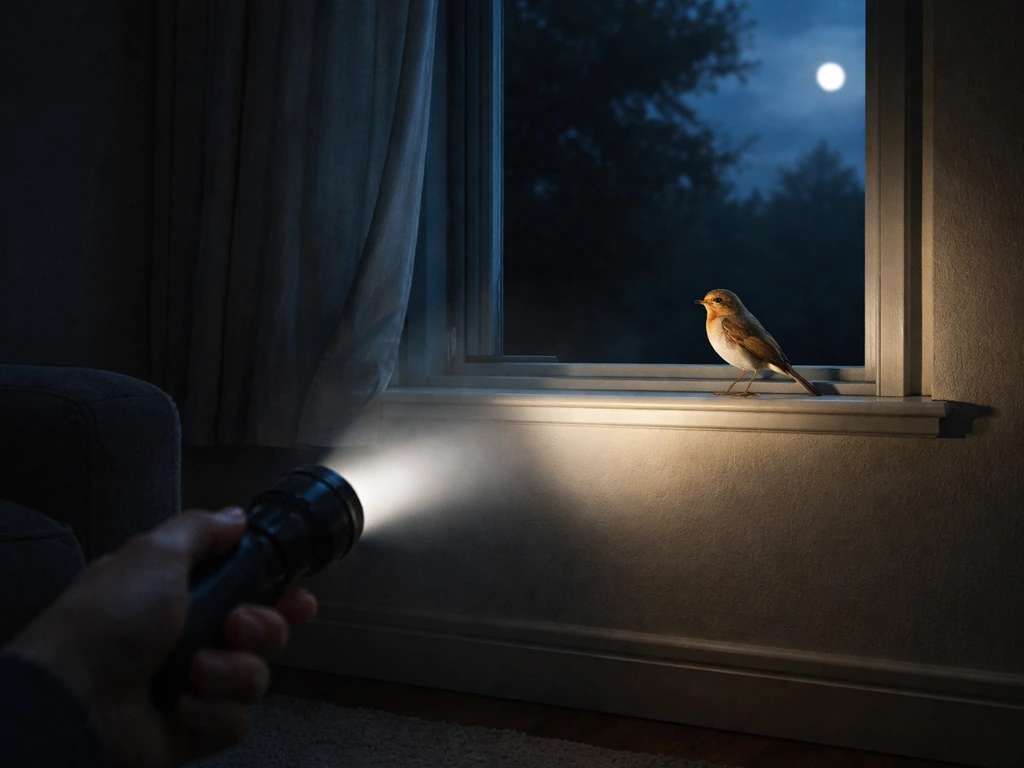
- Turn off interior lights and let natural daylight pull the bird toward the opening. If it's nighttime and exterior lights are bright, turn off indoor lights entirely for 15 to 20 minutes to let the bird reorient away from disorienting light sources.
- Leave the room. Birds are far more likely to find an exit when humans are absent.
- Check back every 5 to 10 minutes. In most cases the bird is gone within 20 minutes.
Wear gloves if you must handle the bird at any point. Even a healthy songbird can scratch or bite, and birds can carry salmonella. If the bird appears injured (unable to fly, limping, one wing drooping), do not attempt to manage it yourself. Skip ahead to the section on calling a wildlife professional.
Figure out exactly where the bird is and how it got in
Before you can solve the problem permanently, you need two answers: where the bird is right now, and which opening it used to get inside. These two facts determine every decision that follows.
Locate the bird first
Listen for wing flaps, scratching, or chirping. A bird in a living area is relatively easy to find. A bird in an attic, wall cavity, or vent system is harder. If you hear movement in a wall or ceiling but cannot see the bird, do not start cutting drywall. Identify the sound location, note whether it moves (which suggests a live bird navigating a space), and check for accessible entry and exit points before doing anything else.
Trace the entry point
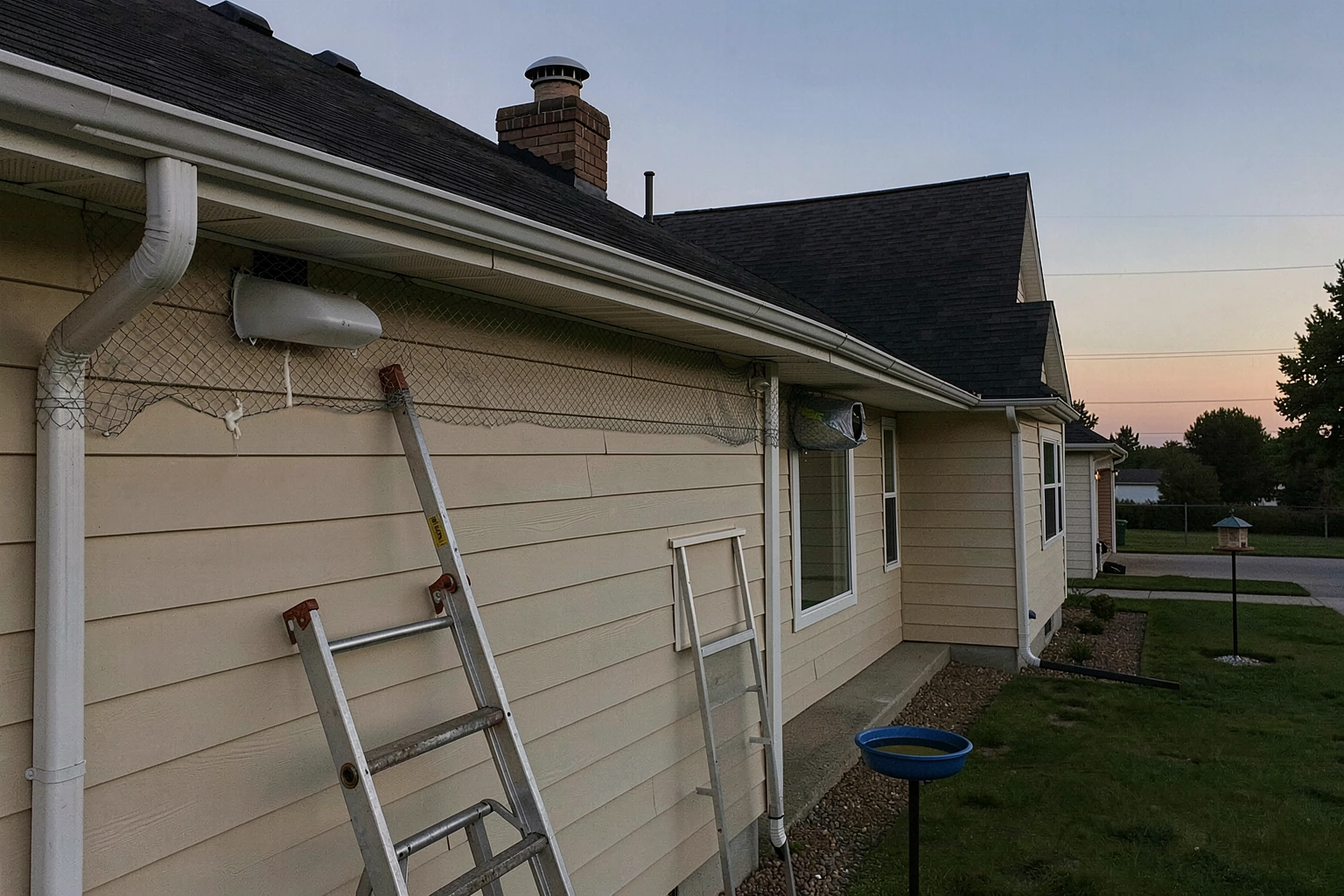
Walk the exterior of the building and look for gaps larger than half an inch. Common entry points include unscreened soffit vents, open ridge vents, gaps where pipes or wires penetrate exterior walls, uncapped chimneys, loose or missing fascia boards, and open dryer or bathroom exhaust vents. Note every opening you find, not just the obvious ones. Birds return to entry points they have used before, and sealing only one when several exist wastes your effort.
- Soffit and fascia gaps at roofline
- Uncapped or mesh-free chimney flues
- Roof vents without hardware cloth backing
- Dryer, range hood, and bathroom exhaust vent flaps that stick open or are missing
- Open windows or doors left unscreened
- Gaps around pipe penetrations, cable conduits, and AC lines
- Damaged ridge cap or missing roof tiles
Humane methods to encourage the bird to leave on its own
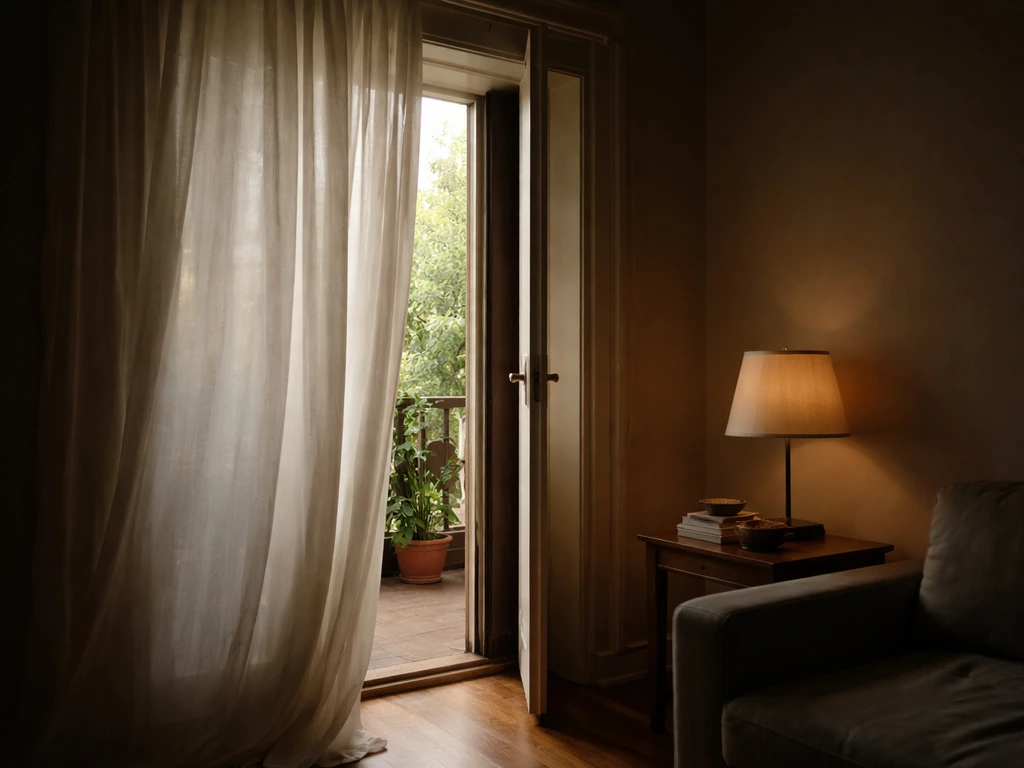
Light is your most reliable tool. If you are specifically trying to scare birds away, focus on changing the lighting, sounds, and entry access around the area so they do not stay Light is your most reliable tool. . Birds navigate toward daylight, so the single-exit method described in the emergency steps works because it removes every other light source except the one opening you want the bird to use.
If the bird is confused and not moving toward the exit after 20 minutes, gently encourage it by standing behind the bird at the far end of the room and slowly walking toward it. Turning lights off for 15 to 20 minutes can help disoriented birds escape when bright nighttime lighting cannot be turned off immediately.
Keep your arms low and move in a smooth arc, not directly at the bird. This creates mild pressure that nudges it forward without triggering a full panic flight.
Timing matters too. Birds are calmer and more oriented at dawn and dusk than in the middle of the day when light angles are confusing. If you have a bird trapped in an attic or enclosed space and it is not finding its own way out, opening the attic hatch or vent cover just before dawn gives it the best chance of self-releasing when natural light cues are strongest.
For birds in large enclosed spaces like warehouses or big-box retail buildings, a combination of blocking high windows and lighting only the intended exit has the best track record. If you still need more specific guidance, the methods in this article on how to lure a bird out of your house can help you choose the right approach for your situation.
For the quickest results, also use the single-exit approach so the bird knows exactly where to go blocking high windows. The related guides on how to lure a bird out of your house and how to guide it out of your house go deeper on these scenarios how to guide a bird out of your house. If you want more specific scenarios, see our guide on how to lure a bird out of your house.
The related guides on how to lure a bird out of your house and how to guide a bird out of your house go deeper on these scenarios, but the core principle is the same: reduce everything that competes with the exit, then wait. If you want more detailed ideas, see our guide on how to lure a bird out of your house.
Sound can also help in some situations. Playing a bird distress call or predator call on a phone speaker can push a stubborn bird toward an exit, but use this sparingly. Prolonged stress sounds can injure a bird through exhaustion or collision. Use a single short burst if the bird has been stuck for more than an hour and is still not finding the exit.
When gentle handling is necessary
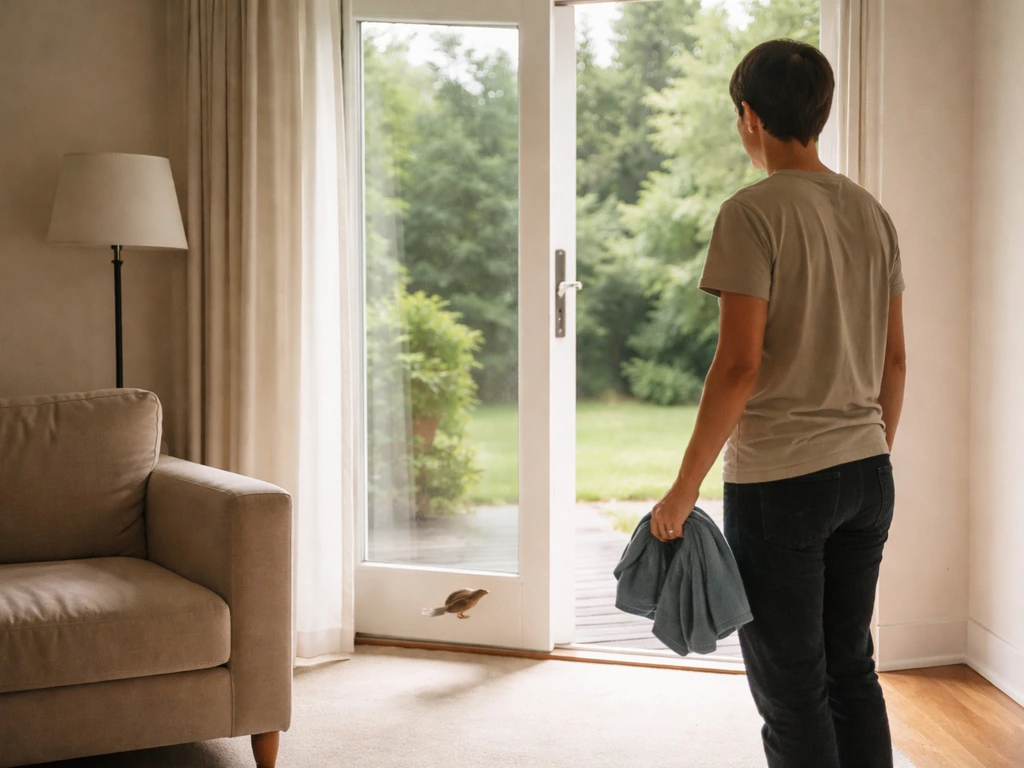
If the bird has been inside for several hours, is visibly exhausted, or is trapped somewhere it genuinely cannot exit (inside a wall cavity, caught behind a radiator), you may need to handle it. Put on gloves and a long-sleeved shirt. Approach slowly and cover the bird with a lightweight towel or cloth, cupping both hands around its body with its wings held gently against its sides. Carry it directly outside and release it near shrubs or ground cover so it has a place to recover. Do not attempt to hand-release an injured bird. If it cannot fly when you release it, place it in a cardboard box with air holes and call a wildlife rehabilitator.
Seal the entry points and stop it from coming back
Once the bird is out, your job is to make sure it cannot get back in. This is where most homeowners stop short and end up dealing with the same problem every spring. Every gap you identified earlier needs a fix.
Sealing and exclusion materials
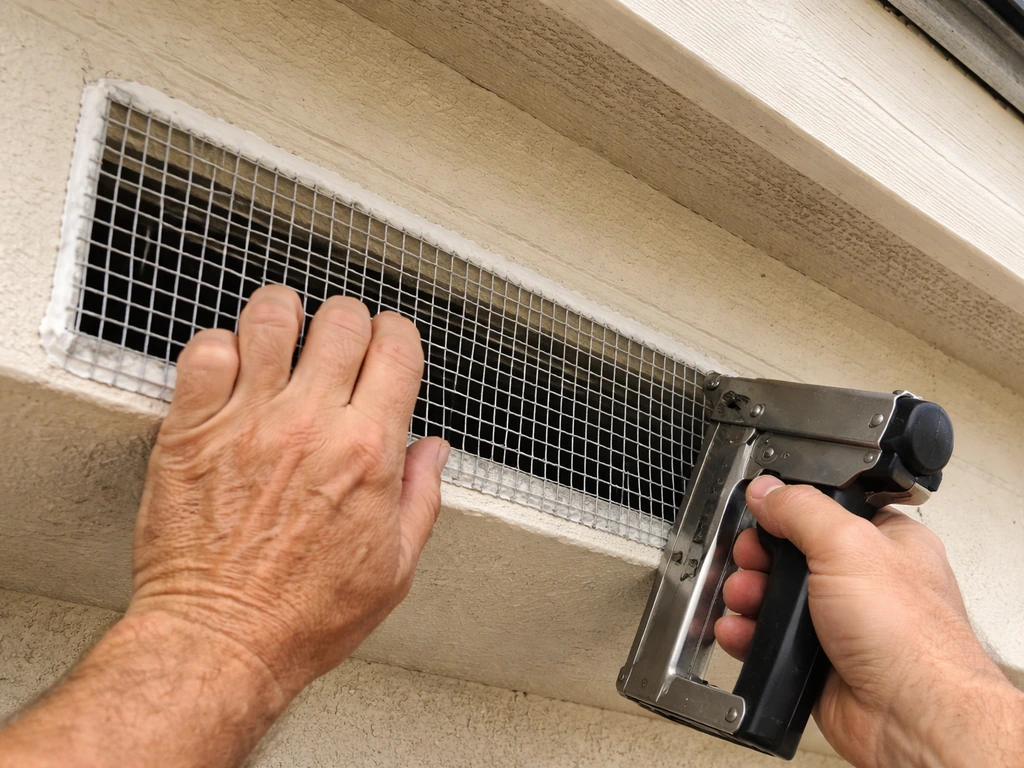
| Gap/Opening Type | Best Fix | Notes |
|---|---|---|
| Soffit and fascia gaps | Hardware cloth (1/4-inch mesh) stapled and sealed with caulk | Check for existing nests before sealing |
| Roof and ridge vents | Vent covers with built-in mesh backing | Replace damaged covers; do not just patch mesh with tape |
| Chimney flues | Stainless steel chimney cap with mesh sides | Prevents both birds and squirrels; required for gas appliances to allow exhaust |
| Dryer and exhaust vents | Spring-loaded vent flap covers | Flap must close fully under its own weight; test before relying on it |
| Pipe and cable penetrations | Expanding foam plus hardware cloth collar | Foam alone is not enough; birds peck through it |
| Open windows and doors | Full-screen installation or magnetic screen door | Use 18x14 mesh minimum to stop small sparrows |
| Garage doors (gap at base) | Rubber garage door seal with brush insert | Standard rubber seals leave gaps large enough for sparrows and starlings |
One-way exclusion devices
If birds are roosting in an attic or wall space and you cannot easily seal the entry point while they may still be inside, use a one-way exclusion tube or funnel. These attach over the entry hole and allow birds to exit but not re-enter. Leave the device in place for at least five to seven days during daylight hours to make sure all birds have exited, then remove it and permanently seal the opening.
Never install a one-way device during nesting season without confirming the nest is empty and no chicks are present. If you are dealing with an active nest, the safest approach is to focus on one-way exclusion and sealing after confirming the nest is empty can you scare a bird away from its nest. Trapping birds inside with young is both inhumane and, for migratory species, illegal.
Remove what attracted the bird in the first place
Structural gaps are one cause of bird entry. Attractants are the other. If birds keep finding ways in despite your sealing efforts, look for food sources: open garbage containers, uncovered compost, pet food left outside, or unsecured grain storage. Standing water near foundation vents also draws birds. Remove feeders from within 10 feet of the building if you want to stop birds from investigating the structure. Keeping the building envelope clean of old nesting material also reduces re-nesting because birds are attracted by scent and familiarity with prior nest sites.
Common problem birds and what works for each
Not every bird situation is the same. A panicked robin that flew through an open door needs a very different response than a flock of European starlings nesting in your attic soffit. Here is how the tactics shift by species and scenario.
Songbirds (robins, sparrows, finches, warblers)
These small birds enter accidentally through open doors and windows. The single-room, single-exit method works almost every time. They exhaust quickly so move fast once you start. The biggest danger is window collision: if there are large windows in the room, place dark towels or newspapers over the glass temporarily so the bird does not repeatedly fly into them while searching for the exit.
Pigeons
Pigeons are calmer than most songbirds but harder to dislodge once they have established a roosting spot. For a pigeon inside, the exit method works, but you may need to physically walk it toward the opening with a large piece of cardboard held in front of you as a gentle barrier. For attic or ledge roosting, physical exclusion (netting, spikes, or coiled wire on ledges) is essential. Pigeons have a strong homing instinct and will return to the same spot for years without structural changes.
European starlings and house sparrows
These two non-native species are not protected under the Migratory Bird Treaty Act, which gives you more options for deterrence and nest management. Both are aggressive cavity nesters and will take over birdhouses, dryer vents, and soffit gaps quickly. Starlings in particular can squeeze through a 1.5-inch opening. Use hardware cloth with no larger than 0.5-inch mesh. Their nests can be legally removed without a permit at any stage, but it is still worth doing so humanely. Repeated nest removal without closing the entry point is a losing game, however. Seal the gap.
Swallows
Barn swallows and cliff swallows are blank" rel="noopener noreferrer">federally protected under the MBTA. They build mud nests on exterior walls, eaves, and under bridges. Once eggs or chicks are present, you cannot legally disturb the nest. If swallows are building but have not yet laid eggs, you can legally remove the nest in progress (act quickly: egg laying begins within days of nest completion). After the nesting season ends and birds have left, block the nesting area with netting, foam backer rod stuffed into preferred gaps, or by modifying the surface texture so mud does not adhere. Plastic sheeting hung loosely over eaves during the spring building period is a widely used deterrent.
Woodpeckers
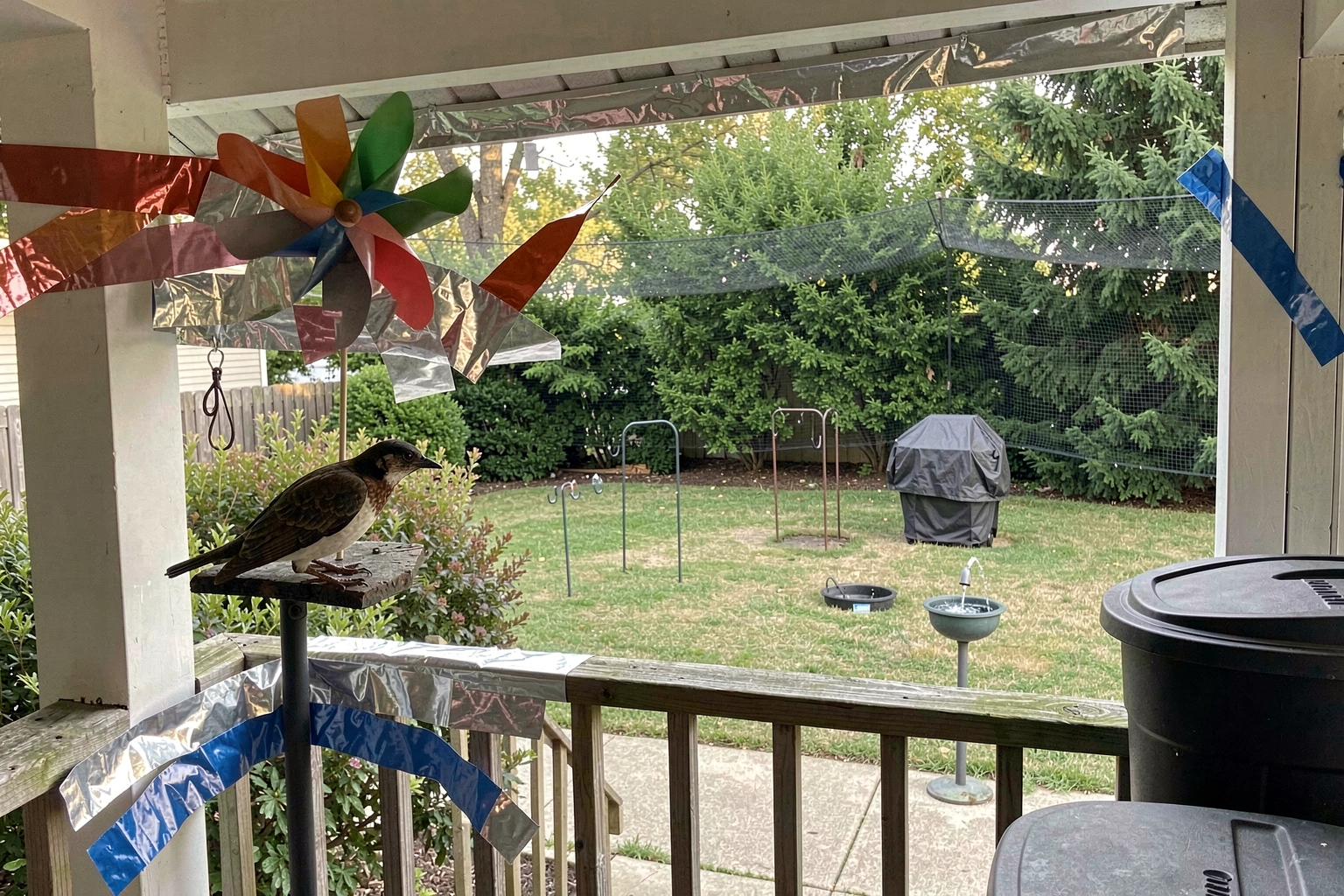
Woodpeckers drilling into siding or fascia boards are also federally protected. A woodpecker found inside the house is rare; this scenario is usually more about them excavating a hole in your structure that other birds (or themselves) later use as an entry point. Cover fresh holes with hardware cloth immediately. Reflective tape, wind spinners, or hanging mylar strips near active drilling sites can discourage return visits, though persistent woodpeckers often require professional exclusion netting.
Owls and raptors
A large bird like a barn owl or red-tailed hawk that ends up inside a building is a more stressful situation for both parties. These birds have strong talons and will use them if they feel cornered. Open every large exit you can, leave the building entirely, and wait at least one to two hours before checking. If the bird has not found its way out, call a licensed wildlife rehabilitator or animal control. Do not attempt to handle a raptor without heavy leather gloves and training.
When to stop DIYing and call a wildlife professional
There are situations where the right move is to pick up the phone instead of a towel. Here is a clear list of when to escalate.
- The bird is visibly injured: drooping wing, cannot fly, bleeding, or in shock
- You suspect it is a raptor, owl, or other large bird with talons
- The nest contains eggs or live chicks and is located inside your structure
- The bird is in an inaccessible space (inside a wall cavity, deep in ductwork) and you cannot reach it or create an exit
- You have tried the exit method multiple times over several hours and the bird is deteriorating
- You are unsure whether the species is protected under the Migratory Bird Treaty Act
- Removal requires dismantling part of your building, working at height above one story, or entering a confined space
The U.S. Migratory Bird Treaty Act makes it illegal, without a federal permit, to kill, capture, or possess any migratory bird, and also to destroy or disturb their active nests or eggs. This covers the vast majority of wild bird species in North America, including most songbirds, swallows, woodpeckers, raptors, shorebirds, and waterfowl. European starlings and house sparrows are the main exceptions as non-native species with no MBTA protection. If you are not sure, assume protection applies and call a professional. State laws sometimes go further than federal law, so check your state wildlife agency as well.
When you call a wildlife rehabilitator or your local animal control, be ready to tell them the species if you know it, where in the building it is located, how long it has been inside, whether it appears injured, and whether there is a visible nest. This saves time and helps them bring the right equipment. The National Wildlife Rehabilitators Association maintains a directory of licensed rehabilitators by region.
A seasonal prevention plan to keep birds out for good
Bird problems are largely seasonal and predictable, which means you can get ahead of them with a simple annual maintenance schedule. Most cavity nesting begins in March across the northern U.S. and peaks through June. Swallows return from migration in April. Fall brings flocking species like starlings looking for winter roost sites. Knowing this lets you time your inspections and repairs before the birds arrive rather than after.
Late winter (February to early March)
This is the most valuable time to act. Walk the full exterior of the building and check every gap, vent, and roofline feature before nesting season starts. Repair any damage from winter freeze-thaw cycles, which commonly opens new gaps in fascia, soffit, and caulking. Install or replace chimney caps, vent covers, and exhaust flap covers now. Any repair done before April is one you will not have to work around an active nest.
Spring (April to June)
Monitor active nest sites weekly. If swallows or other protected species are building on your structure but have not yet laid eggs, you can legally remove the nest in progress. Act within the first few days of construction. Once eggs appear, you must wait until the nest is abandoned after the chicks have fledged (typically four to six weeks). After the nest is vacant, remove it, clean the surface, and apply deterrents or make structural modifications before the next season.
Summer (July to August)
Most cavity nesting is complete by midsummer. Fledglings will have left nests. This is a good window to install one-way exclusion devices on any soffit or attic vents where birds have been active, wait a week to confirm the space is empty, then seal permanently. Also check that bird netting and spikes installed in prior years are still intact and have not been undermined.
Fall (September to November)
Starling and sparrow flocks begin looking for winter roost sites. Inspect attic vents, ridge vents, and eave gaps again. Remove any nesting debris from vents (clogged dryer vents are a fire hazard, not just a bird problem). Add or check chimney caps before winter drafting season. Confirm all screen mesh is intact after summer use of windows and doors.
Year-round habits that make a big difference
- Keep window and door screens in good repair and fully seated in their frames
- Do not leave garage doors or large outbuilding doors open and unattended for extended periods
- Store pet food, birdseed, and grain in sealed containers away from the building
- Clean gutters regularly since clogged gutters create nesting material and standing water
- Trim overhanging branches within three feet of the roofline to reduce landing and entry points
- Install motion-activated lights on building perimeters to discourage nighttime roosting without leaving bright static lights on (which attract and disorient birds)
- Keep a log of where and when bird problems occur so you can target inspections more efficiently each year
Dealing with birds in and around buildings is rarely a one-time fix. The homeowners and facility managers who stop having repeat problems are the ones who combine immediate action with a consistent seasonal routine. Get the bird out today using the steps above, seal the entry point this week, and block it permanently before next spring. If you also want to learn how to keep a bird away long term, focus on removing attractants and preventing re-entry with exclusion and maintenance seal the entry point. That sequence, done once properly, is genuinely enough to keep most bird situations from recurring.
FAQ
Should I chase the bird to get it out faster?
Yes, but only to a point. If the bird is already in one room, keep movements minimal and do not start waving objects toward its face. For large windows, covering the glass can be safer than chasing. If you cannot create a clear single exit quickly, switch to waiting and positioning yourself near the exit rather than trying to “herd” the bird aggressively.
What lights should I turn on or off to help the bird find the exit?
Turn off interior lights in the room and any nearby rooms whose lights could shine toward the exit. Keep the outdoor exit area bright enough to guide the bird, for example, a porch light or daylight at the open door. Avoid using multiple flashlights or bright phone screens from different angles, because that creates competing “targets.”
What should I do if I cannot see the bird but I hear it moving in the house?
If you cannot tell where the bird is, do not open multiple openings. Close doors between spaces, then use sound cues to narrow down the source (wing flaps, scratching, chirping) and identify which exterior penetrations are closest to that sound. Only after you can locate the likely area should you start checking vents, soffits, and roofline gaps.
How long should I wait before I try gently encouraging the bird?
Wait at least 20 minutes after you have created a single clear exit and removed competing lights. If the bird still will not move toward the opening, stand behind it at the far end and walk slowly in a smooth arc with your arms low, using gentle pressure without sudden lunges.
Is it ever okay to pick up a bird, and what if it will not fly after release?
For a wild bird, hand capture should be a last resort, especially if it is injured, cornered, or trapped in a place it cannot access. If you must handle it, use gloves, cover it with a lightweight towel, and release it near ground cover where it can recover. If it cannot fly after release, use an air-holed box and call a wildlife rehabilitator.
What if the bird exits, but it ends up in another part of the house?
Open doors and windows do not automatically work if the exit is not accessible. Make sure the opening leads directly outside and is not blocked by screens that reduce visibility. If the door opens into another interior room, close that path and use a direct route outdoors instead.
What if the bird seems trapped in a wall or vent and I cannot reach a safe exit?
If you find a live bird inside a wall cavity, vent, or behind a radiator where it cannot reach an exterior opening, you usually should not start cutting materials. Instead, confirm the sound location and check for the nearest exterior gaps that could be sealed after the bird leaves. For anything truly inaccessible, escalate to a wildlife professional.
Can I use exclusion or removal right away if I suspect there is a nest nearby?
If you have a nest active with eggs or chicks, do not try to scare adult birds away or remove nests. Disturbing active nests is often illegal under federal and state protections. The safest alternative is to contact a wildlife professional who can plan exclusion and sealing once the nest is confirmed empty.
When can I install a one-way exclusion tube without harming birds?
Do not use one-way exclusion during the nesting season without confirming no chicks are present. Even if you think the nest is abandoned, verify before installing a funnel or exclusion tube. If you discover active nestlings, switch plans to professional guidance for a legal, humane timeline.
Why do birds keep getting back in even after I sealed the obvious hole?
If birds keep returning after sealing, prioritize the possibility that you missed an entry point or that the original gap is still open behind a surface. Re-walk the entire exterior and identify every opening larger than about half an inch, including vents, penetrations for pipes and wires, uncapped chimneys, and loose fascia. Then address attractants like accessible food or standing water.
Should I cover windows if the bird keeps flying into the glass?
Yes, and it matters. For birds that enter through windows repeatedly, temporarily covering large windows with dark towels or newspapers can prevent repeated collisions while you keep the single-exit method in place.
Does the same single-exit approach work for pigeons and starlings?
Some situations require a different plan because of species behavior. Pigeons may require guiding with a barrier like cardboard, and cavity nesters often need structural exclusion to prevent return. For aggressive cavity nesters like starlings, sealing alone after you remove the bird may still fail if the smallest entry gaps remain open.
What is different about handling a hawk or owl inside my house?
If a raptor is inside, treat it as high risk. Open every large exit you can, leave the building, and wait at least one to two hours before checking again. Do not attempt to handle it without appropriate training and heavy protective equipment, and call a licensed rehabilitator or animal control if it has not left.
How do I know whether I am allowed to remove a nest or take action near nesting birds?
Most people should assume protection applies to wild birds unless they are certain they are dealing with non-native exceptions. If you are unsure whether a species is protected or if eggs or chicks might be present, call a wildlife professional before taking any action that could disturb a nest.
What details should I record so I can act correctly and avoid disturbing nests?
Because timing affects eligibility for certain actions, track dates. Note when the bird entered, how long it has been inside, whether you observed nest building, and when you seal or install exclusion. Weekly checks during active building help you avoid interfering with eggs or chicks.
What is the best preventative maintenance schedule to stop bird re-entry next season?
Bird problems are easiest to prevent with pre-season inspections. Check exterior gaps, vent covers, chimney caps, and roofline features before cavity nesting peaks, then confirm later that screens and mesh remain intact. Removing nesting debris and correcting vent damage earlier reduces both re-entry and re-nesting.