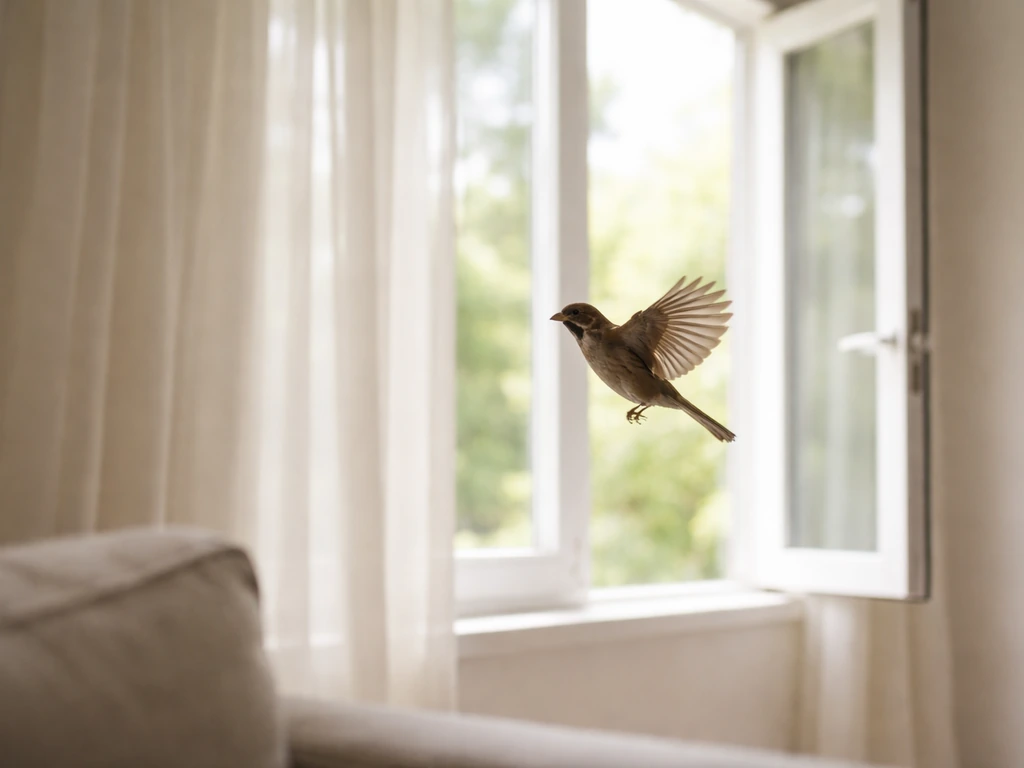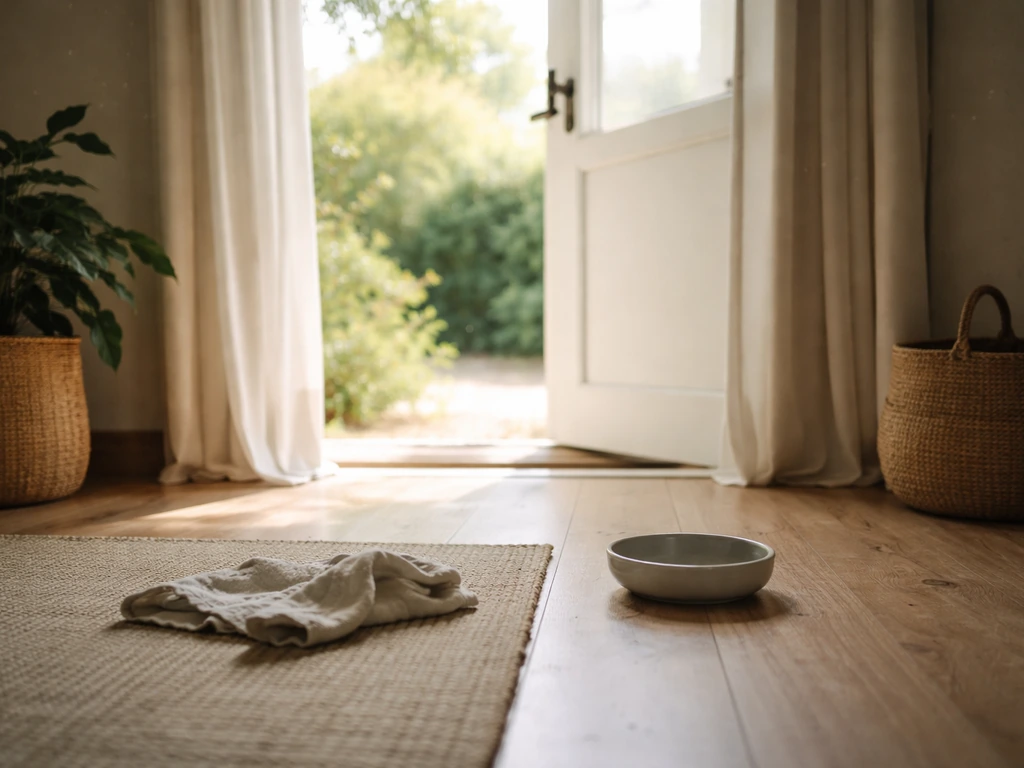
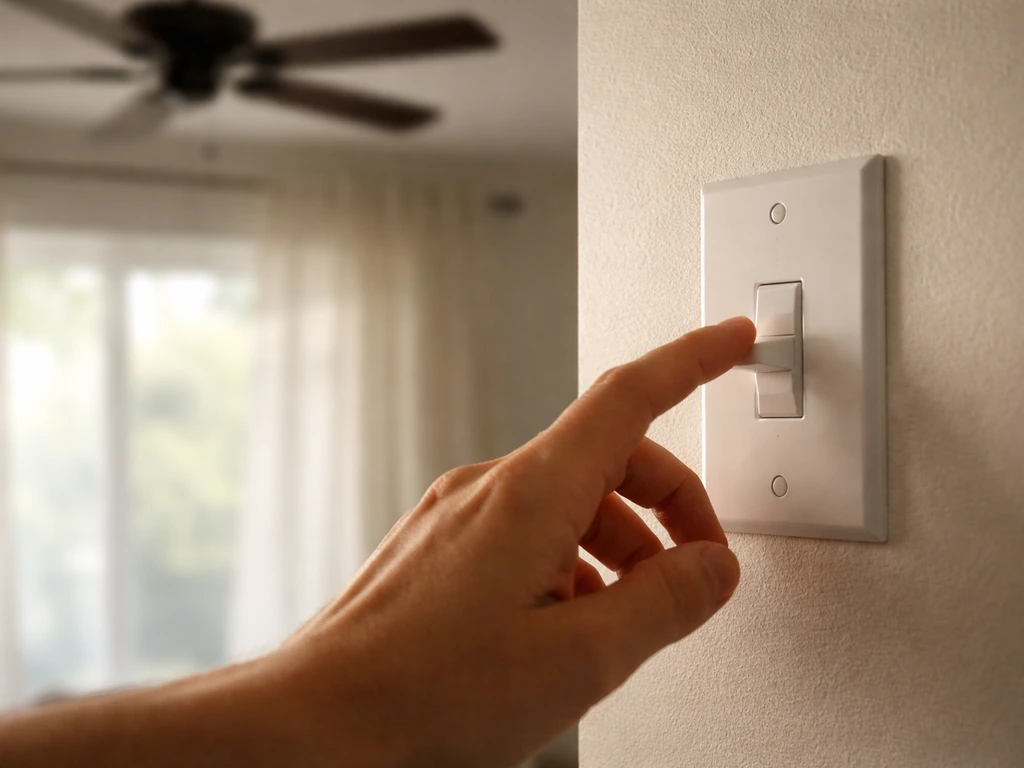
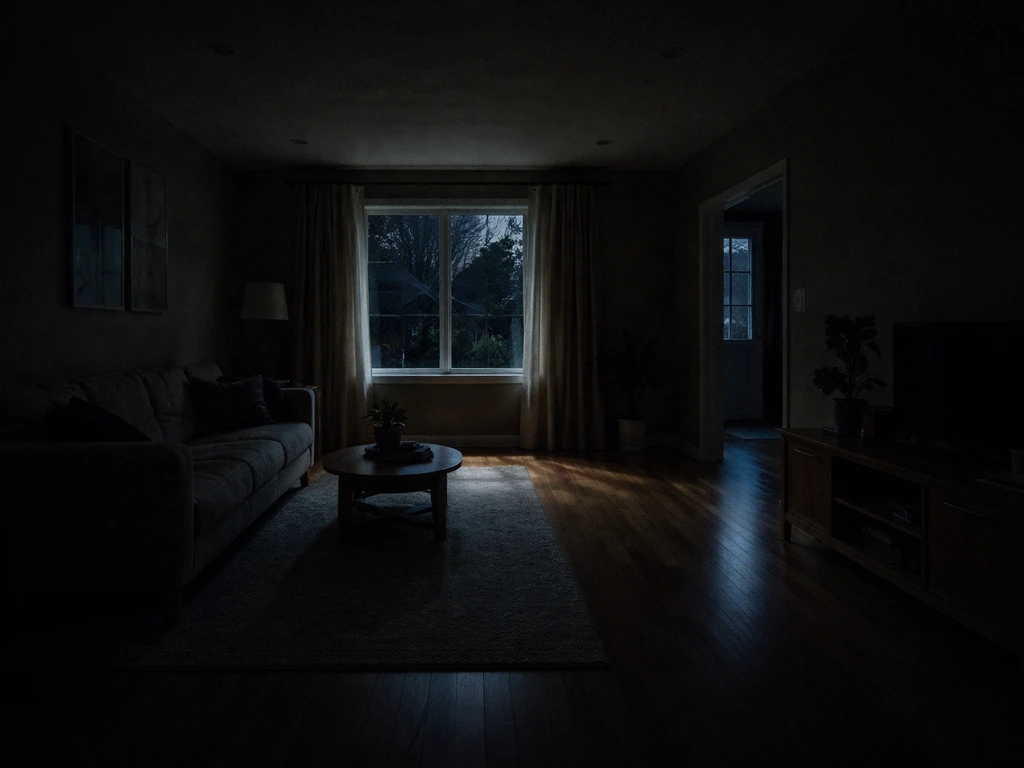
Open one exterior door or window as wide as possible, remove the screen, then turn off every interior light so that open exit becomes the brightest spot in the room. Close all interior doors to keep the bird in the smallest space possible. Then step back, stay quiet, and give the bird a few minutes to find its own way out. That single sequence solves the problem in most cases. If you still need more guidance, this bird-scaring approach for inside your home can help you get it out safely how to scare a bird out of house.
How to Guide a Bird Out of Your House Safely Today
Maya Carver
7 Jun 2026
Quick emergency steps for the first five minutes
When you first spot a bird inside, the instinct is to chase it or shoo it toward a window. Resist that. A panicked bird is a danger to itself: it will repeatedly crash into glass, burn energy, and become too exhausted or injured to fly out on its own. Your job in the first few minutes is to reduce stimulation and create one obvious exit.
- Turn off ceiling fans, ventilation fans, and any portable fans immediately. A bird in a room with a spinning fan is at serious risk of fatal injury.
- Close all interior doors to the room the bird is in. If the bird is roaming multiple rooms, herd it gently into the smallest, most exterior-facing room you can.
- Keep pets and children out. Put them in a separate room and close that door.
- Open one exterior door or window fully. Remove the screen entirely rather than leaving a gap; a screen edge is a distraction that confuses the bird.
- Turn off every interior light in the room. Close blinds or curtains on windows that are NOT the exit so the open door or window is the only light source.
- Step out of the room or move to a corner and stay completely still. Give the bird at least 10 to 15 minutes of calm before doing anything else.
Birds instinctively fly upward and toward light. Dimming the interior and keeping only one bright exit visible uses that instinct in your favor instead of fighting it.
Figure out what you're dealing with before you do anything else
Not every bird-in-house situation is the same, and the right approach depends on where the bird is, what species it appears to be, and how it's behaving. Taking 60 seconds to assess the situation prevents you from making things worse.
Where is the bird right now?
- Open living space (kitchen, living room, bedroom): This is the easiest scenario. The one-window, lights-off method almost always works.
- Garage or workshop: These spaces often have multiple skylights or translucent roof panels that confuse the bird. Cover or block non-exit panels with cardboard or a tarp, then open the main garage door fully.
- Attic or wall cavity: The bird may have entered through a vent or gap and may be stuck or nesting. Do not seal anything until you confirm the bird can exit freely.
- Chimney: If you hear flapping or chirping in the chimney, it could be a chimney swift, which is a federally protected migratory bird that nests in chimneys. Do not attempt to evict swifts during nesting season (typically May through August). Keep the damper closed and call wildlife control.
- Large commercial building or warehouse: The scale makes self-directed exit harder. See the escalation section at the end of this article.
What is the bird doing?
A bird repeatedly hitting a window is panicking, not injured yet. Give it space and darkness. A bird sitting still on a surface, panting, or not moving when you approach may have already struck a window hard enough to sustain a concussion-like injury. If that's the case, skip to the injured bird guidance later in this article. A bird hopping around on the floor pecking at crumbs is probably a house sparrow and is likely calm enough to guide out slowly. A large bird like a hawk or owl that has come in through an open door requires more caution because of talons and wingspan.
Quick species triage
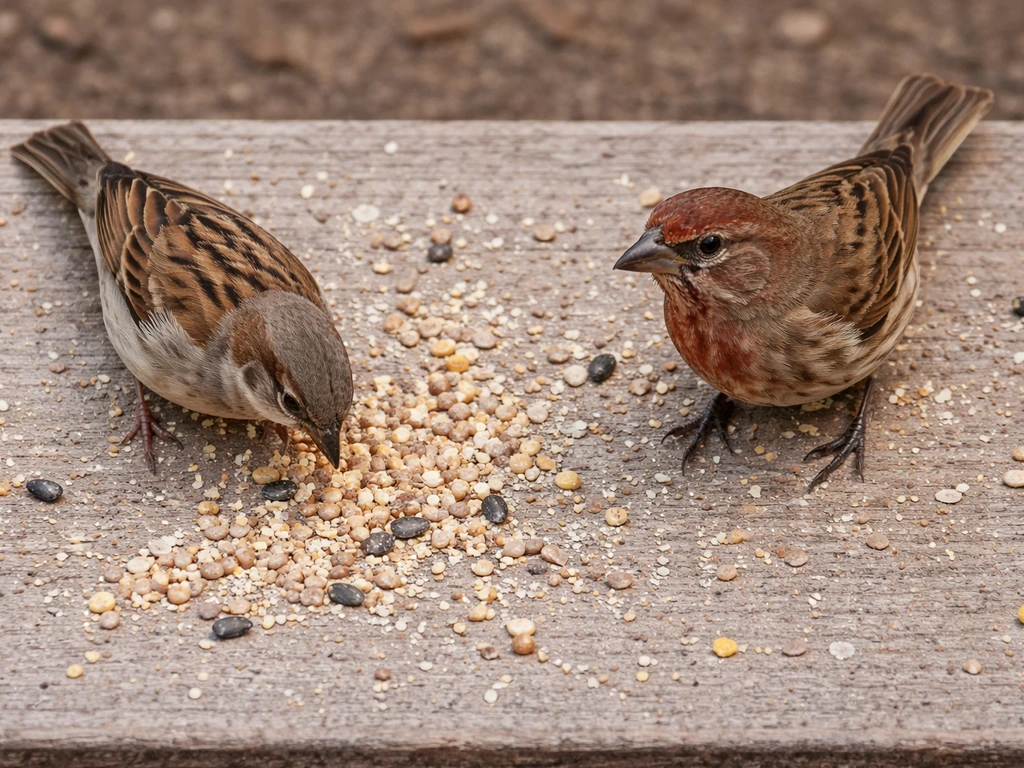
| What you see | Likely species or type | Key consideration |
|---|---|---|
| Small brown bird hopping, pecking at food | House sparrow | Common, non-protected, easy to guide out |
| Fast, darting flier, swallow-shaped | Swallow or swift | Swifts are federally protected; swallows less so. ID matters. |
| Large bird, hooked beak, talons | Hawk or owl (raptor) | Do not attempt to handle. Call wildlife control. |
| Bird near chimney at dusk, dipping in and out | Chimney swift | Federally protected. Do not disturb during nesting season. |
| Iridescent, pigeon-sized | Starling or pigeon | Non-native, non-protected. Standard exit method works. |
| Bird sitting still, not responding normally | Any species, possible injury | Treat as injured bird. See escalation section. |
How to guide the bird out step by step
This is the core process. It works for the vast majority of small to medium birds in residential spaces. The whole idea is to make the exit obvious and everything else uninteresting. If you need a straightforward way to make the bird go away fast, follow the steps in the core process section make the exit obvious.
- Choose the best exit point: a door or window that opens directly to the outdoors, ideally on the same side of the room the bird is already near. Bigger opening is better.
- Remove the screen completely. A half-open screen still looks like a wall to a bird.
- Close or cover all other windows in the room. Pull blinds, drape a towel over a window, or tape a sheet of cardboard temporarily. The goal is to eliminate competing light sources.
- Turn off all interior lights. If it is daytime, this alone makes the open window the obvious target.
- Leave the room if possible, or stand still in a far corner. Movement is the biggest reason birds won't fly toward an exit.
- Wait 10 to 15 minutes. Most birds find the exit in this window of time if the room setup is correct.
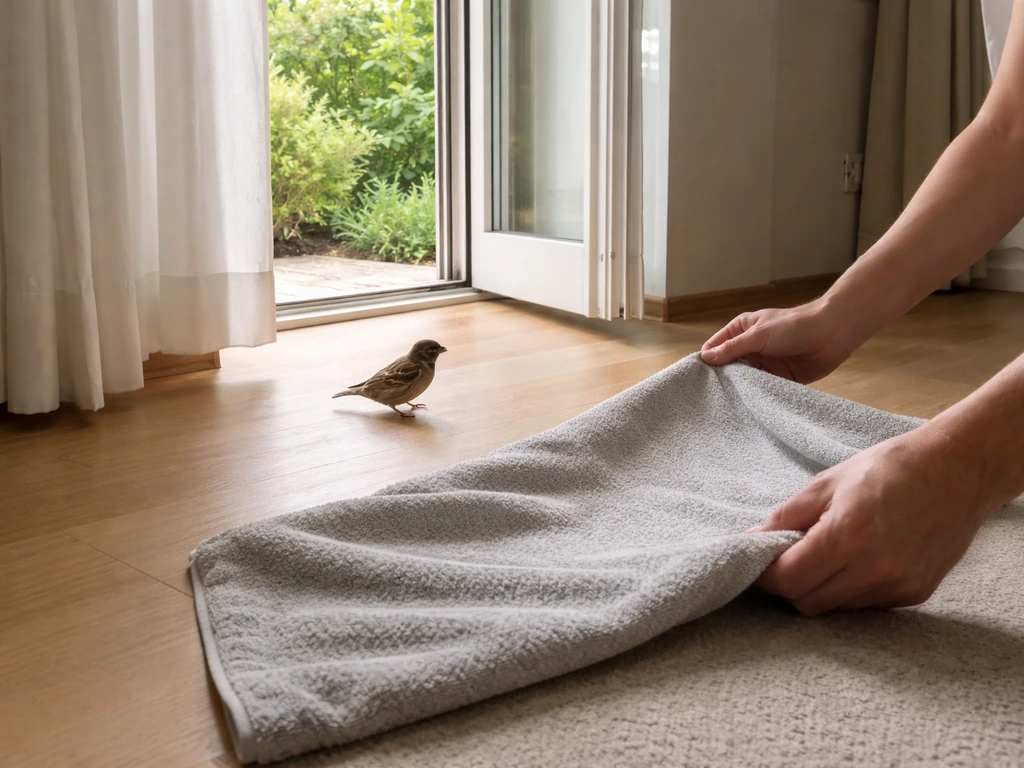
- If the bird is stuck high (near a skylight or clerestory window it can't exit through), use a large piece of cardboard or a bedsheet held wide to gently funnel it downward and toward the open exit. Move slowly and steadily, not quickly.
- If the bird won't move on its own after 20 to 30 minutes, try dimming or blacking out the room completely for 15 to 20 minutes. Birds often calm down in darkness, and when light is restored at only the exit point, they orient and leave quickly.
- Once the bird is out, close the exit immediately so it can't re-enter, then replace the screen.
If the bird is in a larger building like a warehouse or an attic space, the same principles apply but you may need to physically darken large sections using tarps or cardboard panels over skylights. Opening a single large door on one end and blocking light from all other sources gives the bird a corridor to follow. Open a single large door on one end and blank" rel="noopener noreferrer">block light from all other sources to create a corridor to follow. In most cases, these same directions can help you learn how to get a bird to leave a building quickly without making the situation worse. For very large buildings, consider calling a wildlife removal professional (see the escalation section).
Things that seem helpful but make it worse
There is a long list of well-intentioned moves that consistently backfire. Knowing what not to do is just as important as the step-by-step method above.
- Do not chase the bird around the room. Running after it triggers its panic response and makes it fly faster, crash harder, and exhaust itself faster.
- Do not open multiple windows and doors at once. More openings mean more competing light sources. The bird gets confused, circles, and never commits to one exit.
- Do not try to grab the bird unless it is clearly injured and you need to contain it for safety. Grabbing a healthy bird is stressful and potentially harmful to both of you.
- Do not use glue boards or sticky traps of any kind. These cause severe wing and leg injuries, feather destruction, and extreme suffering. They are indiscriminate and can trap non-target animals as well.
- Do not use noisemakers, air horns, or loud clapping to scare the bird toward the exit. Sudden loud sounds cause the bird to fly unpredictably and increase collision risk.
- Do not turn on more lights to 'show the bird the exit.' More interior light competes with the outdoor brightness you are trying to exploit.
- Do not block the exit area with your own body. Stand to the side or leave the room entirely.
- Do not try to lure the bird with food placed near the window. It takes too long, and food can attract other wildlife into the space.
If the bird has hit a window and is stunned
A bird that has struck a window hard may appear dazed, sit in one spot with its eyes half closed, or fall to the floor. [This is likely a concussion-type injury. ](https://www. massaudubon.
org/nature-wildlife/birds/helping-injured-birds) Do not try to guide it out in this state. Instead, put on gloves, gently place the bird in a small ventilated cardboard box lined with a paper towel, close the box, and set it somewhere dark, quiet, and away from pets for up to two hours. If it recovers, it will flutter and make noise in the box; take it outside, open the box away from traffic or cats, and let it fly out on its own.
If it has not improved within two hours, contact a licensed wildlife rehabilitator or veterinarian.
Once it's out: find out how it got in
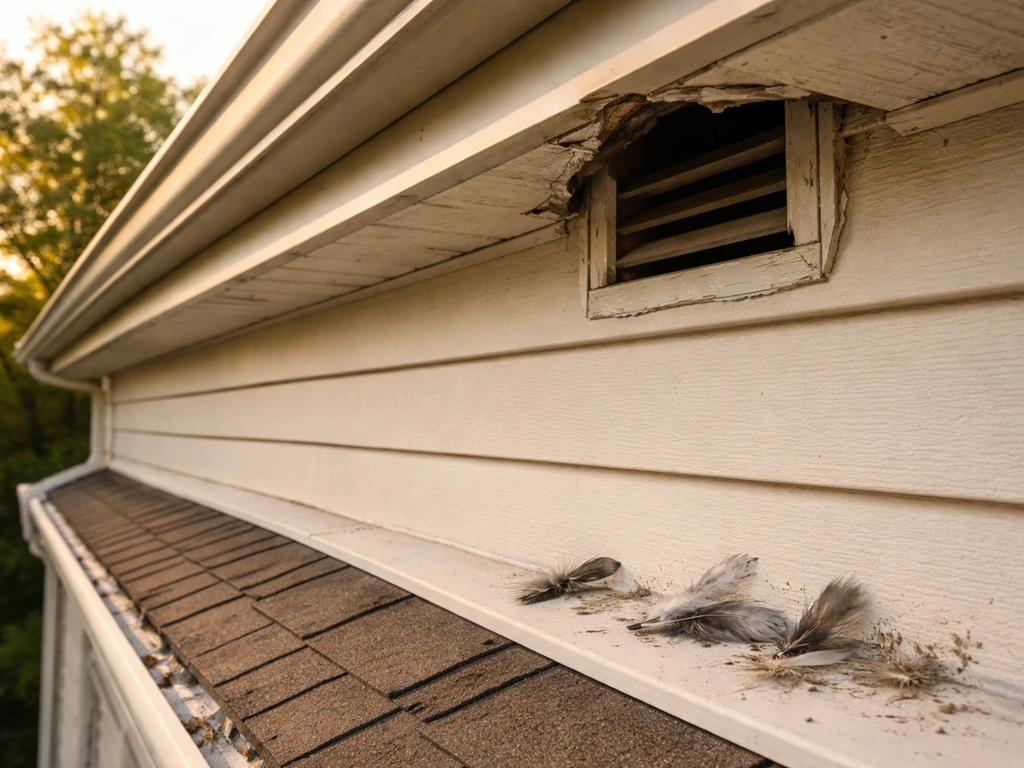
The bird is gone, the adrenaline has faded, and now you have maybe 30 minutes of motivation left. Use it. Walk the exterior of your home or building and look for the entry point before you forget about this incident.
Common entry points to check
- Unscreened or damaged attic vents
- Gaps where the chimney meets the roofline or siding
- Rotted or loose soffits and eaves
- Loose or missing window screens
- Open or unscreened dryer vents, bathroom exhaust vents, or range hood vents
- Pet doors left open or unlatched
- Gaps around utility pipes or electrical conduits entering the building
- Warped or damaged siding boards with gaps behind them
- Open garage doors left unattended for extended periods
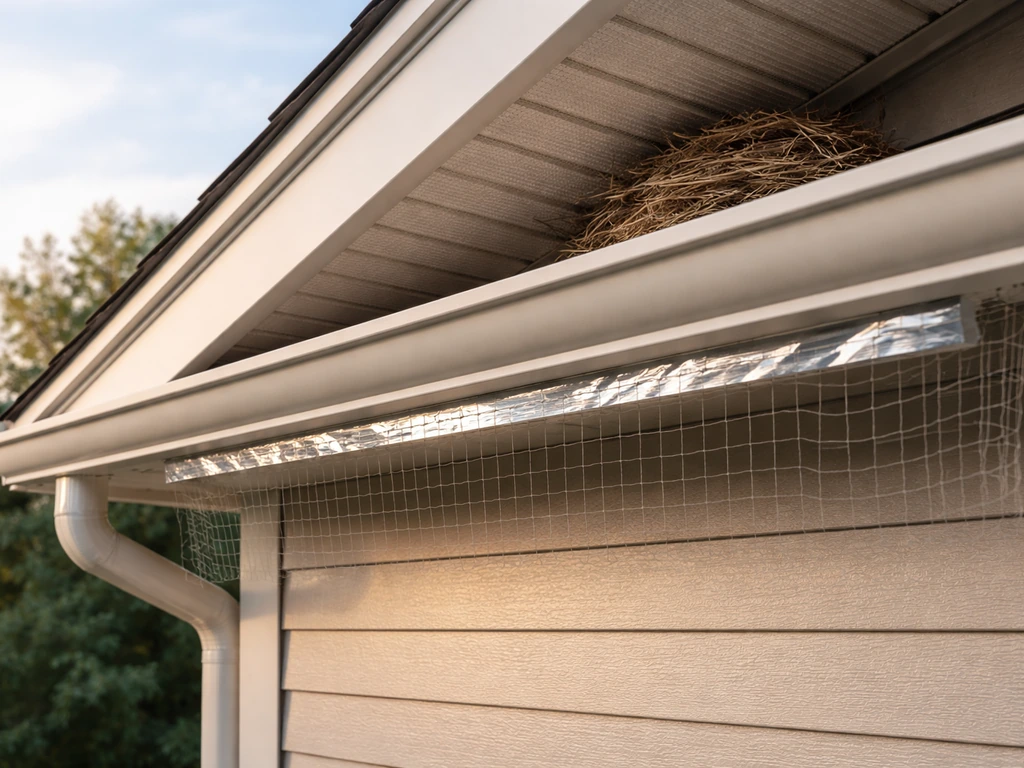
Look for feathers, droppings, or scratch marks near potential openings. These are reliable signs that a bird has been using an entry point repeatedly, not just today. Also check for nest material: grass, twigs, or debris packed into a vent or gap means a bird has been using the space for longer than you realized. Do not seal an active nest with eggs or chicks inside. Observe first, seal later once it is unoccupied. To discourage a bird from returning to its nest, make sure entry points are sealed only after the nest is unoccupied and remove nesting materials once the bird is out Do not seal an active nest with eggs or chicks inside..
While you are outside, remove or secure any attractants: pet food bowls left outdoors, open trash bags, birdfeeders placed too close to windows or vents, or standing water near entry points. These do not directly cause entry but they keep birds active around your building and increase the odds of accidental re-entry.
Long-term proofing plan: keep it from happening again
One entry event is a coincidence. Two or more is a building vulnerability. The good news is that most common entry points are easy to seal with basic hardware. A seasonal check schedule keeps the problem solved without much ongoing effort.
Seal gaps and vents the right way
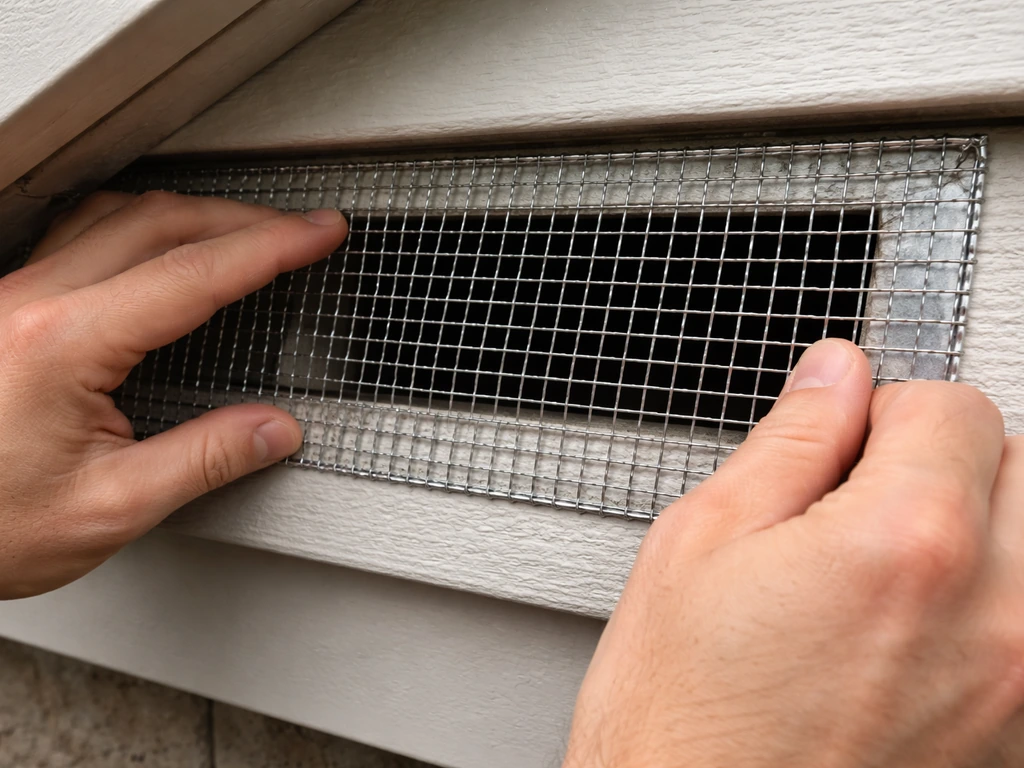
Any gap a quarter-inch or larger is a potential entry point for small birds. Use hardware cloth (half-inch galvanized mesh) to cover attic and soffit vents while still allowing airflow. Replace damaged window screens with tight-fitting frames. Install vent covers with internal flaps on dryer and bathroom exhaust vents so they open only when air is actively moving through them. For gaps around pipes and conduit, use caulk or expandable foam rated for exterior use. For larger structural gaps in soffits or siding, the fix is a carpentry repair, not just a stuffed cloth or tape.
Reduce window collision risk
Windows kill far more birds than entry events. If birds regularly fly at your windows, it is usually because they see a reflection of trees or sky and perceive open passage. At night, interior lights shining outward cause the same problem. Practical fixes include applying window collision tape or decals in a grid pattern (spaces no wider than 2 inches by 4 inches horizontally), closing interior blinds at night, and turning off non-essential interior lighting after dark. These are the same measures that reduce repeated entry attempts from birds that have learned your building is a source of food or nesting opportunities.
Seasonal maintenance schedule
| Season | What to check and do |
|---|---|
| Early spring (March–April) | Inspect all attic vents, soffits, and eaves before nesting season begins. Seal gaps now before birds select nesting sites. Check chimney caps before swifts arrive. |
| Late spring to summer (May–August) | Do NOT seal active nest sites. Observe vents and openings for activity. Note locations for post-season sealing. Keep garage and shed doors closed when unattended. |
| Fall (September–October) | Once nests are vacated, seal all identified entry points. Install or replace vent covers. Repair damaged screens before winter. |
| Winter (November–February) | Walk the exterior after any major storm. Ice and wind damage can open new gaps in soffits, flashing, and siding. Repair promptly before spring nesting season. |
Manage roosting and landing areas
If birds regularly roost on ledges, sills, or HVAC equipment on your building, that increases how often they explore entry points. Sloped ledge covers, stainless steel bird spikes (installed correctly so they do not trap birds), and reflective tape on flat surfaces near vents are all humane deterrents that reduce roosting without harming birds. These dovetail with strategies covered more thoroughly in related topics on keeping and scaring birds away from buildings. These dovetail with strategies covered more thoroughly in related topics on keeping and scaring birds away from buildings.
When to stop DIY and call wildlife control
Most bird-in-house situations are solved in under an hour with the steps above. But there are specific circumstances where calling a licensed wildlife rehabilitator, animal control, or a professional wildlife removal company is the right move, not a last resort.
Call for help when you have any of these situations
- The bird is visibly injured: bleeding, a wing held abnormally low, or unable to stand. Do not attempt to guide an injured bird out. Contain it in a ventilated box and call a wildlife rehabilitator.
- You cannot identify the species and it is large, has talons, or is behaving aggressively. Raptors (hawks, owls, falcons) require trained handling and may be federally protected under the Migratory Bird Treaty Act.
- The bird appears to be a chimney swift, purple martin, or any species you suspect may be protected. Under federal law (50 CFR 21.14), you are allowed to humanely remove a migratory bird that is trapped in your home under specific conditions, but if you are uncertain, getting professional guidance first protects you legally.
- Your DIY attempts have failed after 30 to 60 minutes and the bird is becoming increasingly distressed.
- You find evidence of a large infestation: multiple birds, significant droppings accumulation, or nesting activity in an attic or wall cavity. This goes beyond a single-bird removal and may involve structural damage and health hazards.
- The situation involves a chimney with possible swift nesting (typically May through August). Chimney swifts are federally protected and cannot be legally disturbed during active nesting.
- You are in a large commercial building or facility and multiple birds have entered. Scale makes DIY impractical and a professional with netting or exclusion equipment is the faster, safer solution.
What to tell the wildlife professional when you call
- Approximate size and coloring of the bird
- Behavior: flying normally, grounded, aggressive, or unresponsive
- Where in the building it is located
- How long it has been inside
- Whether you have already attempted any removal steps
- Whether you see any signs of nesting or more than one bird
Your immediate action checklist
Use this list right now if a bird is in your home. If you want the overall answer fast, follow these steps for how to make a bird leave your house. Check off each step as you go.
- Turn off all fans in the room immediately.
- Get pets and children out of the room and close that door.
- Close all interior doors to confine the bird to one room.
- Open one exterior window or door fully and remove the screen.
- Close or cover all other windows in the room.
- Turn off all interior lights in the room.
- Leave the room or stand completely still in a far corner.
- Wait 10 to 15 minutes without entering or making noise.
- If no progress after 20 minutes, darken the room completely for 15 minutes, then restore light only at the exit point.
- If the bird is stunned or injured, contain it gently in a ventilated box and call a wildlife rehabilitator.
- Once the bird is out, close the exit and replace the screen.
- Inspect the exterior for entry points within the next few hours.
Your post-event proofing checklist
- Walk the exterior and identify the likely entry point.
- Check all attic vents, soffit edges, chimney flashing, and window screens for damage or gaps.
- Look for feathers, droppings, or nesting material near openings.
- Do not seal any opening with active nest activity inside.
- Purchase and install hardware cloth or vent covers for any unprotected openings.
- Apply window collision tape or decals if birds regularly fly at your windows.
- Schedule a full exterior inspection at the start of next spring before nesting season begins.
- Note the date and location of this incident so you can track whether it recurs.
FAQ
What if I can’t open a window or screen in my house right now?
Yes. Covering more than one exit usually confuses the bird. Open only one exterior door or window and make the rest of the home darker by turning off lights and keeping interior doors closed, then wait quietly for the bird to leave on its own.
How should I guide a bird that is on the floor and not flying?
If the bird is on the floor, reduce your movement and do not try to scoop it. Keep the main exit bright, stay back, and let it walk or hop toward the opening. If it shows signs of injury (stillness, half-closed eyes, repeated window impacts), switch to the injured-bird approach instead.
What should I do if the bird won’t leave and keeps moving to other rooms?
Use the “quiet and dark, one bright exit” rule first. If the bird keeps reappearing in different rooms, you likely have more than one open pathway. Close interior doors, confirm only one exterior opening is accessible, and then wait again for 5 to 10 minutes before taking other action.
My bird keeps slamming into a specific window. Is it injured?
If the bird is repeatedly hitting a window, treat it as panicked rather than injured. Create one bright exit away from that window, dim interior lights, and physically block access to the problematic window if you can do so without chasing the bird.
Should I put food or a water bowl out to lure it toward the door?
Do not offer food or water indoors while you are trying to guide it out. Leaving attractants inside increases darting and stops the bird from focusing on the exit.
Is it safe to pick up the bird if it seems calm?
Wear gloves when handling, even if it looks calm, and avoid bare-hand contact. For a window-strike bird that seems dazed, place it in a small ventilated cardboard box with paper towel lining and keep it dark and quiet away from pets until it either recovers or you arrange help.
What if opening the obvious door would let the bird escape into an attached garage?
Open windows and doors can accidentally let the bird escape to the wrong area (garage, porch, or a different room of a multi-level home). If possible, create a single controlled exit, like one exterior opening to the outside, and close off other exterior doors during the process.
Can I guide it with my hands or by chasing it toward the exit?
In most cases, no. Move slowly and keep your distance. Chasing increases collisions and exhaustion. If you must guide it, do so indirectly by controlling lighting and blocking multiple windows, not by physically pushing it.
How long should I wait before sealing entry gaps after the bird leaves?
After the bird is out, do a quick entry-point scan while it is still fresh in your mind. Look for feathers, droppings, scratch marks, and nest material, but avoid sealing any spot that could still contain eggs or chicks. Only seal once you are sure it is unoccupied.
What household items most commonly keep birds re-entering after I fix the gap?
Check for attractants that keep birds active around the building. Secure pet food, trash, and bird feeders, and remove standing water near likely entry points, since these can cause repeated visits even after the first exit attempt.
If birds keep coming to my windows, should I address roosting or only entry holes?
Yes, roosting can raise the frequency of indoor visitors. Humane deterrents like sloped covers, properly installed bird spikes, and reflective tape near ledges and vents can reduce how often birds explore entry points.