The fastest and most effective way to get a bird to leave a building is to control light and exits: open the door or window you want the bird to use, darken everything else, and then step back and give it time. If you are trying to scare away a bird outdoors, focus on making the area less inviting and more difficult to approach, rather than chasing it.
How to Get a Bird to Leave a Building Safely
Maya Carver
22 Mar 2026
You can also learn how to make a bird leave your house by focusing on controlling the light and openings, then guiding it calmly toward the exit. That single approach handles the majority of situations. Everything beyond that is about troubleshooting when the basics don't work fast enough, or when the bird is in an awkward location that needs a slightly different setup.
Everything beyond that is about troubleshooting, and if you need a step-by-step version of how to guide a bird out of your house, follow the linked guidance for the same basics and common fixes.
Immediate safety steps and setup
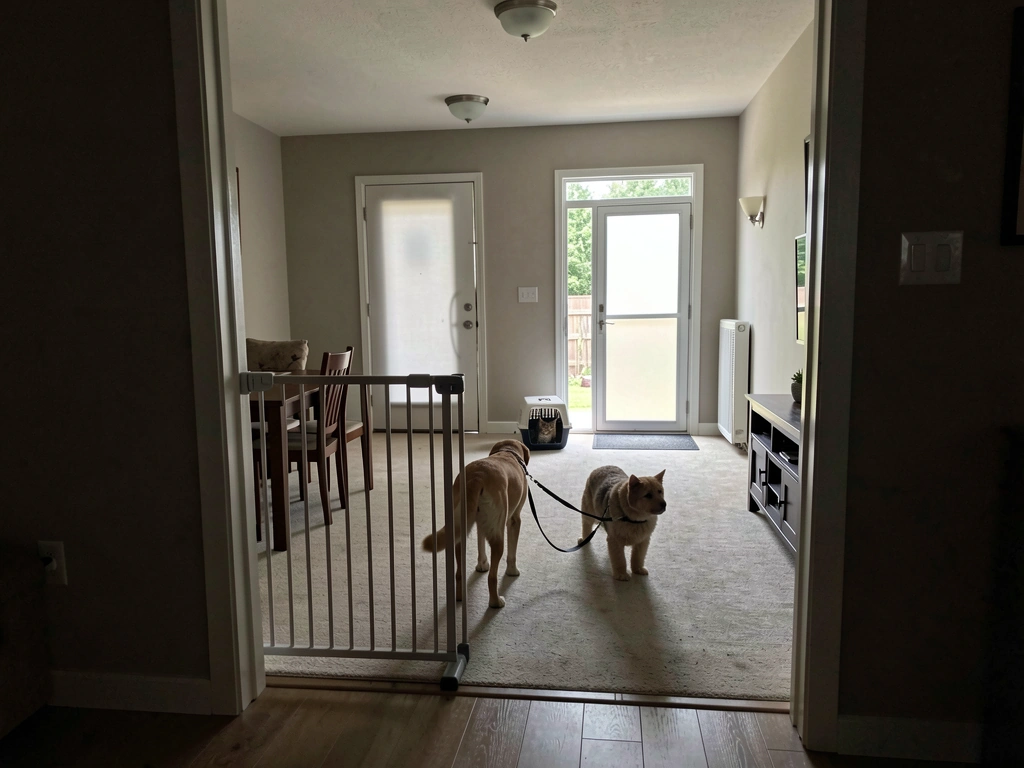
Before you do anything else, get people and pets out of the immediate area. Dogs, cats, and even curious kids create chaos that keeps a bird agitated and flying erratically. A stressed bird that keeps crashing into walls or windows is a bird that is harder to guide out and more likely to injure itself. Clear the space first.
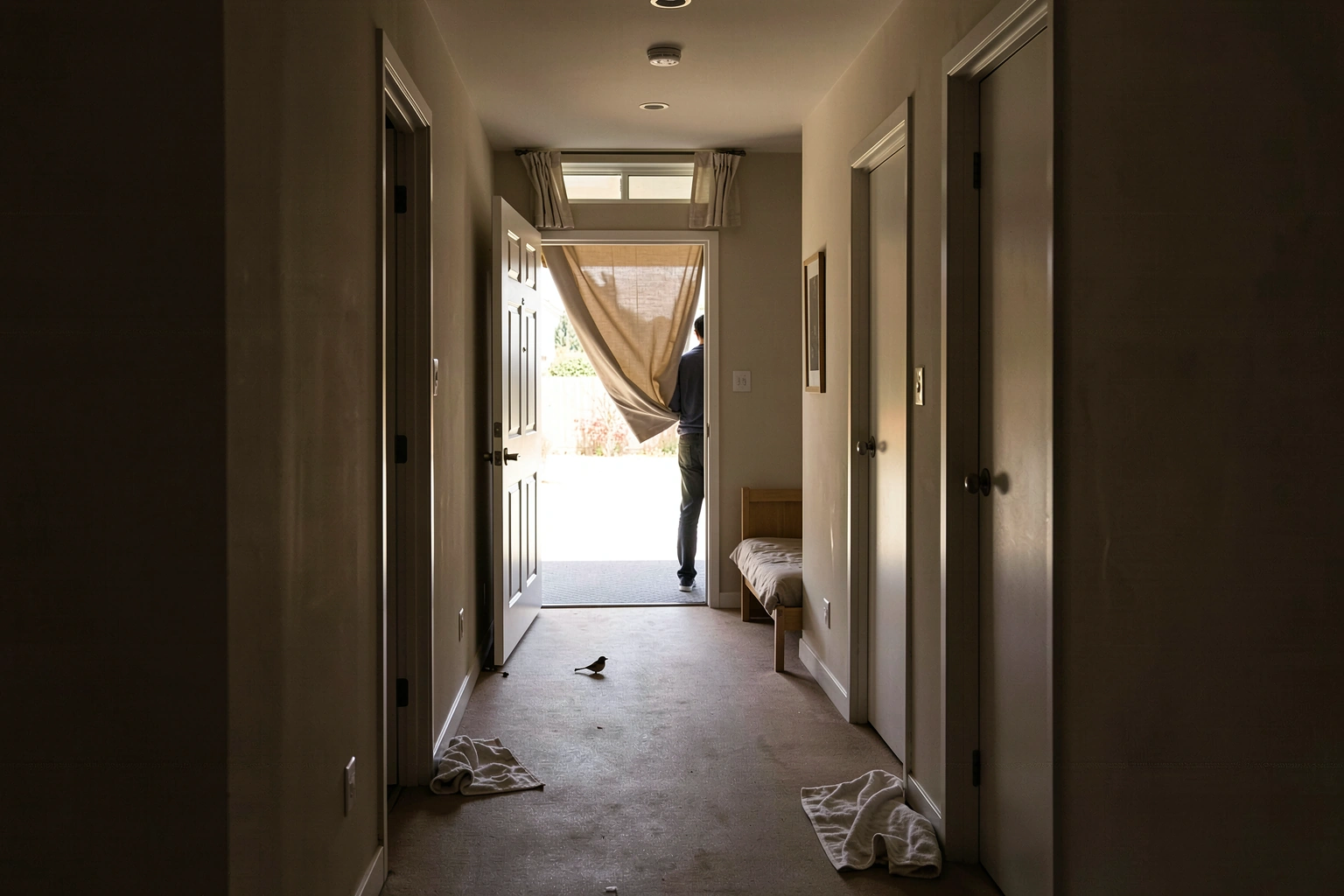
Once the area is calm, identify the closest exit to where the bird currently is. That becomes your target. Close every interior door between the bird and deeper parts of the building so the bird cannot spread further inside. The goal is to shrink its world down to one room (or one corridor) that has a single obvious way out.
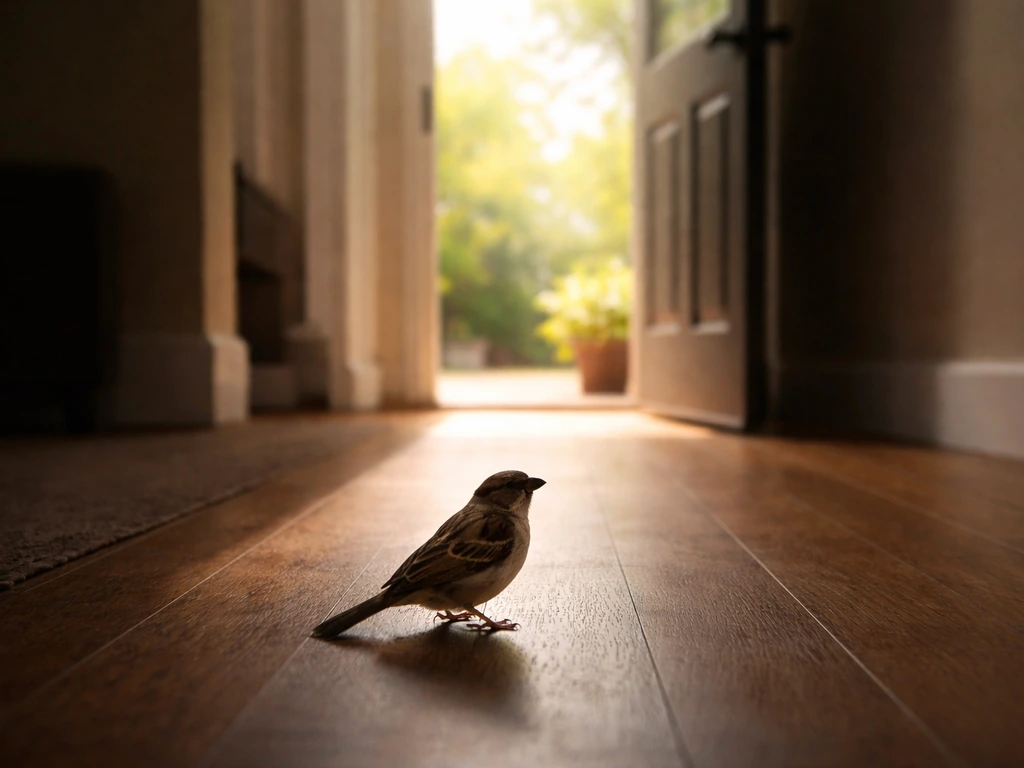
Now open that exit, whether it is a door to the outside, a window, or both, as wide as it will go. Remove the screen if possible, because birds often do not understand that a screen is not solid. Then turn off every interior light in the room. The idea is to make the outside opening the brightest, most obvious point in the space. Birds are naturally drawn toward light, and when the exit is the only bright spot, they tend to move toward it on their own.
If there are skylights or other windows that let in light but do not lead outside, cover them with curtains, cardboard, or anything else on hand. The RSPCA specifically recommends using only one source of light during a trapped-bird situation, because multiple light sources disorient the bird and make it harder for it to navigate toward the exit. The San Diego Humane Society gives the same advice for larger buildings: make the interior as dark as possible and let the open exit be the single beacon.
How to encourage the bird to exit
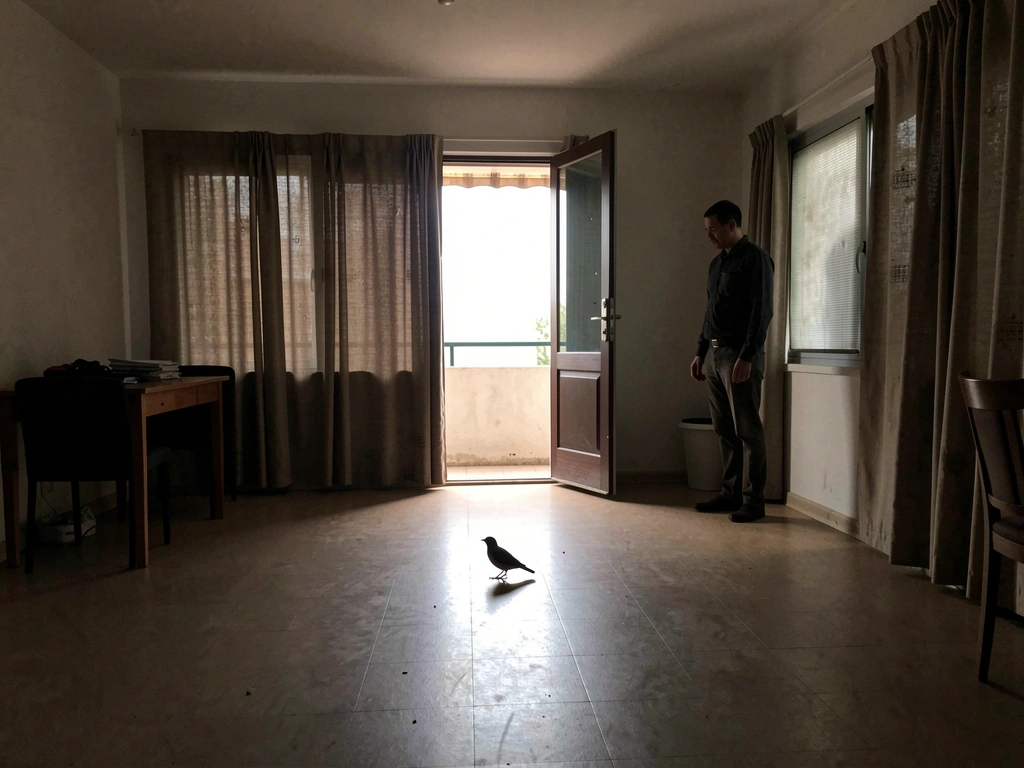
Once the room is set up correctly, your most important job is to do as little as possible. After the bird is safely out, you can also use deterrents and entry-point fixes to prevent it from coming back into your home. Stay quiet, move slowly, and position yourself behind the bird, between it and the back of the room, so your presence gently nudges it toward the exit rather than away from it. Laura Erickson's bird rescue guidance describes exactly this approach: darken the room, open the outside door, and move quietly behind the bird to guide it out without forcing contact.
Give it time. Birds that are disoriented or tired often need several minutes to settle, get their bearings, and then find the exit on their own. The Houston Humane Society Wildlife Center notes that birds become disoriented easily while flying indoors, which is exactly why the controlled environment matters so much. Rushing the process by moving quickly or making noise just resets the bird's panic response and adds more time to the whole ordeal.
If the bird is flying in circles near the ceiling or upper walls, resist the urge to wave it down. Let it tire. A bird that has been flying hard for a few minutes will eventually land and rest, and that is your best opportunity to guide it toward the exit. Once it lands and is still, you can move slowly toward the back of the room to shift its direction without causing another panic flight.
Room-by-room tactics for common locations
A single room with an outside window or door
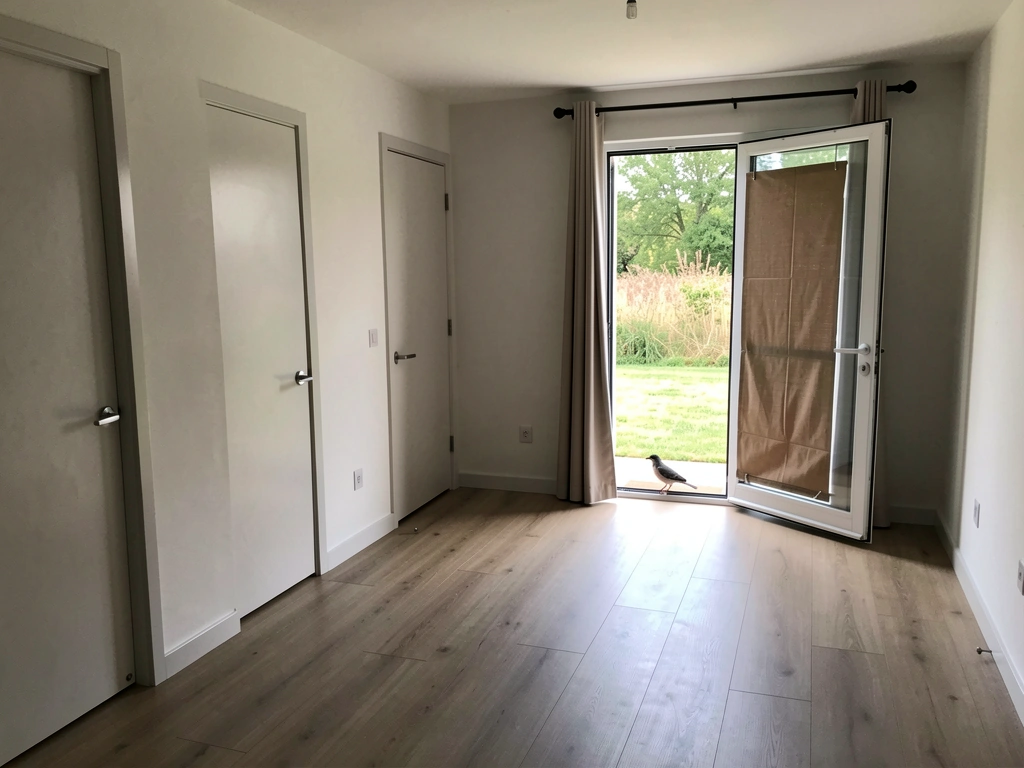
This is the easiest scenario. Close all interior doors so the bird is contained in just that room. Open the window or door to outside as wide as possible, remove any screen, cover all other light sources, turn off the lights, and wait. The San Diego Humane Society advises confining the bird to as small an area as possible and as close to an open exit as possible, which is exactly what this setup achieves. Most birds find their way out within 10 to 30 minutes under these conditions.
A hallway or open-plan area
Hallways and open floor plans are trickier because there are more directions for the bird to go. Close off as many interior rooms and branching corridors as you can, then identify the nearest exterior door and open it fully. Use towels, sheets, or cardboard propped in doorways to block off sections you cannot close with a door. The Skunk Corner's guidance emphasizes limiting the bird's ability to choose multiple routes, creating one controlled path to the outdoors. Once you have narrowed the corridor, position yourself behind the bird and let it work its way to the light.
A large open building (warehouse, gym, atrium, or large retail space)
Large buildings with high ceilings are the hardest situations because the bird has enormous airspace and may have trouble finding a single exit. The San Diego Humane Society's guidance for larger buildings is to make the building as dark as possible, covering skylights and turning off all interior lights, then opening the exit doors and letting the bird navigate toward the light. If the building has loading dock doors or large roll-up doors, those are ideal because they provide a wide, obvious opening. Be patient here. It can take longer than in a small room, and the bird may need several attempts before it finds the exit.
A chimney or enclosed interior space
Birds stuck in chimneys or narrow enclosed spaces need a different approach. If the bird is still inside the chimney flue, the RSPCA recommends opening the fireplace damper, placing a light source inside the fireplace to attract the bird down and out, then carefully transferring it outside. If the bird has already dropped into the firebox, close the damper above it, open the fireplace doors slowly, and let it fly into the room, then use the standard room-exit method from there. Keep the room dark except for the exterior window or door.
What not to do
Chasing the bird is the single biggest mistake people make. Running at a bird, waving arms, or herding it aggressively triggers a full panic response, which causes the bird to fly faster, crash into things, and exhaust itself far more quickly. An exhausted bird that has collided with windows repeatedly is a bird that may need medical attention, which is a much more complicated problem to solve.
- Do not chase or herd aggressively. Slow, calm movement is the only kind of movement that helps.
- Do not block or partially close the exit while the bird is nearby. It needs a clear, unobstructed path.
- Do not throw towels or blankets at a bird that is still flying. The RSPCA warns that doing this can worsen any existing injuries and cause new ones.
- Do not try to grab the bird mid-flight. This rarely works, usually causes injury, and dramatically increases the bird's stress level.
- Do not open multiple exits at once unless they all lead directly outside. Multiple openings just give the bird more confusing choices and more opportunities to fly deeper into the building.
- Do not give the bird food or water inside the building. It does not help it leave, and offering food or water to a potentially injured bird can cause harm according to wildlife rescue guidance from the Center for Wildlife.
- Do not let children or pets back into the area until the bird is out.
If the bird won't leave: troubleshooting and escalation
If you have had the exit open, the lights off, and the space calm for 20 to 30 minutes and the bird still has not moved toward the exit, try resetting the setup. If you need a more specific alternative, this guide also explains how to make bird go away when the basic exit method is not working. Check that no other light sources are competing with the exit opening. Make sure no one is standing near the exit and inadvertently blocking or startling the bird. Sometimes simply repositioning yourself further behind the bird and moving very slowly toward it is enough to shift it in the right direction.
If the bird has landed and is resting, Columbus Audubon recommends a low-contact guiding method: place a box on its side near the resting bird and use a small towel to gently push the bird into the box, then carry the box outside and tip it open. This only works when the bird is calm and stationary, and contact should be minimal. Use this as a last resort before calling for help, not as a first step.
The RSPCA uses three hours as a general escalation threshold. If the bird has not made meaningful progress toward the exit after roughly three hours of proper setup, it is time to contact a wildlife rehabilitator or animal control. The bird may be injured, ill, or simply too disoriented to respond to environmental cues without hands-on assistance.
If you need to temporarily contain the bird while waiting for help, the guidance from multiple wildlife organizations is consistent: use a towel to drape over the bird gently, pick it up with both hands, and place it in a cardboard box lined with a paper towel or cloth. Put a lid or a towel over the top of the box to keep it dark and calm. Do not force-feed it or give it water.
Keep it in a quiet, dark, room-temperature space and wait for professional guidance before doing anything else. San Diego Humane Society’s Wildlife Help Hub also recommends keeping the bird in a dark, quiet room during temporary containment keep it in a quiet, dark, room-temperature space.
If you are trying to keep a bird away after it is out, keep indoor lights and entrances secured so it does not return quiet, dark, room-temperature space.
When to call wildlife control and how to handle the bird safely
Call a licensed wildlife rehabilitator or your local humane society right away, rather than waiting three hours, if the bird is visibly injured (a drooping wing, inability to stand, blood), if it appears to be a raptor (hawk, owl, falcon), if it is clearly juvenile and not capable of flying well, or if it is in a location that makes safe DIY intervention impossible, such as a high ceiling or behind equipment.
To find help quickly, the Bi-State Wildlife Hotline and similar regional organizations direct people to resources like Animal Help Now, an online tool that locates licensed wildlife rehabbers by ZIP code. The Florida Fish and Wildlife Conservation Commission, Alabama Wildlife Center, and most state-level wildlife agencies have similar referral systems. If you reach a voicemail, leave a message and wait for a return call before attempting any capture or transport, as the Alabama Wildlife Center specifically advises.
For basic handling when you do need to pick up a bird, keep these points in mind. Always wear gloves if you have them. Use a lightweight towel to drape over the bird and scoop it up gently, supporting its body from underneath. Place it in a cardboard box with a secure lid and ventilation holes.
Do not put it in a cage where it can see out and thrash against the bars. Keep the box in a quiet spot away from pets, children, and direct sunlight. The U. S.
Fish and Wildlife Service guidance is clear that you should not try to force-feed or give water to a confined bird, and the Open Sanctuary Project advises waiting for professional guidance before attempting any further intervention beyond basic containment.
Once the bird is out of the building, take a few minutes to figure out how it got in and close that entry point. A gap in a screen, an uncapped chimney, or a door left propped open are the most common culprits. Solving the entry issue prevents the same problem from happening again, which is worth doing before the next nesting season or migration period arrives.
If you also want to prevent birds from coming back, it helps to know how to keep a bird away using the right deterrents and entry-point fixes. If you still need a plan after it is gone, this guide also covers how to scare away a bird using the right deterrents and entry-point fixes. how to scare away a bird.
Quick reference: the core method at a glance
- Remove people and pets from the area immediately.
- Close all interior doors to contain the bird in one space.
- Open the nearest exterior exit (door or window) as wide as possible and remove any screens.
- Turn off all interior lights and cover any competing light sources (skylights, windows that face inside).
- Position yourself quietly behind the bird and wait.
- If the bird is not moving after 20 to 30 minutes, gently reposition yourself to shift it toward the exit.
- If the bird lands and rests, use a box-and-towel method to guide it out with minimal contact.
- If no progress after roughly three hours, or if the bird appears injured, call a licensed wildlife rehabilitator.
FAQ
What if the bird is already near a door or window, but it keeps turning away from it?
Double-check that the exit is the brightest option in the bird’s immediate room. Turn off all nearby interior lights, cover skylights that spill light into the room, and avoid standing in the bird’s line of travel from the back. If people are nearby or the exit is partially blocked (even by a towel or chair), reposition so the exit opening is clear and unobstructed.
Can I use my flashlight or phone light to help guide the bird?
Avoid adding moving light sources. Even if you are trying to help, flashlights and phone screens can create competing “beacons” that pull the bird in the wrong direction. Use only one dominant light situation, with the exit opening as the main bright spot.
Should I close curtains or blinds outside the room to make the exit brighter?
Don’t close the exit, but you can darken anything that competes with it. If there are other bright windows in the same room, close curtains or cover those openings so the bird sees one clear way out. Leave the door or outside window fully uncovered and as wide as possible.
What if the exit I want is on the second floor, and the bird is on the first floor?
Focus on the nearest safe exterior exit first, even if it is not the “best” one. If the closest door is upstairs, narrow the bird’s space toward that level by closing interior doors on the first floor to reduce routes, then repeat the same light-and-exit setup for the selected upstairs exit once the bird is near it.
Is it okay to open multiple doors or windows to the outside at the same time?
Usually no. Multiple outside openings and extra interior lights create several potential directions and can prolong the situation. Keep only one target exit “open wide” in the area the bird is confined to, and close or block other pathways you are not using.
How long should I wait before I decide it is not working?
If you have maintained the correct setup (exit open wide, room dark except the exit, minimal movement and noise) and there is no meaningful progress after about 20 to 30 minutes, reset the conditions. If proper setup still does not produce progress after roughly three hours, contact a licensed wildlife rehabilitator or animal control for hands-on help.
What should I do if the bird lands and goes still, and I’m afraid to startle it?
Give it calm time to settle before changing anything. When you do approach, move slowly and stay behind the bird to encourage direction toward the exit. If it remains stationary, avoid sudden gestures or loud talking, since that can trigger another panic flight and collisions.
Are there signs that I should call for help immediately rather than trying the setup?
Call sooner if the bird shows visible injury (blood, drooping wing, difficulty standing), appears to be a raptor (hawk, owl, falcon), is clearly a juvenile that cannot fly well, or is in a situation where containment and lighting control are not practical (such as extremely high ceilings, complex machinery areas, or unsafe access paths). Also call if collisions have already happened repeatedly.
What is the safest way to contain the bird temporarily if it lands somewhere inconvenient?
Use minimal contact. Gently drape a towel over the bird, pick it up supporting its body, and place it in a cardboard box lined with a paper towel or cloth. Keep the box dark with a towel over the top, secure a lid, and ensure ventilation holes. Do not give food or water and keep it away from pets, children, and direct sunlight.
How do I prevent the bird from re-entering after it leaves?
After release, immediately inspect the most likely entry points: gaps in window or door screens, propped-open doors, damaged chimney caps or uncapped flues, and any open vents near where it was first spotted. Repair or block the gap right away, since the same entry routes often cause repeat incidents during nesting and migration periods.
Next Articles
How to Get a Trapped Bird Out of Your House Safely
Humane, step-by-step guide to get a trapped bird out safely, handle injuries, and prevent future entry.
How to Get a Bird Out of Your House Reddit Guide
Step-by-step humane bird escape, DIY fixes, prevention tips, and when to call wildlife experts for indoor bird incidents
How to Help a Bird Get Out of a House Safely
Humane, safety-first steps to help a trapped bird exit your house, plus DIY escape tips, fixes, and prevention.