The fastest way to lure a bird out of your house is to darken the room, open the largest exit you have (a door or wide window), and let light do the work. Birds instinctively fly toward bright openings, so removing distractions and creating blank" rel="noopener noreferrer">one obvious lit exit is usually all it takes. If you act calmly and follow a few simple steps, most birds are out within 10 to 20 minutes. Once the bird is out, use the same calm, light-and-exit approach described in our guide on how to scare a bird out of house.
How to Lure a Bird Out of Your House: Safe Steps
Maya Carver
29 Apr 2026
Your immediate emergency plan
Before you do anything else, take 30 seconds to set up the situation correctly. Rushing at the bird, turning on more lights, or trying to grab it will make things harder and more stressful for both of you.
- Close off the room. Shut interior doors, closets, and any openings that lead deeper into the house. You want the bird contained in one space.
- Cover mirrors and windows that don't open. A bird can't tell glass from open air and will repeatedly fly into it. Drape a towel, blanket, sheet, or cardboard over any glass surface that isn't your exit point.
- Turn off all lights in the room. Darkness removes competing light sources and makes your chosen exit the obvious bright target.
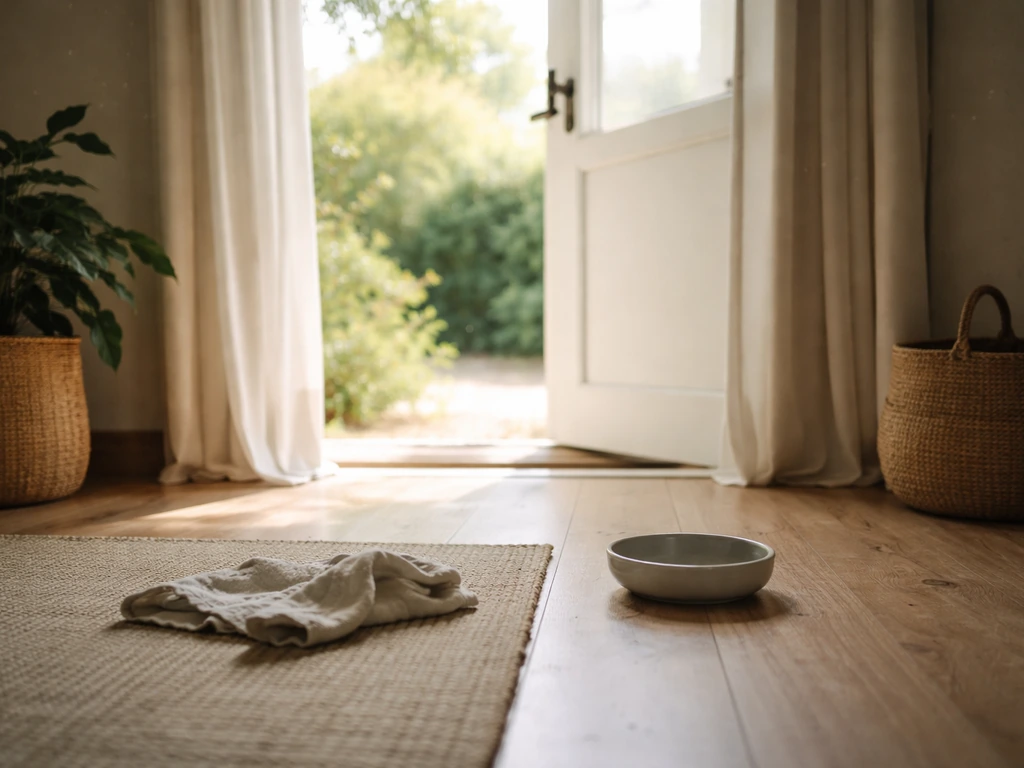
- Open your largest exit fully. A wide exterior door is ideal. If you only have windows, open the biggest one completely and remove the screen.
- Step back and give the bird space. Stand quietly near a wall, away from the exit. Wait 5 to 10 minutes. In many cases, the bird will find the opening on its own.
- If the bird is still inside after 10 minutes, use a slow sheet-herding technique (described below) to gently guide it toward the exit.
For garages and sheds specifically, the Wisconsin Humane Society recommends covering non-opening windows with a blanket or thick paper so the bird doesn't mistake the glass for an exit, turning off the interior lights, and then opening the main garage door wide. The bird will almost always fly toward the outside light and leave on its own.
Humane luring tactics that actually work
Use light as your main lure
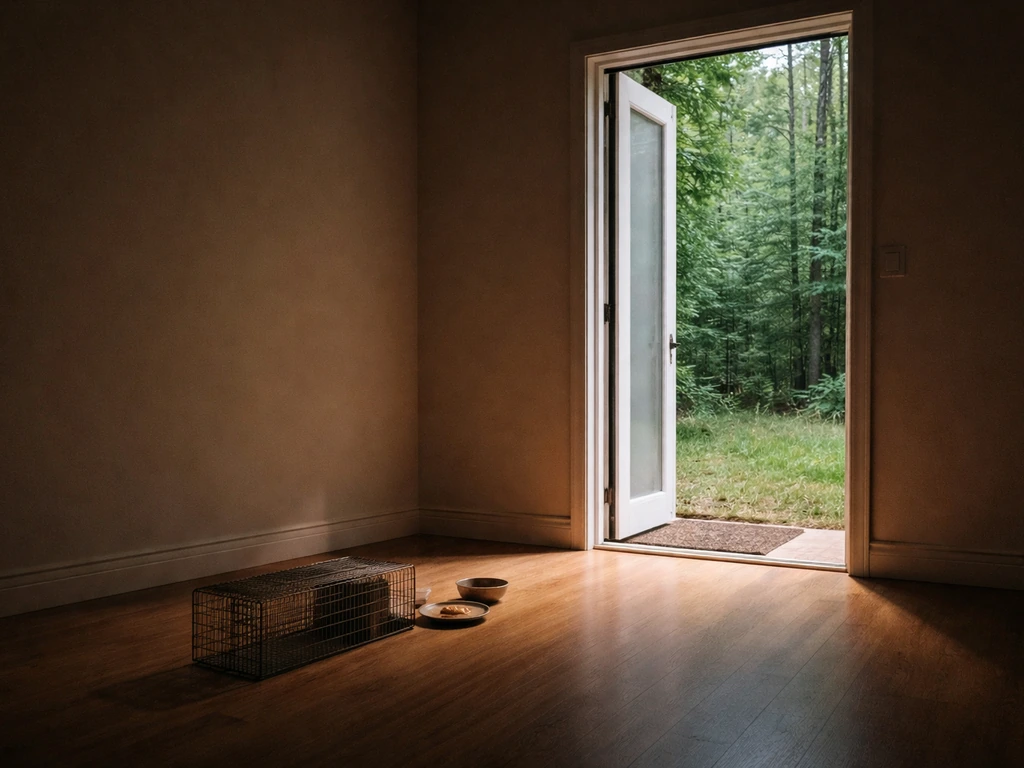
Light is your most effective tool. Birds are strongly drawn to bright openings and will almost always orient toward them when the rest of the space is dark. The key is contrast: the exit needs to be noticeably brighter than everything else in the room. On a sunny day, opening an exterior door wide and pulling curtains shut on all other windows creates that contrast immediately. At night or on overcast days, you can place a flashlight or a bright lamp just outside the exit pointing inward, creating an artificial beacon.
The sheet-herding method
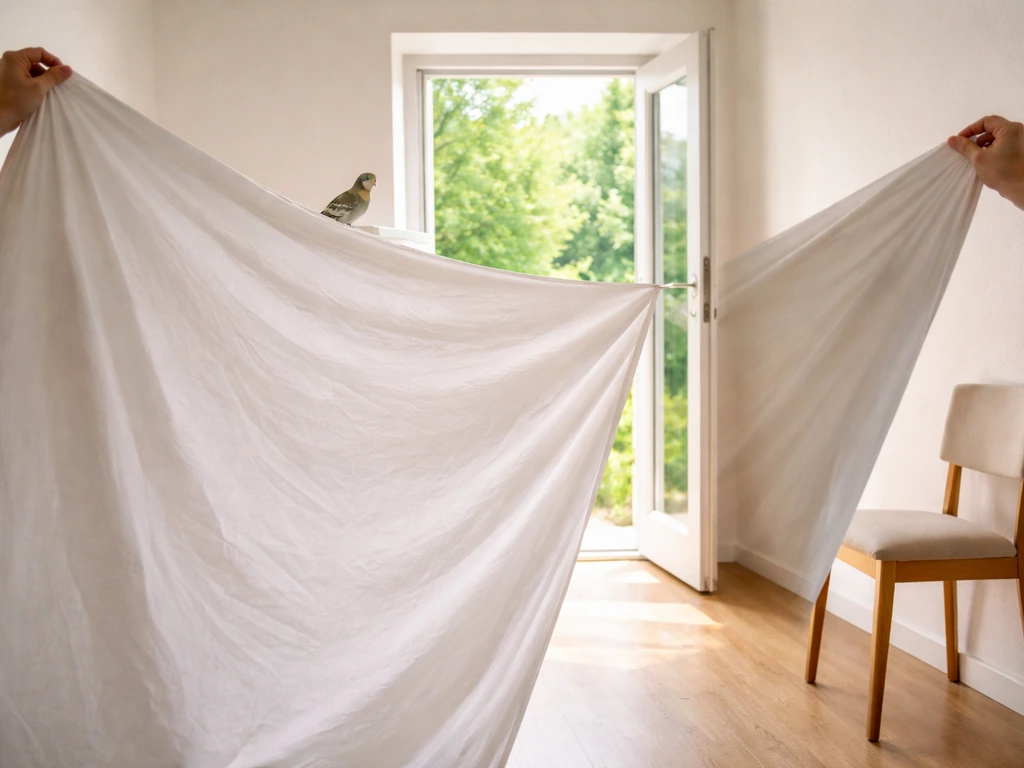
If the bird isn't moving toward the exit on its own, the Canadian Wildlife Federation recommends using a large sheet as a gentle visual barrier. Hold the sheet up high with both hands so it forms a wide wall, then slowly and quietly walk toward the bird from the far side of the room, moving it in the direction of the open exit. Do not flap, shake, or rush with the sheet. The idea is to make the bird's only comfortable option the open door or window ahead of it. This works best with a second person: one person holds the sheet, the other stands near the exit ready to step aside and give the bird a clear path out.
Creating a clear exit path
Remove any furniture or objects blocking a straight line between where the bird is perching and the exit. Birds tend to fly in straight lines when frightened, so a clear runway matters. If the room has a long hallway between the bird and the outside door, prop every door along that hallway wide open before you begin. The fewer decisions the bird has to make, the faster it leaves.
What about food as a lure?
Placing birdseed or food near the exit can occasionally work for very calm birds, but it mostly slows things down. A stressed bird that just flew into your house is not thinking about food. Stick with light and space as your primary lures. If you need a step-by-step plan for how to get a bird to leave a building, use the light-contrast and clear-exit approach above Stick with light and space as your primary lures.. Food is better used as a last resort or to coax a bird that has been trapped inside for many hours and is exhausted.
Room-by-room troubleshooting
Birds behave differently depending on where they end up. Here's how to handle the most common situations.
Living room or bedroom
These rooms usually have the most windows and mirrors, which is part of why birds panic here. Cover all non-exit glass first, then open a single large window or door fully. Pull curtains and blinds shut on all other windows. The bird will likely perch high on a curtain rod, ceiling fan blade, or bookshelf. Leave it alone, darken the room, and wait. If it keeps flying into a window you couldn't fully cover, drape a towel over the outside of that window from the frame if you can safely reach it.
Kitchen
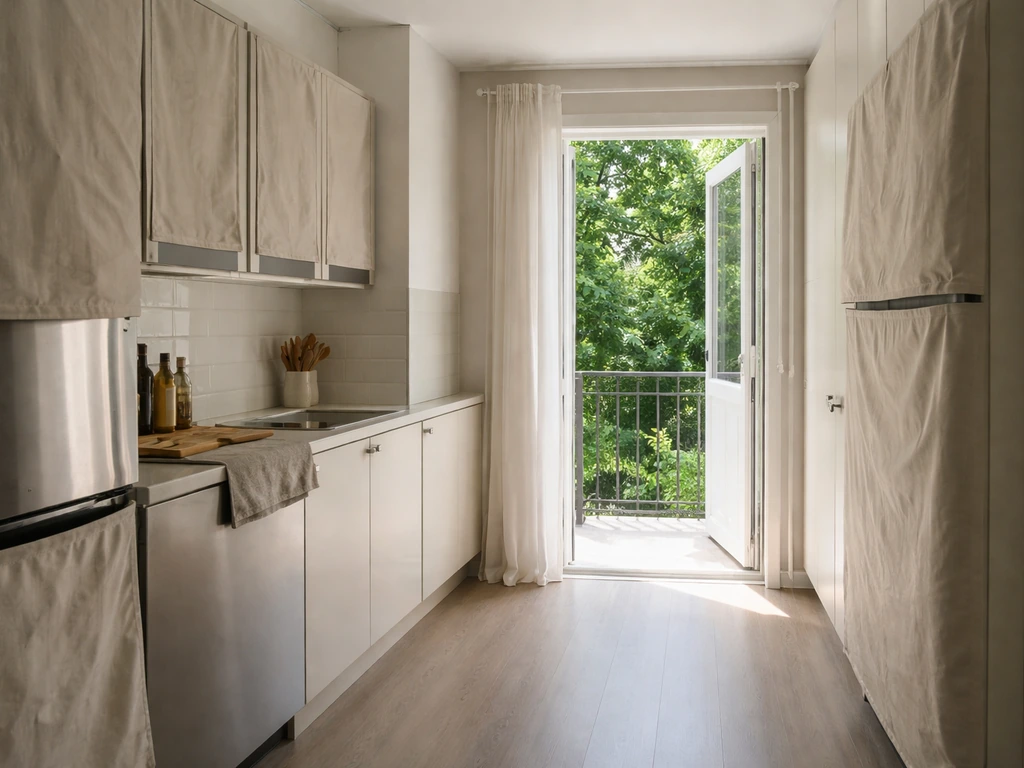
Kitchens are tricky because they often have small windows, no direct exterior door, and lots of reflective surfaces (appliances, glass cabinet doors). Cover all reflective surfaces and glass cabinet fronts with towels. Open the kitchen window as wide as possible and remove the screen. If there's a back door, that's your best exit: open it fully and use the sheet method to guide the bird from the kitchen toward the door. Keep countertops clear and stove burners off.
Garage or shed
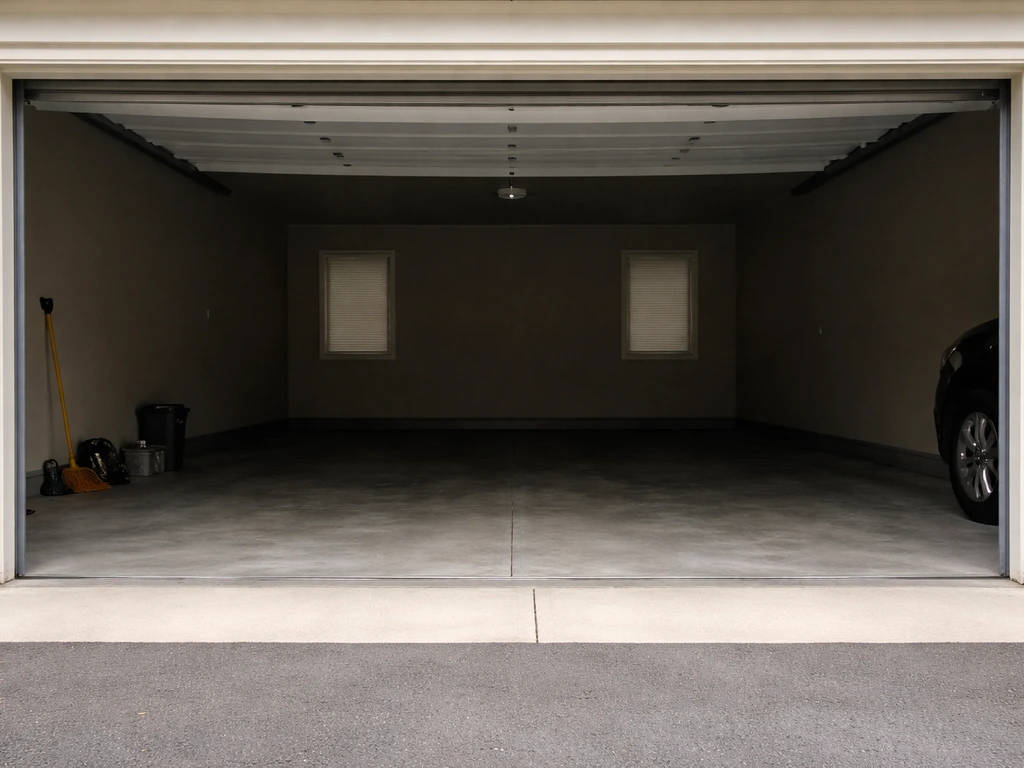
This is usually the easiest scenario. Cover any fixed windows that can't open, turn off interior lights, and open the main garage door or shed door completely. Stand outside and wait. The bird will fly out toward the daylight. If there are multiple windows in the garage, cover all of them except the main door opening.
Attic
Attics are dark by default, which can work in your favor. Open any attic vents, gable vents, or access windows that lead outside. If there's a pull-down stair or hatch, leave it open and turn the attic light off. The bird should be able to find the exterior opening. The bigger concern in attics is whether the bird has been there long enough to build a nest: if you hear persistent chirping over multiple days or find nesting material, stop and read the protected species section below before doing anything else.
Large commercial spaces, warehouses, or common areas
In large buildings with high ceilings, birds can circle for hours without finding an exit because the space is too big for light contrast to work well. The best approach here is to open the largest exterior access point (a loading dock door, roll-up door, or emergency exit) and turn off all interior lights near that end of the building. In facilities with skylights, birds often get trapped flying at the skylight glass: cover or shade those skylights temporarily and open a ground-level exit instead. If the bird is very high up and the building is large, this is a situation where calling a wildlife professional or pest management company with bird experience is genuinely the practical choice.
If the bird is exhausted or injured
A bird that has been flying into windows for an extended time may be dazed and sitting on the floor or a low surface. If it appears alert but just stunned, place a small cardboard box (with air holes) over it gently and slide a piece of cardboard underneath to create a temporary enclosure. Move the box outside and open it away from traffic. If the bird doesn't fly away after a few minutes outdoors, or if it appears to be bleeding, has a wing hanging low, or is unresponsive, contact a licensed wildlife rehabilitator immediately.
What not to do
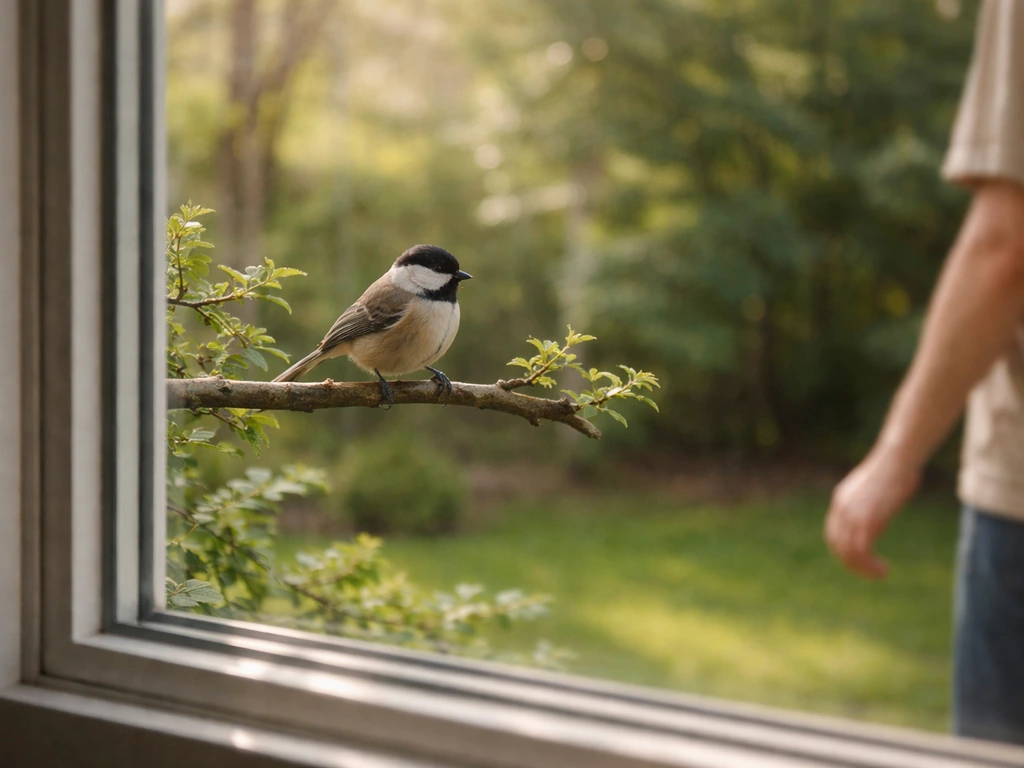
A few common instincts will make this much harder or cause real harm to the bird. Avoid all of these.
- Don't chase or rush at the bird. Sudden movement triggers panic flight and the bird is more likely to collide with glass or injure itself.
- Don't try to catch or grab the bird with your bare hands unless it is clearly injured and not moving. Grabbing a healthy bird causes serious stress and can injure both you and the bird.
- Don't use glue traps. The Wildlife Center of Virginia specifically warns against glue traps because birds caught in them suffer wing and leg dislocations and feather damage that can permanently affect their ability to fly. They are cruel and medically damaging.
- Don't turn on extra lights to 'help.' More lights create more confusion. Darkness is what makes your exit the obvious target.
- Don't leave pets in the room. A cat or dog in the room will keep the bird panicked and prevent it from calming down enough to find the exit.
- Don't use noise, clapping, or loud sounds to scare the bird toward the exit. This causes extreme stress and erratic flight, increasing collision risk.
- Don't disturb a nest. If the bird appears to be nesting or there are eggs or chicks present, most migratory and songbirds are protected under the Migratory Bird Treaty Act (MBTA). Disturbing, moving, or destroying a nest without a federal permit is illegal and can result in significant fines. Stop, back away, and contact a wildlife professional or your state wildlife agency.
- Don't block the bird's retreat route while herding. Always keep a path available behind the bird so it doesn't feel cornered and make a panicked crash.
When to call a wildlife professional
Most birds-in-the-house situations resolve within 30 to 60 minutes using the steps above. If you want the quickest path to safety, follow a clear, repeatable approach for how to make a bird leave your house Most birds-in-the-house situations resolve within 30 to 60 minutes using the steps above.. If you want a step-by-step overview, see this guide on how to guide a bird out of your house. But there are clear situations where calling in a licensed wildlife rehabilitator or a professional wildlife removal service is the right call, not just the cautious one.
| Situation | What to do |
|---|---|
| Bird is injured (bleeding, drooping wing, can't stand, unresponsive) | Contact a licensed wildlife rehabilitator immediately. Do not attempt home treatment. |
| Bird has been inside more than 24 hours and is exhausted | Attempt gentle cardboard-box containment and transport to a rehabilitator. |
| You find a nest with eggs or live chicks inside the building | Stop all eviction activity. Contact your state wildlife agency or USFWS for guidance. Nest disturbance without a permit violates federal law under the MBTA. |
| Bird is in an inaccessible space (inside a wall cavity, deep in ductwork) | Call a wildlife removal professional. DIY attempts risk injuring the bird and damaging your building. |
| Large bird (hawk, owl, heron) is inside a home or small space | These birds have large wingspans and sharp talons. Give them maximum space and call a professional if they don't exit within 15 minutes. |
| Bird of a protected or rare species | Do not attempt handling. Contact USFWS or your state wildlife agency for guidance before doing anything. |
| Bird keeps returning after repeated exits | This suggests an attractant or a structural entry point. A professional can identify the entry hole and advise on legal exclusion methods. |
When you call a wildlife rehabilitator or removal service, have this information ready: the type of bird if you know it, where it is in the building, how long it has been inside, whether it appears injured, and whether you see any signs of nesting. This helps them respond with the right equipment and expertise.
Preventing birds from entering again
Getting the bird out solves today's problem. Once the bird is out, use these same ideas to figure out how to keep a bird away from the spots it used to enter. Sealing entry points and managing attractants prevents it from becoming a recurring one. Here's a practical proofing plan you can work through over a weekend.
Find and seal entry points
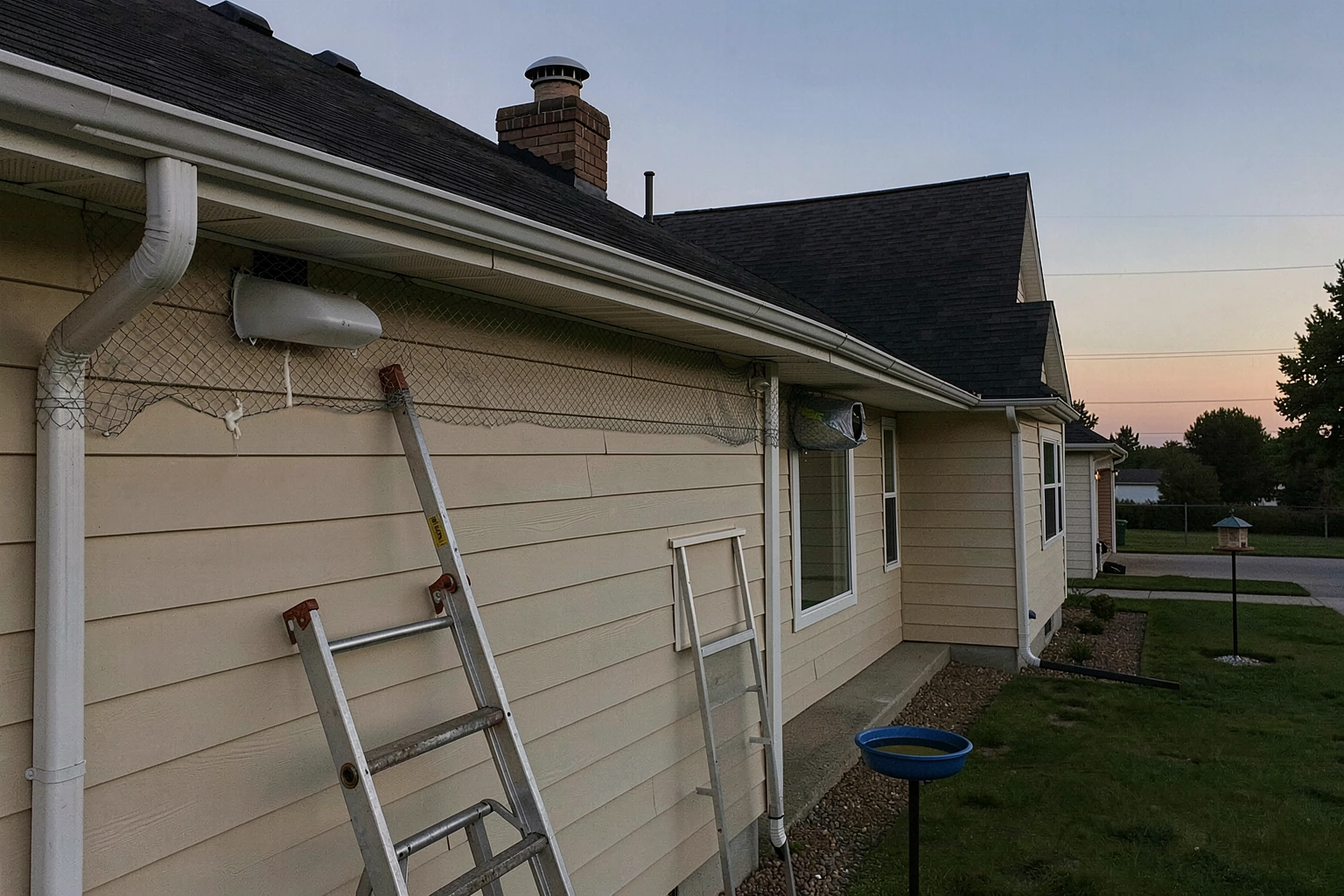
The Washington Department of Fish and Wildlife recommends a simple light-leak method: turn off all interior lights and look for daylight coming through gaps in your walls, roof, eaves, or foundation. Any crack or gap you can see light through is large enough for a small bird. Common entry points include open or broken soffit vents, torn or missing vent covers, gaps around pipe penetrations, unscreened chimneys, damaged fascia boards, open ridge vents, and uncapped exhaust fans. Seal gaps with hardware cloth (1/4-inch galvanized mesh), caulk, or appropriate weather stripping depending on the location. Foam alone is not durable enough for exterior use.
Screen and cap all openings
- Install or repair window and door screens. Make sure screens fit flush with no gaps at the edges.
- Cap your chimney with a commercially available chimney cap that includes a mesh screen.
- Cover all attic, soffit, and roof vents with 1/4-inch galvanized hardware cloth, secured with staples or screws.
- Install draft stops or vent covers on bathroom and kitchen exhaust fans.
- Check and repair any damaged fascia boards or roof edges where birds can squeeze under the roofline.
Manage attractants
Birds enter buildings looking for food, water, or nesting sites. A garage with an open bag of birdseed or pet food is an invitation. Store all seed and pet food in sealed metal or hard plastic containers. Remove standing water sources near entry points. If you have bird feeders, place them at least 10 feet away from the house and avoid placing them near doors or windows that birds could fly through when startled.
Seasonal planning
Spring and early summer (roughly March through June in most of North America) is when bird intrusions spike, because this is active nesting season. Birds are actively searching for sheltered spots, and a gap in your soffit or an open garage door is exactly what they're looking for. Do your inspection and sealing work in late winter, before nesting season begins.
If you miss that window and birds are already nesting inside, remember that you legally cannot disturb an active nest with eggs or young birds under federal law. If birds are already nesting, you may be able to discourage them from the area, but you should avoid disturbing an active nest.
You will need to wait until the nest is abandoned (typically 2 to 6 weeks depending on species) before sealing that entry point, or contact USFWS for permit guidance.
A simple annual maintenance checklist
- Late winter (February): Inspect roof, eaves, soffits, vents, and chimney before nesting season. Seal any gaps found.
- Spring (April): Check window and door screens for tears or gaps after winter. Replace any damaged screens.
- Summer (June to August): Monitor attic and garage for signs of bird activity (droppings, feathers, chirping). Address any new gaps immediately.
- Fall (October): Do a second full exterior inspection. Seal any new gaps before winter. This also prevents other wildlife from entering for warmth.
- Year-round: Keep garage doors and exterior doors closed when not in active use. Don't prop them open for extended periods.
Once you've got the current bird out safely and your entry points sealed, the problem is usually solved for good. The birds aren't targeting your home personally. They're opportunists looking for the easiest shelter available, and a well-sealed building with no food left out simply isn't worth their effort.
FAQ
Should I turn on every light in the house to help the bird find the exit?
No. Turning on multiple rooms increases the number of “bright options” and breaks the light contrast. Instead, darken the room(s) the bird is in, then make one exit noticeably brighter than the rest of the space (for example, an open door with a lamp or flashlight just outside at night).
What if the bird keeps flying back to the same room after I open the door?
Give it a clear runway and reduce choices. Cover reflective glass and cabinet fronts in that room, remove objects that block a direct path to the exit, and keep every door between the bird and the exit closed or propped open appropriately to avoid dead ends. Also stay calm and avoid re-routes like chasing it down hallways.
Is it okay to use birdseed or a feeder to lure it out faster?
Usually not. For a stressed bird, food can distract it and slow the process. Use food only as a last resort, such as when the bird seems calm and you can place a small amount near the exit without leaving a long-lasting food source that will invite repeat visits.
How long should I wait before calling a wildlife professional?
If the bird is not moving toward a single bright exit within about 30 to 60 minutes, or if it’s in a difficult location like a high attic/large building interior with skylights, switching to professional help is often the most practical option. Call sooner if the bird seems dazed and repeatedly crashes, or if you suspect an injury.
What should I do if I think the bird is injured or unable to fly?
Do not force it to move. Use a temporary, ventilated cardboard enclosure (air holes, gentle placement), then take it outside away from traffic and open the enclosure. If it does not leave shortly after or you see bleeding, a hanging wing, or unresponsiveness, contact a licensed wildlife rehabilitator immediately.
Can I capture the bird with a towel or net if it won’t cooperate?
Avoid grabbing, flapping towels, or using nets. These actions increase panic and risk injury. If the bird won’t use the exit, switch to the non-contact guidance method (sheet as a visual barrier from the far side of the room) and keep the exit clearly lit and unobstructed.
The bird is hitting windows, but I can’t cover the glass fully. What then?
If you cannot fully cover the window from the inside, drape a towel over the outside of the window if you can do it safely. If that’s not possible, focus on creating contrast near the open exit and removing other reflections in the room, since repeated window collisions often come from competing “bright” reflections.
What if the bird ends up in a kitchen where the exit is far away?
Cover reflective surfaces and glass cabinet fronts, turn off nearby burner heat sources, and open the widest available window by removing the screen when safe. If there is a back door, use it as the main exit and apply the sheet-guiding method to move the bird from the kitchen toward that door while keeping countertops clear.
What’s different about handling birds in a garage or shed?
Cover non-opening windows so the bird does not treat glass as an exit, turn off interior lights, and open the main garage or shed door wide. Standing outside and waiting works better than chasing, because the outdoors will be the brightest consistent option.
If the bird is in an attic, should I turn on the attic light to guide it?
Often no. Attics can be dark in a way that helps the bird find exterior openings. Open vents that lead outside and keep the attic light off so light contrast favors the outdoor exit. Pay extra attention to signs of nesting like persistent chirping over multiple days or nesting material.
Do I need to worry about legal issues if I find a nest after the bird is out?
Yes. If you discover active eggs or young birds, you generally cannot disturb the nest under federal law. In that case, wait until the nest is abandoned (often 2 to 6 weeks depending on species) before sealing, or contact USFWS for permit guidance.
How can I prevent the next bird from getting inside once it’s out?
Do a targeted “light leak” inspection after the current situation is resolved, then seal gaps with durable exterior-appropriate materials (hardware cloth mesh, caulk, or weather stripping). Foam alone is often not durable outdoors, and you should also remove attractants like open seed bags, standing water, and nearby feeders too close to windows or doors.
Where should I place bird feeders so they don’t worsen the problem?
Place feeders at least 10 feet away from the house and avoid positioning them right next to doors or windows that birds could fly through when startled. This reduces the chance that a bird is already on approach when it enters your home through a gap.
Next Article
How to Keep a Bird Away: Step-by-Step Fixes Today
Step-by-step fixes to keep birds away: find access points and attractants, seal and deter safely, and prevent repeat vis