The fastest way to make a bird go away depends on one thing: where it is. A bird in your yard needs a different approach than one flapping around your living room, and both are different from a bird that's injured, nesting, or stuck in your attic. If the bird is inside, use the light and exit method rather than trying to catch it bird out of your house. This guide walks you through every scenario so you can handle it today, humanely, and without making the problem worse.
How to Make a Bird Go Away: Humane Steps for Today
Maya Carver
22 Mar 2026
First: figure out what you're actually dealing with
Before you do anything, take 30 seconds to assess the situation. The right move depends entirely on where the bird is and how it's behaving. Getting this wrong means wasted effort or, worse, stressing the bird to the point of injury.
Ask yourself these questions quickly:
- Is the bird inside your home or building, or is it outside in a yard, on a ledge, or near a window?
- Is it moving around normally, or does it look weak, dazed, or injured?
- Is it in an accessible room, or somewhere hard to reach like an attic, soffit, or behind a wall?
- Is there a nest nearby with eggs or chicks?
On the safety side: keep pets and other people away from the bird and avoid touching it directly. The CDC advises against direct contact with wild birds, especially sick or dead ones, because of infection risks including avian influenza. That means no bare hands, and definitely don't touch any surfaces contaminated with bird droppings, saliva, or mucus. If you do need to handle the bird in an emergency, use gloves or a thick towel.
Humane ways to get a bird to leave on its own
Whether the bird is in your yard, on your porch, or near your windows, the goal is always the same: make the space unattractive without harming the bird. Here are the methods that actually work.
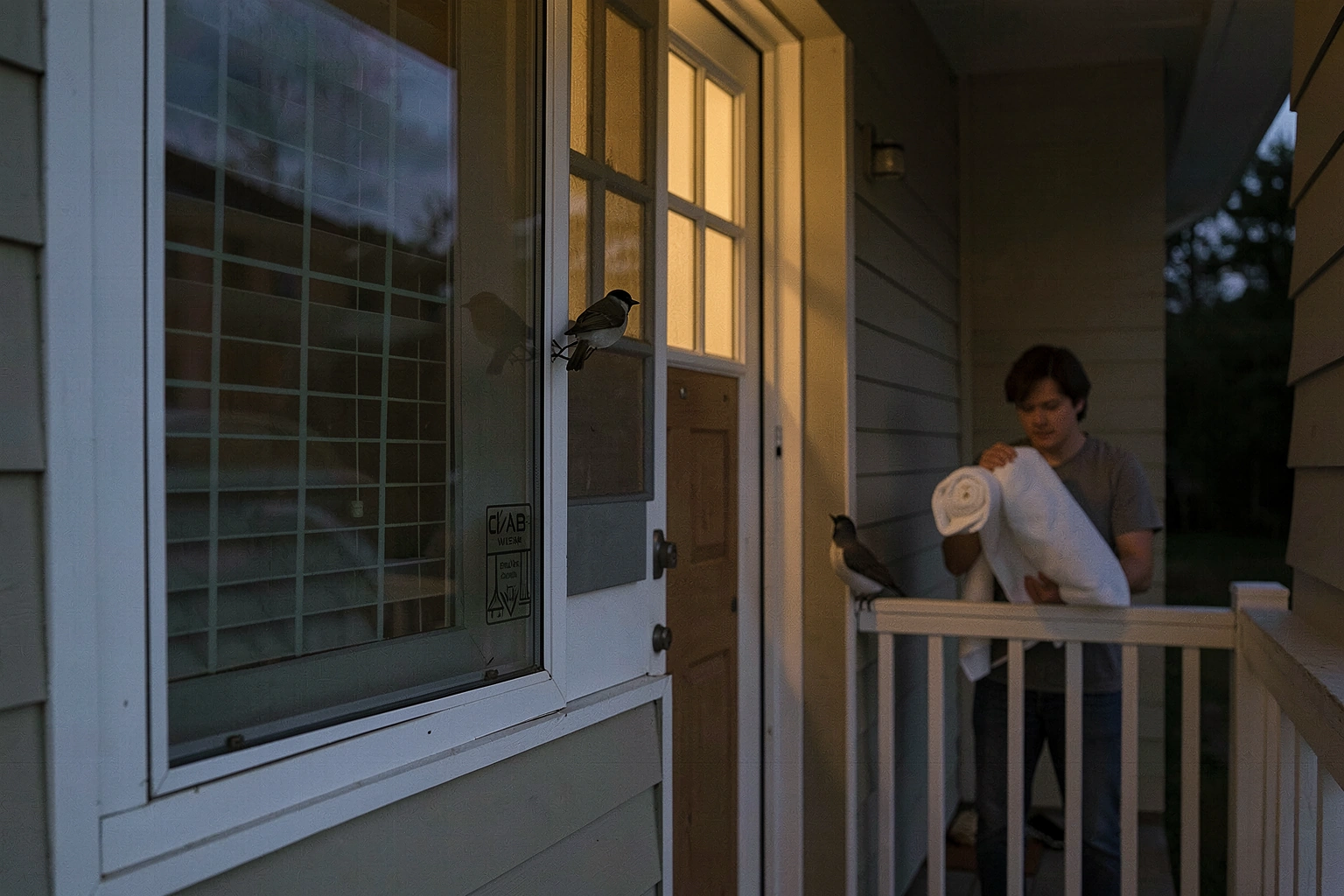
Visual deterrents for windows and glass
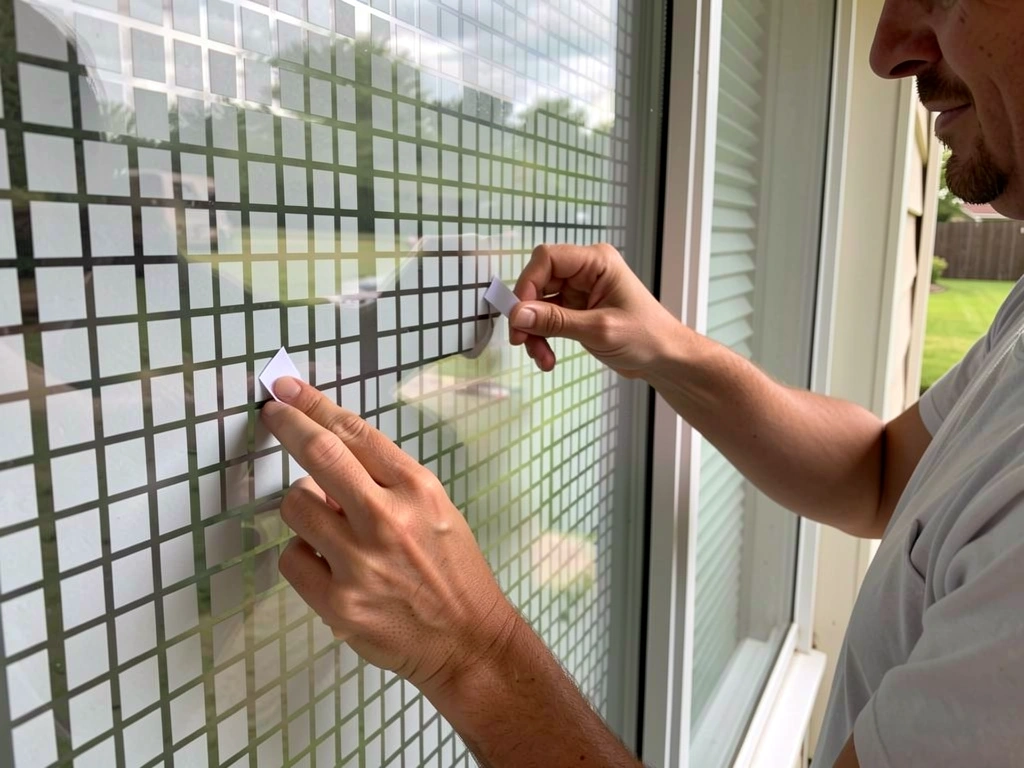
Birds collide with and hover near windows because they can't perceive the glass as a barrier. The fix is to break up the reflection from the outside. Apply window decals, tape strips, or patterned film in a dense grid pattern on the exterior of the glass. The USFWS recommends spacing markers no more than 2 inches apart vertically and 2 inches apart horizontally, essentially a 2-by-2-inch grid. That tight spacing is what actually registers to a bird's vision. A single hawk silhouette sticker in the center won't cut it.
Manage your lighting
Artificial light disorients birds, especially during spring and fall migration when millions of birds are navigating at night. If a bird keeps returning to your building or porch at night, excess lighting is likely the cause. The Audubon Lights Out program recommends turning off non-essential exterior lights during migration periods, and when you do need outdoor lighting, directing or shielding it downward rather than letting it spill upward. This is one of the easiest changes you can make and it has an immediate effect.
Remove what's attracting the bird
A bird hanging around your yard or property is almost always there for a reason: food, water, shelter, or a nesting spot. <a data-article-id="0E774587-9826-45E3-9AAC-881C13CD8FDF">Remove the attractant</a> and the bird has no reason to stay. Take down or temporarily move bird feeders, empty standing water from pots or birdbaths, and clear away fallen fruit or exposed garbage. This won't work overnight, but combined with other deterrents it makes your space significantly less appealing.
Seal up entry points so the bird can't come back
If a bird has gotten into your home, attic, or garage once, it can do it again. Before you even start trying to get the bird out, identify exactly how it got in. Common entry points include roof vents, gaps around soffit panels, holes around pipes or cables entering the structure, and uncapped chimneys. Once the bird is out, seal those gaps with mesh, hardware cloth, or appropriate caulk.
For birds roosting in enclosed spaces like attics or wall cavities, a one-way exclusion door is the most effective humane tool. It lets the bird exit but physically prevents re-entry. After installing one, leave it in place for at least seven days, and longer if the weather has been cold or rainy, since birds may stay put longer in those conditions. Then remove the device and seal the opening permanently. The key is to confirm the bird has actually left before you seal anything, so you don't trap it inside.
If the bird is inside your home: step-by-step removal
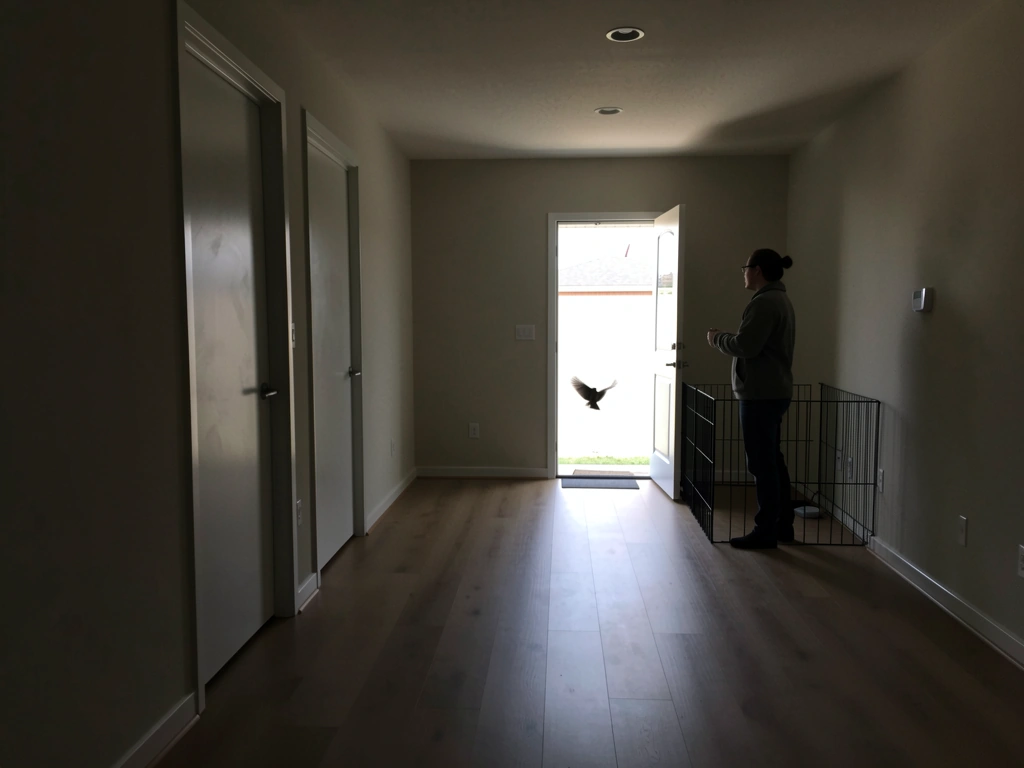
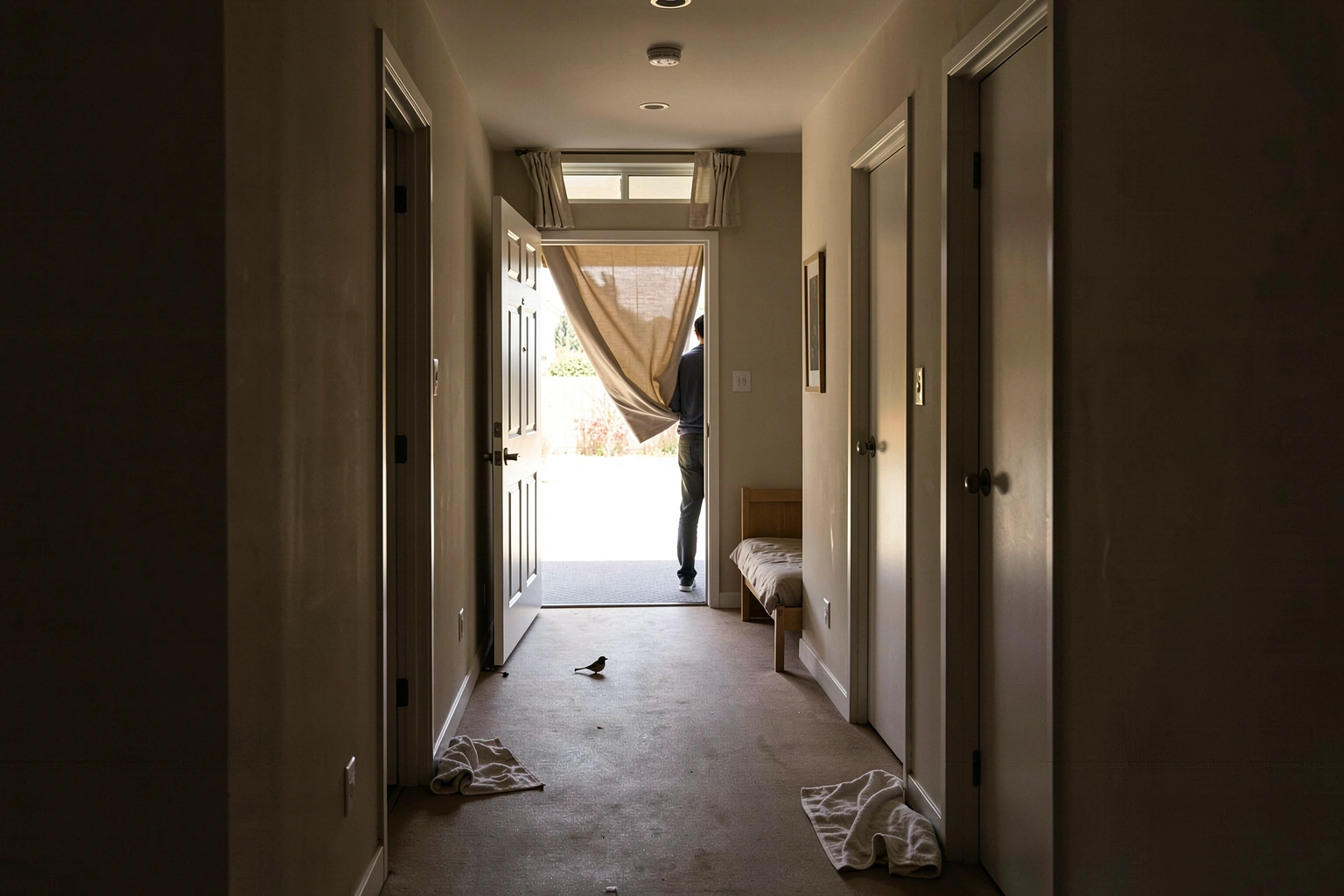
A bird flying around inside a room is stressful for everyone, including the bird. The good news is that most healthy birds will find their own way out if you give them the right conditions. If you are looking for a broader approach for everyday situations, see this for how to scare away a bird without stressing it. Here's how to do it:
- Clear the room. Remove or confine any pets and ask other people to leave. The bird is already stressed and more activity makes it worse.
- Open the largest window or exterior door available, ideally the one closest to where the bird currently is. This is its exit.
- Close or cover all interior doors so the bird can't go deeper into your home.
- Turn off all interior lights. Darken the room as much as possible. Birds are drawn toward daylight, so eliminating competing light sources directs the bird straight to the open exit.
- Step back and wait. Give the bird several minutes to find the opening on its own. Most healthy birds will locate it quickly once the room is dark and calm.
- If the bird isn't moving toward the exit after a few minutes, you can slowly and calmly move toward the opposite side of the room to gently herd it in the right direction. Don't wave your arms or chase it.
That's genuinely it for most situations. The light-and-exit method works because it works with the bird's instincts rather than against them. The most common mistake people make is turning on more lights to 'see better' or trying to catch the bird, both of which create chaos and extend the problem.
If the bird seems stuck, exhausted, or injured
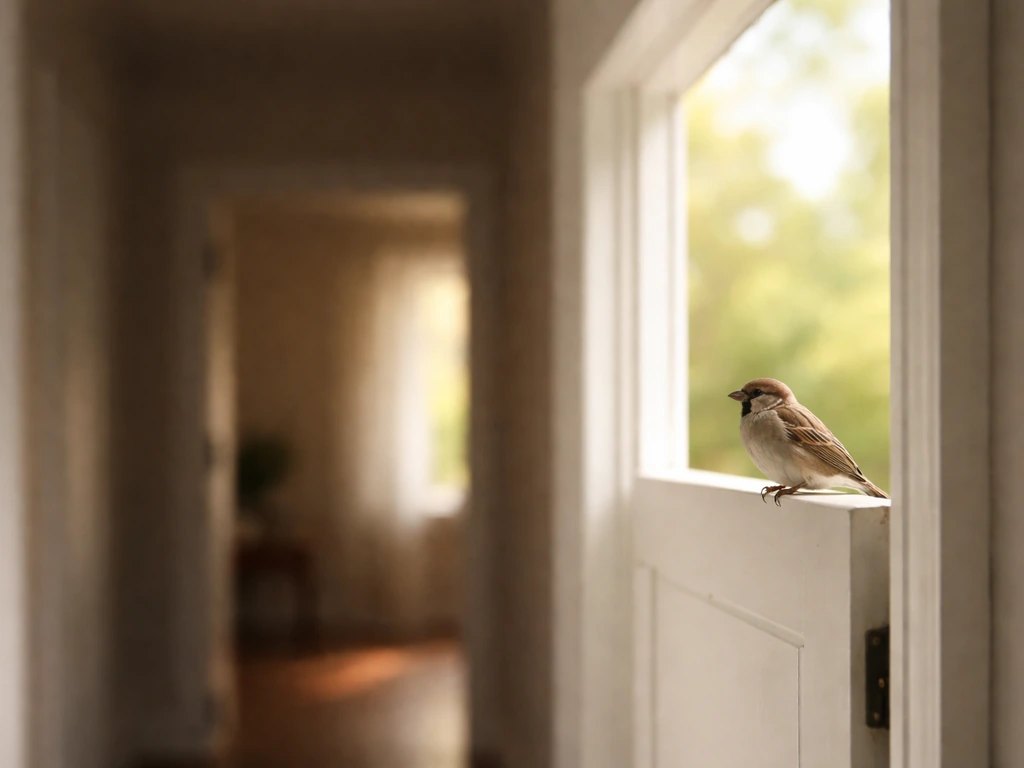
Sometimes a bird doesn't fly toward the exit because it can't. A bird that's sitting still, letting you approach closely, or moving uncoordinatedly has likely hit a window, become exhausted from disorientation, or is sick. This is a different situation and it needs a different response. This is also a useful guide if you're wondering how to get a bird to leave a building safely.
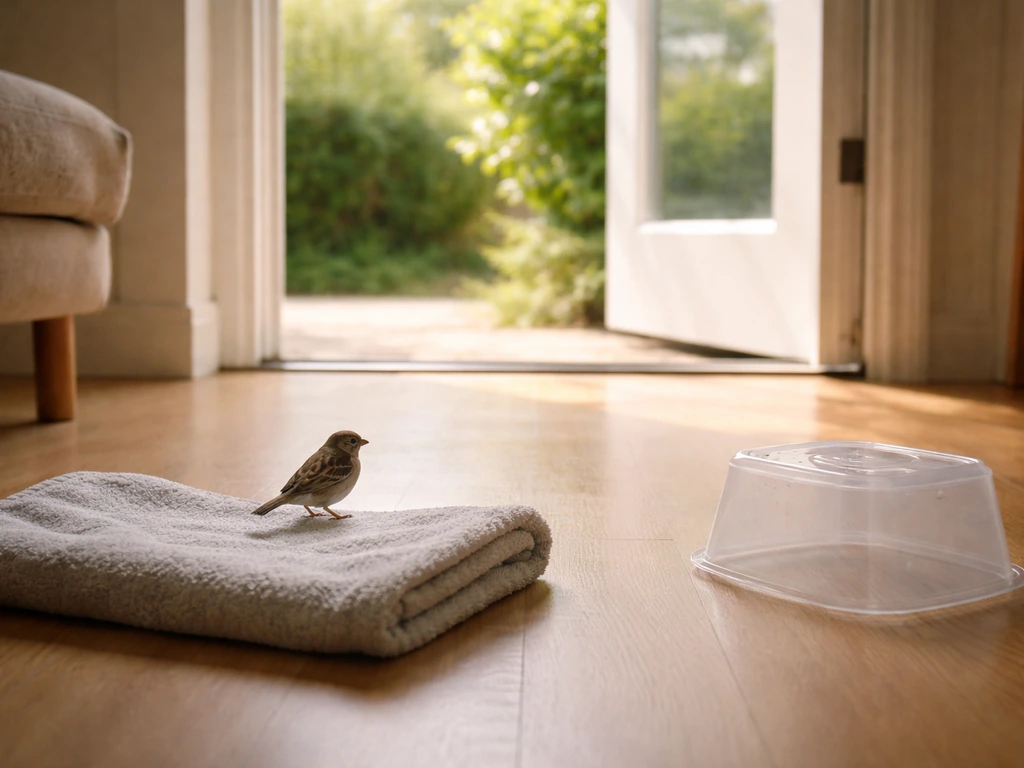
If the bird appears weak or injured, do not attempt prolonged DIY handling. Contact a licensed wildlife rehabilitator or your local animal control agency right away. They're equipped to assess and treat the bird properly. While you wait for help, you can gently place the bird in a cardboard box lined with a cloth, with ventilation holes, and keep it in a quiet, dark, warm space. Do not offer food, water, or any medication. Well-meaning feeding can actually harm a bird that's in shock, and wildlife rehab centers consistently advise against it.
If the bird appears dazed but not obviously injured, it may have just hit a window and needs a few minutes to recover. Place it somewhere safe, quiet, and sheltered from predators, and watch from a distance. Many window-collision birds recover on their own within 15 to 30 minutes. If it hasn't moved normally after that, treat it as injured and call for help.
If there's a nest involved
This changes everything. In the United States, the Migratory Bird Treaty Act makes it illegal to disturb, move, or destroy the nests or eggs of migratory birds without a federal permit. That covers a huge range of common species including robins, sparrows, swallows, and most songbirds you're likely to encounter. If you find an active nest with eggs or chicks, the law is clear: leave it alone until the nesting cycle is complete.
If a bird is building a nest somewhere problematic (like inside a vent or under a porch roof), the time to act is before eggs are laid. Once eggs are present, your options are legally limited. This is also where prevention matters most: sealing potential nesting spots in late winter before nesting season begins is far easier than dealing with an active nest later.
When to call a professional instead of handling it yourself
DIY works well for a healthy bird that just needs a clear exit. It's the wrong call in these situations:
- The bird appears sick, weak, or injured and won't move toward an exit on its own
- The bird is in an inaccessible area like an attic, wall cavity, or crawlspace
- There's an active nest with eggs or chicks
- You suspect the bird may be a protected species
- You've tried the standard indoor removal steps and the bird is still inside after an extended period
- You're in a commercial building or rented space where building management needs to be involved
Who to call depends on your situation. A licensed wildlife rehabilitator handles sick or injured birds. Local animal control can advise on both removal and local regulations. For persistent roosting or nesting problems on commercial properties, a pest management company that specializes in humane bird exclusion is the right call. Some areas also have local Audubon chapters or wildlife rescue organizations that can advise or assist.
One important note: regulations around bird removal, exclusion, and nest disturbance vary by location. What's permitted in one state or country may not be in another. Before doing anything beyond opening a window, it's worth a quick check with your local wildlife agency, especially if a nest is involved. The Migratory Bird Treaty Act applies across the US, but local rules can add additional layers of protection.
Quick comparison: methods by situation
| Situation | Best Approach | Call a Pro? |
|---|---|---|
| Bird in a room (healthy, flying) | Open exit, darken room, wait | No |
| Bird near windows (outdoors) | Window decals in 2x2 grid, reduce lighting | No |
| Bird roosting in attic or soffit | One-way exclusion door for 7+ days, then seal | Optional |
| Bird appears dazed after window strike | Safe box, quiet space, monitor 30 min | If no recovery |
| Bird appears injured or sick | Box with ventilation, contact rehabilitator | Yes |
| Active nest with eggs or chicks | Do not disturb, wait out nesting cycle | If removal needed |
Most bird problems are solved in under 10 minutes with the right steps. The ones that linger are almost always because someone skipped the assessment step and went straight to chasing. Take a breath, figure out which scenario you're in, and work with the bird's instincts rather than against them. If you need a quick step-by-step approach, follow this guide on <a data-article-id="F2D1636C-1352-4BBC-AB9E-EDB9DDD51B6A">how to make a bird leave your house</a> humanely and safely. That's worked.
FAQ
What should I do if I can't tell whether the bird is injured or just disoriented?
Use the approach that matches the bird's location and behavior. If it is outdoors, remove attractants and use window-safe deterrents, then leave it alone. If it is inside, open an exit and reduce confusion, then watch from a distance. If it is injured, trapped in a wall, or appears dazed for more than 15 to 30 minutes, stop DIY efforts and contact a wildlife rehabilitator or local animal control.
Will a fake owl or hawk sticker work to keep birds away from my windows?
A single hawk or predator-shaped sticker is usually ineffective because birds keep testing the area and see patterns over time. For window collisions, you need dense exterior marking on the glass in a tight grid (around 2 inches by 2 inches) or another option that breaks up reflections, and you should apply it to the outside of the window rather than indoors.
How long should I wait for a bird to fly out on its own after opening the exit?
If the bird is in a room, don't keep chasing it or adding more lights. Open one clear exit (doors or an exterior window), close interior doors that lead away from the exit, turn off unnecessary indoor lights, and stand back to let it fly out. If it does not move normally within about 15 to 30 minutes, treat it as injured and get help.
Can I give the bird food or water if it seems tired?
Do not try to feed it to “help it recover.” Offering food or water can be harmful if the bird is in shock, dehydrated, or sick. Instead, provide a quiet, warm, dark, ventilated cardboard box only as temporary shelter if it seems dazed or injured, then contact a wildlife rehabilitator.
Is it ever okay to block a nesting spot if I think eggs are going to be laid soon?
Yes, timing matters. For active nests, disturbance is restricted by law, and your best option is to wait until the nesting cycle ends. For prevention, seal potential nesting gaps during late winter before nesting season, using mesh or hardware cloth where birds might enter, rather than waiting until you see eggs or chicks.
What should I look for to stop the bird from getting back in?
If you find a bird inside your home, start by identifying likely entry points, then prevent repeats. Common entry areas include roof vents, soffit gaps, around pipes and cables, and uncapped chimneys. After the bird is out and you have confirmed it has left, seal those gaps with appropriate materials like mesh or hardware cloth.
How long should I leave a one-way exclusion device in place?
Cold or rainy weather can keep birds inside enclosed spaces longer, so do not remove an exclusion device too early. After installing a one-way exclusion door, leave it in place at least seven days, and extend the time if it is cold or wet. Only seal the opening permanently after you confirm the bird has exited.
What are the safest handling rules if a bird lands near my kids or pets?
Keep pets indoors and people back, and avoid touching the bird or contaminated surfaces. If you must move it in an emergency, use gloves or a thick towel, and wash hands afterward. If the bird is dead or clearly sick, treat it as higher-risk and contact local authorities rather than handling it.
If birds keep coming back at night, what is the first thing to change?
In many cases, the highest impact fix for night-time returning birds is lighting control, not chasing. Turn off non-essential exterior lights during migration periods and shield or direct needed lights downward to prevent upward spill that disorients birds.
When should I call a professional instead of doing this myself?
When a bird has nested or is roosting in an enclosed space, DIY exclusion can fail if openings are not properly assessed and timed, or if removal happens while a bird is still inside. If the problem is persistent (especially on commercial property), hire a humane exclusion specialist or pest management company that can handle exclusion correctly and review local rules.
What if I find a nest in my yard but I'm not sure if the eggs are viable or active?
If you see active eggs or chicks, do not move the nest or try to remove the birds yourself. Wait for the nesting cycle to finish, then seal and prevent future access. If you are unsure whether it is active, treat it as active and contact local wildlife authorities for guidance.