The fastest, safest way to get a bird out of your house is simple: open one clear escape route, kill the interior lights, and give the bird space to find it on its own. That one-two-three approach works in the vast majority of cases, and everything else in this guide builds on it. Whether you're dealing with a sparrow panicking in your living room or a starling that's been loose in your house for two days, the same core principles apply: stay calm, reduce stress on the bird, and let light do the work for you.
How to Get a Bird Out of Your House Safely and Fast
Maya Carver
17 Apr 2026
Quick safety check before you do anything else
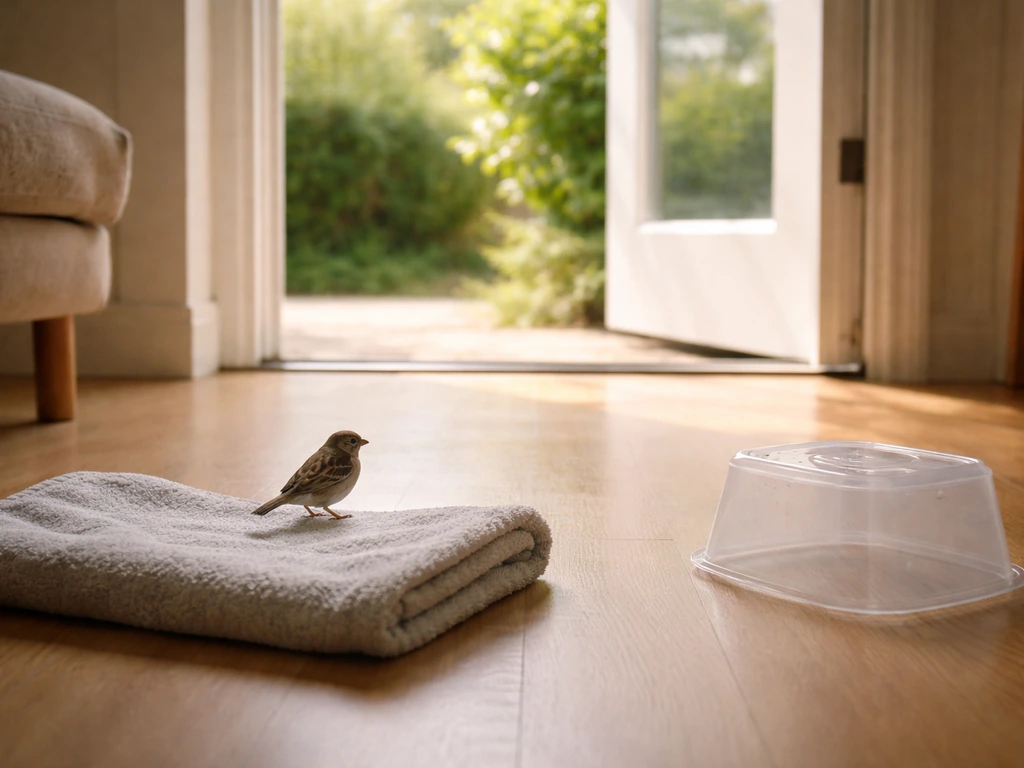
Before you start herding a bird around your house, take 30 seconds to run through this triage. It will save you time and prevent mistakes that make the situation worse.
- Get pets out of the room immediately. The CDC specifically advises keeping domestic animals at a safe distance from wildlife, and a cat or dog in the room will send a panicked bird crashing into walls and windows.
- Do not chase the bird. The Schuylkill Center is clear on this: chasing dramatically increases the chance the bird will injure itself from stress or collision.
- Do not grab the bird with bare hands unless it's clearly injured and unable to move. Wild birds can carry diseases, and the CDC recommends washing hands thoroughly after any contact with birds or bird-related areas.
- Do not use sprays, loud noises, or brooms to shoo the bird. These are the fastest way to create a scared, injured bird that hides behind furniture.
- Do not release a bird near an open flame, ceiling fan, or other hazard. Switch off fans before you open any doors.
- If the bird looks sick (fluffed feathers, inability to stand, neurological signs) or was caught by a pet, stop and go straight to the wildlife professional section at the bottom of this guide. Cornell experts advise against handling sick birds due to avian influenza risk.
If the bird is healthy and actively flying, you're good to proceed. If you're unsure whether the bird is protected under federal law (migratory songbirds, raptors, and many other species are), the short answer is: treat it gently and do not attempt to cage or trap it without a permit. Under 50 CFR § 21.14, handling and transport of migratory birds is restricted to federally permitted contexts, so your goal is always to guide the bird out, not to capture and house it.
Get the bird out fast: calm, isolate, open the exit
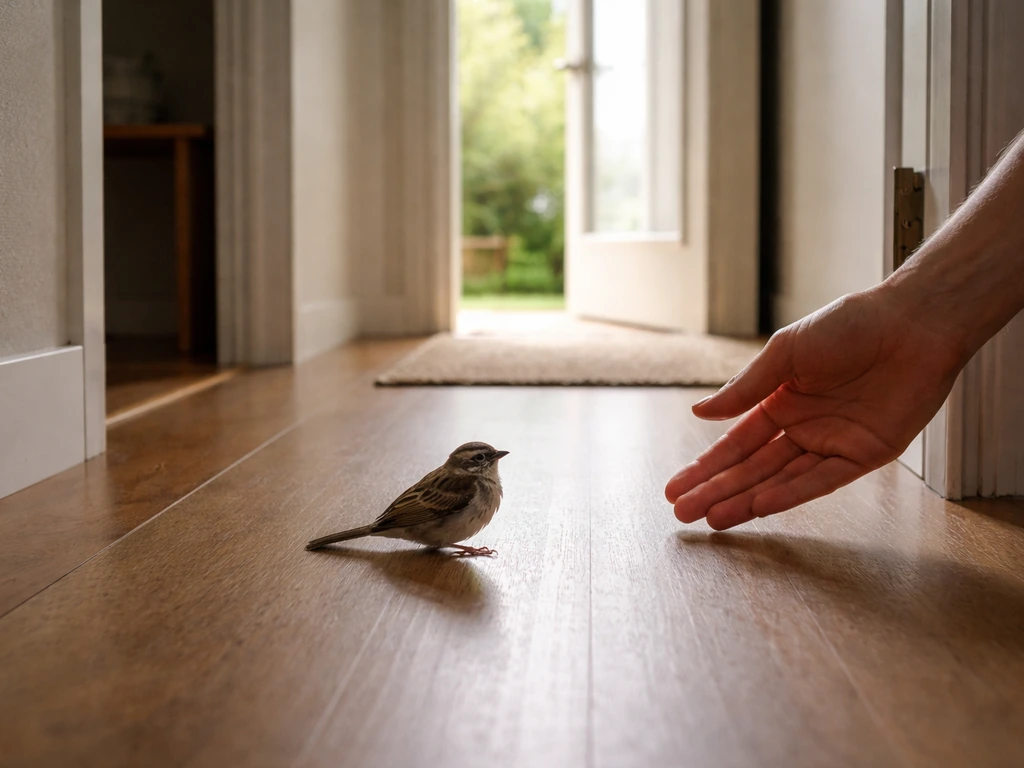
This three-step sequence is your primary method. It works for most healthy birds in most residential spaces.
- Close interior doors to limit the bird's range. The San Diego Humane Society recommends confining a trapped bird in as small an area as possible and as close to an open door as possible. Shutting hallway and bedroom doors gives the bird fewer places to hide and shortens the distance to the exit.
- Turn off all interior lights in the room. Birds are strongly drawn to light. Eliminating competing light sources inside forces the bird's attention toward the brightest point, which should be your open exit. The Humane Rescue Alliance specifically recommends this technique.
- Open one large, unobstructed exit to the outside. A patio door or a full-size window without a screen is ideal. The San Diego Humane Society's guidance is to open a window or patio door to the outside and darken the interior so the bird can leave on its own.
- Leave the room. Close the door behind you if possible, or at least move well back. Give the bird 15 to 20 minutes of undisturbed quiet. Most birds find the exit and leave within this window.
- Check back quietly. Peek around the door frame rather than entering fully. If the bird is gone, close the exit and check for droppings or feathers to confirm it left through the right opening.
This approach works because it leverages the bird's natural behavior rather than fighting it. You are not removing the bird; you are setting conditions where the bird removes itself. That distinction matters for both the bird's safety and your stress level.
Room by room: adjusting the method for different spaces
Single room with a window or door
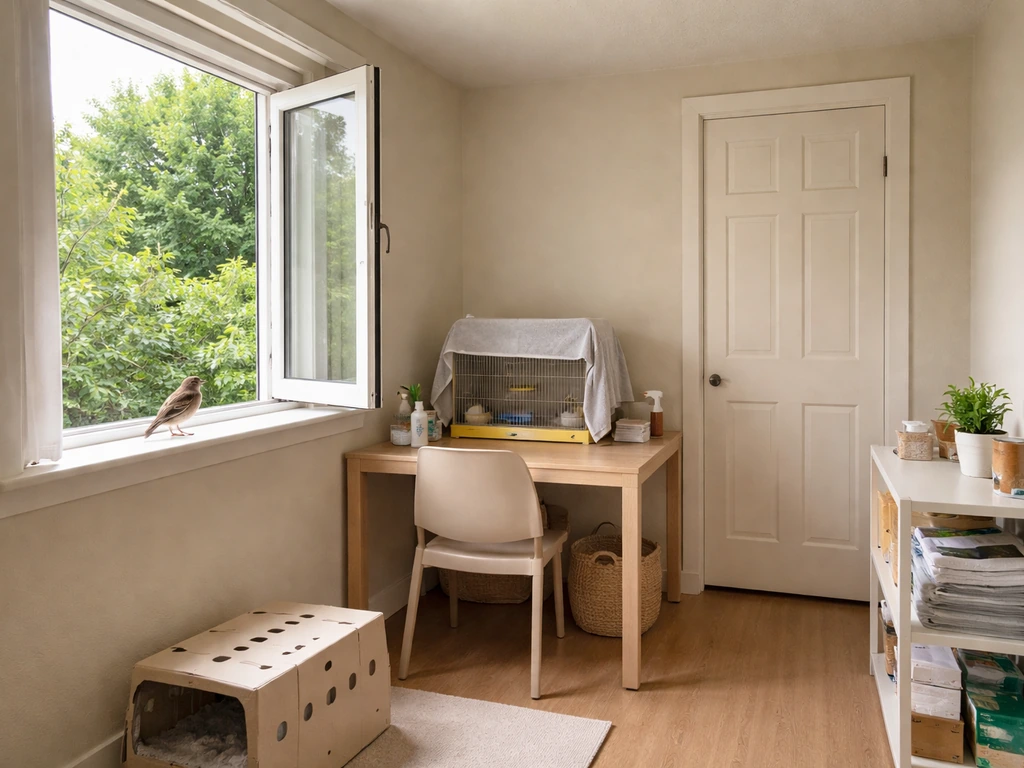
This is the easiest scenario. Follow the three-step sequence above. One tip: if your window has a screen, remove it completely rather than cracking the window, because birds often can't figure out the gap and will keep hitting the screen. A wide-open window beats a partially open one every time.
Open-plan house or multiple rooms
Start at the back of the house and work toward the front exit. Close doors to rooms you don't want the bird accessing, then darken everything except the room containing your chosen exit. The bird will follow the light gradient toward the open door. If you have a hallway, keep it dark and the front door wide open with exterior light flooding in. This is functionally the same advice used when handling a bird loose in a larger building, just scaled down for residential use.
Basement or windowless room
Basements are harder because there's often no natural light to draw the bird. Your best tool here is a flashlight pointed at the open exit (stairway door or exterior cellar door). Hold the light steady and back out of the room. If the bird is trapped in a tight or enclosed space, you can also use a large cardboard box with a towel over one end: place the open end toward the bird, cover the box to darken it, and the bird may retreat inside. You can then carry the box outside and open it away from the house.
Garage or attached structure
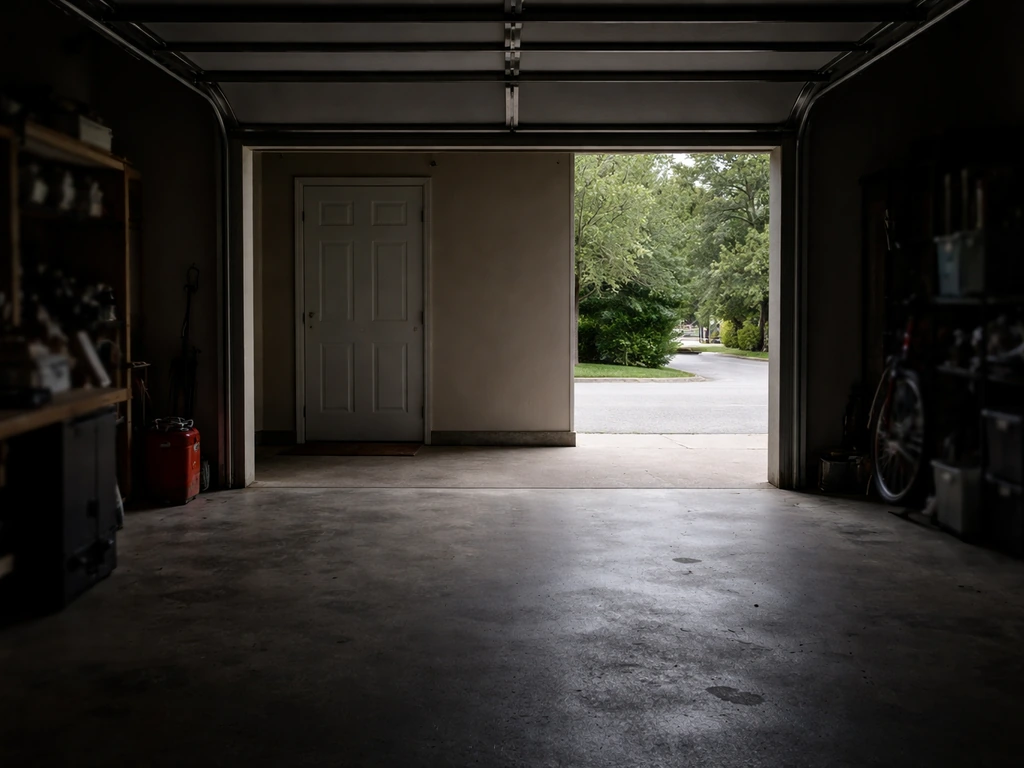
Open the main garage door fully and close any door connecting the garage to the house interior. Turn off garage lights. Birds in garages almost always find their way out within a few hours once the main door is open and interior distractions are removed. If the garage has skylights, cover them temporarily with cardboard or tarps if you can do so safely, because a bird will fixate on an unreachable light source and never find the open door below it.
Large commercial or warehouse space
For facility managers dealing with a bird in a warehouse or retail space, the San Diego Humane Society recommends making the entire building as dark as possible by turning off lights and covering skylights. A bird flying 40 feet up near a skylight will not find a ground-level exit unless you eliminate the skylight as a light source. This is a situation where a professional bird removal service may be warranted if the bird doesn't exit within 24 hours.
Humane tools and techniques worth knowing
The light-and-exit method handles most situations, but a few additional tools help in stubborn cases.
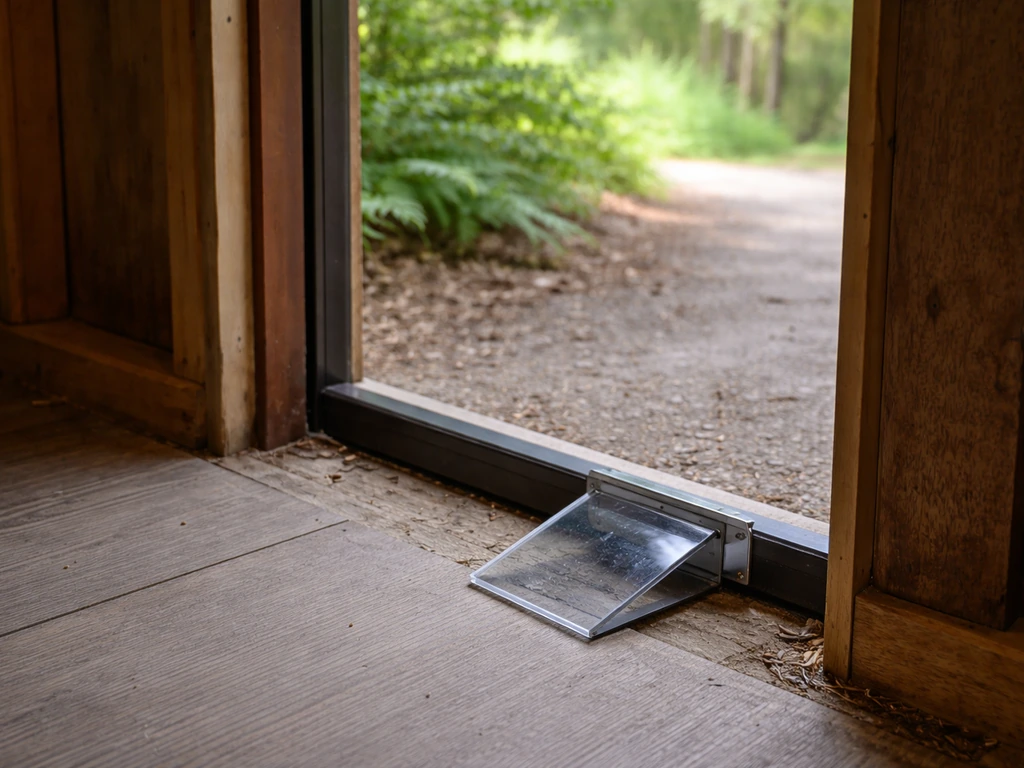
- One-way doors: These are commercial devices that allow a bird to push through from inside to outside but won't open inward. Maine's Inland Fisheries and Wildlife department describes using commercial one-way doors and checking for activity on the outer side (scraping, digging, or signs the animal exited) to confirm the bird has left. These are more commonly used for recurring entry problems rather than single-bird removal.
- Towel or pillowcase capture (last resort): If the bird is injured or the light method has failed after several hours, you can attempt a gentle capture. Approach slowly in dim light, drape a light towel over the bird, and cup it gently in both hands. Transport it immediately outside and release it in a sheltered spot. This should not be your first approach; it's stressful for the bird and carries disease-exposure risk for you. Wash hands immediately afterward.
- Timing your attempt: Birds are calmer at dusk and just after. If you can wait until late afternoon, you'll often have an easier time. After dark is a different challenge entirely; birds become disoriented at night and the light technique becomes less effective. For specific guidance on nighttime scenarios, the techniques used to get a bird out of your house at night differ enough to deserve their own read.
- Cardboard funnel guide: For narrow hallways or corridors, you can hold two large pieces of cardboard to create a gentle funnel shape directing the bird toward an open door. Move slowly and keep the funnel low. This is especially useful for ground-feeding birds like pigeons or doves that aren't strong fliers.
One thing worth noting: the USFWS humane handling guidelines explicitly state that birds should not be housed with other birds in a carrier if capture is required. If you're transporting an injured bird to a rehabilitator, keep it alone, in a dark, ventilated box, and get it there quickly.
What to do when the bird just won't leave
Sometimes the standard method stalls. Here are the most common reasons and what to do about each. If you want a broader perspective on what has and hasn't worked for other homeowners, the experiences shared on bird removal threads can be genuinely useful for edge cases.
The bird is hiding behind or under furniture
Don't try to fish it out. Instead, darken the room completely, open the exit, and leave for 30 to 45 minutes. A bird in hiding will eventually emerge to look for a way out once the space is quiet. If it's stuck behind a bookcase or inside a wall cavity, that's a genuinely trapped bird situation, and you may need to partially disassemble the blockage or call a professional.
The bird keeps flying to the wrong window
Close the blinds or cover windows that don't lead outside (interior windows, skylights over enclosed atriums, etc.). Leave only the actual exit window uncovered. The bird has no concept of glass and is simply following light, so removing competing light sources from the wrong windows is usually enough to redirect it.
Multiple birds are inside
Multiple birds in a house almost always means there's an active entry point, not just a one-time fly-in. The priority becomes finding and closing that entry point after the birds have exited. Use the same darkened-room technique, but be patient: multiple birds take longer because they may follow each other's behavior rather than moving toward the exit independently. Address the entry point the same day, or more birds will come back in.
The bird keeps coming back in
If a bird exits and re-enters within the same day, there is an open gap somewhere it is treating as a roost or nesting site. Check roofline vents, soffit gaps, damaged fascia, chimney openings, and any spot where a previous pest repair has degraded. You'll need to seal these before the problem stops. The prevention section below covers how to do that.
How to stop birds from getting back in
Once the bird is out, you need to figure out how it got in and close that gap. This is the part most homeowners skip, and it's why the same bird (or its neighbors) end up back inside. Helping a bird exit safely is only half the job; the other half is making sure it doesn't need a second invitation.
Find the entry point first
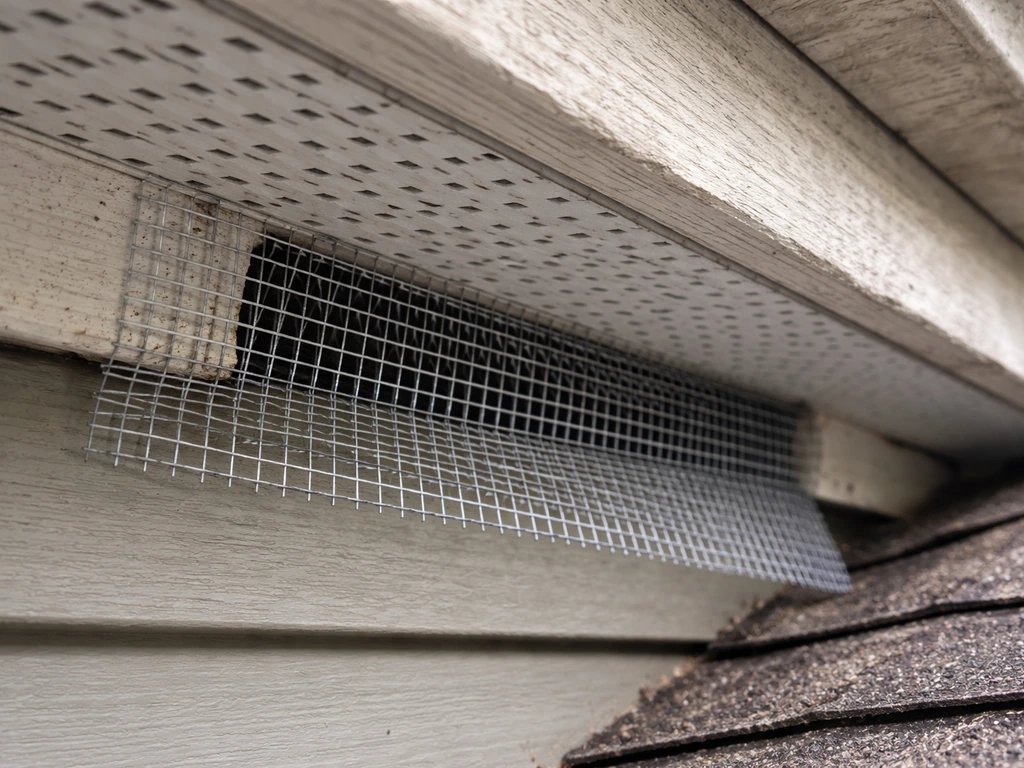
Do a slow exterior walk of the building and look for: gaps in soffit panels, missing or damaged vent covers, open chimney flues, holes around pipe penetrations, and deteriorated roof flashing. Most bird entries are at the roofline. Any gap larger than half an inch is a potential entry point for small birds. Check at dusk or early morning when birds are most active; you may actually see which gap they're using.
Seal and repair
- Hardware cloth (half-inch galvanized mesh): Best for sealing vents, soffits, and openings that need airflow. Staple or screw it over the gap rather than plugging it solid.
- Foam sealant + caulk: Use for small gaps around pipes, wires, and flashing. Not suitable for vents that need airflow.
- Chimney caps and spark arrestors: Standard caps with mesh sides block birds from entering the flue. Install these if you don't already have them.
- Commercial vent covers with bird guards: Replace worn or damaged roof and bathroom exhaust vent covers with bird-resistant versions that have internal baffles.
- Sloped ledge strips or anti-roosting spikes: For flat ledges and window sills where birds are landing regularly. These redirect birds without harming them.
Window and glass management
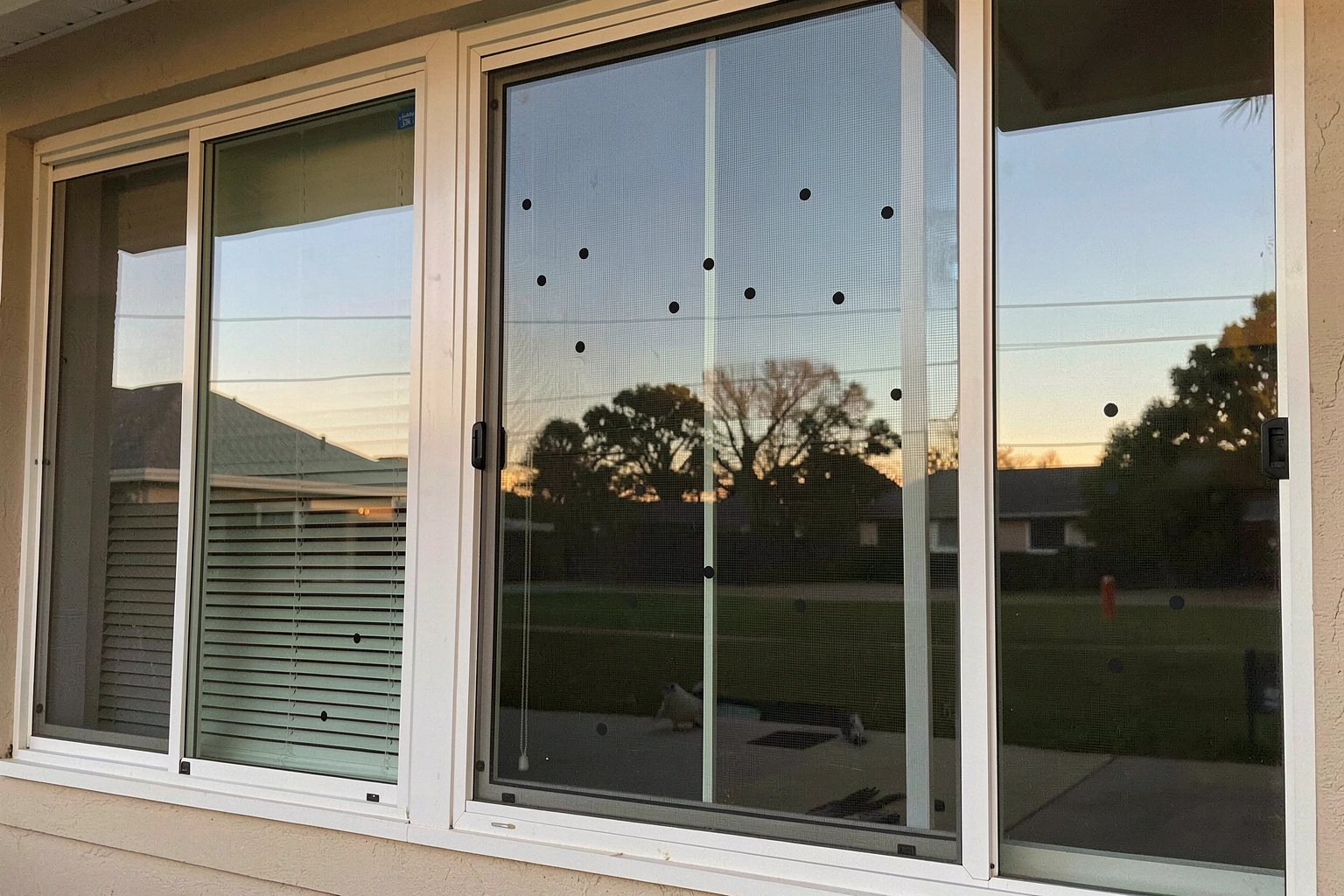
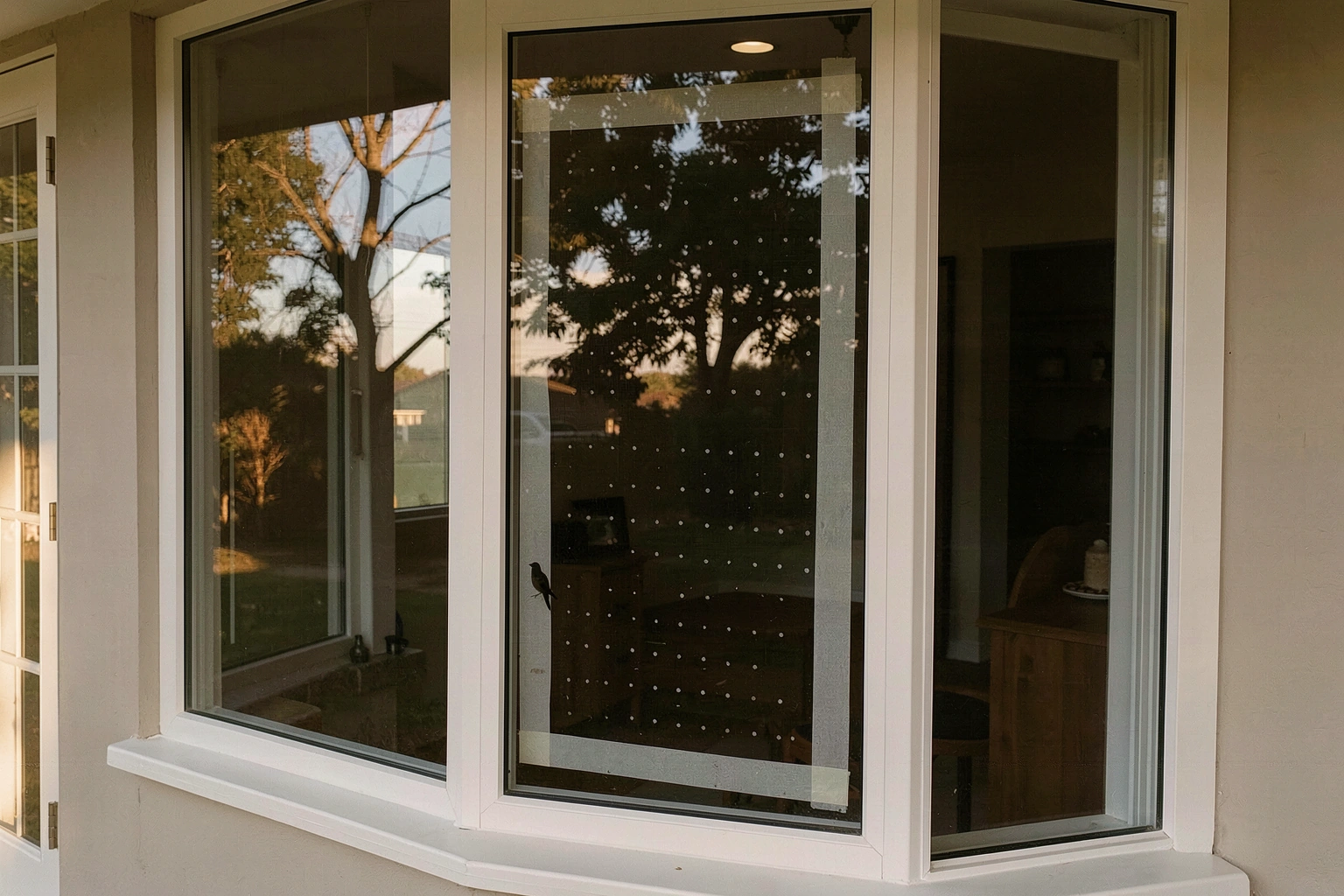
Windows are a major bird hazard both for entry and for collision injuries. The Smithsonian recommends closing blinds and ensuring lights are dim when you can't fully turn them off, particularly at night. Window films with a UV-reflective pattern (visible to birds but not to humans) are one of the most effective collision-prevention tools available. If you have a large glass panel that birds regularly strike, apply a pattern of dots or vertical stripes at 2-inch intervals using either window film or tempera paint on the outside surface.
At night, the Audubon Lights Out program recommends turning off unnecessary building lighting during migration season (roughly April through May and August through October in most of North America) to reduce bird deaths from building collisions. The Smithsonian echoes this, recommending that homeowners close blinds and reduce light spill to keep birds from being drawn to lit windows after dark.
Seasonal maintenance schedule
| Season | Check | Action |
|---|---|---|
| Late winter (Feb–Mar) | Roofline gaps, chimney, attic vents | Repair any damage before nesting season starts |
| Spring (Apr–May) | Active nests near entry points, window collisions | Do not disturb active nests (legal protection applies); treat windows during migration |
| Summer (Jun–Aug) | Soffit and fascia damage from heat/UV | Inspect and re-seal deteriorated caulk and foam |
| Fall (Sep–Nov) | Vent covers, gaps opened by summer repairs | Final seal-up before winter roosting season; lights-out during migration |
| Winter (Dec–Jan) | Any gaps birds are using for warmth | Seal after confirming no birds are roosting inside |
When to call a wildlife professional instead of doing it yourself
Most healthy adult birds in a house do not need a professional. But there are specific situations where you should stop, step back, and make a phone call instead.
Signs the bird needs a rehabilitator
- Visible injury: broken or drooping wing, bleeding, inability to stand, open wounds.
- Neurological signs: circling, head tilting, seizure-like movement.
- The bird was caught or mauled by a cat or dog. Even if it looks fine, cat saliva contains bacteria that cause fatal infection in birds within 24 to 48 hours. The Avian Wildlife Center states that a bird caught by a pet must be brought to a licensed rehabilitator immediately.
- It's a baby bird that has clearly fallen from a nest (featherless or mostly featherless). The USFWS advises that for baby or orphaned wildlife, the best first step is often to leave it alone, but if a parent is visibly deceased or the bird has been on the ground for more than an hour, call a rehabilitator.
- The bird shows signs of illness: fluffed feathers, lethargy, discharge from eyes or nostrils. Cornell experts advise against handling sick birds.
Legal considerations you need to know
Most wild birds in the United States are protected under the Migratory Bird Treaty Act. Oregon's Department of Fish and Wildlife notes that most wild birds are protected and can only be legally possessed by individuals with the proper license or permit. The Florida Fish and Wildlife Conservation Commission makes clear that a wildlife rehabilitation permit is required for rehabilitating wildlife beyond simply transporting it to a licensed rehabilitator. In plain terms: you cannot legally keep, cage, or treat an injured migratory bird yourself. Your job is to contain it safely (dark box, quiet space, away from pets and children) and get it to a licensed rehabilitator as quickly as possible.
If the situation involves a dangerous animal (large raptor, aggressive bird in a public space) or an immediate public safety concern, the Washington Department of Fish and Wildlife indicates you may need to contact your state wildlife agency or, in extreme cases, call 911. For most residential bird-in-house situations, the right number to know is your local wildlife rehabilitator or state wildlife agency. For a detailed breakdown of exactly who to call to get a bird out of your house, including how to find a local rehabilitator fast, that guide walks through your options by scenario.
What to tell the professional when you call
- Species if you can identify it (even a rough description: small brown songbird, large black bird, woodpecker, etc.)
- Whether it's injured, healthy, or unknown
- How long it has been in the building
- Whether there are multiple birds or signs of nesting
- Whether any pets have had contact with the bird
- Your address and best time for a callback or site visit
The USFWS recommends always calling a professional for animal welfare and safety when dealing with baby, injured, or orphaned wildlife, and they direct people to their local state agency or licensed wildlife rehabilitators. The National Wildlife Rehabilitators Association and your state fish and wildlife agency website are good starting points for finding someone nearby.
The short version if you need it right now
- Remove pets from the room.
- Close all interior doors to contain the bird in one space.
- Open one large exit to the outside (door or unscreened window).
- Turn off all interior lights in that space.
- Leave the room and wait 15 to 20 minutes.
- If the bird is injured, sick, or was caught by a pet, skip straight to calling a wildlife rehabilitator.
- Once the bird is out, find and seal the entry point before the next rainfall.
That's genuinely it for most situations. The complications come from chasing the bird, leaving competing light sources on, or skipping the entry-point fix afterward. Do those three things right and you'll have the bird out with minimal stress for everyone involved.
FAQ
Can I catch the bird with a towel or net to speed things up?
Yes, but only if it can’t escalate the bird’s stress. After you open the exit and turn off most lights, you can gently guide from a distance with a doorframe or towel, but avoid grabbing, cornering tightly, or blocking the bird’s route. If it stops flying and starts hiding, switch to the “darken and wait” approach (leave for 30 to 45 minutes) rather than re-chasing.
What if the bird is calm, should I still use the light and exit method?
If the bird has any ability to fly and is acting alert, don’t cage it. Focus on the light-and-exit method, then leave the exit path clear for at least 30 minutes after it seems to leave, because some birds re-enter the same day if a roost or gap is still available.
How should I handle cats or dogs while I’m trying to get the bird out?
Remove pets and limit noise, but don’t try to “use a predator” to herd the bird. Keep cats indoors in a separate room, turn off ceiling fans, and close interior doors so the bird has one obvious path out. Pets near the room can cause repeated panic flights and more window collisions.
During a rescue, should I cover windows or put up film/stripes immediately?
Use the 2-inch interval pattern idea as a prevention step, not during the rescue. During the rescue, remove competing lights and keep blinds closed on windows that are not the exit route. If you must use a ladder or reach for a window screen, do it safely after the bird is out to avoid accidents.
When is it appropriate to use a box to trap a bird rather than letting it exit?
Wait before attempting a box capture if you don’t know what the bird is. The article’s box-with-towel method is for birds in tight or enclosed spaces that are likely to retreat, but for an actively flying bird, boxing it usually increases stress and can create a re-entry or injury problem.
How long should I wait before calling a professional if it won’t leave?
If you don’t see it move toward the exit within about 30 to 60 minutes, stop chasing and do a full quiet reset: darken the house except the chosen exit, keep doors shut, and reduce movement. If it still doesn’t exit after a reasonable period, it likely has a hidden location or an unreachable light fixation, and calling a professional becomes the safer next step.
What if the bird keeps flying to the same window and won’t go to the exit?
A bird repeatedly flying to the same “wrong” window often means that window is lit or visible to it. Re-check for interior lights in that area, remove screen blocks if applicable, and ensure only one exit is unobstructed. If it keeps choosing the same spot, leave and re-run the dark-room approach rather than repeatedly moving the bird closer.
The bird isn’t flying, it’s just sitting or hiding. What should I do?
It can be normal for a bird to be quiet for a while after it lands, especially if it’s hiding under furniture or behind a curtain. If it’s not visibly injured and can move, give it the quiet window of 30 to 45 minutes with an open exit and minimal light, then resume only if it starts to come out.
How do I handle a bird at night when I can’t fully turn off lights?
Yes. During nighttime, keep blinds closed and reduce light spill because many birds will follow lit windows instead of the open door. Use the exit light strategy carefully, for example, only illuminating the exit path with a flashlight rather than lighting the entire room.
I found the likely entry point, but I can’t repair it right away. What’s an interim solution?
If you find an entry gap but can’t seal it immediately, at least temporarily block it (for example, with durable mesh or a properly secured temporary cover) so it can’t re-roost. Then schedule the proper permanent repair, since “temporary” foam, tape, or flimsy materials can fail quickly.
What if I suspect the bird is injured or could be a baby?
The key is safety and legality. If the bird appears to be a baby, looks injured, or you suspect it is orphaned, switch from rescue to containment in a dark, ventilated box and contact a licensed wildlife rehabilitator promptly. If you’re unsure about species protection status, treat it gently and don’t attempt to keep it.