Birds chirping before sunrise or late at night almost always comes down to one of three things: they're roosting on or inside your building, they've built or are building a nest nearby, or they're doing territorial and mating calls triggered by light, noise, or other birds. Once you know which one you're dealing with, the fix is straightforward. Start by figuring out exactly where the sound is coming from, then work through the steps below to stop the noise tonight and prevent it from coming back. A bird that will not stop calling often needs the same process as noisy chirping, starting with finding the source and then using exclusion or deterrents that match the cause stop the noise tonight.
How to Stop Bird Chirping in the Morning and at Night
Maya Carver
28 May 2026
Step 1: Figure out where the chirping is actually coming from
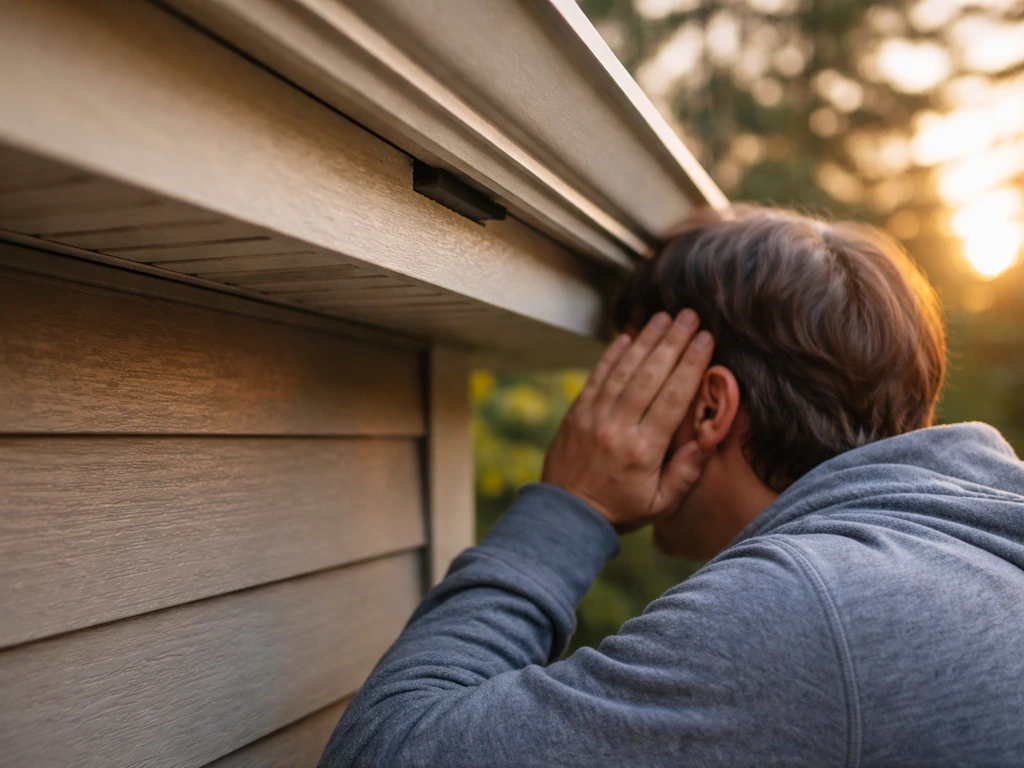
Before you do anything else, walk around your building and listen carefully. The location tells you almost everything about the cause and the fix. Stand outside in the early morning (around 30 minutes before sunrise, when the noise peaks) and identify the direction. Then check the following zones.
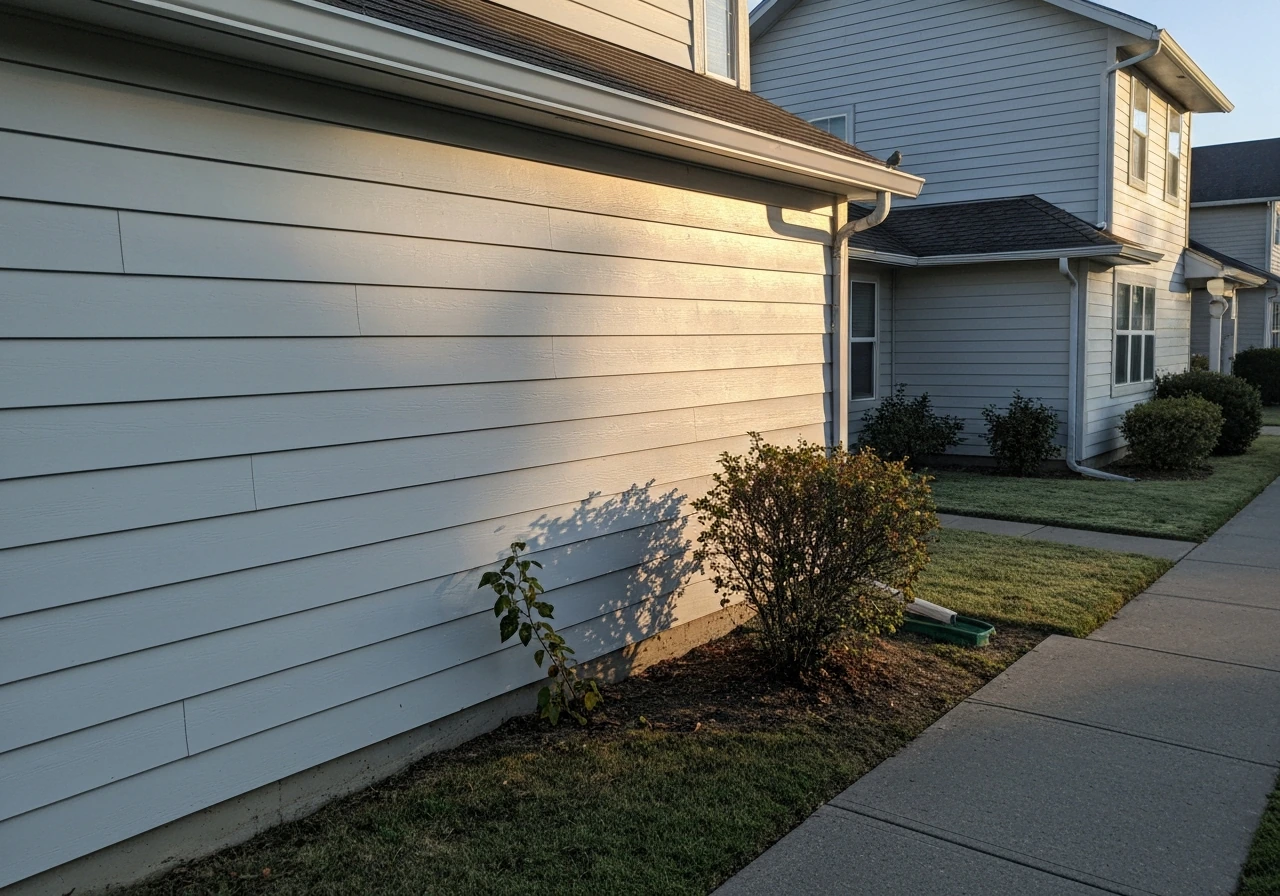
- Roof edge, eaves, or soffit: Look for birds perched in a row or grouped tightly together. This is a roost. Check for droppings concentrated in one area underneath.
- Vents (roof vents, bathroom exhaust vents, dryer vents): If the chirping sounds like it's coming from inside the wall or ceiling, a bird has likely entered through an open or damaged vent cover.
- Near a window or glass surface: A single bird repeatedly chirping or tapping at the same window is almost certainly responding to its own reflection, especially during breeding season (March through July in most of North America).
- Dense shrub, tree, or ivy on or near the building: Look for a nest. Nesting birds are loudest in early morning and can be extremely persistent.
- General area around the yard or building perimeter: Open-ground foraging birds calling loudly at dawn are typically doing territorial or mating calls. This is natural behavior that needs a different approach than roosting or nesting birds.
Once you've identified the zone, you have your diagnosis. A bird inside a vent needs exclusion work. A roosting flock on the ledge needs physical deterrents. A reflection-aggravated bird at a window needs the reflection broken up. A nesting bird needs careful timing and, depending on the species, possibly a wildlife professional. Work through the right section below for your situation.
What to do right now: tonight and tomorrow morning
If you need relief quickly, these actions can reduce the noise within hours. None of them harm the birds, and all of them buy you time while you plan the longer-term fix.
Turn off exterior lights near roosts or nesting areas
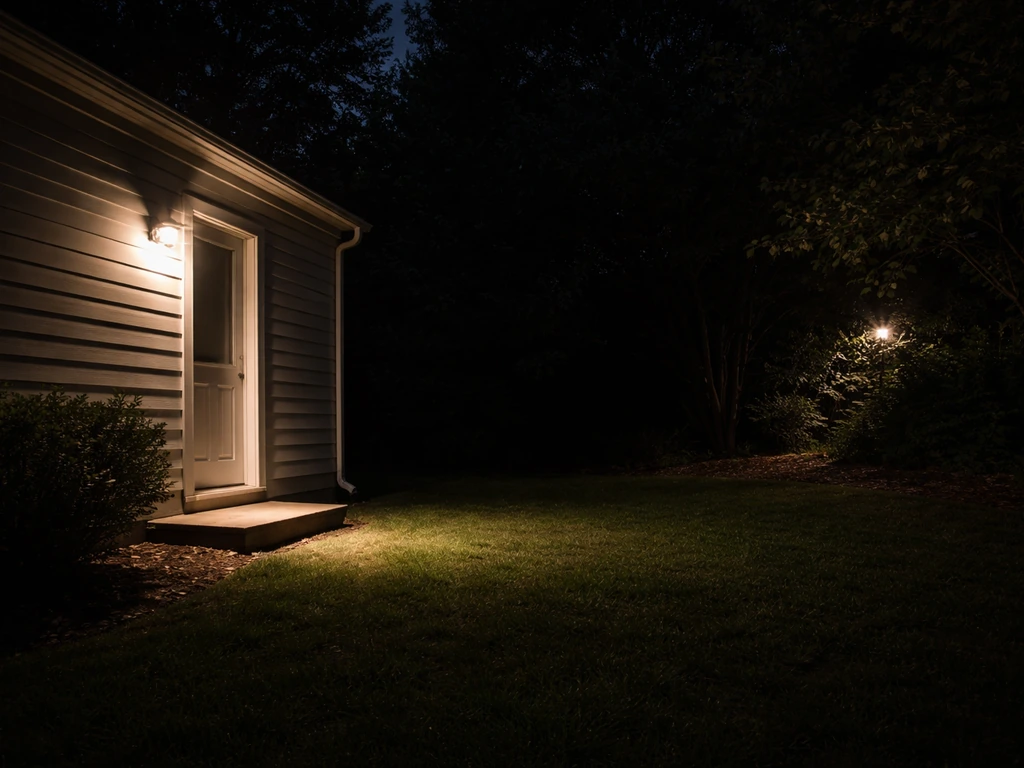
Artificial light is a major trigger for early-morning and nighttime bird chirping. Lights near trees, on building overhangs, or aimed at walls encourage birds to start calling earlier and to roost longer. Switch off any non-essential exterior lights, especially floodlights, porch lights, and decorative landscape lighting near the problem area. Motion-activated lights are better than lights that stay on all night, but even those can trigger a burst of chirping each time they activate.
Remove food and water attractants within 48 hours
Bird feeders, open compost, uncovered garbage, pet food left outside, and birdbaths all make your property more attractive as a territory and roosting site. Pull feeders down or move them at least 30 feet from the building. Cover or empty birdbaths. Secure trash cans. These changes won't silence birds overnight, but they reduce the reason birds are gathering at your property in the first place.
Block the reflection if a bird is attacking a window
If a single bird keeps chirping and pecking at the same window or glass surface every morning, it's fighting its own reflection. A flicker bird that keeps causing problems at the same spot usually needs the right identification first, then exclusion and deterrents tailored to that behavior how to get rid of a flicker bird. The fastest fix is to break up the mirror effect from the outside: tape strips of paper, cardboard, or window film to the exterior glass. Applying decals, whitewash, or soap to the outside of the glass (not the inside, where it won't change the reflection) also works. The goal is to make the glass look opaque from the bird's perspective.
Use white noise or earplugs as a short-term personal fix
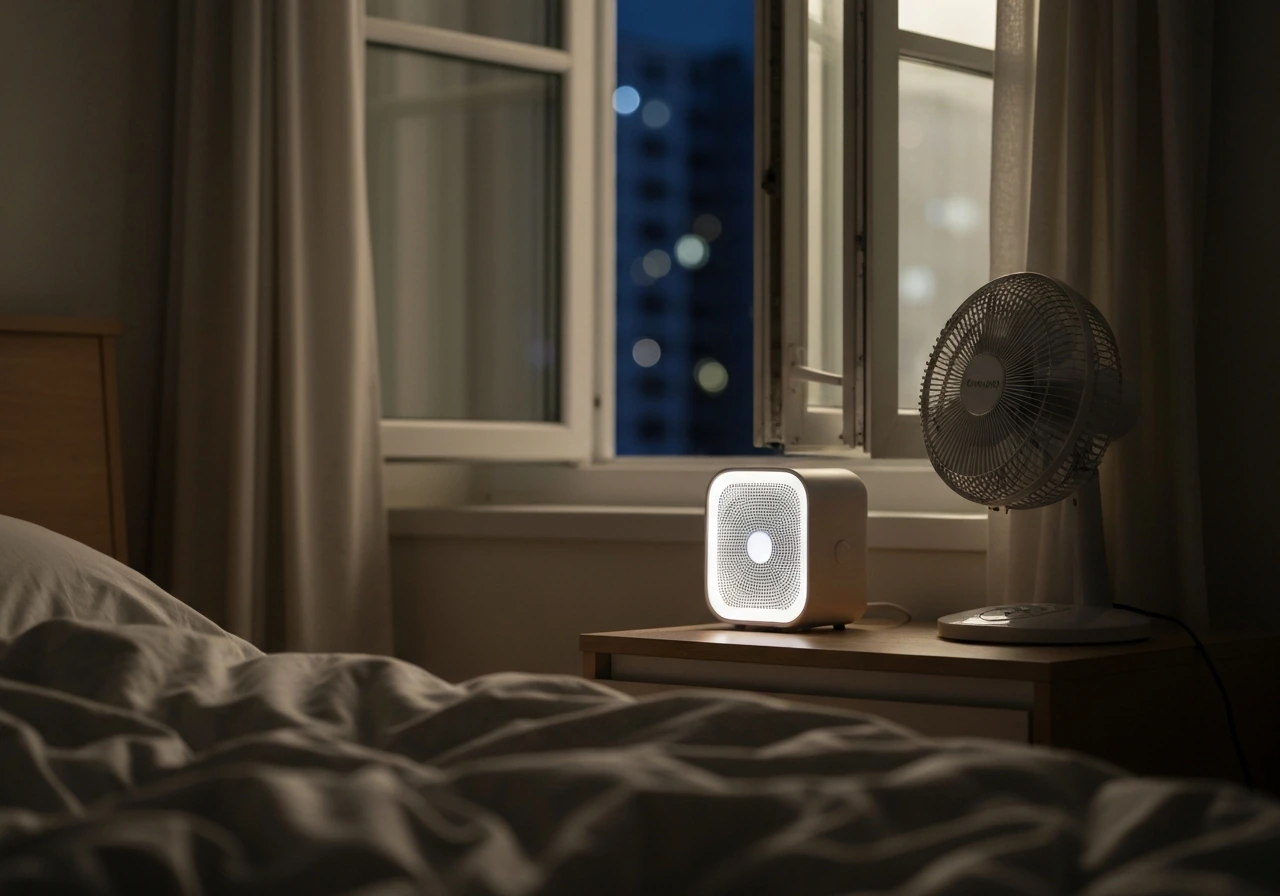
If the birds are in trees or on neighboring property and you have no direct access, a white noise machine or fan near your bedroom window gives you immediate relief while you work on longer-term deterrents. This doesn't solve the problem, but it's a practical bridge solution for tonight. If you still wonder how to stop my bird from screaming in the morning, focus on identifying the cause first so you can choose the right long-term fix.
Identify the cause: roosting, nesting, or territorial calling
The right fix depends entirely on what the birds are doing. Getting this wrong wastes time and, in the case of active nests, can put you on the wrong side of wildlife protection laws.
| Behavior | What you'll observe | When it happens | Correct approach |
|---|---|---|---|
| Roosting | Groups of birds clustered on ledges, eaves, vents, or rooflines; concentrated droppings below | Dusk through early morning | Physical exclusion and deterrents (netting, spikes, slopes) |
| Nesting | Single pair, nest material visible, aggressive defense of a small area, persistent morning calls | Spring and summer (March–July typically) | Wait until nest is inactive if protected species; then seal and exclude |
| Territorial/mating calls | Loud solo calls at dawn or at night, often near reflective surfaces or lit areas | Breeding season, but can occur year-round for some species | Reduce attractants, lighting, and reflections; habitat modification |
| Trapped inside | Chirping from inside walls, ceiling, or vents; flapping sounds | Any time of year | Locate entry point; use one-way exclusion; seal after bird exits |
Some species, particularly mockingbirds, robins, and thrushes, are known for singing loudly at night and in the early hours before dawn. This is normal biological behavior tied to territory defense and mate attraction, not a sign that something is wrong with your building. A peer-reviewed review in The Condor reports that nocturnal vocalizations can be territorial, and that the causes of night calling can differ from daytime behavior depending on social context territory defense and mate attraction. It can still be disruptive, and the deterrent steps below apply, but the approach is different from handling a pigeon flock roosting on your roof.
DIY exclusion and proofing: windows, vents, eaves, ledges, and gaps
Physical exclusion is the most effective and permanent solution. Noise-making devices and visual deterrents have limited success on their own and need to be combined with structural changes to deliver lasting results. Here's what to check and how to seal it properly.
What to inspect first
- Roof vents and bathroom/kitchen exhaust vents: check that all vent covers have intact, fine-mesh screening (1/4-inch hardware cloth minimum for small birds; 1/2-inch for pigeons and larger species)
- Soffit gaps and fascia board joints: walk the roofline and look for openings wider than 3/4 of an inch
- Window air conditioner units: gaps around the edges and behind the unit are common entry points
- Chimney tops: should have a fitted chimney cap with mesh sides
- Ledges and sills: flat surfaces wider than 3 inches are attractive roost spots
- Wall penetrations for pipes, cables, and conduit: any gap larger than a golf ball should be sealed
How to seal and exclude, step by step
- Confirm no birds are inside before you seal any opening. Listen at dusk and dawn. If you hear activity from inside, move to a one-way exclusion approach rather than sealing outright.
- For one-way exclusion: attach a tube or cone of hardware cloth or bird netting to the opening so birds can push out but cannot re-enter. Leave it in place for at least 5 to 7 days before permanently sealing. Timing is critical: make sure birds can exit and that you are not trapping them inside.
- Once confirmed empty, seal gaps smaller than 3 inches with paintable polyurethane caulk or copper mesh (not steel wool, which rusts and gaps over time).
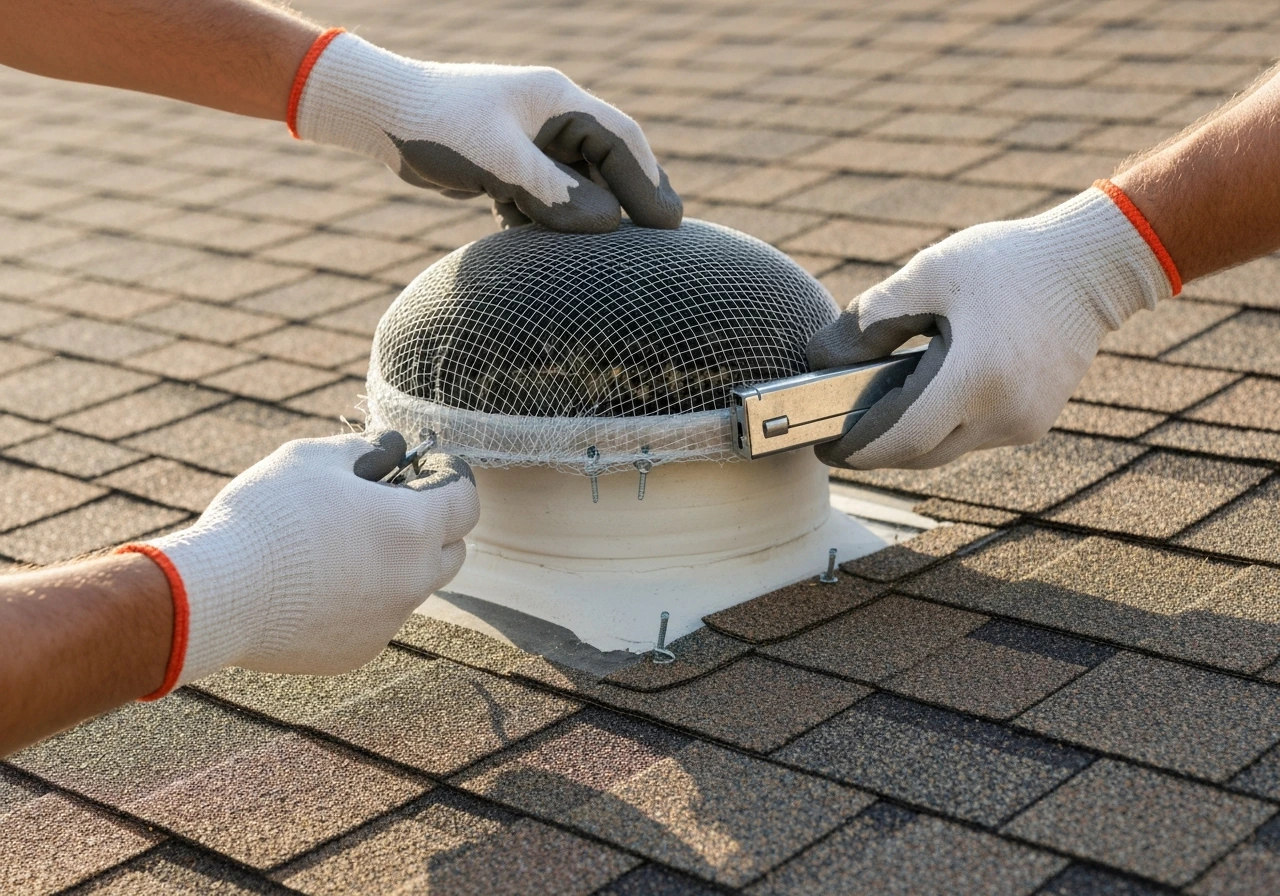
- Cover vents with 1/4-inch galvanized hardware cloth, cut to size and fixed with screws or staples. Avoid plastic mesh, which deteriorates and can catch and entangle birds.
- Install bird netting over eaves, soffits, and recessed areas. Use knotted polyethylene netting sized to 3/4 inch or smaller for sparrows and starlings, 1-1/8 inch for pigeons. Pull it taut and fasten it so there are no loose edges or gaps where birds can squeeze behind it and become trapped. The U.S. Fish & Wildlife Service specifically flags poorly installed netting as an entrapment risk, so installation needs to be tight and gap-free.
- For open ledges, add physical deterrents: stainless steel bird spikes on flat ledges over 3 inches wide, or use slope panels (at a 45- to 60-degree angle) to make surfaces too steep to perch on.
- For windows: apply window film, external screens, or closely spaced paracord or monofilament lines strung 4 to 6 inches in front of the glass to break up the reflection and reduce the landing surface.
Safety note: any exclusion work above ground level means working at height. Use a properly rated ladder with a spotter, or hire a contractor for roof and eave work. Always wear gloves and a dust mask when cleaning droppings, which can carry respiratory pathogens.
Deterrents that work without harming birds
Deterrents are most useful as a complement to exclusion, not a replacement. On their own, most audio and visual deterrents are only temporarily effective because birds habituate to static stimuli quickly. The key is variation and movement.
Visual deterrents
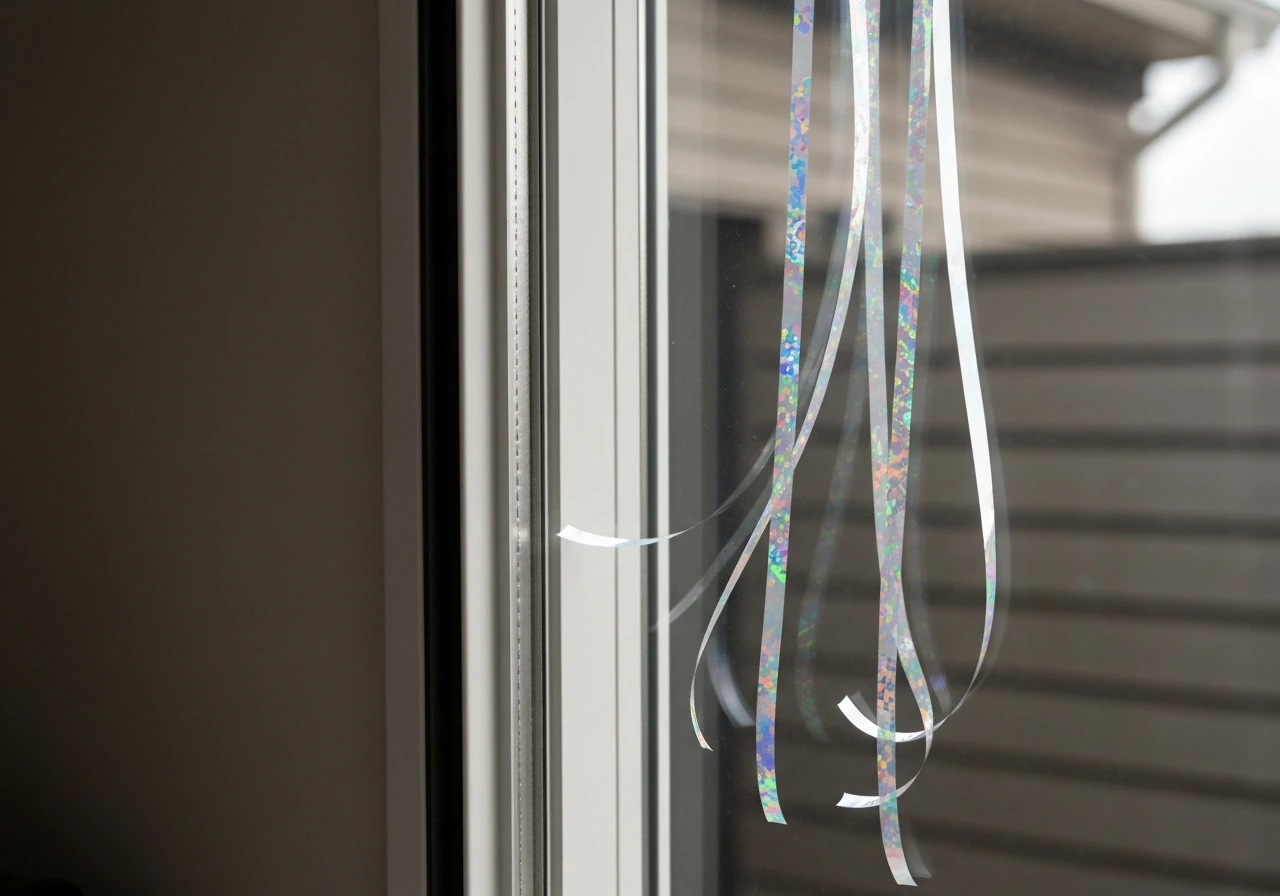
- Reflective tape or holographic ribbon: hang in strips near roost areas so they move in the breeze. Replace or reposition every 1 to 2 weeks to prevent habituation.
- Predator decoys (owl or hawk silhouettes): effective only if moved daily to new positions. A static decoy will be ignored within a few days.
- Window decals or external screens: apply decals in a grid pattern with no more than 2 inches of horizontal and 4 inches of vertical spacing to be effective at preventing window strikes and reflection-triggered calling.
- Slope panels or bird spikes on ledges: these are physical deterrents but work by making surfaces less usable rather than frightening birds, so they don't suffer from habituation.
Audio deterrents
Noise-making devices, including speakers broadcasting predator calls or distress sounds, have limited and short-lived success unless they are actively managed and repositioned frequently. If you use an audio deterrent, move it to a different location daily and combine it with visual deterrents. Ultrasonic devices marketed for bird control have weak evidence behind them: birds may not detect ultrasonic frequencies, and even if they do, environmental factors significantly reduce performance. An integrated approach combining physical deterrents, exclusion, and actively managed audio or visual devices performs much better than any single method.
Lighting adjustments
Switch exterior lighting to motion-activated fixtures rather than always-on lights. Use warm-toned (amber) bulbs rather than cool white or blue-spectrum LEDs near roost areas, as cool light spectra have a stronger biological effect on bird activity. Turn off interior lights in rooms not in use at night, especially rooms with large windows that may be visible to birds outside and contribute to reflection or disorientation.
Landscaping changes
- Trim tree branches that overhang the roofline or provide perch points within 3 feet of the building
- Remove dense ivy and climbing plants from exterior walls, which create ideal nesting and roosting habitat directly on the structure
- Replace berry-producing shrubs close to the building with species that don't produce fruit, to reduce food attraction
- Keep grass cut short near the building to reduce insects and foraging appeal
Prevent it from coming back: a seasonal plan
A one-time fix rarely lasts. Birds are persistent: once they find an opening or a good roost site, they return to it season after season unless the access is permanently closed. If you are dealing with repetitive squawking, the same strategy applies: identify the source and then remove the access or attractants that bring the bird back how to stop a bird from squawking. Once an animal discovers an entry point, it will keep coming back until that entry is sealed for good. Build a simple annual schedule into your property maintenance routine.
| Season | Key tasks |
|---|---|
| Late winter (February–March) | Inspect all vents, soffits, fascia, and gaps before nesting season begins. Seal any openings found. Trim back overhanging branches. Remove last season's deterrents and replace with fresh ones. |
| Spring (April–June) | Monitor for new nesting activity weekly. Do not disturb active nests. Document any problem areas for post-season exclusion work. Reposition and refresh any visual deterrents. |
| Summer (July–August) | Once young birds have fledged and nests are confirmed inactive, remove old nest material and permanently seal the entry points used. Clean and disinfect any droppings accumulation. |
| Fall (September–November) | Full building inspection before winter roosts form. Check that all exclusion materials are intact and undamaged. Install or refresh deterrents on ledges and eaves before roosting flocks establish. |
| Winter (December–January) | Monitor for winter roost formation. Check vent covers and chimney caps after storms. Note any new problem locations to address in February inspection. |
Set a calendar reminder for the late-winter inspection every year. It's the single most effective maintenance task because it lets you seal gaps before breeding season starts, which avoids the legal and practical complications of dealing with active nests.
When to call a wildlife professional instead of DIYing it
There are situations where DIY exclusion is either illegal, unsafe, or likely to make the problem worse. Know when to stop and get professional help.
Active nests with eggs or chicks
In the United States, the Migratory Bird Treaty Act protects the vast majority of wild bird species. In the UK, the Wildlife and Countryside Act applies similarly. Intentionally destroying or damaging an active nest, or killing or injuring a wild bird, is a federal or national offense in most jurisdictions. If you find an active nest with eggs or live chicks, you must stop exclusion work at that location and wait until the nest is fully vacated and the young have fledged before sealing the entry point. If deterrence hazing is being used in a nesting context, it must stop once the first egg is laid. A wildlife professional can confirm species, confirm nest status, and advise on legal timing.
Protected or rare species
Some species, including certain owls, swallows, swifts, and migratory songbirds, have additional protections beyond basic nesting laws. If you're not certain which species you're dealing with, don't proceed with exclusion or removal until a wildlife professional or your local wildlife agency has confirmed the species and confirmed the appropriate timing and method. Your state or provincial wildlife agency can direct you to licensed wildlife control operators in your area.
Birds trapped inside walls or structural cavities
If a bird is confirmed inside a wall cavity, ceiling space, or other enclosed structural area, incorrect exclusion work can trap and kill it. A wildlife professional can manage the one-way exclusion process correctly and, if needed, access the cavity safely. This is particularly important in older buildings where structural access is complex.
Large roost colonies or significant droppings accumulation
If you're dealing with a large flock (dozens of pigeons, starlings, or similar) and significant droppings buildup, remediation carries health risks including histoplasmosis from dried droppings. Professional wildlife control operators have the protective equipment, permits, and experience to handle cleanup and exclusion at scale safely. Ontario's wildlife guidance notes that local wildlife control agents can assist with cleanup and nesting material removal specifically.
What to tell the wildlife professional when you call
- The species if you know it, or a description of the bird (size, color, markings)
- Where exactly the birds are: inside a structure, on a ledge, in a vent, in a tree
- Whether there is a visible nest and whether it appears active (eggs or chicks present)
- How long the problem has been occurring
- What you've already tried
- Any access challenges (height, confined spaces, building age)
If you're also dealing with related noise issues like a bird repeatedly screaming or squawking rather than chirping, or if you have a pet bird causing the problem, those scenarios involve different approaches than the outdoor exclusion and deterrence work covered here. The solutions for outdoor chirping near windows, eaves, and vents are what this guide addresses, and the steps above apply whether the noise is happening at 4 a.m. before sunrise or late in the evening.
FAQ
It’s 4 a.m., I can’t find the source. What should I do first to get relief without making things worse?
Wait until you can identify where the sound is coming from, ideally by standing outside about 30 minutes before sunrise and checking each likely zone (windows, eaves, vents, ledges). If you cannot confirm the source quickly, start with reversible steps that reduce triggers (turn off non-essential exterior lights, remove feeders and open attractants, and block reflections on the specific window). Then schedule the exclusion work once you know whether it is roosting, nesting, or reflection-driven.
Why do my deterrents stop working after a few days, even though the birds were gone at first?
If a bird repeatedly uses the same gap, vent, or window area, deterrents alone often fail because birds habituate. The long-term fix is to permanently remove access (seal openings, block roosting spots, and prevent entry) after you confirm there is no active nest. The most reliable workflow is identify the exact entry or roost spot, choose exclusion that matches the building feature, and set a late-winter inspection so you don’t lose the effort to the next breeding season.
What if I see a bird entering a gap, but I am not sure whether it has a nest inside?
Don’t start exclusion immediately if you suspect an active nest (eggs or chicks) or if a bird is actively carrying material or feeding young nearby. Instead, pause DIY exclusion at that location and get a wildlife professional to confirm species and nest status, then follow legal timing for sealing. You can still reduce triggers safely in the meantime, like turning off exterior lights near the area and reducing attractants.
A bird sounds like it’s inside my walls or ceiling. Is it safe to seal the opening myself?
If the chirping is coming from inside a wall cavity or ceiling space, the risk is that incorrect exclusion can trap the bird inside and lead to death. A wildlife professional can use a one-way exclusion method and access the space correctly, especially in older buildings with complex structural voids. For immediate relief, you can use a bedroom noise bridge (fan or white noise) while you wait for the professional fix.
Can I use a white noise machine or fan to permanently solve morning chirping?
Yes, but only as a temporary bridge, not the main solution. Place it near the bedroom window that hears the sound most, keep it running consistently while you sleep, and do not rely on it to stop roosting or nesting behavior. For lasting results, pair relief with the root-cause fixes like blocking reflections, removing attractants, and performing exclusion where appropriate.
How do I know whether my window problem is reflection, and what side should I treat?
For many roosting and reflection problems, start with the outside of the glass (where the bird sees the reflection). Use window film or tape strips of opaque material to interrupt the bird’s view from outside, and apply opaque treatments externally if appropriate. Avoid treating the interior side only, since that won’t change what the bird perceives from outside.
Are ultrasonic bird repellers or prerecorded predator sounds effective for morning chirping?
For audio deterrents, the key is active management. Birds can adjust quickly to static positioning, so if you do use an audio device, you need to reposition it frequently and combine it with visual deterrents. Avoid relying on ultrasonic products as your primary plan, because performance can be inconsistent due to hearing range and environmental factors.
Could my pet or bird feeder be causing the morning noise, and what changes matter most?
If you have pets or leave pet food outside, birds often return because the area becomes a reliable feeding and territory spot. Fixes that help include securing trash, bringing pet food in promptly, removing standing water sources like birdbaths, and reducing feeders or relocating them farther from the building. These changes reduce the “reason to gather,” which makes exclusion more likely to stick.
What’s the best way to prevent the same problem from coming back next spring?
Yes. Birds are persistent once they learn a productive roost or access point. That’s why the article emphasizes identifying and sealing access permanently and building an annual late-winter inspection. A practical next step is to document which window, vent, or ledge is involved and check those exact spots yearly before breeding season.
When should I stop DIY work and hire a wildlife professional instead?
In many places, intentionally damaging an active nest, or trapping or harming birds, can be illegal. DIY exclusion also becomes unsafe in hard-to-reach areas and when dealing with unknown species. If you find eggs or live chicks, or if the bird is in an enclosed cavity, stop DIY exclusion and contact a licensed wildlife control operator to handle timing and technique.