To stop a bird from squawking right now, your first move depends on where the bird is: if it's trapped inside, open one exit and kill the other light sources so it can find the way out on its own. If it's outside on your building, leave it alone temporarily and focus on identifying why it's there (nesting, roosting, food, or reflection issues) before doing anything physical. Most squawking has a specific trigger, and fixing that trigger is the only thing that actually works long-term.
How to Stop a Bird From Squawking Humanely Today
Maya Carver
1 Jun 2026
Immediate safety and quick response steps
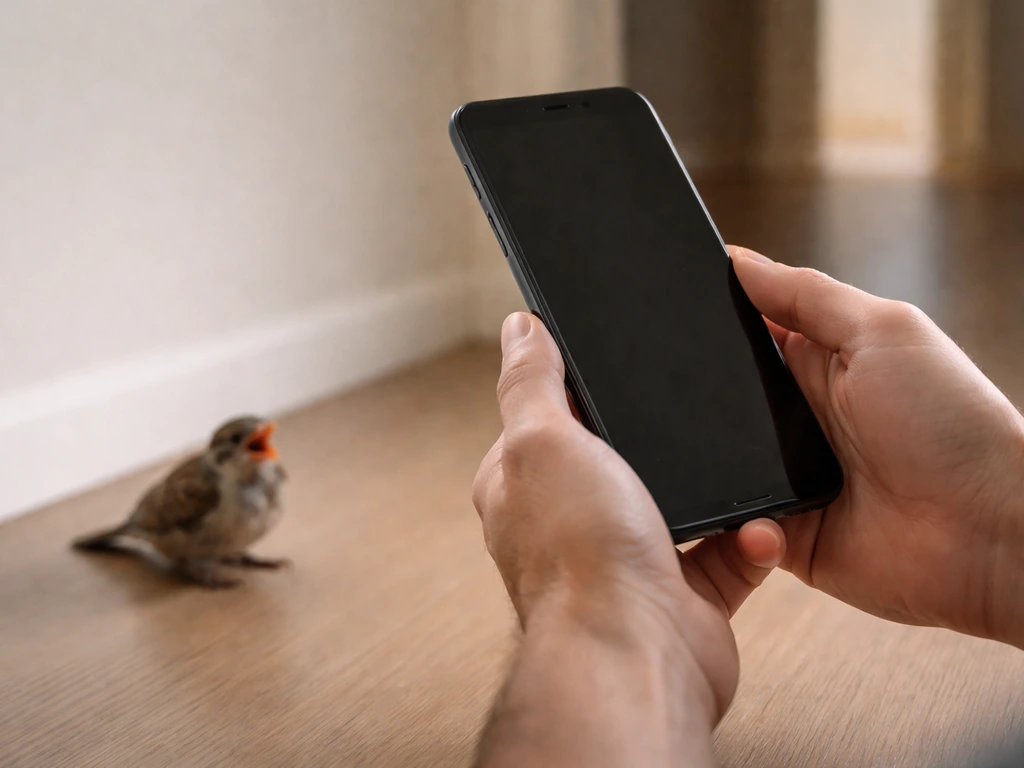
Before you do anything else, take 60 seconds to assess the situation safely. Squawking birds can be stressed, injured, or actively defending a nest, which means they may dive, scratch, or startle you into a fall if you're working at height. Put on gloves if you're going anywhere near the bird. If there are droppings in the area, wear a dust mask or respirator. Bird droppings can carry pathogens like histoplasmosis and salmonella, and dry droppings are especially dangerous when disturbed.
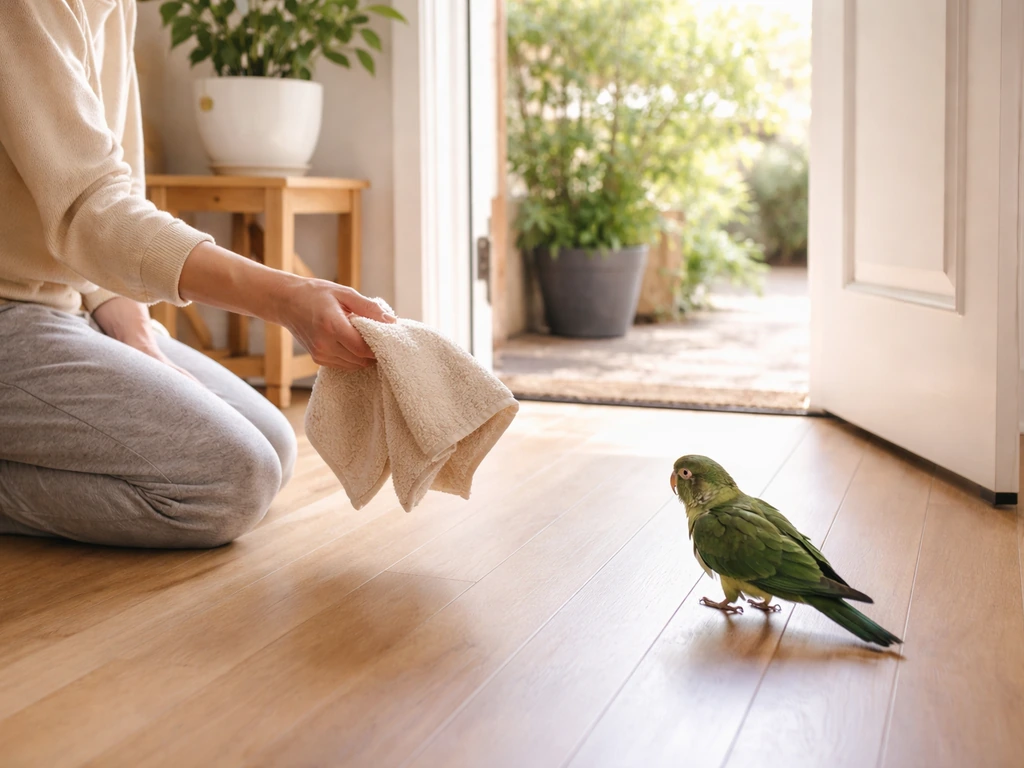
If the bird is trapped inside your building, follow this sequence immediately:
- Open one external door or one window that leads outside. Make it the largest, most obvious exit you have.
- Turn off all artificial lights in the room and draw the curtains on any closed windows. You want a single source of light: the open exit. Birds follow light, and multiple light sources confuse them.
- Block the fireplace opening if there is one, as birds often fly toward it thinking it's an exit.
- Leave the room. The less movement and noise there is, the faster the bird will find its way out. Give it 20 to 30 minutes.
- Do not chase, grab, or throw things toward the bird to push it toward the exit. Stress causes erratic flight and injuries.
If the bird appears injured (blood, a drooping wing, inability to stand), do not give it food or water and resist handling it as much as possible. Cover it loosely with a light cloth or box to reduce stimulation and call a wildlife rehabilitator. After a window-hit bird, Audubon recommends contacting a wildlife rehabilitation agency if the bird has obvious injuries like bleeding or a broken wing, while a bird that is only stunned may need time to recover call a wildlife rehabilitator. An injured bird squawking loudly is in distress, and that's a job for a professional, not a DIY fix.
Why is the bird squawking? Indoor vs outdoor causes
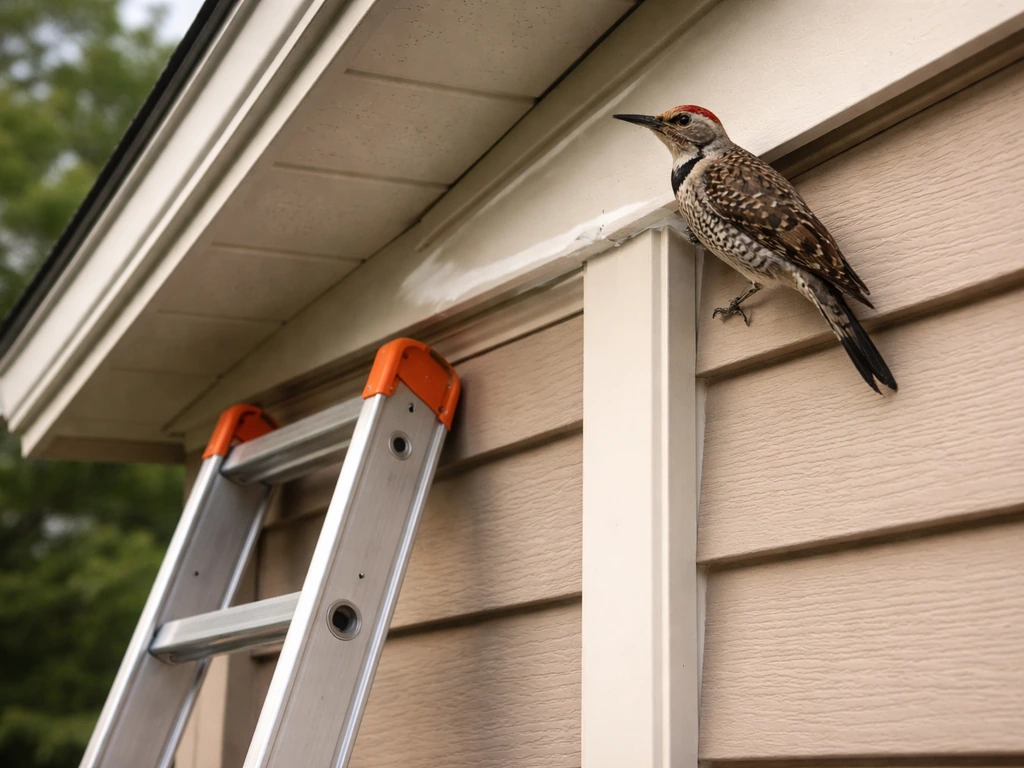
Squawking always has a reason. Figuring out which reason applies to your situation saves you a lot of wasted effort on the wrong solution. Here's how to quickly diagnose the cause based on where the bird is and when it's making noise. If you are dealing with a repeating flicker bird issue, use the same cause-based approach and focus on removing attractants, breaking reflections, and sealing entry points.
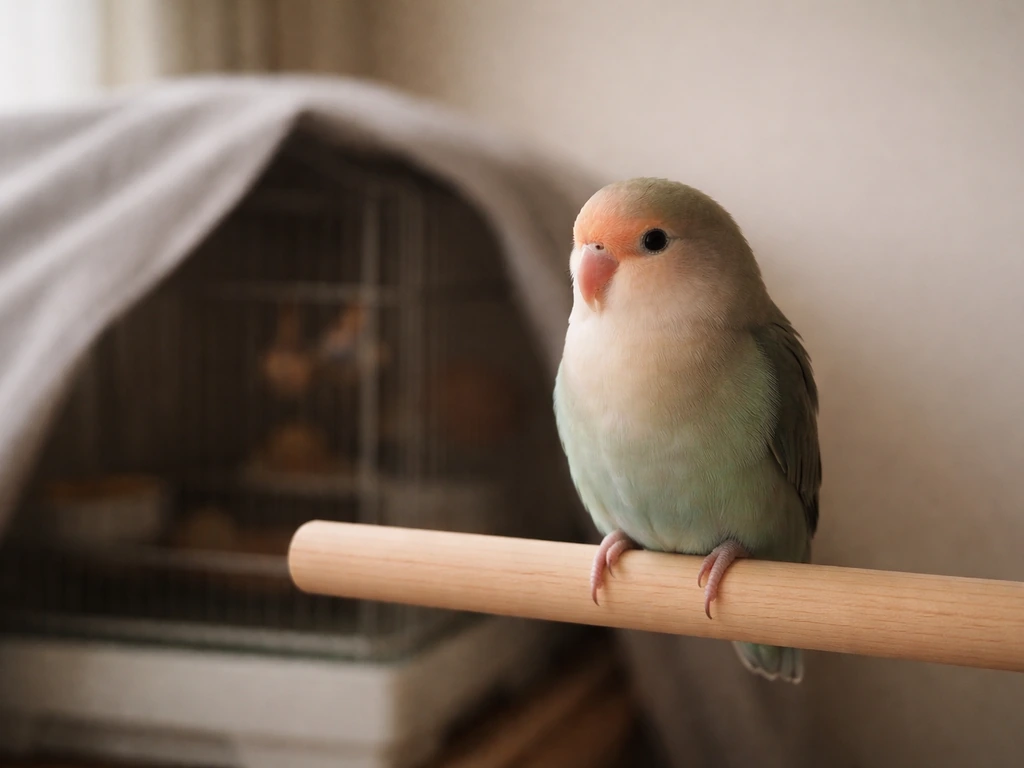
Indoor birds
- Trapped by accident: entered through an open vent, chimney, window, or door and can't find the exit. Usually panicked and flying erratically.
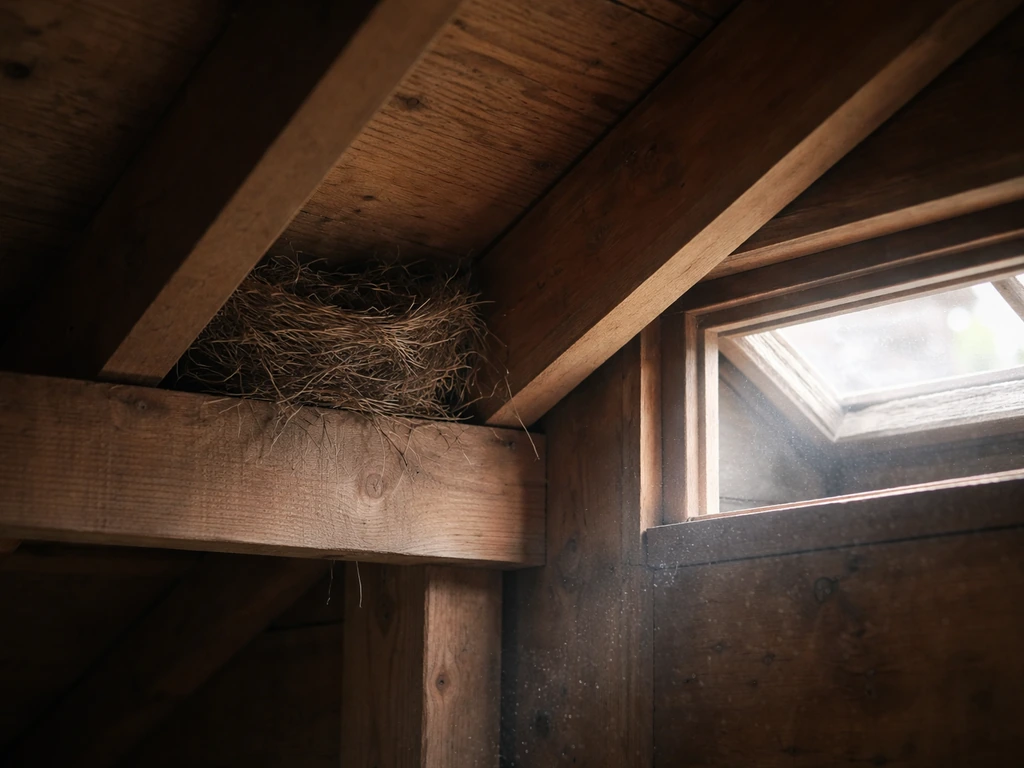
- Nesting inside the building: has found a cavity in your attic, eaves, or ductwork and is actively raising young. Squawking may be from chicks calling for food or adults defending the nest.
- Injured or stunned: struck a window or interior surface and is disoriented. May squawk intermittently or not at all.
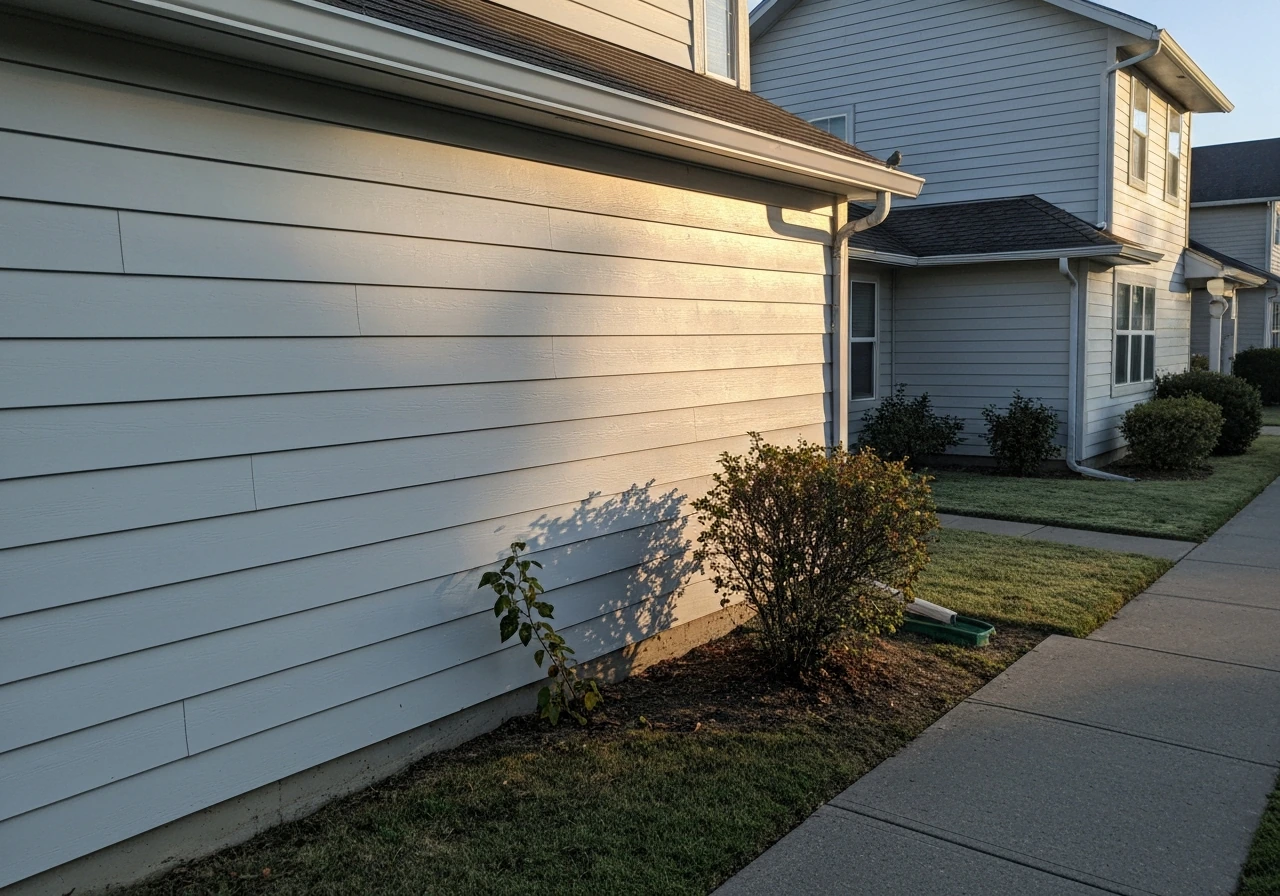
Outdoor birds on or near your building
- Territorial calling: especially common in spring and early summer when birds are establishing breeding territories. The bird may be calling from a rooftop, antenna, or tree near the building.
- Alarm calling: a predator (hawk, cat, or even a human) has been spotted nearby and the bird is warning others. This usually stops within 10 to 20 minutes once the threat moves on.
- Window attacks: the bird sees its reflection in glass and treats it as a rival. It will return repeatedly throughout the day and squawk aggressively at the window. This is a reflection/vision issue, not a noise problem, and requires a different fix.
- Roosting noise: large flocks roosting on ledges, vents, or roof edges make sustained squawking, especially at dusk and dawn.
- Food or water access: a bird repeatedly calling near a food source (open trash, exposed grain, standing water) is associating your building with a reward.
The window-attack scenario deserves special attention. Birds hit glass because reflections show them sky or vegetation they think they can fly into, and they sometimes perceive their own reflection as a territorial rival and attack it repeatedly. If you're dealing with a bird squawking at and repeatedly striking a specific window, the fix is to break up that reflection from the outside, not to scare the bird away.
Humane short-term quieting methods and temporary deterrents
Once you've identified the cause, you can apply the right short-term fix. These are not permanent solutions, but they work well while you set up something more durable.
For a bird squawking at a window (reflection/territorial issue)
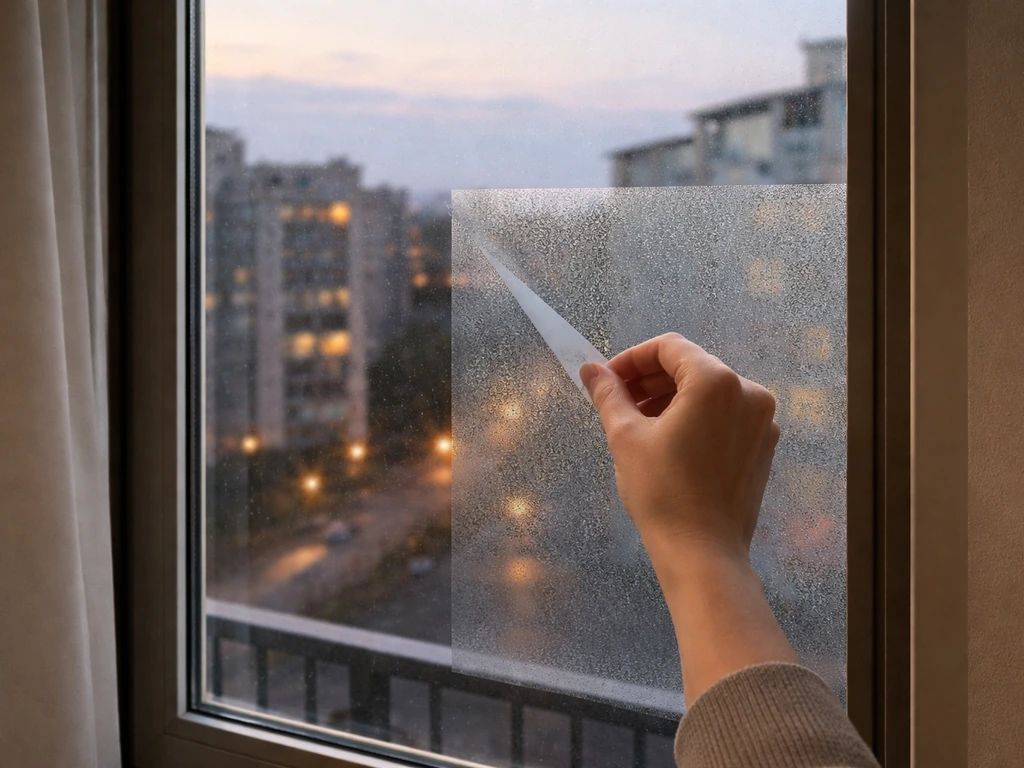
- Apply removable window film, tape strips, or decals to the outside surface of the glass. The goal is to break up the mirror-like reflection so the bird can see the glass as a solid surface. Spacing strips no more than 2 inches apart vertically works well.
- Hang lightweight objects that move in the wind (strips of mylar tape, old CDs, or holographic ribbon) outside the window. Movement disrupts the reflection.
- If you have window screens, installing them on the outside immediately reduces both the reflection and the collision risk.
- Close blinds or curtains from the inside. This changes the appearance of the glass from outside and often stops window strikes within a day.
For a bird squawking from a rooftop, ledge, or vent
- Use visual deterrents like reflective tape, predator decoys (hawk or owl silhouettes), or holographic spinners near the roosting spot. Rotate these regularly, as birds habituate quickly.
- Remove any food or water source nearby first. A bird with a reason to stay will ignore deterrents.
- Block access to attractive ledges with physical barriers (see long-term section below) if the squawking is coming from a specific roost point.
For a bird calling from a nearby tree or territorial spot
Territorial calling at dawn is extremely common in late spring and early summer, and it's closely related to the topic of birds chirping in the morning. In most cases, this type of noise is seasonal and resolves on its own within a few weeks once the bird has established its territory or the breeding season winds down. In the meantime, a white noise machine indoors or heavy window curtains are the most practical short-term fixes. Do not attempt to disturb an active nest. It is illegal under the Migratory Bird Treaty Act and similar protections in most jurisdictions.
Long-term prevention: proofing, exclusion, and habitat modification
Short-term deterrents buy you time. These longer-term fixes are what actually keep the problem from coming back season after season.
Seal entry points
Walk the perimeter of your building and check every potential entry: soffit gaps, open vents, broken roof tiles, open chimney flues, and gaps at the roofline. A bird only needs a 1.5-inch opening to enter. Install hardware cloth (1/4-inch mesh) over vents, chimney caps on flues, and use weatherstripping or metal flashing to close gaps in eaves and soffits. Do all of this outside of active nesting season (generally April through August in North America) so you don't seal a bird inside or trap nestlings.
Physical exclusion on ledges and building features
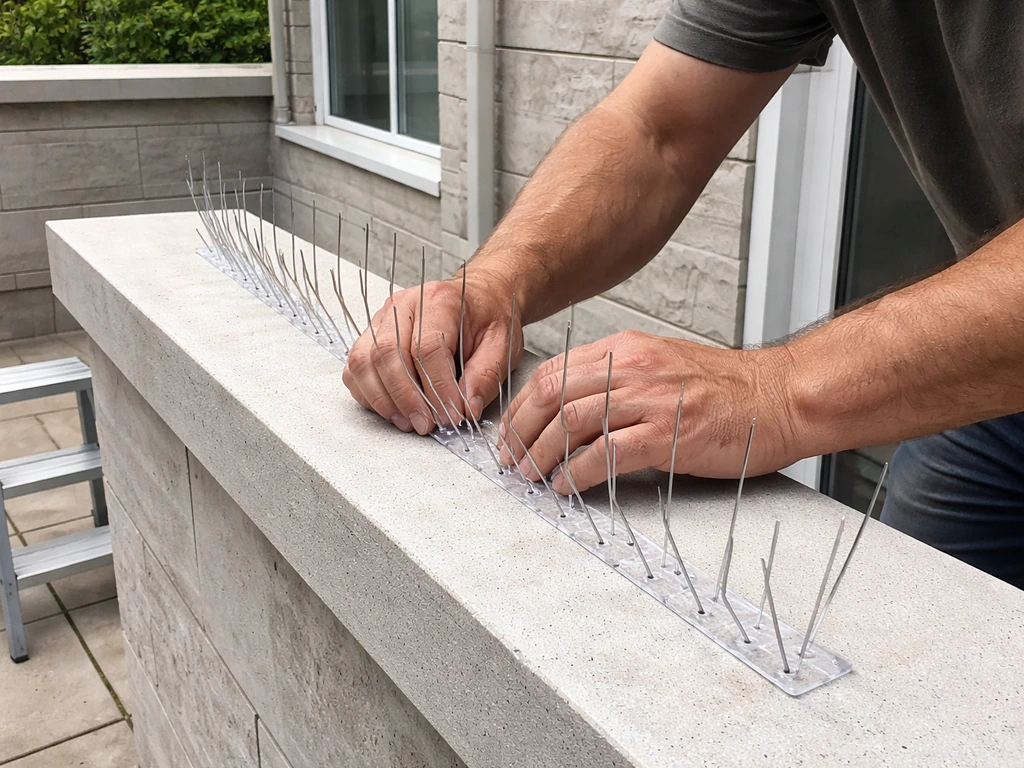
| Deterrent Type | Best Use | Durability | DIY-Friendly? |
|---|---|---|---|
| Bird spikes (stainless steel or plastic) | Flat ledges, parapet walls, window sills | 5+ years | Yes |
| Bird netting | Large open areas, eaves, roof sections | 5-10 years | Moderate (larger installations need pros) |
| Coil/spring wire systems | Narrow ledges, beams, gutters | 3-5 years | Yes |
| Slope/angle inserts (45°+ incline) | Building ledges and sills | Permanent if structural | Moderate |
| Electric track systems | Serious infestations, commercial buildings | 10+ years | No (professional install required) |
For most homeowners, bird spikes on window ledges and a chimney cap cover the majority of squawking-related entry and roosting problems at a reasonable cost. Netting is the right call for large eave areas or covered parking structures where whole sections of roof need to be excluded.
Remove attractants and modify habitat
- Secure garbage cans with tight-fitting lids and don't leave loose food waste outside.
- Remove bird feeders within 30 to 50 feet of the building if roosting or squawking birds are a problem. You can relocate feeders farther into the yard rather than eliminating them entirely.
- Fix any standing water issues: clogged gutters, flat roof puddles, or ornamental water features close to the building all attract birds.
- Trim back tree branches that overhang the roofline or touch the building. These act as launching pads and perch spots.
- If specific plants are producing berries that attract large flocks, consider replacing them with less attractive species.
Window collision prevention for the long term
Fritted glass, exterior screens, and ultraviolet-reflective window films are the most effective permanent fixes for window-strike problems. These products make glass visible to birds without significantly changing your view from inside. If you're replacing windows anyway, ask specifically about bird-safe glazing options. Temporary window decals work, but they require ongoing maintenance to stay effective.
Common mistakes that make the problem worse (or get you in legal trouble)
Most of the things people reach for when a bird is driving them crazy are either ineffective, counterproductive, or outright illegal. how to get rid of a chirping bird. Avoid these:
- Trapping or relocating a wild bird without a permit: In the US, most wild birds are protected under the Migratory Bird Treaty Act. Capturing, killing, or relocating them without a federal permit is a federal offense. This includes birds like mockingbirds, woodpeckers, starlings in some contexts, and nearly all songbirds.
- Destroying an active nest: Removing a nest with eggs or chicks in it is illegal for most species in the US, UK, Canada, and Australia. Wait until the nest is confirmed empty and the season has ended.
- Using noise devices or ultrasonic repellers as a primary fix: These work briefly at best. Birds habituate to them within days to weeks, especially if there is a strong motivator like food or a nest nearby.
- Spraying water at the bird: Temporarily displaces it, does nothing long-term, and may injure a chick or disturb a nest you haven't spotted yet.
- Sealing entry points while a bird or nest is still inside: This traps the animal, causes it to die inside the building (creating odor and pest problems), and is inhumane. Always confirm the space is empty first.
- Using sticky gels on ledges: These products cause serious feather and foot damage. Several municipalities have banned them. They also trap and injure non-target wildlife. Don't use them.
- Attempting to handle a potentially injured bird without proper protection: Risk of bites, scratches, and disease exposure. Use thick gloves or leave it to a rehabilitator.
When to call wildlife professionals or local authorities
Some situations are genuinely beyond DIY scope, and pushing forward without help usually makes things worse. Call a licensed wildlife rehabilitator or pest management professional if:
- The bird is visibly injured (bleeding, broken wing, unable to stand or fly) and you cannot safely contain it for transport.
- You have a confirmed active nest inside your building during breeding season and cannot wait for the birds to fledge.
- You're dealing with a large flock (starlings, pigeons, or similar) roosting on a commercial or multi-unit building. Large-scale exclusion typically requires professional installation and may require permits.
- The bird is a protected raptor (hawk, owl, eagle) or a federally listed species. Do not attempt any deterrent, exclusion, or relocation without guidance from your state wildlife agency or the US Fish & Wildlife Service.
- You suspect there is a health or safety risk from accumulated droppings (large quantities near HVAC intakes, for example). Professional cleaning with appropriate PPE is needed.
- Multiple DIY attempts have failed over more than two to three weeks.
When you call, have this information ready: the species (or your best description of the bird), the location and behavior, how long the problem has been occurring, what you've already tried, and whether there are signs of a nest or chicks. This helps the professional triage the situation over the phone and arrive prepared.
Seasonal planning and monitoring checklist
Bird noise problems follow predictable seasonal patterns. Getting ahead of them on a calendar is far easier than reacting in the middle of nesting season when your options are limited by law. Here's a year-round framework:
| Season | What to Expect | What to Do |
|---|---|---|
| Late winter (Feb–Mar) | Pre-nesting scouting; early territorial calls begin | Inspect building exterior for gaps, damaged vents, and open eaves. Install exclusion hardware before birds nest. |
| Spring (Apr–May) | Peak nesting activity; squawking from adults defending territory and feeding chicks | Do NOT seal entry points if nests are active. Use window treatments to address reflection issues. Tolerate territorial calls; they are temporary. |
| Early summer (Jun–Jul) | Fledglings leave nests; activity decreases | Once nests are confirmed empty, remove nest material and seal the entry point immediately to prevent re-nesting. |
| Late summer (Aug–Sep) | Post-breeding dispersal; flocks begin forming | Check and reinforce exclusion hardware. Remove attractants (food, water sources) before migratory flocks arrive. |
| Fall (Oct–Nov) | Migration; large flocks may temporarily roost | Visual deterrents and removing food sources are most effective now. Flock noise is usually temporary (days to weeks). |
| Winter (Dec–Jan) | Roosting for warmth; birds seek building cavities and sheltered ledges | Ensure all gaps are sealed. Check chimney caps and vent covers after winter storms may have dislodged them. |
Keep a simple log when you're actively dealing with a squawking bird problem: note the date, time, location, species if known, behavior observed, and what action you took. If your main issue is morning chirping, use the log to spot when it happens and which cues trigger it, then apply the right short-term and long-term fixes how to stop bird chirping in the morning. This takes two minutes and pays off significantly if the problem persists, because you'll be able to show a pattern (time of day, specific location, duration) that helps a wildlife professional advise you faster. Check the same spots monthly during the nesting and roosting seasons to catch re-nesting attempts early, before eggs are laid and your legal options narrow.
Most bird squawking problems resolve within two to four weeks if you address the root cause correctly. If your bird is screaming in the morning, use the same approach to find the trigger, apply short-term quieting, and then prevent it from happening again with exclusion or habitat changes Most bird squawking problems resolve within two to four weeks. If you've removed the attractant, blocked the entry, and treated the reflective surface and the noise is still happening, you're either missing a second attractant or there's an active nest nearby that isn't visible yet. That's the point to bring in professional eyes rather than keep cycling through deterrents on your own.
FAQ
What should I do if the bird keeps squawking even after I let it out or removed the obvious attractant?
Treat it as a “second trigger” situation, meaning the bird may still be defending or monitoring something nearby (a hidden nest, a roost, or an alternate entry point). Re-check for openings within its typical flight path, especially roofline gaps, vents, and nearby reflective surfaces, then reassess whether the noise is happening from one specific spot repeatedly over several days.
How can I tell if the bird is trying to defend a nest versus just calling loudly?
Look for consistent timing and behavior. Nest defense often comes with aggressive posturing, repeated dives, or sustained calling from the same direction toward you, usually near a concealed ledge or underside of the roof. Territorial calling is more likely to be periodic (often dawn) and focused on a general area rather than immediate attacks when you approach.
Is it ever okay to use loud sounds, sprays, or chasing to stop the squawking?
In most cases, no. Sudden noise, direct spraying, or chasing can increase stress and can escalate nest defense behavior. If you use deterrents at all, choose non-contact options that remove the trigger (reflection, access, attractants) rather than trying to physically force the bird to leave immediately.
What if the bird is squawking inside the attic but I cannot safely access the entry point?
Do not try to “hunt” for it with repeated openings because you can drive it deeper or startle a nesting bird. Use passive, safer steps first, like sealing obvious external access points after confirming no active nesting, and contact a wildlife professional if the location is unclear or the bird shows injury or repeated distress sounds.
Can I cover a nest site or block a bird’s entry right away if I find droppings near the area?
Be cautious, droppings can appear before nesting is obvious. The safest approach is to avoid sealing or blocking until you confirm whether eggs or chicks are present, because closing access can trap nestlings and may be illegal during protected nesting periods in many places.
What’s the safest way to clean droppings if a bird has been roosting where it squawks?
Avoid dry sweeping or vacuuming, which can aerosolize particles. Wet-cleaning followed by proper disposal is typically safer, and wear a respirator and gloves, especially in enclosed spaces like garages or basements. If there is heavy buildup or you suspect active contamination, consider professional cleanup.
How long should I wait for the noise to stop after installing exclusion tools like mesh or caps?
Expect a resolution window of roughly a couple of weeks if you truly removed the trigger and blocked entry correctly. If the bird keeps squawking from the same spot beyond that, re-check for missed openings or a second access route, and confirm whether there is an active nest nearby that you have not excluded.
What if the bird is striking windows, but I also want to stop it from making noise outside?
For window-strike cases, focus first on breaking the outside reflections or making the glass more visible to birds. Noise often reduces once the bird stops repeatedly attacking the same surface, but if it is also calling from a nearby roost, you may need both window treatment and exclusion of the roosting spot.
Are bird spikes and netting always effective, and when should I avoid them?
They work well when correctly sized and installed to prevent roosting, but avoid using them where they could interfere with active nesting or where birds can get tangled. For large, covered areas like parking structures, netting is usually more complete than spikes, but the system must be installed to eliminate gaps birds can enter from beneath or the sides.
When should I call a wildlife rehabilitator or pest professional instead of continuing DIY deterrents?
Call if the bird appears injured or unable to move normally, if you cannot identify where the noise is coming from, or if the behavior suggests an active nest with chicks. Also call if you have already tried trigger-based fixes and the problem persists beyond a few weeks, because a hidden second attractant or ongoing nesting is likely.