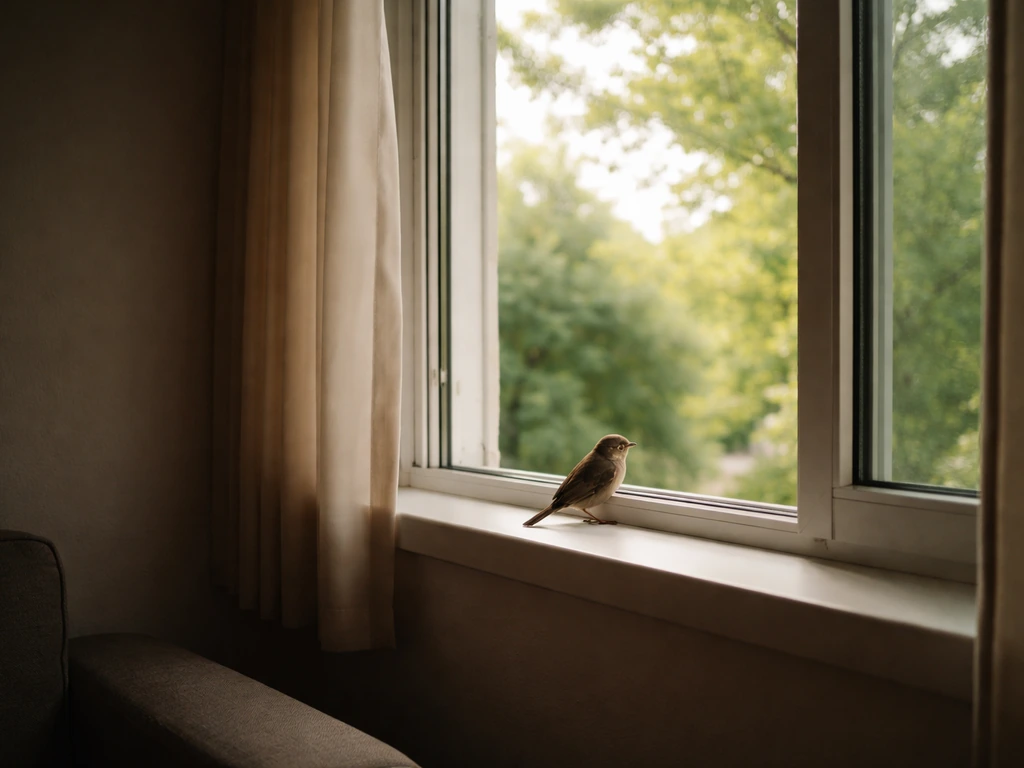
To make a bird stop chirping right now, your fastest move is to identify the trigger and remove it. If a bird is calling repeatedly near your window, cover or treat the glass so it stops seeing a reflection. If it's in a shrub or eave, check whether young are nearby before doing anything else. Most persistent chirping has a clear cause: territory, hunger, mating, distress, or a reflection.
How to Make a Bird Stop Chirping: Fast Humane Steps
Maya Carver
23 Apr 2026
Nail down which one you're dealing with and the fix becomes straightforward. This guide walks you through the full process, from a two-minute triage to long-term proofing, so you can act today and prevent it from happening again. If you want a step-by-step approach, use this guide to learn how to get rid of a chirping bird quickly and humanely.
If you keep dealing with morning calls, follow these same approaches and tailor them to the time of day so the behavior stops for good. If the calls are closer to screaming than chirping, you can use the same humane framework for how to stop my bird from screaming in the morning.
If you keep applying the right humane steps, you can also learn how to make a bird shut up over the long run prevent it from happening again.
Quick triage: figure out why it's chirping before you do anything else
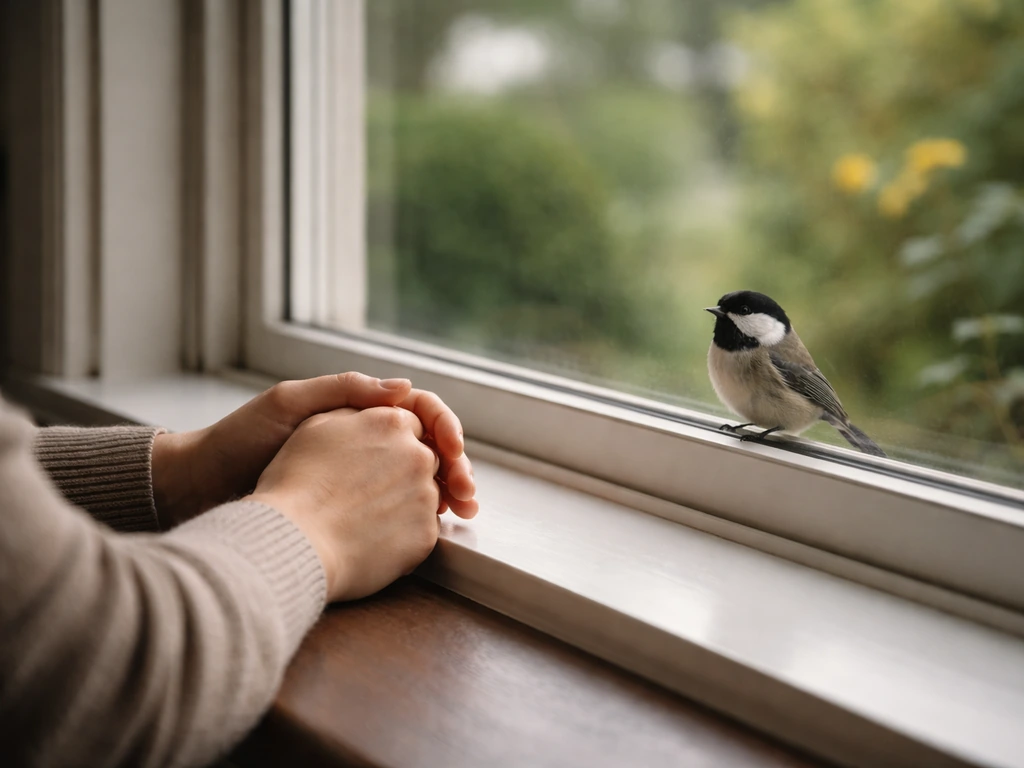
Spending two minutes on triage saves you a lot of wasted effort. Watch and listen for 60 to 90 seconds before touching anything. Ask yourself these questions in order:
- Is the bird flying repeatedly at a window or reflective surface? That's almost certainly a reflection trigger. The bird sees blue sky or foliage in the glass and treats it as open space.
- Is the chirping high-pitched, buzzy, and frantic, with an adult bird coming and going nearby? That pattern points to begging calls from young birds. There's likely a nest close by.
- Is one bird singing the same phrase over and over from a fixed perch, especially in the morning? That's territorial or mating song. Common in spring and early summer.
- Is the sound sudden, sharp, and irregular, like alarm calls? The bird may be stressed by a predator, a pet, or a person nearby.
- Is the bird grounded, wing-drooping, or not flying away when you approach? That's a potential injury or illness situation and requires a different response entirely.
Once you know which category you're in, go straight to the matching fix below. If you're not sure, start with the reflection check since it's the most common reason birds persistently hit or hover near buildings.
Humane steps to reduce the noise today
These are the immediate, no-harm actions you can take right now. None of these hurt the bird, and none require permits or professional help.
For a bird chirping at or near a window
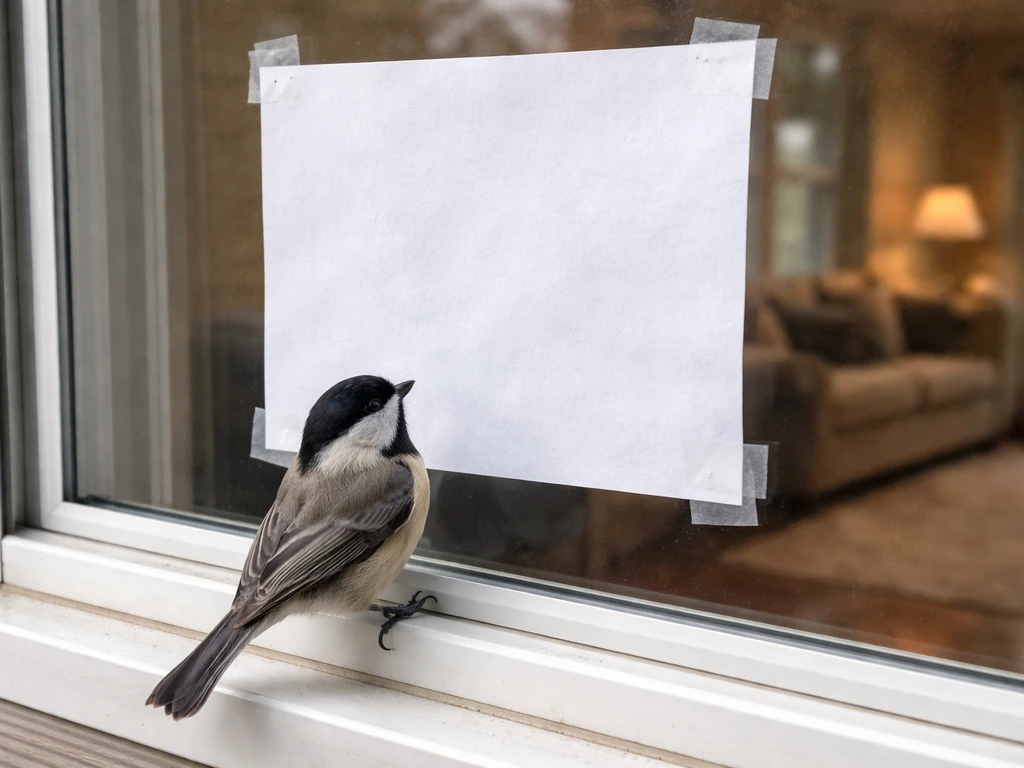
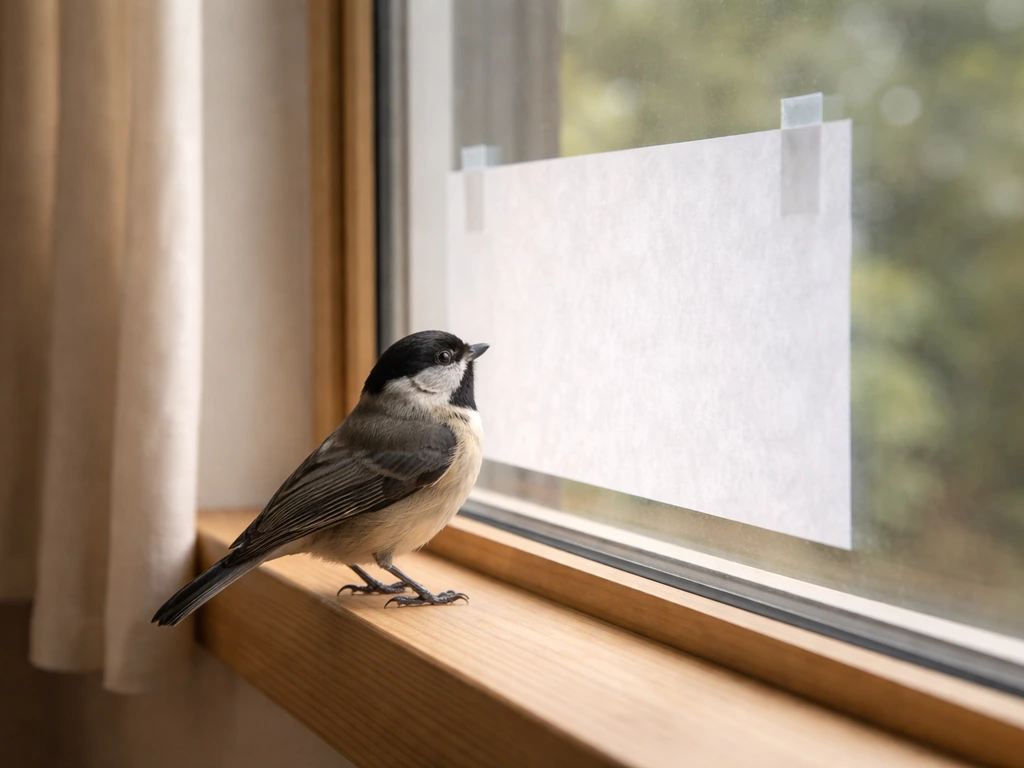
Break up the reflection so the bird no longer sees a clear image. Tape a sheet of paper or fabric to the outside of the glass as a temporary fix. For anything more lasting, apply window film, Acopian BirdSavers (paracord strips hanging vertically), or window marker patterns on the exterior surface. Whatever you use needs to be visible from at least 10 feet away so the bird has time to change course.
Spacing matters too: if you're using dots or decals, keep them no more than 2 inches apart horizontally and 4 inches vertically, otherwise birds read the gaps as open space and fly through anyway. Put the treatment on the outside of the glass when you can, since interior-only products are less effective.
For territorial or mating song from a perch
You can't stop a bird from singing its territory call entirely, but you can discourage it from using your specific building or yard as its perch. Remove or cover the perch it prefers. If it's a fence post, roof peak, or antenna, try a spike strip or slope-mounted deterrent on that specific spot. Shiny reflective tape or pinwheels near the perch can also disturb a bird enough to relocate. These aren't permanent solutions, but they often buy you quiet in the short term while you work on longer-term habitat changes.
For begging calls from young birds
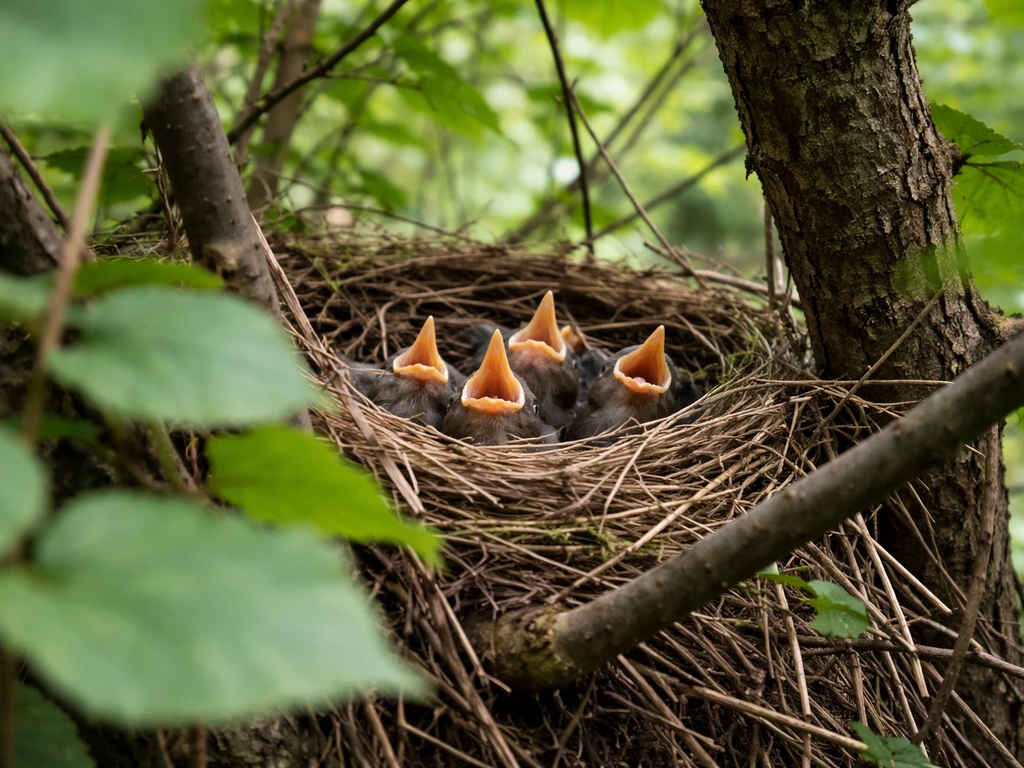
Do not disturb the nest. The blank" rel="noopener noreferrer">Migratory Bird Treaty Act makes it illegal to disturb nests of native birds without a permit, and Maryland DNR provides general compliance guidance on what to do instead. The young will fledge within days to a few weeks depending on the species, and the calling will stop on its own. Trying to move or block the nest when eggs or dependent chicks are present is illegal under the Migratory Bird Treaty Act. Keep pets and people away from the area so adults can continue feeding, which actually speeds things up. If the constant begging call is coming from inside a wall or attic, see the escalation section below.
Common causes of chirping: indoors vs. outdoors
The same bird can be chirping for very different reasons depending on where it is and what time of year it is. Here's a breakdown of the most common scenarios so you can match your situation quickly.
| Cause | Where you'll notice it | Typical sound | Season |
|---|---|---|---|
| Window reflection | Near windows, glass doors, mirrors | Repeated tapping or persistent hovering calls | Year-round, peaks in spring |
| Territorial song | Fence, roofline, tree, antenna | Repetitive single-phrase song from same perch | Spring and early summer |
| Mating calls | Open yard, shrubs, eaves | Loud sustained singing, often at dawn | Spring into summer |
| Begging calls from young | Near nest, inside eaves or walls | Buzzy, frantic, insect-like calls with adult visits | Late spring through summer |
| Alarm or distress call | Anywhere, often sudden | Sharp, irregular, short burst calls | Any season |
| Roosting disturbance | Eaves, vents, attic spaces | Chirping at dusk or just before dawn | Fall and winter especially |
| Trapped bird (indoors) | Inside building, attic, chimney | Frantic calls, scratching sounds | Any season |
If the sound is coming from inside a wall, attic, or chimney and you're also hearing scratching, that's a trapped or nesting bird and it warrants immediate action. Don't seal the opening until you've confirmed the bird can exit. If you're dealing with squawking rather than chirping, or screaming-type calls especially from a pet bird or a parrot-type species, that's a different behavioral problem covered in related guides. If you are dealing with screaming-type calls instead of normal chirping, use the steps in our guide on how to stop bird from screaming for the right approach.
DIY exclusion and deterrents for outdoor birds
Once you know the trigger, these are the practical physical steps you can take outside. Work from least invasive to most, and always prioritize keeping the bird unharmed.
Remove attractants first
Before installing anything, remove what's drawing the bird in. Bird feeders, open water sources, and dense low-maintenance shrubs near your building all increase bird activity and the noise that comes with it. If you want birds in your yard but not at specific locations, relocate feeders at least 30 feet from your windows and building walls.
Sound and visual deterrents (no-contact, safety-first)
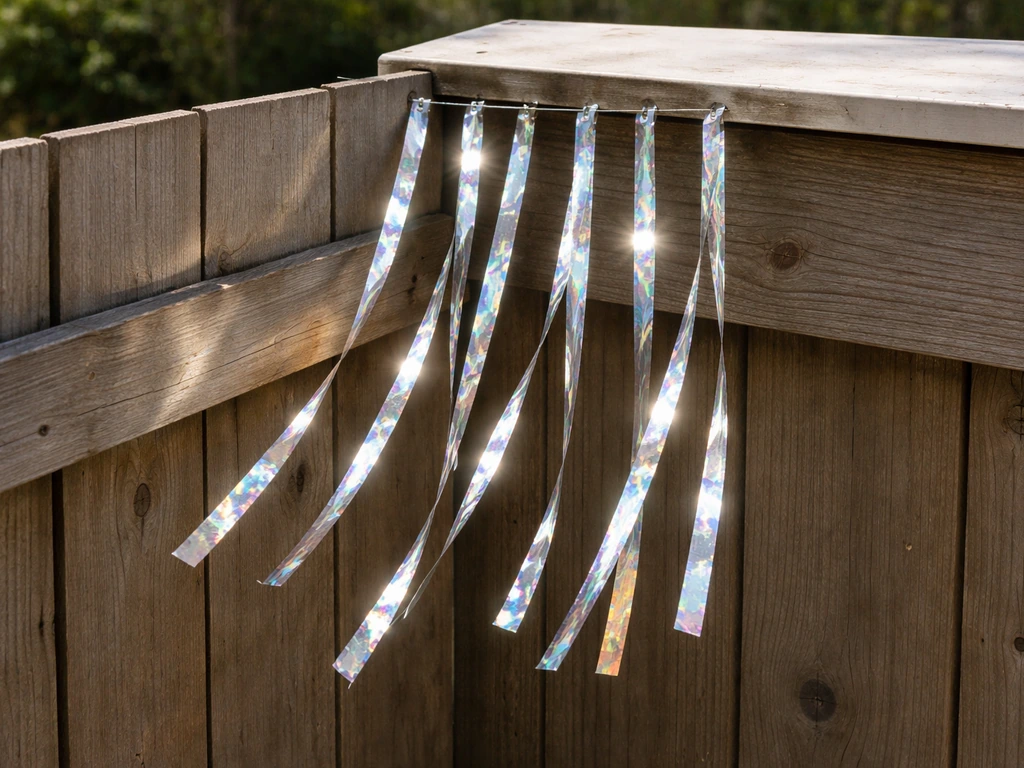
- Reflective tape or flash tape: Hang strips near the problem area. Movement and light reflection disturb birds without harm. Replace every few weeks as effectiveness fades.
- Predator decoys: Owl or hawk silhouettes on the roofline or fence can deter smaller birds. Move them every few days or birds learn they're not real.
- Wind-activated spinners or pinwheels: Inexpensive and effective near ledges and eaves.
- Ultrasonic devices: Mixed evidence on effectiveness, but some homeowners find them helpful as part of a combined approach. Use only devices marketed for outdoor, weather-resistant use.
- Water-jet sprinklers with motion sensors: Highly effective for ground-level birds. Startles without harm and conditions birds to avoid the zone.
Physical exclusion for specific spots
If birds are perching on ledges, rooflines, or signage, bird spikes or slope products on those surfaces eliminate the perching opportunity. For birds entering vents, eaves, or gaps in siding, a one-way exclusion device is the standard humane approach: install a one-way door or cone over the entry point so the bird can exit but cannot re-enter. Leave it in place for several days to ensure all birds are out before permanently sealing the opening. Never seal an entry point until you're certain no birds or young remain inside. Safety note: any work above ground level requires fall protection. Use a ladder stabilizer and have a second person present.
Long-term proofing: make your building less attractive to noisy birds
Getting a bird to stop chirping today is a short-term win. Keeping birds from setting up shop near your building in the first place is what actually solves the recurring problem. If you are dealing with a flicker, use the same trigger-based troubleshooting to figure out why it is hanging around and how to get rid of a flicker bird. These are the habitat and structural changes that make the biggest difference.
Seal gaps and entry points
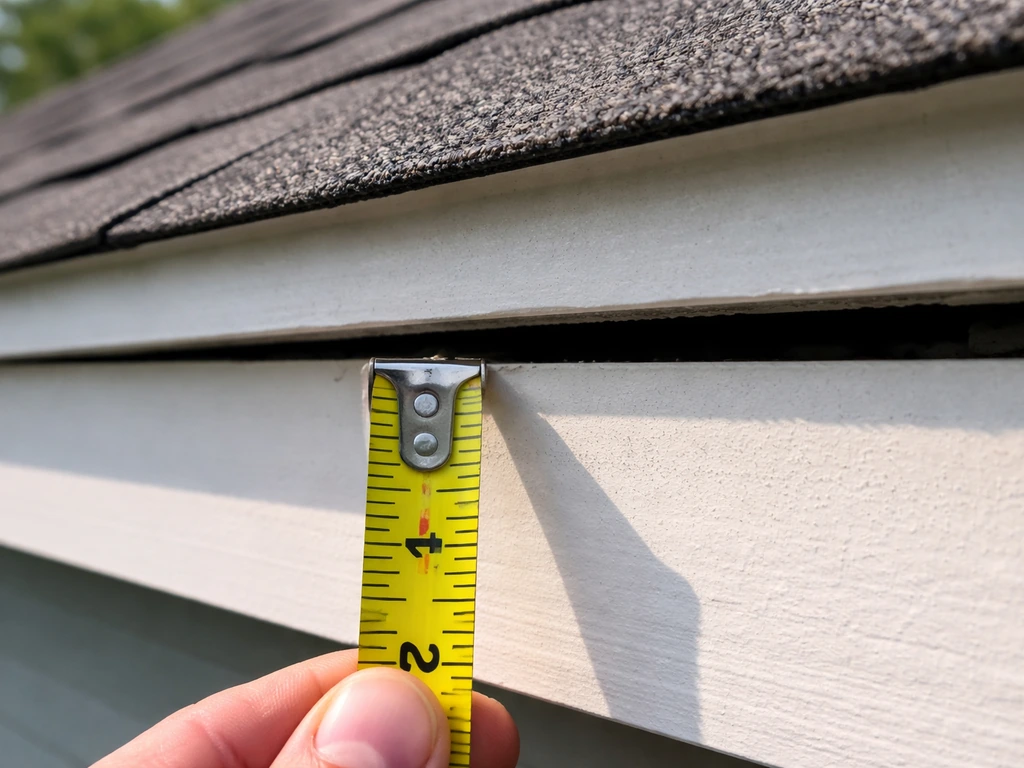
Walk the exterior of your building and look for any gap larger than half an inch. Birds can nest in surprisingly small openings. Common problem spots are roof eave gaps, damaged soffit, open dryer vents, gable vents without screens, chimney openings without caps, and gaps around pipe penetrations. Use hardware cloth (half-inch galvanized wire mesh) to cover vents while still allowing airflow. Install chimney caps with mesh sides. Seal gaps in trim and siding with caulk or foam backer rod before painting.
Modify the landscape
Dense ornamental hedges right against your building's foundation are prime nesting spots. Trim shrubs back at least 3 feet from the building and keep them thinned out so there's less shelter. Remove berry-producing plants near entry points if they're attracting large numbers of birds. Keep trees trimmed so no branches hang directly over the roof, since overhanging branches give birds easy access to gutters and eaves.
Manage window and glass surfaces
Make window treatment permanent rather than seasonal. Apply bird-safe window film to high-risk windows, particularly those that face trees or sky. The American Bird Conservancy's guidance is clear: the pattern must be visible from 10 feet out, and it needs to be on the exterior surface when possible. This one change dramatically reduces both window strikes and the persistent chirping that comes from reflection-confused birds.
Set up a maintenance routine
- Every spring (March to April): Walk the building exterior and check for new gaps, damaged mesh, and loose deterrents before nesting season starts.
- Every fall (September to October): Inspect eaves and vents for birds beginning to roost, re-caulk any new cracks, confirm chimney caps are secure.
- After any storm: Check that screens and deterrents are still in place and intact.
- Annually: Relocate or replace visual deterrents like owl decoys and reflective tape to maintain effectiveness.
When to stop DIY and call a professional
Some situations are outside the scope of what a homeowner or facility manager should handle alone, either because of safety, legality, or the bird's welfare. Here's when to escalate.
The bird is injured or not flying
If you see a bird on the ground that won't fly away, is drooping a wing, is bleeding, or was caught by a cat, do not attempt to capture or transport it yourself. Contact a licensed wildlife rehabilitator immediately. Cat bites in particular cause fast-moving infections that are fatal without treatment. The U.S. Fish and Wildlife Service and Audubon both give the same guidance: call a rehabilitator first, describe what you're seeing, and follow their instructions. Do not chase the bird or try to contain it in a box without guidance. To find a rehabilitator near you, search the National Wildlife Rehabilitators Association directory or contact your state fish and wildlife agency.
There's an active nest with eggs or chicks
Under the Migratory Bird Treaty Act, it is illegal to destroy, move, or disturb a nest that contains eggs or young that are still dependent on it. This applies to nearly all wild bird species in the U. S. If you've found an active nest in a spot that's causing a real problem, such as a nest inside a vent that's creating a fire risk or blocking airflow, contact a wildlife professional and your regional U.
S. Fish and Wildlife Service office. Nest-removal permits are occasionally issued for genuine human health or safety concerns, but you cannot make that call yourself. If you suspect an MBTA violation has occurred or you're unsure whether an action is legal, the FWS enforcement contact is lawenforcement@fws.
gov.
Birds are established inside the structure
If birds are nesting or roosting inside walls, attics, or crawl spaces, a professional wildlife control operator can assess whether exclusion is legal and safe at that moment. One-way exclusion devices are effective but only when installed at the right point in the season and when no young are trapped inside. Getting this wrong means you seal chicks in and create a worse problem. A licensed operator knows how to time it, use the right devices, and seal secondary entry points as part of the same visit.
The species might be protected beyond the MBTA
Some species have additional protections under state law or the Endangered Species Act. If you're in a facility management role and you're not certain of the species involved, treat it as protected until confirmed otherwise. Your state wildlife agency can identify the species from a photo and tell you what applies in your jurisdiction.
Seasonal plan and troubleshooting flowchart for recurring chirping
Chirping problems follow predictable seasonal patterns. Here's how to stay ahead of them throughout the year.
| Season | Most common cause of chirping | Priority action | Proofing window open? |
|---|---|---|---|
| Late winter (Feb-Mar) | Early territorial song, scouts looking for nest sites | Inspect and seal gaps before nesting begins | Yes, best time to seal |
| Spring (Apr-May) | Mating calls, active nesting, begging calls starting | Do not disturb active nests; add window treatments now | No, nesting may be underway |
| Early summer (Jun-Jul) | Begging calls from young, fledglings on ground | Keep pets away; wait for young to fledge | No |
| Late summer (Aug-Sep) | Second broods in some species, juveniles dispersing | Monitor for new activity; trim vegetation | Partial, check before sealing |
| Fall (Oct-Nov) | Roosting and shelter-seeking as temps drop | Check vents, eaves, chimney caps before roosting establishes | Yes, good exclusion window |
| Winter (Dec-Jan) | Roosting disturbance, occasional alarm calls | Maintain existing deterrents, clear debris from gutters | Yes, minimal nesting risk |
Troubleshooting flowchart: which fix do I use?
- Is the bird hitting or hovering at a window repeatedly? → Apply exterior window treatment (film, cords, or markers at correct spacing). Done.
- Is the chirping intense and frantic with an adult bird feeding nearby? → Active nest with young. Do not disturb. Wait for fledging (typically 1 to 3 weeks). Keep pets and foot traffic away.
- Is a single bird singing from the same perch every morning? → Territorial or mating call. Remove or modify the perch. Add a visual deterrent near that spot.
- Is the sound coming from inside a wall, vent, or attic? → Do not seal. Check for active nesting. If nesting is confirmed, call a wildlife professional. If no nest, install a one-way exclusion device and seal after birds exit.
- Is the bird grounded, injured, or not flying? → Do not approach or capture. Call a licensed wildlife rehabilitator immediately.
- Is the chirping at dusk or dawn from eaves or vents with no other obvious trigger? → Likely roosting. Install deterrents at the roost site outside the active season, then seal entry points once vacated.
- Is the problem recurring every year in the same spot? → Permanent habitat modification is needed: remove vegetation, seal the site, and install lasting deterrents before the next nesting season.
Your next steps checklist
- Right now: Watch the bird for 90 seconds. Identify the trigger category (reflection, territory, young, distress, roost).
- Within the hour: Apply a temporary fix matching that category (paper on glass, remove perch, back off from nest, call rehabilitator if injured).
- This week: Assess whether a permanent deterrent or structural change is needed for that spot.
- This month: Walk the building exterior and check for unsealed gaps, damaged screens, and unprotected vents.
- Before next nesting season (February at the latest): Complete all sealing and habitat modification work while the window is legally and practically open.
- If escalation is needed: Save this contact for your state wildlife agency and find your nearest licensed rehabilitator now, before you need them urgently.
Most chirping problems are solvable the same day you notice them, as long as you match the fix to the actual cause. The birds doing the chirping aren't being difficult, they're responding to something specific in their environment. Change that thing, and the noise stops. If the situation turns out to involve an active nest, an injured bird, or a protected species, get professional help rather than guessing. Acting carefully and within the law is faster in the long run than dealing with the fallout of a mistake.
FAQ
How long should I wait after I try a fix before doing something else?
If the bird seems calm and keeps repeating the same call near the same spot, treat it as a “persistent trigger” problem (most often reflection or a favored perch). Watch for 60 to 90 seconds, then do one targeted fix (like an exterior visible-to-10-feet window treatment). If nothing changes after a full day, move to the next most likely category instead of repeating the same action.
Will covering the window or putting up deterrents hurt the bird or make things worse?
Yes, but do it deliberately. Cover or break the reflection using an exterior treatment visible from about 10 feet away, keep the bird away from the window line for several minutes, and avoid aggressive approaches that can scare the bird back to the area. If the chirping is coming from an attic or wall, do not block openings until you confirm the bird can exit.
What if the chirping is coming from inside a wall, attic, or chimney?
If you hear begging chirps coming from inside a wall or attic, that usually means dependent young, not just a vocal adult. The immediate priority is not exclusion or sealing, it is confirming the exit route. Avoid sealing until you’re sure the bird can leave on its own, and consider a licensed wildlife control operator if access is unclear.
What should I do if a nest is causing a real problem, like blocking airflow or creating a safety hazard?
If you find a nest with eggs or dependent chicks, avoid any nest removal or blocking that could trap young. For fire risk, airflow obstruction, or a nest in a vent, the safer route is to contact a wildlife professional or the appropriate authority to discuss timing and lawful options, since permits are situation specific.
Do bird-repellent sounds or ultrasonic devices work to stop chirping?
Don’t rely on noise or loud sounds to “train” the bird away. Birds often habituate quickly, and sudden noises can increase panic behavior that leads to more strikes or frantic calling. The more reliable approach is removing the trigger (reflection, perch access, food, or nesting cover) and proofing the building envelope.
Could my bird feeder or water source be the reason for the constant chirping?
Yes, especially if you have window-facing feeders or water features. A dense “food and activity” zone near the building can lead to ongoing calling even if you later fix the reflection. If you want birds in your yard but not at specific window areas, relocate feeders at least 30 feet away from windows and walls and reduce attractant plants near entry points.
How can I tell whether it’s reflection behavior or territorial calling?
When birds persistently call at the same window, it can be either reflection or repeated territorial display. A quick decision aid is to test whether their movement tracks the glass: if they hover, strike, or patrol the same line, treat it as reflection and use an exterior visible pattern. If they perch repeatedly on nearby ledges, switch to perch removal or slope products at those exact points.
What mistakes make window deterrents fail to stop chirping?
If you use tape, decals, or a film, placement errors are common. Make sure the treatment is on the outside when possible, visible from about 10 feet away, and not left as small, widely spaced marks that birds interpret as openings. Use denser coverage (no more than about 2 inches gap horizontally and 4 inches vertically for dot or decal patterns).
What if I see a bird chirping but it can’t fly away, or I suspect a cat was involved?
If the bird is on the ground and appears injured, drooping, bleeding, or was likely caught by a cat, do not try to relocate it yourself. Contact a licensed wildlife rehabilitator immediately, because cat bites can cause rapidly fatal infections without treatment.
What should I do if I’m not sure whether there are eggs or young in the area?
If you are unsure whether a nest is active, assume it is protected and pause actions that could disturb or seal access. The article’s safest sequence is: confirm if there is a trapped bird or dependent young before exclusion, and escalate to a professional if the nest is inside vents, walls, or crawl spaces.
Next Article
How to Get a Trapped Bird Out of Your House Safely
Humane, step-by-step guide to get a trapped bird out safely, handle injuries, and prevent future entry.