If you have a Northern Flicker or similar woodpecker-type bird getting into or hammering on your home, the fastest fix is to guide it out through an open door or window today, then seal off every gap and vent it used to get in. Flickers are federally protected under the Migratory Bird Treaty Act, so trapping or harming one is illegal. Everything you do has to be humane and focused on exclusion, not elimination.
How to Get Rid of a Flicker Bird: Humane Exclusion Steps

Maya Carver
29 May 2026
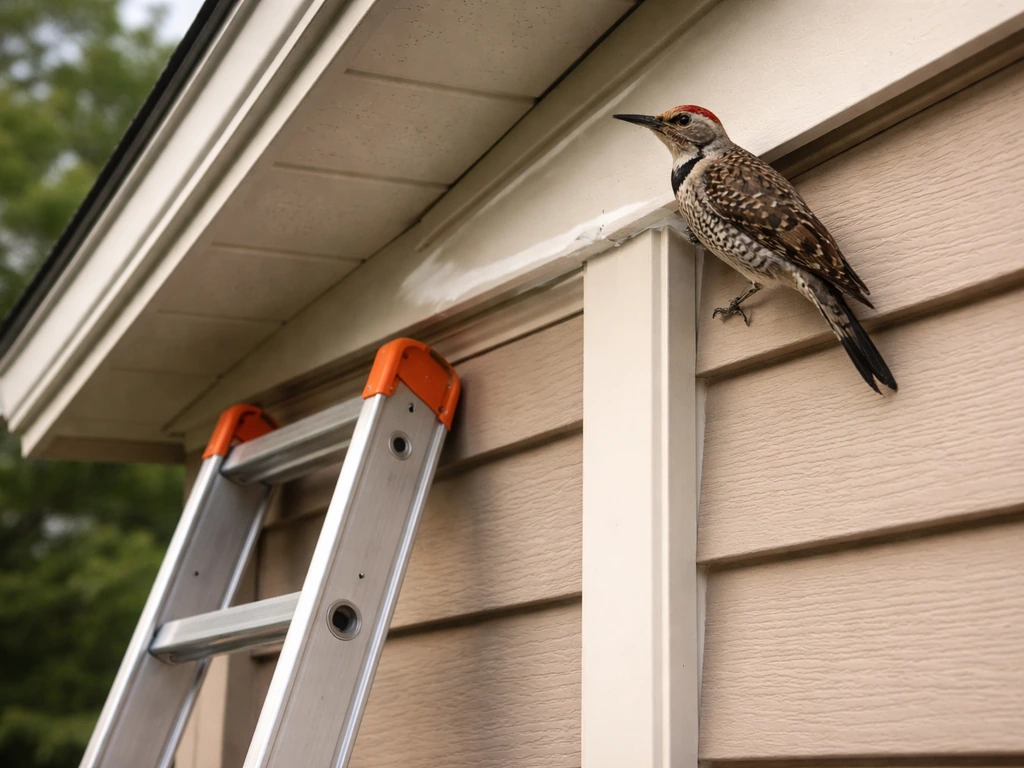
Quick diagnosis: what a "flicker bird" is and why it's at your building
The Northern Flicker (Colaptes auratus) is a medium-sized woodpecker that is unusually ground-feeding for its family. It hops around on lawns eating ants and beetle larvae, climbs tree trunks, and occasionally darts out to catch insects mid-air. It looks like a chunky brown bird with a spotted belly, a red or black face marking, and a bold white rump patch you'll see the moment it flies. Males have a mustache stripe. If that description matches what you're seeing, you've got a Flicker.
Flickers target buildings for a handful of specific reasons, and knowing which one applies to you changes what you do next. The most common reasons are:
- Insects or larvae in wood siding: rows or clusters of small holes almost always mean the bird found wood-boring beetle larvae or carpenter ants inside your siding or trim. This is food-seeking, not vandalism.
- Nest or roost excavation: a single large, rounded hole (roughly 2 to 3 inches wide) being actively drilled means the bird wants to live there. Flickers excavate nest cavities, often in soffits, eaves, or wood-clad walls.
- Territorial drumming: loud, rapid hammering on metal gutters, chimney caps, or flashing (not creating a hole) is territorial communication, most common in spring. The bird isn't trying to get in; it just wants the noise.
- Accidental entry: Flickers sometimes fly into open garages, attic vents, or broken screens and get trapped inside. They can also strike windows hard enough to stun themselves.
- Light and glass reflection: windows that reflect sky or trees can look like open space to a bird. Interior lights visible at night also attract birds toward glass.
Before doing anything, spend two minutes confirming which situation you have: is the bird currently inside the building, actively drilling the exterior, returning daily to drum, or just striking windows repeatedly? The answer determines whether you need emergency removal right now or targeted exclusion and deterrence work. If the bird is chirping or drumming more than usual, focus on humane deterrence and exclusion so it stops returning deterrence work.
Emergency steps: get the bird out safely today
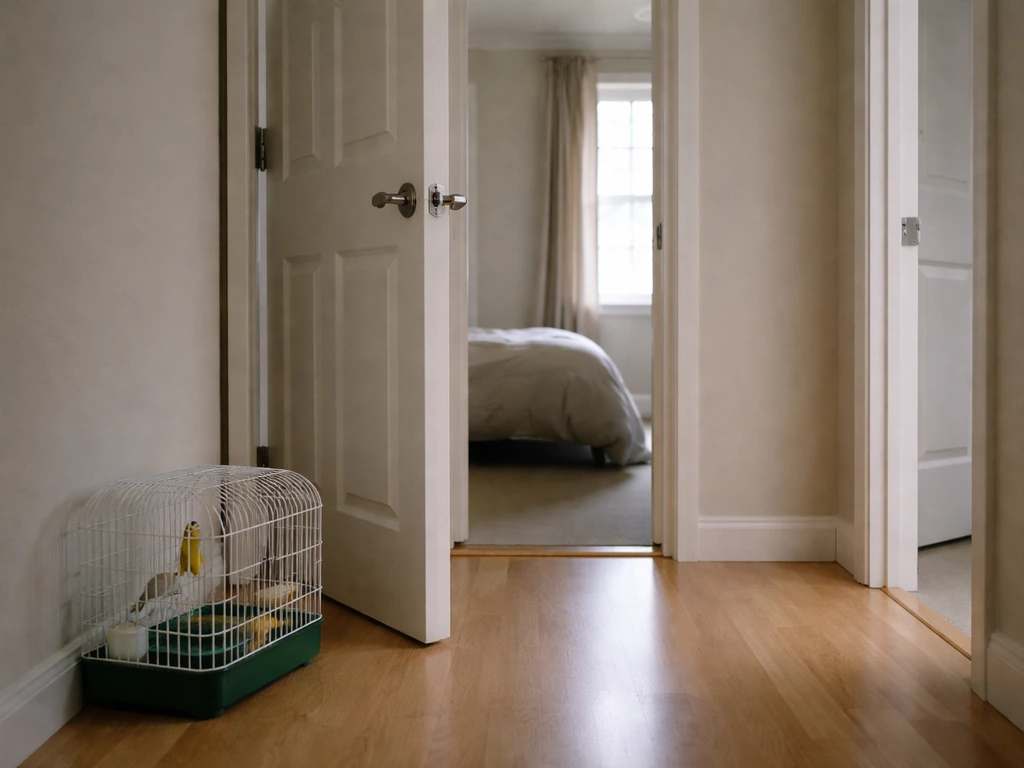
If the bird is already inside, stay calm. Chasing it will exhaust it and risk injury to the bird and you. Work through these steps in order.
- Close off as much of the building as possible. Shut interior doors so the bird is confined to one room. The smaller the space, the faster this resolves.
- Turn off all interior lights. A dark inside and bright outside makes the bird naturally move toward windows and doors.
- Open the largest exit you have: a wide exterior door, a big casement window fully open, or a garage door. Remove any screens from that one opening if you can do it safely.
- Leave the room. Seriously, step out and give the bird 15 to 20 minutes. Most birds will find the opening and leave on their own once people are out of the way.
- If it doesn't leave, gently herd it toward the opening using a bedsheet or towel held wide, moving slowly from the far side of the room. Never swat at it.
- For a bird that has landed and seems dazed (possible window strike), place a ventilated cardboard box over it gently, slide a piece of cardboard underneath, and carry it outside. Set the box upright in a sheltered outdoor spot, open the flap, and step back. Give it 30 to 60 minutes to recover on its own.
A window-strike victim that is breathing irregularly, cannot hold its head up, or is still unresponsive after an hour needs professional help. If a bird collides with a window and is injured, it may need medical attention from a permitted wildlife rehabilitator or a veterinarian, the Wildlife Center of Virginia advises professional help for a window-strike victim. Contact a licensed wildlife rehabilitator in your area. The Wildlife Center of Virginia and most state wildlife agencies keep searchable databases of permitted rehabilitators. Do not attempt to feed or medicate the bird yourself.
Safety note for yourself: wear gloves if you need to handle a bird box or clean up any droppings. Bird droppings can carry Histoplasma fungi and the bacteria responsible for psittacosis. Even a small cleanup is worth wearing an N95 mask and disposable gloves.
Find and fix entry points: the DIY inspection
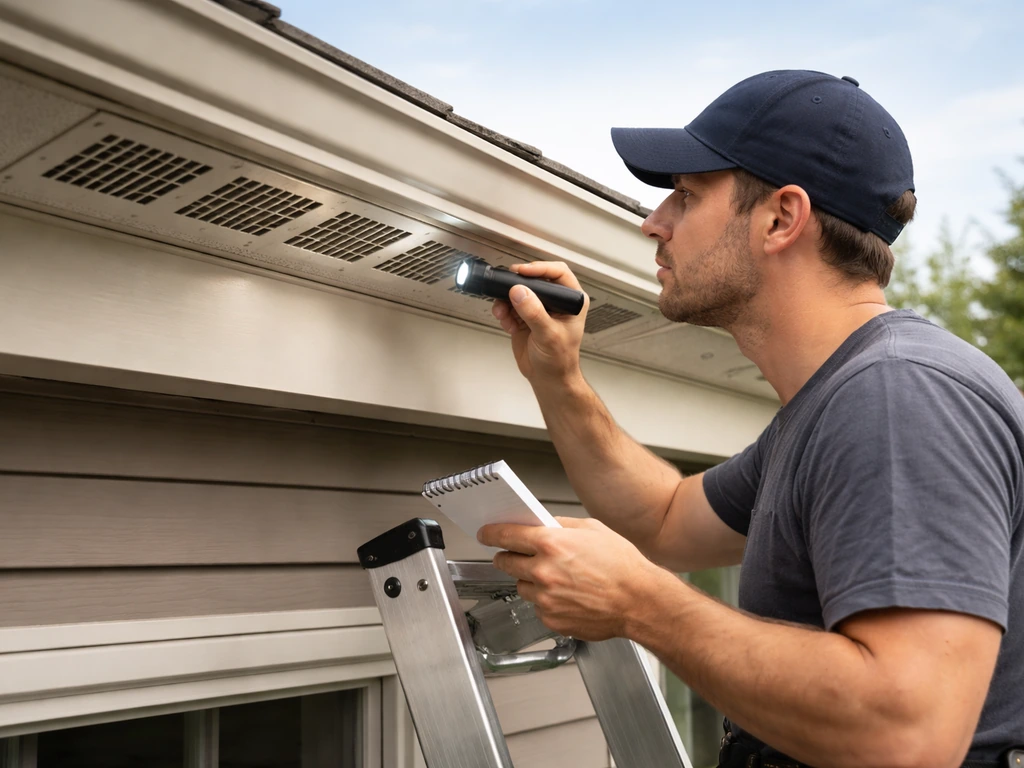
Once the bird is out, your immediate job is figuring out exactly how it got in. Flickers can squeeze through gaps as small as about 1.5 inches long by 0.25 inches wide. Walk the entire building perimeter and look up at the roofline from multiple angles. Use binoculars if you have them.
Where to inspect first
- Soffits and fascia boards: gaps at the joint where soffit meets wall, missing soffit panels, and rotted fascia are the most common flicker entry points.
- Attic vents: unscreened or broken louvered vents are open invitations. Check every one.
- Chimney top: open flues without a proper cap are common entry routes in older homes.
- Drilled holes in siding: any existing woodpecker holes larger than about 1 inch are potential entry points even if the bird wasn't using them for entry before.
- Roof-wall intersections and dormers: check where flashing meets wood trim for open seams.
- HVAC and plumbing penetrations: pipes and ducts passing through exterior walls often have loose caulk or no sealant at all.
Sealing the gaps: materials and methods
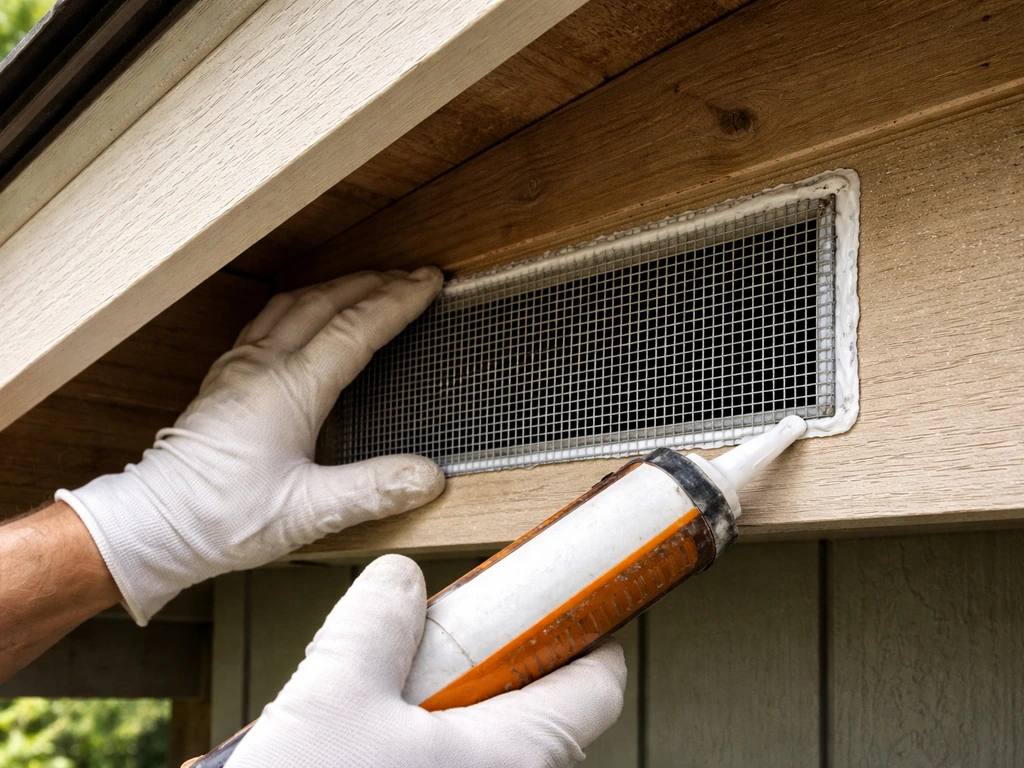
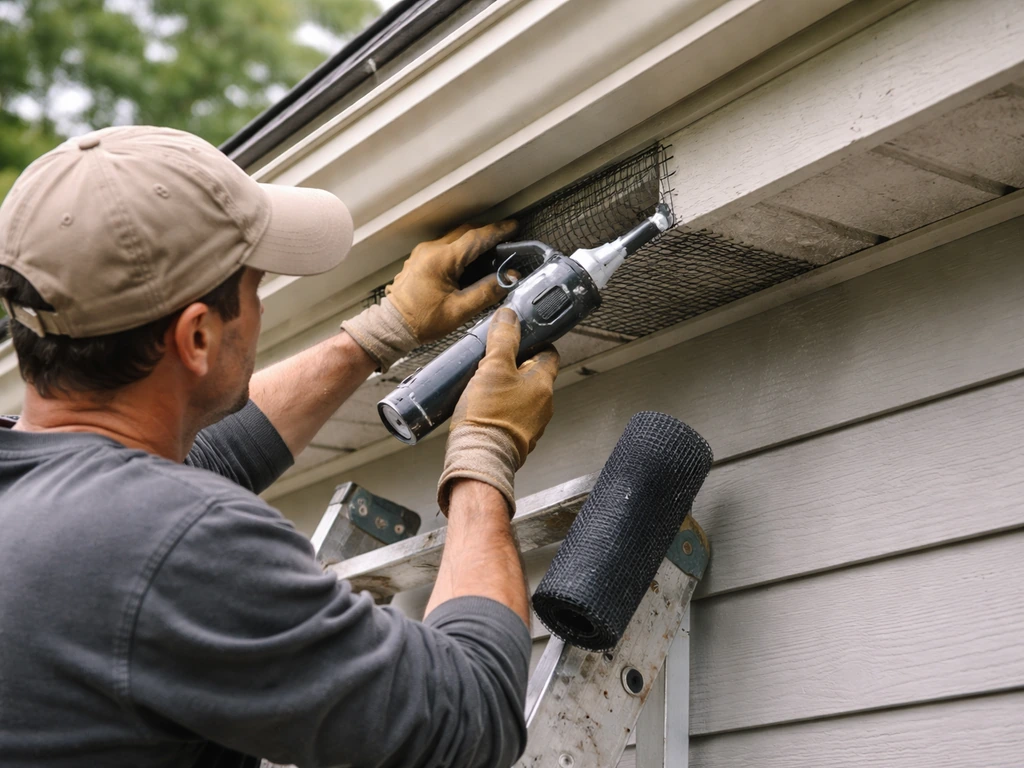
For small gaps and cracks (under about half an inch), exterior-grade silicone or polyurethane caulk works well, especially at joints between dissimilar materials like wood meeting metal flashing. For larger irregular gaps (half an inch to a few inches), use an expanding foam sealant rated for exterior use, then cover the cured foam with hardware cloth or a painted wood patch so birds can't peck it out. For active drill holes in wood siding, fill the hole, then cover the area with a metal flashing patch or hardware cloth stapled at least a couple of inches beyond the hole on all sides. Birds will come back to a repaired spot and try again if it isn't physically reinforced.
For attic vents and soffit vents, the right fix is a rigid galvanized or stainless hardware cloth cover with a quarter-inch mesh size. Half-inch mesh is also widely available and stops Flickers, but smaller species can still get through. Fasten it with screws, not staples, especially on soffit panels that take weather stress. Chimney flues need a properly fitted chimney cap with a spark arrester mesh, which serves double duty keeping birds out and preventing fire risks.
One important rule about timing: do not seal an active nest cavity or a vent where you know a bird is currently roosting without first installing a one-way door (a simple hinged flap or cone insert that lets the bird push out but not back in). Seal the opening only after you are absolutely certain no bird, and no young, remain inside. Trapping juvenile birds inside a sealed cavity is both inhumane and illegal.
Humane deterrents: making your building unappealing
Physical exclusion is the only permanent fix, but deterrents help bridge the gap while repairs are underway and reduce drumming behavior that doesn't involve actual entry. If the chirping is happening in the morning, you can combine exclusion and humane deterrents to reduce the buildup of repeat visits how to stop bird chirping in the morning.
Visual and audio deterrents
Reflective, moving objects hung near active drumming or drilling spots can discourage Flickers. Flash tape, reflective mylar balloons, spinning pinwheels, and hanging CDs all work on the same principle: unpredictable motion and light startle the bird and interrupt its comfort at that spot. Hang them within a foot or two of the active area, not 10 feet away. The catch is that birds habituate fast, sometimes within a few days. Research consistently shows that combining multiple deterrent types and moving or varying them every few days significantly slows that habituation. Noise-makers (wind chimes, recorded predator calls played intermittently) add another layer but are less effective alone. If the bird won't stop making loud sounds, you can also look into how to make a bird shut up as a comparison for extra sound-focused options Noise-makers.
Physical barriers over active damage areas
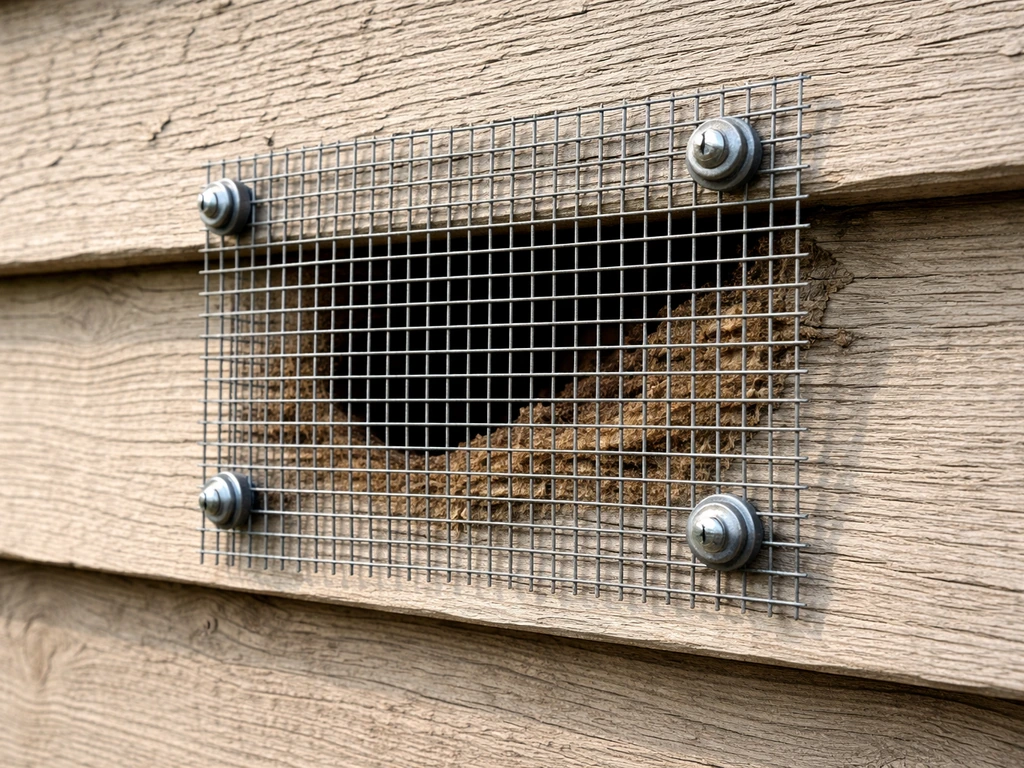
For siding or wood areas that a Flicker keeps returning to, heavy-duty bird netting or hardware cloth mounted on standoffs (small blocks that hold the material a couple of inches out from the surface) is highly effective. The bird can't get purchase on the surface to drum or drill. This is especially useful during nesting season when a single bird may be highly motivated to keep trying despite deterrents. Metal flashing screwed directly over a damaged area also physically denies access and eliminates the wood-contact satisfaction the bird is seeking.
Removing attractants
- Insect infestations in wood siding are the biggest attractant. If a Flicker has found larvae in your siding, the underlying insect problem needs to be treated by a pest control professional, otherwise the bird will keep returning regardless of what deterrents you use.
- Reduce exterior lighting at night, especially near windows and glass facades. Lights visible from outside draw birds toward buildings and increase window-strike risk.
- If you have suet or seed feeders, move them well away from the building (ideally 30 or more feet). Flickers eat suet readily and a feeder close to the house trains them to associate your building with food.
- Dead trees or large dead limbs near the structure are Flicker magnets. Removing standing dead wood eliminates both a foraging site and a potential roost that makes your yard a regular stop.
Window collisions specifically
If your flicker problem is a bird repeatedly striking windows rather than drilling the building, the fix is to break up the reflection. If your flicker problem is a bird repeatedly striking windows rather than drilling the building, you can also compare this to how to get rid of a chirping bird and focus on window and reflection-related causes first. Apply bird-deterrent window film, tape vertical stripes of painter's tape or decals spaced no more than 4 inches apart across the outside of the glass, or mount insect screen or netting a couple of inches in front of the glass surface. Interior decals or curtains help somewhat but are less effective than exterior treatments because they don't eliminate the reflection the bird is responding to. Reducing interior lighting visible from outside at night is also important for any building with large glass areas.
Long-term proofing plan: keeping flickers out for good
Reacting to individual birds is exhausting. A one-time inspection and repair investment will eliminate the problem for years. Here's how to structure it. If you are hearing calls or squawking instead of just drumming, focus on removal and exclusion first, then add deterrents that break the bird's routine how to stop a bird from squawking.
Annual inspection schedule
| Season | What to inspect | What to fix/maintain |
|---|---|---|
| Late winter (Feb-Mar) | All soffits, fascia, attic vents, chimney cap | Repair winter freeze-thaw damage before nesting season begins |
| Spring (Apr-May) | Active drumming/drilling spots, any new holes | Install deterrents, check and reinforce hardware cloth covers |
| Late summer (Aug-Sep) | Full perimeter check after storm season | Re-caulk any failed sealant, replace damaged screens |
| Fall (Oct-Nov) | Roost entry points before birds seek winter shelter | Seal gaps before overnight temperatures drive birds to seek warm spaces |
Structural proofing checklist
- Replace all damaged or missing soffit panels with vinyl or aluminum (wood soffits are more vulnerable to drilling and moisture damage).
- Install quarter-inch hardware cloth behind all louvered attic and soffit vents, fastened with screws.
- Fit a chimney cap with a mesh bird guard on every flue, including unused flues.
- Apply metal flashing at any roof-wall intersection where caulk repeatedly fails due to thermal movement.
- Seal all utility penetrations through exterior walls with exterior-rated silicone caulk or foam plus a rigid cover plate.
- Treat any active wood-boring insect infestation before replacing or painting damaged siding; a bird will re-drill painted wood if larvae are still present underneath.
- Consider replacing cedar or redwood horizontal lap siding in heavily targeted areas with fiber cement board, which Flickers will not drill.
Troubleshooting: why the bird keeps coming back
If you've done repairs and the same problem reappears within days or weeks, work through this checklist before calling for help.
- You sealed the wrong hole. Flickers often have a primary entry and a backup. Watch the building from outside for at least 15 minutes at dawn and at dusk to catch every access point the bird uses.
- The seal failed. Expanding foam alone is not bird-proof. A motivated Flicker will peck through cured foam in minutes. All foam repairs need a rigid cover (hardware cloth, metal flashing, or a wood patch) over them.
- There's still a food source. If wood-boring insects remain in your siding or structure, the bird will chip and peck until it gets back in or finds a new access point. Have a pest inspector assess for carpenter ants or beetle larvae.
- Juveniles are still inside. If you used a one-way door in nesting season, confirm that young birds have fledged (typically 4 to 6 weeks after eggs are laid for Flickers) before permanently sealing the cavity. A juvenile still inside will both suffer and draw the adult back repeatedly.
- It's a new bird, not the same one. Flickers are territorial but territory overlaps. If you removed one individual and haven't changed the underlying attractant or sealed entry points, a neighboring bird will simply move in.
- Seasonal persistence: spring drumming for territory and nest excavation is hormonally driven and very hard to stop with deterrents alone during peak season (roughly March through June in most of North America). Structural fixes work; deterrents alone often don't during this window.
- Habituated deterrents: if you put up reflective tape weeks ago and haven't moved it, it's probably no longer doing anything. Rotate and vary your deterrents every few days.
Persistent drumming noise without actual structural damage (the bird is hammering on metal gutters or a chimney cap but not drilling holes) is a different problem than structural intrusion. If the screaming you hear is from a pet bird rather than a wild Flicker, the approach focuses on routine, lighting, and reducing stress triggers rather than building repairs how to stop my bird from screaming in the morning. For noise-only issues, the bird isn't entering and isn't a structural threat. The methods for dealing with that overlap with techniques for handling other persistent bird noise problems around buildings, such as early-morning calling or repeated window striking.
When to call a wildlife professional
Most Flicker situations are fully DIY-resolvable, but there are specific cases where calling a licensed wildlife control operator or permitted wildlife rehabilitator is the right move.
Call a wildlife professional if:
- The bird is injured: not flying, breathing with difficulty, unresponsive after more than an hour. Contact a licensed wildlife rehabilitator, not a general pest control company.
- There is an active nest with eggs or chicks inside your structure. Under the Migratory Bird Treaty Act, disturbing or destroying an active nest is a federal offense. You must wait until the nest cycle is complete before sealing.
- You cannot safely access the damage location (steeply pitched roof, height above two stories, structural damage risk).
- You've done the repairs twice and the bird is still getting in. A professional can do a pressurized smoke or foam trace to find gaps you missed.
- You have a large accumulation of droppings in an attic or crawl space (more than a shoebox volume). Cleanup requires respiratory protection and proper containment due to Histoplasma and other pathogen risk; this is NIOSH-recommended PPE work, not a quick sweep job.
Legal and safety checklist before you act
- Northern Flickers are protected under the federal Migratory Bird Treaty Act (50 CFR Part 21). You cannot trap, kill, possess, or intentionally harm one without a federal permit.
- Active nests (containing eggs or dependent young) cannot legally be disturbed or destroyed during the nesting season. Do not seal any cavity until you confirm it is empty.
- One-way exclusion doors are legal and appropriate but must not be used when young birds are present inside. Confirm fledging before permanent sealing.
- Any professional you hire to handle protected migratory birds should hold the appropriate federal and state permits. Ask to see documentation before work begins.
- Wear an N95 respirator, disposable gloves, and eye protection any time you are working near bird droppings or inside an area where droppings have accumulated.
- For any work above one story, use a properly rated ladder with a spotter, or hire a contractor. Fall risk is real and bird exclusion work is not worth a serious injury.
- If you are unsure whether a bird is a Flicker or a different species, photograph it and submit the image to a free ID tool (iNaturalist, Merlin Bird ID) before taking any action. Identification errors can lead to legal exposure if the bird turns out to be a species with additional protections.
FAQ
How can I tell if I’m dealing with a Northern Flicker versus another woodpecker when it’s at my house?
Look for the bold white rump patch as it flies away, and check for the red or black facial marking (often described like a “moustache” stripe in males). Also note behavior, Flickers spend more time on lawns and in the ground for insects than most other woodpeckers, which helps confirm the ID before you start exclusion repairs.
What should I do if the flicker won’t leave even after I open a door or window?
Move slowly, keep one exit available, and turn off interior lights in the room with the open window or door when possible so the outside light draws it. If it still won’t go within a short period, avoid repeated chasing, close off other rooms, and switch to professional help if you can’t guide it out safely.
Is it okay to seal the hole if I’m pretty sure there’s no bird inside?
No, you need absolute confirmation first. If a bird is roosting in a cavity, sealing it without a one-way exit can trap it, which is both inhumane and illegal. Use the “one-way door” approach whenever there is any chance of active use, then seal only after you observe that no bird and no young remain inside.
How long should I wait before sealing after installing a one-way door?
Wait until you see the bird successfully exit and stop returning, then verify on multiple days if the entry was used repeatedly. If activity continues, leave the one-way device in place and keep monitoring rather than closing up right away.
Can I use glue traps or poison to stop a flicker from coming back?
No. Trapping that causes harm and poison are illegal for federally protected birds and also create severe welfare risks. Stick to exclusion (sealing and physical barriers) and humane deterrents as the article outlines.
What’s the best way to clean droppings if a flicker has gotten into my attic or crawl space?
Use disposable gloves and a mask like an N95, and avoid dry sweeping, because that can aerosolize fungal spores and bacteria. If the area is dusty or heavily soiled, dampen lightly before wiping and bag waste for disposal, then wash hands and exposed skin thoroughly.
Do reflective tapes and spinning objects really work, or do birds get used to them?
They can work as a short-term bridge, but habituation happens quickly, sometimes within a few days. The practical strategy is to combine types and change their position or rotate them every few days so the bird keeps encountering unpredictable light and motion.
What mesh size should I buy for attic vents so only the flicker is blocked?
For flickers, quarter-inch hardware cloth mesh is a strong choice and is specifically called out for vent covers. Half-inch mesh can also block many flickers, but smaller species may still pass, so quarter-inch is usually safer if you want the broadest exclusion.
My flicker is pecking at a metal chimney cap, not drilling wood. Do I still need to do siding repairs?
Not necessarily. If the bird is only hammering on metal surfaces, you may only need to address access and perching points on that specific structure, like confirming the chimney cap fit and then adding a physical exclusion layer if the bird is trying to access gaps. Focus repairs on the exact contact area the bird is using rather than sealing the entire building indiscriminately.
How do I keep the flicker from pecking out foam sealant after I fill a gap?
Don’t leave foam exposed. After installing exterior-rated expanding foam, cover the cured foam with hardware cloth or a solid patch material (like a painted wood cover) that birds cannot get a beak grip on, and extend coverage beyond the repaired edge so they cannot target a seam.
When should I stop DIY and call a wildlife control operator or rehabber?
Call for help if the bird is injured or window-strike symptoms persist after about an hour, if you cannot safely access vents or higher cavities, or if you suspect active nesting or roosting inside a sealed-off area. Also get help if you’re unsure about where entry points are and you keep seeing repeated new damage after repairs.