If a whippoorwill is near your building right now, the fastest thing you can do is turn off any bright outdoor lights attracting insects, give the bird a clear, unobstructed path away from the structure, and leave it alone for 20 to 30 minutes. Whippoorwills are not aggressive and they are not trying to get inside your walls, they are night hunters drawn in by bugs that flock to your lights. Remove the food source, reduce the light, and most whippoorwills will move on by themselves. What follows is a step-by-step guide for the urgent situation and for making sure the bird doesn't become a recurring visitor.
How to Get Rid of a Whippoorwill Bird Safely and Humanely
Maya Carver
14 Jun 2026
Quick Identification and Immediate Safety Steps
Before you do anything else, confirm you're actually dealing with a whippoorwill. Misidentifying the bird can lead to the wrong approach, and with a protected migratory species, the wrong approach carries real legal risk. The good news is that whippoorwills are almost impossible to mistake once you know what to listen for.
How to Identify a Whippoorwill
- Sound: A rapidly repeated three-note whistle that literally sounds like "whip-poor-will," with emphasis on the first and last notes. Males repeat this call hundreds of times in a row for hours after dark during the breeding season (roughly May through August). If you're hearing it, there's little doubt about the species.
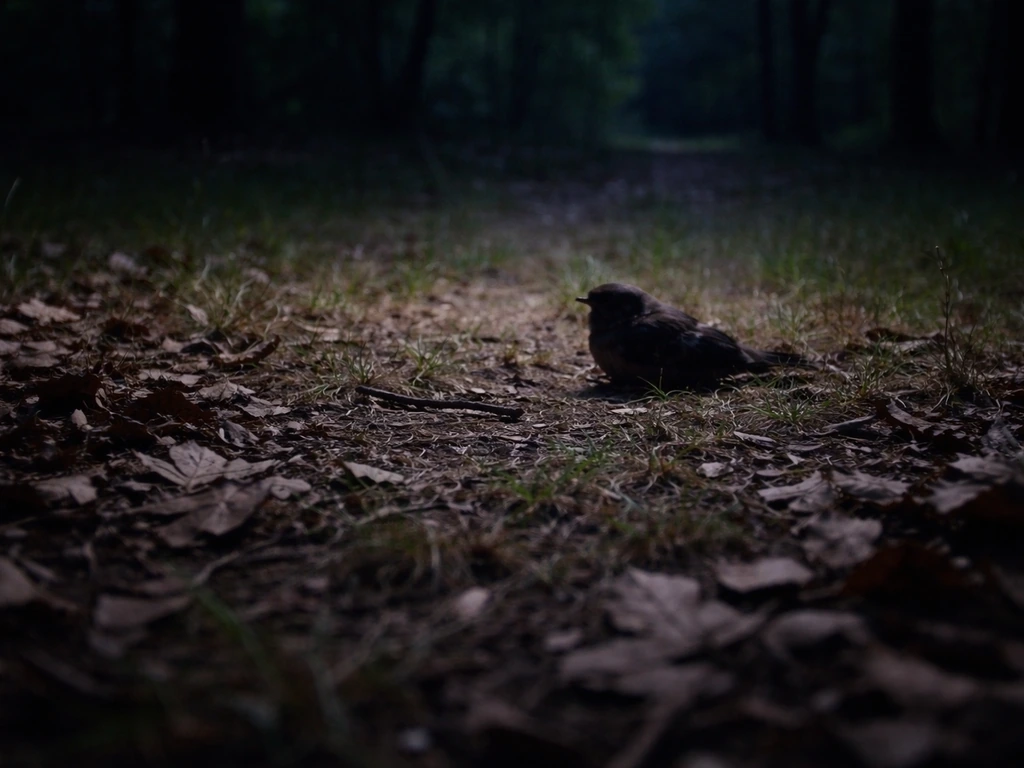
- Appearance: Mottled gray and brown plumage streaked with black — looks almost exactly like dead leaves or tree bark. You may not see it at all during the day because it sits completely still and blends in perfectly. At night, look for large dark eyes reflecting light and a wide, gaping mouth fringed with bristles (these are for catching flying insects mid-air).
- Behavior: Nocturnal. Active only from dusk through the night. During the day it roosts motionless on the ground in leaf litter or on a low branch. If you find a bird sitting very still on the ground that looks like a clump of leaves, it may be a whippoorwill resting — not injured.
- Size: About the size of a robin, roughly 9 to 10 inches long, but it looks smaller because of its flat, crouched posture.
Immediate Safety Steps
- Do not attempt to grab or corner the bird. Whippoorwills are not dangerous, but any wild bird can scratch or bite when stressed, and handling a migratory bird without federal authorization is generally prohibited under the Migratory Bird Treaty Act.
- Keep pets and children away from the area. Give the bird space — stress can cause it to flush into a wall, window, or fence.
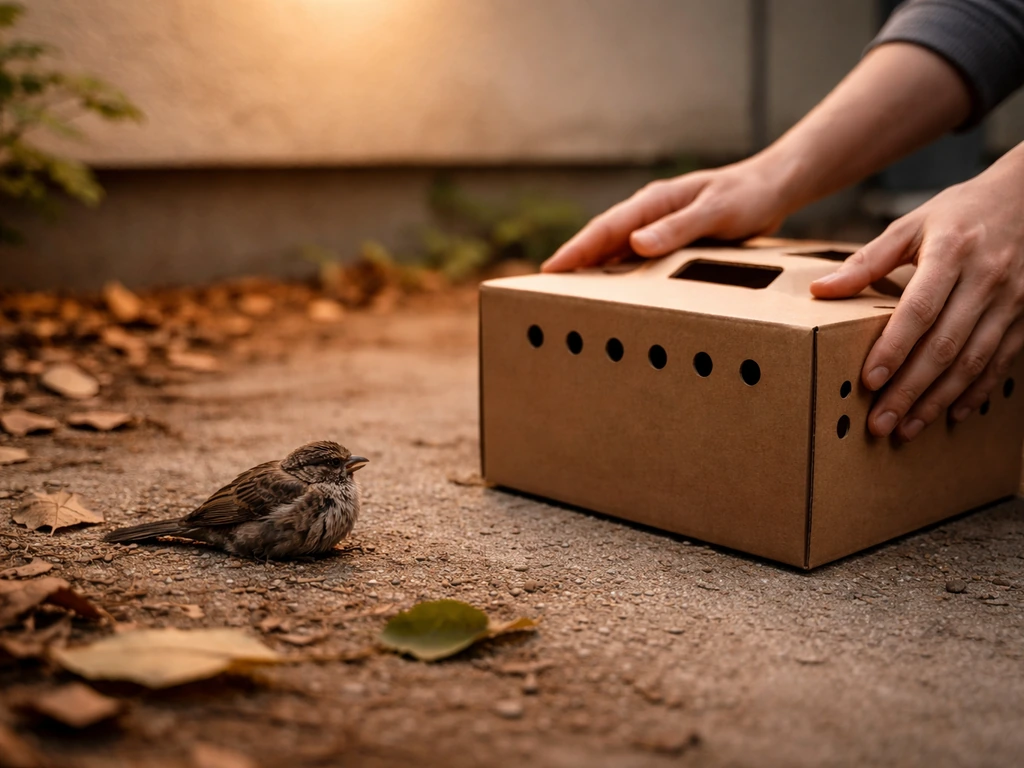
- If the bird is on the ground during the day and appears alert, it is almost certainly resting normally. Do not move it. A whippoorwill that is truly injured will be limp, unresponsive, or bleeding.
- Turn off any unnecessary outdoor lights near the bird immediately — this removes the insect buffet that drew it in.
- If the bird is inside a structure (garage, barn, porch enclosure), skip ahead to the humane removal section below.
Why Whippoorwills Show Up Near Buildings
Whippoorwills don't want to be near your building, they want the food your building is creating. Understanding why they show up tells you exactly how to stop it.
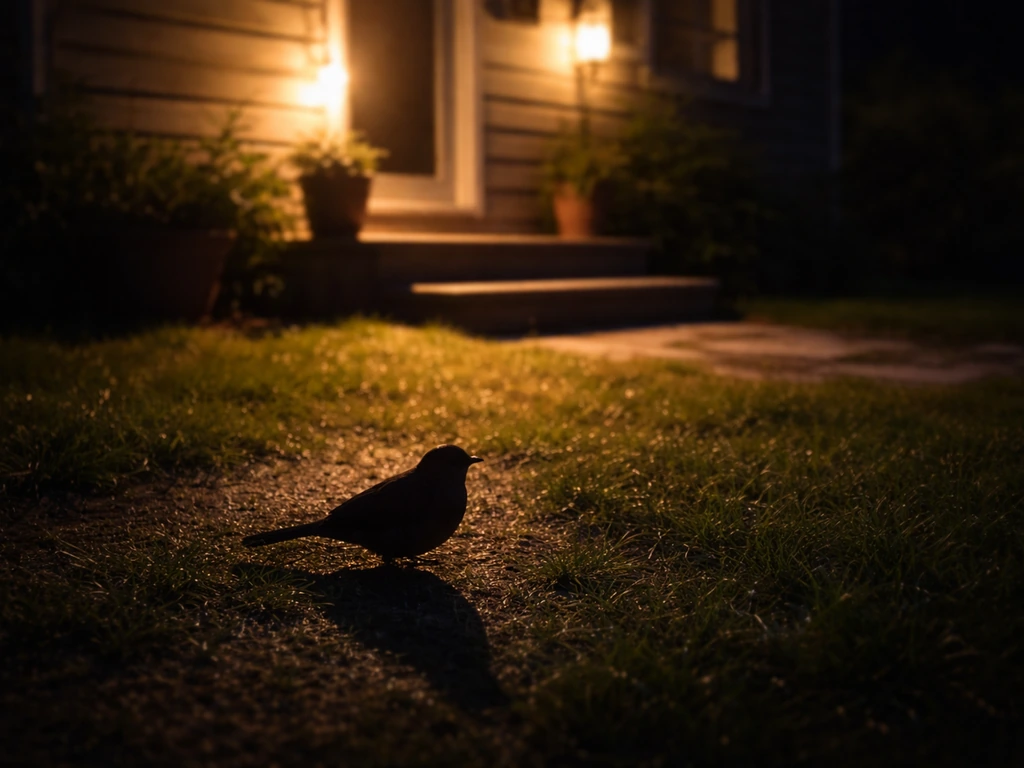
- Outdoor lighting attracts insects: Artificial lights, especially those with blue-spectrum LEDs, draw enormous numbers of flying insects. Nocturnal insects are hardwired to navigate by the moon and stars; bright artificial light disorients them and pulls them in. Whippoorwills follow the insects. A lit porch, floodlight, or parking lot lamp is essentially a dinner invitation for any nightjar in the area.
- Edge habitat near your property: Whippoorwills prefer large forested areas with open edges — think woodland borders, fields that meet tree lines, or shrubby areas. If your property backs up to woods, has overgrown sections, or includes areas with heavy leaf litter, you're sitting in prime whippoorwill territory.
- Ground-level roosting spots: They nest and roost directly on the ground in leaf litter, no nest structure required. A brushy corner of your yard, a pile of leaves near the foundation, or a mulched garden bed can look like a five-star roosting spot.
- Open building access: Barns, open garages, covered porches, and sheds provide sheltered spots that can attract a confused or disoriented whippoorwill — especially during migration (spring and fall) when birds are moving through unfamiliar territory at night.
Humane Removal Options in the Moment
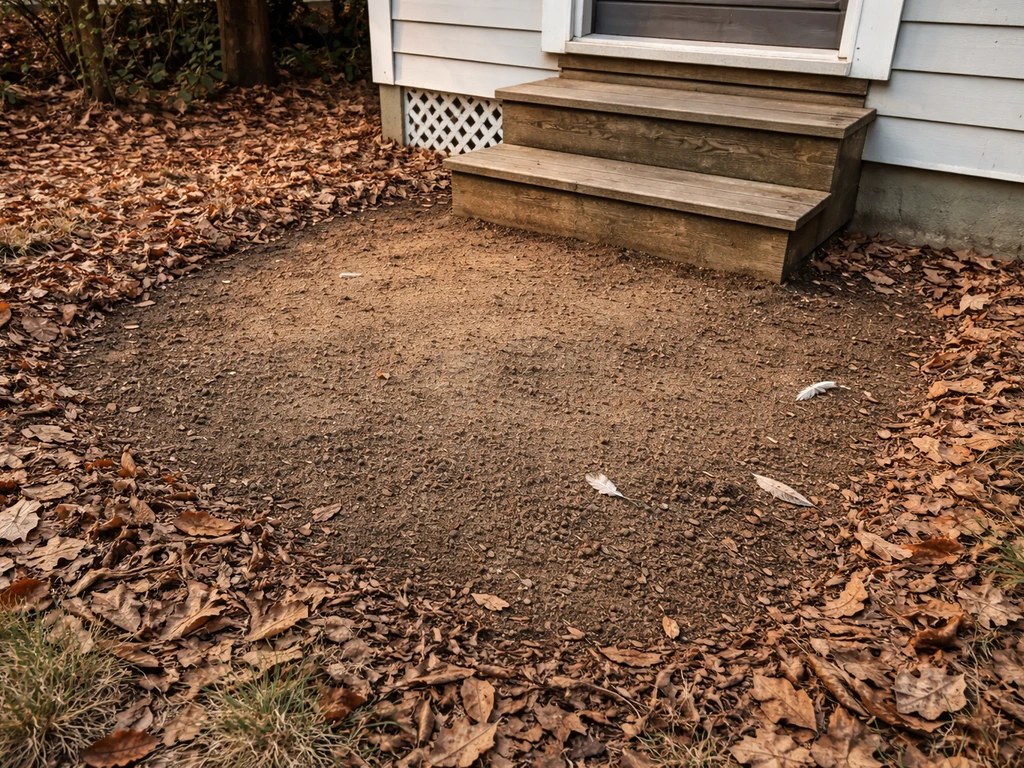
If the whippoorwill is outside on your property, your job is mostly to leave it alone and manage your lights. If it has gotten inside a structure, you need to guide it out safely. Here's how to handle both. If you are dealing with a different kind of bird, the best approach will vary, but you can still use these general strategies for how to get rid of a bird.
Bird Is Outside (Yard, Roof, Porch, or Building Exterior)
- Turn off all non-essential outdoor lights. Do this immediately and leave them off for the night. Without the insect attraction, the bird loses its reason to stay.
- Go inside and leave it alone. Activity and noise from people will stress the bird but rarely cause it to leave faster. Give it 30 minutes of quiet.
- If it is calling persistently from a nearby perch and disrupting sleep, a motion-activated sprinkler directed at that perch area can startle it enough to move — this is a humane deterrent that does not harm the bird.
- A gentle sweep of a flashlight toward the bird (not directly in its eyes) can cause it to flush and move away. Do not shine light directly at it repeatedly.
Bird Is Inside a Structure (Garage, Barn, Shed, or Enclosed Porch)
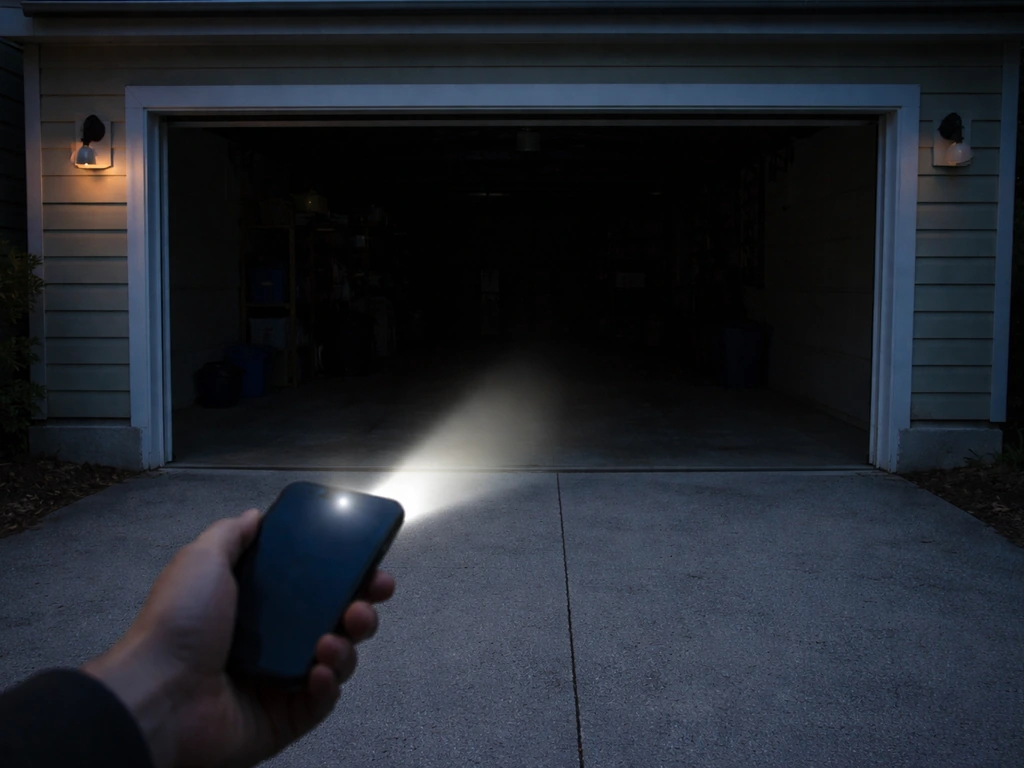
- Open the largest exit available — the main garage door, barn door, or shed door — as wide as possible. This is the primary escape route.
- Turn off all lights inside the structure. Whippoorwills are nocturnal and will move toward light; if the outside is brighter than the inside, the bird will naturally exit toward the opening.
- Cover any interior windows (with a towel, cardboard, or sheet) that the bird might mistake for an exit. A bird flying into glass at speed can be seriously injured or killed. Cover the glass so only the real opening is visible.
- For a whippoorwill specifically: because it is nocturnal, it may be more cooperative after full dark. If it's still light out and the bird is huddled in a corner, it may simply be waiting for nightfall to become active. Once it's dark and the exit is lit (or at minimum unobstructed), the bird will likely fly out on its own.
- Do not chase the bird or try to shoo it with brooms. This creates panic and collision risk. Give it time — 20 to 45 minutes of calm and a clear exit path is usually enough.
- If the bird is clearly injured (wing dragging, not moving, bleeding), do not attempt to handle it without thick gloves. Contact a licensed wildlife rehabilitator.
Federal regulation (50 CFR §21.14) explicitly allows any person to humanely remove a migratory bird from the interior of a residence or business when the bird's presence prevents normal use of the space, creates a health or safety risk, or puts the bird at risk of injury because it is trapped. This means guiding it out is both legal and the right thing to do, just keep it humane and hands-off.
DIY Prevention: Make Your Property Less Attractive
Once the immediate situation is resolved, the most effective thing you can do is reduce the factors that attracted the bird in the first place. If you are dealing with a storm bird behavior near your home, focus first on removing the attractants and managing entry points how to get rid of a storm bird. If you are trying to get rid of a pet bird, the approach is different and depends on whether the bird is tame, healthy, and safe to relocate DIY prevention. These changes are simple, cost-effective, and also happen to benefit a lot of other wildlife-conflict situations.
Lighting Adjustments
- Switch outdoor bulbs to warm-spectrum LEDs (2700K or lower) or amber/yellow bulbs. Cool white and daylight LEDs have higher blue-light output that attracts far more flying insects. Fewer insects means far fewer whippoorwills.
- Install motion-activated lighting instead of lights that run all night. Lights that are only on when needed dramatically reduce insect accumulation.
- Use downward-facing, fully shielded fixtures so light falls only where you need it and doesn't scatter upward or outward into tree lines and field edges where whippoorwills forage.
- If complete darkness is not possible, the U.S. Fish and Wildlife Service recommends bird-conscious lighting practices — meaning minimizing brightness, reducing hours of operation, and avoiding upward light scatter.
Habitat Modifications Around the Building
- Clear leaf litter and dense ground debris from areas immediately adjacent to your foundation, porches, and entry points. Whippoorwills roost and nest directly on the ground in leaf litter — removing that material within 10 to 15 feet of your structure eliminates potential resting sites.
- Trim overgrown shrubs and brush piles near the building. Low, dense vegetation close to walls gives ground-roosting birds cover they find appealing.
- Manage the forest edge if your property backs up to woodland: a clean, maintained edge with less shrubby understory is less attractive to whippoorwills than a dense, tangled border.
- Avoid leaving open compost piles or other organic material near the structure — these attract insects, which then attract insectivores.
Exclusion and Habitat-Proofing: Sealing, Screens, and Landscape Changes
Whippoorwills generally don't try to enter wall cavities or attics the way sparrows or starlings do. Their main access concern is open entrances to barns, sheds, garages, and similar structures. The proofing steps here are straightforward and will also help with other bird issues.
Sealing and Screening Open Structures
- Install bird exclusion netting or wire mesh over large open vents, gaps under eaves, and open barn bays that don't require regular vehicle access. Use hardware cloth (galvanized metal mesh) with openings of 1 inch or smaller for durable, long-lasting exclusion. This material handles weather well and is recommended by Cornell University Extension for bird and bat exclusion.
- Check for and seal any gaps larger than 1 inch in exterior walls, soffits, roof junctions, and foundation areas. Pay particular attention to where utilities enter the building — these are common overlooked gaps.
- For open garage doors or barn doors left open at night: install a full-width insect curtain or a wire-mesh screen door that allows airflow but blocks bird entry. These are inexpensive and easy to install.
- Add chimney caps with fine mesh undersides to prevent entry through flues and vents. Open vertical pipes and similar penetrations are access points for disoriented birds during migration.
- Important: before sealing any opening, confirm no birds or other animals are already inside. Sealing a bird inside a structure is both inhumane and counterproductive. Do a thorough inspection at midday when nocturnal birds are most likely resting visibly.
A Note on Exclusion Netting
The U.S. Fish and Wildlife Service specifically warns that netting marketed for birds can entrap and kill birds if not installed correctly. Loose or improperly tensioned netting is a hazard. If you're using netting rather than rigid hardware cloth, make sure it is taut, well-secured, and inspected regularly for sagging or gaps. When in doubt, hardware cloth or rigid mesh is a safer and more durable choice.
Quick Exclusion Checklist
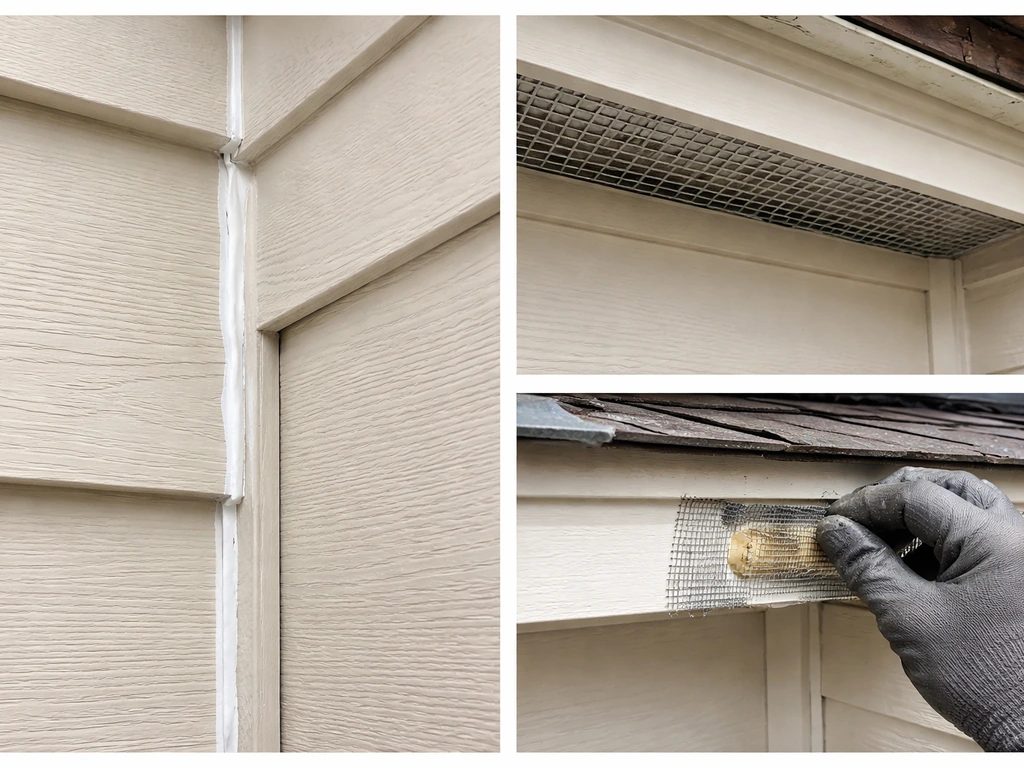
- Gaps larger than 1 inch in exterior walls, soffits, and roof edges: seal with caulk, hardware cloth, or expanding foam covered by mesh
- Open vents without covers: install galvanized mesh screens
- Open barn or garage bays: add mesh screen doors or insect curtain panels
- Chimney and pipe openings: fit with capped mesh covers
- Low eave gaps and open fascia: close with pre-formed vent covers or hardware cloth
- Leaf litter and brush within 10 feet of foundation: clear and keep clear
Troubleshooting When the Bird Won't Leave
Most situations resolve quickly when you follow the steps above. But occasionally a bird doesn't leave on schedule. Here are the most common scenarios and what to do.
| Scenario | Likely Cause | What to Do |
|---|---|---|
| Bird has been in the garage/shed for several hours and won't leave | It's daytime and the bird is waiting for dark; or interior is brighter than the exit | Cover all interior windows completely, keep exit wide open, wait until dusk — the bird will likely leave once it becomes active after dark |
| Bird keeps returning every night to the same perch | Persistent insect source (outdoor light) pulling it back | Switch outdoor light to warm-spectrum/amber bulb or install a motion-activated timer; without the insect draw, the bird will relocate |
| Bird is on the ground and isn't moving even when approached | Normal daytime roosting behavior — whippoorwills play dead when stressed | Leave it alone and observe from a distance; if no movement at all after an hour at dusk, contact a wildlife rehabilitator |
| Bird appears injured (dragging wing, obvious distress) | Collision with window or vehicle | Do not handle with bare hands; call a licensed wildlife rehabilitator immediately |
| Bird is calling non-stop at 2 a.m. and nothing seems to stop it | Breeding season male on territory — it will not be silenced quickly | Focus on light management to reduce nightly returns; a sprinkler on a motion sensor near the perch can disrupt the behavior without harm |
| Multiple birds present or a bird on the ground with young nearby | Active nest site — eggs or chicks on the ground nearby | Stop all activity in the area immediately; do not disturb; contact a wildlife professional before taking any action |
A recurring whippoorwill problem is almost always a lighting problem at its core. If you are specifically trying to get rid of a robin bird, use robin-focused deterrents and removal steps that match their behavior. If you fix the lighting and the bird still returns every night for more than two weeks, do a fresh inspection for brush piles, heavy leaf litter, or other ground-level habitat very close to the building that may be serving as a dedicated roost site. Whip-poor-wills in Texas lay blank" rel="noopener noreferrer">two eggs on dry, well-drained ground, often on open forest floor, where they may roost or incubate camouflaged and are rarely seen during the day. US Forest Service FEIS reviews report that eastern whip-poor-wills prefer large tracts of continuous forest with edge habitat, nest on the ground (often on litter), and have cryptic plumage that blends with leaf litter while roosting on tree branches during daylight.
When to Contact Wildlife Professionals and What the Law Says
The eastern whippoorwill is a migratory bird protected under the Migratory Bird Treaty Act (MBTA). This means you cannot harm, capture, possess, or kill one without federal authorization, and that prohibition also applies to occupied nests and eggs. Here is exactly what you can and cannot do, and when you need professional help. If the bird is already dead, you can follow safe cleanup steps and then prevent other birds from being attracted to the area how to get rid of a dead bird.
What You Can Do Without a Permit
- Humanely guide a bird out of the interior of your residence or business (50 CFR §21.14 explicitly permits this when the bird poses a health or safety risk or is trapped).
- Modify lighting, habitat, and access points on your own property to make it less attractive.
- Seal entry points after confirming no bird is present inside.
- Remove old, clearly abandoned nests (no eggs, no chicks, no adult present).
- Use humane deterrents such as motion-activated sprinklers or bright lights directed at perches.
What You Cannot Do
- Handle, capture, or possess a whippoorwill without federal authorization.
- Disturb, move, or destroy an active nest (one containing eggs or chicks).
- Use sticky traps, poisons, or any method that could injure or kill the bird.
- Use improperly installed netting that could entangle the bird.
Call a Wildlife Professional When:
- The bird is clearly injured and needs hands-on care.
- You have found a nest with eggs or chicks on your property and need to do construction or maintenance work in the area — you will need guidance on timing and possibly a permit.
- The bird has been trapped inside for more than 24 hours and all DIY exit methods have failed.
- You are unsure whether an animal on the ground is a roosting whippoorwill or an injured bird.
- You are dealing with multiple birds or a situation that suggests a roost colony rather than a single foraging individual.
When you call, be ready to describe: the exact location of the bird, how long it has been present, any visible signs of injury, and whether you have seen any young or nesting activity nearby. Your local state wildlife agency, USDA Wildlife Services office, or a licensed wildlife rehabilitator are all appropriate contacts. The U.S. Fish and Wildlife Service also has regional offices that can advise on permit questions related to MBTA species.
Seasonal Planning and Maintenance Checklist
Whippoorwills follow a predictable seasonal pattern, which means your prevention work also follows a predictable schedule. The breeding season runs roughly from May through August, and migration brings birds through in April to May and again in September to October. That timing tells you exactly when to act.
Early Spring (March to April): Pre-Season Prep
- Inspect the exterior of all outbuildings for gaps, open vents, and access points larger than 1 inch. Seal or screen before birds arrive.
- Replace cool-spectrum outdoor bulbs with warm-amber LEDs (2700K or lower) on all fixtures that run at night.
- Install timers or motion sensors on any remaining outdoor lights to minimize hours of operation after sunset.
- Clear heavy leaf litter and brush piles from areas within 10 to 15 feet of your building foundations.
- Test chimney caps and pipe covers to ensure they are in place and the mesh is intact.
Breeding Season (May to August): Active Monitoring
- Do a quick weekly walk-around of the building perimeter at dusk to check for birds roosting near the foundation or on low perches.
- If you hear nightly calling very close to the structure, identify the perch and deploy a motion-activated sprinkler nearby as a non-harmful deterrent.
- Avoid disturbing ground-level areas with heavy leaf litter during this period — you may inadvertently approach an active nest. If you find eggs or chicks on the ground, mark the area and avoid it until the young have left (chicks leave the nest very quickly after hatching).
- Keep garage, barn, and shed doors closed from dusk onward when not in use.
- Check all exclusion mesh and screens monthly for damage, sagging, or gaps.
Fall Migration (September to October): Watch for Transients
- Migrating whippoorwills may stop near your property briefly during passage — disoriented birds are more likely during migration than at any other time.
- Keep outdoor lights on timers during this window; turning off porch and accent lights within two hours after sunset significantly reduces attraction.
- Inspect all exclusion points after summer for any storm or pest damage and repair before winter.
Winter (November to February): Maintenance Window
- Whippoorwills are absent (they winter in the southern U.S. and Central America), so this is the ideal time for repairs, sealing, and hardware upgrades without any risk of disturbing an active bird.
- Replace any exclusion mesh or hardware cloth that has corroded or torn.
- Assess landscape around the building: trim overgrown shrubs, remove large brush piles, and evaluate whether edge habitat very close to the structure can be thinned.
- Review your outdoor lighting plan and upgrade any remaining fixtures to motion-activated or warm-spectrum models.
The whippoorwill situation is genuinely one of the easier wildlife-and-building problems to manage long term. Unlike some of the more persistent challenges, such as dealing with birds that actively nest inside building cavities, which you'll find covered in related guides for other species on this site, the whippoorwill is mostly passing through or hunting near your lights. If you are dealing with a dead bird on a porch instead of a live whippoorwill, the safest approach is to follow a dedicated checklist for what to do with dead birds outside what to do with dead bird on porch. Address the lights, tighten up your building's access points, and keep ground-level habitat clear near the structure. That combination handles the vast majority of cases with no professional help required.
FAQ
What should I do if the whippoorwill ends up in a room and won’t leave after I turn off lights?
If the bird is inside, use the same general approach as an escape-and-release situation: turn off most exterior lights, then open one safe exit path to the outside (door or window) while closing off other interior routes. Avoid chasing it across rooms, and do not try to grab it, since repeated handling increases injury risk. If you cannot get it to leave within a reasonable window, stop and call a wildlife professional rather than escalating.
Are traps or poison an effective and safe way to get rid of a whippoorwill?
Do not use glue traps, poison baits, or attempts to strike or poison the bird. Those methods can injure non target wildlife and are also risky from a legal standpoint for migratory protected species. If you are concerned about safety (for example, the bird is trapped in a tight crawl space), focus on guidance from the outside and contact a licensed wildlife rehabilitator or state agency.
How long should I wait before assuming the whippoorwill is not going to leave on its own?
Yes, but timing matters. If you turn lights off and the bird continues calling or hovering without leaving, give it additional time only if it has a clear line to the outdoors. If it appears trapped (no movement toward an exit, repeated bumping into the same interior point), that is different from simple attraction, and you should shift to a guided-out approach or professional help.
How can I tell whether the whippoorwill is hunting nearby versus nesting on my property?
A whippoorwill being present does not automatically mean it is nesting on your property. Focus first on what is drawing it in, especially night lighting that increases insect activity. Then, if the bird consistently returns to the same ground area, inspect for roosting cover like thick leaf litter, brush piles, or long grass right next to the structure.
What lighting changes actually reduce insect attraction, and not just the bird’s visibility?
When it is close to dawn or dusk and you are trying to get insects under control, use the lowest practical lighting level and shield lights so they point downward. Motion sensors can help by reducing the duration of attraction, but test them during real conditions, since some sensors trigger repeatedly and keep the area lit.
What’s the safest way to proof doors, vents, and gaps so a whippoorwill cannot get inside?
Avoid using loose materials like bird netting unless they can be kept completely taut and inspected often, since sagging creates entanglement risk. For long term openings, use rigid hardware cloth or properly installed rigid mesh and ensure there are no gaps larger than what the bird could enter. Also check corners and framing edges, since most failures happen at seams.
Should I try to scare a whippoorwill away if it is outside but not inside my home?
You generally should not disturb the bird if it is outside and has space to leave. If it is on a porch, path, or yard, remove lighting and reduce insect attraction, then wait for it to move on. Only intervene with guidance when the bird is trapped in an enclosed structure where it cannot exit normally.
What should I do if I discover a dead whippoorwill near the building?
If you find a dead whippoorwill, avoid handling with bare hands. Wear gloves if you must move it, double bag it for disposal, and sanitize any tools or surfaces it contacted. Then address the attractants (lighting and insect sources) so you do not keep drawing other birds to the same area.
What should I check if the whippoorwill keeps returning even after I reduced outdoor lights?
If you have ongoing visits that last beyond a couple of weeks after light and access changes, expand the inspection radius to cover nearby ground-level habitat and perching or roosting spots such as dense shrubs, unmanaged borders, and leaf litter within a short walk from the structure. Also verify that exterior lights are truly off or redirected, since lights from windows or reflections can still lure insects.
When is it time to call a wildlife professional instead of continuing to manage it myself?
If you suspect injury (visible blood, inability to fly, repeated collapse) or you cannot confirm an exit path, that is a strong reason to call for professional help. Provide your location, how long the bird has been there, and what you observed (including whether it appears trapped). A wildlife rehabilitator can guide you on humane next steps without unsafe handling.