The fastest, safest way to get rid of a robin is to figure out exactly what situation you're dealing with first, then apply the right fix for that situation. A robin trapped inside a building needs a different response than one nesting on your porch or repeatedly dive-bombing your windows. Get the diagnosis right and you'll solve the problem the same day in most cases. Get it wrong and you risk injuring the bird, breaking federal law, or wasting time on solutions that don't apply to your situation.
How to Get Rid of a Robin Bird Safely and Humanely
Maya Carver
22 Apr 2026
First, figure out exactly what's going on
Before you do anything else, spend two minutes identifying the actual problem. The situation falls into one of four categories, and each has a different fix.
| Situation | Key signs | Where to start |
|---|---|---|
| Robin is inside the building | Bird flying against windows, hiding behind furniture, visible droppings indoors | Immediate removal section below |
| Robin is trapped or injured | Bird on the floor, not flying, labored breathing, visible wound | Call a licensed wildlife rehabilitator today |
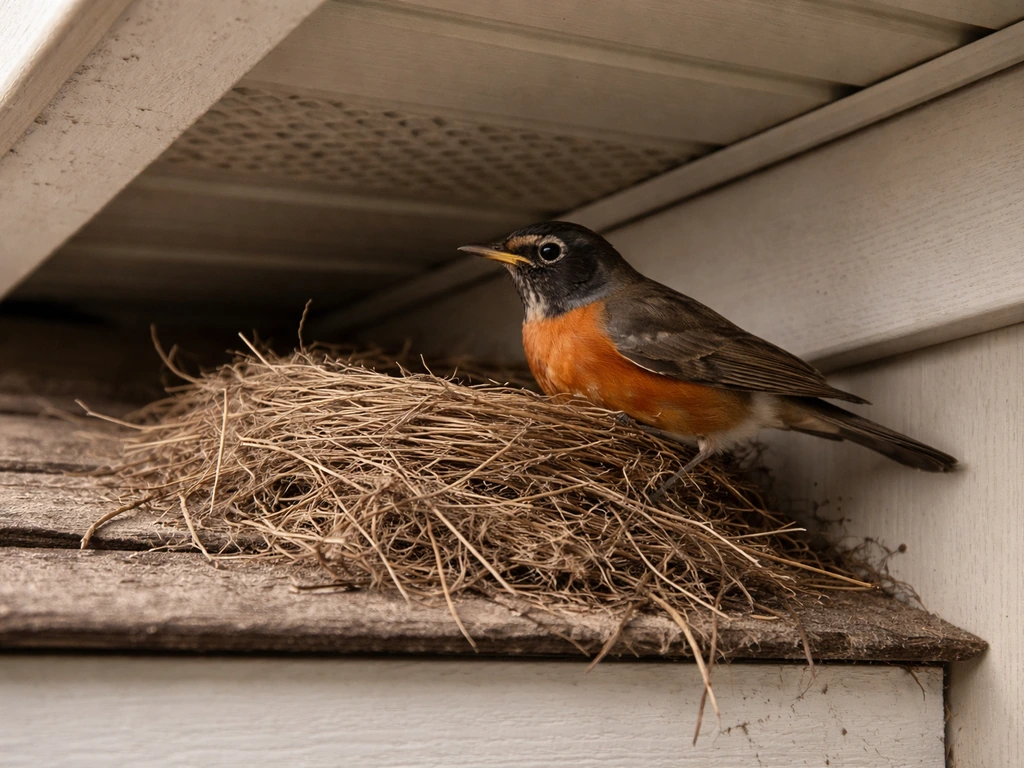
| Robin is nesting on or near the building | Cup-shaped mud nest, eggs or chicks present, adult returning repeatedly | Nesting control section below |
| Robin keeps returning to yard or windows | Repeated window strikes, perching on the same ledge, eating from garden | Attractants and long-term deterrence sections below |
One important legal note before you go any further: robins are protected under the federal Migratory Bird Treaty Act (MBTA). That law makes it unlawful to take, possess, or disturb migratory birds, their nests, or their eggs without proper authorization. That does not mean you're helpless, but it does mean some actions (like removing an active nest with eggs) require a federally permitted rehabilitator to handle. Keep that in mind as you work through this guide.
Robin inside your building: get it out safely right now
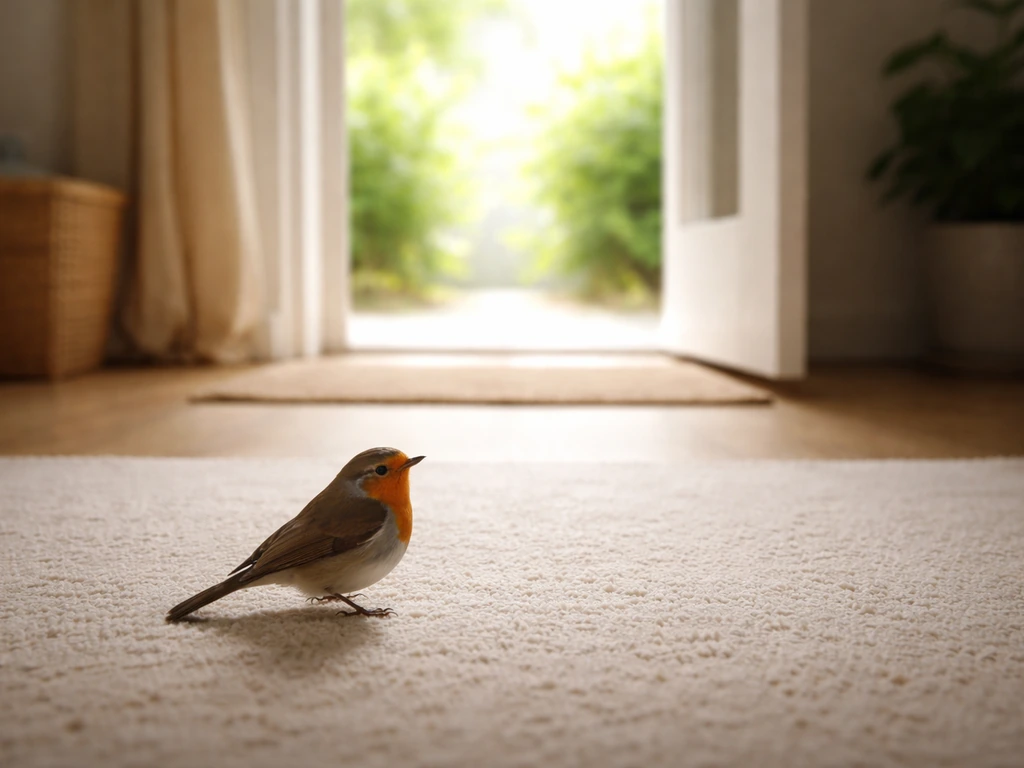
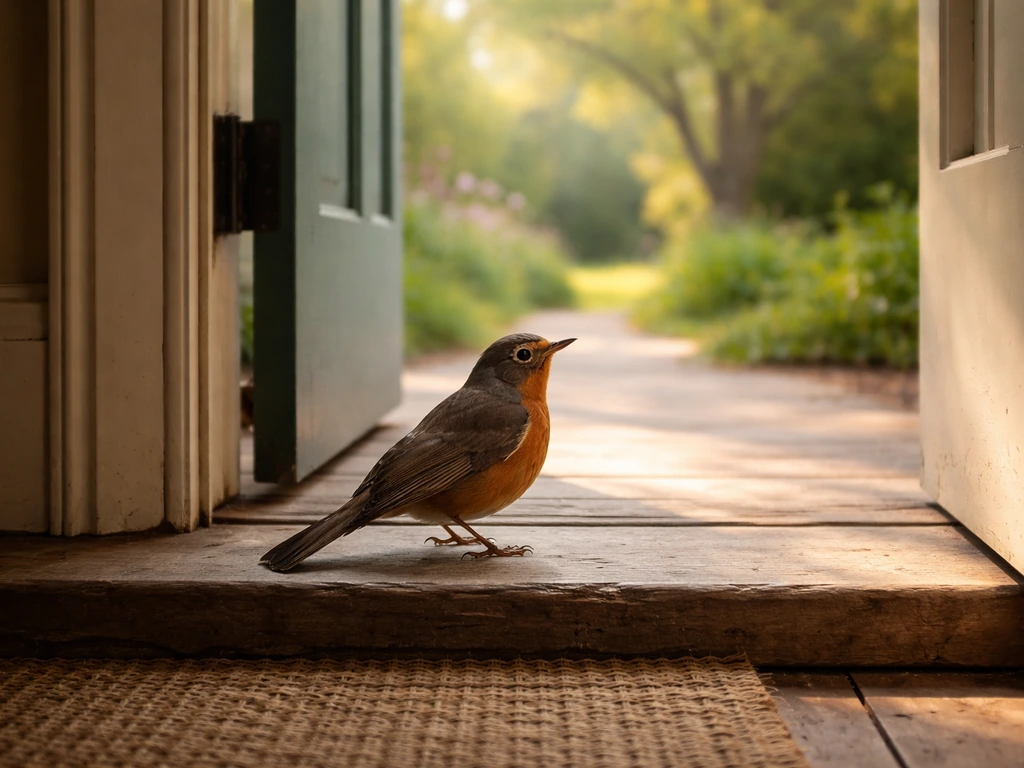
A robin indoors is stressed, disoriented, and burning energy fast. The goal is to open a clear escape route and reduce every source of panic so the bird finds it on its own. Chasing or grabbing a panicked robin almost always makes things worse and can injure the bird or you.
Step-by-step: guiding the robin out
- Clear the room of people and pets immediately. The fewer threats the bird perceives, the calmer it gets.
- Close all interior doors so the robin stays in one room and cannot get deeper into the building.
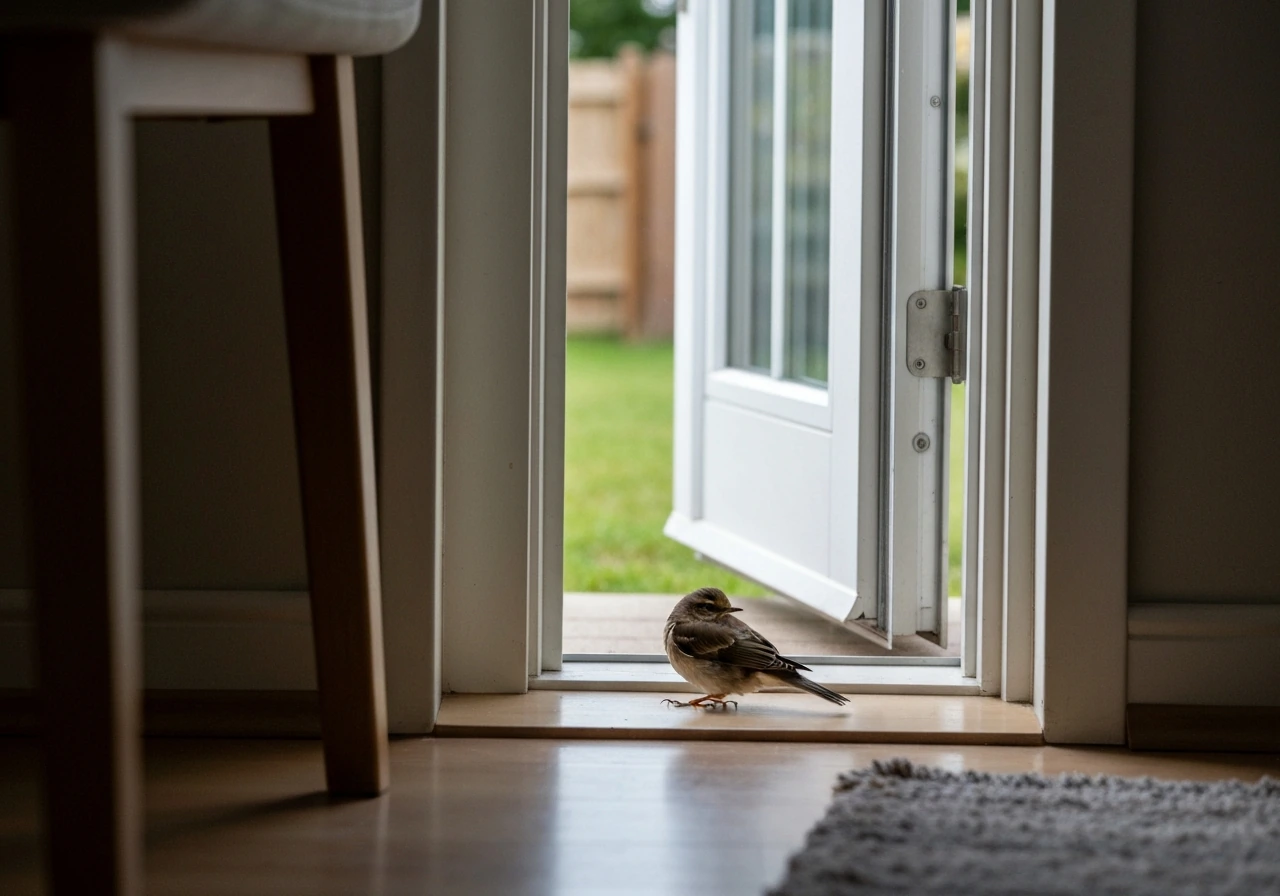
- Open the largest exterior opening available: a window, door, or loading dock. Remove screens if you can do it quickly.
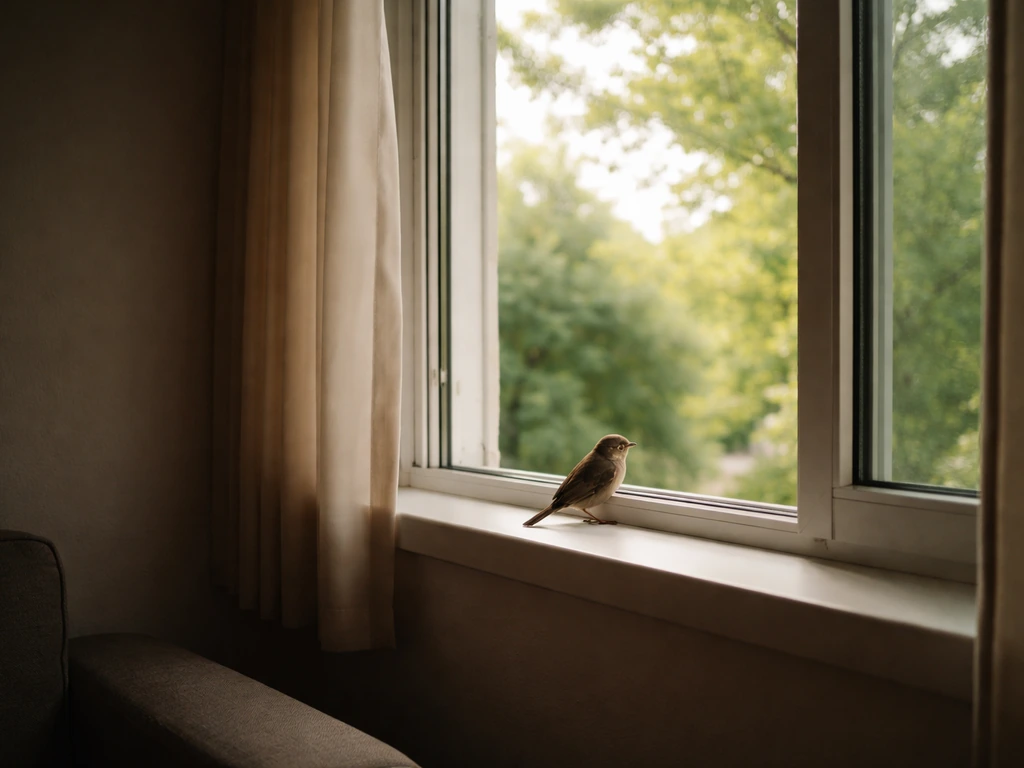
- Close or cover all other windows by pulling blinds or curtains. Robins instinctively fly toward light, so the open exit should be the brightest point in the room.
- Turn off interior lights or dim them if you can do so without making the open exit less visible.
- Leave the room and give the bird 15 to 20 minutes to find its way out on its own. Check back quietly.
- If the robin is still inside after 20 minutes, use a large cardboard box or laundry basket to gently herd it toward the open exit. Move slowly, low to the ground, and keep the box between you and the bird to guide direction rather than trap it.
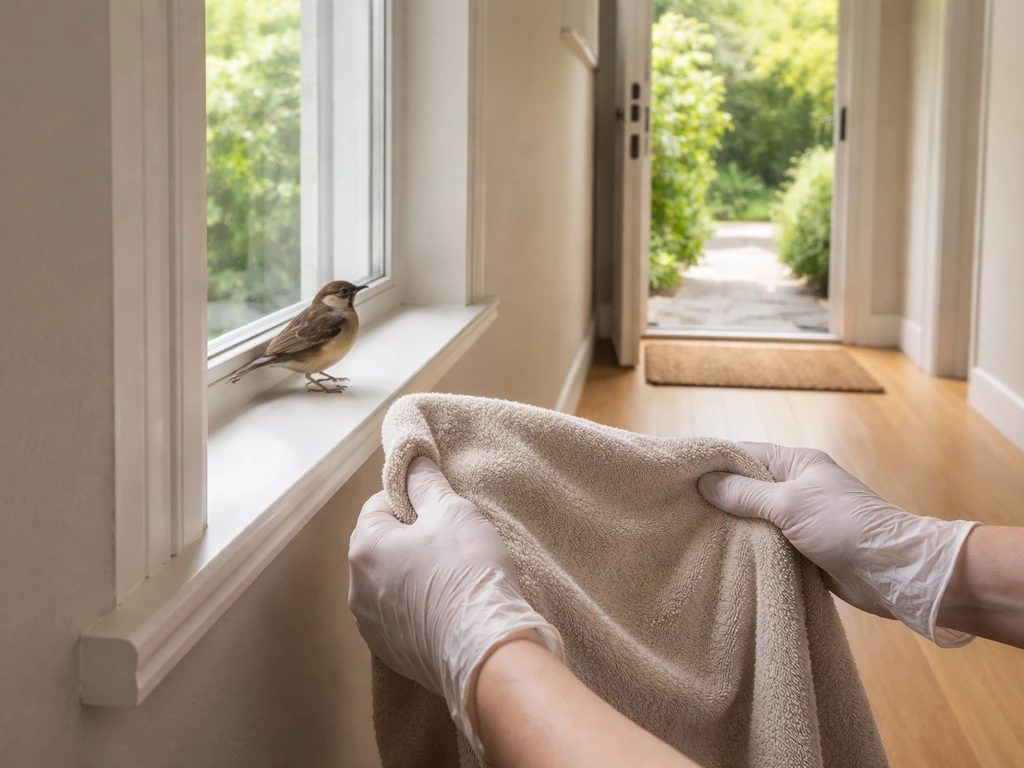
- If the bird is grounded and not flying, wear thick gloves, drape a light towel over it, pick it up gently, carry it outside, and release it in a sheltered area away from traffic.
Under 50 CFR § 21.14, the federal 'birds in buildings' exception does allow you to handle a migratory bird that is inside a structure when it is causing a health or safety risk, property damage, or is at risk of injury, so acting to guide it out is legally appropriate in those circumstances. Document what you did and why, especially in commercial or institutional settings.
If the robin appears injured or cannot fly
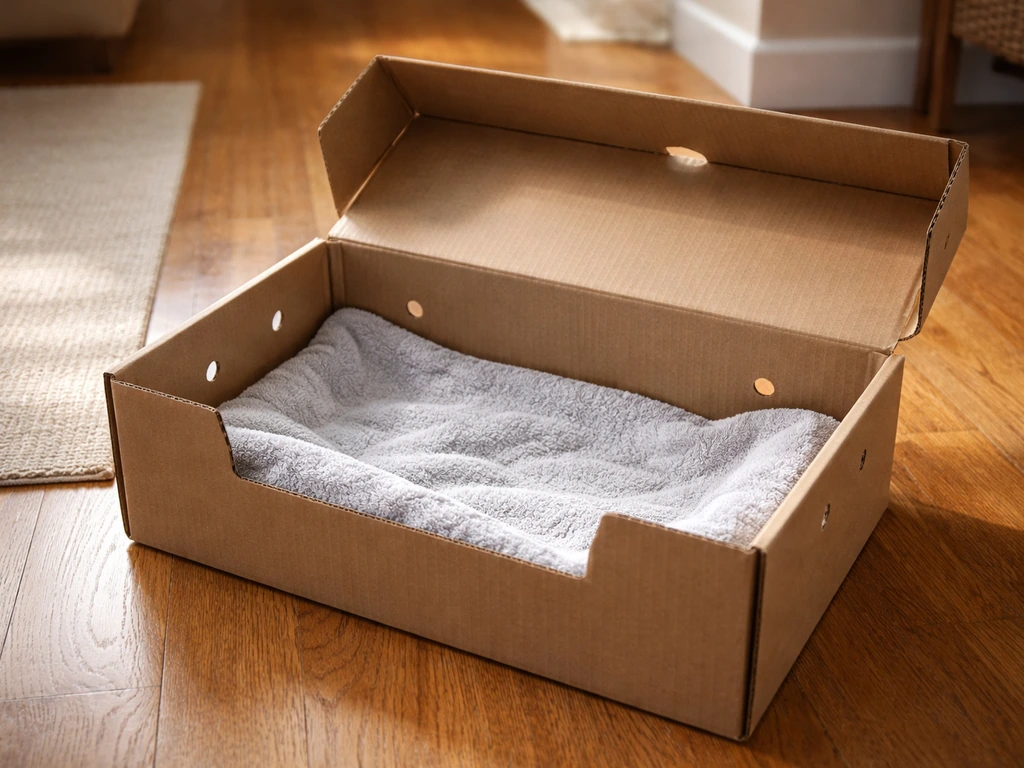
Do not attempt to rehabilitate the bird yourself. Place it in a dark, ventilated cardboard box with no food or water (offering the wrong food or water causes additional harm), keep it in a quiet, room-temperature space, and call your nearest licensed wildlife rehabilitator or your state wildlife agency the same day. A bird that was likely hit by a window may just need a short recovery period in a dark box before it regains its bearings, but a bird with an obvious wound, a drooping wing, or labored breathing needs professional care.
Why robins keep showing up: attractants to remove today
Robins do not randomly choose a property. They show up because something there meets a specific need: food, water, or a safe place to nest or roost. Remove those attractants and most robins will move on within a few days without any direct intervention.
Food sources
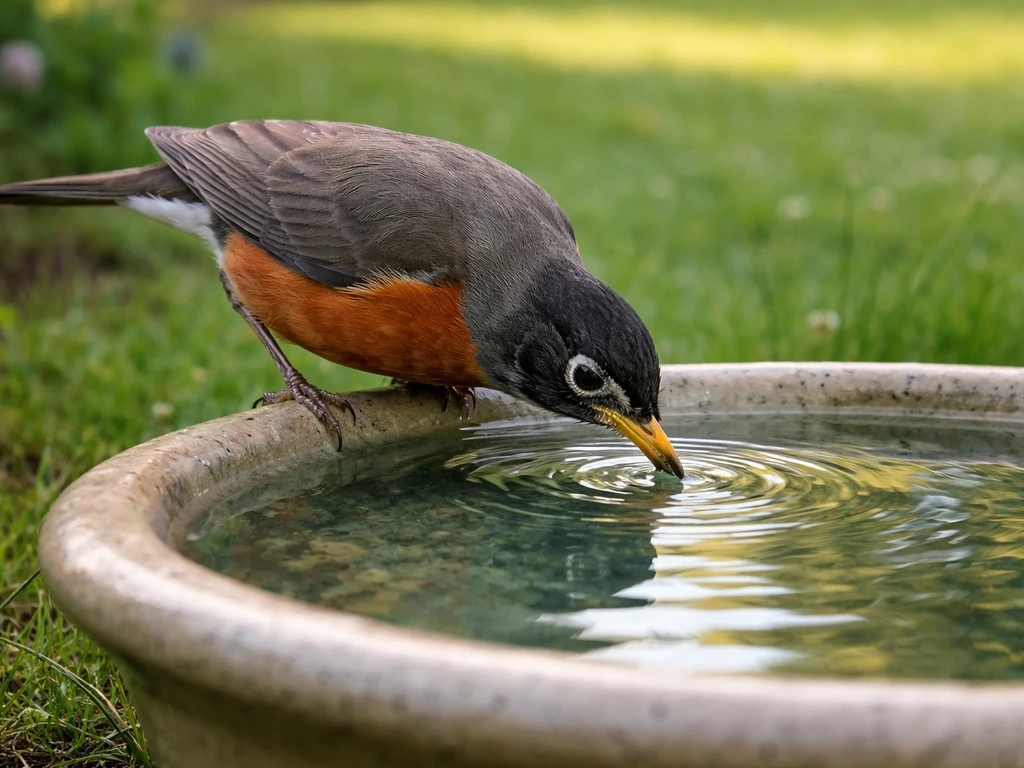
Robins eat earthworms, insects, and fruit. A lawn with moist, loose soil after rain or irrigation is a reliable worm buffet. Berry-producing plants like holly, crabapple, dogwood, serviceberry, and juniper are major attractants in late summer and fall when robins are fueling up for migration or winter. If robins are targeting fruit trees or berry shrubs, netting is your most effective same-day solution: install bird netting directly over the plant before the berries ripen. Reduce watering frequency on lawns if drainage allows, since drier soil makes worm foraging harder.
Water sources
Birdbaths, shallow ornamental ponds, puddles that form on flat roofs, and HVAC drip areas all attract robins. If you have a birdbath and do not want robins, remove it or replace it with a deeper basin that robins find less comfortable (they prefer shallow water, roughly 1 to 2 inches deep). Clear standing water from flat surfaces after rain.
Shelter and nesting sites
Robins look for sheltered ledges, eaves, windowsills, climbing vines on walls, and dense shrubs close to structures. Any horizontal surface protected from rain is a potential nest site. Trim dense vines away from walls, clear debris from ledges, and install bird slope or spike strips on flat ledges before nesting season begins (late March through July is peak season in most of the US).
Sealing gaps, windows, vents, and doors: your proofing checklist
For a robin that keeps getting inside, find the entry point before you do anything else. Walk the exterior and look for gaps at rooflines, open or damaged vent covers, missing soffit panels, open garage doors or loading docks, and gaps around window and door frames. Robins are not small birds (they are roughly 10 inches long with a wingspan of about 12 to 16 inches), so any gap large enough for a fist is large enough for a robin.
- Vent covers: Replace damaged or missing vent covers with hardware cloth (1/2-inch mesh or smaller). Avoid standard window screen mesh, which robins can tear.
- Eaves and soffits: Seal open gaps at the roofline with foam backer rod plus exterior caulk for small gaps, or replace missing soffit panels for larger openings.
- Windows: Install window screens with tight frames. For repeated window strikes (the robin seeing its own reflection), apply window alert decals, frosted film, or external netting 2 to 3 inches from the glass surface so the bird cannot reach the glass.
- Doors and loading docks: Install strip curtains or automatic door closers on doors that need to stay open for ventilation. A door left open for 10 minutes is long enough for a robin to enter.
- Ledges and sills: Install a 45-degree bird slope or spike strip on any horizontal ledge where robins have perched or attempted to nest. These are available at most hardware stores and are designed to be non-injurious.
- Downspouts and gutters: Install gutter guards if robins are nesting in open gutter troughs.
After sealing entry points, do a quick interior check: look for feathers, droppings, or nesting material that might indicate a bird is already inside before you seal everything up. Trapping a bird inside a sealed building is both inhumane and, in the case of a migratory species, creates additional legal complexity.
Nesting control: what you can and cannot do legally
This is the section where most homeowners run into trouble, so read it carefully before touching anything.
Determining if a nest is active
Under USFWS guidance, a nest is considered active from the moment the first egg is laid until fledged young are no longer dependent on it. A nest that is still being built but has no eggs is not yet active. An empty nest with no eggs or chicks, or one that contains clearly non-viable eggs (cold, abandoned for weeks), is considered inactive. This distinction matters enormously because your options change completely depending on nest status.
| Nest status | What you can do | What you cannot do without a permit or rehabilitator |
|---|---|---|
| Nest being built, no eggs yet | Remove nest material, install deterrents on the site, block access to the location | Nothing off-limits at this stage, but act fast before eggs are laid |
| Active nest with eggs or chicks | Leave it alone, protect humans and the area around it, wait for fledging | Remove nest, eggs, or chicks (MBTA violation without authorization) |
| Active nest creating a health or safety emergency inside a building | Contact a federally permitted migratory bird rehabilitator to handle egg/chick removal (required by 50 CFR § 21.12) | Self-remove eggs or chicks without that assistance |
| Abandoned or inactive nest (no eggs, no activity for weeks) | Remove the nest material, clean the area, install deterrents | Nothing off-limits once nest is confirmed inactive |
The practical timeline for a robin nest is roughly 13 days of incubation after the last egg is laid, then 14 to 16 days before chicks fledge. For example, USGS notes that American robins have 12 to 14 days of incubation and 14 to 16 days to fledge 14 to 16 days before chicks fledge. That means if you find an active nest today, you are typically looking at a wait of 2 to 4 weeks before the nest becomes inactive and you can legally remove it and seal the area. Document the date you found it, photograph it, and plan your exclusion work for immediately after fledging.
Protecting yourself and your property during an active nest period
Robins will defend an active nest aggressively. If the nest is near a frequently used door or pathway, use a temporary barrier (a simple rope or cone) to redirect foot traffic a few feet away. This reduces stress on the adults and reduces the chance of dive-bombing encounters. If you must work in the area, wearing a hat with a brim is usually enough to deter aerial harassment.
Long-term deterrence that actually works
Short-term scare tactics (plastic owls, mylar tape, loud noises) lose effectiveness within days once robins habituate to them. The deterrents that work long-term are the ones that change the physical environment so the property genuinely stops meeting the robin's needs.
Habitat and vegetation changes
- Remove or net fruit-bearing trees and shrubs during fruiting season. This is the single highest-impact change for properties with persistent robin activity.
- Reduce lawn irrigation to minimize earthworm access, especially after periods of heavy use by robins.
- Trim shrubs and climbing vines away from walls and eaves to eliminate sheltered nesting opportunities.
- Replace dense ground-cover shrubs near entry points with low-profile, non-fruiting plants.
Physical deterrents on the building
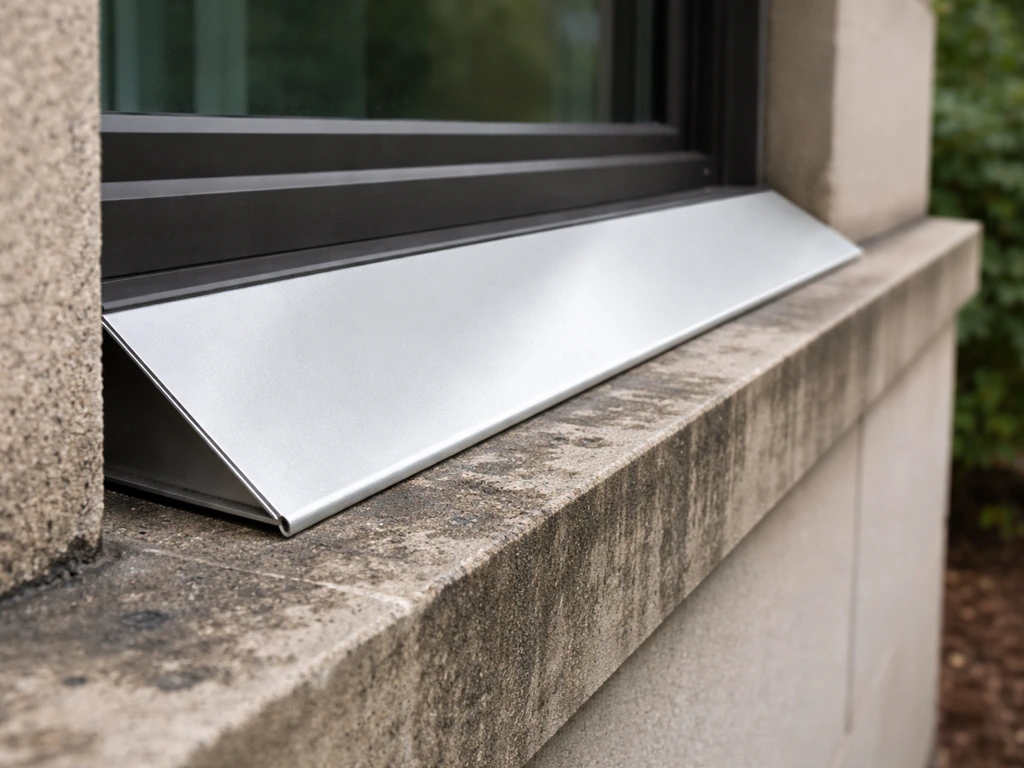
- Bird slope panels on ledges and sills: angled at 45 to 60 degrees, these prevent robins from landing on horizontal surfaces and are far more durable than spike strips for nesting prevention.
- Hardware cloth barriers over eave gaps and open structural voids: install before nesting season, ideally in late February or early March.
- Window film or external netting for strike-prone windows: address both the reflection issue (which triggers territorial attacks in spring) and the collision risk.
- Gutter guards: closed-cell foam or mesh covers eliminate a common nesting trough robins use.
Seasonal timing: when to do what
| Season | Robin behavior | Best actions to take |
|---|---|---|
| Late February to early March | Scouts returning, territory establishment begins | Install ledge deterrents, seal gaps, remove old inactive nests before eggs are possible |
| April to July | Peak nesting, up to 3 broods possible | Avoid disturbing active nests, document and wait, use barriers to redirect traffic |
| August to September | Fledglings becoming independent, berry feeding increases | Net fruiting plants, clear standing water, remove inactive nests from previous season |
| October to February | Flocking and migration, occasional winter residents in mild areas | Best window for sealing, exclusion installs, and habitat modifications with zero nest risk |
When to call wildlife control or a rehabilitator
Most robin problems can be handled with the steps above. But some situations genuinely require a professional, and calling one early saves you time, protects you legally, and gets the bird a better outcome. Whippoorwills are ground-nesting birds, so focus on removing nearby attractants and preventing access to nesting areas rather than trying to relocate or harm them how to get rid of a whippoorwill bird.
If your goal is how to get rid of a pet bird that is causing problems, the safest approach is to follow animal-welfare friendly steps and check local rules before taking action. Blue herons are handled differently than backyard robins, so use the correct removal and habitat-control steps for your situation and local rules how to get rid of blue heron bird.
If you are dealing with a dead bird, focus on safe handling, proper disposal, and local rules before you take any steps to remove it remove a dead bird safely. If you are dealing with a dead bird on your porch, you should treat it as a separate cleanup situation and follow safe disposal steps first dead bird on porch.
Call a licensed wildlife rehabilitator when:
- A robin is injured, cannot fly, or is visibly wounded
- You need to remove an active nest with eggs or chicks from inside a structure (this is legally required under 50 CFR § 21.12 to be handled by a federally permitted rehabilitator)
- A fledgling on the ground appears abandoned for more than several hours and the parents are not returning (though note: fledglings on the ground are often normal, with parents still feeding them)
- You have a large-scale or recurring problem inside a commercial building that has created a documented health or sanitation risk
Call your local animal control or state wildlife agency when:
- You are unsure whether the nest is active and need an official determination before you act
- A robin (or flock) is causing documented property damage and you need to establish a paper trail for a potential depredation permit
- You have already tried exclusion measures and the problem persists across multiple seasons
What to document before you call
Having good documentation makes every professional interaction faster and more productive. Before you call, collect the following: photos of the bird, nest, and entry points with timestamps; the dates you first noticed activity; the specific location on the building (GPS coordinates or a labeled diagram help for larger facilities); any droppings, feathers, or nesting material you have found indoors; and a brief log of how often the bird is present and what behavior you are observing. This information helps a rehabilitator assess the situation remotely and helps animal control determine whether a permit or formal intervention is warranted. If you find a dead bird on your porch, follow the same documentation steps and contact your local wildlife authority for safe, legal handling what to do with dead bird on porch.
Robins are genuinely one of the easier bird problems to resolve humanely because they respond quickly to habitat changes and exclusion. If you are specifically trying to figure out how to get rid of a storm bird, the key is still to identify what is attracting it and remove that need before you attempt exclusion.
For many people asking how to get rid of a blue heron, the approach is similar: identify what is drawing the bird in and remove that attractant how to get rid of a storm bird. The most common mistake is acting too fast (disturbing a nest) or too slow (waiting through three nesting seasons before sealing the entry point).
Get the situation diagnosed correctly, match the fix to the actual problem, and most robin issues are resolved within a season.
FAQ
What should I do if a robin is injured but still flying or perching?
Treat it as potentially serious and avoid handling with bare hands. Keep people and pets away, observe from a distance, and contact a licensed wildlife rehabilitator the same day. A bird that can still move may worsen quickly, especially if it was hit by a window, has internal injuries, or has a subtle wing/leg injury.
Is it ever okay to remove a robin nest if it looks abandoned?
Only if you are confident the nest is truly inactive (no eggs, no chicks, and not recently used). If you are unsure, wait and monitor for a few days before any removal or sealing, because disturbing an active nest can create legal and welfare risk. When in doubt, ask your state wildlife agency or a permitted professional.
How long should I wait after I see a robin nest before sealing entry points?
Use a “wait until fledged” plan rather than a guess. For robins, you’re typically looking at about 2 to 4 weeks after the last egg is laid (incubation plus fledging). Coordinate the timing so exclusion happens right after young are no longer dependent, not while chicks are still in the nest.
What if the robin keeps returning to the same spot even after I remove attractants?
Give it a short window, typically a few days to a couple of weeks, because robins may be checking the area before moving on. If the behavior continues, recheck for overlooked attractants (shallow water sources, exposed soil for worms, nearby berry fruit still available) and for re-entry gaps you may have missed on rooflines, vents, and around frames.
Can I use ultrasonic repellents, audio recordings, or “bird control” sprays to get rid of robins?
Often they provide limited relief because robins can habituate or because many sprays are messy and may not solve the underlying attractant. If you use deterrents, treat them as temporary while you implement habitat changes, netting over food sources, and permanent exclusion. Avoid any toxic product use that could harm non-target wildlife or people.
Does bird netting harm robins or other birds?
Netting can help, but it must be installed correctly so birds cannot become entangled. Install netting taut and ensure there are no loose edges, secure all contact points around the plant, and remove it when it is no longer needed (for example after the fruiting period) to reduce risk to other species.
A robin is repeatedly dive-bombing me near a doorway. How do I make it safer during nesting season?
Keep the robin away from the exact pathway you must use by redirecting yourself and foot traffic temporarily (cones, barriers, or a short detour a few feet away). Work slowly and from outside the bird’s immediate flight line. A hat with a brim can reduce aerial harassment when you must pass near the nest area.
What if I find droppings or feathers inside, but I never see a robin?
Assume a bird may be inside or may have nested recently. Do not seal up the area right away until you confirm it is not currently using the space, because trapping a bird inside is unsafe and increases legal complications. Check for evidence near suspected entry points and call a wildlife professional if activity is ongoing.
I want to get a robin out without the bird being injured. What’s the safest “inside a building” approach?
Create one clear escape route by opening an exterior door or window that the bird can see, turning off interior lights if possible, and closing curtains so the bird is guided toward the lighted opening. Avoid chasing, grabbing, or trapping. If the bird cannot find the exit within a short period, contact a rehabilitator for guidance rather than improvising capture methods.
Is it legal for me to relocate a robin to another part of my property?
Relocating, trapping, or physically moving wild robins is generally not the safest or simplest approach and can raise legal issues under migratory bird protections. The preferred route is exclusion and habitat modification (remove attractants, seal entry points, and manage nesting access). If you feel relocation is necessary due to a specific hazard, consult your state wildlife agency first.