The most effective way to get rid of a blue heron is to remove what's drawing it in (usually fish in a backyard pond), then layer in physical barriers and humane deterrents so the bird has no reason to come back. Herons are protected under the Migratory Bird Treaty Act, which means you cannot trap, shoot, poison, or harm them without a federal permit. Everything in this guide is legal, humane, and proven to work when used consistently.
How to Get Rid of a Blue Heron Bird Safely and Humanely

Maya Carver
19 May 2026
Confirm It's a Blue Heron and Assess the Situation
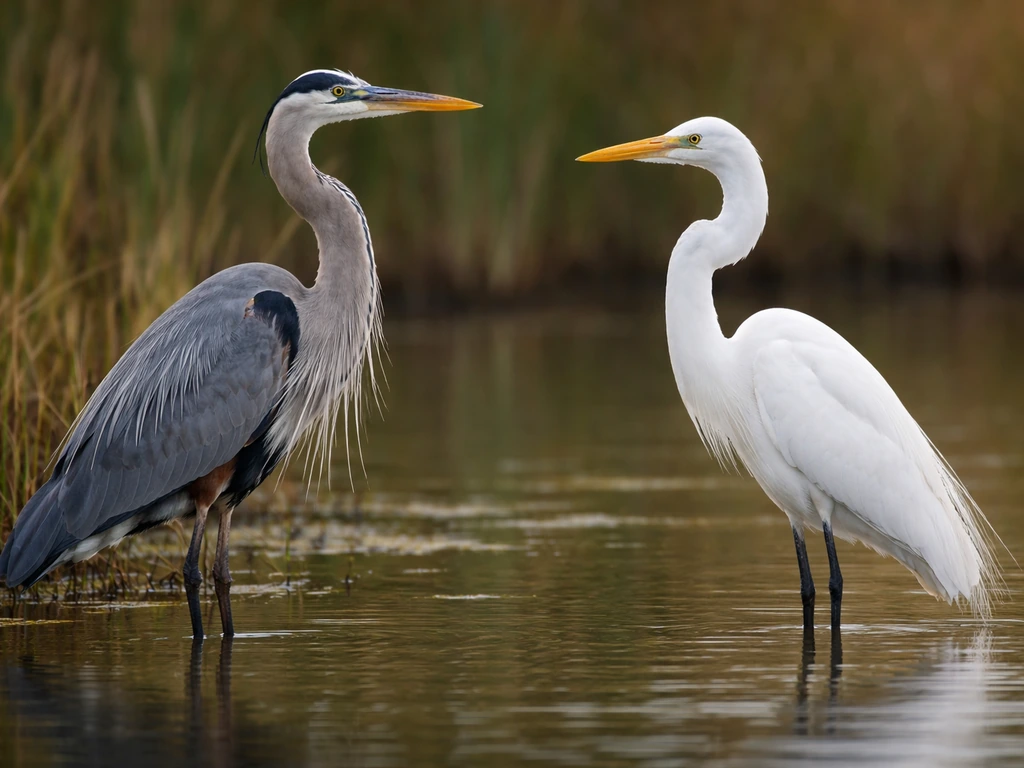
Before doing anything, make sure you're dealing with a Great Blue Heron or a Little Blue Heron, not a Great Egret or Snowy Egret. After you confirm it is not a heron, use the same structured approach in this guide to learn how to get rid of a storm bird safely and legally. Misidentifying the bird doesn't change the legal protections (all are covered under the MBTA), but it does help you understand the behavior and pick the right response.
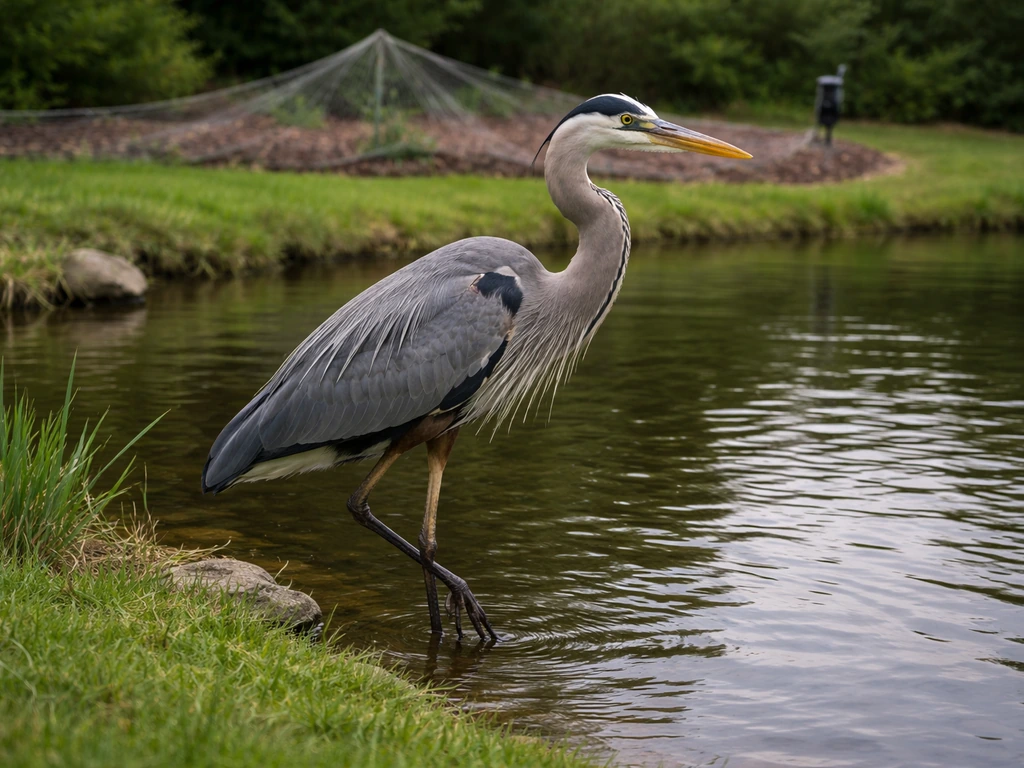
The Great Blue Heron is hard to miss. It's roughly the size of a goose or larger, with a slate-blue body and wings, long dark-to-yellowish legs, and a heavy, pointed yellow bill built for spearing fish.
In flight, the black flight feathers contrast sharply against the powdery-blue plumage, and the bird tucks its neck in an S-curve. The Little Blue Heron is about half that size, with dark greenish legs, and is sometimes confused with a Snowy Egret (the key difference: Snowy Egrets have black legs with bright yellow feet, while Little Blue Herons have dull greenish legs with no yellow).
If the bird at your pond is tall, gray-blue, and standing perfectly still in shallow water, it's almost certainly a Great Blue Heron.
Next, figure out what damage is actually happening. Common signs of a heron working your pond include whitewash (droppings) on rocks or dock edges, feathers near the water, footprints in soft mud or liner, and disappearing fish. You rarely see a fish carcass because herons swallow their prey whole. If you're losing ornamental koi or goldfish and seeing those signs, a heron is the likely culprit.
Also check whether the bird is just passing through or is showing up regularly at the same time of day. A heron visiting daily at dawn is hunting your pond on a routine. One spotted once may simply be transiting. Your response should match the pattern. And if you suspect a nesting colony nearby (large groups of herons in a stand of tall trees), read the section on calling a wildlife professional before doing anything else. The South Carolina DNR nuisance heron publication also discusses heron conflict details like nesting tendencies and aggressive behavior during nesting, which can help you decide when to bring in help.
What to Do Right Now: Immediate Steps for Today
If a heron is actively at your pond as you're reading this, here's how to interrupt its visit safely and legally. If you are specifically trying to get rid of a robin, use the right deterrents and make your yard less attractive to them harass its visit safely and legally.
- Walk calmly toward the bird. Simply approaching will send most herons off. Do not run, throw objects, or let a dog chase it. Michigan DNR specifically notes that allowing dogs to chase herons can injure the bird and constitutes illegal wildlife harassment under state law.
- Make noise. Clap, yell, shake a can of coins, or use an air horn. Loud, sudden sounds are effective for a single visit. The bird will typically fly off immediately.
- Drape any available mesh, netting, or shade cloth over the pond temporarily. Even an imperfect cover breaks the heron's sight line to the fish and forces it to look for an easier meal.
- Move any visible fish to a covered area, bucket, or indoor tank if you have that option while you set up a longer-term solution.
- Document what you see: photos, time of day, and frequency of visits. You'll need this if the problem escalates and you eventually contact USFWS or a wildlife professional.
One important safety note: never attempt to physically handle or restrain a blue heron. If you find a dead bird on your property, use safe handling practices and contact local animal control or a wildlife professional for guidance on what to do next. They are large, strong birds with sharp bills and can cause serious injury. Any injury or death caused to the bird during harassment counts as a 'take' under USFWS regulations and is federally prohibited.
Humane Deterrents and How to Use Them Correctly
Herons are smart. They adapt to deterrents faster than most homeowners expect. USDA APHIS and Penn State Extension both emphasize that frightening devices alone rarely provide lasting results because birds learn quickly that there's no real threat. That said, deterrents are still useful as part of a layered strategy. The key is rotating them and combining them with habitat changes.
Visual Deterrents
- Heron decoys: A plastic Great Blue Heron decoy placed near your pond exploits the species' territorial behavior. Herons are generally solitary feeders and avoid areas where another heron appears to be present. Move the decoy every few days so it doesn't become a familiar fixture.
- Reflective tape and mylar strips: Hang these around the pond perimeter. They create unpredictable light flashes that make herons uneasy. Reposition them weekly.
- Motion-activated owl or hawk decoys: These work reasonably well if you move them regularly. A static decoy quickly becomes scenery.
- Predator eyes or balloons: Large, predator-eye balloons hung over the pond add another layer of visual disruption.
Motion-Activated Deterrents
- Motion-activated sprinklers: These are one of the most consistently effective heron deterrents for backyard ponds. The sudden burst of water startles the bird and delivers a consequence without any harm. Position them to cover the water's edge where a heron would stand to fish. Check and adjust sensitivity as needed.
- Motion-activated lights or sound devices: These add a second sensory disruption. Combine with a sprinkler for better results.
Regardless of which deterrents you use, rotate them on a 5 to 7 day cycle. A heron that visits daily will test each deterrent over time. The moment it realizes there's no real danger, it stops reacting. Mixing methods unpredictably is your best defense against habituation.
Remove the Attractants: Food, Water Access, and Roosting Spots
Deterrents slow a heron down. Removing attractants is what actually makes your property uninteresting to it. Michigan DNR's guidance is direct: discourage herons by eliminating the accessible food sources that attract them in the first place.
Manage Fish and Food Availability
- Reduce the fish population in decorative ponds to what's necessary. A pond packed with brightly colored koi is essentially a heron buffet.
- Add deep zones (at least 3 feet) to your pond where fish can retreat. Herons wade in shallow water and can't easily reach fish in deeper areas.
- Use pond dye (black or blue water colorants) to reduce water clarity. Herons hunt by sight, and murky water makes fish harder to see.
- Feed fish only what they'll consume immediately, and don't feed at predictable times near open water. Leftover food attracts frogs and other small animals that also interest herons.
- Consider temporarily relocating valuable fish (like koi) indoors or to a covered holding tank during peak heron activity periods.
Reduce Water Access and Shoreline Appeal
- Eliminate shallow entry points at pond edges. Herons need shallow, accessible shorelines to wade and hunt. Adding rocks, dense plantings, or a steep edge discourages wading.
- Remove flat, elevated surfaces near the water (dock edges, rocks, retaining walls) that give herons a convenient fishing perch.
- Trim overhanging branches that could serve as a landing or approach point above the pond.
Eliminate Roosting and Resting Attractants
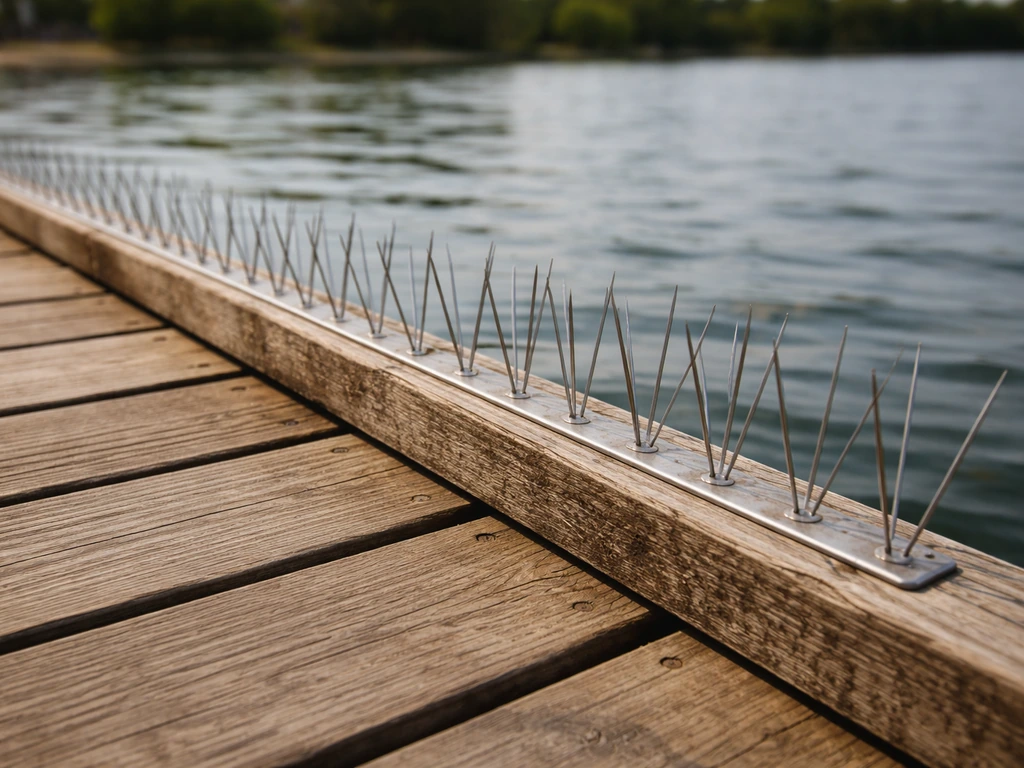
If a heron is roosting on your roof, dock, or nearby structures (not just feeding), you need to remove the perching appeal. Install bird-spikes on flat ledges, dock rails, and roof peaks where the bird lands. These are available at hardware stores and are completely humane. Remove any tall, isolated snags or dead trees near water if possible, as these are favored heron lookout posts.
Physical Exclusion and Habitat-Proofing Around Buildings and Ponds
Physical barriers are the most reliable long-term solution, especially for backyard fish ponds. Penn State Extension recommends pond netting as the primary protective barrier between a fishpond and predatory birds, and it's the method that holds up even when herons have figured out all your deterrents.
Pond Netting
Stretch netting over the entire pond surface, secured tightly at the edges so there's no gap where a heron can reach through or walk underneath. Use mesh with openings no larger than 1 inch to prevent entanglement. Penn State Extension specifically cautions against loosely hung or small-mesh netting at aquatic facilities because it creates entanglement risks for birds and is less effective as a barrier. Keep the netting taut, elevated above the water surface using poles or a frame if possible, so fish can still surface-breathe and the net doesn't sag into the water.
Wire and String Barriers
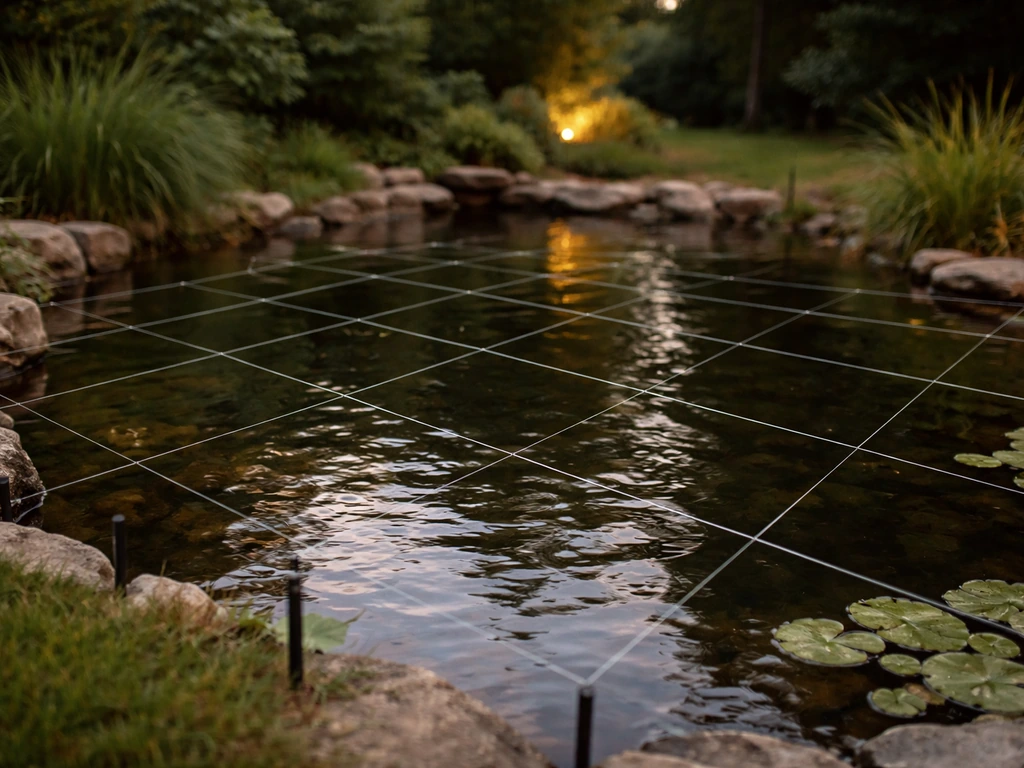
Run monofilament fishing line or wire in a grid pattern 6 to 8 inches above the pond surface and around the perimeter at heron-wading height (roughly 12 to 18 inches). Herons are cautious and won't wade through an obstacle they can't easily identify. This low-cost method works well for irregularly shaped ponds where full netting is difficult. Check the lines regularly for sagging or breaks.
Fencing and Perimeter Barriers
- Install a low fence (18 to 24 inches) of hardware cloth or wire mesh around the pond perimeter. Herons typically land away from the water and walk to the edge, so a low barrier interrupts that approach.
- For larger ponds or facility-scale water features, consider a full exclusion fence of 4 feet or higher with an outward overhang to prevent the bird from landing inside the perimeter.
- For building-adjacent water features (ornamental fountains, retention ponds near structures), the same netting and wire approaches apply. Focus on eliminating shallow wading access rather than trying to cover large open water entirely.
Long-Term Prevention Plan and Seasonal Maintenance
Heron conflicts are seasonal and cyclical. FAO research notes heron visits to fish-stocked areas peak from February through August and again in winter, which tracks with breeding season and the period when young herons (capable of flight by about 60 days, departing the nest at 65 to 90 days) begin independent foraging. Plan your prevention work around those windows.
| Season | Heron Activity Level | Priority Actions |
|---|---|---|
| Late Winter (Feb–Mar) | Increasing — pre-breeding foraging ramps up | Inspect and reinstall pond netting; test motion-activated sprinklers; add fish hiding structures |
| Spring (Apr–May) | Peak — active nesting and feeding; young birds fledging by late spring | Keep all physical barriers in place; rotate deterrents weekly; avoid disturbing nearby nesting colonies |
| Summer (Jun–Aug) | High — fledglings start independent foraging, adding new birds to the pressure | Check netting for damage; maintain deterrent rotation; reduce fish density if possible |
| Fall (Sep–Nov) | Moderate — post-breeding dispersal | Conduct a full inspection of exclusion barriers; repair damage before winter |
| Winter (Dec–Jan) | Moderate to low, but varies by region | Keep netting in place in mild climates; store portable deterrents; plan any pond redesign (depth, plantings) for spring installation |
At least twice a year (March and September work well), do a full walkthrough of your pond and property perimeter. Check netting for tears, inspect wire lines for sagging, rotate or replace deterrents that have been in the same position for more than two weeks, and reassess shallow entry points. A heron that visited once and found nothing accessible is unlikely to return. A heron that's been successfully feeding your pond for a season is a much harder habit to break, so catching the problem early is worth the effort.
When to Call a Wildlife Professional (and What the Law Says)
Great Blue Herons and Little Blue Herons are both protected under the federal Migratory Bird Treaty Act (MBTA). Under 50 CFR and CRS legal analysis, 'take' is broadly defined to include pursuing, hunting, shooting, wounding, killing, trapping, capturing, or collecting migratory birds. That means no trapping, no poison, no shooting, and no deliberate harassment that causes injury or death. Violations carry serious federal penalties.
Everything described in this guide stays well within legal boundaries because it focuses on habitat modification, physical exclusion, and passive deterrence. But there are situations where you'll need professional help.
Call a Licensed Wildlife Professional or Contact USFWS When:
- A heron or colony is actively nesting on your property. Disturbing an active heron nesting colony (a 'heronry') early in the season can collapse breeding success and may violate federal protections. The National Park Service specifically identifies early-season human disturbance as a colony-disruption risk. Do not proceed without professional guidance.
- You've tried all nonlethal methods consistently for 30 or more days and the problem persists at a scale causing significant property or economic damage.
- A heron is injured, entangled in netting or line, or trapped. Contact a licensed wildlife rehabilitator immediately. Do not attempt to handle the bird yourself.
- You need to consider a depredation permit. USFWS depredation permits can authorize lethal control in documented cases of serious damage, but applicants must show that nonlethal methods were attempted first. NYSDEC notes that in most cases handling migratory bird depredation requires a USFWS depredation permit. These permits are primarily issued for commercial aquaculture operations facing significant economic loss, not typical residential pond conflicts.
- The conflict involves a building or facility at a scale beyond a single homeowner's capacity to manage (large retention ponds, commercial fish farms, stormwater features adjacent to buildings).
When you contact a wildlife professional or USFWS, have your documentation ready: photos, dates and times of visits, a description of damage, and a record of what nonlethal methods you've already tried. This speeds up the process and demonstrates good faith compliance with the law.
Quick Troubleshooting: What's Not Working and Why
| Problem | Likely Cause | Fix |
|---|---|---|
| Heron ignores decoy or scarecrow | Bird has habituated to a static deterrent | Move the decoy every 3–5 days; add a motion-activated sprinkler alongside it |
| Fish still disappearing despite netting | Netting is loose, sagging, or has gaps at the edge | Re-tension the net; add edge weights or stakes; check for tears |
| Heron visits at night | Standard visual deterrents don't work in the dark | Add motion-activated lights and sprinklers; tighten physical barriers |
| Heron stands on dock or roof, not pond | Roost/perch behavior, not just feeding | Install bird spikes on ledges; remove flat perch surfaces near water |
| Multiple herons showing up | Fledglings from nearby colony dispersing in summer | Intensify physical exclusion; contact wildlife professional if volume is unmanageable |
| Heron returns same time every morning | Established feeding routine | Consistently interrupt it for at least 10–14 days straight using motion sprinklers and presence; remove fish visibility with pond dye |
Your Action Checklist
Use this checklist to make sure you've covered the key steps. If you're dealing with a general bird nuisance beyond herons, similar frameworks apply to other species too, though the specifics of habitat modification and legal considerations will vary by species. If you are dealing with a whippoorwill instead, the approach is different, and you should use targeted, humane steps for how to get rid of a whippoorwill bird.
- Confirm identification: large gray-blue wading bird, long yellow bill, S-curve neck in flight.
- Check for nesting activity nearby before taking any action.
- Do an immediate soft deterrent (approach bird, make noise) if it's present right now.
- Cover the pond surface temporarily with available netting or mesh.
- Install a motion-activated sprinkler at the water's edge within 24–48 hours.
- Add a heron decoy near the pond and commit to moving it every 3–5 days.
- Assess pond depth: add deep zones or fish hiding structures if shallower than 3 feet.
- Stretch proper netting or wire grid over the full pond surface with tight edge securing.
- Remove flat perch surfaces (dock edges, rocks) near the water.
- Add dense marginal plantings to eliminate open wading access at the pond edge.
- Set a recurring calendar reminder to inspect and rotate deterrents every 7 days.
- Schedule full prevention inspections in March and September each year.
- If the problem persists beyond 30 days of consistent effort, contact USFWS or a licensed wildlife professional.
FAQ
What if I cannot confirm whether the bird is a Great Blue Heron or a Little Blue Heron?
Treat it as a heron anyway. The legal protections and core “remove attractants plus exclude” approach do not change with the exact heron species. Identification mainly helps you choose deterrent placement, for example where it’s likely to wade versus where it’s likely to roost.
Is it legal to scare a blue heron away with a loud sound, laser, or motion-activated device?
Using noise, motion, or lights can be part of a humane, non-injurious deterrent plan, but it must not escalate into injury or harassment that causes harm. The article’s key practice is rotating deterrents on a 5 to 7 day cycle and combining them with habitat changes so the bird has no reason to return.
How long should I expect before the heron gives up after I install pond netting or wire lines?
Some birds test barriers quickly, but most habituate only after repeated, consistent failures to reach the food. Plan on monitoring daily at least for the first 2 to 3 weeks, then do your routine checks (at least March and September) to confirm the exclusion system remains tight and gap-free.
What are the most common mistakes that make deterrents fail?
The big ones are relying on a single method for too long (no rotation), leaving the fish accessible (attractant not removed), and installing barriers that have gaps or sag (a heron can reach through or walk around). Also avoid deterrents that can injure birds, even accidentally.
Will pond fish always be safe if I put netting on the pond?
Netting greatly reduces predation, but you still need to keep it taut with no sagging into the water, use appropriate mesh size, and secure edges so there is no reach-through opening. Loose or overly small mesh can create entanglement risk, so inspect regularly for tears and looseness.
Can a blue heron still hunt if it’s coming from only one side of my pond?
Yes, which is why partial coverage often fails. For irregular pond shapes, the wire grid placed at heron-wading height (around 12 to 18 inches) can help, but make sure the grid covers the actual wading approach points and perimeter areas where it stands.
What should I do if the heron starts roosting on my dock or roof after I block feeding?
Changing roosting appeal is part of the “layered” strategy. Use humane perching controls like bird-spikes on ledges, dock rails, and roof peaks where it lands. Also remove nearby lookout posts where feasible, such as tall isolated snags near water.
How do I handle it if the heron appears to be nesting or I see a group in nearby trees?
If you suspect nesting activity or a local colony, stop DIY deterrence and contact a wildlife professional. Nesting increases the likelihood of repeated returns, and you’ll want guidance on the safest nonlethal approach that stays within legal requirements.
What if the heron is visiting only occasionally, not every day?
Still prepare, but scale based on pattern. For infrequent transits, focus on removing easy-access food (fish remain protected) and ensure your barrier system has no gaps. Catching early prevents the habit from forming, because repeated seasonal feeding is harder to break later.
Is it safe to remove feathers, droppings, or disturbed soil after the bird leaves?
Yes, but do it carefully. Avoid disturbing the bird itself or any active nesting area. Clean-up can proceed after the heron is gone, and you should wear gloves and wash hands to reduce exposure to debris and contaminants from droppings.
What should I tell a wildlife professional if I decide to get help?
Bring a simple log: photos, exact dates and times of visits, what damage you see (for example, whitewash on dock edges and missing fish), and a list of what nonlethal methods you already tried plus where you placed them. This helps them verify the pattern and recommend a compliant solution faster.
Do I need to keep devices running all the time?
Not necessarily. The guidance in the article emphasizes rotation on a 5 to 7 day cycle and combining deterrents with exclusion or habitat changes. Continuous use of the same device in the same spot often becomes predictable, so plan intermittent, rotated deployment.
Next Articles
How to Get Rid of a Storm Bird Safely and Humanely
Step-by-step, humane removal of a storm-blown indoor bird plus prevention, cleanup, and when to call wildlife control.
How to Get Rid of a Dead Bird Safely and Cleanly
Safe step-by-step guide to remove and dispose of a dead bird, disinfect the area, and prevent future incidents.
How to Get Rid of a Robin Bird Safely and Humanely
Humane, legal step-by-step methods to remove a robin safely, prevent return, and handle nesting or indoor entry.