blank" rel="noopener noreferrer">Put on disposable gloves, double-bag the bird in thick plastic bags, tie them tightly, and put it in your regular trash. That is the core process for getting rid of a dead bird from your yard or garden, and it works safely for the vast majority of situations. Everything below fills in the details: what gear to wear, how to clean up afterward, when to call a professional instead of handling it yourself, and how to stop this from happening again.
How to Get Rid of a Dead Bird Safely and Cleanly
Maya Carver
27 Apr 2026
Immediate safe cleanup steps
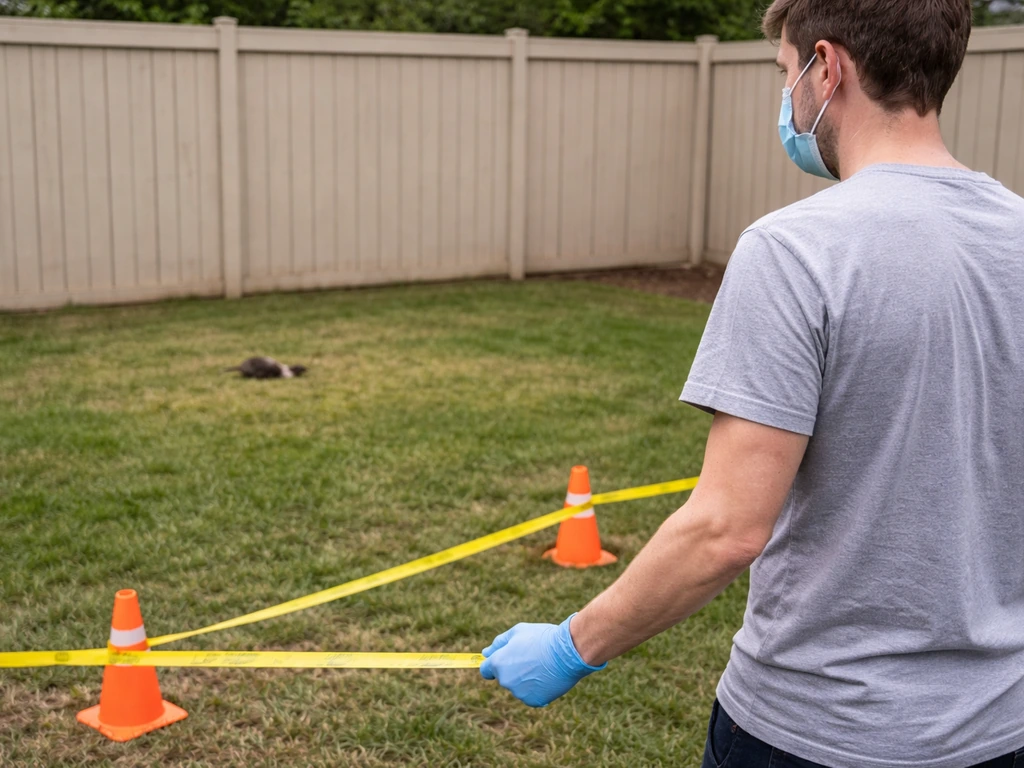
Before you do anything else, resist the urge to pick the bird up with your bare hands or to let children or pets near it. Dead birds can carry West Nile Virus, avian influenza, and other pathogens. The risk to a healthy adult is low, but it is not zero, so a few quick precautions make this a safe job.
- Keep everyone back: move kids and pets away from the area before you approach.
- Grab your PPE: pull on disposable waterproof gloves. If you do not have gloves, turn a plastic bag inside-out over your hand as an improvised barrier.
- Do not stir things up: avoid kicking feathers, raking around the carcass, or doing anything that sends dust or debris into the air.
- Skip the pressure washer: pressure washing can aerosolize viral particles. Use a low-pressure rinse or a damp cloth later during disinfection.
- If there is any chance of splashing during pickup (wet ground, puddles nearby), add safety goggles and a surgical mask to protect your eyes and nose.
Once you are geared up, you are ready to move to removal. Do not delay longer than necessary, especially in warm weather, because decomposition accelerates and creates both odor and additional contamination risk.
Removing a dead bird from your yard or garden
The actual pickup is straightforward. The key is containment: get the bird into a sealed bag without touching it directly, and without letting the bag sit open any longer than needed.
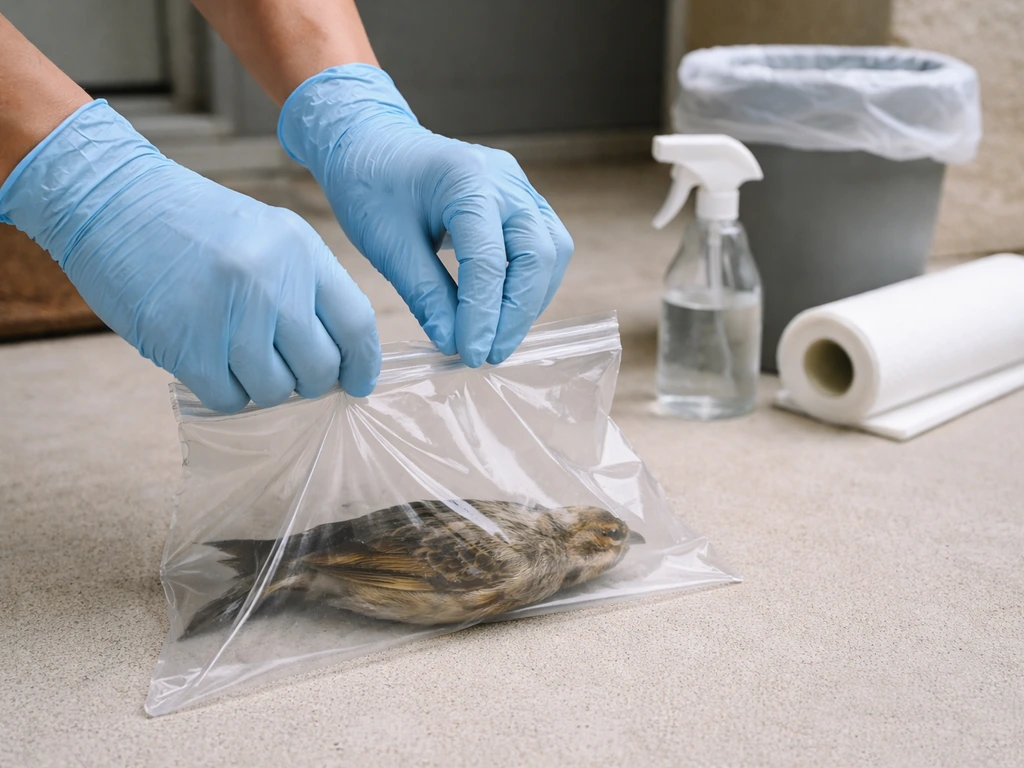
- Method 1 (preferred): With gloved hands, pick up the bird directly and place it into a thick plastic trash bag. Avoid squeezing or compressing the carcass.
- Method 2 (no gloves available): Turn two plastic bags inside out over both hands, pick up the bird, then fold the bags right-side out around it to double-contain it in one motion.
- Method 3 (decomposing or fragile carcass): Scoop the bird into the bag using a shovel or garden trowel. This keeps your hands further away if the bird is in poor condition.
- Place the first bag inside a second thick plastic bag and tie both bags tightly. This double-bag method is what Massachusetts and Illinois public health agencies both recommend for safe wild bird disposal.
- Put the double-bagged carcass into your regular outdoor trash bin with a lid. Do not compost it, bury it in a shallow hole, or leave it out for scavengers.
If the bird is in a hard-to-reach spot, like under a deck, inside a window well, or lodged in a shrub, use a long-handled tool to dislodge it into a bag or bucket first. A cheap pair of kitchen tongs works well here and can be bagged and thrown away afterward.
What to do when you find multiple birds
If you find more than a couple of dead birds in the same area in a short period of time, do not just bag them up and move on. Multiple deaths in close proximity may signal a disease event, and in that situation the right move is to contact your local wildlife agency or state health department before handling anything. Illinois IDPH specifically notes that with larger numbers of birds, you should report to local authorities. More on this in the escalation section below.
Avoiding contamination: PPE, hygiene, and disinfecting the area
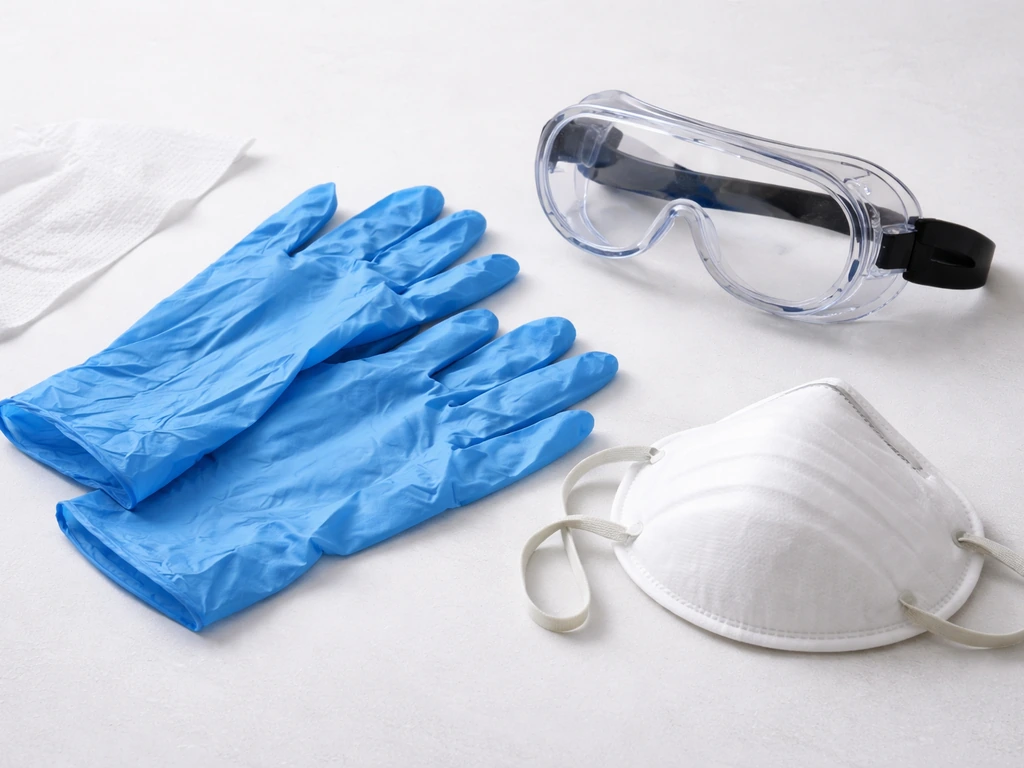
What to wear
| Item | When you need it | Notes |
|---|---|---|
| Disposable waterproof gloves | Every situation | Nitrile or latex; double up if you have thin gloves |
| Safety goggles or glasses | Wet environment, splashing likely | Protects mucous membranes from aerosolized particles |
| Surgical or N95 mask | Wet conditions, dusty feathers, suspected disease | Especially important if you are immunocompromised |
| Closed-toe shoes | Every situation | Avoid sandals; hose down soles afterward |
| Old clothes or coveralls | Large cleanup, multiple birds | Bag clothes separately or wash immediately on hot cycle |
Hand hygiene after the job
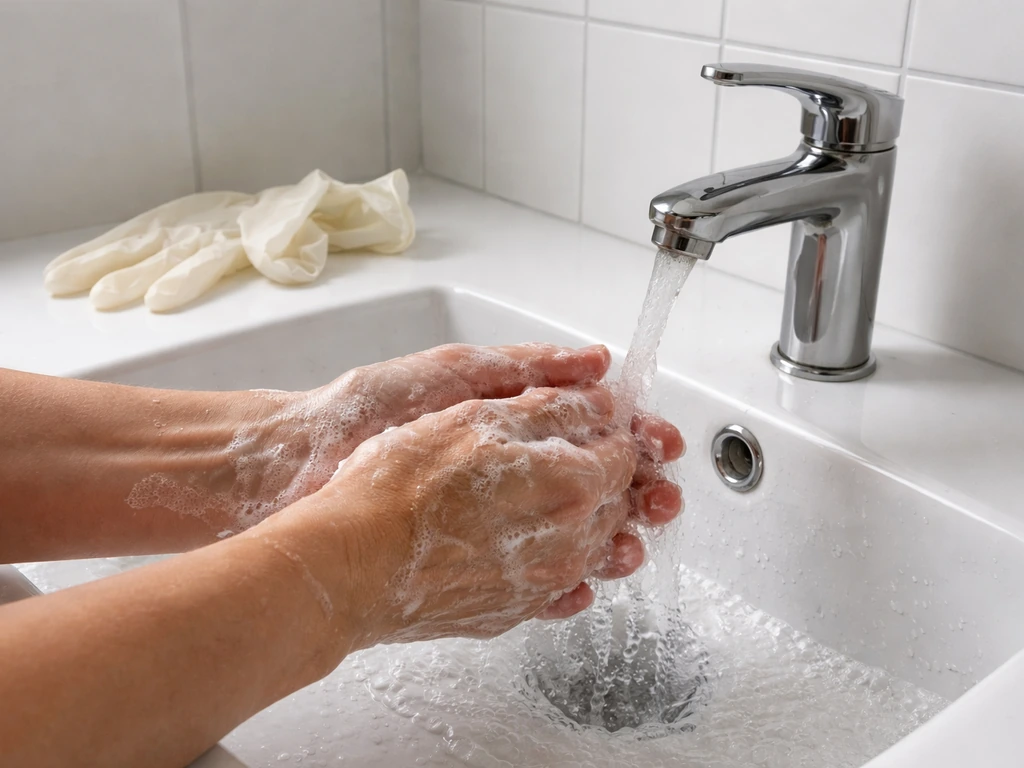
The CDC is very clear here: once the bird is bagged and the gloves are off, wash your hands with soap and water. Do not skip this step, and do not touch your face while you still have gloves on. If you are outdoors without access to a sink, use an alcohol-based hand sanitizer as a temporary measure, then wash properly as soon as you get inside.
Disinfecting the spot where the bird was found
Once the carcass is gone, disinfect the area where it was lying, especially if it was on a hard surface like a patio, driveway, or pathway. Use an EPA-registered disinfectant that is labeled effective against avian influenza (influenza A viruses). The EPA maintains a List M of registered products for exactly this purpose, and the label on those products will specify the contact time, meaning how long the surface needs to stay wet for disinfection to work. The EPA’s List M page explains that it is intended to help users find registered antimicrobial products with validated label claims for avian influenza disinfection The EPA maintains a List M of registered products for exactly this purpose. Follow that contact time exactly; wiping it off too soon means the disinfectant has not done its job.
- Remove any visible debris (feathers, droppings) by picking them up with gloved hands or a paper towel before applying disinfectant.
- Apply your EPA-registered disinfectant and let it sit for the full contact time listed on the label.
- For soil or grass where disinfection is not practical, remove the top layer of soil or grass if it is heavily contaminated, bag it, and dispose of it with the carcass.
- Keep pets and children off the area until it is fully dry.
- Do not use a pressure washer at any stage of this cleanup.
When to call wildlife professionals or sanitation instead of DIYing it
Most single dead birds are a quick job you can handle yourself. If you specifically need help with how to get rid of a blue heron bird on your property, use the same safe removal principles and then focus on preventing repeat visits. If you have a dead bird on your porch, use the same safe pickup, bagging, and disposal steps described here dead bird on porch. If you are looking for how to get rid of a storm bird specifically, follow the same safe pickup, bagging, and disposal steps described here for dead birds. If you are dealing with a robin specifically, the same safe pickup, bagging, and disposal steps for getting rid of a dead bird are the right place to start get rid of a dead bird. If the bird is not a storm bird or robin, you can still use these steps to learn how to get rid of a pet bird safely how to get rid of a dead bird. For other species, the same containment and disposal approach applies when you’re figuring out how to get rid of a whippoorwill bird safely robin specifically. But there are situations where you should step back and make a phone call rather than picking anything up. Here is how to read the situation:
| Situation | Who to call | Why |
|---|---|---|
| Multiple dead birds in the same area | State wildlife agency or local health department | May indicate a disease outbreak like HPAI or WNV; requires reporting and coordinated response |
| Suspected protected or rare species | U.S. Fish & Wildlife Service or state wildlife agency | Federal and state law prohibits handling certain species without authorization |
| Bird died inside a wall, ceiling, or inaccessible space | Wildlife removal or pest control professional | Access requires structural knowledge; odor and contamination can spread without proper extraction |
| Lingering odor after removal | Odor remediation or sanitation professional | Fluids may have soaked into substrate; standard disinfectant may not be enough |
| You develop flu-like symptoms within 10 days of handling dead birds | Your doctor and local health department | Illinois IDPH recommends this as a precaution after any group bird disposal |
| Bird showing neurological symptoms before death, or mass die-off | USDA APHIS (1-866-536-7593) or state veterinarian | Potential reportable disease event; do not disturb the area |
USDA APHIS Wildlife Services runs the National Wildlife Disease Program and is the right federal contact for unusual wildlife mortality events. For avian influenza specifically, you can reach APHIS at 1-866-536-7593. If you are unsure whether what you are looking at warrants a call, err on the side of calling. Agencies would rather hear from you early than respond to a larger problem later.
Preventing future bird deaths on your property
A single dead bird in the yard is usually bad luck. Repeated incidents point to a specific hazard on your property that you can actually fix. The two most common killers are window collisions and predator access, and both are very addressable.
Stop window strikes
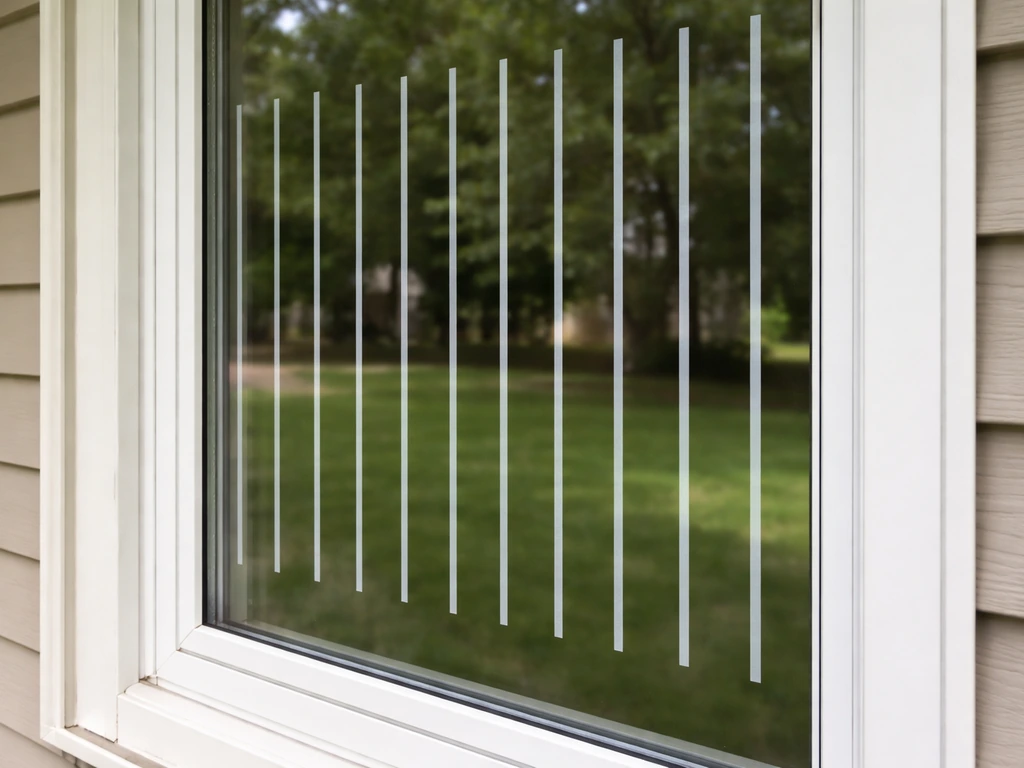
Window collisions are one of the leading causes of bird deaths around homes. Birds cannot see glass the way we do. The fix is to make the glass visible to them, and the most reliable method is applying exterior window film or bird-deterrent decals spaced about 2 inches apart across the outside surface of the glass. The Cornell Lab of Ornithology recommends this 2-inch spacing specifically because it is close enough that birds register the pattern as a solid barrier rather than flying through the gap. Placing a single decal in the center of the window is not effective. You need coverage across the whole pane.
- Apply deterrent decals or tape on the outside of windows, spaced no more than 2 inches apart vertically and horizontally.
- Consider UV-reflective window film that is invisible to humans but visible to birds.
- Move bird feeders either within 3 feet of windows (so birds cannot build up collision speed) or more than 30 feet away.
- Turn off interior lights at night or close blinds to reduce glass transparency that confuses birds.
- Install external screens or zen curtains (paracord strands hung in front of the glass) for large picture windows.
Reduce other hazards around your property
- Keep cats indoors or supervised outdoors; cats are among the highest causes of bird mortality around residential properties.
- Keep pets away from bird feeders and birdbaths, which can be contamination points if a bird dies nearby.
- Secure loose netting on garden beds so birds cannot get tangled.
- Remove standing water near bird feeders to reduce disease transmission between birds.
- Trim back shrubs and dense plantings right against glass to reduce bird activity at collision-prone windows.
Seasonal planning
Spring and fall migration seasons (roughly March to May and August to November) see the highest bird activity near homes, and window strikes spike during these periods. This is the time to check that your window deterrents are in place and in good condition. Summer is when avian influenza and West Nile Virus activity tends to be highest in wildlife populations, so if you find dead birds during this window, take extra care with PPE and consider reporting to your local health department even for single birds if the species is one that is commonly tested in your region. Winter die-offs are often related to cold and food scarcity rather than disease, but the safe handling steps are the same regardless of season.
Legal and safety rules you need to know
This matters more than most people realize. In the United States, most wild birds are protected under the Migratory Bird Treaty Act (MBTA), which makes it unlawful to pursue, hunt, take, capture, or kill migratory birds, and also restricts possession and transport of those birds and their parts. That legal protection does not disappear because the bird is already dead. In practical terms, this means you cannot legally keep a dead protected bird, its feathers, or its eggs, even if you find them on your own property. Your only legal option in most cases is to dispose of the carcass as described above, through normal trash disposal.
If you find a bird that appears to be an endangered or threatened species, do not handle it at all. Contact the U.S. Fish and Wildlife Service or your state wildlife agency immediately. Under 50 CFR § 17.21, federal prohibitions on endangered wildlife apply regardless of how the animal died, and handling without authorization can expose you to significant legal liability.
Local rules also vary on disposal. Some municipalities do not allow dead animals in regular household trash and require you to call animal control or a sanitation service. A quick check with your local health department or municipal website will tell you what applies in your area. If you are in a state or county with active West Nile Virus or HPAI surveillance programs, your local health department may actually want you to report certain dead birds (especially corvids like crows and jays, which are sentinel species for WNV) rather than disposing of them yourself.
The bottom line on legal considerations: dispose of the bird promptly and safely, do not keep any part of it, and check your local rules before trash disposal if you are unsure. When in doubt, a quick call to your local health or wildlife agency is always the right move and typically takes less than five minutes.
FAQ
Can I pick up a dead bird with a shovel or rake instead of picking it up directly?
Yes, but only if you can do it without contaminating yourself or spreading material. If you use a shovel or rake, treat it like a “tool pick-up” that never contacts bare hands or the inside of your home, then disinfect the tool after using an EPA-registered disinfectant effective against influenza A viruses and let it stay wet for the label contact time.
Is it okay to compost or bury a dead bird?
Avoid composting or burying it. Standard yard waste and compost piles are not designed to reliably neutralize bird pathogens, and burial can leave contaminants in place. The article’s approach, double-bagging and placing in regular trash (when allowed by local rules), is the safer default.
How do I clean and disinfect if the bird was on dirt or grass?
If the bird is on a driveway, patio, or walkway, disinfect the spot after removal using a product labeled for influenza A and follow the exact wet-contact time. If it was on soil or grass, focus on gloves, removal, and cleanup around the area, since disinfectants are not typically practical or effective on porous ground.
What should I do if the dead bird is stuck somewhere I cannot reach safely right away?
If the area is inaccessible to remove promptly, do not leave it exposed. Instead, block access to kids and pets, wear PPE when you do remove it, and use a long-handled tool to contain it into a bag quickly. Defer removal until you can do it safely, but avoid waiting long enough for heavy decomposition and fluids to spread.
Do I need to open the bag after double-bagging to check anything before throwing it away?
Yes, keep the bag sealed and minimize handling during disposal. After double-bagging and tying, you generally do not need to open the bags again. If the outside of the bag gets splattered, treat the outside as contaminated, wipe carefully only if the bag itself is still intact, and then disinfect your hands after glove removal and do not touch your face.
If I find a single dead bird in the same location for multiple days, should I treat it differently?
Most of the time, you can still follow the same safe handling steps, but with extra caution if you suspect disease and you live in an area with active surveillance. For unusual clusters, sick-appearing wildlife, or multiple birds close together, the article recommends contacting local authorities or APHIS rather than continuing routine cleanup yourself.
What protective gear matters most if I do not have N95 respirators?
Prescription or over-the-counter masks are not a guarantee. If you are concerned about aerosol exposure from disturbing the carcass, use PPE that includes gloves and consider eye protection, and avoid activities that create dust or spray (like sweeping dry debris). If you want a higher-assurance setup, call a local wildlife or sanitation service rather than improvising.
What if I cannot take the bags to the trash right away?
Do not store the carcass in your garage, shed, or kitchen trash. If you cannot take it out immediately, keep it outdoors and secured in a sealed, double-bagged container where pets cannot access it, then dispose promptly when you can. Bring nothing into living spaces.
How can I tell if my city requires disposal through animal control instead of regular trash?
It depends on whether your municipality requires alternative disposal. The article notes local rules vary, some places prohibit dead animals in household trash and require animal control or sanitation service. If you are unsure, the fastest decision tool is to call your local health department or municipal sanitation line before disposing.
Is it legal to keep feathers or photos by bringing the dead bird indoors for documentation?
If the bird is protected species, you cannot keep it, its feathers, or eggs, even after it is dead. Also, if it appears to be endangered or threatened, the article advises not handling and contacting the U.S. Fish and Wildlife Service or your state agency immediately.