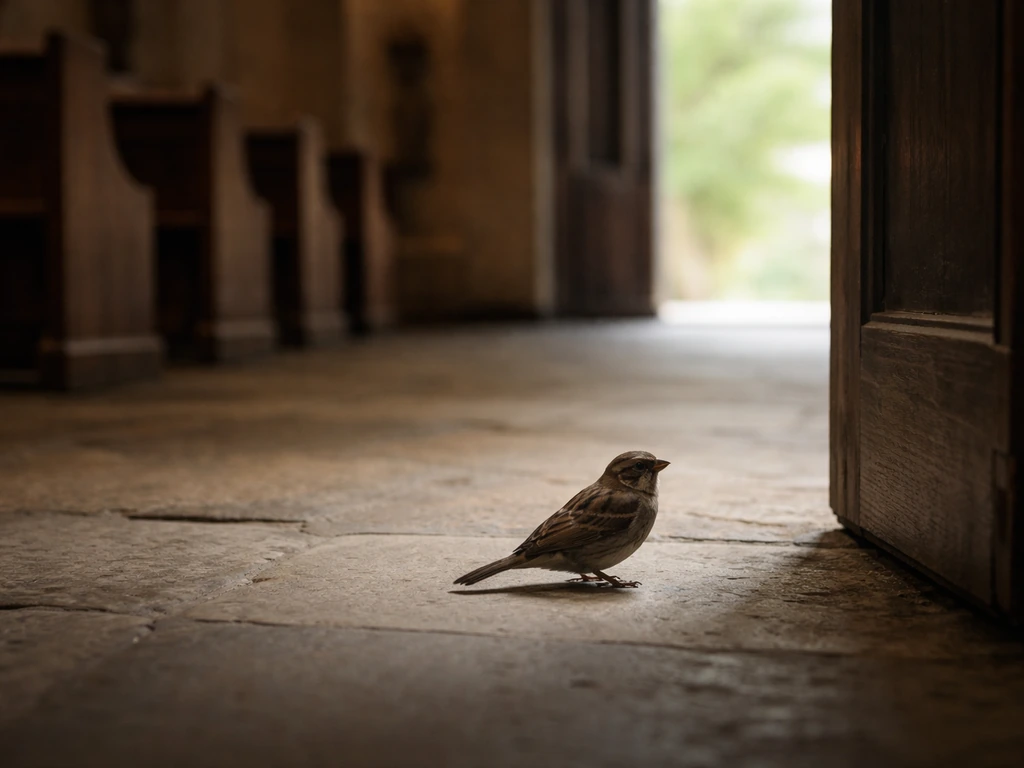
Close off the fireplace opening, darken the room, open a nearby window or exterior door, and then step back. Most birds that fall down a chimney will find their own way out within a few minutes once they can see daylight and feel fresh air. That is the single most effective first move. If you need the quick method, use the same principles in this guide to figure out how to get a bird out of a chimney safely. Everything else depends on what happens next: whether the bird makes it out on its own, whether it is injured or still stuck high in the flue, and what you need to do afterward to prevent a repeat.
What to Do If a Bird Falls Down Your Chimney: Steps
Maya Carver
13 Jun 2026
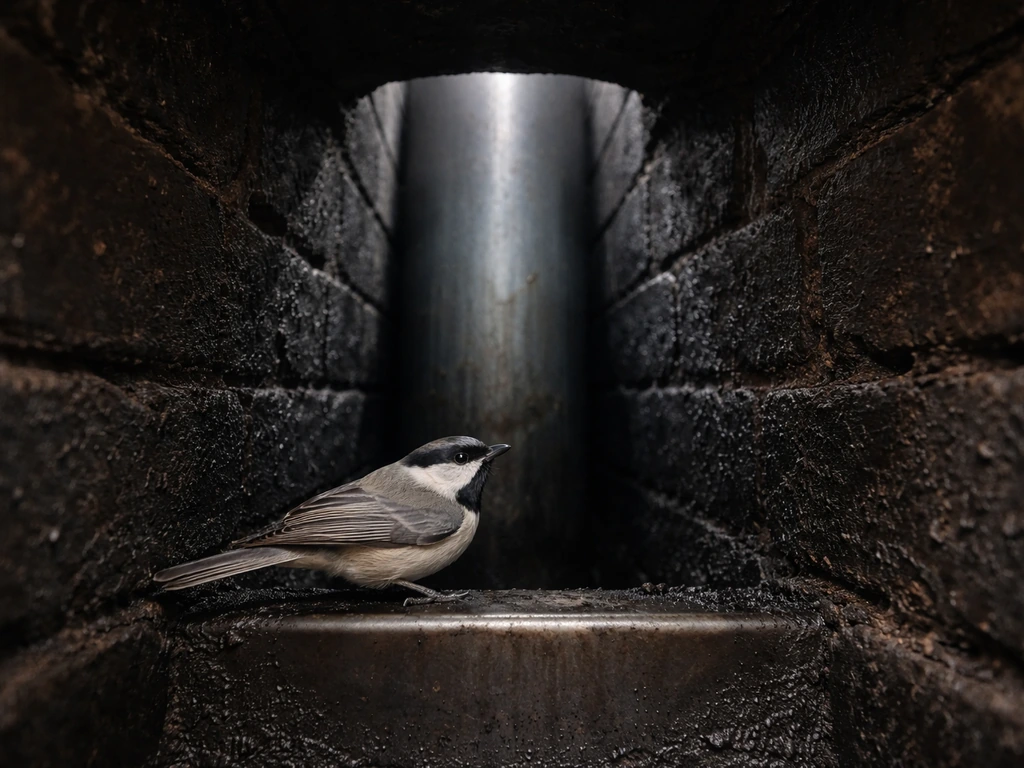
First 5 to 10 minutes: what to do right now
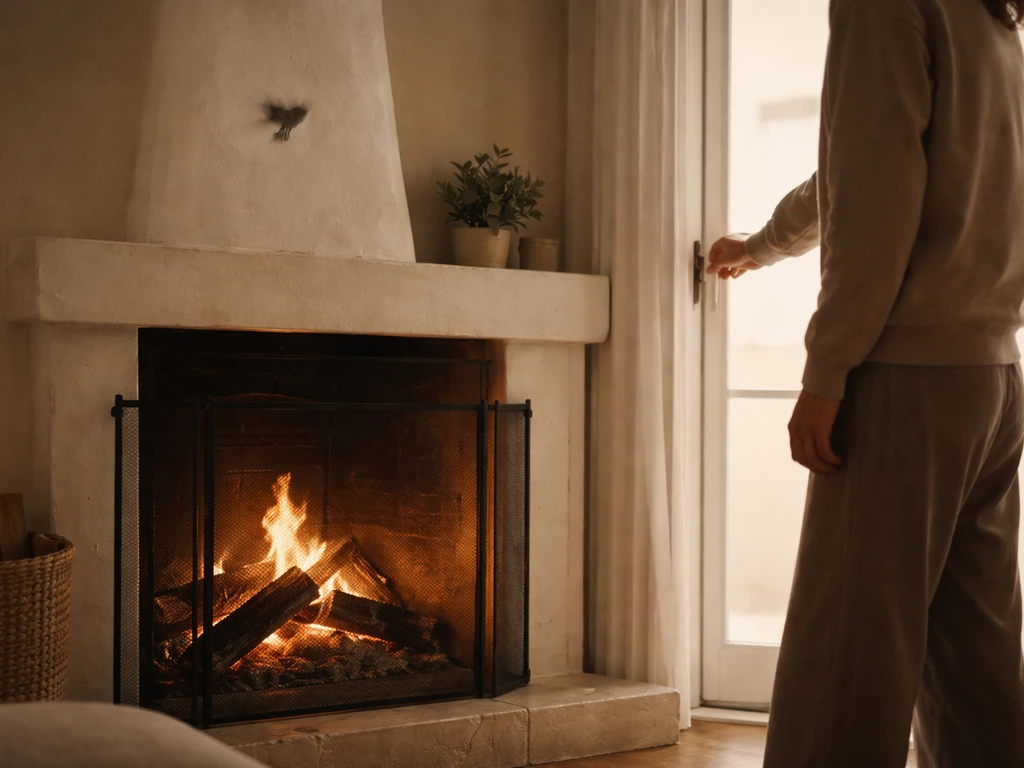
The moment you hear flapping or scratching in the chimney, the clock starts. Birds in enclosed spaces panic fast, and panic leads to injury. Your job in the first few minutes is to slow things down, not speed them up.
- Stay calm and move quietly. Loud voices or sudden movement make the bird thrash harder and increase injury risk.
- Remove or contain pets. Dogs and cats will stress the bird and can injure or kill it. Get them out of the room and close the door.
- Resist the urge to open the fireplace immediately. If the damper is still closed, the bird may still be in the flue, not your living room. Listen first.
- Open an exterior door or window in the same room before you open any fireplace access. You want the exit ready before the bird enters the space.
- Turn off all lights in the room. Darkening the room and creating a single bright exit point is the most reliable way to guide a bird out.
- Open the damper or fireplace doors slowly. Step back immediately. Give the bird space and time.
Do not try to grab the bird right away. Do not use a broom to shoo it. Do not light a fire to scare it upward. All of these approaches cause harm and are likely to make the situation harder to resolve. Patience in the first ten minutes saves hours of chasing a panicked bird around your home.
Help the bird find its own way out
Birds navigate primarily by light. If you give them a clear, bright exit and remove competing light sources, most will self-rescue. The Wisconsin Humane Society recommends this exact approach: open the fireplace curtain or doors, open the damper fully, turn off all room lights, then leave the room and sit quietly somewhere the bird cannot see you. The bird should spot the open window or door and fly toward it.
- Keep the exit window or door fully open, not cracked. A bird needs a clear, unobstructed opening.
- Close interior doors to other rooms so the bird cannot fly deeper into the house.
- Cover or close any other windows in the room that you do not want the bird to use as a false exit. Birds can fly into closed glass. Covering windows or pulling blinds removes that hazard.
- If the bird is not moving after 15 to 20 minutes, you can gently increase airflow by adding a second open window on the opposite side of the room to create a cross-breeze, which can help a disoriented bird locate the air current moving toward the exit.
- Keep the room as dark as possible except for the light coming in through the open exit.
Give this process at least 20 to 30 minutes before moving to the next step. Most birds exit on their own if you set the conditions correctly and stay out of their way. If the bird is flying around the room but cannot find the exit, you can try draping a lightweight towel over it once it lands and is resting, then carrying it gently outside and releasing it. Cover the bird loosely, do not squeeze, and release immediately outdoors.
If the bird is still trapped in the flue or appears injured
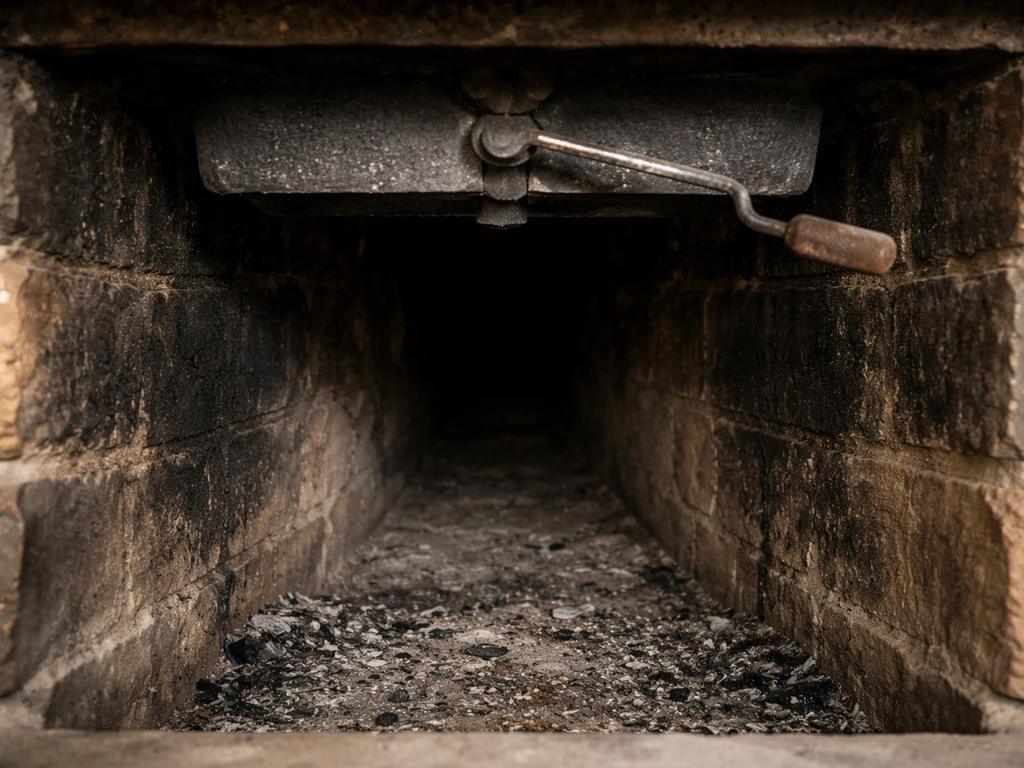
Not every bird makes it into the room cleanly. Some get stuck partway down the flue, especially in older chimneys with ledges, offsets, or narrowing sections. Others fall into the firebox already injured from the drop or from striking flue tiles on the way down.
Signs the bird is still in the flue
- You hear scratching or flapping but nothing appears in the firebox after 10 to 15 minutes with the damper open.
- You can hear the bird but see no movement.
- Feathers or debris are falling but no bird is visible.
If the bird is stuck high in the flue and cannot drop down on its own, do not reach into the chimney from above unless you are a trained professional with proper fall protection equipment. The risk of injury to you is real, and disturbing the bird from above may cause it to fall farther or injure itself. Instead, try leaving the damper fully open and the room dark with the exit window open for a longer period, up to a few hours if the bird sounds active. Sometimes a bird that is wedged will work itself free with rest.
Signs the bird is injured
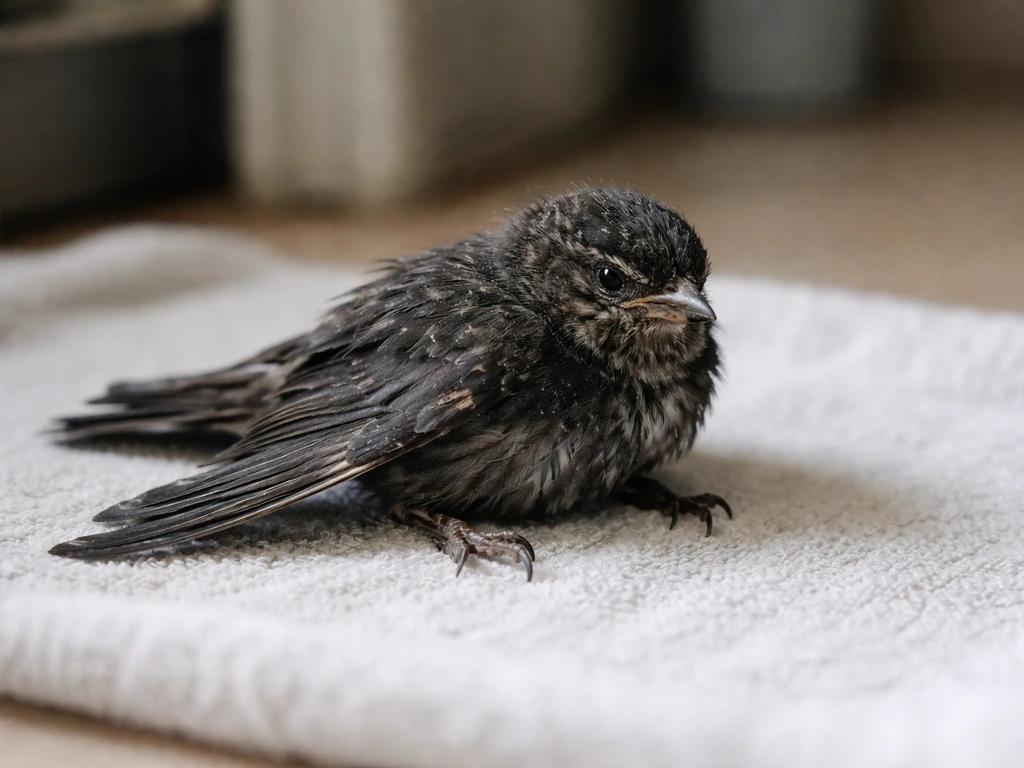
- It is covered in heavy soot and not moving normally.
- It is sitting still on the floor and not attempting to fly.
- It has an obviously drooping wing or is unable to stand.
- It is a juvenile with incomplete feathers (downy patches visible).
If the bird shows any of these signs, do not attempt to rehabilitate it yourself. The Wisconsin Humane Society is direct on this: call a local, licensed wildlife rehabilitator. You can handle the bird briefly and carefully to move it to a quiet, dark, ventilated box (a cardboard box with small air holes works) while you make that call, but keep handling to an absolute minimum. Do not give it food or water. Do not keep it in a hot or cold space.
One critical legal note: most birds that end up in chimneys are migratory species protected under the Migratory Bird Treaty Act. This federal law prohibits capturing, harming, or killing protected migratory birds without a permit from the U. S. Fish and Wildlife Service.
That means well-intentioned but uninformed handling can put you on the wrong side of federal law. Handing an injured bird to a licensed rehabilitator is the safe, legal path. USGS provides a publication intended to guide wildlife managers, regulators, and others who handle or authorize handling of live-captured migratory birds on humane capture, handling, and disposition practices [humane capture, handling, and disposition of live-captured migratory birds](https://www. usgs.
gov/publications/humane-capture-handling-and-disposition-migratory-birds). If you are unsure whether a species is protected, treat it as if it is.
Late at night or can't get help immediately
If you cannot reach a wildlife rehabilitator right away and the bird is injured, place it in a ventilated cardboard box with a loose lid, keep it in a quiet dark room at moderate room temperature, and contact a rehabilitator first thing in the morning. Do not leave it loose in your home overnight. Many wildlife rehabilitators have after-hours lines, and your state's wildlife agency or local animal control may also be able to connect you with emergency resources.
Cleanup and sanitation after the bird is gone
Once the bird is out, the cleanup is not optional. Bird droppings, feathers, and the debris a bird tracks in from the flue can carry Histoplasma capsulatum, a fungal spore that causes histoplasmosis, a lung infection. The risk from a single bird incident is generally low compared to large accumulated deposits, but you should still handle cleanup carefully.
- Wear an N95 respirator or better before disturbing any droppings or soot. The CDC and NIOSH note that cleaning activities aerosolize spores, and respiratory protection is an important safeguard.
- Wear disposable gloves. Do not touch droppings, feathers, or debris with bare hands.
- Lightly mist droppings with water before wiping. This suppresses dust and reduces spore aerosolization.
- Use a HEPA-filter vacuum if available for fine debris. Standard vacuums without HEPA filtration can blow spores back into the air.
- Wipe hard surfaces with a damp cloth, then disinfect with a diluted bleach solution or an EPA-registered disinfectant.
- Bag all contaminated materials (gloves, cloths, debris) in sealed plastic bags before disposal.
- Wash hands thoroughly afterward even if you wore gloves.
For a single bird incident with limited droppings, careful DIY cleanup using the steps above is generally reasonable. However, the CDC and NIOSH are clear that large accumulations of bird or bat droppings should be handled by a professional hazardous waste company. If you find that a bird has been living in your chimney for a long time and there is significant buildup in the firebox or flue, bring in a professional chimney sweep and consider a hazardous waste evaluation before proceeding. The best prevention, as CDC and NIOSH emphasize, is stopping the droppings from accumulating in the first place, which brings us to proofing.
Prevent it from happening again: caps, screens, and proofing
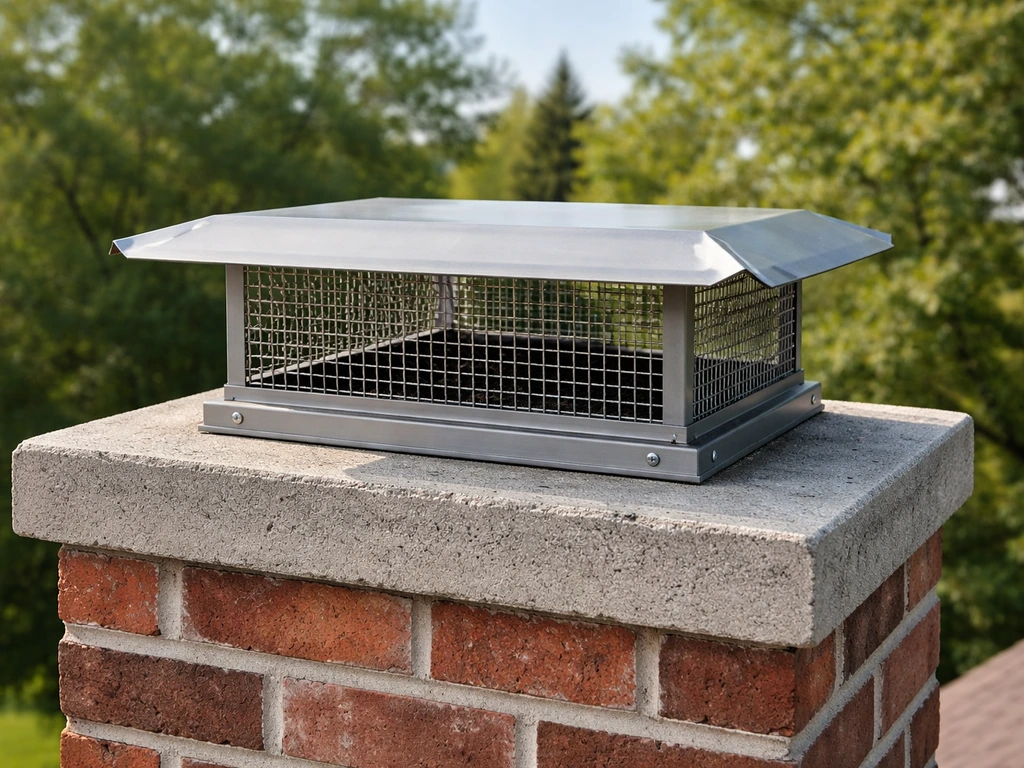
A bird in the chimney is almost always a proofing failure. Either the chimney has no cap, the cap is damaged or missing mesh, or there is a gap somewhere that gives birds access. Fixing this is not complicated, but it does require a proper inspection and the right hardware.
Chimney caps: the most important fix
The National Wildlife Control Training Program is unambiguous: every flue in a masonry chimney should be protected with a professionally manufactured chimney cap that meets your local fire code requirements. A good chimney cap covers the top of the flue opening with a solid top (to shed rain and debris) and wire mesh sides that block birds and other wildlife while still allowing exhaust to vent. Make sure the cap is correctly sized for your flue dimensions, securely fastened, and made from stainless steel or galvanized steel to resist corrosion. A poorly fitted or cheap cap can be dislodged by weather or wildlife pressure.
What to look for during an inspection
- Missing or damaged chimney cap: the most common entry point.
- Torn, rusted, or bent mesh on an existing cap: even small gaps are enough for a starling or sparrow.
- Cracked or missing mortar around the crown (the concrete or mortar layer at the top of the chimney): gaps here can allow entry at the flue edge.
- Loose or missing damper: a working damper at the bottom of the flue adds a second barrier and helps with energy efficiency.
- Droppings, feathers, or nesting material visible in or around the firebox: signs that birds have been entering regularly, not just once.
- Staining or debris on the chimney exterior: can indicate birds roosting or nesting near the top.
Choosing the right cap
| Cap Type | Best For | Key Consideration |
|---|---|---|
| Single-flue cap | One-flue chimneys, most common residential use | Must match flue dimensions exactly; available in stainless steel or galvanized steel |
| Multi-flue cap | Chimneys with two or more flues | Covers the entire chimney crown; better coverage but must fit precisely |
| Outside mount cap | Flues without a tile liner or with irregular openings | Mounts to the exterior of the chimney top; good for older masonry |
| Lyrebird or draft-assist cap | High-wind areas with downdraft problems | Improves airflow; still provides wildlife exclusion if mesh is intact |
Have the cap installed by a certified chimney sweep (CSIA-certified is a good benchmark) if you are not comfortable working on the roof. Fall risk is real, and a cap that is not properly seated can blow off in a storm and leave the flue open again.
When to call a wildlife professional
Some chimney bird situations are squarely in DIY territory. Others are not. Here is how to tell the difference.
| Situation | DIY or Professional? |
|---|---|
| Healthy bird in the room, no injuries | DIY: darken room, open exit, wait |
| Bird stuck in flue but sounds active | DIY first (wait it out), then call if no progress in a few hours |
| Injured bird, covered in soot, or juvenile | Call wildlife rehabilitator now |
| Bird species unknown and possibly protected | Call wildlife rehabilitator or state wildlife agency |
| Large droppings accumulation in firebox or flue | Call chimney sweep and possibly hazardous waste professional |
| Repeated entries (birds keep coming back) | Call chimney sweep or wildlife control operator for inspection and proofing |
| Bird is a chimney swift (protected nesting species) | Do not disturb; call USFWS or a licensed wildlife professional immediately |
Chimney swifts deserve a specific mention. They are a federally protected migratory species and they actively nest inside chimneys. If you hear a churring or chittering sound rather than typical bird distress sounds, and especially if it is late spring through summer, you may have swifts nesting rather than a trapped bird. Disturbing an active chimney swift nest is a federal offense under the Migratory Bird Treaty Act. In that case, you need to contact the U.S. Fish and Wildlife Service or a licensed wildlife professional before doing anything else.
What to tell the wildlife professional when you call
- Describe the bird as best you can: size, color, any visible markings, whether it can fly.
- Describe the chimney: masonry or prefabricated, approximate height, number of flues, whether there is an existing cap.
- Describe the sounds: scratching, flapping, chirping, or a distinctive call that might help identify the species.
- Note whether you have seen feathers, droppings, or nesting material in or around the fireplace before today.
- Tell them the time of year and whether this has happened before at your property.
Seasonal planning and maintenance checklist
Chimney bird incidents are not random. They peak at predictable times: spring and early summer when birds are actively nest-building, and fall when juvenile birds are dispersing and exploring. A simple seasonal inspection routine catches problems before a bird does.
Early spring (March to April)
- Inspect the chimney cap from the ground using binoculars. Look for missing sections, rust damage, or mesh gaps.
- Schedule a chimney sweep and inspection if you have not had one in the past 12 months.
- Check the damper from inside: it should seal properly when closed and open fully when operated.
- Look for fresh feathers, droppings, or nesting material in the firebox as signs of winter entry.
- Confirm your chimney cap is correctly seated and fastened after any winter storms.
Late spring to summer (May to August)
- Listen for chimney swift activity (chittering calls) at dusk. If swifts are using your chimney as a nesting site, note it and plan exclusion work for after the nesting season ends (typically September).
- Keep the damper closed when the fireplace is not in use.
- Do not install or repair a chimney cap during active nesting season if birds are present, as this may trap nestlings or violate federal law.
Fall (September to October)
- This is the ideal window to install or replace a chimney cap: nesting season is over, but before winter weather arrives.
- Have a professional chimney sweep clean the flue and inspect for cracks, loose mortar, or deterioration.
- Seal any gaps in the chimney crown with appropriate crown sealant or mortar.
- Confirm your chimney cap is installed and intact before lighting the first fire of the season.
Winter (November to February)
- Keep the damper closed when the fireplace is not in use.
- After any significant storm, do a visual inspection from the ground to confirm the cap is still in place.
- If you hear scratching in the chimney during cold weather, it may be a bird or small mammal seeking warmth. Follow the same response steps above.
Quick decision guide: what to do right now
If you are still reading because the bird is in your house right now, here is the shortest possible version of what to do in order. For the exact step-by-step, also see how to get a bird out of a wood stove, which follows a similar safe approach. If the bird is in a church building specifically, the same calm, light-based approach can help you safely resolve it how to get a bird out of a church. If you’re dealing with a bird in a chimney right now, follow these steps immediately so it can exit safely bird in chimney what to do.
- Get pets out of the room. Close the door behind them.
- Open one exterior window or door in the same room as the fireplace.
- Cover or close all other windows in the room.
- Turn off all lights in the room.
- Open the damper and fireplace doors slowly, then back away.
- Leave the room. Wait at least 20 to 30 minutes.
- If the bird exits on its own: close the fireplace, clean up, schedule a chimney cap inspection.
- If the bird is still in the room after 30 minutes: try the towel-drape method to gently carry it outside.
- If the bird is injured, covered in soot, or a juvenile: call a licensed wildlife rehabilitator before handling.
- If you suspect chimney swifts or a protected nesting species: stop everything and call the USFWS or a licensed wildlife professional.
The related problems of getting a bird out of the fireplace opening itself, dealing with a bird in a wood stove, or handling a situation in a large building like a church each have their own wrinkles, but the core logic is the same: reduce stress, create a clear exit with light and airflow, avoid contact unless necessary, and call a professional when the situation is beyond a straightforward release. The long-term fix, every time, is a properly installed chimney cap. That one piece of hardware prevents the vast majority of chimney bird incidents before they start.
FAQ
What if I open a window or door but the bird keeps flying around inside?
Turn off room lights and stay out of sight. If you can, create the brightest single exit by opening one exterior door or window near the fireplace and closing or shading other windows so the bird is not drawn toward darker corners. Give it 20 to 30 minutes before changing tactics.
Is it okay to use a towel to move the bird if it is not leaving on its own?
Do not chase it or try to “herd” it with a broom. If it lands and seems calm, drape a lightweight towel over it loosely to prevent sudden flapping, then carry it directly outside and release immediately. If it will not settle, continue leaving the exit bright and yourself out of the room.
How long should I wait before calling for help if the bird seems stuck in the chimney?
If the bird is stuck high or is making noise high in the flue, avoid reaching in from above. Leave the damper fully open, keep the room dark, and maintain the open exit route for longer periods (possibly up to a few hours) unless you can safely involve a trained professional.
What signs mean the bird is injured and I should not try to rehabilitate it?
Signs include obvious injury (bleeding, broken wings), extreme weakness, repeated crashes, or behavior that suggests it cannot fly out. In these cases, minimize handling and contact a licensed wildlife rehabilitator rather than trying to nurse it yourself.
If I temporarily house the bird, should I give it food or water?
You generally should not feed or water it. If you must move it briefly while you arrange help, place it in a ventilated cardboard box in a quiet, dark room at moderate temperature, and keep handling to an absolute minimum until the rehabilitator can take over.
Do I need to worry about the law if I capture the bird to help it?
No. Because many chimney birds are protected migratory species, capturing or harming the bird without the right authorization can create legal risk. The practical solution is to move it only as necessary, then contact a licensed wildlife rehabilitator.
How can I tell if the sounds in the chimney might be a nesting chimney swift instead of an emergency?
Chimney swifts are a key exception. If you hear churring or chittering rather than typical distress sounds, especially late spring through summer, it may be nesting and disturbing it can be a federal offense. Contact the U.S. Fish and Wildlife Service or a licensed wildlife professional before taking action.
What should I do overnight if the bird is injured and I cannot reach a wildlife rehabilitator today?
If the bird is active and you cannot reach a rehabilitator immediately, use a ventilated cardboard box with a loose lid and keep it in a quiet dark room. Contact a rehabilitator first thing in the morning, and do not leave it loose in your home overnight.
When is DIY cleanup not enough after the incident?
If droppings or debris appear heavy or the bird has been in the chimney long enough to suggest buildup, use professional help. Large accumulations of bird (or bat) droppings can require hazardous waste handling, so a chimney sweep and, if needed, a hazardous waste evaluation is the safer path.
What features should I look for in a chimney cap to prevent future birds?
A chimney cap should be correctly sized, securely fastened, and meet local fire code. The best caps have a solid top to shed debris and wire mesh sides to block wildlife while still venting exhaust. A cap that is loose, cheap, or incorrectly fitted can be displaced by weather or wildlife.
Should I install the chimney cap myself, or hire someone?
If you are not comfortable working on the roof, hire a qualified chimney professional for installation and fitment. Incorrect seating can leave gaps, and roof fall risk is real. A properly installed cap also needs to be checked after storms.
Who should I call if I cannot find a wildlife rehabilitator right away?
Call animal control or a local wildlife hotline if you cannot locate a rehabilitator quickly. Many areas also have after-hours lines or emergency routing through the state wildlife agency, which can help you decide the fastest safe option.
What is the correct way to handle the bird briefly without causing extra harm?
Move the bird only as necessary for immediate safety or transfer to a box, and keep the box in a quiet dark place with ventilation. Avoid squeezing or pressing the bird’s body, and release outdoors promptly once conditions and legality allow.
Next Article
How to Get a Bird Out of a Church Safely Step by Step
Step-by-step, humane guide to get a bird out of a church safely, prevent return, and know when to call experts.