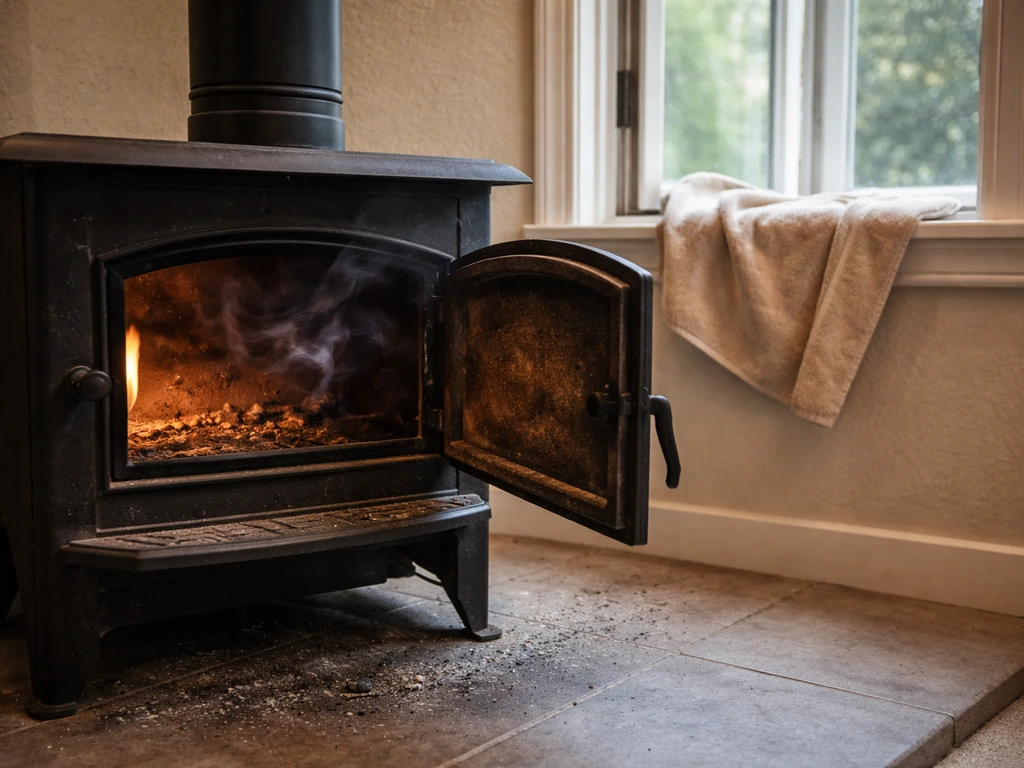
If you have a bird stuck in your chimney right now, start by closing off the fireplace opening, keeping the room dark and quiet, and opening a nearby exterior door so the bird has a clear, low-stress exit route. If you are dealing with a bird in chimney, follow these steps first to lower stress and help it exit safely bird in chimney what to do. In most cases you won't need to call anyone immediately, a calm environment and an open flue are enough to let the bird find its own way out. But if the bird is injured, covered in soot, a juvenile, or has been trapped for more than a few hours with no progress, you'll want to call blank" rel="noopener noreferrer">a licensed wildlife rehabilitator rather than animal control or a pest removal company.
Who to Call When a Bird Is Stuck in a Chimney
First things first: safety steps and what NOT to do
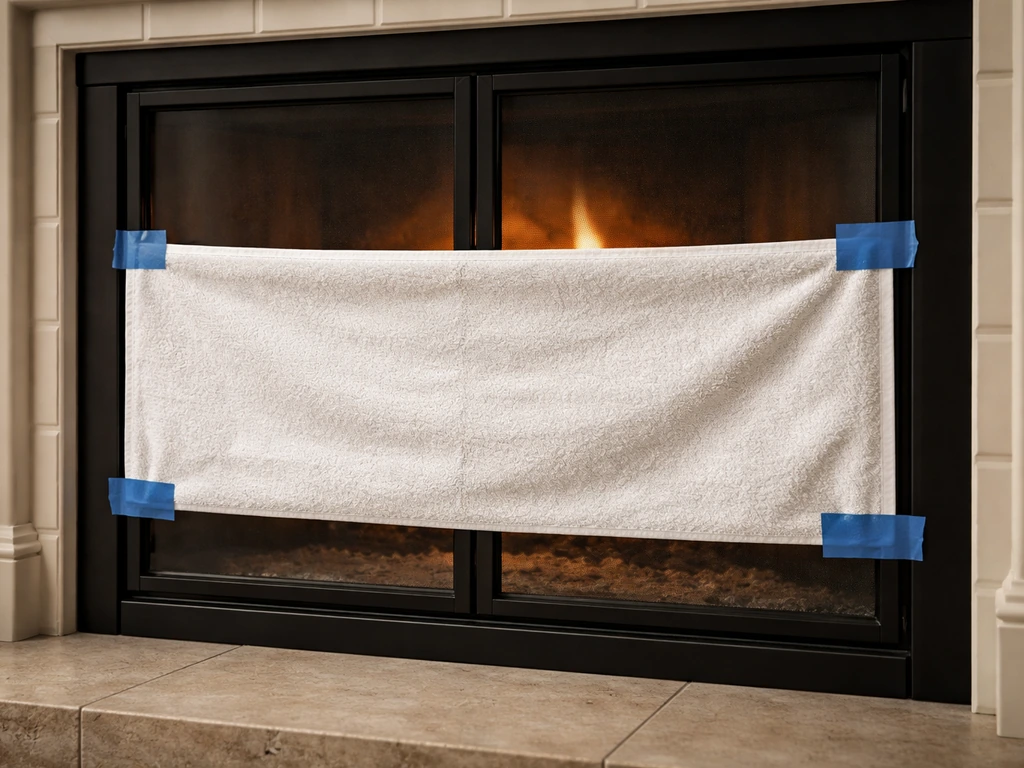
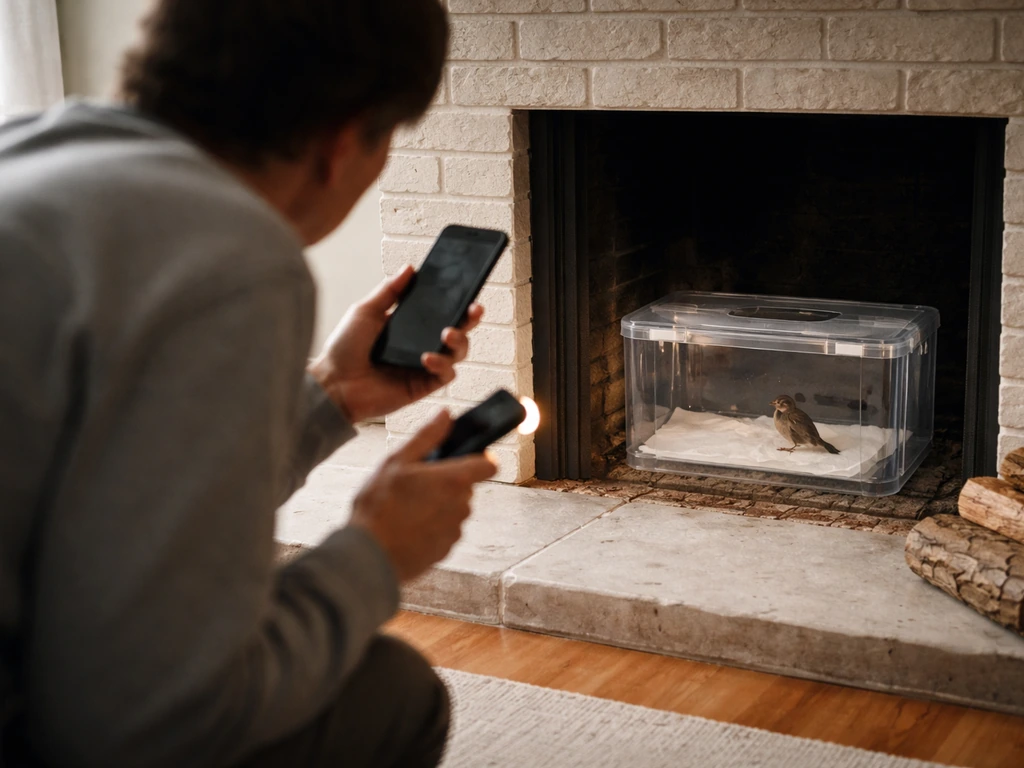
Before you do anything else, secure the fireplace opening. Close the glass doors or tape a sheet or towel across the front of the firebox so the bird can't suddenly fly into the room while you're figuring out next steps. This also protects you from falling soot if the bird is still flapping around in the flue.
Here's what you should actively avoid. These mistakes are common and they almost always make the situation worse.
- Do not light a fire. This will not drive the bird out — it will kill it or force it deeper into the flue. The Canadian Wildlife Federation is blunt about this: a fire will not magically un-trap the animal.
- Do not bang on the walls, yell, or use smoke, chemical repellents, or any kind of noise device to 'scare' the bird out. Panic causes injury.
- Do not try to grab the bird with your bare hands. Even small birds can scratch, and wild bird droppings carry pathogens including Histoplasma capsulatum, the fungus that causes histoplasmosis.
- Do not use a net to try to catch the bird inside the chimney or firebox. The Wisconsin Humane Society specifically flags this: a frightened bird will often rocket straight back up the flue when it sees the net, making the situation harder to resolve.
- Do not call a general pest control company as your first move. They are not trained for live humane bird release and may cause unnecessary harm.
- Do not assume the bird will sort itself out without any action on your part — especially if it's been silent for more than a few hours, which can mean it's injured or exhausted.
If you need to look up into the flue to assess the situation, put on safety glasses first. Falling soot and debris are a real hazard, and you don't want any of that in your eyes.
Quick DIY methods to help the bird find its own way out
The most effective approach is the low-light, open-exit method. It works with the bird's natural instinct to move toward light and open space, rather than against it.
- Close all interior doors to the room with the fireplace so the bird stays in one contained space if it enters the room.
- Open the damper fully. Use a flashlight first to check that the damper opens wide enough for the bird to pass through — some older dampers have a restricted opening that traps birds even when 'open.'
- Turn off all the lights in the room. Pull the curtains closed except for one window or an open exterior door at the far end of the room.
- Step back and leave the room. Keep the rest of the house as quiet as possible for at least 30 to 60 minutes.
- The bird should orient toward the light source and exit through the open door. Check back quietly after an hour.
- If the bird has come down into the firebox but hasn't moved into the room yet, you can carefully remove the barrier covering the fireplace opening to give it access to the room and the exit route.
This method works well for healthy adult birds. Chimney swifts are a common exception, they are federally protected migratory birds that nest inside chimneys intentionally, and if you hear a colony of chirping sounds rather than frantic flapping, you may be dealing with an active nest rather than a trapped bird. That changes the entire approach, and removing or disturbing them is illegal without the right permits.
Who to call and when
Knowing who to call saves you time and gets the right help to the bird faster. The short version: a licensed wildlife rehabilitator is your first call for any injured, sick, or juvenile bird. For a healthy adult bird that simply can't find its way out, you may not need to call anyone, but if the DIY method fails, a wildlife removal professional who uses humane methods is the right next step. If you are specifically dealing with a bird in a wood stove flue, the steps and who to call are similar how to get a bird out of a wood stove. A wildlife removal professional can also help if you cannot get the bird to exit using DIY methods how to get a bird out of the fireplace (DIY methods).
Licensed wildlife rehabilitators
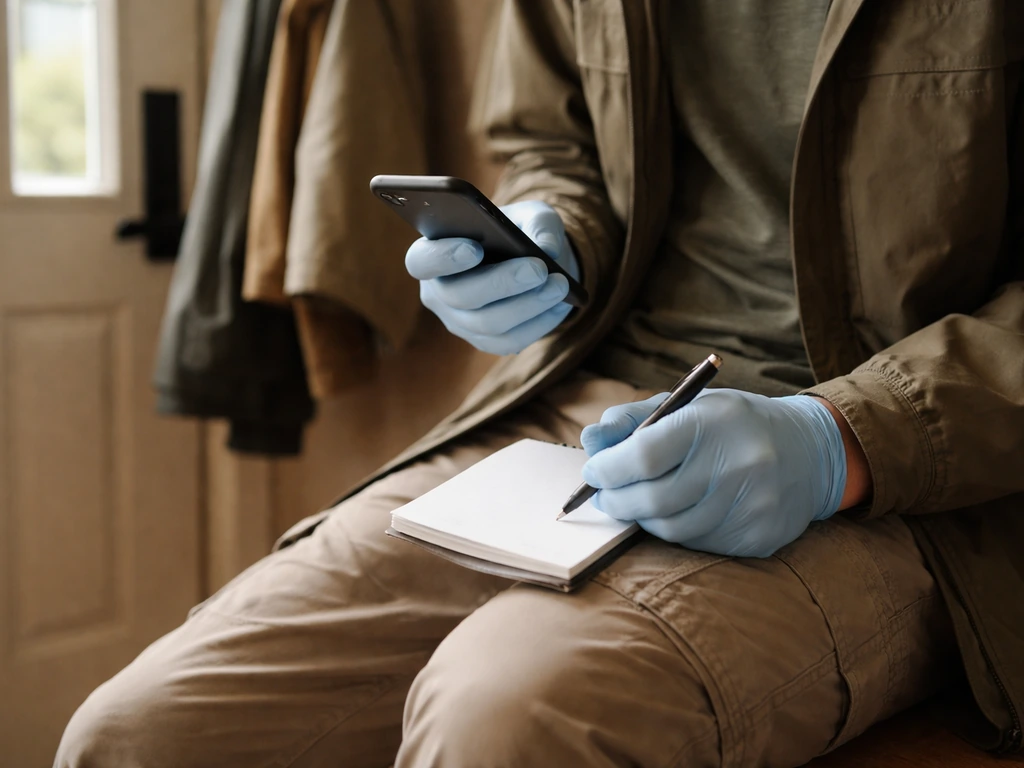
This is the right call when the bird is injured, covered in soot, acting lethargic, or appears to be a juvenile. If a bird is injured, the Canadian Wildlife Federation’s chimney-wildlife protocol advises calling a local wildlife rehabilitation centre rather than relying on DIY measures. Wildlife rehabilitators are specifically trained for this. In the US, any rehabilitator who handles migratory birds must hold a Federal Migratory Bird Rehabilitation permit, so when you call, you can confirm they're properly licensed. Your state wildlife agency's website typically maintains a searchable directory. In the UK, the RSPCA operates a rescue line and can dispatch trained animal rescuers. In Canada, your provincial wildlife authority can direct you to a licensed rehabilitation centre.
When you call, have this information ready: your full address, the species if you can identify it (or just describe it), how long you think the bird has been stuck, whether it has entered the firebox or is still in the flue, and whether there are any signs of injury. The more specific you can be, the faster they can assess whether an in-person response is needed.
Humane wildlife removal professionals
If the bird is a healthy adult and the DIY method hasn't worked after a couple of hours, a humane wildlife removal specialist can help. Look specifically for someone who advertises humane live bird removal, not a general exterminator. Ask directly how they handle live bird releases before you book. These professionals also have the equipment and experience to safely access the flue if needed.
Animal control
Municipal animal control is rarely the right first call for a bird in a chimney. Most animal control departments are set up to handle domestic animals and immediate public safety threats, not wildlife rescue. They may refer you elsewhere. That said, if you can't reach a rehabilitator and the bird is clearly in distress, calling animal control is better than waiting and doing nothing, they can often connect you with the right local resource.
Chimney sweeps and roofing contractors
A chimney professional is not the right call for the rescue itself, but they are exactly the right call afterward, to inspect the flue for damage, install a cap, and make sure the chimney is structurally sound. To get a bird out of a church safely, follow the same humane chimney-and-firebox rescue steps, then address the flue so it does not happen again how to get a bird out of a church. If the bird is inaccessible because of a structural obstruction in the flue and neither you nor a wildlife removal specialist can reach it, a chimney sweep working in coordination with a rehabilitator may be the only way to safely access the bird. Never have a chimney professional open the flue for a gas appliance if you're not sure about the gas supply, the RSPCA notes that even their own rescuers cannot work around active gas fittings, and the same principle applies here.
DIY or escalate? A quick decision guide
Use this table to quickly decide what level of response your situation needs.
| Situation | Recommended action |
|---|---|
| Healthy adult bird, actively moving, no injury signs | Try DIY low-light/open-exit method for 1-2 hours |
| Bird has entered the firebox, seems alert and strong | Remove fireplace barrier, dim room, open exterior door |
| Bird is covered in soot, lethargic, or won't move | Call a licensed wildlife rehabilitator immediately |
| Bird appears injured (drooping wing, bleeding, limping) | Call a licensed wildlife rehabilitator immediately |
| Bird appears to be a juvenile (fluffy, underdeveloped feathers) | Call a licensed wildlife rehabilitator for advice before acting |
| DIY method hasn't worked after 2+ hours, bird still appears healthy | Call a humane wildlife removal professional |
| Sounds like multiple birds or a colony (chirping, not flapping) | Do not disturb — likely chimney swifts nesting; call a wildlife rehabilitator for guidance on protected species |
| Bird is inaccessible due to flue obstruction | Call humane wildlife removal and a chimney sweep to coordinate access |
After the bird is out: cleaning up and checking for damage
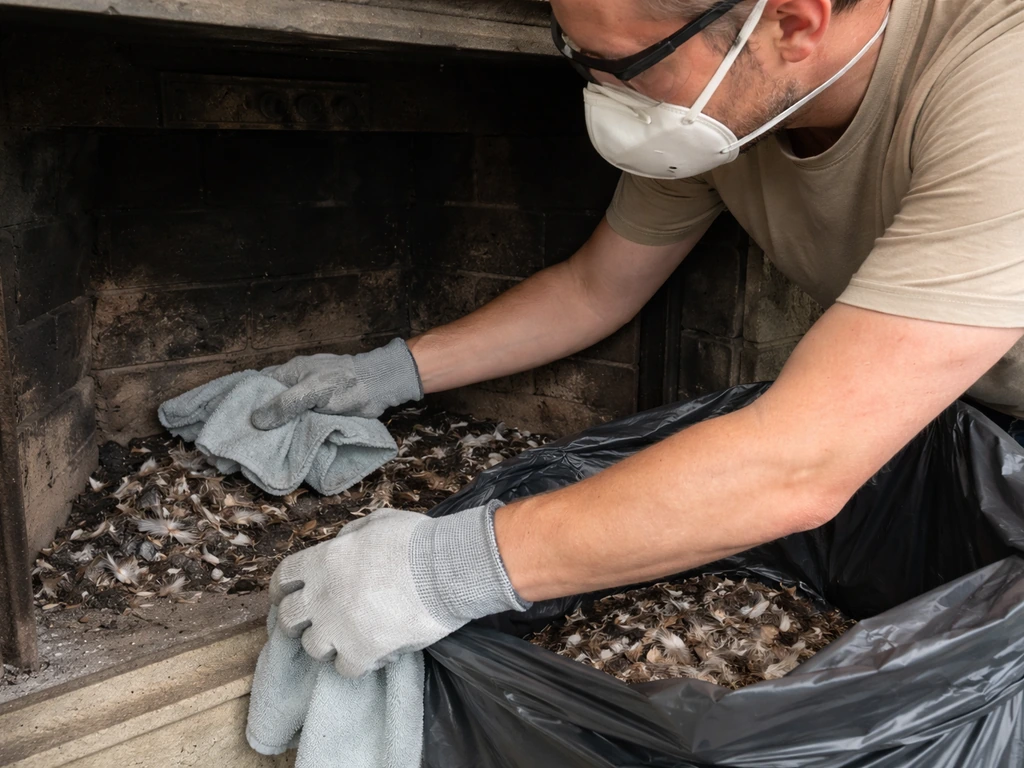
Once the bird is gone, don't just close the damper and move on. Bird droppings and feathers inside your chimney and firebox carry real health risks, and the incident may have flagged a structural issue worth addressing.
Cleaning safely
Put on gloves, safety glasses, and an N95 respirator before handling any droppings or soot-covered debris. This is not overcaution, the CDC's guidance on histoplasmosis specifically recommends respiratory protection during cleanup activities that disturb dried bird droppings, because the fungal spores become airborne when disturbed. Dampen any droppings lightly before sweeping or wiping to reduce dust. Bag everything in a sealed plastic bag and dispose of it in an outdoor bin. Wash your hands thoroughly afterward, even if you wore gloves.
Wipe down any surfaces in the room that the bird may have contacted. If the bird spent time in the firebox, the inside of the firebox should be cleaned before you next use the fireplace. A chimney sweep can do this as part of a post-incident inspection.
Checking for structural damage
Book a chimney inspection after any bird entry incident, even if everything looks fine from below. A bird that's been in the flue for hours or longer can dislodge mortar, damage the damper plate, or leave debris that creates a fire hazard. A certified chimney sweep can inspect the full length of the flue and confirm the damper seals properly, which matters both for fire safety and for keeping future wildlife out.
How to stop this from happening again
A bird in your chimney is almost always a preventable event. Open, uncapped chimneys are exactly what the Audubon Society describes as 'death traps' for birds and other wildlife, the vertical opening looks like a natural cavity to a bird scouting for a nest site or shelter, and once inside, the smooth walls and confined space make self-rescue nearly impossible.
Install a chimney cap
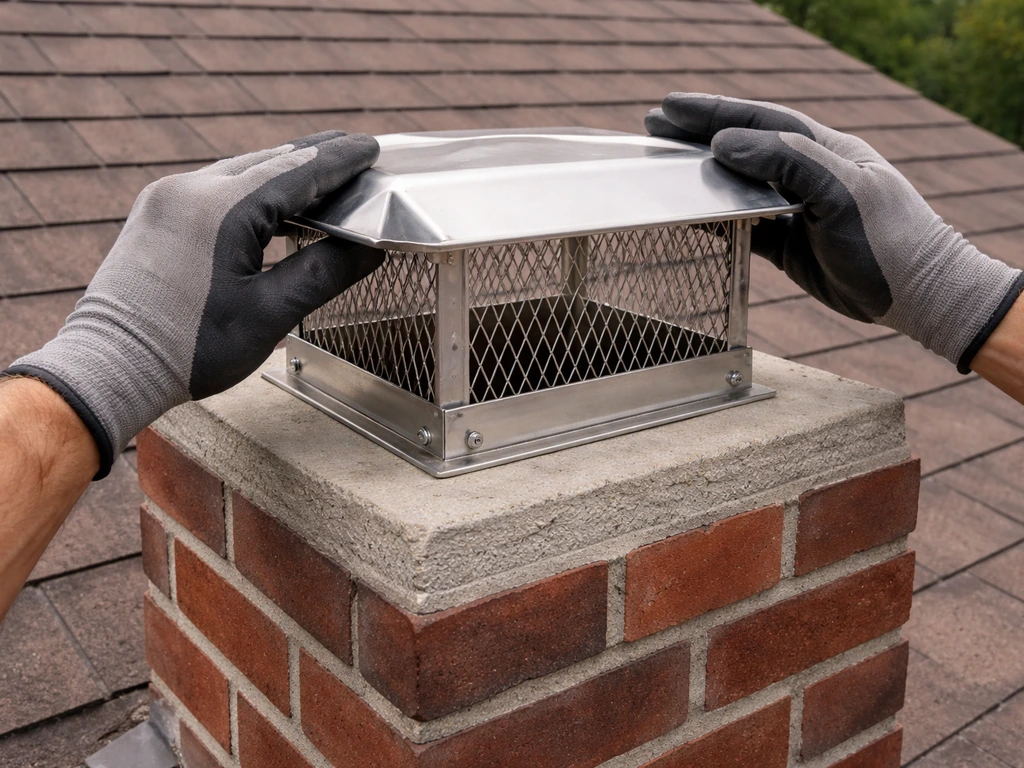
A properly fitted chimney cap with mesh sides is the single most effective prevention measure. It keeps birds, squirrels, and raccoons out while still allowing smoke and gases to exit. Make sure the mesh is fine enough to exclude small birds but coarse enough to avoid restricting airflow, a chimney sweep can advise on the right spec for your flue size and fuel type. For gas appliances with vertical flue pipes, a bird-proof terminal cover serves the same purpose.
Schedule annual inspections
Have your chimney inspected and swept at least once a year. The best time to schedule this is late winter or early spring, before nesting season begins, so you can confirm the cap is intact and the flue is clear before birds start actively looking for nesting sites. If you have a wood-burning fireplace used regularly, a post-season inspection in late autumn is also a good habit.
Seasonal planning notes
- Spring (March to June): Peak nesting season. Inspect and cap before this window. If chimney swifts or other protected species are already nesting, you must wait until the young have fledged before installing a cap — disturbing an active nest of most migratory birds is a federal offense in the US.
- Summer: Check that cap mesh hasn't been damaged by storms or attempted entry by larger birds or squirrels.
- Autumn (September to November): Second high-risk window as birds seek warm shelter heading into winter. Confirm cap is secure before temperatures drop.
- Winter: Less active for birds, but a good time to schedule a chimney sweep if you haven't done so, and to confirm the damper plate seals fully when closed.
A note on protected species and legal obligations
In the US, most wild birds are protected under the Migratory Bird Treaty Act, which means you cannot legally harm, capture, or disturb them, including their nests and eggs, without the appropriate federal or state permits. This applies to chimney swifts, which nest exclusively in vertical structures like chimneys and are a protected species in significant decline. If you suspect you have an active chimney swift colony, stop any exclusion or removal work immediately and contact a licensed wildlife rehabilitator or your state wildlife agency for guidance on what you can legally do and when.
FAQ
What if I do the DIY steps but the bird still will not come out?
If the bird is still alive and you can hear it moving, keep the flue open and the room dark while you create an exit path (open an exterior door near the fireplace area). Call for help right away if the bird shows visible injury (bleeding, broken wing), appears slow or unresponsive, or keeps crashing into the firebox openings without making progress after a couple of hours.
Does “who to call” change if the bird is stuck in a wood stove or a fireplace?
Yes, but it depends on what kind of “chimney.” The same low-stress exit setup applies to wood stoves and masonry fireplaces: darken the room, keep the flue accessible, and prevent sudden access to the room. If it is a bird in a gas appliance flue, do not attempt to remove it yourself or have a chimney pro open fittings without confirming safe gas conditions.
Can I use deterrents like spray or smoke to get the bird out faster?
Don’t use smoke, sprays, or household chemicals to “drive it out.” These can burn the bird, worsen stress, and create additional residue in the flue and firebox. The safer replacement is the low-light method with a clear path to the outdoors, then escalation to a wildlife rehabilitator or humane removal specialist if there is no improvement.
What should I do if the “bird” seems like part of a nest, not a trapped single bird?
If you suspect an active chimney swift nest, stop all exclusion or removal actions immediately. Instead, contact a licensed wildlife rehabilitator or your state wildlife agency for guidance on what is legal and when. Even well-intended attempts to block entrances during nesting can put protected birds at risk.
Should I call animal control if I cannot find a wildlife rehabilitator?
Animal control is usually a second choice because many departments prioritize domestic animals and immediate public safety. If you cannot reach a wildlife rehabilitator and the bird is clearly in distress, call animal control so they can route you to the correct local wildlife resource or emergency contact.
How do I decide between a wildlife rehabilitator and a humane removal specialist?
A licensed wildlife rehabilitator is the safest first call for injured, sick, sooty, juvenile, or lethargic birds, or if the bird has been trapped for hours. For a healthy adult that cannot find its way out after DIY fails, a humane live bird removal specialist may be appropriate, but confirm they specialize in live, humane removal and releases before booking.
What details should I have ready when I call for help?
Before calling, note your exact address, your best estimate of how long the bird has been stuck, where it is located (in the flue vs. in the firebox), and any visible injury or excessive soot. If possible, identify the species or describe size, color, and behavior, because permits and handling requirements can differ by species.
Is it safe to clean up after the bird is gone without special protection?
Yes. After the incident, you should plan for cleanup precautions because dried droppings can create airborne fungal spores. Wear gloves, safety glasses, and an N95 respirator, lightly dampen debris before wiping or sweeping to reduce dust, bag waste sealed, and wash hands thoroughly afterward.
Do I really need a chimney inspection if I cleared the area and everything looks normal?
After a bird entry, you should arrange a chimney inspection even if it seems fine. A bird in the flue for hours can dislodge debris, affect the damper plate, or leave obstructions that raise fire risk and keep future wildlife out.
Should I call a chimney sweep during the rescue?
Chimney professionals are best used for what comes after rescue, like flue inspection, cap installation, and confirming the damper seals properly. Do not ask them to open or modify the flue for a gas appliance without confirming safe gas conditions first.
What prevention measure helps the most after a bird gets into the chimney?
For long-term prevention, the most effective step is installing a correctly sized chimney cap with mesh sides that excludes small birds while still allowing airflow. The right mesh spec depends on your flue size and fuel type, so ask a chimney sweep for guidance after the inspection.
How to Get a Bird Out of a Wood Stove Safely
Emergency, humane steps to safely remove a bird from a wood stove, plus cleaning, prevention, and when to call wildlife