If you can hear a bird flapping or scratching in your chimney right now, the short answer is: don't panic, don't light a fire, and don't start poking around blindly. If a bird has actually fallen down your chimney, the steps below will help you handle the situation safely and without causing harm what to do if a bird falls down your chimney. Most chimney bird situations are solvable in an afternoon with a calm, methodical approach.
How to Get a Bird Out of a Chimney Safely and Humanely
Maya Carver
19 Apr 2026
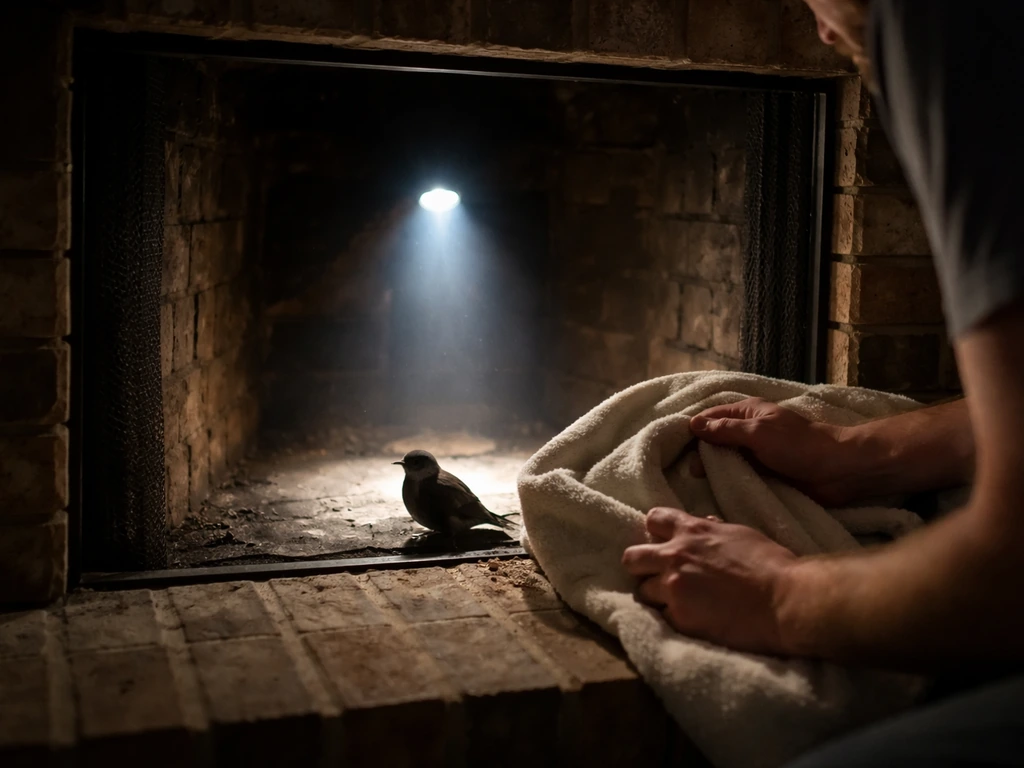
This guide walks you through every scenario: live bird, dead bird, active nest, open fireplace, sealed chimney, or chimney pipe. If the bird is somewhere unexpected like a church sanctuary, the goal is still the same as in how to get a bird out of a church: get it safely out without harming it. It also tells you exactly when to stop DIY and make a phone call.
Quick Safety Check and What Not to Do First
Before you do anything else, run through this mental checklist. The actions you avoid in the first five minutes matter as much as the ones you take.
- Do NOT light a fire or turn on a gas appliance. A panicked, disoriented bird will fly straight into flames, and smoke inhalation kills quickly.
- Do NOT bang on the chimney walls, yell, or use a vacuum near the flue. Stress can cause a bird to wedge itself deeper into the flue or go into shock.
- Do NOT reach blindly into a dark flue. Sharp metal edges, creosote deposits, and an unpredictably thrashing bird can all injure you.
- Do NOT assume it is a chimney swift and immediately try to evict it — if nesting swifts are present, disturbing them may be illegal (more on that below).
- Do close off the room from the rest of the house before you open any access point. If the bird escapes into a living space, retrieval becomes significantly harder.
Now do a quick situation assessment. Is the bird alive or dead? Is this an open masonry fireplace with a damper, a sealed decorative fireplace, or a metal chimney pipe connected to a wood stove or boiler? If you are dealing with an open masonry fireplace, the steps for how to get a bird out of the fireplace will differ from a sealed chimney or chimney pipe, so match the method to your setup.
If you are dealing with a bird in the chimney, the right steps depend on whether the flue is open or closed, so follow a bird-in-chimney checklist how to get a bird out of the fireplace. Is there a nest involved? Your answers determine which section below to follow.
If you are dealing with a bird that has already come through the fireplace opening and into the room, that is a slightly different problem covered separately, but the same safety principles apply.
PPE you should grab before you start
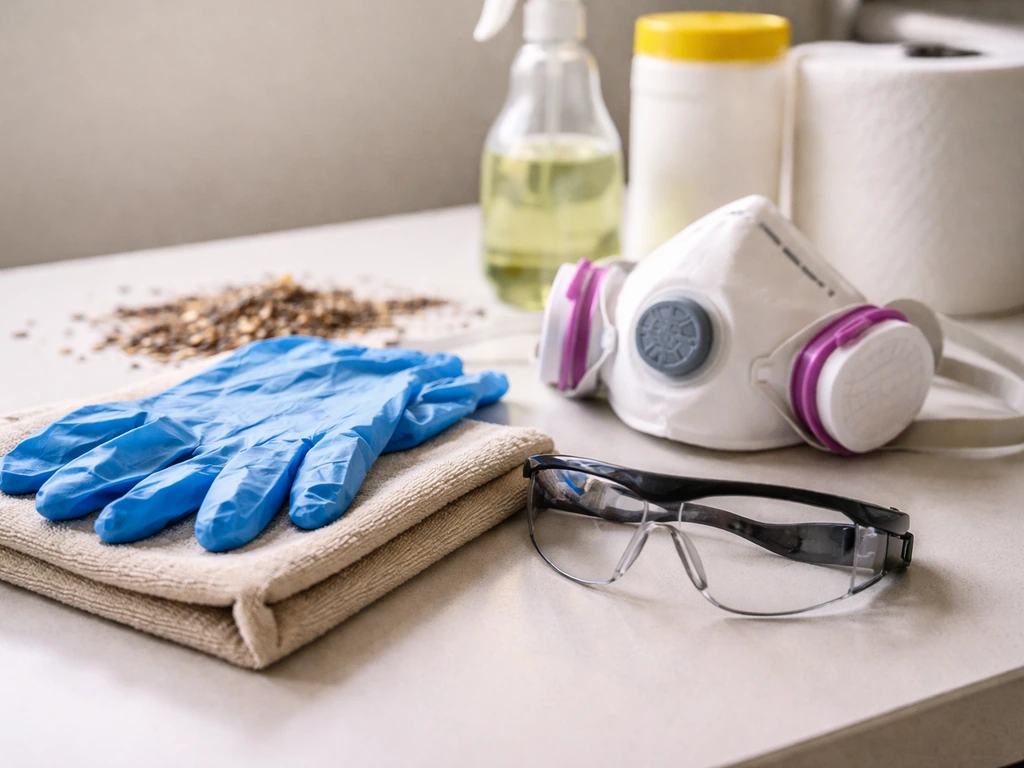
- Disposable nitrile or rubber gloves (bird droppings can carry salmonella and psittacosis)
- N95 or P100 dust mask (dried guano is a respiratory hazard)
- Safety glasses or goggles
- Old clothes or a coverall you can wash immediately
- A torch/flashlight with fresh batteries
Getting a Live Bird Out: Step-by-Step
The goal here is to give the bird a clear, dark exit route and a bright escape target. Birds instinctively move toward light, so you are working with their natural behavior rather than against it.
- Close and seal off the room. Shut every internal door and block gaps under them with towels. If the bird drops into the firebox, you want it contained in one room, not flying through the house.
- Close the damper if it is currently open, or if the bird is above the damper. If the bird is already below the damper (in the firebox), skip this step.
- Darken the room completely. Close blinds, turn off lights. The only light source should be the one you deliberately create as an exit.
- Open a window or exterior door fully, remove any screen, and position yourself out of the bird's flight path. Stand to the side, not directly in front of the opening.
- Open the fireplace damper slowly and step back. The bird will see light from the open window and, in most cases, will fly out within 10 to 30 minutes.
- If the bird lands in the firebox but won't fly out on its own, place a large cardboard box or laundry basket over it gently, slide a piece of stiff cardboard underneath, and carry it outside. Release it at ground level in a sheltered spot away from traffic.
- Once the bird is out, close the damper and inspect the cap or crown from ground level with binoculars to identify how entry was possible.
If the bird has been in the flue for more than a few hours it may be exhausted. Exhausted birds sometimes need 15 to 30 minutes sitting quietly in a dark, ventilated box before they recover enough to fly. Place the box in a quiet outdoor area, open one flap, and give it space. If it does not fly away within an hour, contact a licensed wildlife rehabilitator.
What if the bird won't leave the flue at all?
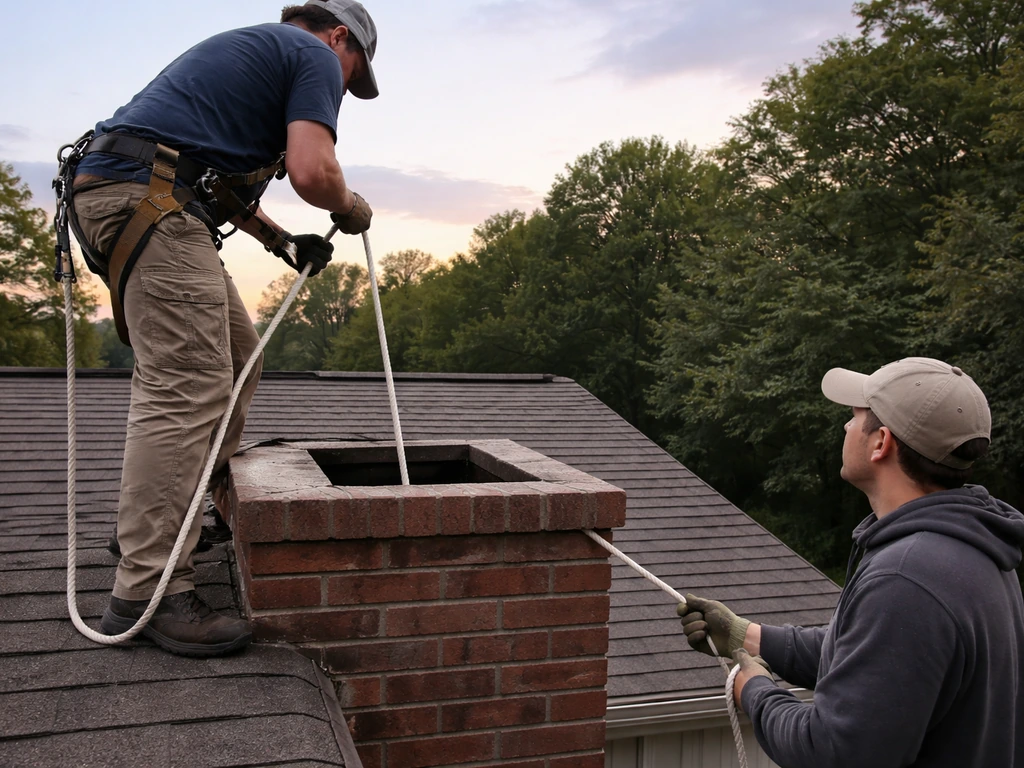
Sometimes a bird is lodged higher in the flue and simply cannot find the damper opening. In that case, lower a rope or thick cord down from the chimney top (with someone safely on the roof or using a chimney brush rod from below) so the bird has something to grip and climb. Do not lower anything with loops or snags that could trap it. If roof access is not safe, call a chimney sweep, who already has the equipment and ladder setup to work at the crown safely.
If It's a Closed Chimney or Chimney Pipe: Access and Release
Sealed or decorative chimneys, and metal chimney pipes on wood stoves, boilers, and multi-fuel appliances, present a different challenge because there is no damper to open. The bird is essentially inside a metal or masonry tube with no obvious exit at the bottom.
Sealed masonry chimney (no working fireplace)
Look for a removable access plate or inspection hatch, usually a small metal or plasterboard panel set into the breast of the chimney. Unscrew or pry this open carefully, darken the room, open a window, and give the bird a light-guided exit route as described above. If there is no access hatch and you cannot identify one, do not start cutting into walls yourself. This is a job for a chimney professional who can create a proper access point without structural damage.
Metal chimney pipe (wood stove, log burner, boiler flue)
This is the scenario where caution matters most. The RSPCA is explicit: [rescue teams cannot remove birds trapped behind gas appliances because they are not qualified to work on gas fittings](https://www. rspca. org.
uk/adviceandwelfare/wildlife/birds/trapped). The same logic applies to any sealed flue connected to a live appliance. Do not disconnect sections of a gas or oil flue yourself. For a wood stove, if the stove is cold and has not been used in 24 hours, you can open the stove door and the air-wash vent fully, darken the room, and open a window.
For a wood stove with a sealed flue or chimney pipe, this is the same kind of situation as how to get a bird out of a wood stove safely. Many birds will descend into the firebox and exit through the stove door. If the pipe connects to a boiler or gas appliance, call a registered gas engineer and a wildlife rehabilitator simultaneously: the engineer handles the access, the rehabilitator handles the bird.
For facility managers dealing with large commercial flue stacks or mechanical ventilation ducts, the same escalation rule applies: isolate the appliance, do not attempt field repairs on live systems, and bring in both a building services engineer and a licensed wildlife removal company.
Removing a Bird Nest from the Chimney
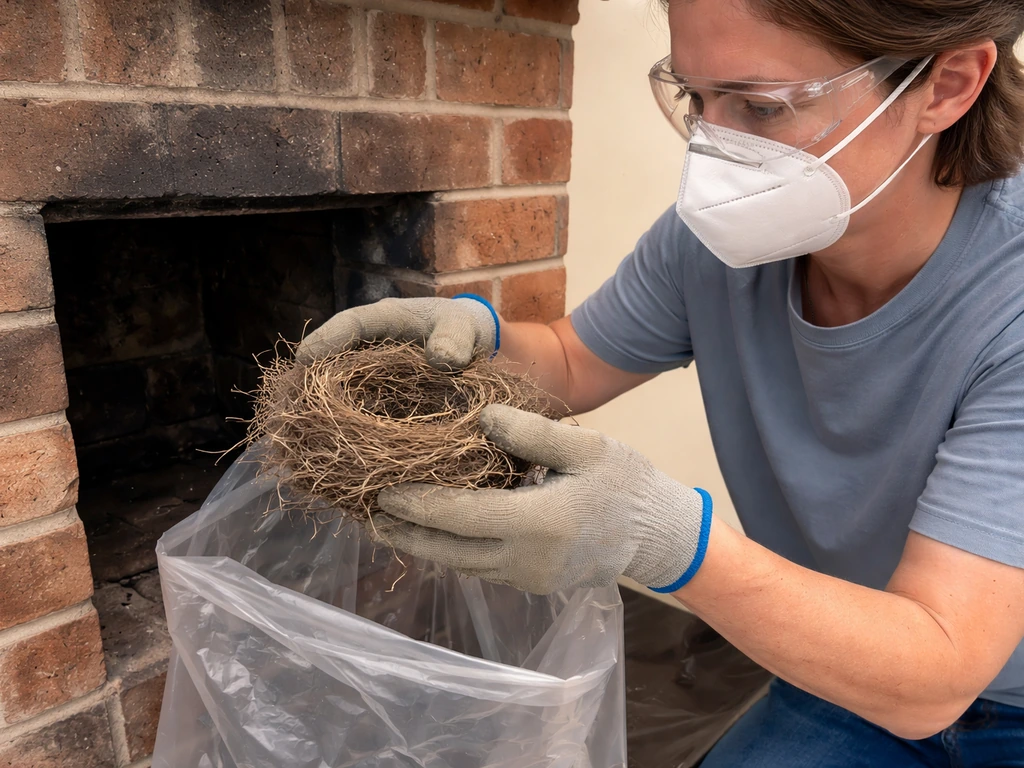
This section is important, and it comes with a firm legal warning before any DIY steps.
Check the legal status first
In the United States, the Migratory Bird Treaty Act (MBTA) protects the overwhelming majority of native wild bird species. Under 50 CFR § 21. 12, if an active nest with eggs or live nestlings is present, you must seek the assistance of a federally permitted migratory bird rehabilitator before doing anything to it. You cannot legally remove an active nest on your own.
Chimney swifts, in particular, are a common chimney-nesting species and are fully MBTA-protected. In the UK, the Wildlife and Countryside Act 1981 makes it illegal to intentionally or recklessly disturb a Schedule 1 bird at its nest, and in the EU the Birds Directive (2009/147/EC) prohibits deliberate destruction of nests or eggs across all wild bird species. The practical rule everywhere is this: if eggs or chicks are present, stop and call for professional guidance.
There is one meaningful exception under US federal law. USFWS guidance states that the public does not require a federal permit to humanely remove a trapped bird from inside a residence or commercial building if the bird poses a health risk, is injuring people, or may injure itself. This covers a bird that has fallen into your living space, but it does not grant a blanket right to remove an occupied nest from your flue. When in doubt, call before you act.
Removing an inactive nest (no eggs, no chicks, outside breeding season)
An inactive nest is fair game to remove yourself, and doing so is actually good chimney maintenance. In North America, most songbirds breed between March and August, so late autumn and winter are the safest window to clear nest material. In the UK, the breeding season runs roughly from February to August.
- Put on your full PPE: gloves, N95 mask, safety glasses.
- Lay a drop cloth or bin bags in the fireplace and immediately below the flue opening.
- Use a chimney brush rod set from below to dislodge the nest, or hire a sweep to do it from the top with a vacuum-assisted system (much less mess).
- Bag all nest material immediately in a sealed plastic bag and dispose of it in your outdoor bin, not a compost heap. Nest material carries mites, bird lice, and potentially Histoplasma fungal spores.
- Shine a torch up the flue and inspect for remaining debris, damage, or blockage before closing up.
- Install a chimney cap immediately after cleaning (see the prevention section below) so you are not repeating this next season.
Removing a Dead Bird from the Chimney
A dead bird in a chimney announces itself with a smell that gets noticeably worse on warm days. Histoplasmosis is caused by breathing Histoplasma spores from the environment, which can be spread in bird and bat droppings that mix with soil. The carcass can also attract blowflies, which will breed in the flue and eventually find their way into the house. Deal with it as soon as you locate it.
Locating the carcass
Shine a torch up from the firebox. Many birds die on the smoke shelf (the ledge just above the damper) or become wedged in a narrowing of the flue. If you can see the bird and reach it safely from below, use long-handled tongs or a flexible grabber tool. Do not lean your head and shoulders into a closed flue space: you risk getting stuck, and the concentration of decomposition gases directly above a carcass can be briefly disorienting.
Retrieval and cleanup steps
- Full PPE on before you open the damper or firebox: gloves, mask, glasses.
- Open the firebox slowly. Place drop cloths directly below to catch debris.
- Remove the carcass using tongs or a grabber. Double-bag it in sealed plastic bags and place in your outdoor bin. Check local regulations: in some areas, bird carcasses should be reported to wildlife authorities if the cause of death is unknown (disease surveillance programs).
- Spray the affected area of the flue with an enzyme-based odor eliminator. Avoid bleach inside a masonry flue as it can interact badly with creosote.
- If the bird was above your reach and you cannot retrieve it with a rod or brush, a chimney sweep with a CCTV flue camera can locate and extract it without unnecessary mess.
- After removal, open windows to ventilate the room for at least an hour.
- Schedule a full flue inspection and sweep before you next use the fireplace, especially if decomposition material has fallen onto the smoke shelf or into the firebox.
If the smell persists after removal, the cause is usually residual fluids that have soaked into porous masonry. A chimney sweep can apply a specialist sealer, or you can use a commercial odor-block paint on accessible brickwork inside the firebox.
When to Call a Professional (and Which One)
Knowing when to stop DIY is not a failure; it is the right call in several specific situations. The two types of professional you might need are a licensed wildlife rehabilitator or removal company, and a chimney sweep or building services engineer. Sometimes you need both. If you are unsure which expert route to take, use who to call when bird stuck in chimney to match the right professional to your chimney type and bird situation.
| Situation | Who to Call | Why |
|---|---|---|
| Active nest with eggs or chicks present | Licensed wildlife rehabilitator | Legally required under MBTA (US) / Wildlife and Countryside Act (UK) / EU Birds Directive |
| Chimney swift or other MBTA-protected species confirmed | Licensed wildlife rehabilitator | Removal without a federal permit is illegal in the US |
| Bird trapped behind gas appliance or sealed boiler flue | Registered gas engineer + wildlife rehabilitator | RSPCA and safety guidance: unqualified personnel must not work on gas fittings |
| Bird injured, unable to fly after release | Licensed wildlife rehabilitator | USFWS directs injured/orphaned wildlife cases to licensed rehabilitators only |
| Dead bird inaccessible, carcass above reach, CCTV needed | Chimney sweep | Specialist equipment needed; prevent unnecessary structural disturbance |
| Nest blockage causing partial or full flue obstruction | Chimney sweep | Fire safety risk; a blocked flue can cause carbon monoxide buildup |
| No safe roof access for cap installation or inspection | Chimney sweep or roofer | Fall risk; working at height requires appropriate safety equipment |
| Facility/commercial building, large flue stack | Building services engineer + wildlife removal company | Regulatory compliance and liability require professional sign-off |
When you call a wildlife rehabilitator, give them the species if you can identify it, the bird's approximate condition (alive and active, alive but lethargic, injured, dead), how long it has been in the chimney, and what type of chimney or appliance is involved. The more precise you are, the faster they can advise or dispatch help. The USFWS INW Reference for Wildlife Calls page and the Wisconsin Humane Society both maintain resources for finding your nearest licensed rehabilitator.
A note on chimney swifts specifically
Chimney swifts are one of the most commonly reported chimney birds in North America, particularly in the eastern and central United States. They build nests from small sticks bonded with saliva and genuinely rely on chimneys as substitute habitat for hollow trees. Under the MBTA, their nests, eggs, and young are fully protected. If you have swifts nesting in your chimney, the correct approach is to leave them alone until the young have fledged (usually 6 to 8 weeks after hatching), then install a cap at the end of the season. Contact the Houston Humane Society Wildlife Center or a local swift conservation group for species-specific guidance if you are unsure.
How to Stop Birds Getting Into Your Chimney Again
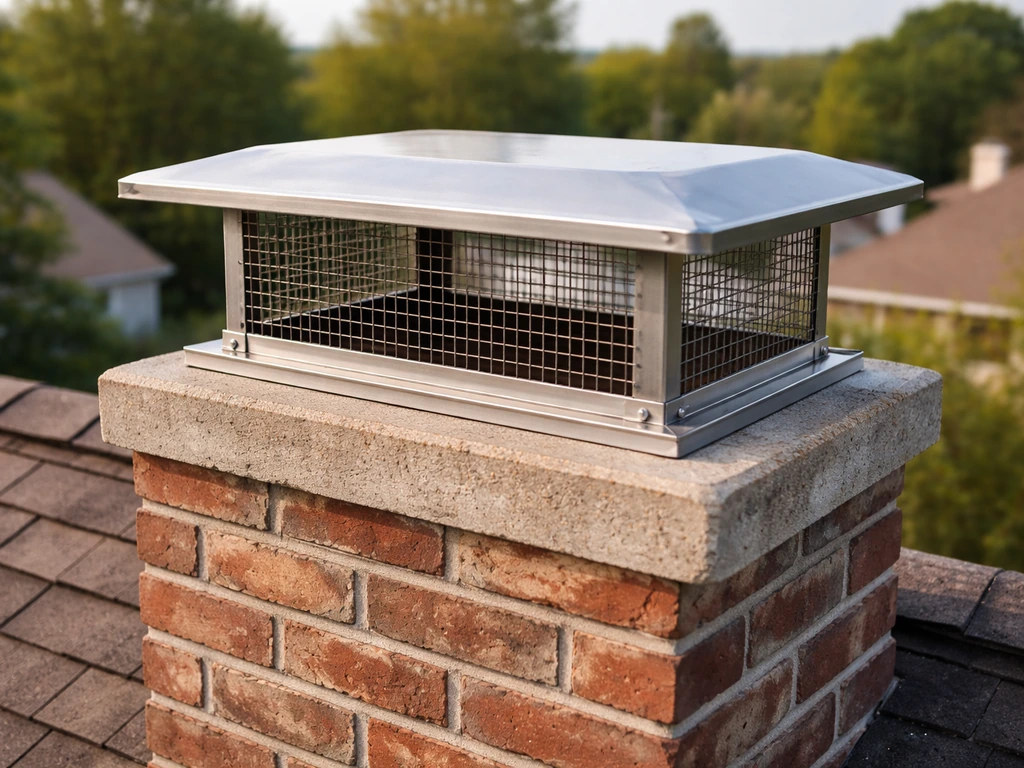
Every chimney bird problem is a gap problem. Birds do not choose your flue randomly; they find it because the top is open, damaged, or improperly capped. A single afternoon of preventive work done at the right time of year will end repeat incidents.
Chimney caps and guards: your main line of defense
A correctly sized and installed chimney cap covers the flue opening with a mesh surround that allows smoke and gases to vent freely while physically blocking birds, squirrels, and rain. Standard stainless steel caps with 9mm to 12mm (roughly 3/8 inch) mesh openings are effective against all common chimney birds. Heavy-gauge stainless steel or galvanized steel lasts 20 or more years; aluminum caps are cheaper but corrode faster and are more easily deformed by nesting material pressure. Avoid caps with mesh openings larger than 12mm: house sparrows and starlings can squeeze through anything much wider than that.
For multi-flue chimneys, a full-width chase cover (a flat or slightly pitched metal cover that spans the entire chimney crown and has individual capped outlets for each flue) is a better solution than individual caps, because it eliminates the gaps between flue liners where birds can land and probe for entry. These need to be custom-fitted to your chimney dimensions and are typically installed by a chimney sweep or metalworker.
Seasonal timing for cap installation and inspections
The best window to install or replace a chimney cap in North America and the UK is late summer to early autumn: after the main breeding season ends (August to September) and before the heating season begins. This ensures no active nests are present when you access the flue, and the cap is in place before birds start scouting for winter roost sites in October and November.
| Time of Year | Recommended Action |
|---|---|
| Late August to September | Inspect and sweep chimney, remove any inactive nests, install or replace cap |
| October to November | Check cap is secure before lighting season; look for storm damage |
| February to March | Inspect from ground level with binoculars before breeding season; check mesh for damage or nest material being pushed in from outside |
| After any severe storm | Visual inspection for displaced or damaged cap; do not use fireplace if cap is missing or visibly broken |
Other entry points to check and seal
- Cracked or open mortar joints at the chimney crown: fill with crown coat mortar sealant, not standard builder's mortar, which cracks again quickly under thermal cycling.
- Gaps around the flue liner at the crown: these can be filled with appropriate high-temperature flue sealant.
- Damaged or absent rain-hood on gas boiler balanced flue terminals: replace the hood or mesh guard if missing.
- Open top of a redundant or capped-off chimney that is no longer used: seal with a permanent concrete or steel closure plate from below, or fit a ventilated cap if the void needs airflow to prevent damp.
- Ventilation bricks in chimney breasts at attic or loft level: these rarely allow bird entry into the flue itself, but can let birds into the void. Fit proprietary vent covers with integral mesh.
Long-term maintenance schedule
Annual chimney sweeping is the single most effective long-term prevention measure, not just for birds but for creosote buildup and flue integrity. A sweep who uses a CCTV camera inspection will spot a partially dislodged cap, a cracked liner, or early-stage nest debris before it becomes a blockage or a bird emergency. Book a sweep in August or September each year, before the heating season, and combine it with a cap inspection as standard.
If you manage a facility with multiple roofline penetrations, chimneys, and mechanical ventilation stacks, put a formal annual roof and penetration inspection on the maintenance calendar every spring. Birds move into roof-level openings fastest in March and April, so a February inspection catches problems before they become occupied nest sites, and keeps you on the right side of wildlife protection law.
FAQ
Can I open my stove or fireplace to help the bird escape if I have a live fire or a recently used appliance?
Use the “flue cool test” and avoid any soot-smoke escalation. If the stove, boiler, or fireplace has been off long enough to cool fully (and you can touch the exterior safely), you can open the stove door and any air-wash controls as described for wood stoves. If the appliance is connected to a live gas or oil system, do not attempt access, removal, or disconnecting flue sections, even if you think the bird is “just stuck,” call the right engineer plus a wildlife rehabilitator.
What if I cannot identify the bird species in my chimney, can I still act?
If you cannot confidently identify a bird, treat it as protected wildlife and escalate earlier. Provide the rehabilitator a photo (if you can do so safely from outside the flue), size estimate (sparrow-sized, robin-sized, swift-sized), and behavior (active and calling, lethargic, visibly injured). Identification matters most for legal nest rules, especially for species like chimney swifts.
How long should I wait before calling for help if the bird is still not gone after I set up an escape route?
Plan for a controlled “wait, then act” window: after you’ve darkened the room and opened a clear exit route, allow up to about an hour for recovery and flight behavior. If the bird is in a ventilated recovery box, check after 15 to 30 minutes for reactivity, then observe up to an hour. If it does not leave within that timeframe, contact a licensed wildlife rehabilitator rather than repeating the process indefinitely.
I found and removed a dead bird, but the smell is still strong. What should I do next?
If you smell worse decomposition odor after removing a visible carcass, assume the source is still inside porous masonry or joints. Stop further DIY probing and request a chimney sweep to inspect the smoke shelf and flue surfaces, they can apply odor-blocking sealers where appropriate. For temporary relief, keep the area ventilated but do not seal the flue yourself with household materials that could trap gases.
Can I install or replace a chimney cap immediately after a bird event to prevent repeats?
A cap can prevent future incidents, but only if it truly blocks entry without restricting venting. If you install too early, you risk trapping an active nest. If you find nest material or active birds, delay cap installation until the flue is confirmed inactive (outside of breeding season in your region), then replace or repair the cap with correctly sized mesh and ensure the chimney crown is sealed properly.
What household products or sprays should I avoid during a bird rescue in the chimney?
Do not use oil, insect sprays, air fresheners, or smoke-based repellents inside the firebox or near the flue during an active rescue. These can irritate respiratory tissues, worsen stress, and may contaminate the flue area you need to access safely. Stick to light-guided escape, darkening the room, and controlled recovery steps, then clean and treat odor afterward via a sweep if needed.
What if the bird is lodged high in the flue, and I cannot access the roof safely?
If roof access is unsafe, the safest decision is to stop and call a chimney professional or sweep rather than trying to improvise from ladders or by lowering items without equipment. Also, avoid lowering cords with knots, loops, or anything that can snag and trap the bird. When in doubt, the professional will use proper access and tools from below or from the crown.
I hear flapping, but I do not know if the bird is in the chimney or already in my room. What is the safest way to confirm?
If you hear flapping but you are not sure whether the bird is inside the flue or already in the room, treat it as two different scenarios. First, check the room safely for an escaped bird, then only proceed with flue steps if you confirm the bird is in the chimney. If you find a bird loose in living space, focus on capturing safely without chasing it into hazards, and still escalate if it appears injured or can’t be guided out easily.
My bird seems exhausted. Should I try to force it to move, or is there a recovery step?
If the bird appears lethargic, the priority is quiet recovery, not repeated light or mechanical intervention. Place it in a dark, ventilated container in a quiet outdoor area for 15 to 30 minutes, open one exit flap, and keep people and pets away. If it still will not fly away after about an hour, contact a licensed wildlife rehabilitator.
I see a nest in the chimney, but I am not sure if it is active. How do I decide whether I can remove it?
For inactive nests, removal can be part of maintenance, but do it at the safest time for your region and only after confirming there are no eggs or live chicks. If you discover fresh eggs, nestlings, or active behavior, stop immediately and contact a permitted rehabilitator or the relevant wildlife authority. In other words, “inactive” must be confirmed by absence of active nest contents, not just by season alone.