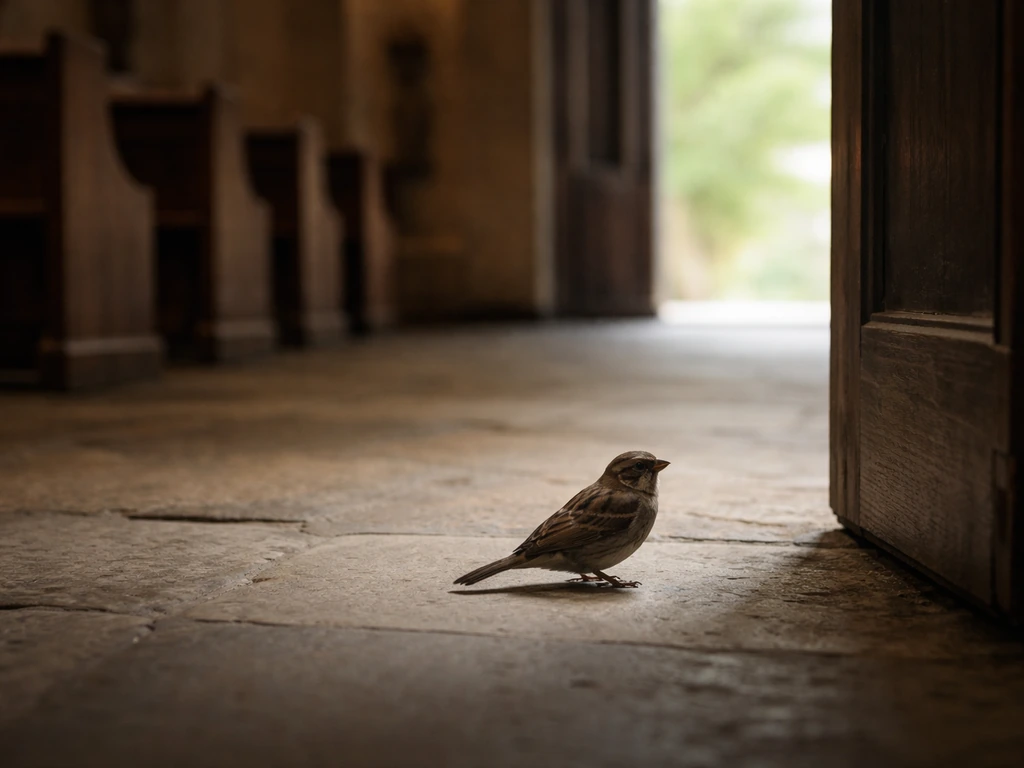
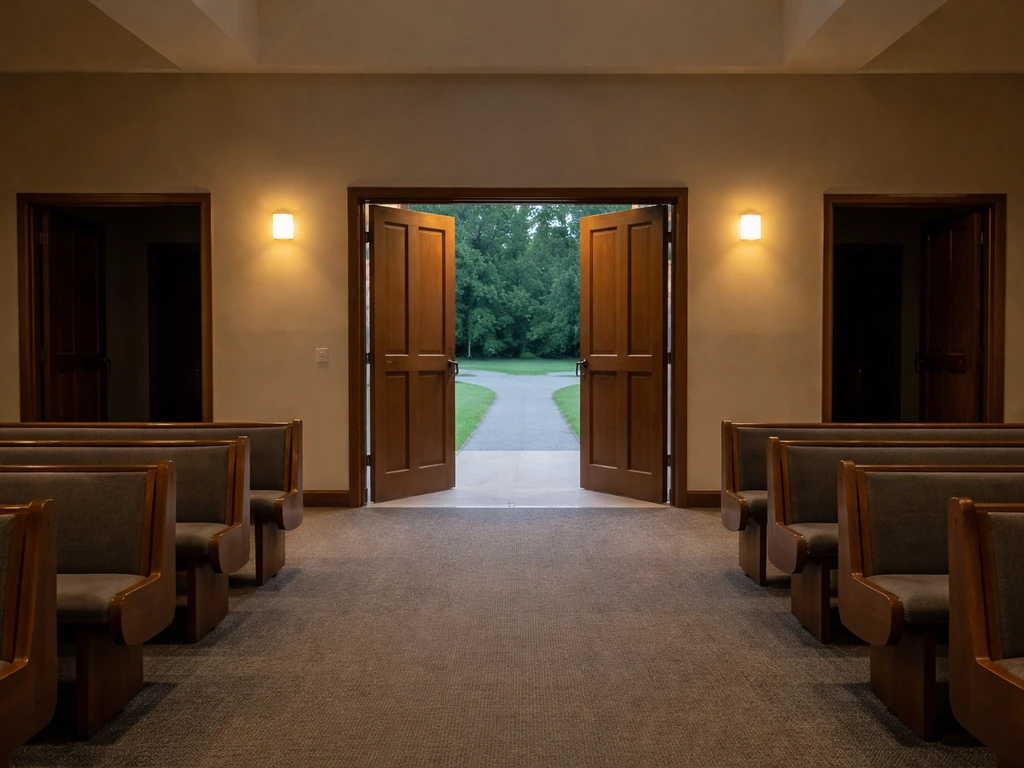
To get a bird out of a church, open one clear exit (a door or large window leading outside), turn off all interior lights, and cover or close every other window so the bird isn't drawn to glass. Then leave the space quiet and still for at least 20 to 30 minutes. Birds find their way out by moving toward light, so give them one obvious light source to aim for and remove every other distraction. That single approach resolves most cases without any chasing, catching, or stress to the bird.
How to Get a Bird Out of a Church Safely Step by Step
Maya Carver
11 Jun 2026
Immediate safe steps to take right now
Before you do anything else, resist the urge to chase the bird or wave your arms at it. If a bird falls down your chimney, the safest immediate move is to keep your distance, avoid chasing, and focus on getting it out calmly once you can offer a clear path. That only burns the bird's energy, causes it to crash into windows or rafters, and can turn a healthy bird into an injured one. Here is what to do in the first five minutes.
- Clear and open one exit only. Choose the largest door or window that leads directly outside. Prop it fully open so there is no obstruction.
- Close every interior door. Shut off adjoining rooms, vestries, sacristies, hallways, and storage areas so the bird stays in one contained space.
- Kill all the lights. Turn off every interior light in the room the bird is in. A dark interior and a bright exit is the single most effective combination.
- Cover or draw curtains over every closed window. Birds fly toward light and will slam into glass trying to get out. Darkening closed windows removes that trap.
- Cover any skylights if you can reach them safely. Large skylights in a sanctuary ceiling are one of the most common reasons birds get stuck — they look like sky but lead nowhere.
- Leave the space quietly. Walk out, close the door to the rest of the building behind you, and give the bird 20 to 30 minutes of peace to find the exit on its own.
- Check back from a distance. If the bird is still inside after 30 minutes, reassess rather than escalating immediately.
Do not bring other people in to watch, do not play music or make noise, and do not use brooms, towels, or anything else to herd the bird. The calmer the space, the faster this works.
Figure out the situation before doing more
Once you have set up the exit and darkened the space, take a moment to assess what you are actually dealing with. The right next step depends heavily on where the bird is, what kind of bird it is, and whether it looks healthy. Getting this wrong can waste hours or cause harm.
Where is the bird?
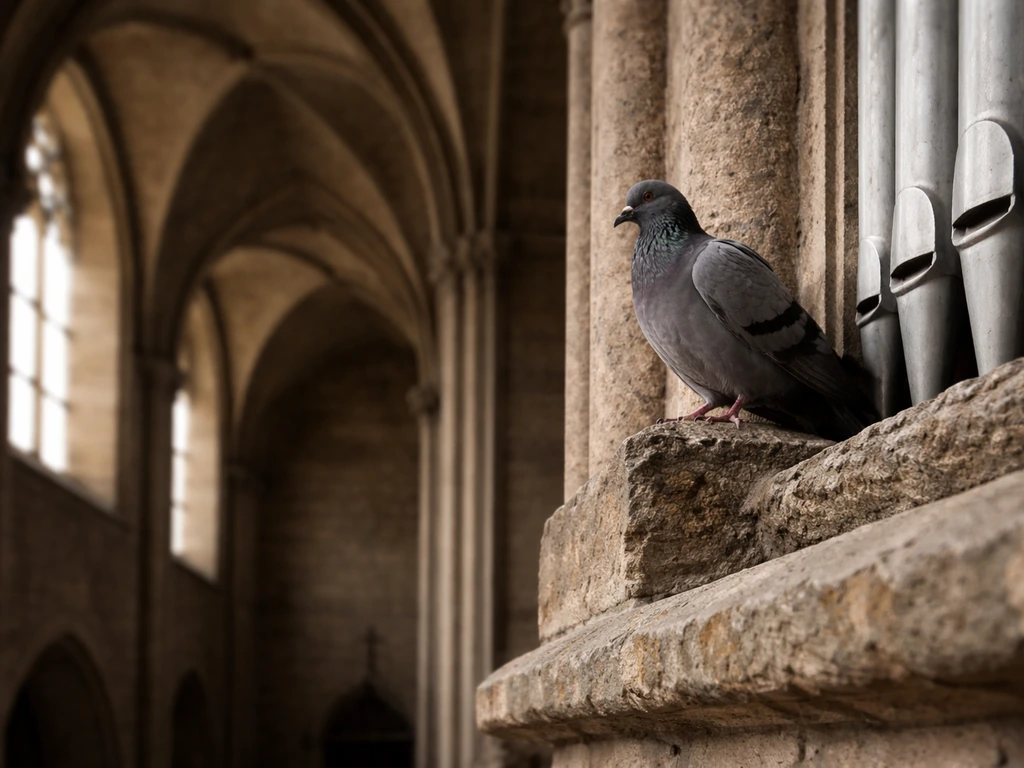
Location inside a church matters a lot. A bird flying freely around the nave is a very different situation from a bird wedged behind the organ pipes, perched 40 feet up in the bell tower, or sitting motionless in a confined loft space. For high, inaccessible spots like bell towers or steeples, DIY removal is rarely safe or effective, that is a call-a-professional situation covered later. For birds in the main sanctuary, chancel, or choir loft, the light-and-exit method above works well. For birds trapped in a small room or closet, containment is easier but the space may need to be darkened completely before they settle.
What species are you looking at?
You do not need a field guide, but a rough ID helps. Pigeons and starlings are common church visitors and respond well to the standard darkened-room exit method. Swifts, swallows, and house martins are protected species in many countries and are likely nesting in the building rather than just passing through, in those cases, legal protections apply and you should not disturb nesting areas.
Raptors (owls, hawks, kestrels) occasionally enter churches through openings in bell towers and behave differently: they tend to perch and wait rather than fly frantically, which can actually make them easier to guide out. If you are in the US, the Migratory Bird Treaty Act covers a very wide range of species, and any attempt to capture or relocate a protected bird without authorization is a federal offense.
When in doubt about the species, photograph it from a distance before doing anything else.
Is the bird injured?
Watch the bird carefully from the doorway for a few minutes. Signs of injury include sitting on the floor unable to fly, a visibly drooping wing, or rapid continuous panting that lasts more than two hours. A bird that is flying actively, even if it looks panicked, is almost certainly healthy. Do not try to catch a flying bird even if you think it is injured, throwing a towel or blanket over a bird in flight can worsen injuries significantly. If the bird is grounded and clearly injured, skip ahead to the professional help section.
How many birds are there?
One bird that wandered in through an open door is a manageable DIY situation. A flock of pigeons or starlings that have been roosting in a loft or bell tower for weeks is a different problem entirely, that is an infestation requiring professional bird control, not a single rescue. If you are seeing droppings, feathers, and nesting material in volume, the birds are not just visiting. Secure the space, avoid disturbing the area (especially any accumulated droppings), and call a specialist.
How to guide the bird to the exit without chasing it
The goal is to make the exit the most attractive option in the room, not to push the bird toward it. Chasing causes panic, and a panicked bird will exhaust itself flying into walls and windows before it finds the door. Use the environment instead.
The basic light-and-dark method
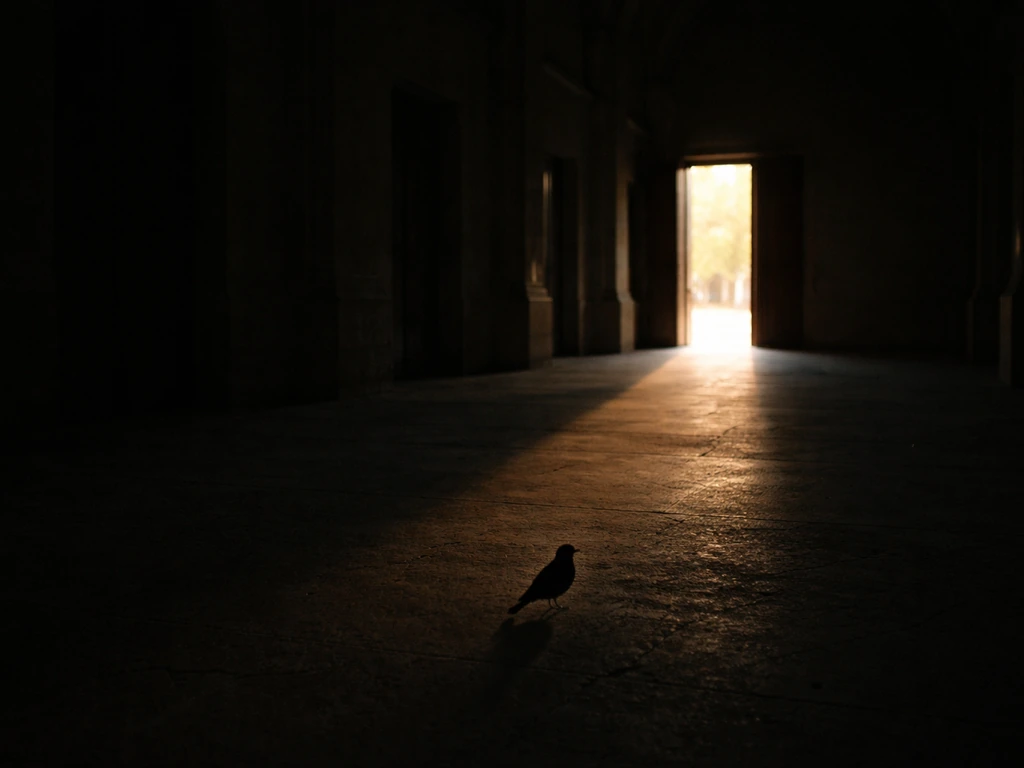
You have already set this up in the immediate steps. Open one exit, darken everything else, and wait. This works for the majority of birds and often takes less than 30 minutes with no human involvement at all. If the bird is still inside after that, re-check that all other windows are fully covered and that the exit is genuinely clear with no screen or obstruction.
If the bird needs a nudge
If after 45 minutes the bird is still inside and alert, you can gently encourage it by entering the space very slowly and quietly from behind the bird's position, never in front of it. Move it toward the exit by presence alone, not by waving or rushing. Think of it as gently herding, not chasing. A bedsheet or large piece of cardboard held low and moved slowly can work as a soft barrier to guide the bird's path. Keep it at floor or lower-wall level; do not swing it or lift it toward the bird.
Scenarios that need a different approach
| Scenario | What to do | What NOT to do |
|---|---|---|
| Bird perched high in rafters or trusses | Darken the room and open exit below; let it come down on its own when calm | Shine lights up at it, throw things, or attempt to climb up to it |
| Bird inside the sanctuary at night | Leave the exit open and wait until dawn — birds are much more active at first light and will often find the exit on their own | Attempt removal in darkness; a nocturnal rescue is rarely needed for daytime birds |
| Injured bird on the floor | Gently cover with a ventilated box and call a wildlife rehabilitator; do not try to fly it out | Try to toss or flap it out, or leave it without shelter |
| Multiple birds flying freely | Open the widest available exit, darken all else, and give them extended time — up to a few hours | Try to chase the group; let them settle and self-exit |
| Bird in a small, confined space (closet, vestry) | Darken the room completely, open one exit to outdoors or the larger space, step out, and wait | Block the exit in frustration if the bird doesn't move immediately |
| Bird in bell tower or steeple | Do not attempt DIY — call a professional bird removal service | Climb unsecured to high areas; risk of fall and injury is serious |
A note on nocturnal birds
If you are dealing with an owl or other nocturnal bird that entered during the day, it will be calmer and easier to guide out at night when it is naturally active. Keep the space quiet and undisturbed through the day, then open the exit after dark and turn off all interior lights. Owls in particular tend to sit quietly on a perch and wait, this patience works in your favor.
Preventing repeat visits: church-specific exclusion and repairs
Once the bird is out, the most important question is how it got in. Churches are genuinely one of the hardest building types to bird-proof because of their age, the number of architectural openings (louvred bell tower vents, lead flashing gaps, arched window tracery, damaged eaves), and the legal constraints around altering historic fabric. That said, a systematic inspection and a few targeted repairs will stop most repeat entries.
Inspection checklist: where birds get in
- Bell tower louvres and ventilation openings (common entry for pigeons, jackdaws, starlings, and owls)
- Gaps around roof tiles, ridge tiles, and damaged or missing leadwork
- Open or unscreened eaves and soffit vents
- Broken windows or missing glazing in upper clerestory windows
- Holes in stone or brickwork, particularly around carved decorative elements
- Open or propped-ajar doors (including fire exits and vestry doors) during services or maintenance
- Gaps around pipes, cables, or conduits entering through the roof or walls
Exclusion options and what actually works
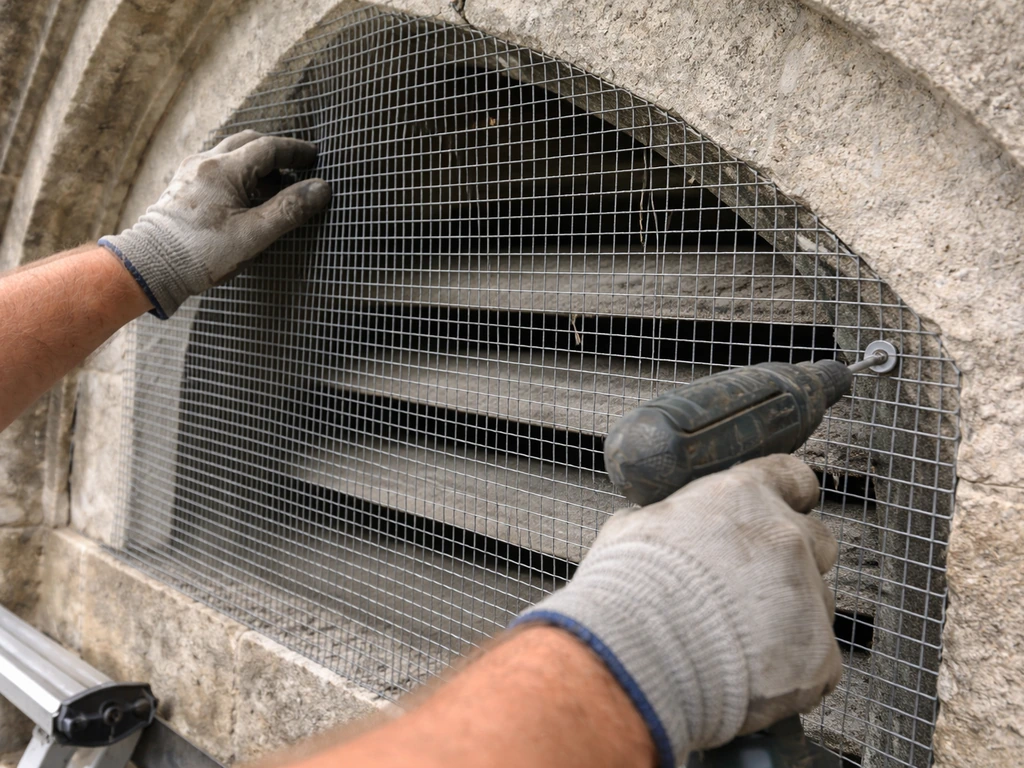
For ventilation openings in bell towers, heavy-gauge galvanized wire mesh (19mm or smaller aperture for starlings and smaller birds) installed behind existing louvres is effective and discreet. For larger openings, purpose-made bird mesh panels can be fitted inside the opening without altering the external appearance, which matters for listed or historic buildings. Netting inside roof voids is another option but must be properly maintained: poorly installed or sagging netting can entrap birds and cause the exact harm you are trying to prevent. Only use netting that meets wildlife-safe standards and have it installed by someone experienced with it.
One-way excluder funnels are useful when birds are actively roosting in a void and you need them out before sealing. They allow birds to exit but not re-enter. However, never install these during active nesting season, you risk trapping adults inside with dependent young. In the UK, disturbing an active nest is an offence under the Wildlife and Countryside Act 1981. In the US, the Migratory Bird Treaty Act applies to a similarly wide range of species. Church of England guidance specifically flags that scaffolding erected in summer can block swift nesting sites and potentially break the law, the same principle applies to exclusion work.
Timing exclusion work by season
| Season | Safe for exclusion? | Notes |
|---|---|---|
| Late summer (Aug–Sep) | Yes, generally best | Most nests have fledged; birds not yet in winter roost patterns |
| Autumn (Oct–Nov) | Yes | Good window for repairs before winter roosting begins |
| Winter (Dec–Feb) | Caution | Check for active roosting in voids before sealing; bats may also be present |
| Spring (Mar–May) | No for most repairs | Nesting season in full swing; do not seal any opening that could contain active nests |
| Early summer (Jun–Jul) | No | Peak nesting; swifts, swallows, house martins actively using church fabric |
Historic buildings often also have bat roosts, which are protected separately under their own legislation. Before any roof or loft work, check whether bats are present. Many church conservation officers have experience navigating both bird and bat protections simultaneously.
Reducing attractants and entry temptations
- Keep exterior doors closed except during services — prop them open only when supervised
- Install door-closing mechanisms on fire exits and side entrances that are frequently left ajar
- Remove or relocate bird feeders from directly adjacent to the building
- Keep the churchyard tidy to reduce ground-feeding attractants near the building
- Brief staff and volunteers to close doors behind them, particularly during breeding season when birds are actively exploring cavities
- Reduce unnecessary exterior lighting at night — artificial light can disorient birds and draw them toward the building
Cleaning and health considerations after the bird is out
A single bird passing through the nave for a few hours poses minimal health risk to a healthy adult. But if birds have been roosting in a loft, void, or bell tower for any length of time, accumulated droppings (guano) are a genuine health concern and need to be handled carefully before anyone works in that space.
The main risks from accumulated bird droppings are histoplasmosis (a fungal lung infection caused by Histoplasma capsulatum, which grows in droppings), cryptococcosis (another fungal infection), and psittacosis (a bacterial infection from certain bird species, particularly pigeons and parrots). These risks increase significantly when droppings are disturbed and particles become airborne, which is exactly what happens when someone starts sweeping or vacuuming a contaminated area without protection.
What to do for a minor cleanup (single bird, no accumulation)
- Wear disposable gloves and wash hands thoroughly afterward
- Dampen any droppings with water before wiping — never sweep or vacuum dry droppings, as this disperses fungal spores into the air
- Use a disinfectant appropriate for bird waste and dispose of wipes or cloths in a sealed bag
- Clean and disinfect any surfaces the bird landed on, including pews, ledges, and floors
What to do for significant accumulations (roosting or nesting area)
If there is visible buildup of droppings, even a thin layer covering a significant area, treat it as a contaminated work zone. Only wet cleaning methods should be used: never dry sweep, dry vacuum, or use compressed air. Anyone entering the space should wear a properly fitted respirator (at minimum an N95, ideally a half-face respirator with a P100 filter), disposable coveralls, gloves, and eye protection. Ventilate the space before and during cleaning by opening windows away from occupied areas. For large volumes of droppings, hire a specialist cleaning contractor with experience in biohazard remediation, this is not a job for general maintenance staff without proper PPE and training.
After cleanup, dispose of all material in sealed heavy-duty bags and arrange for appropriate collection. Do not use the cleaned space for congregation activities until it has been properly ventilated and any surfaces that contact people have been disinfected.
When to stop DIY and call in professionals
Most single-bird situations in accessible spaces are genuinely DIY-manageable. But there are clear situations where you should stop and call for help rather than persist alone.
Call a wildlife rehabilitator if:
- The bird is visibly injured (wing hanging, unable to fly, bleeding)
- The bird has been sitting on the floor or in the same spot for more than three hours without moving
- The bird is panting rapidly and this has continued for more than two hours
- The bird is a protected or rare species and you are unsure how to proceed without risking a legal violation
- You suspect the bird may have avian influenza (bird flu) — do not handle it; contact your local animal health authority
Call a professional bird control service if:
- There are multiple birds or signs of an established roost (droppings, feathers, nesting material in volume)
- The bird is in a bell tower, steeple, or other area accessible only by ladder or scaffolding
- You have tried the exit method for several hours with no success and the bird appears healthy but cannot find its way out
- You need exclusion work done on the building fabric and want it done correctly without risking harm to nesting birds or bats
- The cleanup required is substantial and involves significant droppings accumulation
Legal notes you need to know
In the US, the Migratory Bird Treaty Act prohibits the capture, killing, or transport of protected migratory bird species without prior authorization from the US Fish and Wildlife Service. This covers a very broad range of common species including most songbirds, swallows, swifts, and raptors. The practical implication: if you try to catch a bird with a towel, box, or net and injure or kill it, you may be breaking federal law regardless of your intentions. The safest legal position is always to guide the bird out rather than to capture it, and to call a licensed wildlife rehabilitator for any bird that needs handling.
In the UK, the Wildlife and Countryside Act 1981 protects all wild birds, their nests, and their eggs. Intentionally taking or disturbing an active nest is an offence. Church buildings that host swifts, house martins, or barn owls are subject to these protections, and any repair or exclusion work that might affect nest sites needs to be timed and planned accordingly. If your church is a listed building, coordinate with your local planning authority and conservation officer before undertaking any exclusion work, both bird protection law and building regulations may apply simultaneously.
If you are dealing with a bird stuck behind a gas appliance or heating unit (less common in churches but possible in boiler rooms or vestries), be aware that wildlife rescuers will generally not disconnect or move gas fittings, that requires a qualified gas engineer working alongside them. The same basic light-and-exit approach can help when a bird is trapped behind a wood stove or other heating unit, but keep safety first and don’t handle the bird. Do not attempt this yourself. If the bird is stuck in a chimney, call a wildlife rescuer or a professional bird removal service for safe help.
The problems described in this guide share a common thread with birds in chimneys, fireplaces, or wood stoves elsewhere in a building: the entry point matters as much as the rescue, and the same light-and-exit principles apply across all of them. If the bird is in a chimney or flue, use the same light and exit principles, but focus on getting it out safely without blocking the flue chimneys, fireplaces, or wood stoves. If birds are getting into your church through the chimney or flue system specifically, the access point and approach differ from a general building entry and may need separate attention.
FAQ
How do I keep the bird from flying into other parts of the church while I set up the exit?
Once you choose the exit, stay near it and avoid moving around the space. Keep other doors to separate rooms closed so the bird’s “safe options” are limited to the one outside path you opened.
Should I turn off HVAC fans or ventilation systems before trying to get a bird out?
If you can do so safely from a normal control panel, reduce strong air currents (especially in drafty nave areas). Sudden gusts can keep a bird from settling and make it crash into decorative features.
What if the bird keeps hitting stained glass or windows even after I darken the room?
Verify the covered windows are fully opaque, not just dimmed. If the outside area has bright lamps or reflections, try switching off interior lights further, then open only one exit so the outside remains the bird’s primary “light direction.”
Can I use a towel, net, or box to trap the bird if it won’t move toward the door?
Avoid trapping tools. Even if the bird seems calm, sudden contact can cause fractures or internal injury, and for protected species capturing can create legal and safety problems. Use slow, low barriers only if you need gentle guidance.
What should I do if the bird lands on a platform or altar area and won’t come down?
Do not reach or try to lure it upward. Keep the chosen exit open and quiet, then wait the bird out. If it is still up after 45 minutes, have it guided from a low position without approaching in front of it.
How can I tell the difference between a healthy bird that is panicked and one that is truly injured?
Healthy birds usually can fly or hop with coordination, even if they look frantic. Look for sustained inability to fly, persistent drooping or dragging, continuous open-mouth panting that goes on for hours, or blood, then switch to professional help rather than continued guiding.
Is it safe to use flashlights or phone screens near the bird while I wait?
Use minimal, steady lighting and avoid sweeping beams across walls or glass. Flashing lights can encourage repeated circling. If you need light to see, keep it aimed downward and away from the bird’s escape route.
What if the only exit has a screen or door that won’t open fully?
A partially blocked exit often fails because the bird cannot perceive or commit to the escape path. Choose a different door or large window if possible. If every outside opening is restricted, call a wildlife rescuer rather than forcing DIY solutions.
Should I open multiple doors or windows to speed things up?
No. Multiple open exits and competing light sources can confuse the bird and extend the time it takes to leave. Pick one clear route, close or cover the rest, then wait.
If the bird is in a bell tower or loft, how do I decide when to stop DIY?
Stop immediately if you cannot reach the bird safely without climbing, removing historic fabric, or accessing confined spaces. The guide notes that high, inaccessible locations should be handled by professionals because DIY attempts risk falls and can worsen entrapment.
What should I do if I notice nesting behavior or feathers suggesting the bird is already “in residence” (not just passing through)?
Treat it as a potential nesting or roosting situation. The right move is to avoid disturbing the area and plan exclusion or repairs only after confirming active status and timing. During active nesting season, do not attempt sealing or one-way funnel installation.
How long should I wait before assuming the bird won’t self-rescue?
Use the guide’s timing structure: first wait 20 to 30 minutes with one exit and the rest darkened. Then re-check coverage and obstruction, and if it is still alert after about 45 minutes, you can do gentle low guidance or call for help depending on access.
Once the bird is out, should I clean droppings immediately?
Only if the droppings are accessible and you can handle them safely with wet-cleaning and proper PPE. If there is significant buildup in lofts or voids, plan for professional biohazard cleanup before reopening that area for congregation or events.
What if the bird left droppings but I cannot access the area where they came from?
Avoid starting repairs or routine sweeping in a contaminated zone you cannot properly protect. Instead, identify the likely source area and request advice from church conservation staff or a remediation specialist before any work that could aerosolize debris.
Do I need to notify anyone (church leadership, conservation officer, facilities manager) after a rescue?
Yes, especially if you suspect repeated entry or protected species. Document the location and time of the bird’s presence, then share it internally so repairs and any required inspections are timed and permitted correctly.
Next Articles
Who to Call When a Bird Is Stuck in a Chimney
Get step-by-step action and who to call to safely remove a bird stuck in a chimney, plus prevention tips.
How to Get a Bird Out of a Wood Stove Safely
Emergency, humane steps to safely remove a bird from a wood stove, plus cleaning, prevention, and when to call wildlife
Bird in Chimney: What to Do Today for Safe Removal
Quick steps for a bird in the chimney, safe DIY removal, cleanup, prevention, and when to call pros