Open as many large exits as you can, darken or cover windows and skylights that don't open, then step back and give the bird a clear, calm path to fly out on its own. That single approach solves most warehouse bird situations within an hour without touching the bird, risking injury, or breaking any wildlife protection laws.
How to Lure a Bird Out of a Warehouse Safely

Maya Carver
10 Jun 2026
Safety first: what to do before you try anything else
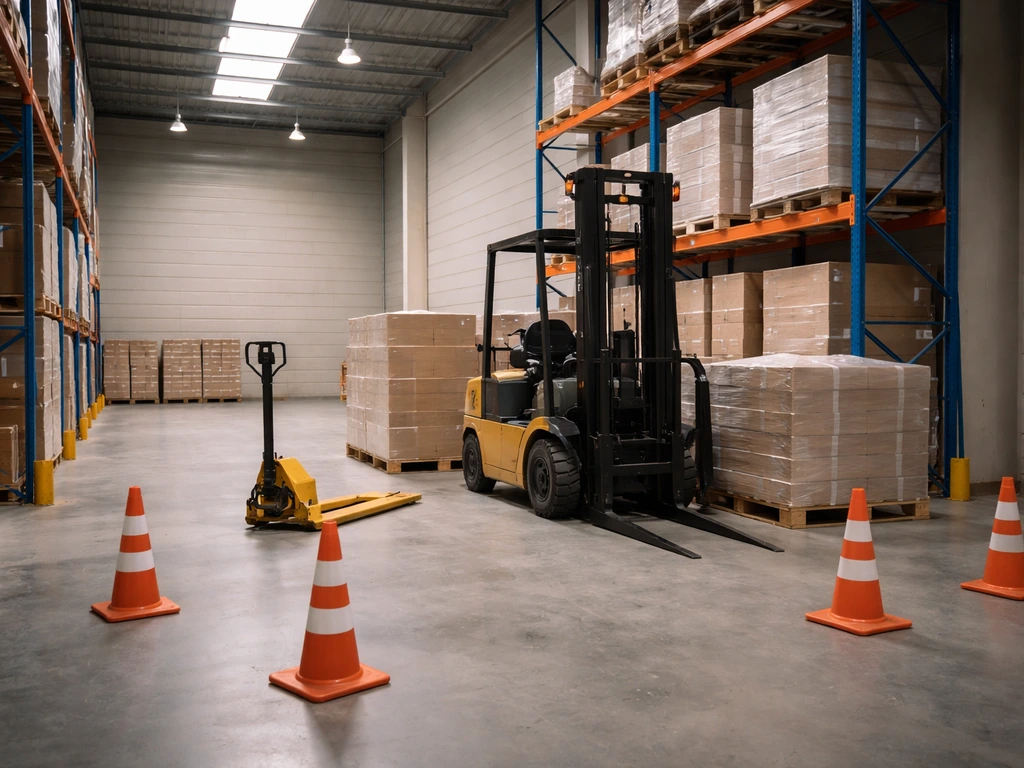
Before you focus on the bird, deal with the human hazards. Warehouses have forklifts, high racking, concrete floors, and skylights that make a rushed bird-removal attempt genuinely dangerous. Take two minutes to sort these out first.
- Stop forklift and pallet jack movement in the area until the bird is out. A panicking bird flying low can distract an operator.
- Rope off or flag the immediate zone if the bird is perching near high racking where staff might be tempted to climb.
- Put on safety glasses and a dust mask (N95 minimum) if you are working near roosting areas. Dried bird droppings can carry fungal spores and are a real respiratory hazard.
- Do not use ladders to chase the bird. Almost every bird-in-warehouse injury happens because someone climbed something while looking up.
- Let your safety officer or supervisor know what is happening so nobody accidentally closes the exit doors you are about to open.
- If the bird appears injured, grounded, or unable to fly, stop and skip straight to the escalation section below. The approach is completely different.
Figure out what kind of bird you are dealing with
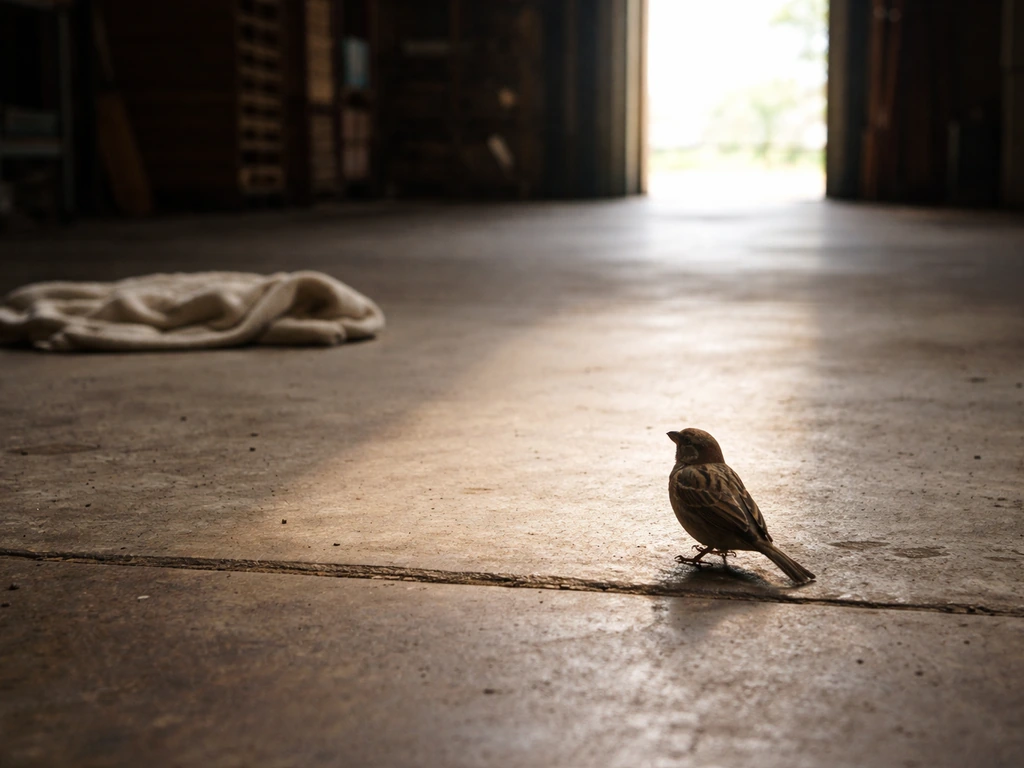
You do not need to be an ornithologist, but a quick ID shapes everything that follows, including whether you have legal flexibility or whether the bird has extra protections. The three most common warehouse visitors are feral pigeons, European starlings, and house sparrows. Less commonly you will see crows, swallows, or even a raptor that followed prey inside. Pigeons are chunky, gray-blue birds with iridescent necks and a slow walking strut. Starlings are smaller, short-tailed, and speckled, and they tend to move in fast, twitchy bursts. Sparrows are tiny and brown with streaked backs. Crows and ravens are large, all-black, and noticeably intelligent; they will actually look around and assess exits on their own if you give them space.
While you are watching the bird, note where it is perching or retreating to. Pigeons and starlings almost always head for the highest point in the building and work toward any gap, ledge, or beam near a roofline opening. Cornell Lab’s All About Birds identification overview notes that feral pigeons commonly use building areas such as window ledges and openings for nesting and related behavior, which aligns with focusing on gaps and ledges near roofline openings blank" rel="noopener noreferrer">work toward any gap, ledge, or beam near a roofline opening. That tells you exactly where the entry point probably is and where to focus your exit strategy. If the bird keeps returning to one corner beam or vent cover, that is likely where it came in.
One important check: look carefully for a nest. If you see a nest with eggs or flightless chicks nearby, stop your removal effort immediately. Under the Migratory Bird Treaty Act (MBTA), disturbing an active nest of a protected species is a federal violation. Pigeons and house sparrows are not covered by the MBTA, but starlings, swallows, crows, and most other species are. When in doubt, assume protection applies and call a wildlife professional before doing anything else.
Step-by-step: how to lure the bird out humanely
The core technique is simple: make the exit obvious, make everything else unappealing, and then get out of the way. Birds do not want to be inside your warehouse. They want out. Your job is to remove the confusion between them and the exit.
Step 1: Open every possible large exit
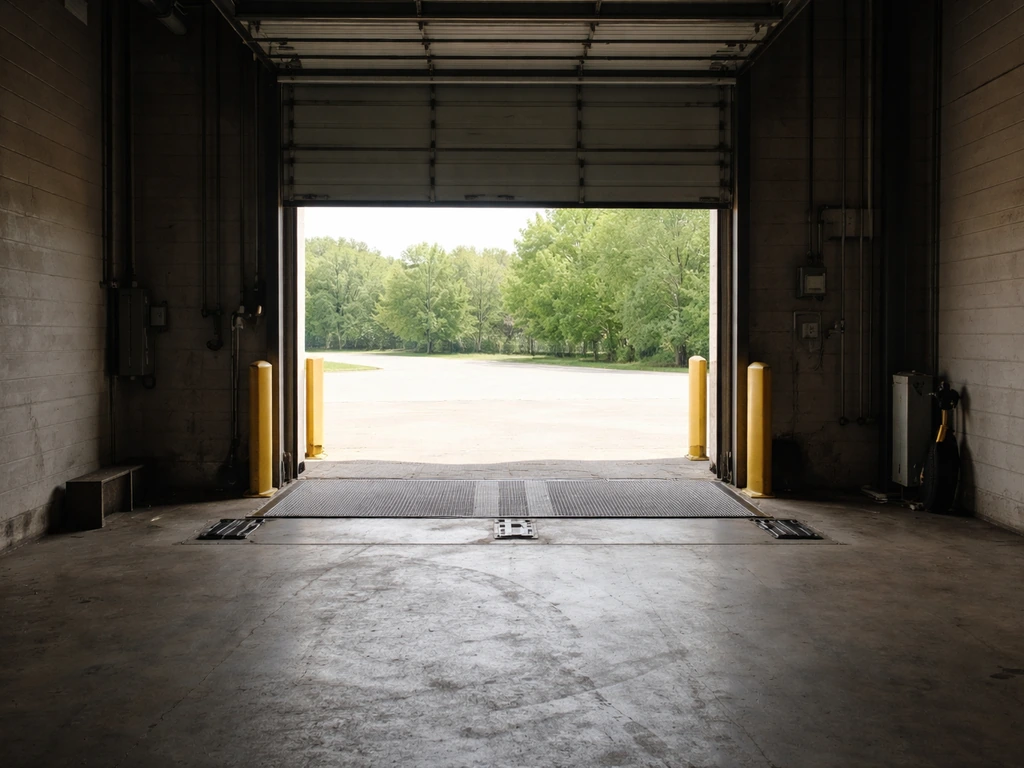
Roll up loading dock doors, open personnel doors, prop open any roof hatches or ridge vents you can safely reach from the ground or a fixed platform. If you want the safest order of operations, review Safety first: what to do before you try anything else, especially before you start rolling doors and opening hatches to figure out how to catch a bird in a store. Bigger is better. A bird that is stressed and flying fast needs a wide opening it can see clearly. If you have a choice between a small window and a large dock door, the dock door will work every time.
Step 2: Cover or darken every other opening
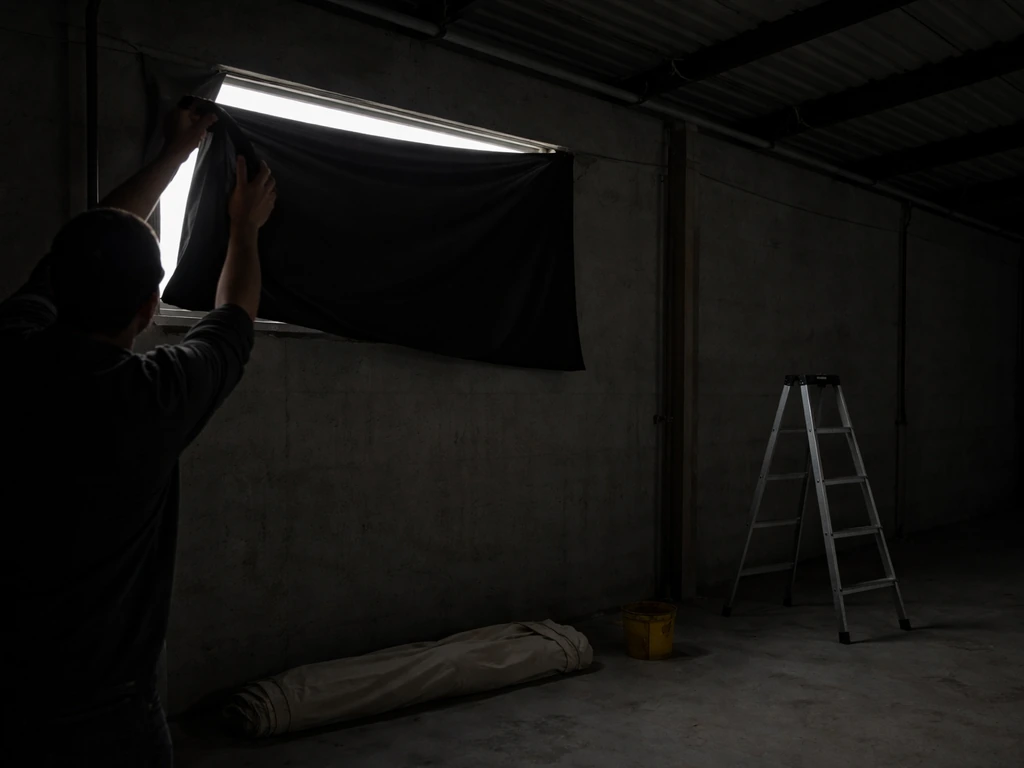
This is the step most people skip and it is the most important one. Birds instinctively fly toward light. If your warehouse has skylights, translucent roof panels, or windows that cannot be opened, they will draw the bird away from your exit doors. Cover them temporarily with tarps, cardboard taped over the inside, or even have a colleague stand near them and block the light. The Wisconsin Humane Society specifically recommends covering windows that do not open so the bird does not mistake glass for an escape route. Once the only bright opening is your exit, most birds will find it within minutes.
Step 3: Reduce interior light and noise
Turn off interior lighting in the bay where the bird is, if it is safe to do so. You want a darker interior and a bright exterior visible through the open exit. Silence machinery, turn off radios, and ask staff to leave the area quietly. A calm, low-stimulus environment helps the bird settle down from panic mode and start making deliberate decisions. A bird that is frantically bouncing off the ceiling cannot navigate. A bird that has settled on a beam for 10 minutes will start looking for a way out.
Step 4: Wait, then gently guide if needed
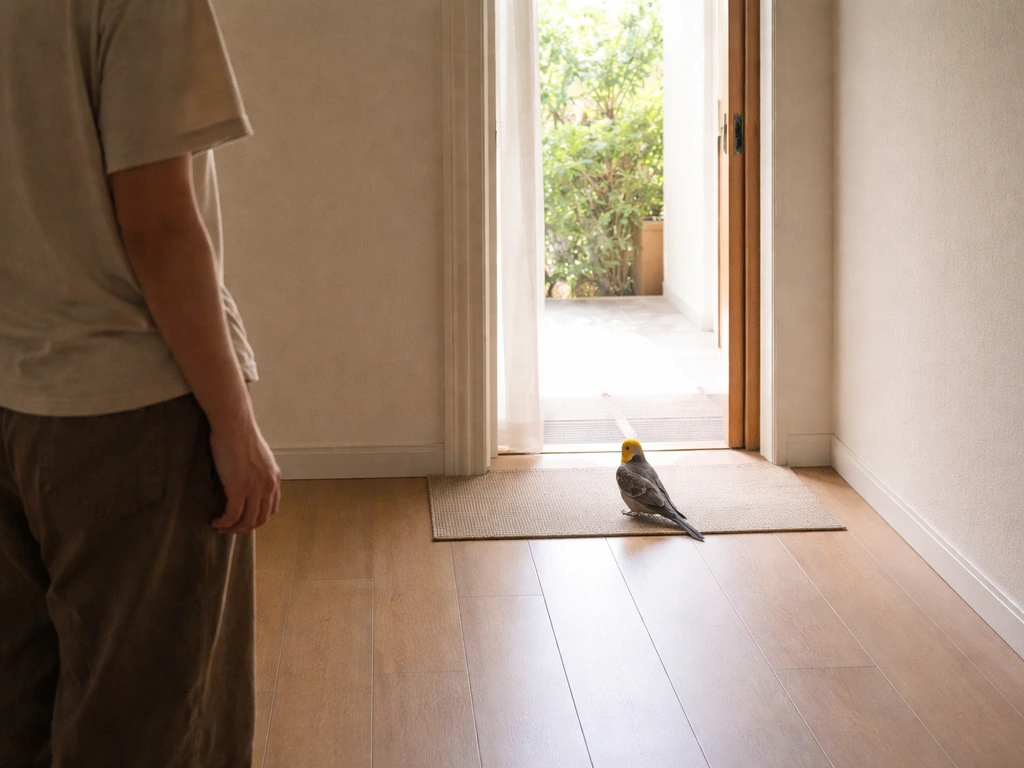
Give the setup at least 20 to 30 minutes before you intervene further. If the bird is still not moving toward the exit, you can gently encourage it by slowly walking behind it (not toward it) with a large white or brightly colored cloth held out to your sides. Wildlife Victoria recommends this approach specifically for birds in buildings: use a sheet or blanket as a soft visual barrier to funnel the bird toward the opening, moving slowly and without sudden gestures. Do not wave the cloth or rush. You are not herding; you are nudging. Keep your movements calm and predictable.
Step 5: Use a one-way guidance setup for stubborn cases
If the bird keeps returning to the same roost spot and will not move toward the exit on its own, a simple one-way exclusion funnel at the exit point can help. The concept, documented by wildlife agencies including Washington DFW and the National Wildlife Control Training Program, is straightforward: install a temporary mesh or heavy cloth funnel over the primary exit that the bird can push through from the inside but cannot navigate back through from the outside. Once the bird exits, it cannot re-enter through that point. Use netting or flexible mesh (not sticky materials, never mist nets) attached loosely at the top of the opening with the bottom edge free. Make sure no young or flightless birds are in the building before you set this up.
What not to do: tactics that hurt birds or put you at legal risk
Some common instincts in this situation are genuinely dangerous or illegal. Here is what to avoid, and why. If you still need a quick bird in warehouse how to get rid of plan, start with the step-by-step humane luring approach rather than risky tactics that hurt birds or create legal issues.
- Do not chase the bird. Running at a bird causes it to fly in panic, increasing its chances of colliding with walls, racks, or machinery. It also increases your fall risk if you are moving fast in an industrial space.
- Do not try to grab or catch the bird with your bare hands. Birds have sharp beaks and talons, and direct contact can also transfer mites, bacteria, and in rare cases salmonella. Unless you are a licensed handler, you also have no legal authority to handle most migratory species.
- Do not use glue traps. The Wildlife Center of Virginia documents clearly how sticky glue traps cause severe dehydration, wing injuries, and leg damage as birds struggle. They are indiscriminate and inhumane.
- Do not use chemical repellents, sprays, or any substance intended to immobilize or harm the bird. Chemical immobilization is restricted to USDA APHIS Wildlife Services, veterinarians, and licensed government personnel. DIY use is inappropriate and potentially illegal.
- Do not use mist nets or nylon netting draped as a capture device. Wildlife management best practices, including guidance from Ontario wildlife authorities, explicitly state that mist netting and nylon capture netting must never be used for this purpose because birds become entangled and are seriously injured.
- Do not disturb an active nest. If eggs or nestlings are present, stop everything. Under the MBTA, disturbing an active nest of a protected species can result in federal penalties. Contact a federally permitted migratory bird rehabilitator instead.
- Do not attempt to handle or relocate a bird that appears injured, grounded, or exhausted. Under 50 CFR § 21.12, if an injured migratory bird is found, the property owner is responsible for immediately transferring it to a federally permitted rehabilitator. Do not try to care for it yourself.
When it still won't leave: troubleshooting and when to escalate
If you have had exits open for several hours and the bird has not left, work through these checks before you decide what to do next.
- Check for a nest. A bird that keeps returning to one spot despite open exits is almost certainly nesting. Look for nesting material on beams, ledges, and in open structural cavities. If you find eggs or chicks, stop and call a wildlife professional.
- Check that the exit is actually visible from where the bird is perching. Walk from the bird's position to the exit. If there are walls, racking rows, or dividers blocking the sightline, the bird may not be able to see the daylight at all. Rearrange temporary barriers or open an additional exit closer to where the bird is roosting.
- Check for food and water sources. Spilled grain, open pallets of food product, standing water in roof gutters or on the floor: if the bird has found a resource, it has a reason to stay. Remove or cover the attractant.
- Verify the bird has actually left before closing everything up. Sprinkle talcum powder or flour on the floor near the exit and check for tracks after a few hours. If you see no tracks going out and the bird is no longer visible, do a full visual sweep of the roofline, high beams, and any enclosed mezzanine areas before sealing the entry points.
- If none of the above resolves it within 24 hours, contact a licensed wildlife control operator or your state wildlife agency. Maine's Department of Inland Fisheries and Wildlife explicitly recommends contacting regional offices or certified agents when DIY eviction methods fail.
| Situation | What it likely means | Next step |
|---|---|---|
| Bird keeps returning to same beam/corner | Probable nesting site | Inspect for nest; call wildlife professional if nest found |
| Bird flies toward skylights or windows repeatedly | Mistaking glass for exit | Cover those windows; redirect toward open door |
| Bird settles down but won't approach the exit | Exit not visible or food source present | Open a closer exit; remove food/water attractants |
| Bird appears grounded, injured, or exhausted | Injury or exhaustion | Do not handle; contact licensed rehabilitator immediately |
| Bird is gone but you are not sure | May have left or may be hiding | Use powder/flour verification; do full visual sweep before sealing |
Escalation triggers: when to call a professional right now
- Active nest with eggs or flightless chicks is present anywhere in the building.
- The bird is a raptor (hawk, owl, falcon) or any species you cannot confidently identify as a pigeon, starling, or sparrow.
- The bird is injured, grounded, or showing signs of exhaustion.
- The bird has been inside for more than 48 hours despite open exits.
- There are multiple birds or signs of an established roost (heavy droppings, feathers, nesting material).
- You suspect an eagle, threatened species, or any protected raptor is involved. Eagle nest disturbance under 50 CFR § 22.27 involves strict federal criteria, and you need professional and potentially legal guidance before doing anything.
Once it's out: seal the entry and stop it coming back
Getting the bird out is only half the job. If you do not address how it got in, you will be doing this again within weeks. Birds, especially pigeons and starlings, are creatures of habit and will return to a site they have used before.
Find and seal every entry point
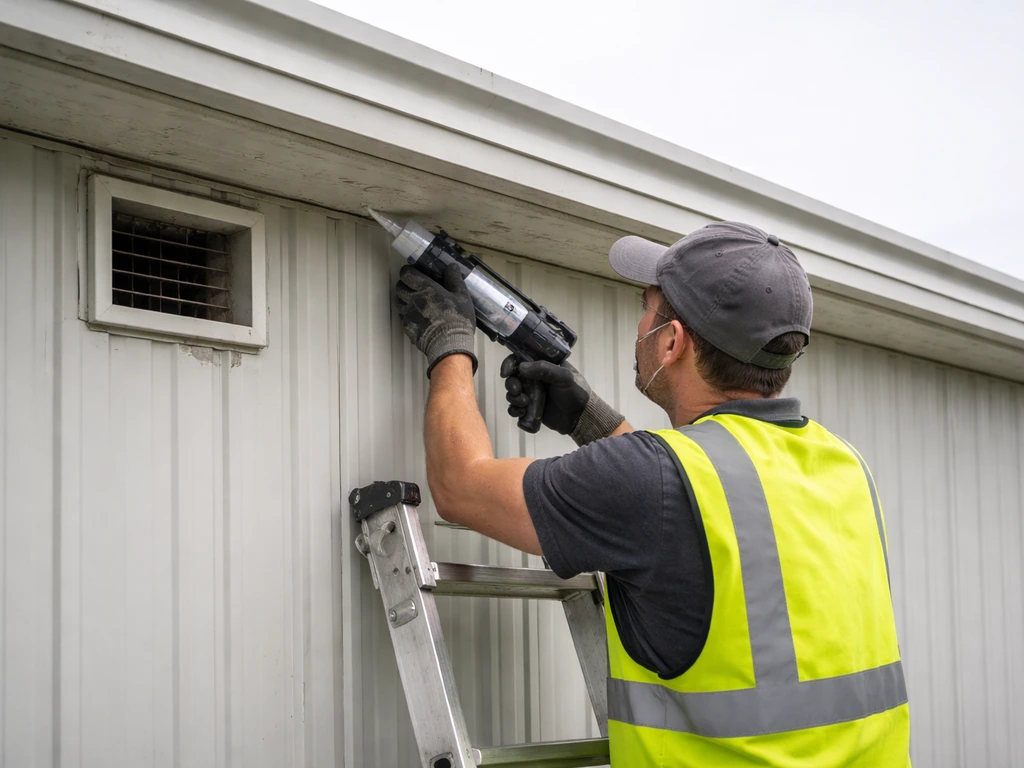
Do a full exterior inspection of the roofline, eaves, vents, louvers, ridge gaps, damaged cladding, and any point where utilities enter the building. A pigeon needs a gap of about 2 inches to enter. A starling needs even less. Pay particular attention to ridge vents without mesh, broken or missing vent covers, gaps around HVAC penetrations, and open eave soffits. Seal gaps with galvanized hardware cloth (half-inch mesh is the right size), metal flashing, or foam-backed weatherstripping depending on the location. Avoid soft foam alone because birds will peck through it.
Install passive deterrents at problem ledges and beams
For ledges, beams, and roof edges where birds perch or roost, physical deterrents work better than anything else. Bird spikes on flat ledges, wire tensioning systems along rooflines, and slope boards on wide ledges all make landing uncomfortable without harming the bird. Minnesota DNR's exclusion guidance specifically notes that wire-line and similar systems are effective at preventing access to ledges and open building areas. For loading dock doors that are regularly open, consider a plastic strip curtain or a mesh screen that keeps birds out while allowing airflow and fork traffic.
Remove what attracted the bird in the first place
- Store all food products (grain, seeds, animal feed, packaged goods) in sealed containers or closed bays.
- Clear spilled product from dock floors promptly, especially at shift end.
- Fix standing water issues: blocked gutters, puddles on flat roofs, and water pooling near dock drains.
- Seal trash compactor areas and dumpster enclosures where birds forage.
- Clean up existing roost sites: remove droppings and nesting material while wearing PPE (N95, gloves, eye protection) and dispose of waste in sealed bags.
Seasonal planning and legal notes for year-round protection
Bird problems in warehouses are not evenly distributed through the year. Knowing when to act proactively makes the difference between a quick fix and a months-long infestation.
| Season | Key risk | Priority action |
|---|---|---|
| Late winter (February–March) | Scout birds identify entry points before nesting season | Inspect and seal all gaps before March 1; install deterrents on ledges |
| Spring (April–June) | Active nesting; MBTA protections fully in effect | Do not disturb active nests; call professional if nesting birds are inside |
| Summer (July–August) | Young birds fledging; may enter openings while learning to fly | Keep dock doors screened when open; remove food attractants |
| Fall (September–November) | Flocking behavior; groups may enter open doors or vents | Re-inspect and repair any deterrents damaged over summer |
| Winter (December–January) | Birds seek warm shelter; active roost establishment in warehouses | Seal heat-loss points; check roofline vents and ridge gaps before cold snap |
Legal notes you need to know
Most of the birds you will encounter in a warehouse, feral pigeons, European starlings, and house sparrows, are not protected under the Migratory Bird Treaty Act and can be removed without a federal permit. However, nearly every other species you might encounter, swallows, crows, raptors, most songbirds, is federally protected. The USFWS Migratory Bird Permit program governs any action that might result in the take (capture, harm, or kill) of a protected species. If you are unsure of the species or if your removal method carries any risk of harm, check with USFWS or your state wildlife agency before proceeding. When in doubt, passive exclusion (open doors, light management) carries essentially zero legal risk because you are not touching or trapping the bird. Physical capture, relocation, or any action likely to cause harm is where permits become relevant.
If you find an injured migratory bird during this process, federal regulations under 50 CFR § 21.12 are clear: you are responsible for transferring it promptly to a federally permitted migratory bird rehabilitator. You can find the nearest one through the USFWS Migratory Bird Permit program or through your state fish and wildlife agency. Do not attempt to care for it yourself, even temporarily, without that referral.
A simple annual maintenance checklist for warehouse managers
- February: Walk the full exterior roofline and inspect all vents, eaves, and penetrations. Seal any gaps before breeding season starts.
- April: Check all previously installed deterrents (spikes, wire systems, mesh) for damage or displacement after winter.
- June: Inspect inside the warehouse for signs of nesting (droppings concentrations, feathers, nesting material on beams). Do not disturb if active.
- September: Repair any deterrents and re-inspect sealed entry points after summer heat expansion/contraction.
- November: Seal any heat-loss gaps that may attract roosting birds seeking warmth before winter. Clean gutters to eliminate standing water.
Dealing with a bird in a smaller space like a shed or retail store follows similar principles, but warehouses present unique challenges because of scale, high ceilings, and the number of potential entry points. The core approach stays the same: open the right exits, reduce confusion, stay calm, and only escalate to direct intervention when passive methods have genuinely failed. The same calm, one-way exit strategy works in retail stores and other buildings, too, so you can focus on getting the bird out without escalating the situation how to get a bird out of a store. Get the proofing done before next season and you will almost certainly not be back here again.
FAQ
What if the warehouse has only one opening I can use to lure the bird out?
Still use the same light management idea, but make that one opening extra visible by covering or dimming any other brighter sources (interior lights, skylight glare, roll-up door windows). If you cannot open more exits, don’t add new obstacles near the exit, because the bird will interpret them as alternative paths.
Should I open every door on that side of the building or only a few?
Open fewer, better exits when possible. A bird chooses the brightest, clearest route, so opening many partially blocked doors can create competing “escape” options and prolong the situation.
How long should I wait before trying gentle nudging or a funnel?
After you have the exit obvious and non-exit windows covered, give it at least 20 to 30 minutes as stated. If the bird is not moving toward the exit after that period, switch to one step at a time (first cloth nudging, then a one-way exclusion only if the bird is repeatedly returning and you have confirmed no nests or flightless young inside).
Is it ever okay to use food or call the bird to lure it out?
Avoid food and loud calls. They can pull the bird deeper into the warehouse and can also attract mates or other birds, which complicates removal and increases the chance it stays for longer.
What if the bird is on a high rafter and won’t come down even with exits open?
Focus on making the exit the only clearly lit route, and keep people traffic away from the bird’s chosen roost. If it is not deciding to fly out on its own, the safest escalation is still the same approach described, slow cloth nudging from behind, not climbing or attempting to physically reach it.
Can I use adhesive tape, glue, or sticky substances to trap it?
No. Sticky materials can injure birds by trapping wings or feet and they are also the kind of method that can elevate harm risk and legal exposure. Use a non-sticky one-way funnel concept instead if passive luring fails.
What should I do if I hear a bird nesting behavior or find a nest while the bird is still inside?
Stop any direct removal immediately. Active nests with eggs or flightless chicks are a key legal trigger, and the safest move is to pause and contact a wildlife professional so they can advise on timing and compliant next steps.
What if the bird keeps escaping through the same entrance point it came in?
That’s when you concentrate on the exit funnel approach. Before setting it up, confirm the building is free of flightless young and then ensure the funnel is installed at the primary exit so the bird can push out but cannot correctly navigate back in.
Do I need to cover skylights and windows if the bird seems to ignore them?
Yes, at least temporarily. Even if the bird is currently near an exit, skylights and translucent panels can create multiple light cues, and birds often change decisions after they settle. Covering or blocking non-opening glazing helps prevent “glass mistake” behavior.
Is it safe to turn off all lights, including outside lighting near the dock door?
You want contrast, not darkness. The exit should be visibly bright relative to the interior by controlling interior lighting and reducing competing glare, rather than making the outside equally dark.
Can I leave the bird overnight if the steps aren’t working quickly?
You can consider pausing, but do it with safety and welfare in mind. Keep human traffic minimal, maintain the light-managed exit setup, and re-check during daylight. Also confirm the bird is not trapped with no usable routes, such as behind closed dock sections.
What if I suspect a raptor is inside?
Treat that as a different scenario and prioritize safety for people and a fast, professional response. Raptors can injure themselves or prey items while inside, and they may not follow the same predictable “bright light” exit behavior as pigeons or starlings.
How do I find and measure entry gaps if I’m not sure where it came in?
Start with the roosting return point you observe, then inspect roofline features from ground view outward (vents, ridge gaps, louvers, damaged cladding) and seal based on bird type guidance. If you cannot access areas safely, use contractors for exterior work rather than trying to climb inside and disturb the bird.
If the bird is injured, what is the right immediate action?
Isolate the area to prevent further harm, and arrange for transfer to a permitted migratory bird rehabilitator promptly. Do not attempt temporary care yourself, even “just until morning,” because regulations place responsibility on getting it to the right facility quickly.
Does opening doors and adjusting lights count as “trapping,” legally speaking?
Generally it is treated as passive exclusion because you are not capturing, injuring, or killing the bird and you are not using trapping devices. Risk increases when you add interventions that likely cause harm (capture, relocation, netting, or direct physical handling), especially for potentially protected species.
Next Articles
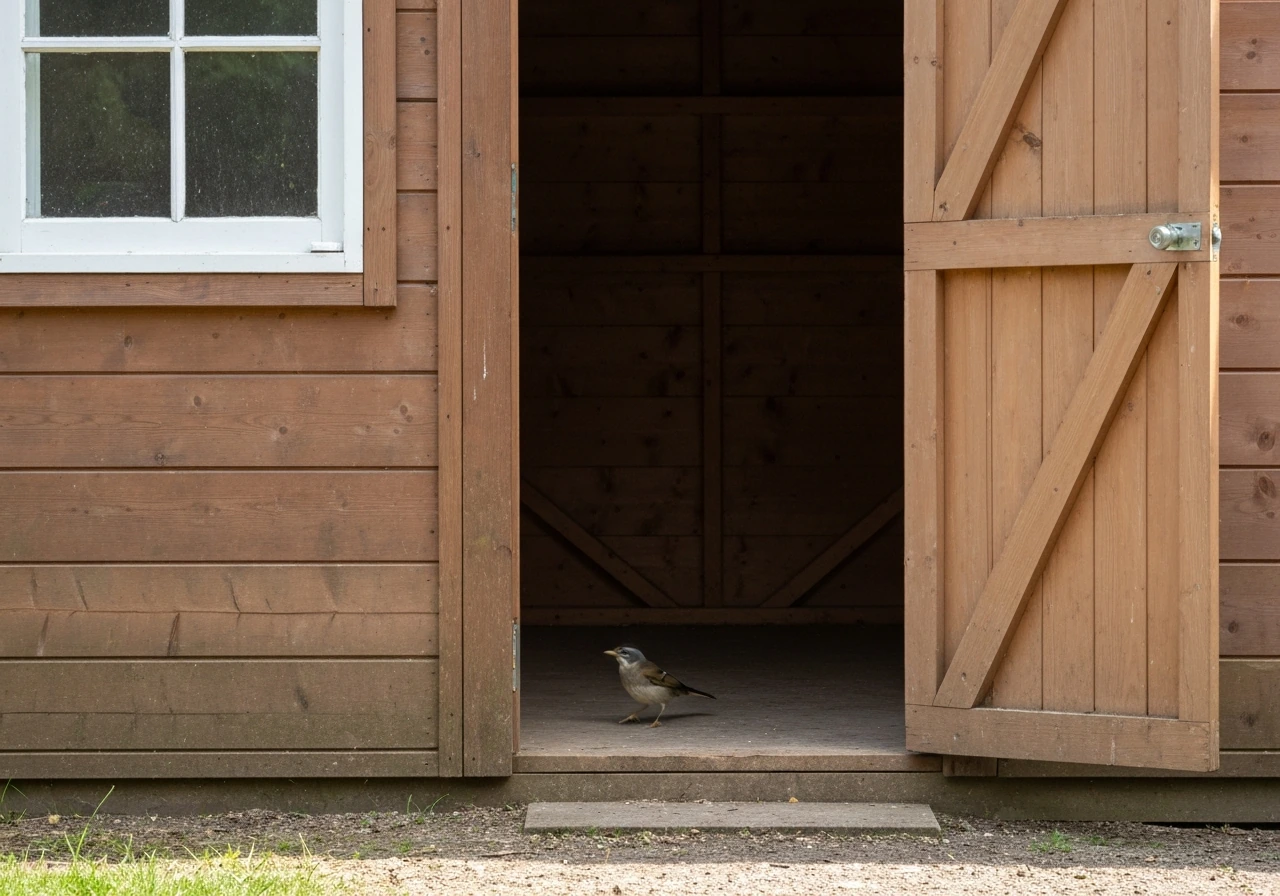
How to Get a Bird Out of a Shed Step-by-Step Safely
Step-by-step safe rescue and prevention for birds trapped in sheds, including emergency exits, injured care, and re-entr
How to Catch a Bird in a Warehouse Safely and Humanely
Humane, step-by-step emergency guide to catch or remove a bird from a warehouse safely, with PPE, cleanup, and preventio
Bird in Warehouse How to Get Rid of It Safely
Step-by-step guide to safely remove a bird from a warehouse, clean droppings, and seal entry to prevent repeat visits.