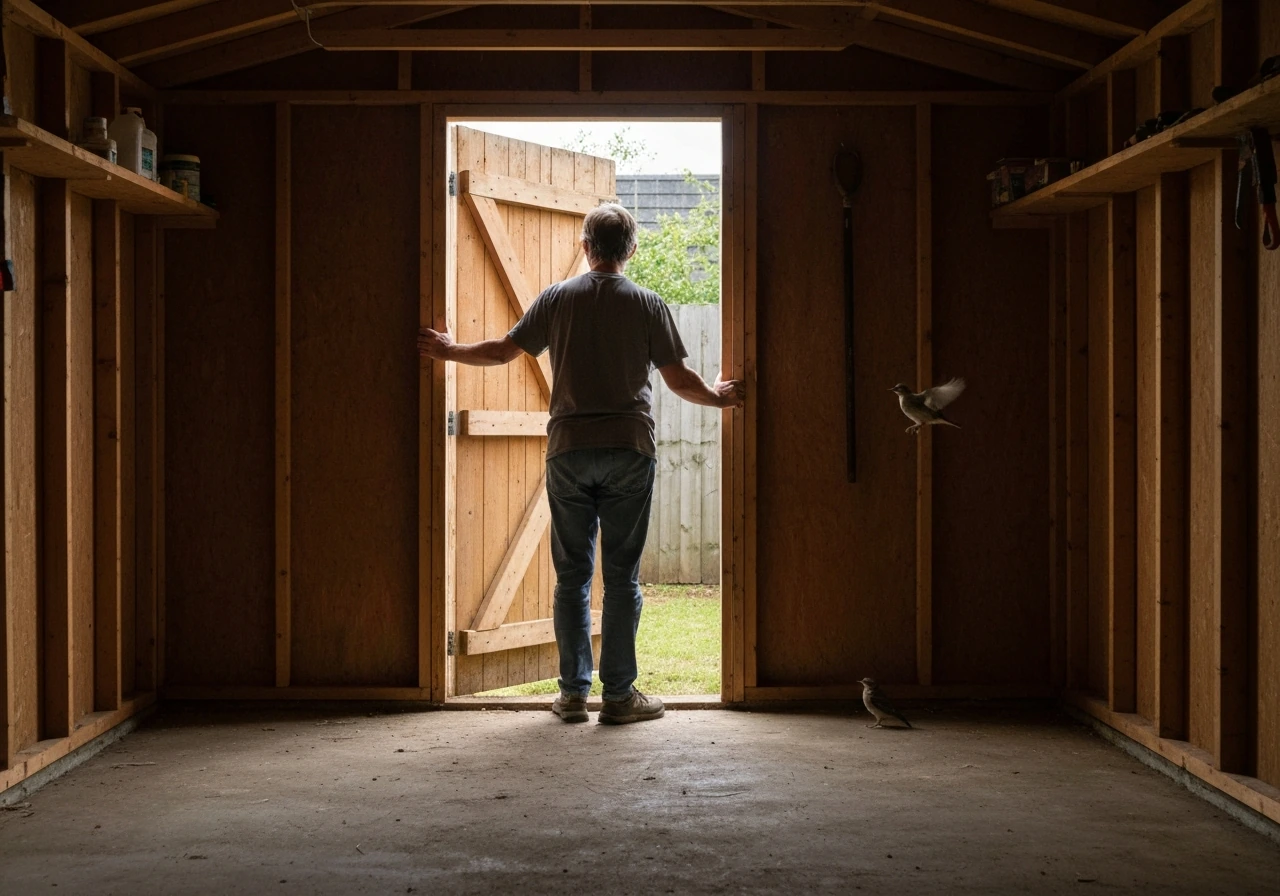
Open the shed's largest door or window all the way, then turn off any interior lights and step back. That's the core move. Birds instinctively fly toward the brightest opening, so once you remove competing light sources and create one clear exit, most birds will find their own way out within a few minutes. The rest of this guide covers what to do when that simple step doesn't work, what to do if the bird is injured, and how to make sure it never gets back in.
How to Get a Bird Out of a Shed Step-by-Step Safely
Maya Carver
31 May 2026
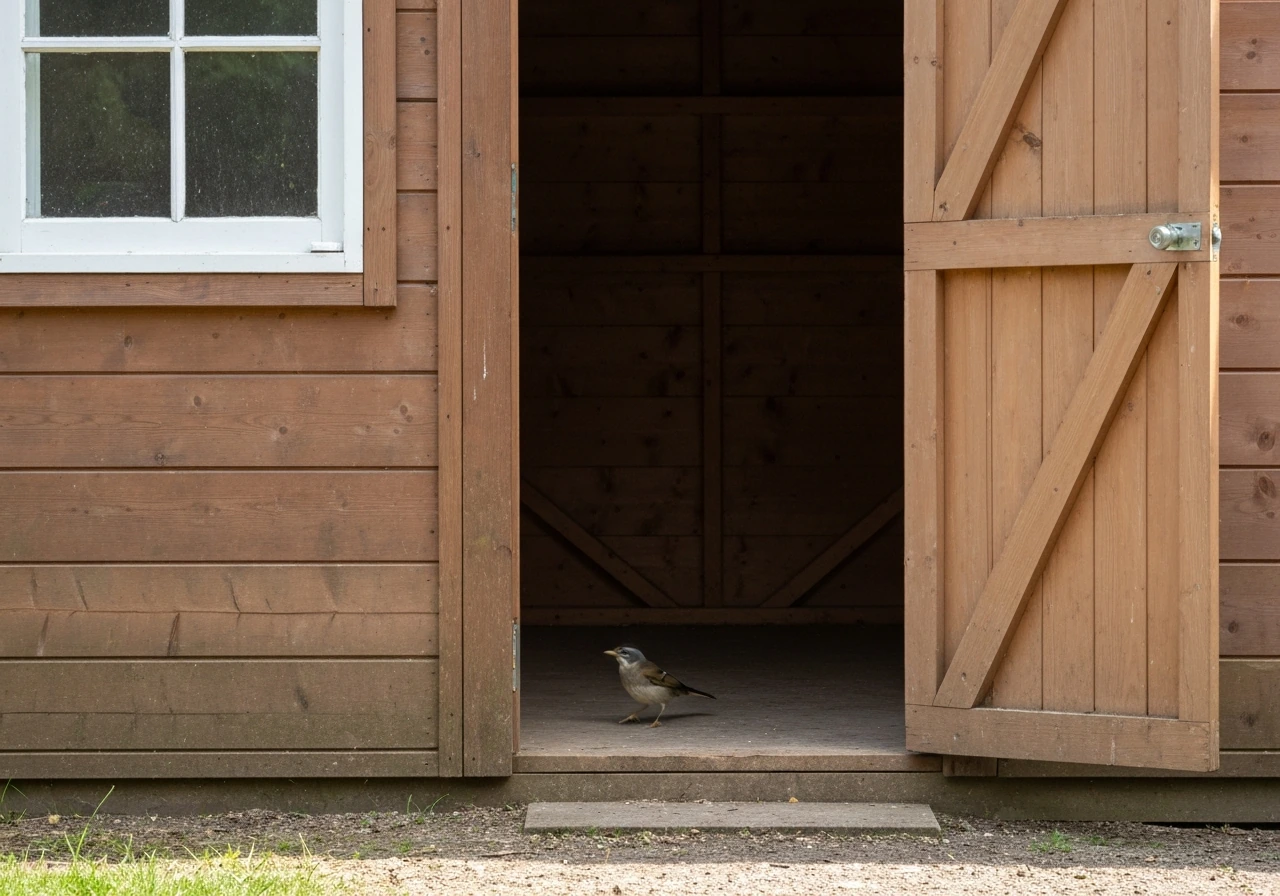
Quick emergency actions to get the bird out safely
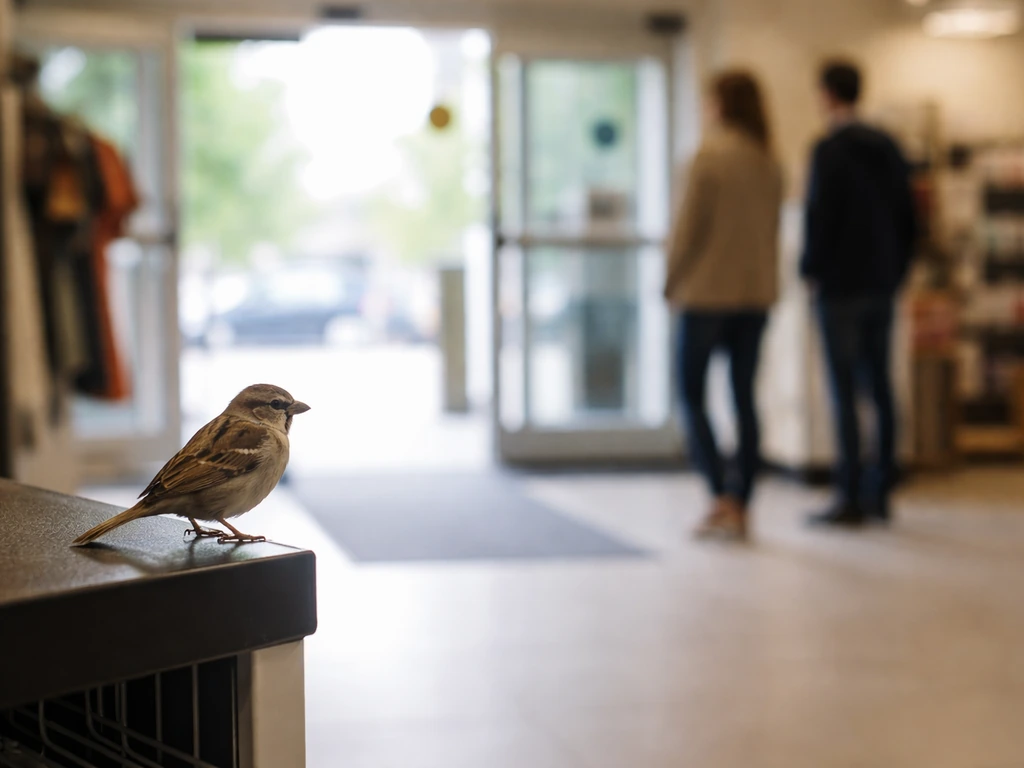
Before anything else, take a slow breath and lower your energy. A panicked person running around the shed makes things dramatically worse. Birds in enclosed spaces are already stressed, and sudden movement causes them to fly erratically, exhausting themselves and sometimes injuring themselves on walls or tools. Move calmly, speak quietly, and keep kids and pets outside. Move calmly, speak quietly, and keep kids and pets outside how to get a bird out of a store.
Your first 60 seconds should look like this:
- Open the largest door or window that leads directly outside. Fully open, not cracked.
- Turn off all interior lights, including any overhead fixtures or work lights.
- Cover or block any secondary windows that don't lead outside (a sheet or cardboard works fine) so the open exit is the only bright spot.
- Back away from the exit and leave the shed if possible. Give the bird 10 to 15 minutes of quiet.
- Keep pets, children, and other people out of the shed until the bird is gone.
Never use a glue trap. The Wildlife Center of Virginia is clear that glue traps cause severe injuries including dislocations and damaged feathers that can permanently impair flight, even when there's no visible bleeding. They're also illegal for use on most wild birds. Similarly, avoid chasing the bird, throwing anything at it, or using brooms to bat it toward the exit. You'll exhaust and injure it.
If there's a small flock rather than a single bird, the same principles apply, but open multiple exits and give them more time. Sheds with skylights or translucent roof panels can complicate things since birds often fixate on light coming from above. In that case, cover the skylight temporarily with a tarp thrown over the roof, which shifts the brightest point to your open door.
Set up an exit path: lighting, timing, and how to guide it out
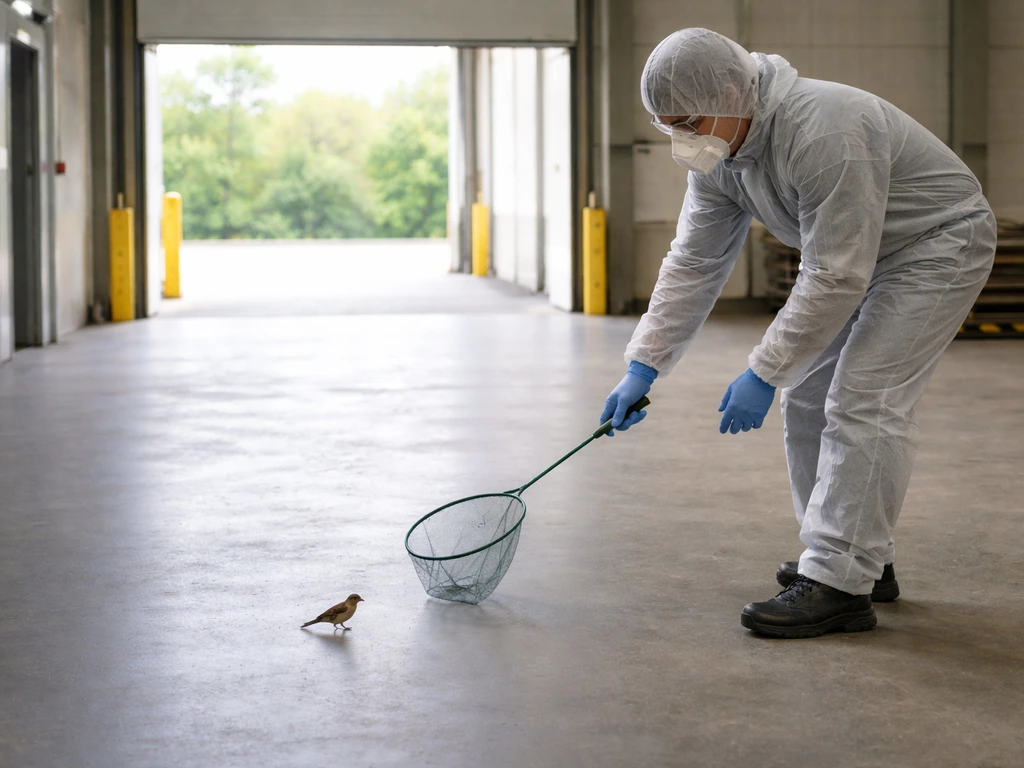
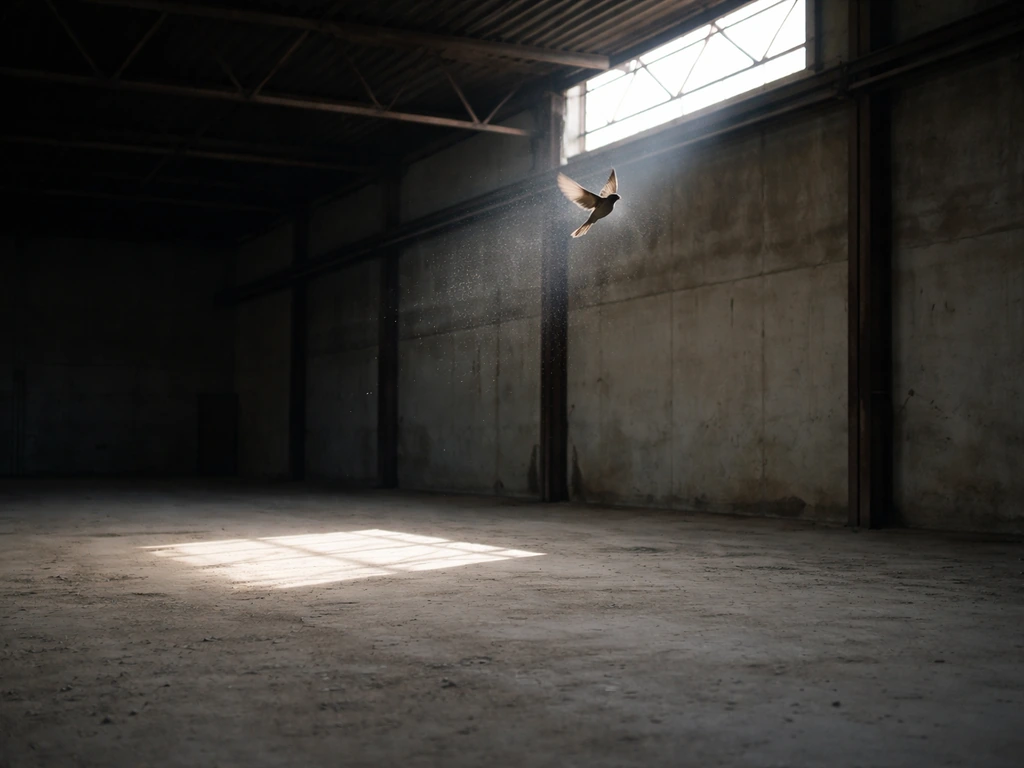
The light-attraction principle is your main tool. Birds instinctively move toward the brightest point in a space. The open door or window is the brightest place, so that becomes the only way out. Your job is to make that contrast as sharp as possible. If you are dealing with a bird in a warehouse, the same light-attraction approach and calm, single-exit strategy can help lure it out safely how to lure a bird out of a warehouse. In a warehouse, the same calm approach and exit-path setup can help you catch the bird and get it out safely make that contrast as sharp as possible. If you still wonder about a bird in a warehouse and how to get rid of it, the same exit-path approach and light cues apply to sheds and other enclosed spaces too exit path.
Getting the lighting right
- Turn off all artificial lights inside the shed.
- Block secondary windows that face walls, fences, or other structures with fabric or cardboard so no competing daylight sources confuse the bird.
- If your shed has a translucent or clear roof panel, cover it from outside with a tarp if the bird keeps flying upward toward it.
- On overcast days, the contrast between inside and outside may be low. Try waiting for brighter conditions, or use a flashlight pointed outward through the open exit to boost its attractiveness.
Timing matters
Early morning and late afternoon are the best times to attempt an exit, when birds are most active and alert. If a bird has been trapped overnight, it's likely tired and hungry, so it may respond more readily to an open exit. Avoid attempting to guide it at dusk when light levels outside drop and the contrast between interior and exterior diminishes.
Guiding it toward the exit
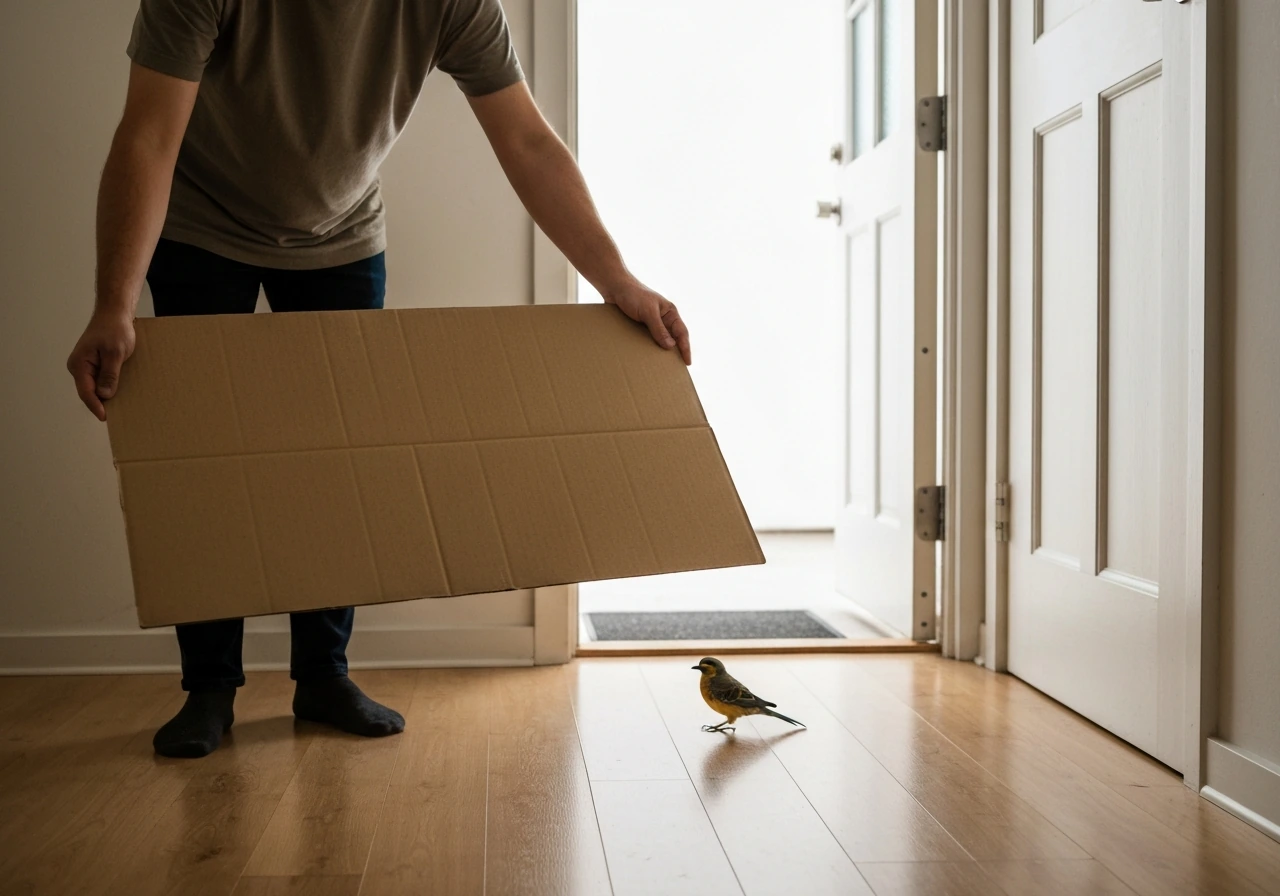
If the bird is perched and not moving toward the exit after 15 minutes, you can gently encourage it. Hold a large sheet or piece of cardboard horizontally at chest height and walk slowly toward the bird from behind. The goal is to reduce the space behind it, not to scare it, so move in slow increments. The Canadian Wildlife Federation recommends holding the sheet up high and walking toward the bird at a slow, steady pace. Stop and wait if the bird flies upward or panics. San Diego Humane Society's guidance reinforces this: confine the bird to the smallest area possible, as close to the open exit as you can, so the bright doorway becomes overwhelmingly obvious.
If you can get the bird into a corner near the exit, stop there. Don't close in further. Let it make the last move on its own.
If it won't leave: troubleshooting and one-way exit options
Most birds leave within 20 to 30 minutes once you've set up the right conditions. If yours hasn't, work through this decision flow before trying anything more complicated.
| Situation | What's probably happening | What to do next |
|---|---|---|
| Bird keeps flying to the ceiling or rafters | It's fixating on light from a roof panel or gap in the roofline | Cover the roof panel or gap from outside, then reopen the door exit |
| Bird perches quietly and doesn't move for 30+ minutes | It may be exhausted or injured | Check for signs of injury before continuing (see injured bird section below) |
| Bird keeps flying at a closed window | It can see outside through glass but can't identify the glass as a barrier | Cover the closed window from outside with newspaper or fabric temporarily |
| Multiple birds inside and only some leave | Remaining birds may be juveniles, disoriented, or injured | Give juveniles extra time; assess remaining birds individually |
| Bird exits but immediately returns | It's found a secondary entry point or there's a food/nesting attractant inside | Identify and temporarily block the secondary entry, remove attractants |
One-way exit doors
If a bird is repeatedly entering and exiting your shed rather than being trapped in a single incident, a one-way exclusion door is worth building. Maine and Washington Department of Fish and Wildlife both describe this approach: construct a simple flap from plywood, sheet metal, or quarter-inch mesh hardware cloth that allows the bird to push out from inside but prevents re-entry from outside. Install it over the entry point you've identified. After 24 to 48 hours with no sign of the bird inside, seal the entry point permanently.
One important note: don't install a one-way door during nesting season (roughly March through August in most of North America) if there's any chance of an active nest inside. You'll seal chicks in. Wait until the nest is inactive and empty before exclusion.
What to do if the bird is injured (or you find one dead)
Identifying an injured bird
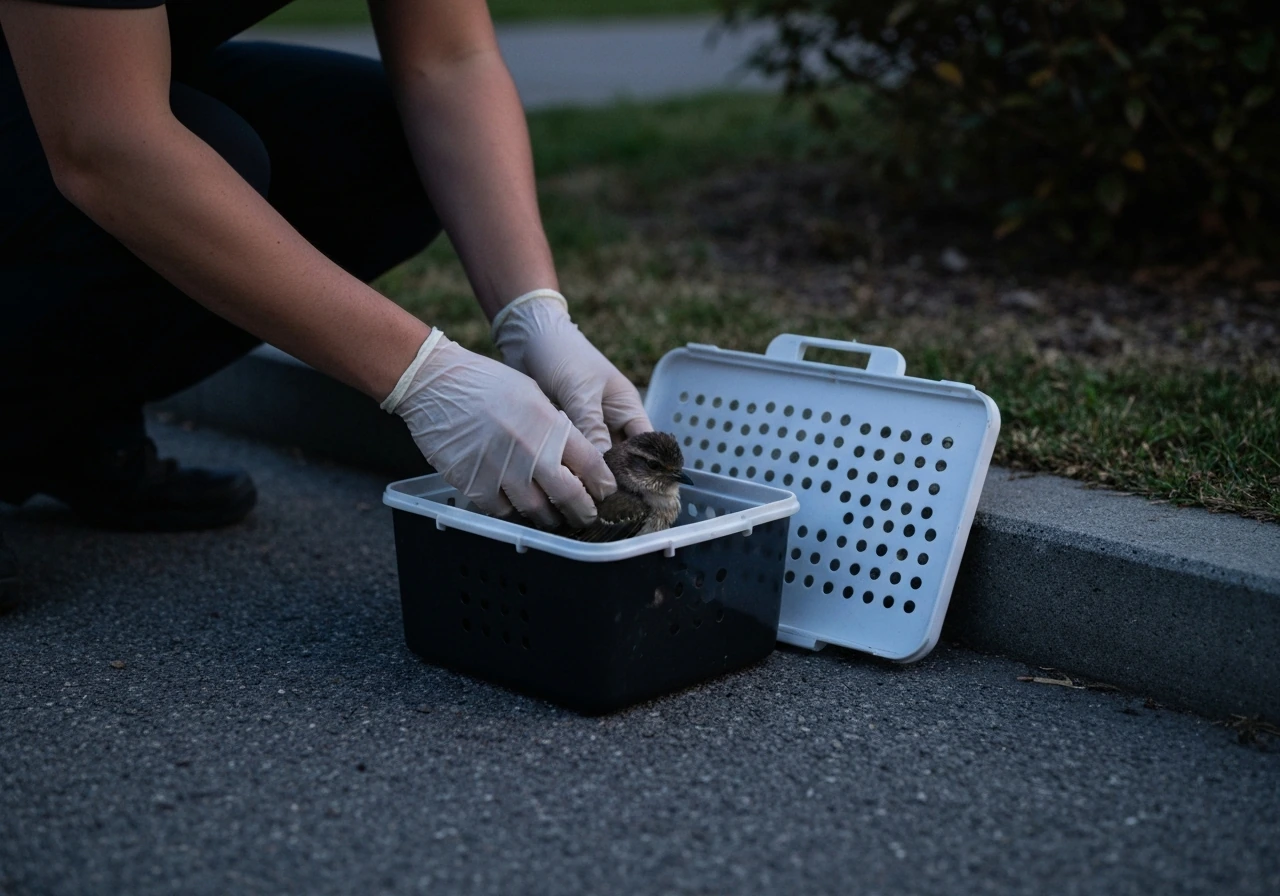
A healthy bird that's just disoriented will be alert, hold its head upright, and will fly (even erratically) when approached. Signs that something is wrong include: the bird is sitting on the floor and won't fly when you approach, one wing droops lower than the other, there's visible bleeding, it's unable to grip or stand, or it's breathing with its beak open. If you see any of these, stop trying to guide it out and shift to containment and care.
Containing an injured bird
- Put on gloves before handling. Wild birds can carry parasites, and some species carry disease.
- Find a cardboard box or paper bag slightly larger than the bird. Punch several small air holes in the lid or top.
- Line the bottom with a folded paper towel or small cloth.
- Gently place the bird inside using both hands, cupped around the body with wings folded against the sides. Move slowly.
- Close the box and place it in a warm, dark, quiet location away from pets, children, and direct sun.
- Do not offer food or water. Incorrect feeding can cause aspiration or make things worse.
- Contact a licensed wildlife rehabilitator immediately.
Both Tufts University and Audubon recommend exactly this approach: a dark, quiet, warm space in a ventilated box while you arrange professional care. Wildlife Welfare adds that if the bird seems cold, you can place a heating pad on the lowest setting under one half of the box so the bird can move away from the heat if it becomes too warm. Never place the heating pad under the entire box.
Under 50 CFR Section 21.14, if you find an injured migratory bird, federal regulations require you to contact a federally permitted migratory bird rehabilitator and follow their instructions. You are not legally authorized to keep a wild migratory bird without a permit, even temporarily, beyond what's necessary for emergency stabilization.
If you find a dead bird
Single dead birds in sheds are not unusual, particularly during window-strike season or winter. Wear disposable gloves, double-bag the bird in plastic bags, and dispose of it in your regular trash. Wash your hands thoroughly afterward. If you find five or more dead birds in a short period, treat this differently: Illinois Department of Public Health guidance notes that finding a group of dead birds warrants extra caution, and if anyone who handled them develops flu-like illness within 10 days, they should contact their local health department. If anyone who handled a group of dead birds develops blank" rel="noopener noreferrer">flu-like illness within 10 days, they should contact their local health department. Given ongoing concerns about highly pathogenic avian influenza (HPAI), do not handle a group of dead birds without an N95 mask, gloves, and eye protection. Michigan Department of Agriculture guidance for wildlife rehabilitators emphasizes quarantining suspect cases, using dedicated PPE and clothing for workers, and following handling and testing procedures for HPAI Given ongoing concerns about highly pathogenic avian influenza (HPAI).
Prevent it from coming back: shed proofing and humane exclusion
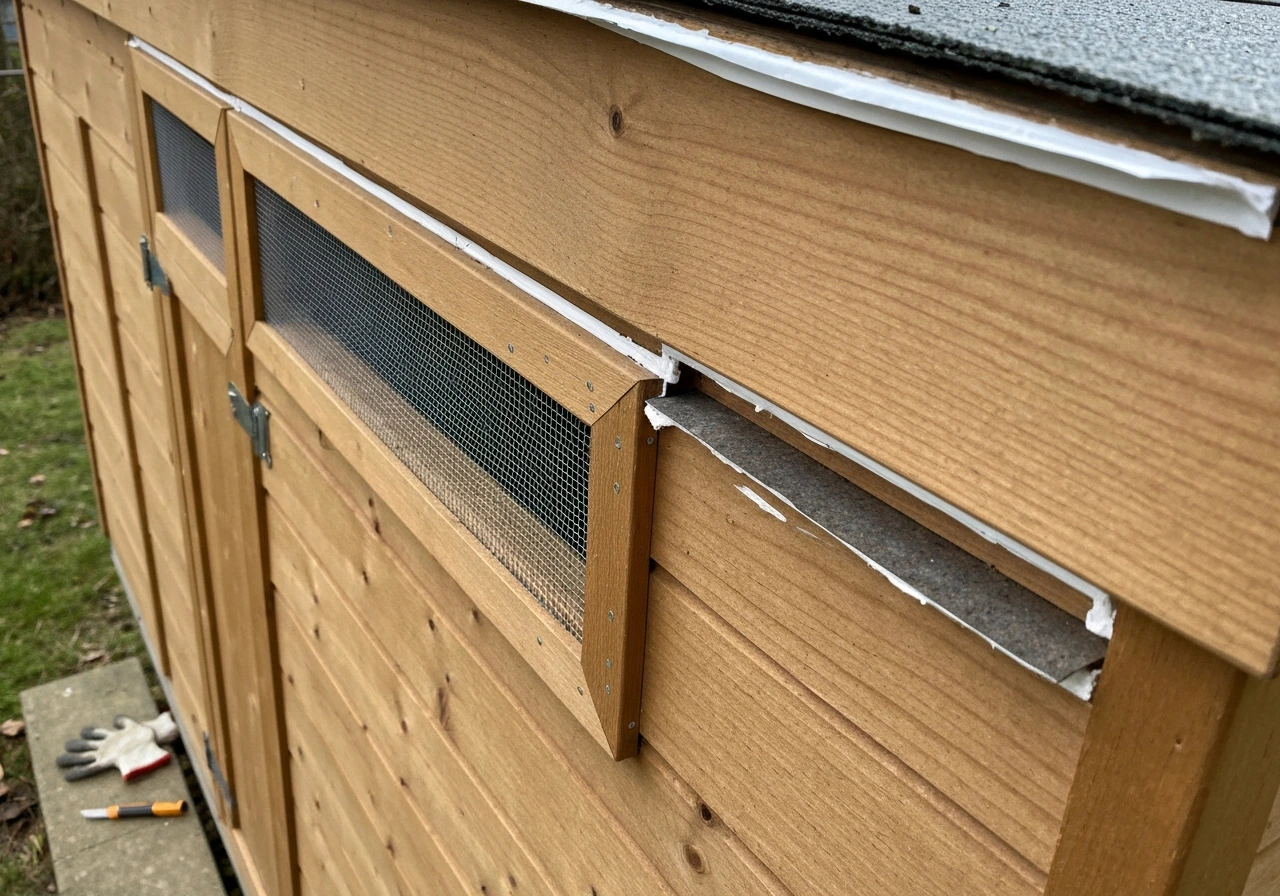
Once the bird is out, give the shed a systematic inspection. A bird got in somewhere, and if you don't close that entry point, you'll be doing this again. Take 20 minutes to walk the perimeter and interior methodically.
Finding and sealing entry points
- Check the roofline: gaps between rafters and the top of walls, loose or missing fascia boards, and open eave spaces are the most common entry points.
- Inspect vents: any vent opening without a screen is an invitation. Cover all vents with hardware cloth using a maximum mesh opening of 1/2 inch by 1/2 inch, as recommended by Wildlife Illinois for exhaust and ventilation openings.
- Look for gaps around pipe penetrations, electrical conduit, and cable entry points. Any gap larger than half an inch can let in smaller songbirds.
- Check door gaps: a door that doesn't close flush at the top or sides leaves room for birds to enter, especially swallows and sparrows.
- Look for holes in siding, rot-softened wood boards, or missing caulk around trim.
- If your shed has a window, confirm the screen is intact and tight-fitting.
For sealing materials, use 1/2-inch by 1/2-inch mesh hardware cloth for ventilation gaps and openings, caulk or foam backer rod for gaps around penetrations, and metal flashing or galvanized wire mesh for larger structural gaps. Avoid using expandable foam alone on exterior surfaces where birds could peck through it.
Removing attractants
Birds enter sheds for three main reasons: they're looking for shelter, they found food, or they found nesting material. Reduce all three. Store birdseed, pet food, and grain in sealed hard-sided containers. Remove standing water from containers, buckets, or low spots in the floor. Clear out loose clutter like old fabric, rope, straw, or plant material that birds use for nesting. A tidy, well-organized shed is simply less appealing.
Proofing checklist
- All vents covered with 1/2-inch hardware cloth
- Eave and fascia gaps sealed with wood filler, caulk, or metal flashing
- Door gaps addressed with door sweeps or foam weatherstripping
- Pipe and conduit penetrations sealed
- Window screens intact and properly fitted
- Food, seed, and grain in sealed containers
- Standing water removed
- Nesting material (loose fabric, straw, rope) removed or stored in closed containers
Seasonal planning, legal notes, and when to call a professional
Plan exclusion work around the calendar
The best window for exclusion and proofing work is late fall through early winter (November to February in most of North America), after migratory birds have left and before the spring nesting season begins. Attempting exclusion in spring or summer risks sealing active nests inside, which is both illegal under federal law for most species and genuinely harmful. If you're not sure whether a nest is active, wait and watch for a week before sealing anything.
| Season | Priority action | Notes |
|---|---|---|
| Late fall (Oct–Nov) | Full proofing inspection and sealing | Best time: birds have mostly migrated, no active nests |
| Winter (Dec–Feb) | Repair and install hardware cloth on vents and eaves | Cold weather makes materials easier to handle; fewer wildlife concerns |
| Early spring (Mar–Apr) | Check for new nest activity before any exclusion work | Do not seal entries if birds are already nesting inside |
| Summer (May–Aug) | Monitor only; do not disturb active nests | Most songbirds, swallows, and sparrows have active nests during this period |
| Late summer (Aug–Sep) | Once nests are confirmed empty, begin exclusion prep | Confirm juveniles have fledged before sealing |
Legal protections you need to know about
The Migratory Bird Treaty Act (MBTA) protects most wild bird species in the US. This means you cannot legally destroy an active nest, remove eggs, or harm migratory birds without a federal permit. The US Fish and Wildlife Service notes that permits for nest removal are typically only issued when the nest poses a direct human health or safety concern. Practically speaking: if a bird has built a nest in your shed and chicks are present, you cannot remove that nest until the chicks have fledged and the nest is no longer active. Attempting exclusion or removal during active nesting can result in federal penalties.
Common shed visitors like house sparrows and European starlings are generally not covered under the MBTA since they are non-native, introduced species. But swallows, wrens, robins, and most other species are protected. When in doubt, contact your state wildlife agency before removing a nest.
When to call a wildlife professional
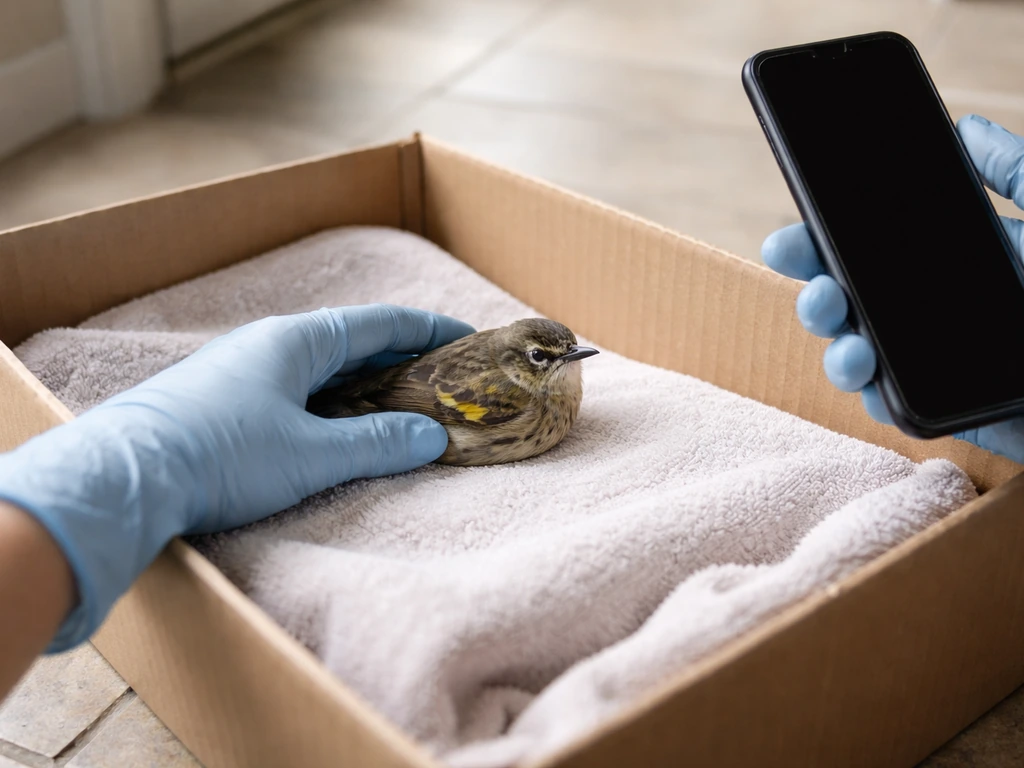
Most single-bird shed situations are solvable in under an hour with the steps above. Call a licensed wildlife rehabilitator or wildlife control professional when:
- The bird shows signs of injury and won't fly (broken wing, bleeding, unable to stand)
- You've found a nest with eggs or chicks and need professional guidance on timing
- There's a recurring flock problem that your own proofing hasn't resolved
- You suspect the bird may be a raptor (hawk, owl, kestrel) or other protected species that requires specialist handling
- You find multiple dead birds and suspect disease
- The bird has been trapped for more than 24 hours and is visibly exhausted or declining
When you call, be ready to describe the species if you can identify it, how long the bird has been inside, what you've already tried, and any visible injuries. That information helps the rehabilitator or wildlife officer advise you quickly. The USFWS website maintains a directory of permitted rehabilitators by state, and your local animal control or state wildlife agency can also connect you with the right resource.
Sheds present similar challenges to other enclosed structures like warehouses and retail spaces, though the smaller scale means you usually have more control over lighting and exit points. The core principles are the same regardless of the size of the building: reduce light competition, create one clear exit, move slowly, and never force the situation. Get those basics right and most birds will handle the rest themselves.
FAQ
Do I need to turn off all the lights in my whole house, or just inside the shed?
Just the lights inside the shed (and any lights aimed into it) matter. If the shed exterior is brightly lit, birds may not choose the door you want. If possible, dim or redirect any nearby light sources so the open shed exit is the brightest option.
What if the bird keeps choosing the skylight or roof gap instead of the open door?
Make the door the only bright route. Temporarily cover the skylight or translucent panel with a tarp or dark sheet so the brightest point moves to the doorway. Remove the cover once the bird starts leaving, then keep other openings closed during the attempt.
How long should I wait before trying to gently guide the bird with a sheet?
If the bird is perched or not orienting toward the exit, wait about 15 minutes after you set up the single exit and removed competing lights. If it still shows no progress, then use the slow, behind-the-bird sheet method near the end of that window.
Is it ever okay to catch the bird with a towel or gloves and move it out?
Only if the bird is injured or you are switching to containment and care. For a healthy, disoriented wild bird, picking it up or grabbing it can cause injury. Prefer the light and exit setup first, and use a box or ventilated container only when the bird cannot be guided safely.
What should I do if the bird won’t fly when approached and just walks or flutters on the floor?
That pattern can indicate injury, exhaustion, or shock. Stop trying to guide it and move to a dark, quiet, ventilated holding box (or another temporary container) so a rehabilitator can assess it.
Can I use a broom, net, or leaf blower to push the bird toward the exit?
Avoid all of those. Brooms and nets can cause collisions and wing injuries, and leaf blowers create loud stress plus rapid air movement that can disorient birds. Stick to calm movement, one clear exit, and the sheet approach if needed.
Does “open the largest door or window” mean I should open every possible opening?
No, not during the rescue attempt. Open one primary exit fully, then keep other doors closed to reduce confusion. If you have multiple birds, you can open more than one exit, but still aim to keep exits clear and prevent cross-lighting inside.
If I open the door and step back, what if the bird exits and flies back in immediately?
That usually means you have an accessible re-entry gap. After the bird leaves, inspect and seal the entry point, or install a temporary one-way exclusion flap once the bird is out and you confirm there is no active nesting activity.
How can I tell whether the bird might be nesting in the shed before I do exclusion work?
Look for a nest in corners, on shelves, in rafters, or in sheltered cavities. If you see eggs or chicks, do not exclude yet. If you are unsure about activity, wait and watch for about a week before sealing anything.
Is it safe to install a one-way exclusion door during spring or summer?
No, not if there is any chance of an active nest. Exclusion during nesting can trap chicks inside and can also trigger legal issues. Wait until nesting is inactive, based on your observation, before installing or sealing.
What size holding box should I use for an injured bird while I call a rehabilitator?
Use a ventilated container sized so the bird cannot thrash around, but large enough to allow normal breathing and a comfortable posture. Line it with paper or a towel for grip only if it doesn’t shed lint. Provide warmth by using a heating pad under one side only if needed.
Can I offer food or water to a wild bird I found in my shed?
Usually no. During initial stabilization, focus on quiet containment and warmth if necessary, then follow the rehabilitator’s instructions. Giving food or water at the wrong time or in the wrong way can worsen injuries or cause aspiration.
Do I need to worry about bird disease when I handle a dead bird in a shed?
Yes. Wear disposable gloves, use eye protection if you might get splashes, and bag the bird securely before disposal. If you find several dead birds in a short period, use an N95 mask and avoid dry sweeping or aerosol-generating cleanup.
What counts as a “short period” if I find multiple dead birds?
Treat it as an urgent cluster if you find five or more within a few days or within the same general short timeframe. If it’s a rapid increase, pause cleanup, increase protective gear, and consider contacting local public health for guidance.
After the bird leaves, when is the best time to do the full inspection and sealing?
Do a quick inspection immediately after the incident, then schedule the main proofing work for late fall through early winter (about November to February in much of North America). That timing reduces the risk of sealing in active nests.
What’s the most common mistake that makes birds keep reappearing in the shed?
Leaving the original entry gap open or only partially blocking it. Birds can use tiny cracks around penetrations, gaps in siding, loose vents, or damaged mesh. Do a methodical perimeter and interior scan, then seal with appropriate materials.