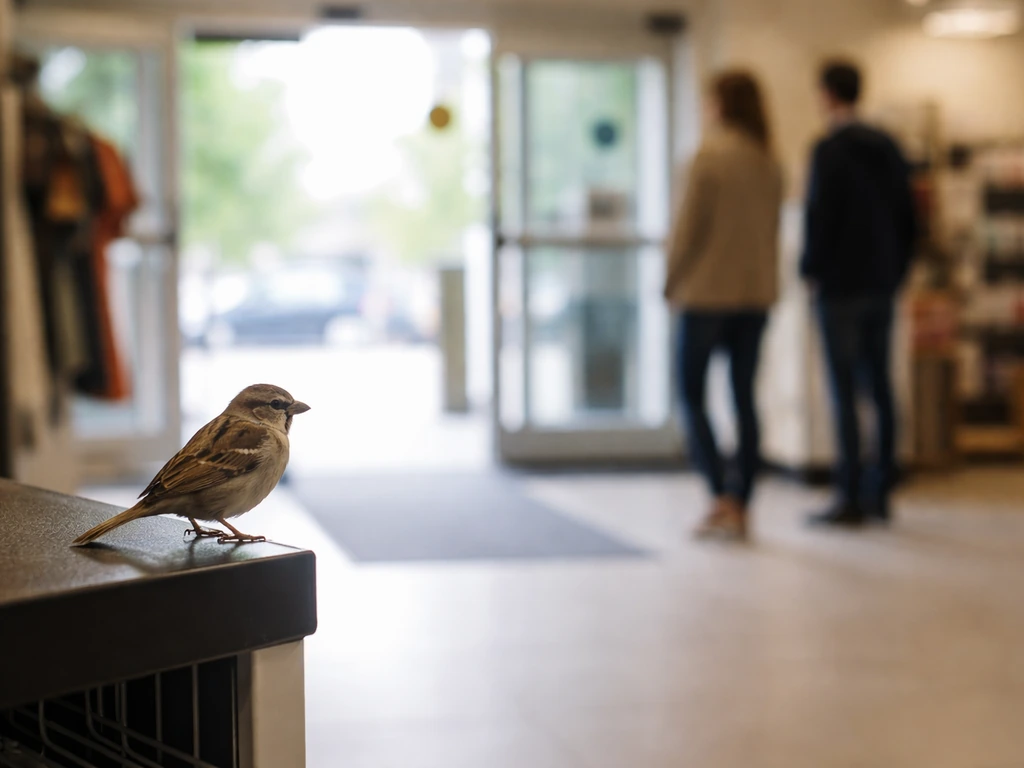
If a bird just flew into your warehouse, stop moving, dim the lights near exits, and open the largest door or loading dock you have. Most birds will find their own way out within 20 to 30 minutes once they can see a clear exit and the space gets quieter. If you need a step-by-step approach for a store situation, look at the specific guidance on how to get a bird out of a store. That's the fastest, safest, and most humane fix available. The rest of this guide covers what to do when that doesn't work, how to clean up safely afterward, and how to seal things up so this doesn't keep happening.
Bird in Warehouse How to Get Rid of It Safely

Maya Carver
14 May 2026
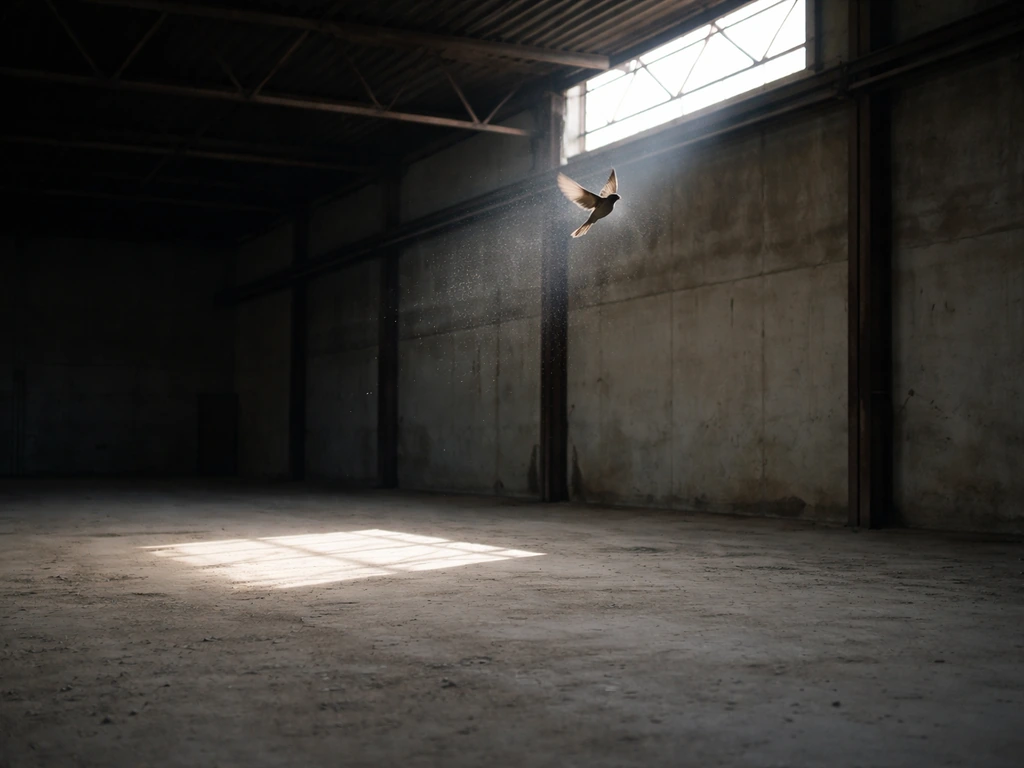
Right Now: Emergency Actions to Get the Bird Out Safely
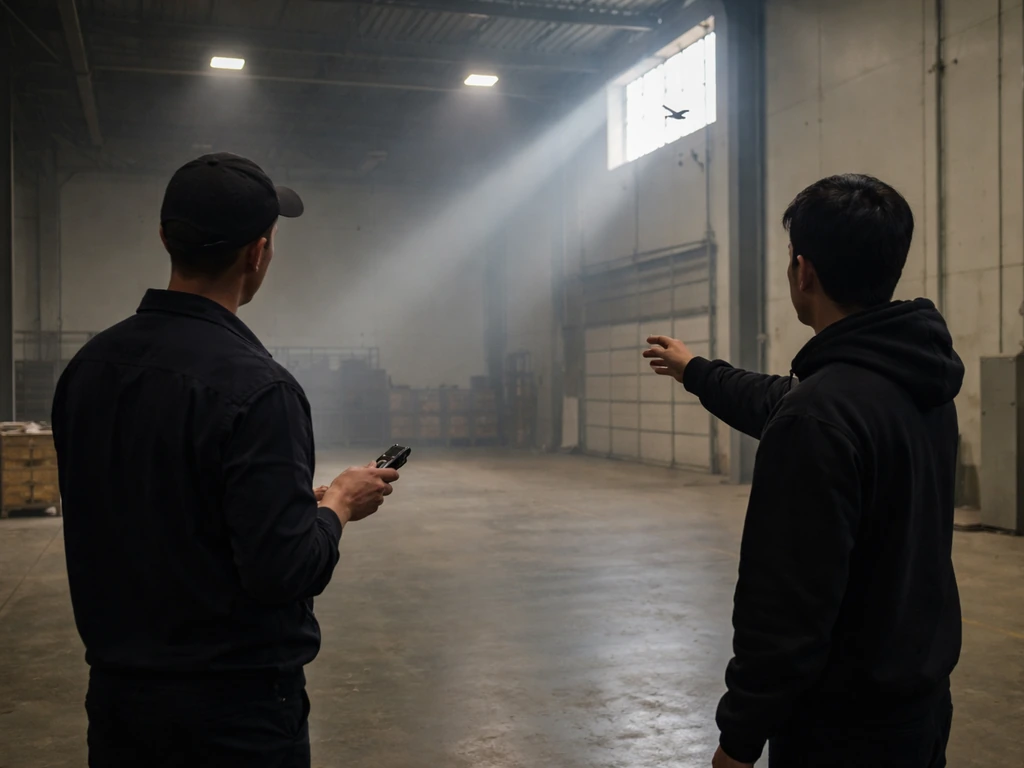
The first few minutes matter a lot. A panicked bird will exhaust itself flying into windows, beams, and skylights if you don't manage its environment quickly. Keep people calm and quiet. A warehouse full of shouting and waving arms will stress the bird and make the situation last much longer than it needs to.
- Clear people away from the area where the bird is flying. The fewer people moving around, the faster the bird settles.
- Open the largest exit you have: a loading dock door, a roll-up door, or double doors. Size matters. A bird won't reliably find a small personnel door.
- Dim or turn off interior lights near the ceiling and beams. Birds instinctively fly toward light, so make the exit the brightest point in the space.
- If your building has skylights, consider covering them temporarily with tarps or cardboard if you can do so safely from the ground. Skylights are a common trap; birds fly toward them and get stuck beating against the glass.
- Give the bird 20 to 30 minutes in this setup before doing anything else. Rushing in makes it worse.
- If it hasn't left after that, move to the guide-out steps below.
One thing to avoid right away: do not try to catch a flying bird with a net, box, or your hands unless it has landed and is clearly grounded or injured. If you still need more hands-on guidance, see how to catch a bird in a store for practical options once the bird is behaving and you can safely approach catch a flying bird with a net, box, or your hands. If you need a practical, step-by-step approach for capturing and containing the bird safely, follow the methods in this guide instead of trying to grab it catch a flying bird with a net, box, or your hands. Chasing a flying bird causes injury to the bird and creates a real risk of people getting hurt too, especially around racking, machinery, and elevated surfaces.
Containment and Guide-Out: DIY Methods That Keep Everyone Safe
If the bird hasn't found the exit on its own after 20 to 30 minutes, you need to actively guide it out without causing harm. If the situation is specifically a shed and you need step-by-step help, you can follow this guide on how to get a bird out of a shed. If you are still stuck, follow the steps for how to get a bird out of a warehouse using clear exits, calming the space, and careful guiding. The goal is to funnel the bird toward the open exit using the environment, not by chasing it.
- Close off as much of the interior as you safely can. Shut doors to adjoining rooms, offices, and storage areas. You want to limit the bird's flying range to the zone closest to your open exit.
- Use a slow, steady sweep with a large piece of cardboard or a moving curtain of people (spaced a few feet apart, arms out) to herd the bird gently toward the opening. Move slowly and don't rush.
- If the bird lands on a beam or rafter and won't move, reduce all light in the building except at the exit. Wait. Darkness encourages birds to move toward the light source.
- For a bird that has landed and is grounded or injured, approach slowly with a large box or laundry basket, place it over the bird, then slide a stiff piece of cardboard under the basket to trap it. Carry it outside and set it down gently in a safe spot away from the building.
- If you need to handle the bird directly, wear gloves. Don't squeeze the bird's chest, as birds breathe partly through their ribcage and chest compression can be fatal.
- Once the bird is outside, close the exit immediately to prevent re-entry.
A note on netting: large mesh nets can be used to temporarily section off a part of the warehouse to confine a bird and guide it toward an exit. USDA APHIS recommends netting with a mesh size matched to the target species, for example around 3/4-inch mesh for smaller birds. USDA APHIS’ bird dispersal guidance notes that net mesh size should be matched to the target species, including an example of netting with a ¾-inch mesh netting with a mesh size matched to the target species, for example around 3/4-inch mesh for smaller birds.. If you have a large open warehouse with high ceilings, this can actually be one of the most practical DIY approaches when slow sweeping isn't working.
Figure Out What You're Actually Dealing With
Before you start sealing anything or setting up deterrents, spend 10 minutes figuring out the scope of the problem. A single bird that wandered in through an open dock door is a very different situation from a colony of starlings that have been roosting in your roof trusses for three months.
Single bird vs. roosting or nesting birds
A single bird is usually an accidental visitor. You guide it out, seal the entry point, and you're done. Roosting birds are using your warehouse as a regular overnight shelter, often in groups. Nesting birds have gone further and are actively raising young inside the building. If you're seeing droppings accumulating in a specific spot, feathers, nesting material (twigs, grass, foam insulation), or you hear birds consistently at the same time of day, you're dealing with a roost or nest, not a one-time visit. That requires a different, more careful approach, especially given legal protections for some species.
Common warehouse species and what they tell you
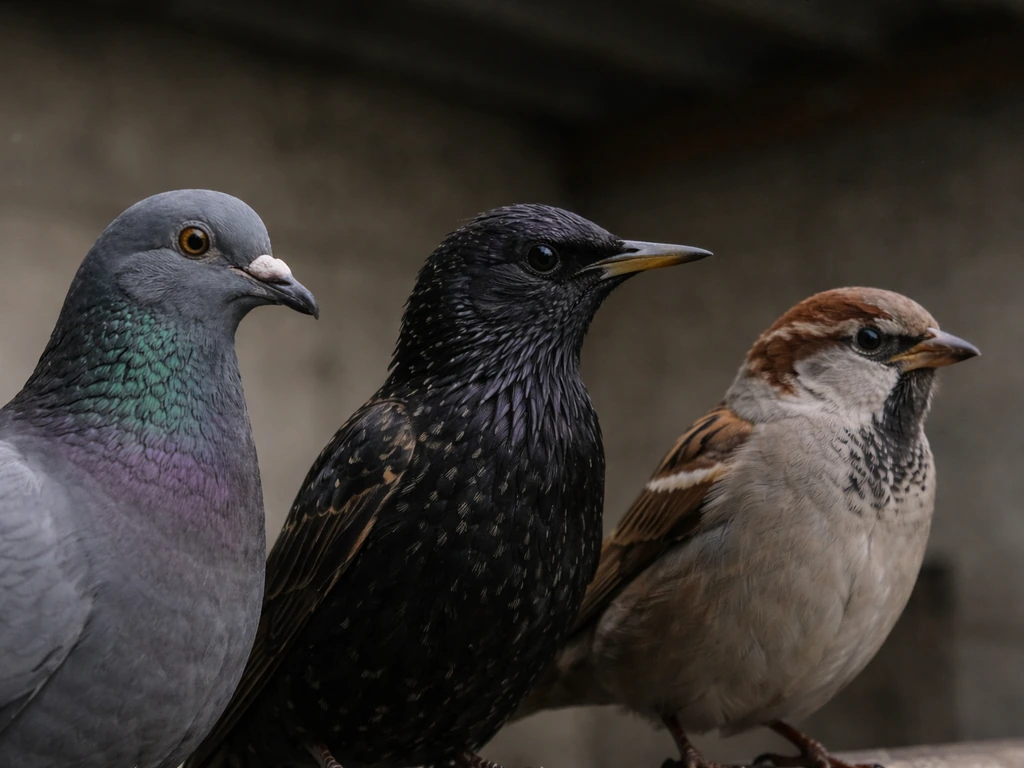
The most common warehouse birds in the U.S. are pigeons, European starlings, house sparrows, and occasionally swallows or barn owls. Pigeons and starlings are drawn to large open buildings with roof access and are the species most associated with large dropping accumulations. The CDC and USDA APHIS specifically flag blackbirds, starlings, grackles, and pigeons as the species most commonly linked to histoplasmosis risk from accumulated droppings. Swallows and barn owls tend to nest in specific spots like rafters, corners, or cavities. Sparrows are small and can squeeze through surprisingly tight gaps, as small as 3/4 of an inch.
Common hotspots inside a warehouse
- Steel roof trusses and I-beams (flat surfaces and joints collect birds and droppings)
- Loading dock areas and dock leveler pits
- Above suspended ceilings or in ceiling cavity voids
- Near skylights and translucent roof panels
- Around HVAC units, ductwork, and exhaust vents on the roof
- Mezzanine levels and elevated storage areas with low foot traffic
- Any area with standing water, spilled grain, or food waste nearby
Clean-Up: Protecting Yourself from Droppings and Feathers
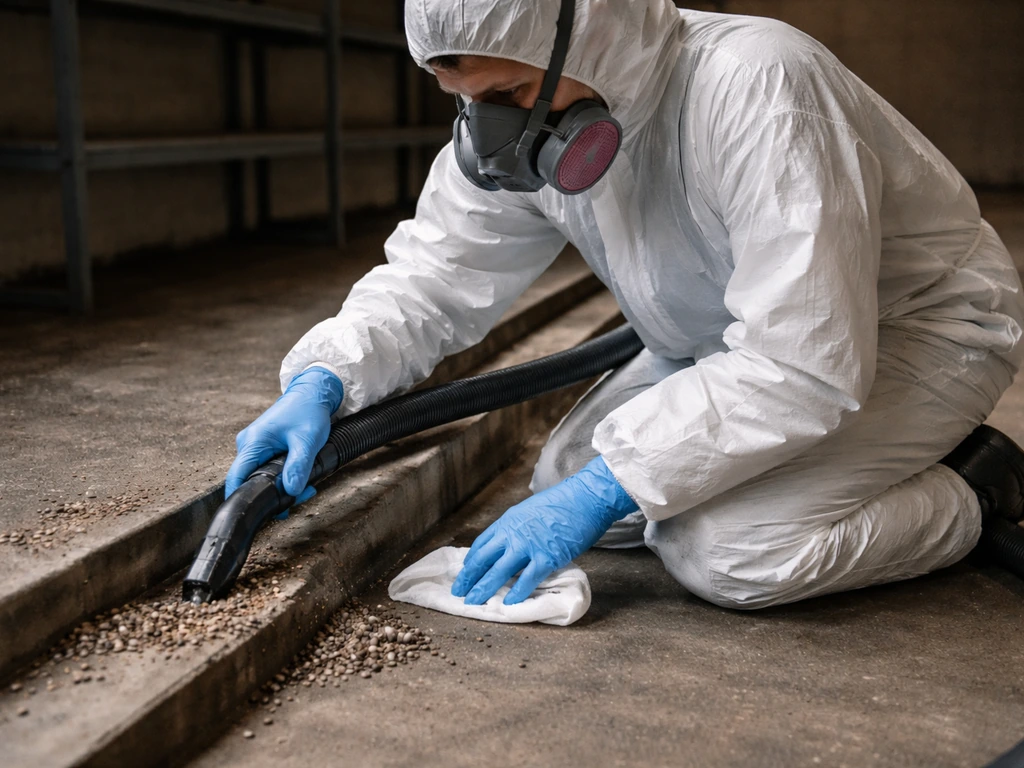
Bird droppings are a real health hazard, not just a mess. Histoplasmosis is a lung infection caused by breathing in fungal spores that grow in soil and accumulated droppings, particularly from pigeons, starlings, and similar species. You can't see or smell the spores. This means any cleanup involving dried droppings requires proper respiratory protection, full stop.
Before you start cleaning, gear up properly. OSHA recommends an NIOSH-certified N95 respirator at minimum for work involving bird waste. The CDC also advises against stirring up dust, bird waste, and feathers in ways that disperse material into the air. Wet the droppings lightly with water or a disinfectant spray before sweeping or scraping to keep dust down. The US EPA lists antimicrobial products registered for disinfection use against avian influenza and advises users to follow label directions for effective and safe disinfection. Never dry-sweep or use compressed air on dried bird droppings.
- Wear an N95 or higher respirator (not just a dust mask)
- Use disposable gloves and eye protection
- Cover any exposed skin with long sleeves
- Wet droppings before disturbing them
- Bag waste in heavy-duty garbage bags and seal them before disposal
- Clean surfaces with soap and water until visibly clean, then disinfect with an EPA-registered disinfectant that lists influenza A virus claims (EPA List M)
- Wash hands and any exposed skin thoroughly after finishing
- Change clothes before entering common areas
If you're dealing with a large accumulation of droppings (a roosting colony situation with months of buildup on beams or floors), the CDC and NIOSH are explicit that this type of cleanup should be handled by a professional hazardous waste company. That's not overcautious advice. A large deposit of dried pigeon or starling droppings creates a serious inhalation hazard that goes well beyond what standard facility cleaning crews should handle without proper training and equipment.
Find and Seal Entry Points Before the Next Bird Moves In
Getting the bird out is only half the job. If you don't find and close the entry point, you'll be doing this again next week. Warehouses are genuinely difficult to proof completely because of their size and the number of penetrations in the building envelope, but a systematic inspection focused on the most common entry points will cover 80 to 90 percent of cases.
Where to inspect
- Loading dock doors and dock seals: gaps around dock bumpers, worn or missing dock seals, and the space above dock levelers are the most common entry points in commercial warehouses
- Roof penetrations: HVAC units, vents, exhaust fans, ridge vents, and any conduit or pipe penetrations through the roof deck
- Eaves and fascia: open gaps at the roofline where the wall meets the roof are a frequent pigeon and sparrow entry point
- Broken or missing vent covers on gable ends and soffits
- Skylights and roof panels: cracked or lifted panels, gaps around frames
- Personnel doors that are propped open or have large gaps at the threshold
- Window louvers and broken window glass
- Gaps around overhead door tracks where they penetrate the wall
How to seal what you find
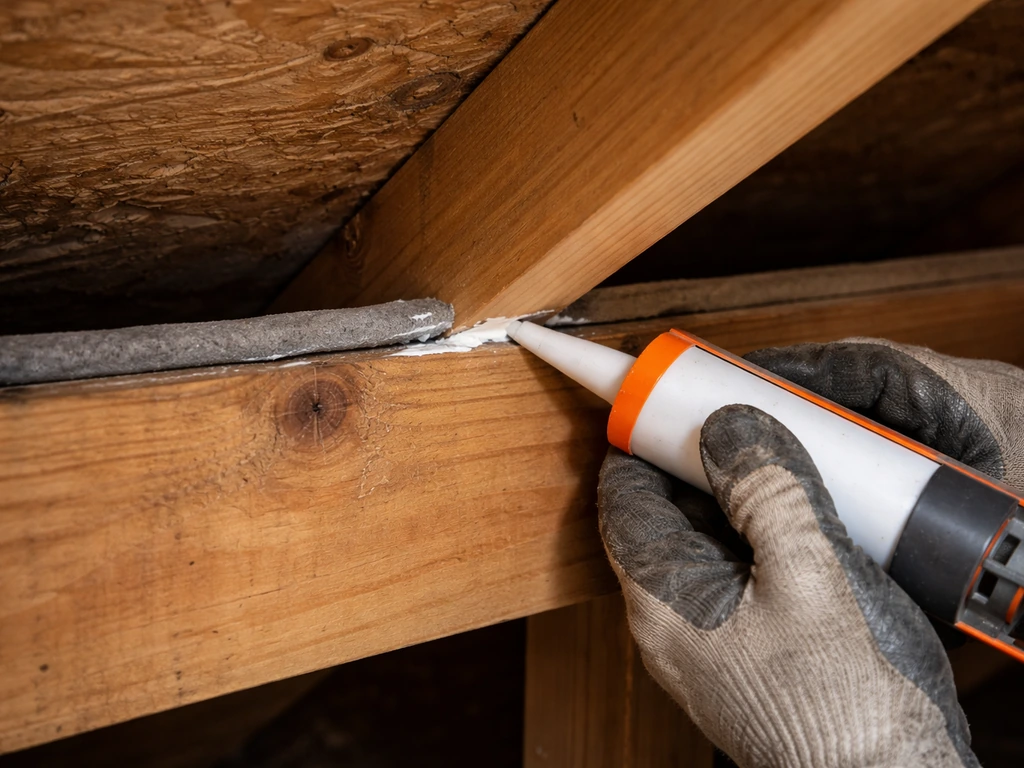
The right sealing method depends on the size and location of the gap. Small gaps and cracks (under 1/2 inch) can be sealed with exterior-grade caulk or foam backer rod. Larger gaps at roof penetrations should be covered with galvanized hardware cloth (1/2-inch mesh or smaller for sparrows) secured with screws and washers, not staples. Loading dock seals should be inspected and replaced by a dock equipment company if they're worn; in the meantime, brush strips along the top and sides of dock doors are an inexpensive temporary fix. Open roof vents should be covered with heavy-gauge wire mesh, not plastic mesh, which birds can peck through.
For active roost points on beams and ledges, physical exclusion works better than deterrents alone. Bird slope panels (angled plastic or metal strips that prevent landing), bird spikes on flat ledges, and netting stretched across beam sections are all proven approaches. USDA APHIS specifically recommends exclusion netting as a primary technique, with mesh size chosen for the target species. If birds have been roosting long-term in a specific area, the combination of professional-grade netting plus one-way door exclusion during active use of a cavity is often the most reliable fix.
One-way doors: useful but use them carefully
A one-way door fitted over an entry/exit point lets birds leave but not return. The Maine DNR and Washington Department of Fish and Wildlife both describe this as a reliable exclusion technique, but both agencies are clear on one critical point: only use a one-way door when you are certain there are no young birds or eggs inside. Evicting an adult while chicks are trapped inside is inhumane and in many cases illegal. Confirm the season, check for nesting activity, and if there's any sign of a nest with eggs or young, wait until the nest is complete (all birds fledged) before installing a one-way door or sealing the opening.
Make the Warehouse Less Attractive to Birds
Even with entry points sealed, a warehouse that offers food, water, and comfortable perching will keep drawing birds to try. Controlling attractants is the longer-term layer of protection that makes all your sealing work stick.
- Food and waste control: keep all food products in sealed containers, clean up spilled grain, seed, or food scraps daily, and manage dumpsters and compactors with tight-fitting lids. A single open bag of birdseed or loose grain on the warehouse floor is enough to establish a feeding pattern.
- Standing water: fix roof drains and floor drains that collect standing water. Birds need water sources, and even a few inches in a floor drain pit or roof depression counts.
- Lighting: high-pressure sodium or LED warehouse lights near roof vents and dock openings can attract insects at night, which then attract insect-eating birds. Consider motion-activated lighting near vulnerable openings rather than continuous overnight lights.
- Nesting material: remove any accumulated debris (cardboard scraps, packing foam, rope, loose insulation) from beam tops and roof cavities. Birds use these materials to build nests and their presence signals a hospitable site.
- Keep dock doors closed when not in active use. This sounds obvious but is the single most effective thing most warehouses can do. Automated dock door controls that close doors after a timed interval help significantly in high-traffic operations.
When to Call a Wildlife Professional (and What the Law Requires)
Most single-bird situations are manageable as DIY. But there are several scenarios where calling a licensed wildlife control professional is the right call, not just a convenience.
Call a pro when:
- You have an active roost of more than a handful of birds inside the building
- You've found an active nest with eggs or chicks
- Droppings have accumulated on a large scale (multiple beam sections, entire floor areas)
- The bird appears injured or ill and can't be released safely
- You've identified the bird as a species you're not sure how to handle (owl, hawk, or unusual species)
- Your sealing and deterrent efforts have failed and birds keep returning
The legal side: the Migratory Bird Treaty Act
This is genuinely important and something a lot of facility managers aren't aware of. The Migratory Bird Treaty Act (MBTA) under Title 16 of the U. S. Code protects most migratory bird species and their nests.
Under USFWS guidance, you cannot legally destroy a nest that has eggs or chicks in it, or contains young birds that still depend on the nest. An empty nest (no eggs, no birds) can generally be removed without a permit, as long as you don't possess it. The birds most commonly found in warehouses, pigeons, European starlings, and house sparrows, are not MBTA-protected species, which gives you more flexibility with them.
But if you have swallows, swifts, barn owls, or any raptor nesting in or on your building, the MBTA applies and you need to consult a wildlife professional before doing anything that could disturb that nest.
When you call a wildlife professional, be ready to tell them: the species if you know it, how long the birds have been present, where they are roosting or nesting specifically, whether you've seen chicks or eggs, and the approximate size of the building. That information helps them come prepared with the right equipment and give you an accurate assessment.
Seasonal Prevention Checklist and Ongoing Monitoring
Bird pressure on warehouses isn't constant year-round. It peaks in early spring as birds seek nesting sites (February through May in most of the U.S.), again in late summer and fall when migratory species and juveniles are searching for shelter, and in winter when birds move toward warm buildings. A seasonal inspection calendar lets you stay ahead of the problem instead of reacting to it.
| Season | Key Actions |
|---|---|
| Late Winter / Early Spring (Feb–Mar) | Inspect and repair all roof vents, dock seals, and fascia gaps before nesting season begins. Remove any old nesting material from rafters and beam tops now, while nests are empty and legal to remove. |
| Spring (Apr–May) | Watch for new nesting activity on beams, in dock areas, and around HVAC units. Do not disturb active nests with eggs or young. Document locations for post-fledge removal. |
| Summer (Jun–Aug) | After nests fledge, remove nesting material and install exclusion measures (netting, spikes, slope panels) at confirmed roost/nest sites. Reinspect dock seals and repair wear from spring/summer truck traffic. |
| Fall (Sep–Nov) | Check roof drains and eliminate standing water before winter. Inspect for new gaps created by summer heat expansion in roofing materials. Confirm dock doors are closing fully and seals are intact. |
| Winter (Dec–Jan) | Monitor interior for signs of roosting (fresh droppings, feathers). Check interior lighting near roof vents on overnight inspections. Confirm HVAC exhaust guards are secure. |
Ongoing monitoring: what to track
- Walk the perimeter of the building at roof level (safely) at least twice a year, in late winter and late summer
- Assign a staff member to log any bird sightings inside the building, including location and approximate time of day
- Keep a photo record of known entry points and sealing work so you can compare against future inspections
- After any heavy wind or hail event, inspect roof vents and mesh covers for damage
- Check dock seal condition as part of your regular dock equipment maintenance schedule
Quick Troubleshooting Flowchart
Use this decision path to figure out your next step quickly based on what's happening right now.
- Bird is flying inside right now → Open largest exit, dim interior lights, clear people out, wait 20 to 30 minutes.
- Bird hasn't left after 30 minutes → Begin slow guide-out sweep toward open exit, or use the basket method if it has landed.
- Bird is injured or grounded → Use box-and-cardboard capture, release outside, monitor the bird briefly.
- You've removed the bird but droppings are present → Gear up (N95, gloves, eye protection), wet droppings, clean and disinfect with EPA List M product. Large accumulations: call a hazmat cleaning company.
- You want to stop this happening again → Inspect all dock seals, roof vents, eaves, and skylights. Seal gaps with hardware cloth or caulk. Install exclusion devices on known roost spots.
- Birds keep coming back despite sealing → Check for attractants (food waste, standing water, nesting material). Review lighting near openings. Consider professional wildlife control assessment.
- You've found an active nest with eggs or chicks → Do not disturb. Check species. If MBTA-protected, contact a licensed wildlife professional. If pigeon, starling, or house sparrow, document and plan exclusion for after fledging.
- You have a large roosting flock → Call a licensed wildlife control professional. This is not a DIY situation.
Your Quick-Reference Action Checklist
- Open the largest exit and dim interior lights immediately when a bird is inside
- Keep people calm and quiet; clear the area near the bird
- Guide the bird out slowly; use basket capture only if it has landed
- Gear up with N95, gloves, and eye protection before any cleanup
- Wet droppings before sweeping; use EPA List M disinfectant after cleaning
- Call hazmat professionals for large dropping accumulations
- Inspect loading dock seals, roof vents, eaves, skylights, and door gaps
- Seal gaps with hardware cloth or caulk; install netting or spikes at roost points
- Control food waste, standing water, and dock door discipline to reduce attractants
- Check species before disturbing any nest; MBTA applies to most migratory birds
- Schedule biannual building inspections in late winter and late summer
- Call a licensed wildlife control professional for flocks, active nests, or persistent repeat entries
FAQ
How long should I wait before I start actively guiding a bird in my warehouse?
If the bird is inside and not acting injured, don’t chase it. Instead, dim lights and open the largest exit, then stay quiet and let it self-direct. If it still hasn’t left after about 20 to 30 minutes, switch to active guiding that funnels it toward the open exit without cornering or grabbing it.
What signs tell me a “one bird” issue is actually a roost or nest?
Yes, and it’s often a clue the bird is not just an accidental visitor. If you see repeated droppings in the same area at similar times of day, feathers or nesting material, or you hear birds consistently, treat it as a roost or nest and avoid any cleanup that could spread dust until you confirm the scope.
Can I just sweep dried bird droppings like normal dirt?
Treat dried droppings as potentially infectious dust. Don’t dry-sweep, don’t use compressed air, and don’t blast the area with fans that blow dust outward. Wet the waste lightly with water or disinfectant spray before any removal, and wear at least an N95 that is NIOSH-certified.
When should I stop DIY cleaning and call a hazardous waste cleanup company?
If you’re seeing months of buildup, the safest move is to hire a professional hazardous waste company. Large deposits from pigeons or starlings create a real inhalation hazard that typically exceeds what standard janitorial methods cover, even if you wear a basic respirator.
How do I find the entry point if I can’t tell where the bird got in?
Before sealing, identify the entry point by doing a quick 10-minute scope check, then inspect the most common penetrations such as roof vents, soffits, loading dock gaps, and areas around racking where gaps are hidden. If you cannot find a likely gap, birds may still be accessing through vents or small roof penetrations you don’t visually spot.
What’s the right way to seal a gap so birds don’t come back?
Use an exclusion approach that matches the gap size and location. Small cracks can be caulked or backed with foam rod, larger roof penetrations are usually covered with secured hardware cloth (not plastic), and loading dock brush strips or dock seal replacement can address worn door seals.
Can I install a one-way door right away to force birds out?
A one-way door is only appropriate when you are confident there are no eggs or young inside the building or cavity. If there’s any sign of nesting activity, wait until birds have fledged, because trapping dependent young is both inhumane and potentially illegal.
What should I do if I suspect eggs or chicks near where birds are entering?
If you see nesting in progress, you should delay exclusion or any sealing that could trap birds. A wildlife professional can help confirm whether young are present and advise whether you can exclude immediately or must wait for fledging to avoid legal and welfare violations.
When is netting an appropriate option in a large warehouse?
Yes, and it can create a safer “search zone” to get the bird moving toward an exit. The key is using the right mesh size and keeping the net setup temporary so the bird isn’t stressed for long periods. If you’re dealing with tall ceilings and a large open space, sectioning off can be more practical than slow sweeping.
What if I can’t identify the species, but I keep seeing birds return?
If you can’t identify the bird, don’t rely on cleaning alone to solve recurrence. Repeated return attempts plus consistent droppings usually means roosting behavior, and it may require professional assessment for exclusion and cleaning sequencing to avoid spreading contaminated dust.
What situations mean I should call a wildlife control professional instead of handling it myself?
Call a licensed wildlife control professional when you have suspected raptors, swifts, swallows, or barn owls, because MBTA protections can apply. Also call if there is heavy buildup over time, multiple roost locations, or you’re not confident about nest status and season, since the timing affects what you can legally and safely do.
Next Article
How to Catch a Bird in a Store Safely and Humanely
Humane, safety-first steps to catch a store bird now, redirect it out, then prevent future entries and know when to call