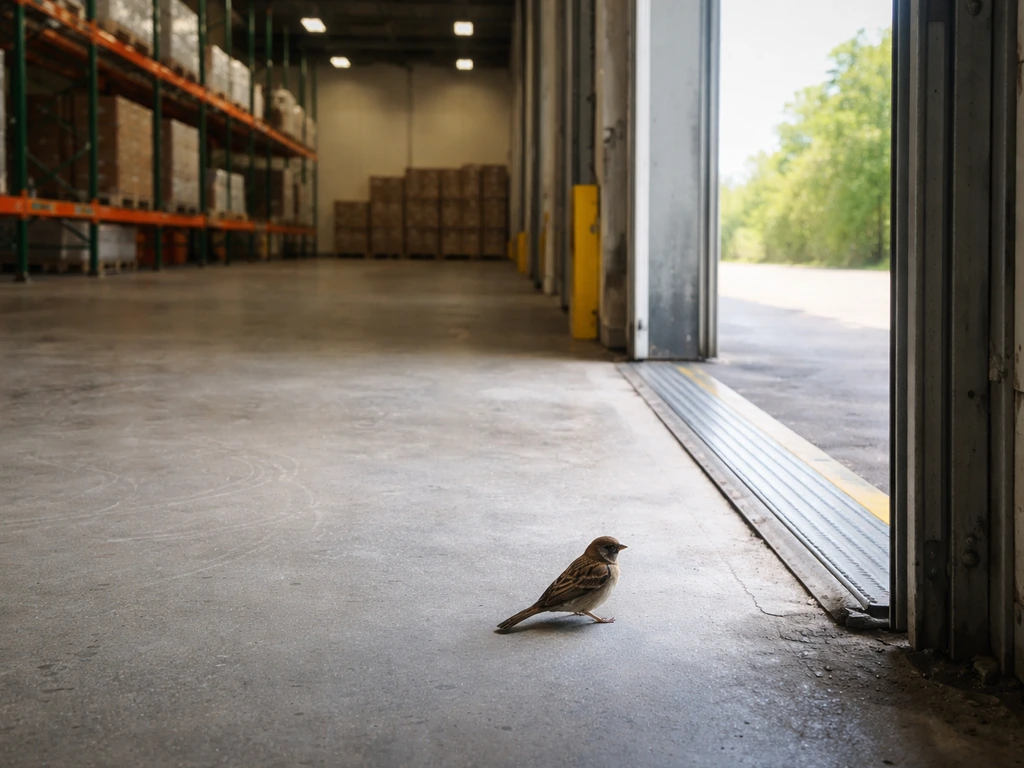
Turn off every interior light you can, open your largest exit door or window wide, and step back. Birds almost always fly toward the brightest point in a space, so making that bright point an open exit is your fastest, most humane solution. In most cases, a bird will find its own way out within a few minutes once you set up the right conditions.
How to Get a Bird Out of a Store Safely Today
Maya Carver
28 Apr 2026
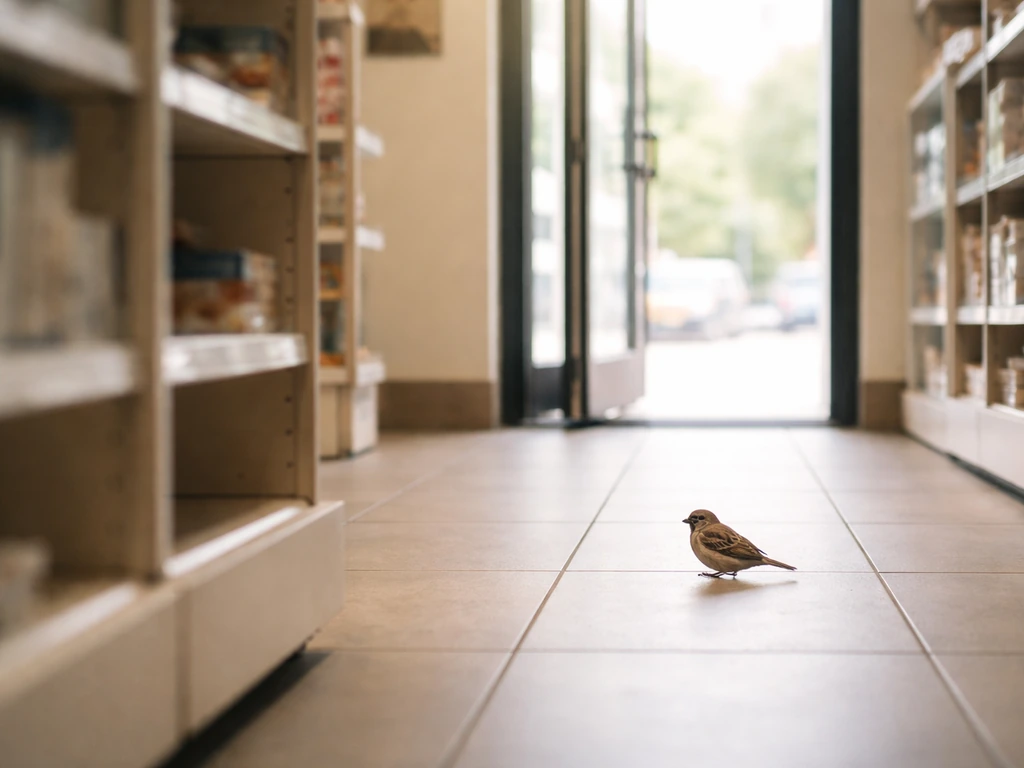
First: do a quick safety check and calm things down
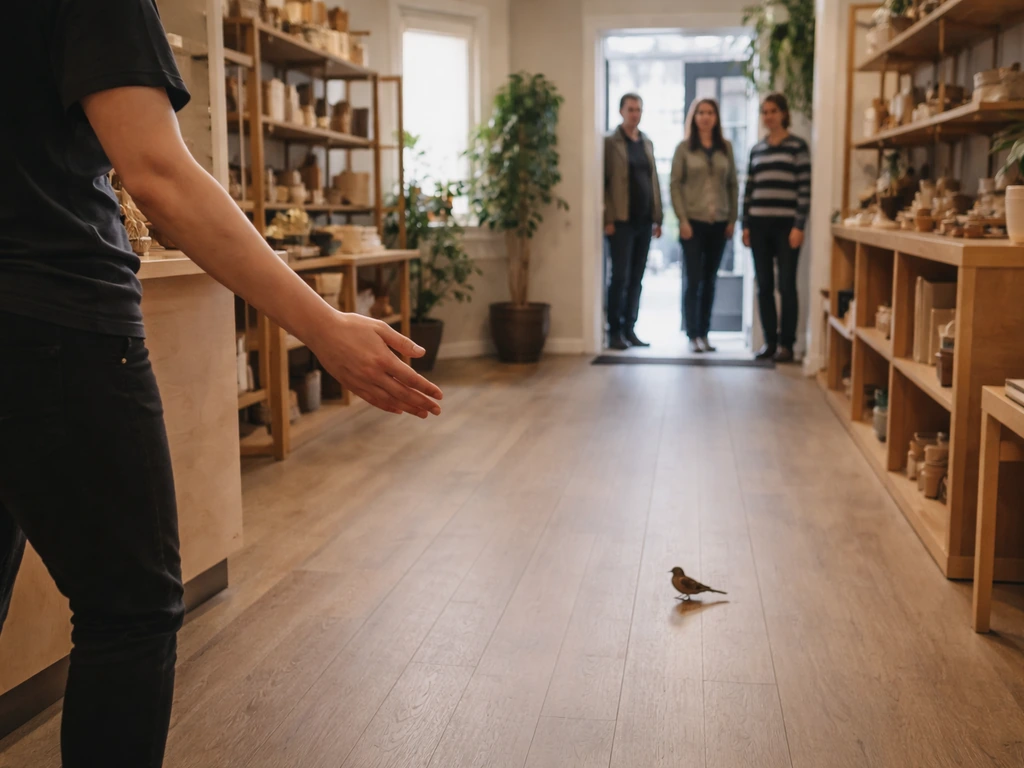
Before you chase the bird or start propping doors open, take 60 seconds to make the situation safe for your customers, staff, and the bird itself. A panicked bird will crash into display cases, shelving, and windows. A panicked crowd makes it ten times worse.
- Clear customers away from the area where the bird is active. Calmly direct them to another section of the store or ask them to wait outside.
- Tell staff to stop sudden movements and lower their voices. Loud noise and waving arms keep the bird stressed and flying erratically.
- Identify where the bird is right now and roughly what species it is. A small sparrow or starling behaves very differently from a large crow or pigeon.
- Check whether the bird appears injured: is it flying normally, or is it hopping on the floor, listing to one side, or unable to gain altitude? Injured birds need a different approach (covered below).
- Note which entry points are open: doors, loading bays, sky windows, broken vents. You'll need to close everything except your chosen exit.
- Do not attempt to grab the bird yet. Chasing it burns its energy and drives it deeper into the store.
The goal in this first stage is simply to reduce chaos. A calm store with one bright open exit almost solves the problem by itself.
The fastest way out: using light and exits
This is the core technique, backed by guidance from humane societies and wildlife responders: make the interior dark and one exit the brightest point in the building. Here is how to do it in a retail space.
- Choose your exit: pick the largest door or window that opens directly to the outside, ideally on the side of the building the bird is closest to.
- Open that exit completely. Prop it wide open so there is no glass or screen blocking the path.
- Close or block every other potential exit and entry point: other doors, loading dock doors, emergency exits (where safe to do so temporarily), and connecting interior doors.
- Turn off all interior lights in the area where the bird is. If you have skylights, cover or dim them if possible using blinds, tarps, or cardboard.
- If your chosen exit leads outside into natural daylight, that contrast will draw the bird almost immediately.
- Stand well back and give the bird five to ten minutes of quiet. Do not hover near the exit or the bird.
- If the store has a natural light source such as a large front window, and the bird keeps flying toward it, position your open exit directly beside or below that window to redirect its movement outward.
In most cases, this is all you need. Sparrows, starlings, pigeons, and the other small birds most likely to wander into a retail store will exit within minutes once the light contrast is set up correctly. This same principle works in larger commercial buildings too, though the scale of the operation changes. The approach for getting a bird out of a warehouse follows the same light-based logic, just applied across a much bigger footprint. The same gentle, light-based approach used for smaller stores can help you figure out how to catch a bird in a warehouse and get it out safely. If you need help because a bird is inside a warehouse, this guide also explains how to get it out safely and quickly bird in warehouse how to get rid of. The approach for getting a bird out of a warehouse is the same overall: darken the interior and make the exit the brightest, most accessible spot.
Step-by-step humane guidance when it won't leave on its own
Some birds, especially those that have been inside for a while or are confused by reflective surfaces, artificial lighting, or the smell of food, need a little more encouragement. Work through these steps in order.
Step 1: Gently herd the bird toward the exit
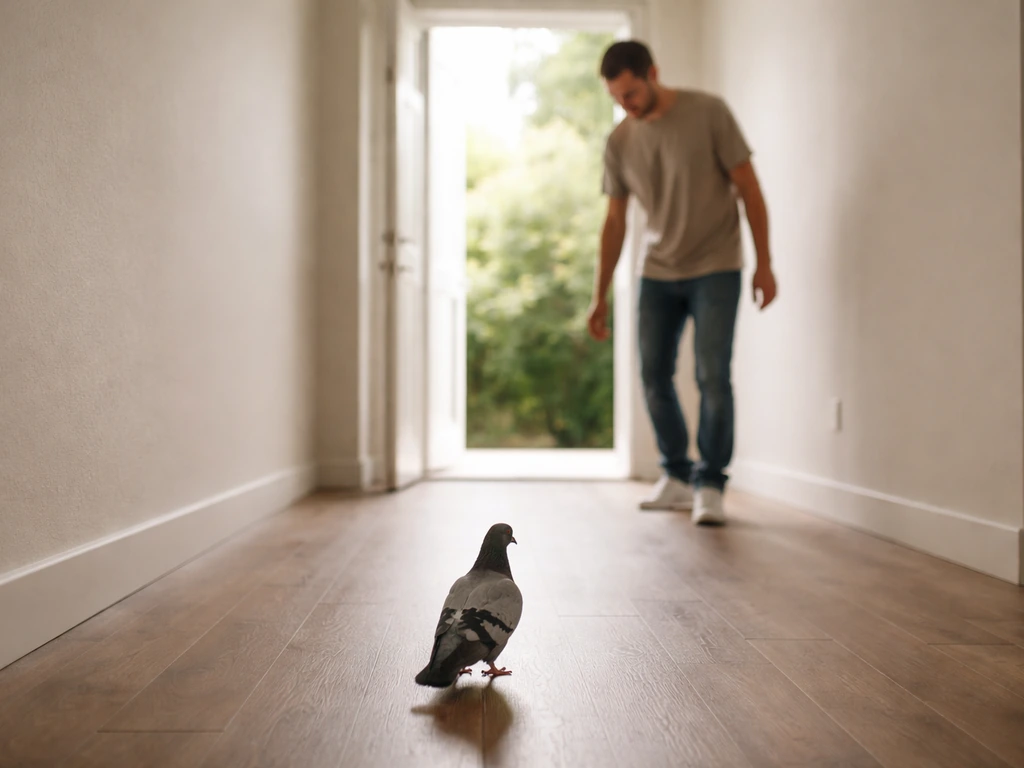
Stand behind the bird at a distance of six to ten feet and move slowly toward it. If you are dealing with a bird that will not leave on its own, follow the step-by-step humane guidance in this article for how to catch a bird in a store. Use a large, light-colored sheet or piece of cardboard held in front of you to create a soft visual barrier. Do not rush. The idea is to reduce the space available to the bird on the interior side and let the open exit feel like the only comfortable direction. If you have two staff members available, one on each side and one behind works well for steering.
Step 2: Use gentle sound cues
A soft, consistent sound from behind the bird (a slow clap, a gentle shaking of keys, or a low voice) can encourage forward movement. Avoid sudden loud noises, which cause the bird to spike upward and circle rather than move horizontally toward the exit.
Step 3: If the bird lands and won't move, try a containment approach
If the bird has perched somewhere low and is not flying, you have a window to contain it. This works best when the bird is exhausted or temporarily resting.
- Put on a pair of thick gloves (leather or gardening gloves) before you attempt contact. Birds can bite and scratch, and direct skin contact with a wild bird is a health risk.
- Drape a light towel or cloth over the bird from above. Do this in one calm, deliberate motion, not a grab.
- Once covered, gently cup both hands around the bird's body through the cloth, keeping its wings folded against its body. Do not squeeze.
- Carry the bird calmly to the open exit and release it at ground level or a low ledge just outside the door. Open the cloth and step back.
- Watch to make sure it flies away before you close the exit.
If you are not comfortable handling the bird directly, a cardboard box with air holes can work as a temporary carrier. Coax or gently herd the bird into the box, close the top, and carry it outside to release. This technique is essentially the same whether you are dealing with a bird in a shed, a retail shop, or a larger commercial space. Birds in sheds can often be handled the same way: darken the shed interior and make one exit the brightest, safest route out how to get a bird out of a shed.
What not to do
- Do not spray the bird with water. It does not help and causes unnecessary stress.
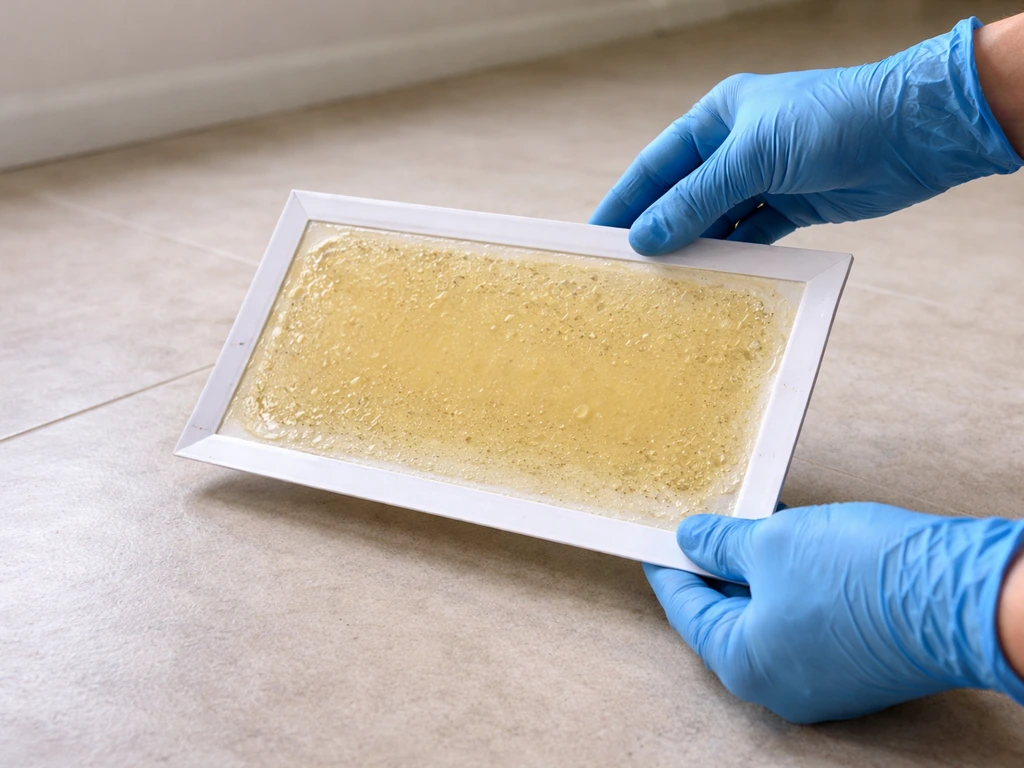
- Do not use glue traps, sticky boards, or any adhesive product. These cause severe injury and in many cases are illegal to use on wild birds.
- Do not use chemical repellents or aerosol sprays near the bird.
- Do not let the store remain at full brightness with all doors open. This creates an undirected environment and the bird will simply keep circling.
- Do not leave food out to lure the bird. It keeps the bird inside longer and can attract additional birds.
After the bird leaves: release, cleanup, and disinfection
Releasing the bird safely
If you caught the bird in a towel or box, release it outside in a quiet area away from traffic and crowds. Set it down on a flat surface (not tossed into the air) and step back at least ten feet. A healthy bird will take flight within seconds. If it does not fly away after a couple of minutes, it may be injured or in shock. In that case, do not return it to the interior. Instead, contact a licensed wildlife rehabilitator.
Cleanup and disinfection
Bird droppings are not just a mess. They can carry Histoplasma capsulatum, the fungus responsible for histoplasmosis, as well as Salmonella and other pathogens. The CDC notes that histoplasmosis risk comes from blank" rel="noopener noreferrer">breathing spores in environments contaminated by bird or bat droppings, so reducing exposure during droppings-related cleanup and activities is important. For a single bird that was inside briefly, the cleanup risk is low, but you still need to handle it properly, especially in a food-adjacent retail environment. After removing contaminated PPE or gloves, OSHA advises washing hands with soap and water as soon as feasible.
- Wear disposable gloves and, if disturbing any accumulated droppings, an N95 respirator. The CDC and NIOSH specifically recommend respiratory protection when cleanup activities could aerosolize spores.
- Do not dry-sweep or vacuum droppings. Wet them lightly with a water-and-bleach solution (1 part bleach to 9 parts water) first to prevent aerosolization.
- Wipe down the affected surfaces with the same disinfectant solution and let it sit for at least 10 minutes before wiping clean.
- Bag and seal all waste in a plastic bag before disposal.
- Wash your hands thoroughly with soap and water after removing gloves, as OSHA recommends after any contact with potentially contaminated surfaces.
- If the bird was in a food preparation or food display area, follow your local health department's guidance and consider notifying your manager or health officer.
For a bird that was only inside for an hour or two, a targeted spot-clean is usually sufficient. If the bird was roosting overnight or for multiple days and left significant droppings, treat it as a more substantial biohazard cleanup and consider bringing in a professional cleaning service.
How to bird-proof your store so it doesn't happen again
A bird wandering in once is bad luck. A bird coming in repeatedly is a facility management problem. The good news is that retail spaces are very controllable environments once you identify where birds are getting in and what is attracting them.
Seal and screen entry points
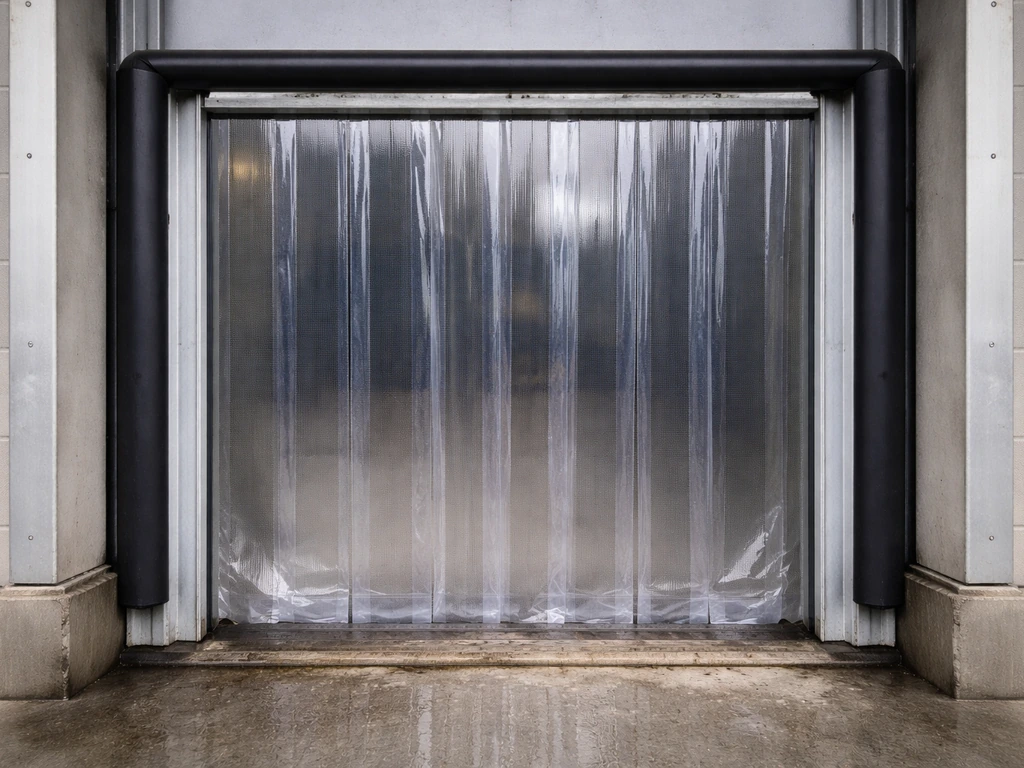
- Install strip curtains or air curtains on high-traffic loading dock doors and delivery entrances. These let staff and forklifts move freely but create a barrier birds dislike.
- Add self-closing mechanisms to all exterior doors. Propped-open doors are the most common entry point in retail stores.
- Inspect and repair any gaps around HVAC vents, exhaust fans, and roof penetrations. A gap as small as half an inch is enough for a sparrow to enter.
- Install bird-proof mesh or hardware cloth over open vents, eaves, and any gaps in the roofline. Use mesh with openings no larger than half an inch.
- Check that window screens are intact and fitting properly. Damaged or missing screens on stockroom or break room windows are frequently overlooked.
Reduce attractants
- Keep outdoor trash and food waste in sealed containers. Exposed garbage near loading areas is a major bird draw.
- If your store sells pet food or birdseed, store open stock in sealed bins rather than open display bags.
- Avoid bright white or UV-heavy outdoor lighting near entrances, as this attracts insects and the birds that follow them. Switch to amber or warm-spectrum LEDs where possible.
- Clear spilled grain, seed, or food from loading areas and outdoor seating daily.
Install exclusion and deterrent devices
For rooflines, ledges, and window sills where birds like to perch and then find their way inside, physical deterrents are the most reliable long-term solution.
| Deterrent type | Best use case | Effectiveness | Notes |
|---|---|---|---|
| Bird spikes (stainless or plastic) | Ledges, sills, parapets | High for pigeons and larger birds | Humane, low maintenance, long-lasting |
| Bird netting | Loading bays, covered entries, roof gaps | High for all species | Must be properly tensioned and anchored; professional install recommended for large areas |
| Air curtains (door fans) | High-traffic entrances and dock doors | High when sized correctly | Good for retail with frequent door openings |
| Visual deterrents (reflective tape, predator decoys) | Perching areas, skylights | Moderate, degrades over time | Birds habituate; rotate or replace regularly |
| Acoustic deterrents | Outdoor perching and roosting zones | Moderate | Less practical indoors; can disturb customers and staff |
Set up a seasonal inspection schedule
Bird pressure on buildings peaks in spring (nesting season, roughly March through June) and again in late fall when birds seek shelter from the cold. Schedule a brief exterior walkthrough at the start of each of those seasons. Check vents, roofline gaps, dock door seals, and window screens. Catching a small gap in April is far easier than dealing with an active nest in May.
When to stop DIY and call a wildlife professional
Most single-bird situations in a store are a 30-minute problem you can solve yourself. But some situations genuinely require professional help, and trying to handle them yourself can be illegal, dangerous, or both.
Call a wildlife professional if:
- The bird is injured: it cannot fly, has a drooping wing, is bleeding, or is in obvious distress. Injured wild birds need a licensed wildlife rehabilitator, not a box in the back room.
- You suspect the bird is a protected species. In the United States, most wild birds are protected under the Migratory Bird Treaty Act, which makes it illegal to harm, possess, or disturb them without a federal permit. If you are not certain what species you are dealing with, do not attempt to handle it.
- You find an active nest with eggs or chicks inside the building. Removing an active nest of a protected species without a permit is a federal violation. A wildlife professional can advise on legal options.
- You have multiple birds inside at once, or birds are returning regularly despite your efforts. This suggests a roost or entry point that needs professional assessment.
- The bird has been inside for more than 24 hours and there is a large accumulation of droppings. At that scale, the cleanup risk increases significantly and may require professional remediation.
- The bird is showing signs of illness: unusual lethargy, neurological symptoms, or discharge. Contact your local animal control or wildlife authority immediately.
When you call, have this information ready: the species if known, how long the bird has been inside, whether it appears injured, whether you have found a nest, and a description of where it is in the building. The more detail you give, the faster they can advise you. Many areas have free wildlife hotlines or local Audubon chapters that can point you to a rehabilitator quickly.
Repeat intrusions are a sign you have not found the entry point yet. If birds keep coming back to your store, the next step is a professional exclusion inspection, not another round of herding them out. That persistent problem is a different project from a one-off removal, and it is worth treating it as one.
FAQ
What should I do if customers can’t be cleared out and the store is crowded?
If the bird is inside and you cannot safely keep customers away, prioritize safety by closing the busiest area, turning off nonessential interior lights, and opening one exterior door that is closest and least obstructed. You can also keep the bird’s path clear by temporarily moving breakables, but avoid blocking the bird’s only bright route with display racks or carts.
How do I handle it if the bird keeps circling near a window or reflective display?
Yes. If you suspect a window reflection is confusing the bird, dim lights near windows and avoid shining phones or flashlights toward it. Use one open exit as the strongest light contrast, and keep other doors and signage from becoming competing “bright points.”
When is it appropriate to actually steer the bird versus just waiting?
Use the light-based approach first, and only steer if the bird is not moving toward the exit after several minutes or is trapped in a corner. If you do steer, move slowly and stay behind or to the side, using a sheet as a visual barrier. Avoid grabbing, netting, or chasing that can cause wing injuries.
What if the bird won’t fly away after I released it outside?
If the bird is on the floor and will not fly, give it an open, unobstructed route to outdoors, then pause. If it remains grounded after a couple of minutes, treat it as possibly injured or in shock and do not reintroduce it indoors. Contact a licensed wildlife rehabilitator for next steps.
Is it safe to use a box or towel to contain a bird before carrying it out?
Avoid direct contact if possible. A box or container should only be used to temporarily contain the bird during transport, with air holes and gentle handling. Do not cover the bird’s head tightly or press it into corners, because that increases stress and injury risk.
Do I need to disinfect the whole store after a bird was inside briefly?
Once it is out, do not immediately reuse the same cleanup area. Pick up droppings with disposable tools, then disinfect using an appropriate cleaner for biological contamination and follow any posted store safety procedures. If there are many droppings, feathers, or a prolonged presence, consider professional cleaning.
How can I tell whether cleanup is “small spot-clean” or a bigger biohazard issue?
If the bird has been inside longer, any droppings that look fresh and any areas where it roosted can become higher risk. A quick reality check is the duration, quantity of droppings, and whether it was roosting overnight. Those factors are what determine whether spot-cleaning is enough or you should escalate.
What if I can’t find the bird’s location because it might be in a ceiling or wall space?
If the bird might be inside a sealed or unsafe space, like a ceiling cavity, do not start removing tiles or accessing electrical areas. Instead, contact a wildlife professional or facility team to evaluate entry points and safely prevent access, then complete exclusion afterward.
What should I do if I suspect there is a nest inside the store?
If you discover evidence of an active nest, stop attempts to remove birds yourself. An exclusion plan should wait until the nesting period is complete, and the correct approach is often prevention and guided removal by a qualified wildlife or pest exclusion service.
What do I do if this happens repeatedly, not just once?
If birds keep entering, treat it as an exclusion problem. The practical next step is a professional exterior and entry-point inspection, focusing on roofline gaps, vent openings, dock door seals, and screen integrity, because light-hunting alone won’t stop repeat intrusions.
What details should I gather before calling a wildlife rehabilitator?
When calling for help, include the species if known, exact location in the store, how long it’s been there, whether it’s injured, and whether you’ve seen it perched or nesting. If you can, tell them which door you opened for the exit so they can advise on minimizing further stress during transfer.
How can I prevent birds from entering in the first place without doing a full overhaul?
Yes, especially in spring and late fall. A short pre-season checklist, roofline and screen checks, and sealing known gaps before bird pressure peaks can prevent repeat events. If you can only do one thing, inspect and fix window and vent gaps first, since those are frequent entry routes.
Next Article
How to Get a Bird Out of a Warehouse Safely and Humanely
Step-by-step humane guide to get a bird out of a warehouse safely, including troubleshooting, when to call pros, and pre