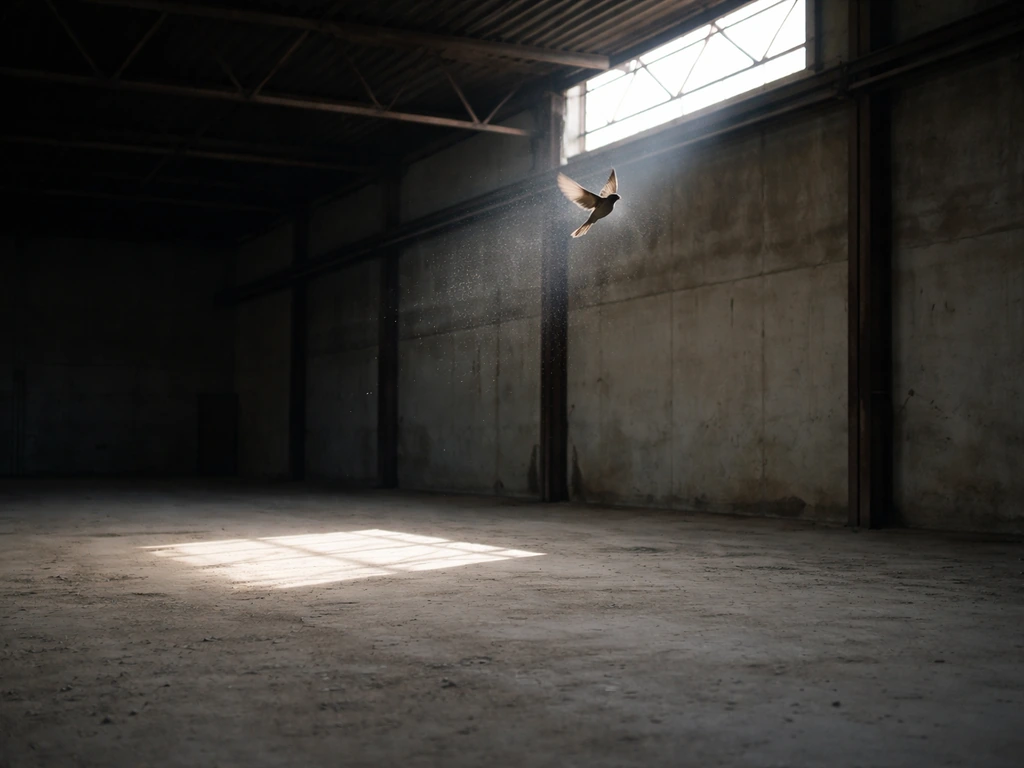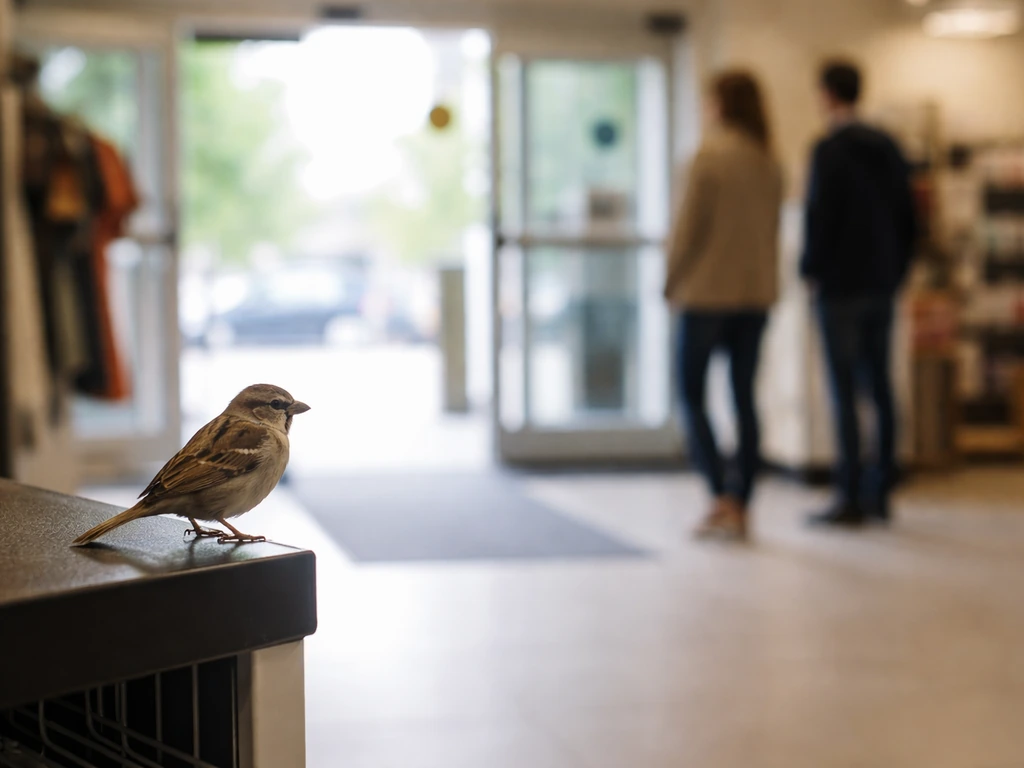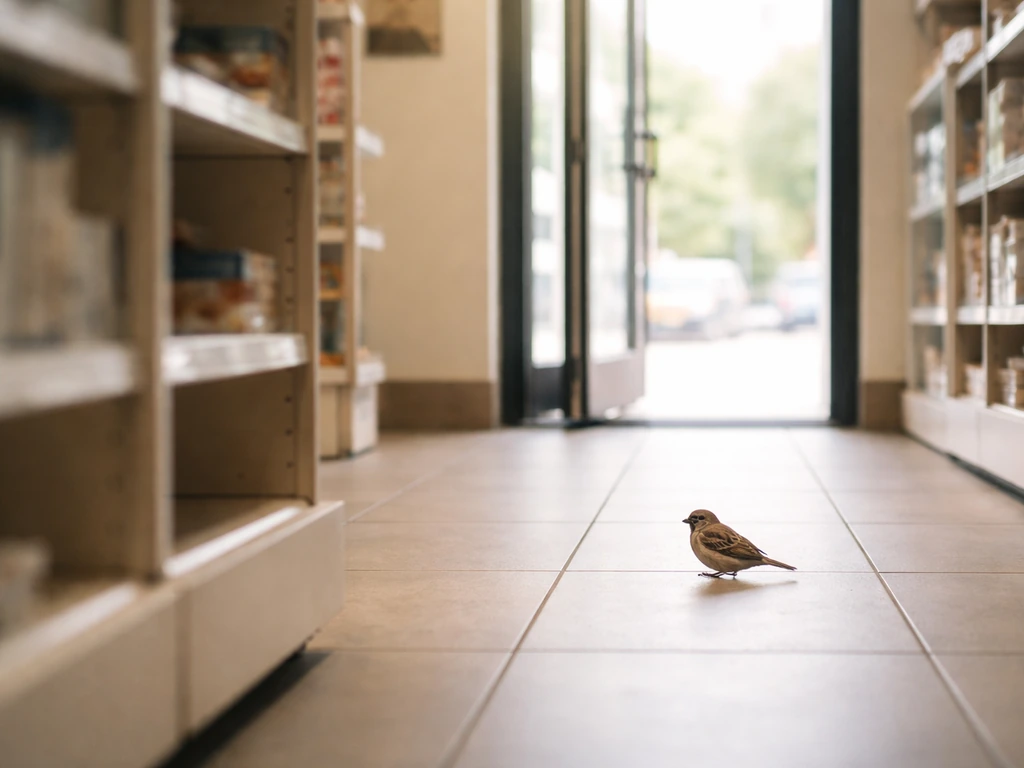
The fastest, safest way to deal with a bird in a warehouse is usually to guide it out through an open door or loading bay, not to physically catch it. That said, sometimes the bird won't cooperate, it's injured, or you need it contained quickly for safety or health reasons. In those cases, a humane net-and-carrier approach with the right PPE works well. This guide walks you through the full process: triage, step-by-step capture, species-specific adjustments, hazard control, cleanup, and long-term prevention so it doesn't happen again.
How to Catch a Bird in a Warehouse Safely and Humanely
Maya Carver
21 May 2026
Catch it or just remove it? Start here
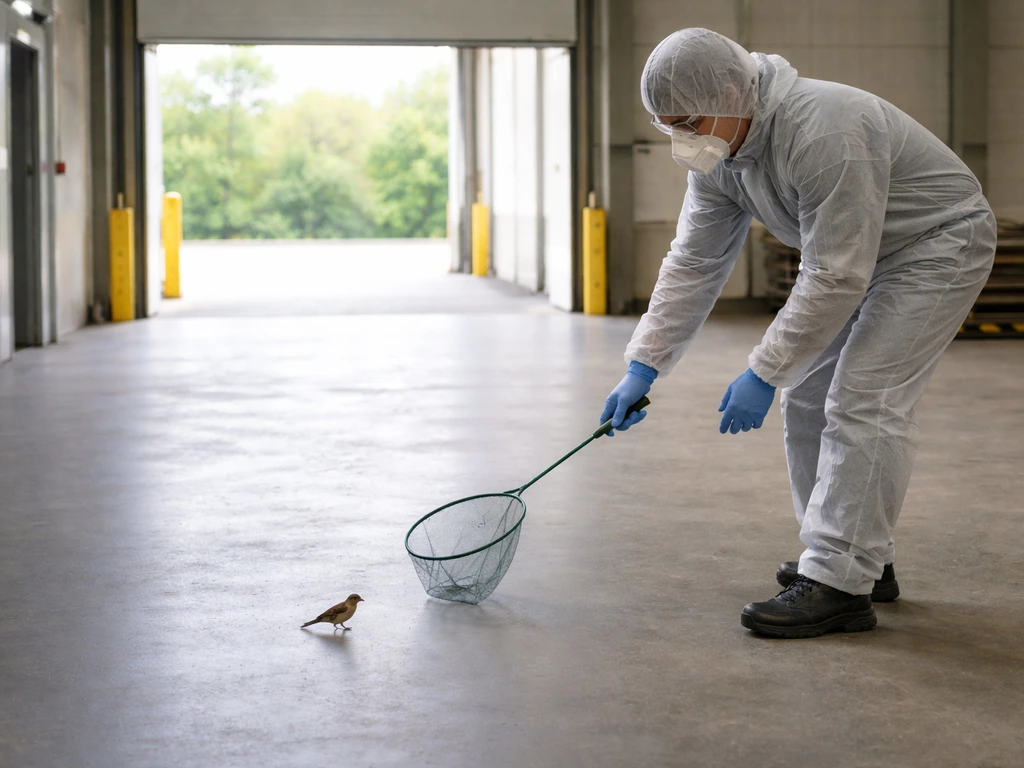
Before you grab a net or chase anything, spend 60 seconds answering this question: does the bird actually need to be caught, or does it just need to find its way out? These are two very different jobs, and chasing a healthy bird around a warehouse is one of the worst things you can do. It exhausts the bird, causes panic-flying into walls or racking, and increases the chance of injury to both the bird and your staff.
Use physical capture (net, carrier, towel) only when the bird is visibly injured and can't fly well enough to exit on its own, when it's roosting in a spot that creates a direct safety or health hazard and won't move, when guided-exit methods have failed after a reasonable attempt, or when the species is known to be aggressive around nesting (rare indoors, but it happens with starlings and pigeons protecting young).
In every other situation, the smarter move is guided removal: open the right doors, dim interior lights, use a bright exit, and let the bird do the work. In every other situation, the smarter move is guided removal: open the right doors, dim interior lights, use a bright exit, and let the bird do the work. If you need a scenario-focused walkthrough, see how to get a bird out of a shed for practical shed-specific steps.
If you need specifics on guiding versus capture, follow the warehouse-focused steps in how to lure a bird out of a warehouse. In some situations, knowing how to catch a bird in a store starts with choosing the least stressful option first. If you need a quick, step-by-step plan for how to get a bird out of a store safely, follow the guided-removal steps and prevention checklist in the next section.
Guiding is faster, lower-risk, and much less stressful on the animal.
Emergency steps the moment a bird is inside
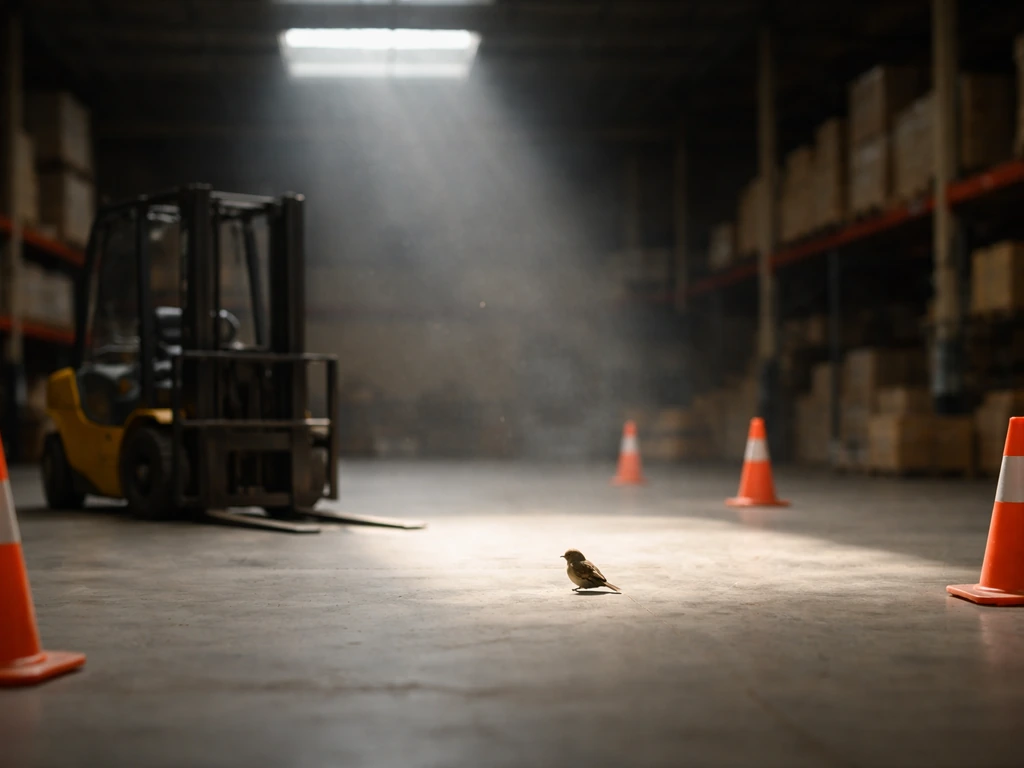
The first few minutes matter most. A panicked bird bouncing off skylights and racking is a hazard to itself, your inventory, and your team. Here's what to do immediately.
- Stop all loud activity near the bird. Shut down forklifts, PA announcements, and any equipment that's causing noise or vibration nearby. Give the bird a chance to land and calm down.
- Clear the immediate area of unnecessary staff. One or two calm people is all you need. A crowd makes the bird more agitated.
- Identify your best exit point before you do anything else. A large loading bay door or roll-up door at or near ground level is ideal. If possible, open it fully and darken the interior lights near it so outside light draws the bird naturally.
- If the bird is in a confined section of the warehouse, close internal doors or use temporary barriers (cardboard, pallets, plastic sheeting on a frame) to limit the area it can move through. Smaller controlled space equals faster resolution.
- If the bird lands and stays put, note the location and species if you can identify it. This helps you decide your next step.
- If the bird appears injured (one wing dragging, unable to fly, visible bleeding), move to the capture steps below and then contact a wildlife rehabilitator rather than releasing it outside.
Know what you're dealing with: common warehouse birds and how they behave
The species matters because it changes your approach significantly. Pigeons are heavy, slow fliers, often calm enough to corner and pick up with gloved hands or a towel. Sparrows and starlings are fast, erratic, and will exhaust themselves quickly if chased. Swallows and swifts are extremely agile in the air but get disoriented indoors and tend to crash-land after a few circuits. Larger birds like pigeons are also more likely to carry diseases associated with their droppings, so PPE becomes especially important.
| Species | Typical behavior indoors | Best capture/removal approach | Key hazard |
|---|---|---|---|
| Pigeon (Rock Dove) | Roosts on beams/ledges, slow mover, relatively calm when cornered | Guided exit or towel/gloved hand pickup | Droppings volume, Histoplasma risk |
| House Sparrow | Fast, erratic flier, seeks small gaps and corners | Dim lights, bright exit lure, net if needed | Stress/injury from chasing |
| European Starling | Aggressive, fast, may have flock mates outside | Open large exit, avoid chasing, net if injured | Droppings, can nest quickly |
| Barn Swallow/Swift | Extremely fast, tires quickly indoors, crash-lands | Wait for it to land, then towel or net pickup | Fragile when exhausted |
| Canada Goose or large bird | Walks on ground, hisses/bites when cornered | Guided exit using physical barriers/herding | Bites, scratches, wing strikes |
If you're not sure what species you have, take a photo from a distance before you approach. This is especially important for legal reasons covered later in this article. A quick image search or local wildlife hotline can confirm identification in minutes.
Humane capture methods: step-by-step DIY workflow
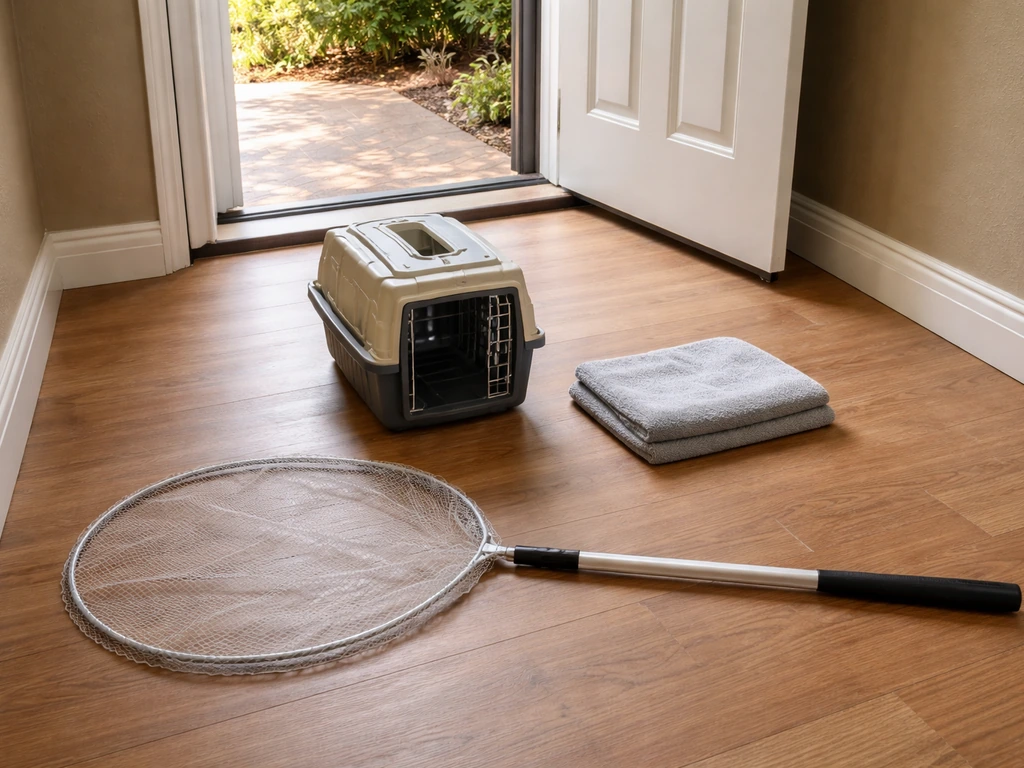
If guiding the bird to an exit hasn't worked after 20 to 30 minutes, or if the bird is grounded and injured, it's time to move to active capture. If you still need a step-by-step plan for how to catch a bird in a store, choose active capture only as a last resort and use one-way guidance whenever possible. Work slowly and quietly. Fast movements are the main cause of injury during warehouse bird captures.
Option 1: Guided exit (try this first)
- Open the largest available exit door or loading bay fully. If there's a choice, pick the one with the most natural daylight beyond it.
- Turn off or dim interior lights, especially fluorescents near the ceiling. Birds are drawn toward brighter light.
- Use a long broom handle, a piece of cardboard, or a soft barrier to gently encourage the bird toward the exit from behind. Move slowly and steadily, not in bursts.
- If the bird is on a high beam, lower your lights further and add a bright portable light source (work light or flashlight) pointing out through the exit.
- Once the bird exits, close the door immediately to prevent re-entry.
Option 2: Net capture (for grounded or perched birds)
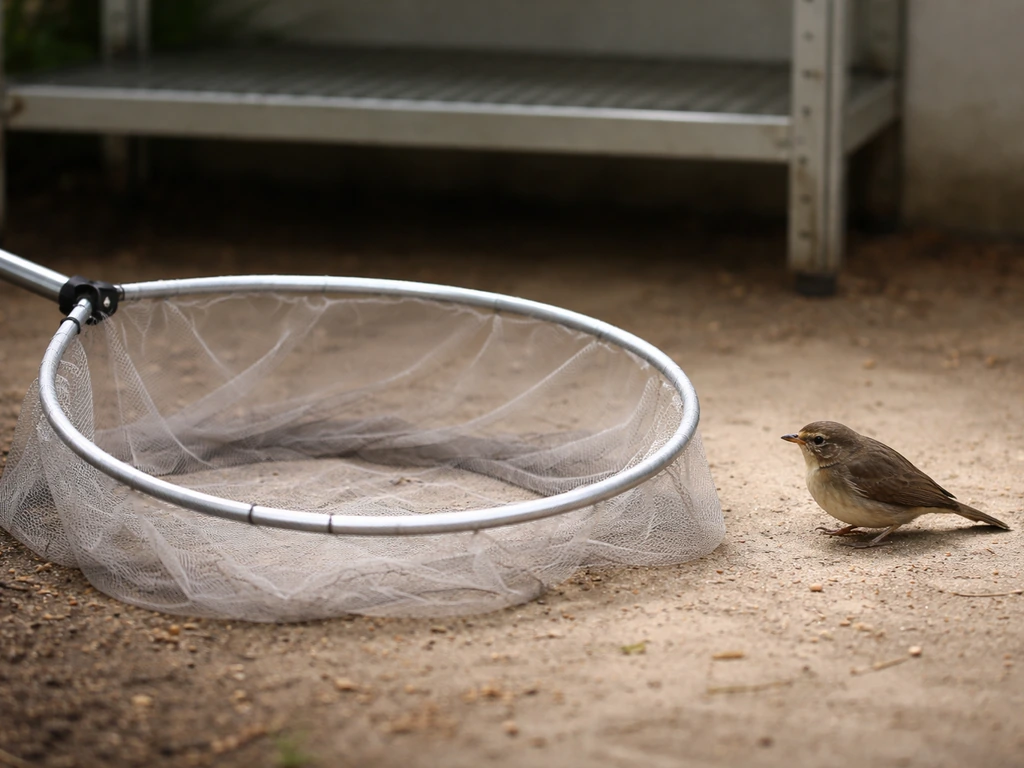
- Use a lightweight hoop net (sometimes called a landing net or avian capture net) with a fine mesh that won't tangle wings. A standard fishing landing net with soft mesh works in a pinch.
- Approach the bird slowly from the side, not head-on. Keep the net low and out of direct line of sight until you're within range.
- Sweep the net smoothly over the bird in one confident motion. Don't jab or stab. A clean arc from the side or above works best.
- Once the net is over the bird, tilt the hoop so the mesh falls around it and prevents escape. Keep the bird close to the ground.
- Reach through the mesh and hold the bird gently but firmly, wings folded against its body. Never grip the chest tightly as this restricts breathing.
- Transfer the bird into a ventilated carrier box or transport cage. Line the bottom with a clean cloth or paper towel to reduce stress.
Option 3: Towel or gloved-hand pickup (for calm or exhausted birds)
- Put on leather work gloves or thick gardening gloves before approaching.
- Drape a medium-weight cloth or small towel loosely over the bird to reduce its visual field and calm it. Most birds go still when their vision is blocked.
- Scoop the bird from below, keeping both wings pressed gently against its body through the cloth.
- Hold it firmly but not tightly, chest up, and move directly to a ventilated box or carrier.
- For injured birds, call a wildlife rehabilitator before you do anything further. Keep the bird in a quiet, dark box while you wait.
Option 4: One-way funnel or exclusion trap (for repeat visitors or roosting birds)
If the same bird or flock keeps re-entering, a one-way exclusion funnel installed at the entry gap lets birds exit but blocks re-entry. For birds roosting in a specific zone, a live trap baited with grain can capture the bird overnight. These need to be checked at least every 12 hours to avoid stress or dehydration. Live trapping of most wild birds requires permits in the US under the Migratory Bird Treaty Act, so check your local regulations before setting any trap.
Protecting yourself and your team: injuries, PPE, and contamination
Even a small bird can scratch or bite hard enough to break skin. Large birds like geese or pigeons can deliver a strong wing strike. Beyond physical contact, droppings are the bigger long-term hazard, particularly in warehouses where accumulation has gone unnoticed.
What to wear before you approach any bird
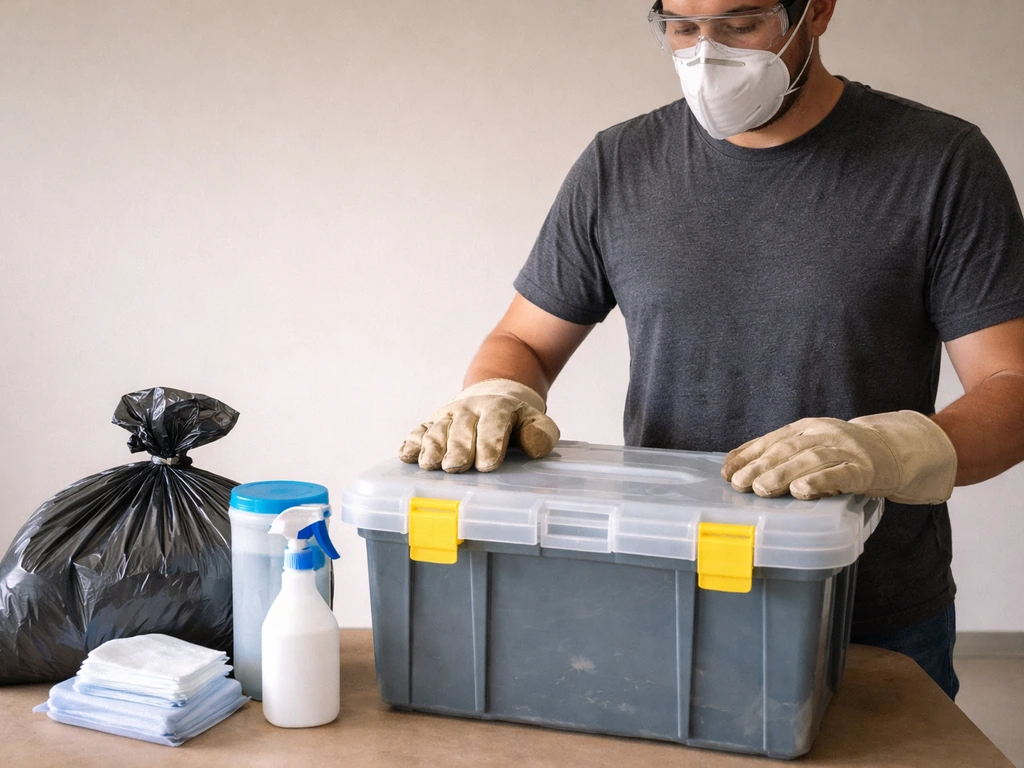
- Leather or thick work gloves to protect against bites and scratches
- Safety glasses or goggles if the bird is likely to flap near your face
- A fitted N95 respirator or better if you're working near accumulated droppings, which can carry Histoplasma capsulatum, the fungus responsible for histoplasmosis
- Long sleeves and pants to reduce skin exposure
- Disposable shoe covers if you're moving through areas with heavy dropping accumulation
The CDC and NIOSH specifically flag the disruption of bird droppings as a key exposure route for histoplasmosis because spores become airborne when droppings are disturbed. If there's a significant accumulation in the area where you're working (more than a light scattering), wear respiratory protection regardless of whether you think it's necessary. Respirator selection depends on the potential for dust or aerosols. If you're only doing a quick catch in a clean area, an N95 is usually sufficient. If you're cleaning up a heavily fouled roosting area, that job may warrant a professional hazardous-waste service.
Avoiding bird stress injuries
Birds can die from capture myopathy, a condition where extreme exertion and stress cause muscle damage. This is why slow, calm, deliberate movements are non-negotiable. Don't chase a bird repeatedly around the warehouse. If it's not landing after a few passes, stop, let it rest for 10 to 15 minutes, and try again with better preparation. Once a bird is captured, minimize handling time. Get it into a dark, ventilated box quickly and keep it in a quiet area until release or handoff.
Ventilation considerations
If your warehouse HVAC pulls air through a zone with bird accumulation, that's a contamination pathway for the whole building. Shut down any air returns pulling from a heavily fouled area until cleanup is complete. This is especially important in food-storage or pharmaceutical warehouses.
Once the bird is out: release, recovery, and cleanup
Releasing a healthy bird
For a healthy, uninjured bird, take the carrier at least 100 feet from the building before opening it. Open the carrier gently and step back. Don't toss the bird or shake it out. In almost every case it will fly off on its own. Release at ground level in a vegetated area where possible, away from roads and active loading zones.
If the bird appears injured
Keep it in a ventilated, dark box in a quiet room. Don't offer water by forcing the beak open, and don't offer food unless a rehabilitator advises it. Contact your nearest wildlife rehabilitator or local animal control immediately. In the US, most songbirds, raptors, and waterfowl are protected under the Migratory Bird Treaty Act, which means keeping them beyond temporary emergency care without proper authorization is a federal violation.
Post-incident cleanup
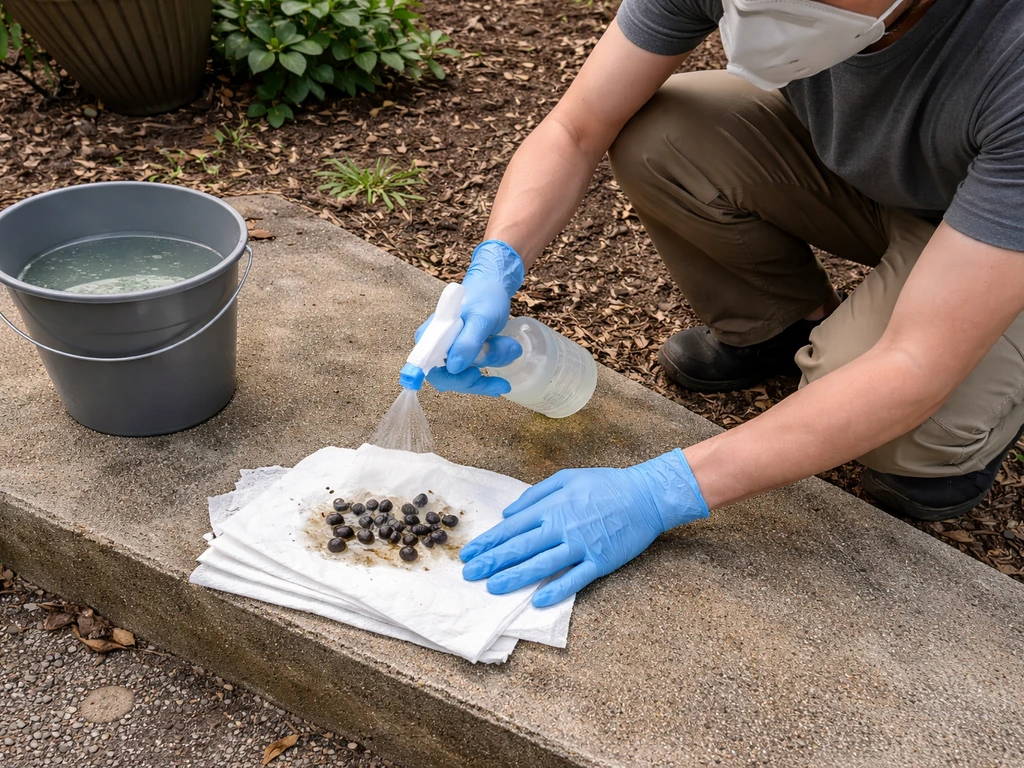
- Put on your N95 (or better) and gloves before approaching any droppings.
- Wet down any visible droppings with a diluted disinfectant solution (such as a 10% bleach solution or an EPA-registered disinfectant) before sweeping or scraping. This reduces aerosolization of spores.
- Do not dry-sweep or use a leaf blower on droppings. Use a HEPA-filter industrial vacuum or damp-mop method.
- Double-bag all droppings, nesting material, and contaminated disposables in heavy-duty trash bags and seal before disposal.
- Disinfect the area with your chosen disinfectant and allow adequate contact time before rinsing.
- If the accumulation is large (more than a standard garbage bag's worth from a concentrated area), consider bringing in a professional hazardous-waste service as CDC/NIOSH recommends for significant accumulations.
- Wash hands thoroughly and change clothes if you've been in contact with droppings.
- Document the incident: date, species if known, location in the warehouse, quantity of droppings removed, and cleanup steps taken. This is useful for any regulatory inspection or health and safety reporting.
Long-term prevention: warehouse proofing plan
Catching a bird is a one-time fix. Stopping the next one from getting in is what actually solves the problem. Most warehouse bird intrusions happen through the same handful of entry points repeatedly, and they're almost always preventable.
Find and seal entry points
- Gaps around loading bay doors where seals are worn or missing: replace dock seals and dock shelters on a regular maintenance schedule
- Roof vents, ridge vents, and HVAC penetrations: screen with 19-gauge welded wire mesh or purpose-made bird-exclusion mesh (avoid plastic mesh which degrades quickly outdoors)
- Broken or missing window screens and louvers
- Gaps where utility conduit or pipes enter through exterior walls: seal with caulk, foam, or metal flashing as appropriate
- Skylights with broken or missing frames
- Any gap larger than 0.5 inches (1.25 cm) is large enough for a sparrow
Operational controls
- Keep loading bay doors closed or fitted with strip curtains whenever not actively in use
- Install motion-sensor door closers on pedestrian entry doors that staff leave propped open
- Use bird-deterrent strip curtains at large openings that must stay open during operating hours
- Eliminate food and water attractants: fix roof drains that pool water, keep dumpsters lidded, and store any grain, seed, or food product in sealed containers
Roosting deterrents
- Install physical deterrents (stainless steel spikes, anti-roosting wire systems, or bird coil) on ledges, beams, and roof edges where birds perch
- Optical deterrents (flash tape, predator decoys) can work short-term but birds habituate to static decoys within weeks: move or rotate them regularly
- Ultrasonic deterrents have limited evidence for effectiveness inside large open warehouse spaces and are not recommended as a primary solution
- Netting is the gold standard for fully excluding birds from specific zones inside a warehouse (like loading docks or storage bays near open doors): use 75mm or 50mm polyethylene bird netting installed by a professional for best results
Seasonal maintenance checklist
| Season | Key tasks |
|---|---|
| Spring (March to May) | Inspect all roof penetrations and vents before nesting season. Remove any early nest-building material (check for active nests before removal). Check dock seal condition after winter. |
| Summer (June to August) | Check strip curtains for wear. Inspect netting for tears. Monitor for new entry points opened during any construction or maintenance work. |
| Fall (September to November) | Birds seek warmth as temperatures drop: this is peak intrusion season. Audit all door gaps and seals before cold weather. Check deterrents are still in place. |
| Winter (December to February) | Inspect after any storms that may have dislodged deterrents or damaged roof screens. Keep loading bay doors closed during any low-traffic periods. |
Legal rules and when to call a professional
This is where a lot of facility managers get caught out. In the United States, most wild birds are protected under the Migratory Bird Treaty Act of 1918. The MBTA prohibits the 'take' of protected migratory birds without proper federal authorization, and 'take' explicitly includes capturing or possessing a bird. That means physically catching and holding most songbirds, sparrows, swallows, starlings (actually not protected under MBTA), and similar species without a permit is a federal offense.
In practice, brief emergency handling to move an injured or disoriented bird to safety is generally treated as an emergency situation rather than a violation, but prolonged holding, live trapping of wild birds, or any activity involving nest or egg removal for protected species requires you to work with a licensed wildlife professional or to obtain appropriate permits. Three species that are NOT protected under the MBTA and can be controlled without a federal permit are Rock Pigeon, European Starling, and House Sparrow. All other common warehouse species (swallows, native sparrows, wrens, doves other than rock doves) are protected.
Call a wildlife professional when:
- You cannot identify the species and aren't sure of your legal status
- The bird is injured and needs rehabilitation beyond temporary containment
- There is an active nest with eggs or chicks involved (do not disturb until you've confirmed legal status)
- You're dealing with a flock of 10 or more birds requiring systematic exclusion or trapping
- Droppings accumulation is extensive (more than a garbage bag's worth from a concentrated area) and you lack the equipment or training for safe cleanup
- Guided-exit and DIY capture attempts have failed repeatedly and the bird has been in the building for more than 24 hours
- The situation involves a raptor (hawk, owl, falcon): these are always federally protected and handling without authorization carries significant penalties
When you call a wildlife professional or animal control, give them: the species if you know it, the approximate location within the building, how long the bird has been inside, whether it appears injured, and any capture attempts already made. The more specific you are, the faster they can respond with the right equipment. USDA Wildlife Services is one federal resource that works with commercial facilities on exactly these situations and can advise on both capture and long-term prevention.
Whether you handle this yourself or bring in help, the playbook is the same: stay calm, protect yourself and the bird, get it out humanely, clean up properly, and seal the entry point so it's a one-time problem instead of a weekly one. If you need a quick, practical guide, see how to get a bird out of a store for the step-by-step flow.
FAQ
When should I avoid physically catching the bird and just focus on guiding it out?
Not automatically. If the bird is healthy and can be guided out, you should focus on evacuation rather than capture. Capture is mainly for clear cases like injury with limited flight, a roosting spot that creates an immediate hazard, or repeated guided attempts that fail.
How long should I try guiding a warehouse bird before switching to net-and-carrier capture?
Yes. The article emphasizes guided removal first, and it also notes that capture can be necessary after 20 to 30 minutes if guiding fails. In practice, extend that window if you are making steady progress toward the exit (bird is moving in the right direction), and switch to capture if it is grounded, injured, or repeatedly colliding.
Can I speed things up by shaking or tossing the bird out of the carrier after capture?
Avoid it. The safe release instruction is to step back and let the bird fly out on its own once the carrier is opened at a distance, then release at ground level in a vegetated area. Shaking or tossing can trigger injury and increases stress.
What should I do if the bird seems stunned but not obviously injured?
It depends on the species and your goal. If you have a grounded injured bird, immediate stabilization and contact with a wildlife rehabilitator is appropriate. If the bird is just disoriented and mobile, prioritize evacuation and use capture only if it cannot exit or poses a direct hazard to people or inventory.
How do I decide what respiratory protection to use during cleanup after a warehouse bird incident?
If you see heavy droppings or visible contamination where you will work, treat it as an aerosol risk. The article recommends respiratory protection when accumulation is more than light scattering, and for heavily fouled roosting areas you may need a professional hazardous-waste cleanup rather than DIY.
I am getting nowhere, the bird keeps panicking. Should I keep chasing to finish the job faster?
Stop and create a rest window. The article advises not chasing repeatedly, if it is not landing after a few passes then pause, let the bird rest 10 to 15 minutes, and only then try again with better setup.
Is live trapping ever acceptable if the bird keeps coming back into the warehouse?
Yes, but only as a last resort for specific conditions mentioned in the article. Live trapping needs permits for most wild birds in the US, and traps must be checked at least every 12 hours to prevent stress or dehydration. Also, the article warns that nest-related activity increases the permitting burden.
What can I install so the bird or flock stops re-entering without repeatedly catching them?
A one-way exclusion funnel can help with re-entry when birds are already using a known entry point, especially when the issue is recurring. If roosting is localized, that approach reduces the need for repeated catching, but it should be installed correctly at the entry gap to work as intended.
Can bird droppings affect other parts of the warehouse through HVAC systems?
Often. The article includes that HVAC air movement from bird-contaminated zones can spread contamination through the building. If air returns pull from a heavily fouled area, shut down those returns until cleanup is complete, especially in food or pharmaceutical storage areas.
What information should I gather before calling wildlife control or a rehabilitator?
Yes, and the specific list matters. Use a photo from a distance for identification, and when you call wildlife professionals or animal control provide the species (if known), exact location, how long it has been inside, whether it appears injured, and what attempts you already made.
How should I hold the bird after capture while waiting for help?
Keep it in a ventilated, dark box in a quiet room, and avoid forcing water or food by opening the beak. The article also notes to minimize handling time and seek immediate professional guidance, since keeping protected species beyond emergency care can be illegal.