Open the largest garage door or window you have, turn off the interior lights, step back, and give the bird 15 to 30 minutes of quiet to find its own way out. That single step resolves the situation for most homeowners. If it doesn't work, or if you suspect the bird is nesting, injured, or a protected species, the rest of this guide walks you through exactly what to do next without causing harm to the bird or yourself.
How to Get a Bird Out of Garage Rafters Safely
Maya Carver
5 Jun 2026
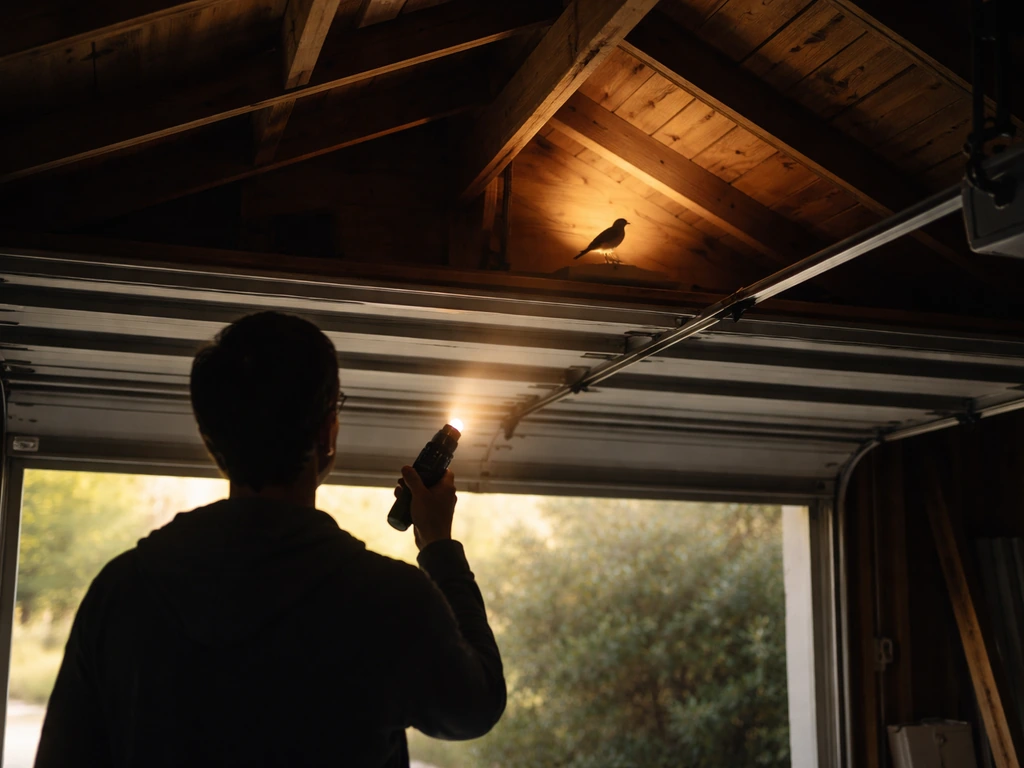
Safety first: triage before you do anything else
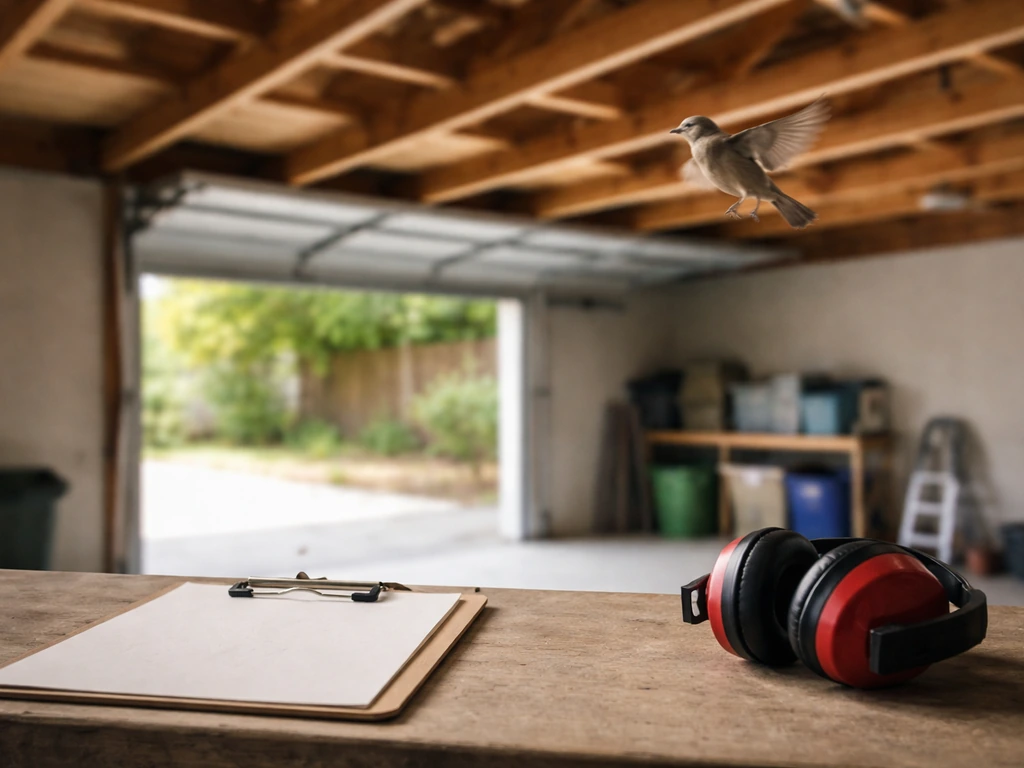
Before you grab a broom or climb a ladder, take 60 seconds to assess the situation. A panicked bird flying around your garage is a very different problem from a bird that has been roosting quietly in the rafters for days, and both are different from a bird that may be actively nesting. Acting without triage can make things worse, waste time, or in some cases put you on the wrong side of federal wildlife law.
Ask yourself these three questions right now:
- Is the bird flying and alert, or is it sitting still and possibly injured?
- Can you see any nest material, eggs, or chicks in or near the rafters?
- Can you identify the species? Swallows, swifts, pigeons, starlings, and sparrows are common garage visitors, but some species carry federal protections.
If the bird is alert and flying, your job is simply to open an exit and get out of the way. If it is grounded, hunched, or not reacting normally, do not handle it with bare hands. Use thick gloves and a cardboard box to contain it gently, and contact your local wildlife rehabilitator. A sick or injured bird can bite, scratch, and potentially carry pathogens.
One critical safety note on ladders: most garage rafter injuries happen to people who climb to chase or catch a bird. Don't do it. Working at height in a cluttered garage, while looking upward at a moving target, is how people fall. Let the bird come down on its own terms.
When to stop and call a professional immediately
- You can see eggs or active chicks in a nest (removing or disturbing an active nest may be illegal under the Migratory Bird Treaty Act)
- The bird appears sick, injured, or is a bird of prey (hawk, owl, kestrel)
- You have a large colony roosting, not just one or two birds
- There are extensive droppings already accumulated in the rafters
- You cannot safely access the area without a tall ladder or roof work
Humane ways to encourage the bird to leave on its own
Birds are not trying to live in your garage permanently. They ended up there because a door was open, or because a gap in your roofline led them in. Given the right conditions, they will leave the same way. Your goal is to make leaving easier than staying. If you notice a cuckoo clock bird door stuck open, follow the same humane idea: provide an open exit and remove the obstacle so it can leave safely.
The light and silence method (works most of the time)
- Open your largest garage door fully, plus any side doors or windows you have.
- Turn off all interior lights so the garage interior is darker than the outside.
- Leave the space completely. No people, no pets, no noise.
- Wait at least 20 to 30 minutes before checking.
- If the bird is still there, repeat at dusk or dawn when birds are most naturally active and motivated to move.
This works because birds navigate toward light. A bright, open exit with a dark interior behind it is a powerful cue. Harassing the bird by waving objects or making noise usually has the opposite effect: it pushes the bird deeper into the rafters or causes it to injure itself against walls and windows.
Using a one-way door or exclusion funnel
If the bird is roosting in a specific gap or cavity in the rafters rather than just flying loose in the garage, a one-way exclusion funnel is the most reliable humane tool available. These are cone-shaped or tube-shaped devices that allow a bird to exit through the narrow end but prevent re-entry. You attach the funnel over the entry/exit point the bird is using, leave it in place for several days, then seal the gap once you've confirmed the bird is gone.
Timing matters enormously here. Install a one-way device only when you are confident there are no eggs or chicks inside. Sealing a bird inside a cavity is inhumane and will result in the bird dying inside your structure, which creates an odor problem and a different kind of mess. The safest windows for exclusion work are late fall through early winter (after nesting season ends and before birds return in spring) and midsummer after confirmed fledging.
If you are unsure whether a bird is just passing through or has started nesting, the article on why birds won't fly out of a garage covers the behavioral signs in more detail and can help you make that call. If you are wondering why a bird still won't fly out, look at the behavioral signs and common reasons it gets stuck before you try exclusion or cleanup why birds won't fly out of a garage.
Gentle encouragement as a last resort
If the bird has been in the garage for more than a few hours and the light method hasn't worked, you can try slowly and calmly moving toward the bird with a large, light-colored sheet or piece of cardboard held at arm's length. The goal is to gently herd it toward the open door, not to catch it or corner it. Move slowly, stay low, and stop whenever the bird becomes frantic. This takes patience.
Find the entry point before you seal anything
This is the step most people skip, and it's why they end up with the same problem two weeks later. Once the bird has left, your first job is to figure out exactly how it got in before you close anything up. Sealing a garage without confirming the bird is out first is the fastest way to trap it inside and cause it to die in your walls or ceiling.
How to find gaps and entry points
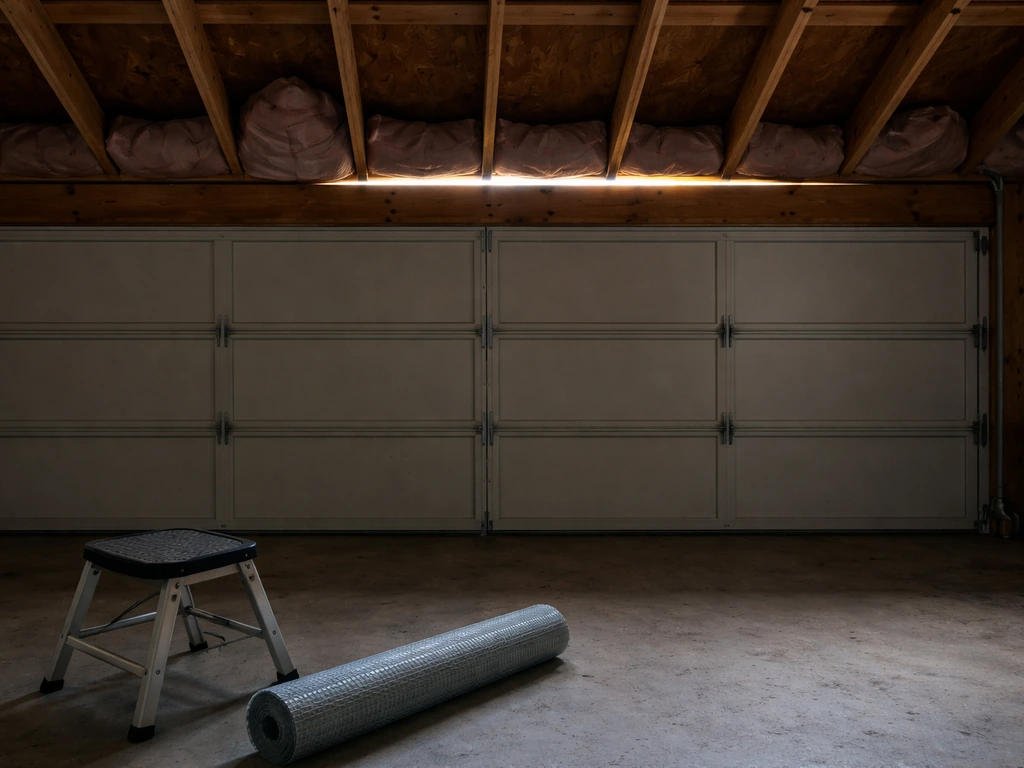
- On a sunny day, stand inside the garage with all doors and windows closed and lights off. Look for any daylight showing through the roofline, eaves, soffits, ridge vents, or where walls meet the ceiling.
- Check where the garage door tracks meet the wall frame, as well as around any pipes, electrical conduit, or HVAC penetrations.
- Inspect the roofline from outside with binoculars, looking for gaps where fascia boards have pulled away, broken soffit panels, or missing vent covers.
- Look for fresh droppings, feathers, or nest material on the garage floor directly below a gap as a clue to where the bird is entering and perching.
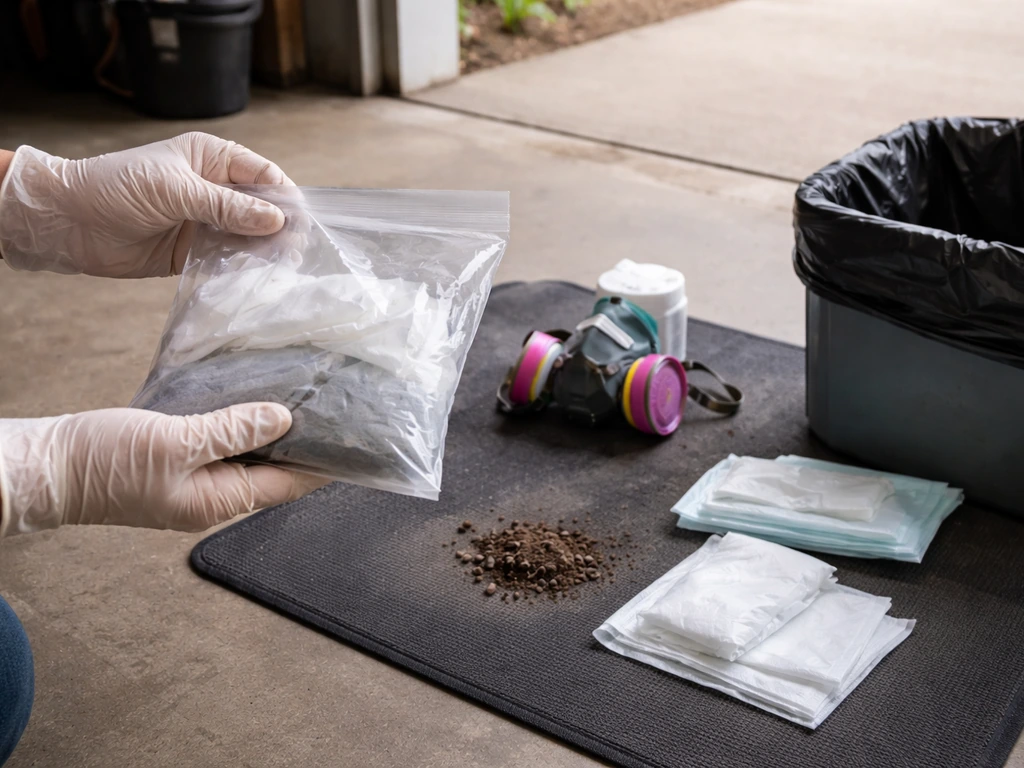
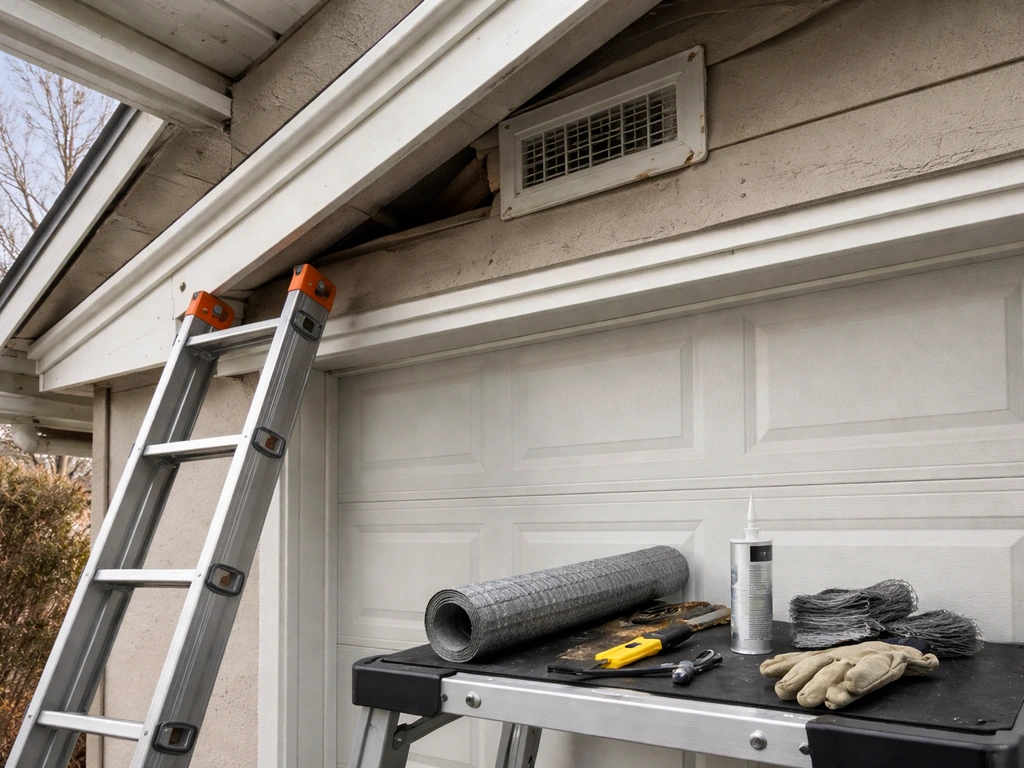
Once you have confirmed the bird has exited, seal all gaps you found using hardware cloth (half-inch galvanized mesh), foam backer rod plus paintable caulk for narrow cracks, or prefabricated vent covers with fine mesh. Hardware cloth is your best option for larger openings because it is durable, chew-resistant, and allows ventilation. Avoid standard window screen material for exterior gaps because birds and weathering will eventually breach it.
The related topic on how to remove a bird nest in a garage goes deeper on identifying whether a nest is active, abandoned, or newly started, which affects whether you can legally and safely seal that specific spot.
Clean-up after the bird leaves: do it safely
Once the bird is out, resist the urge to just sweep up and move on. Bird droppings can carry Histoplasma capsulatum, the fungus responsible for histoplasmosis, a respiratory illness caused by inhaling fungal spores that become airborne when dry droppings are disturbed. The CDC notes that the best way to prevent exposure is to prevent droppings from accumulating in the first place, but when cleanup is necessary, how you do it matters as much as whether you do it. CDC states hantavirus can spread through contact with infected rodents or their droppings, and it emphasizes safe cleaning of urine, droppings, and nesting materials around homes and vehicles blank" rel="noopener noreferrer">safe cleaning of urine, droppings, and nesting materials to prevent hantavirus exposure. CDC’s updated risk-reduction recommendations also advise not vacuuming or sweeping rodent urine or droppings before disinfecting to avoid aerosol generation blank" rel="noopener noreferrer">how you do it matters as much as whether you do it.
PPE and ventilation before you start
- Wear an N95 or P100 respirator, not a cloth or paper dust mask, before disturbing any droppings
- Put on disposable gloves and, for larger accumulations, a disposable coverall or old clothes you can wash immediately afterward
- Open the garage door and any available ventilation before starting, and work with airflow moving away from you
- Wear eye protection if you will be working overhead where debris can fall
The correct way to remove droppings
- Never dry sweep or vacuum droppings first. This is the same principle the CDC applies to rodent droppings and hantavirus risk: dry sweeping aerosolizes particles and dramatically increases your inhalation exposure.
- Dampen the droppings with a spray bottle of water mixed with a small amount of household disinfectant before touching them.
- Scoop or wipe the dampened material into a sealed plastic bag.
- Double-bag, seal, and dispose of in your regular trash.
- Wipe down the surface with disinfectant and let it air dry.
- Wash hands thoroughly after removing gloves, and wash any clothing that may have been contaminated.
For large accumulations (more than a bucket's worth of material, or droppings spread across a wide area of rafters), this is a job for a professional remediation contractor with proper respiratory protection and containment equipment. A respirator you buy at the hardware store is not adequate for that scale of work.
Nesting material removal
Nesting material can harbor mites, lice, and other parasites that will look for a new host once the bird is gone. Bag and seal nesting material using the same dampened approach described above. Check the area around the nest for mite activity (tiny crawling specks) before and after removal. If you find active mites, treat the area with a household insecticide labeled for mites before sealing the gap.
Keep birds out of the rafters for good
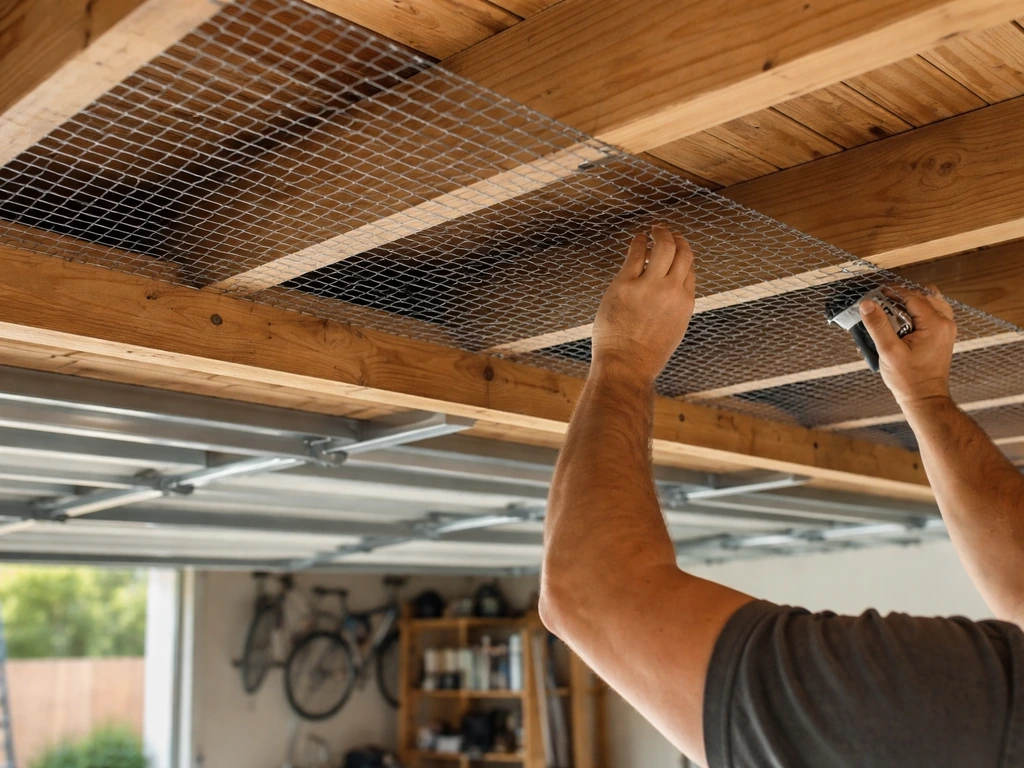
Getting a bird out once is satisfying. Having to do it every spring is not. The real fix is a combination of physical exclusion, removing what attracts birds in the first place, and a simple seasonal maintenance habit.
Physical proofing for garage rafters
- Install half-inch hardware cloth or bird netting across open rafter bays to deny landing and roosting surfaces without blocking airflow
- Cover all attic vents, ridge vents, and soffit vents with fine galvanized mesh (quarter-inch for sparrows and smaller birds)
- Seal gaps at the roofline with caulk, foam, or flashing before nesting season (late February through March in most of the US)
- Install bird slope panels or gel repellent strips on ledges, beams, and horizontal surfaces where birds prefer to land
- Check and replace weatherstripping at the base and sides of the garage door annually so there are no gaps birds can squeeze through
Remove what's attracting them
- Store pet food, birdseed, and grain in sealed containers, not open bags
- Clear out clutter from rafters: stored boxes, loose lumber, and hanging items all create perching and nesting opportunities
- Install bright LED lighting in the rafters if your garage is dim and cave-like, as many birds prefer darker roosting spots
- Keep the garage door closed when not in active use, especially from March through July during peak nesting season
Seasonal proofing checklist
| Season | Task |
|---|---|
| Late winter (February to March) | Inspect and seal all gaps, vents, and roofline penetrations before birds start scouting nest sites |
| Spring (April to June) | Check netting and mesh monthly, watch for new nest material appearing, keep garage door closed |
| Summer (July to August) | After fledglings leave, remove any nesting material and re-seal gaps that were occupied |
| Fall (September to November) | Full inspection of soffit, fascia, and vent covers before winter roosting season begins |
| Winter (December to January) | Best time for exclusion work and major sealing projects with no active nests present |
When to call a wildlife professional or pest control
DIY methods work well for a single bird that wandered in and needs an exit. They are not the right tool for every situation, and in some cases attempting DIY removal is actually illegal.
Legal protections you need to know about
The Migratory Bird Treaty Act (MBTA) protects most native North American bird species, which means it is a federal offense to kill, harm, capture, or disturb an active nest with eggs or chicks without a federal permit. This covers a very long list of common birds including barn swallows, chimney swifts, house wrens, and many others you might find in a garage. Starlings, house sparrows, and feral pigeons are not protected under the MBTA, but some state laws extend additional protections, so verify your local rules. If you are not certain what species you're dealing with, treat it as protected until proven otherwise.
The practical consequence: if you find a nest with eggs or chicks, you generally cannot legally remove it or seal the entry point until all chicks have fledged and the nest is confirmed abandoned. A wildlife professional can identify the species, assess the nest status, and advise on your legal options.
Call a professional when you encounter any of these
- Active nest with eggs or chicks present
- A bird of prey (owl, hawk, falcon, kestrel) or protected species you can identify
- A colony of birds, not just one or two individuals
- An injured or sick bird that needs rehabilitation
- Large accumulation of droppings requiring remediation
- Entry points that require roof work, high ladder access, or structural repairs
- The same bird problem recurring repeatedly despite your DIY sealing efforts
When you call, be ready to tell the professional: the species if you know it, how long the bird or colony has been present, whether you can see a nest or eggs, where the entry point appears to be, and what you have already tried. That information helps them show up prepared and gives you a faster resolution.
Look for a wildlife control operator who is licensed in your state and experienced with bird exclusion specifically. Pest control companies vary widely in their approach: the best ones use humane exclusion methods, while others may recommend lethal control that may not be legal for the species you have. Ask specifically whether they use one-way exclusion devices and whether they can confirm species and nest status before any work begins.
FAQ
What if I open the garage door and the bird leaves, but I still see it reappearing later?
If you are seeing a bird repeatedly return to the same rafter gap, do not assume it is gone just because you opened an exit once. Wait until you have clear visual confirmation the bird is not occupying the entrance point, then seal only after the exclusion window you choose (several days for a one-way device) matches the situation you observed.
Can I seal the entry right away if I do not see eggs or a nest?
Yes, but only if the species is clearly non-protected and you can confirm there are no eggs or chicks. For protected species or any sign of nesting, the safest choice is to stop DIY work at removal and exclusion and contact a wildlife professional to advise what you can legally seal and when.
What should I do if the bird looks injured, but I still want to avoid calling someone?
A thick glove is safer for brief containment, but it is still not ideal if the bird appears injured, dizzy, or unusually aggressive. If the bird cannot perch normally, is bleeding, has visible entanglement, or you cannot safely move without climbing, contact a local wildlife rehabilitator instead of trying to handle it.
Are there any quick DIY traps I can use if the bird keeps landing in the rafters?
Do not use glue traps, poisons, or sticky household products. They often cause severe injury and can expose you to legal and public health risks. Use humane containment only (gloves and a box) if you must intervene, otherwise rely on an open exit and one-way exclusion when nesting is ruled out.
How do I adjust the light-door method if the bird keeps panicking even after the interior lights are turned off?
If a bird is repeatedly circling and vocalizing, or it panics when lights are off, you may want to dim the interior more gradually and keep the exit open, rather than changing everything at once. Also, remove visual clutter near the door so the bird can orient to the opening.
The bird is roosting high, should I climb up to chase it down?
If the bird is perched high and not moving, still avoid climbing. Try the open-exit approach plus a long-handled sheet or cardboard only from the ground, and stop immediately when it becomes frantic. Patience matters, and working at height is a common cause of garage rafter injuries.
What if I suspect the bird is nesting in a tight cavity but I cannot tell for sure?
If you cannot confidently confirm the cavity is empty, do not install a one-way device and do not seal the gap. Instead, wait and monitor from the floor for exit activity, or call a wildlife professional to assess whether eggs or chicks are present before exclusion and sealing.
How should I handle droppings safely if there are only a few spots, but they are in rafters I cannot easily reach?
For cleanup, keep people, pets, and HVAC airflow in mind. Seal off the garage area while you clean, dampen droppings before wiping, and avoid dry sweeping. If you find large droppings coverage, widespread nesting material, or strong odor, that is the point where a remediation contractor with containment equipment is the safer option.
What mesh should I use to permanently block rafter gaps, and why not standard window screen?
Use fine-mesh options that are meant for exterior gaps and consider how water and wind will affect materials. Standard insect screen is prone to tearing and stretching over time, and birds can exploit even small breaches when they return in the future.
Do I need to worry about mites and nesting debris differently than just sealing the hole?
If you discover nesting material, remove it only after the bird is confirmed out. Bag it immediately with dampened handling, then check closely for mite activity (tiny crawling specks). If mites are active, treat only with products labeled for mites and appropriate to indoor use, then seal.
When does this stop being a DIY job and become a call-a-pro situation?
If you find only one bird and no nesting signs, calling for professional help is optional. But if multiple birds are present, a nest is visible, or you suspect a species protected by federal or state rules, get expert guidance before sealing or disturbing the area.
How should I handle it if I cannot identify the bird species from my garage?
If you are unsure of species, treat it as protected, especially for active nests or chicks. Many common garage birds are covered under federal protections, and state rules can add more restrictions, so confirmation by a wildlife professional can prevent illegal sealing or removal.
Next Articles
Cuckoo Clock Bird Door Stuck Open: Fix and Safety Steps
Fix a cuckoo clock bird door stuck open with safety steps, quick checks, jam clearing, and when to call a pro.
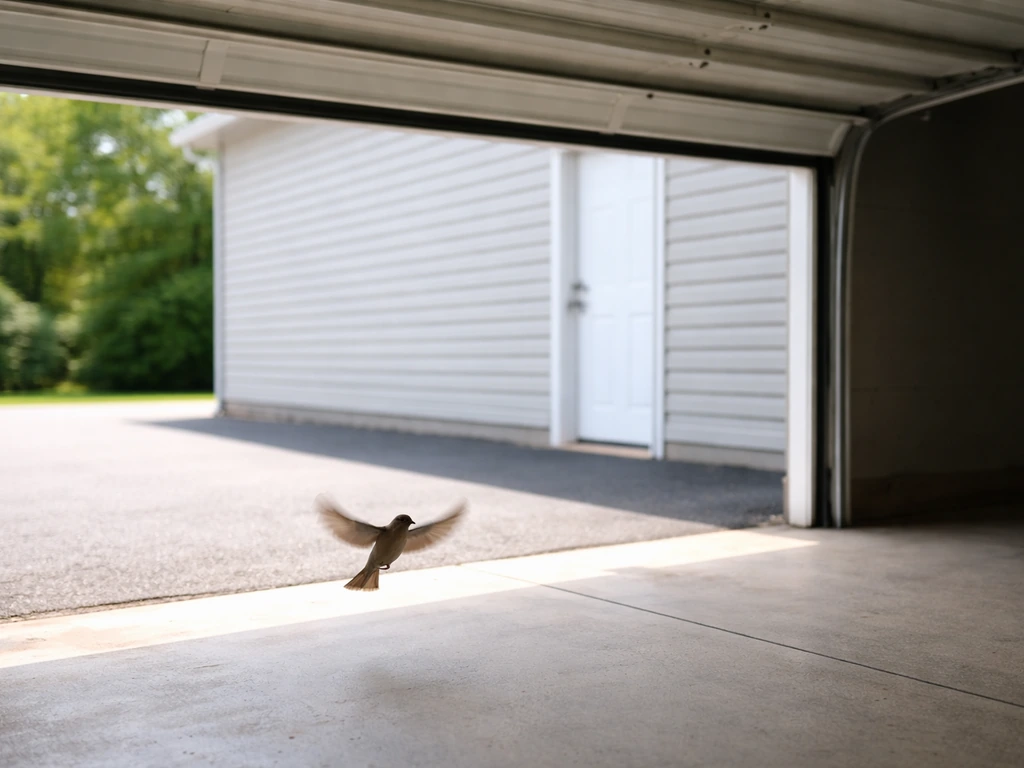
How to Get a Bird Out of a Garage: Reddit-Style Guide
Humane, safety-first steps to get a bird out of a garage, what not to do, troubleshooting, and prevention tips.
How to Get a Trapped Bird Out of Your House Safely
Humane, step-by-step guide to get a trapped bird out safely, handle injuries, and prevent future entry.