A bird that won't leave your garage is almost always stuck because it can't find the exit, not because it wants to stay. The most common culprits are window confusion (the bird keeps flying toward a closed window it thinks is open sky), not enough contrast between the dark interior and the exit, too much noise or activity near the garage door, or the bird is exhausted, injured, or actively nesting. Once you know which situation you're dealing with, getting the bird out is usually straightforward and takes less than 30 minutes. If you want a Reddit-style walkthrough, search for “how to get bird out of garage reddit” for the most commonly shared step-by-step advice getting the bird out.
Why Won’t a Bird Fly Out of Your Garage? What to Do Now
Maya Carver
14 Jun 2026
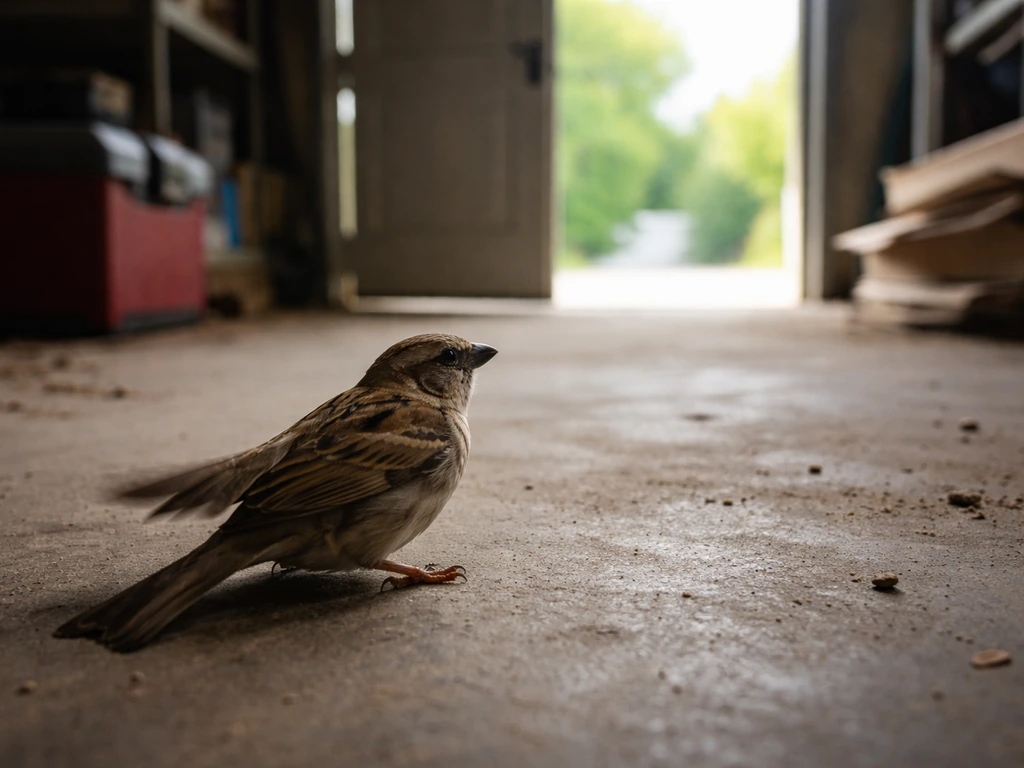
Why birds get stuck and won't leave
Understanding the reason behind the behavior is what lets you fix it fast instead of chasing the bird around for hours. Here are the most common reasons a bird won't fly out on its own.
Window and glass confusion
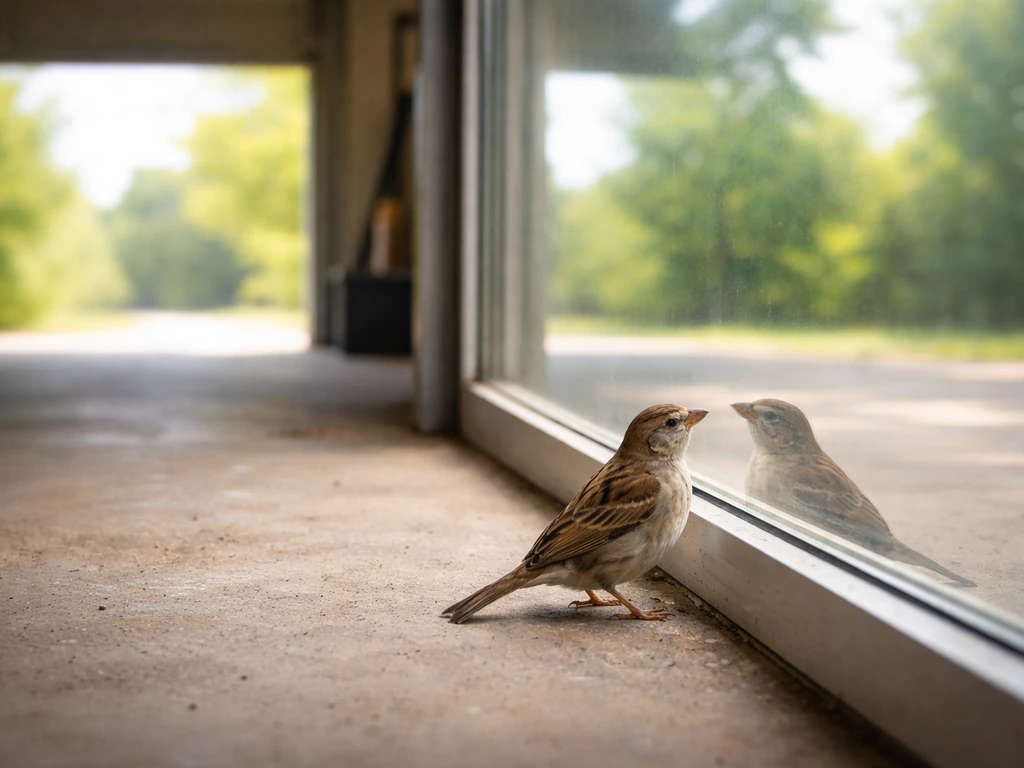
This is the number-one reason birds stay trapped. Birds can see a reflection of trees, sky, or open landscape on glass and interpret it as real space. If your garage has a window on the back or side wall, the bird may be repeatedly flying toward it and bouncing off, genuinely believing it is the exit. Bright windows on the opposite side from your garage door make this worse by creating what researchers describe as a visual tunnel effect, where the bird is pulled toward the bright glass. The bird is not being stubborn. It literally cannot see the barrier.
Not enough light at the exit
Birds fly toward light. If your garage door is open but the interior lights are also on, the bird may not register the door as the brightest point in the space and won't naturally orient toward it. The fix is simple: turn off interior lights, open the garage door wide, and close or cover everything else.
People, pets, and noise near the exit
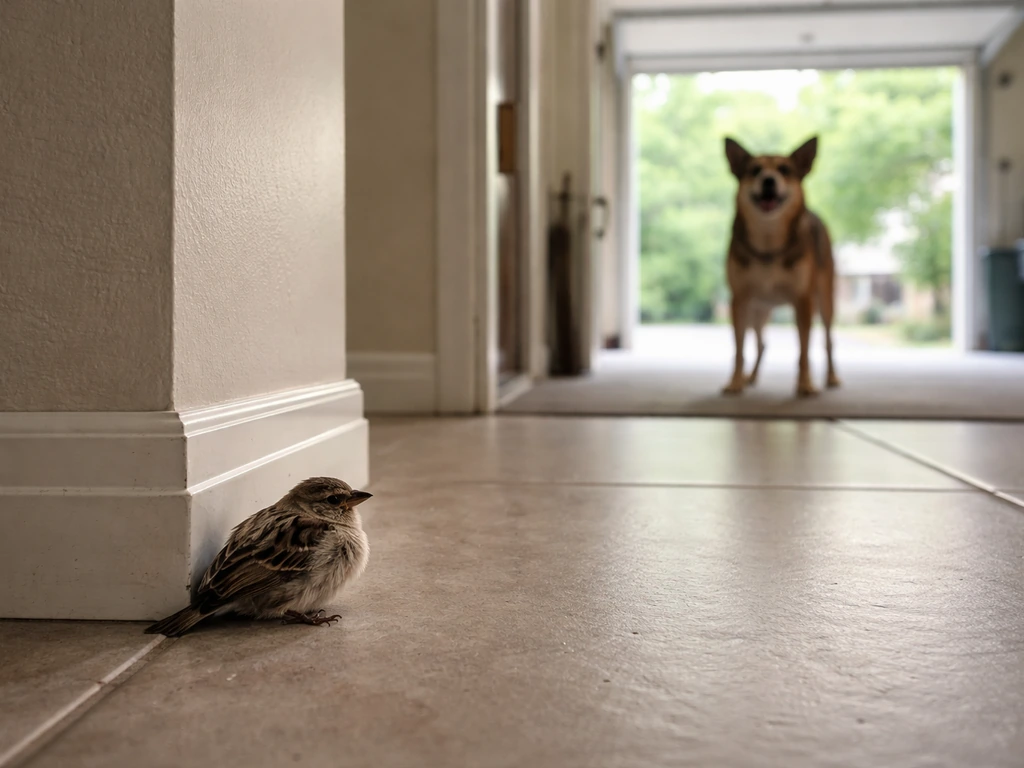
A bird in distress will not fly toward a perceived threat. If there are people standing near the garage door, a dog barking, or kids watching, the bird will retreat to the back of the garage and stay there. The exit needs to feel safe before the bird will use it.
The bird is injured or exhausted
A bird that has hit a window hard enough may be dazed and unable to fly properly for minutes or even hours. Some birds that strike windows suffer internal injuries that aren't visible but affect their ability to fly. If the bird is sitting on the floor or a low surface and not attempting to fly, injury or exhaustion is a real possibility and needs a different response than a healthy confused bird.
Active nesting, eggs, or young
A nesting bird will not willingly leave the area. Parent birds will stay near a nest with eggs or chicks even under significant stress. Swallows, sparrows, and pigeons are particularly common garage nesters. If you are dealing with active nesting, use the safest removal steps and then bird-proof the garage to prevent another nest from starting how to get rid of bird nest in garage. If you're seeing repeated returns by the same bird no matter what you do, check the rafters and wall edges carefully before doing anything else. This changes the whole approach, and it has legal implications.
Garage conditions making things worse
Clutter, low ceilings, hanging tools, and storage items create a maze that disorients birds and makes them feel unsafe. Very hot or very cold garages can exhaust small birds quickly. Reflective surfaces like chrome bumpers, mirrors, or metallic shelving can multiply the window-confusion problem by creating additional false exits. In summer especially, heat buildup in a closed garage can stress a bird within minutes.
Quick triage: figure out what you're dealing with first
Before you do anything else, take 60 seconds to observe the bird from a distance without approaching it. What you see in that minute determines your whole next move.
| What you observe | Likely situation | What to do next |
|---|---|---|
| Bird is flying around, hitting windows, seems alert | Healthy but confused | Use the light-and-exit method below |
| Bird is sitting on the floor, eyes open, upright | Stunned from window strike, may recover | Give it 20-30 minutes in quiet darkness first |
| Bird has one wing lower than the other, can't stand, or is bleeding | Injured, needs professional care | Contain safely and call wildlife rehab |
| Bird keeps returning to the same spot in the rafters | Nesting or protecting young | Check for a nest before doing anything; legal considerations apply |
| Bird is small with fluffy feathers, no tail, calling loudly | Fledgling or juvenile out of the nest | Look for a nest or adult nearby before intervening |
| Bird is a hawk, owl, or other raptor | Raptor with special handling needs | Do not approach; call wildlife professionals |
The Migratory Bird Treaty Act (MBTA) protects the vast majority of wild bird species in the U.S., including their nests and eggs. Disturbing, moving, or destroying an active nest with eggs or chicks is illegal without a federal permit. If you find an active nest, stop and read the nesting section below before proceeding.
Emergency steps to get a healthy bird out right now
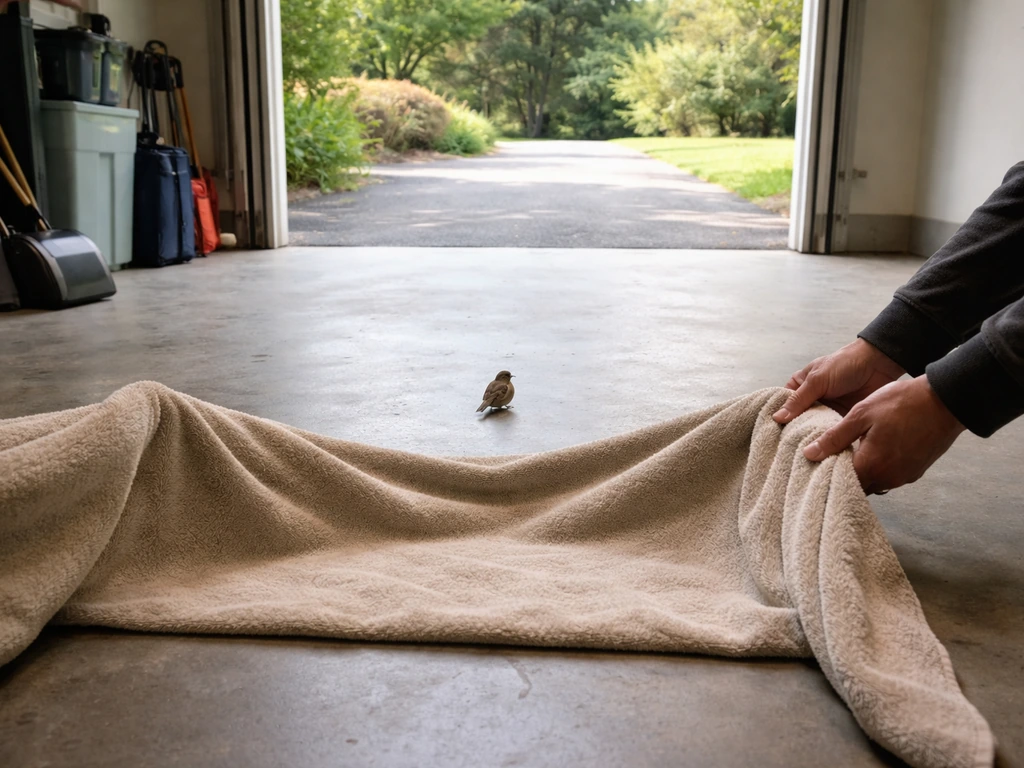
If your triage shows a healthy, alert bird that is just confused, this is your go-to process. Work through these steps in order and give each one a few minutes to work before moving to the next.
- Clear people, pets, and noise away from the garage door area entirely. Go inside and watch from a window if you can. Give the bird a full 5 to 10 minutes with no human presence near the exit.
- Open the garage door all the way. Wide open is better than partially open because a partially open door still looks like a wall to a panicked bird.
- Turn off every interior light in the garage. The goal is to make the garage door the single brightest point in the space.
- Cover any windows that cannot be opened. Use a blanket, sheet, towel, cardboard, or thick paper pressed against the glass. This removes the false exits the bird is chasing. If a window can be opened, open it as a secondary exit but still cover closed windows.
- Close any interior doors to the house. You do not want the bird going deeper into the building.
- Step back and wait quietly for 15 to 20 minutes. Most healthy birds will find the exit on their own once the false exits are removed and the garage door is the clear bright opening.
- If the bird is still stuck after 20 minutes, try gently herding it toward the door using a large piece of cardboard or a bedsheet held up as a soft barrier. Move slowly from behind the bird toward the exit. Do not rush or wave things at it.
Handling specific scenarios
High ceilings and rafters
Birds in garages with tall ceilings or exposed rafters often perch up high and won't come down to fly out the door. The light method still works, but it takes longer. Make sure the garage door is the clearly brightest exit and give it extra time. If you have a large broom or pole, you can gently tap near (not at) the bird to encourage it to move, but avoid cornering it against a wall or ceiling because a panicked bird trapped in a corner can injure itself badly. For birds stuck in rafters that aren't responding, some wildlife guidance recommends placing a small light source about five feet inside and just to the side of the garage door to create a gradient that guides the bird toward the exit. If you have concerns about nesting in your garage rafters specifically, that situation has its own considerations worth exploring in detail.
Window confusion that keeps repeating
If the bird keeps hitting the same window over and over even with the garage door open, that window is creating a powerful enough visual illusion to override the light cue from the door. Cover that window completely before doing anything else. Even a layer of newspaper taped over the glass from the inside breaks the reflection enough to stop the behavior. Once you cover it, the bird typically reorients within a few minutes.
Bird won't move at night
Most songbirds do not fly well in the dark, and many birds will simply not attempt an escape at night even with a wide-open door. If it is nighttime and the bird appears healthy, the best approach is to leave a single light on just outside the garage door to mark the exit, leave the door cracked open enough for the bird to pass through, and let it find its way out at first light. If the bird appears injured or stressed and nighttime rescue organizations are not available, gently containing it in a dark, ventilated box overnight and calling a wildlife rehabilitator in the morning is the right call.
Large birds: pigeons, raptors, or waterfowl
The same light method works for pigeons and larger birds, but give it much more time. Raptors (hawks, owls, falcons) are a different situation entirely. They have strong talons, can cause real injury, and are almost always legally protected. Do not attempt to catch or handle a raptor yourself. Open the garage door, clear the space, and call a wildlife rehabilitator or your state wildlife agency. If a raptor is clearly injured and cannot fly, call first before approaching.
Humane handling rules and what not to do
The biggest mistakes people make when trying to get a bird out of a garage are the ones that cause the most harm. Keep these rules in mind before you do anything.
- Do not chase the bird or wave objects at it aggressively. Stress can cause heart failure in small birds, and a panicked bird is more likely to hit a wall or window at full speed.
- Do not throw a towel or blanket over a bird that is still flying. If it is injured, this can worsen the injury significantly.
- Do not try to catch a bird by hand unless it is clearly grounded and injured. Even then, use gloves and handle with minimal pressure.
- Do not offer food or water to an injured bird, especially a raptor. Aspiration is a real risk and can make things worse.
- Do not attempt to remove, relocate, or destroy a nest that has eggs or live chicks. This is a federal offense under the MBTA for most wild bird species.
- Do not use chemical repellents, glue boards, or snap traps of any kind. Beyond being cruel, many of these are illegal when used on protected migratory birds.
- If you need to handle a small injured bird, wear gloves, pick it up gently with two hands cupped around its body, and place it in a cardboard box with airholes and crumpled paper towels to keep it upright. Keep it in a warm, dark, quiet place until you can reach a rehabilitator.
- For larger birds like crows or raptors, use a thick towel to cover the bird before picking it up, protecting both you and the bird, but only attempt this if the bird is completely grounded and unable to fly.
When to stop DIY and call wildlife professionals
Some situations are beyond what you should handle yourself. Call a licensed wildlife rehabilitator or your state wildlife agency if any of the following are true.
- The bird has a visibly broken wing (one wing held noticeably lower than the other), is bleeding, or cannot stand upright.
- The bird has been sitting in the same spot on the floor for more than an hour and is not improving.
- The bird struck a window and you suspect internal injuries (it appears dazed, its eyes are partially closed, or it is breathing with its beak open).
- You have a raptor (hawk, owl, falcon, osprey) in the garage at any point.
- You find a nest with eggs or live chicks and need it removed for safety reasons. You need a professional to assess legality and options.
- It is after hours and the bird is injured. Keep it contained in a dark, warm, ventilated box and call first thing in the morning.
- The bird is a species you cannot identify and appears unusual or large.
- You are in a facility setting where fall risk or confined-space hazards make a DIY approach unsafe.
When you call, have this information ready: the species if you can identify it, where you found it and when, what behavior you observed, and whether you have already handled or contained it. The more specific you are, the faster the rehabilitator can triage and advise you.
Long-term bird-proofing and seasonal prevention
Getting the bird out today is only half the job. A garage that had one bird in it will almost certainly have another one unless you address the entry points and attractants. Here is a practical plan for keeping it from happening again.
Seal gaps and entry points
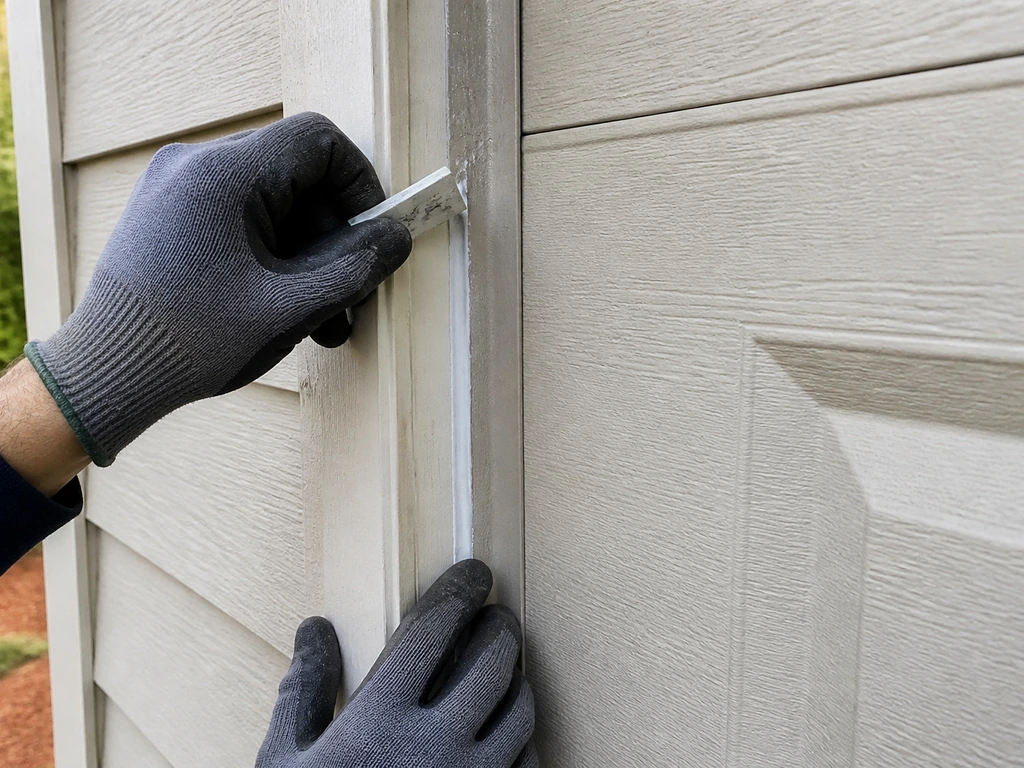
Walk the perimeter of your garage and look for gaps larger than half an inch at the roofline, around the garage door frame, at vent openings, and where utility lines enter. Common entry points include damaged weatherstripping on the garage door, gaps between the garage door and the frame when closed, unscreened soffit vents, and open eave gaps. Use hardware cloth (quarter-inch mesh) to screen all ventilation openings. Replace worn weatherstripping. Seal structural gaps with caulk or steel wool packed into cracks before caulking over it.
Manage the garage door itself
The most common way birds enter a garage is through the open garage door during peak bird activity times: early morning and late afternoon. If you leave the garage door open for extended periods, birds will eventually explore it. Try to limit long unattended open-door periods during spring nesting season (March through July in most of the U.S.) and fall migration (September through November). Installing a screen door or bird netting across the opening lets you keep the door open for air and light without letting birds in. If your cuckoo clock bird door is stuck open, it may be the same kind of issue where a latch or mechanism fails to reset properly cuckoo clock bird door stuck open.
Fix the window and lighting problem permanently
If your garage windows cause repeated bird strikes, apply a visual pattern to the outside of the glass. The U.S. Fish & Wildlife Service notes that bird-glass collisions are linked to how birds perceive glass barriers, and it explains that making windows visible to birds helps reduce strikes making glass visible to birds. The U.S. Fish and Wildlife Service recommends patterns that make glass visible to birds, such as UV-reflective decals, frosted film, or closely spaced dots or stripes at 2-inch intervals on the glass surface. Applying these to the outside of the glass (rather than the inside) is more effective because it interrupts the reflection before the bird approaches. At night, turning off interior garage lighting reduces the reflective effect from outside and removes the visual beacon that draws birds toward windows.
Remove attractants
- Store pet food and birdseed in sealed containers, not open bags on shelves.
- Fix any leaks that create standing water. Even a small puddle on the garage floor is a water source for birds.
- Remove debris piles, cardboard stacks, and clutter from corners and shelving where birds like to nest.
- Do not hang anything from the rafters that could look like nesting material or shelter from the outside.
Seasonal maintenance schedule
| Season | Key tasks |
|---|---|
| Late winter (February-March) | Inspect and replace weatherstripping before nesting season begins. Screen any open vents. Check roofline for new gaps after winter damage. |
| Spring (April-June) | Monitor for early nesting activity in rafters and eaves. Limit unattended open-door time during morning and evening. Apply window deterrent film if strikes are occurring. |
| Summer (July-August) | Check screens and netting for damage. Remove any inactive nests (only after confirmed no eggs or chicks are present). Watch for fledglings near the garage. |
| Fall (September-November) | Migration season: migrating birds are more likely to enter buildings. Keep garage door closed during dawn and dusk when possible. Recheck all seals and weatherstripping. |
| Winter (December-January) | Inspect for birds seeking warmth in vents and eave gaps. Clear out any debris that accumulated near entry points. Plan any structural repairs before spring. |
For facility managers dealing with repeated bird intrusions in commercial or multi-unit garage structures, the same principles apply at scale: screen all vents, reduce open-door time, apply window treatments to reflective glass panels, and document any nesting activity before scheduling exclusion work so you can confirm compliance with the MBTA. A short annual inspection in late February before nesting season begins is the single most effective thing you can do to stay ahead of the problem.
FAQ
How long should I wait for the bird to fly out after I set up the garage door and lights?
Give the light-and-exit setup at least 10 to 15 minutes, then re-check for the top two blockers: an uncovered reflective window on side or back walls and competing bright lights that may make the door not the brightest exit. If the bird repeatedly circles the same spot or won’t orient toward the door after a few cycles, switch tactics by covering the offending window or making the exit brightness unambiguous.
Can I use a broom or towel to guide the bird out without hurting it?
You can use a large broom or pole only as a gentle nudge from a safe distance near where the bird is positioned, not to corner it against walls, rafters, or ceilings. Avoid sudden lunging, repeated shooing, and trapping motions, because panicked birds often injure themselves during frantic impacts.
What if the bird is not flying but is breathing and looks alert, should I still try the light method?
Yes, if it looks alert and you do not see obvious blood or a broken wing. The bird may be disoriented or exhausted rather than unable to fly. Keep people and pets away, ensure the garage door is the brightest exit, and let it reorient for several minutes before attempting contact or relocation.
How can I tell whether the bird is injured versus just confused?
Injury signals include inability to lift off, repeated stumbling or rolling, hanging wing or head tilt with sustained weakness, blood, visible trauma, or a consistent failure to attempt flight when you dim distractions and open the door. Confused birds usually reposition and attempt to orient toward an exit, even if they keep choosing the wrong one.
Is it safe to handle or pick up a bird to move it out faster?
Avoid picking up unknown wild birds. Besides the injury risk to the bird, there is also a risk of stress and bites to you. If containment is needed (for example, nighttime or visible injury), use a ventilated box or container, minimize handling time, and contact a wildlife rehabilitator for next steps.
What should I do if the bird keeps hitting the same window even after opening the garage door?
Cover that specific glass completely from the inside so reflections cannot keep overriding the exit cue. A practical option is placing newspaper or a temporary covering over the inside of the window so the bird can no longer “see” the outside space through it. Once covered, give it a few minutes to reorient before changing anything else.
Does it matter if the bird is small like a sparrow or larger like a pigeon?
Yes. Small songbirds often respond quickly to the light approach, while larger birds may take much longer and may prefer perching or running to the back instead of immediately flying. Keep the space clear of people and pets longer, and expect you might need more time for the exit to become their chosen escape route.
Should I try to rescue the bird at night or wait until morning?
If the bird appears healthy, best practice is to leave one exterior light near the garage door to mark the exit, keep the door cracked open enough for passage, and avoid turning on interior lights that create competing brightness. If the bird looks injured or severely stressed and you cannot get immediate help, place it in a dark, ventilated box overnight and contact a rehabilitator at first light.
What if the bird is nesting in the garage, can I move it right away?
Do not remove or disturb an active nest with eggs or chicks, doing so can be illegal without a permit. Focus on observing from a distance, exclude access to prevent more entry, and contact a wildlife professional for the correct timing and removal method so you comply with protection rules.
If a bird returns repeatedly, how should I approach prevention?
Treat it as an ongoing entry and attraction problem. First, inspect and seal likely gaps at the garage door frame and around vents, then address the open-door behavior by reducing long unattended open-door time during peak activity. Finally, screen vents and add window treatments on reflective glass to prevent the same bird from repeatedly attempting entry.
Are all bird species handled the same way, especially raptors?
No. Raptors are different because they can injure people and are commonly protected. If you suspect a hawk, owl, falcon, or other raptor, do not attempt capture or “herding.” Clear the area, keep distance, open the door if safe, and call a wildlife rehabilitator or state wildlife agency for proper guidance.
What information should I gather before calling a wildlife rehabilitator?
Note the species if you can identify it, the exact location inside the garage (near door, rafters, behind storage, by a window), the approximate time and date, whether it is nesting or merely confused, and what you already tried (for example, windows covered, lights on or off, door open duration). This helps them decide whether they should advise DIY steps or dispatch immediate care.
What signs mean I should stop trying on my own and call for help immediately?
Call right away if the bird is clearly injured, if it cannot right itself, if blood is present, if you suspect a raptor, if there is active nesting, or if the bird is repeatedly trapped after you have corrected common causes like window reflections and confusing lighting. Also call if you cannot keep pets and people safely away while you attempt a rescue.
Next Articles
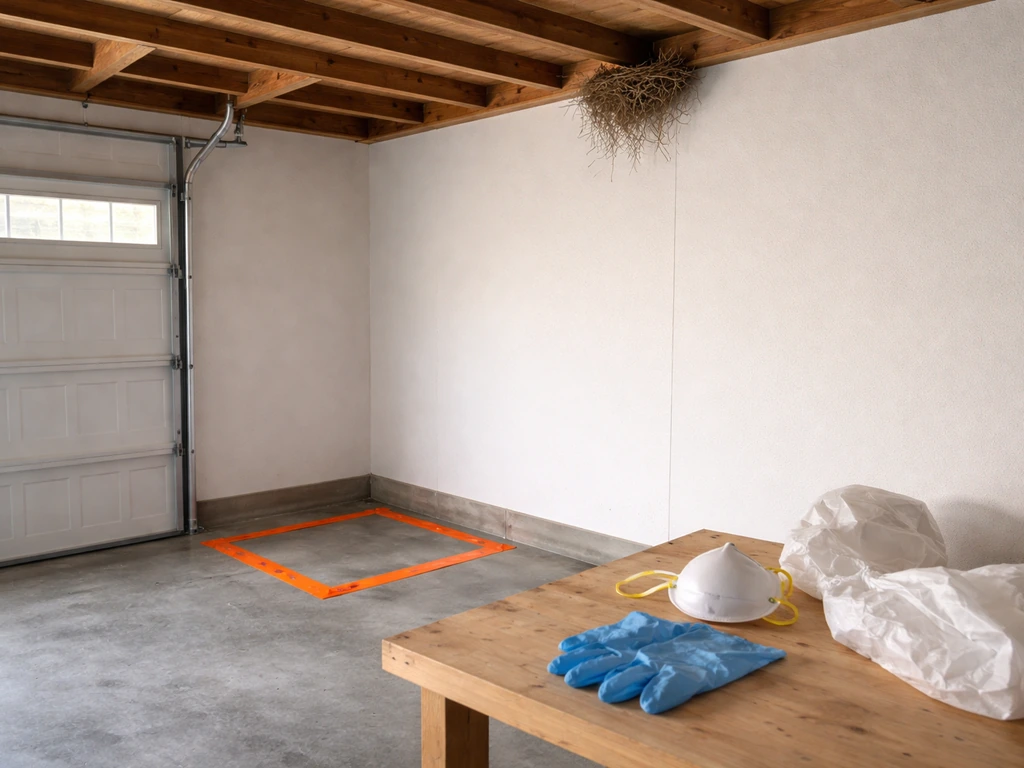
How to Get Rid of Bird Nest in Garage Safely
Step-by-step, safety-first guide to remove a bird nest in your garage today and permanently prevent return.
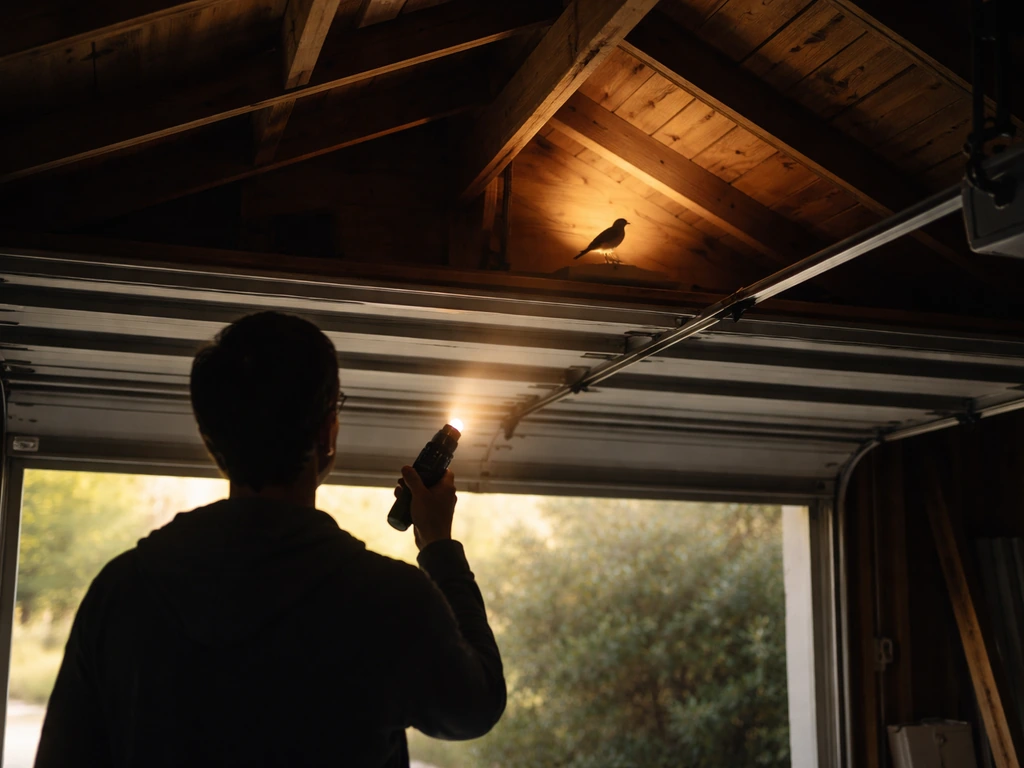
How to Get a Bird Out of Garage Rafters Safely
Step-by-step, humane tips to remove a bird from garage rafters safely, plus cleanup, prevention, and when to call pros.
Cuckoo Clock Bird Door Stuck Open: Fix and Safety Steps
Fix a cuckoo clock bird door stuck open with safety steps, quick checks, jam clearing, and when to call a pro.