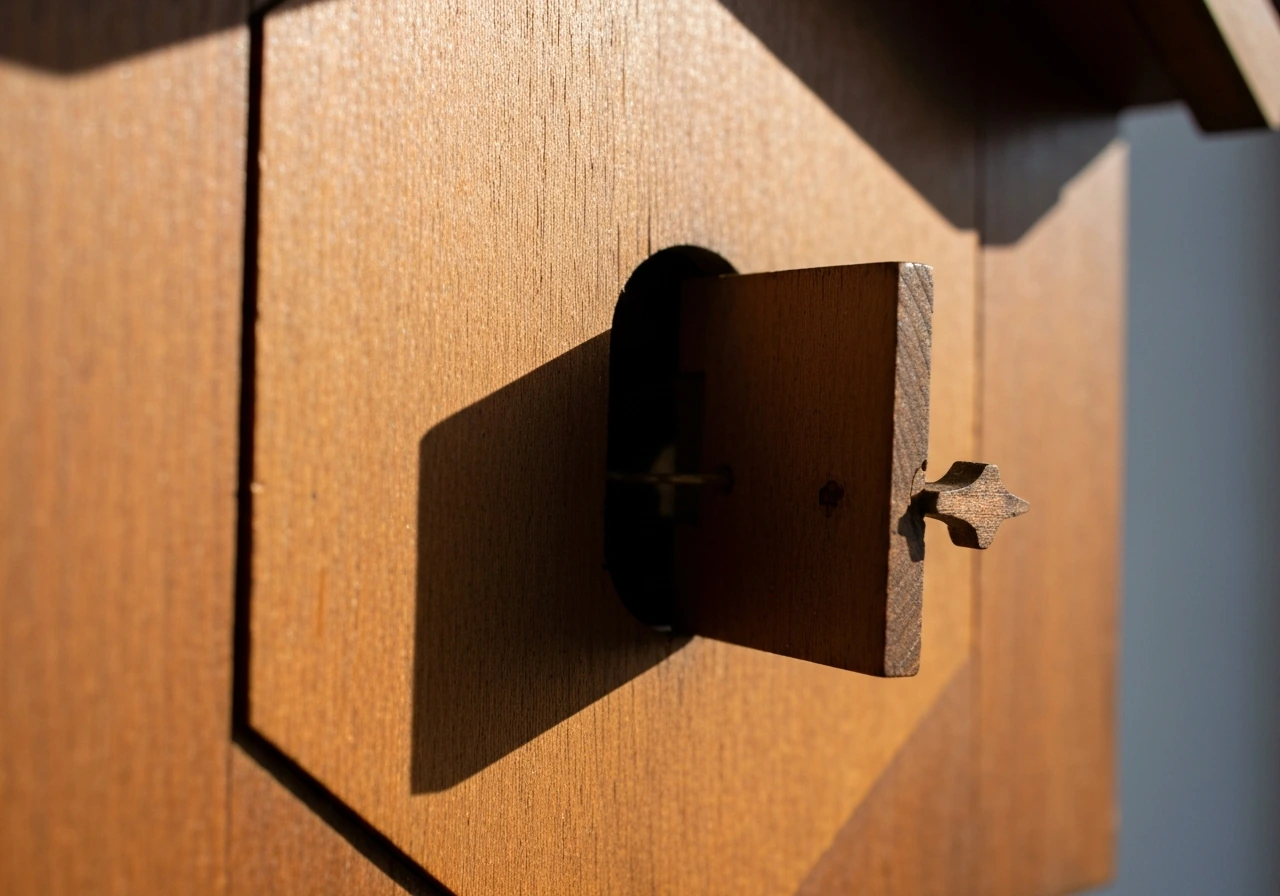
If your cuckoo clock bird door is stuck open, stop the clock immediately by lifting the pendulum or removing the weights, then gently move the bird figure back and forth by hand while watching the door path. That single step resolves the problem about half the time, because the door is usually held open by a lift wire that didn't return to rest rather than by a broken part. If the door still won't close after that, you're dealing with one of a handful of mechanical causes: a bent or misaligned lift wire, a weak return spring, debris in the door path, or a movement that has shifted out of alignment. All of these are diagnosable at home, and most are fixable without sending the clock out for repair.
Cuckoo Clock Bird Door Stuck Open: Fix and Safety Steps

Maya Carver
24 May 2026
Immediate safety steps when the bird is stuck
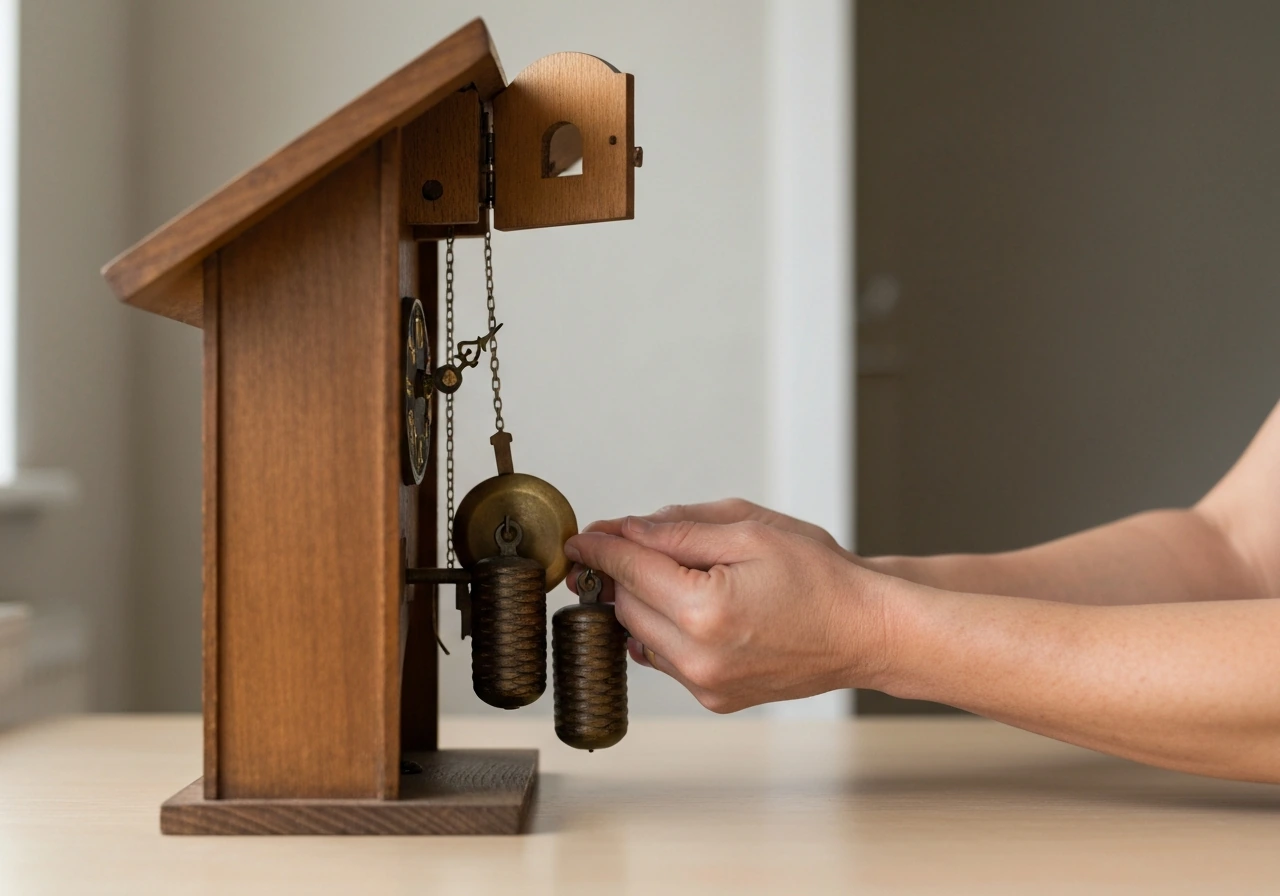
Before you touch anything, take the clock off power (stop the pendulum, remove or lower the weights). A running clock with a stuck bird door is under constant strain: the mechanism is trying to close something that won't move, and that stress can bend wires, strip pivots, or tear the bellows. Getting it to stop is the single most important first action.
- Stop the pendulum by holding it still or unhooking it.
- Lower the weights to the floor or unhook the chains if the clock has them, to remove drive tension.
- Do not pull or push the bird door forcefully. The door is connected to spring and linkage components that can snap or bend under pressure.
- Keep fingers clear of the hinge area and wire path, especially if the movement is still under tension.
- Set the clock on a flat, stable surface if it was hanging, so you can inspect it safely.
One more note: if you see an actual live bird near, in, or around the cuckoo door opening, treat it as a completely separate situation. Real birds can occasionally squeeze into unusual spaces, and some species are federally protected under the Migratory Bird Treaty Act. If a live bird is involved, do not trap, handle, or harm it. The guidance in this article applies to the clock mechanism only. The real-bird scenario is covered in the escalation section below.
Figure out what's actually causing the sticking
The stuck door almost always comes down to one of three root causes: a physical obstruction in the door's closing path, a misaligned or non-returning lift wire or linkage, or a tension problem (weak return spring or a shifted movement). Running through these in order from simplest to most involved saves a lot of time.
Is there something physically blocking the door?
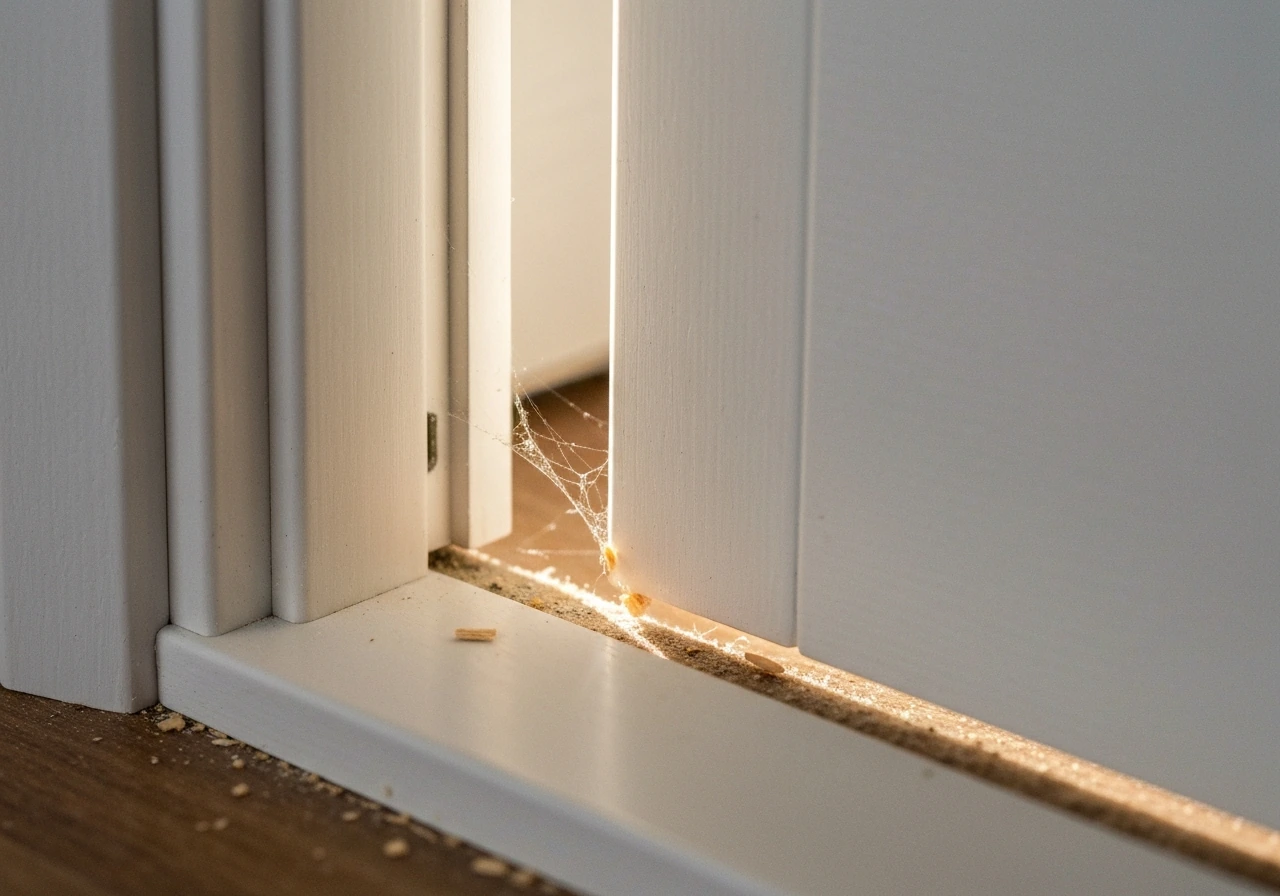
Look closely at the door opening and the frame around it. Dust buildup, a cobweb, a tiny wood chip from the case, or even a piece of old lubrication residue can be enough to prevent the door from seating fully in the frame. This is especially common in clocks that haven't been serviced in several years or that have been stored in a dusty environment. If you see debris, carefully remove it with a soft brush or a toothpick before doing anything else.
Is the lift wire or linkage out of position?
The bird figure is connected to the door by a lift wire and a small linkage system inside the case. When the bird retracts, the wire is supposed to drop back to a rest position that releases the door to close. If the wire is bent, too short, rubbing against something, or just hasn't returned fully, the door stays propped open.
Clockworks notes that a bent or shortened bird wire can keep the bird from retracting correctly and can change how the bird pulls the door shut when it returns to its case bent or shorter bird wire. Gently move the bird forward and back by hand (with the clock stopped) and watch whether the door moves with it.
If the door responds but doesn't seat closed, the wire geometry is the problem. If the door doesn't move at all when you move the bird, the linkage between the two has come disconnected.
Is it a spring or movement alignment issue?
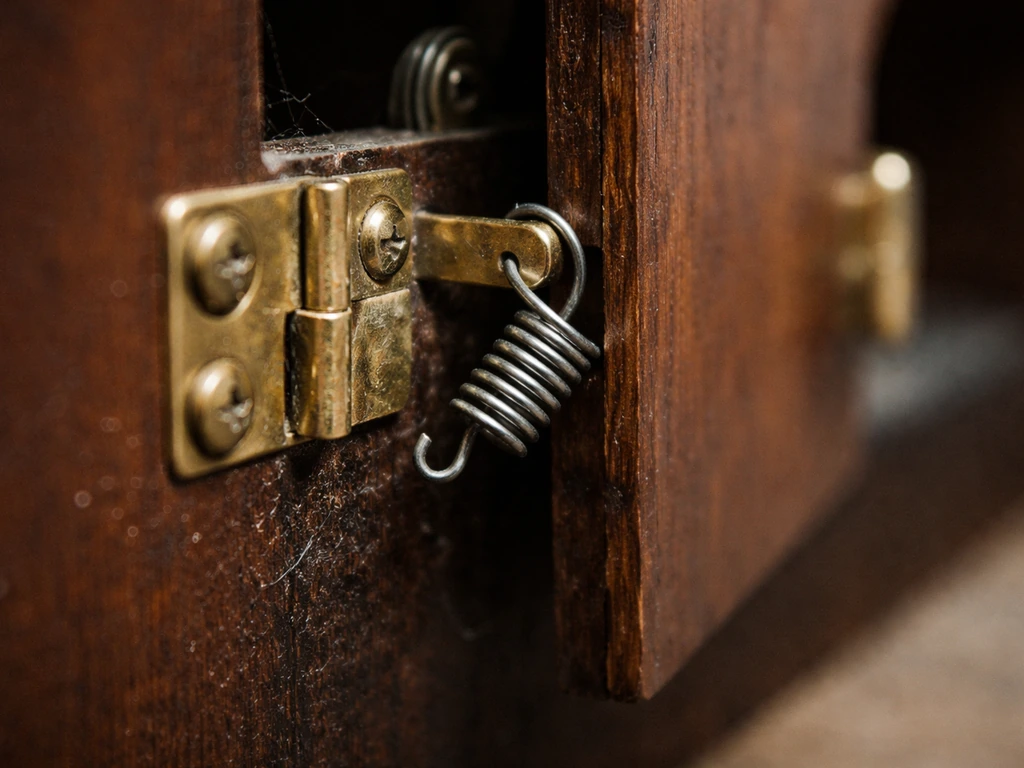
Every cuckoo clock door is assisted by a small metal spring that pulls the door shut after the bird retracts. If that spring is weak, fatigued, or has slipped out of position, the door may swing partway closed but not latch. On movements like the common Regula 25, the entire movement can shift slightly inside the case over time, and even a small angular misalignment changes where all the wires and levers end up relative to the door. Open the back panel and look at whether the movement sits squarely and whether the return spring is in contact with the door assembly.
| Symptom | Most likely cause | Complexity |
|---|---|---|
| Door stays fully open, bird retracts fine | Lift wire not returning to rest, or return spring out of position | Low to medium |
| Door and bird both stay out | Linkage disconnected or lift wire bent/too short | Medium |
| Door moves partway but won't latch | Weak return spring, debris at door frame, or movement misaligned | Low to medium |
| Bird is stuck extended and won't move at all | Bellows clip engaged, latch stuck, or bent arbor/pivot | Medium to high |
| Door opens and closes but at wrong timing | Movement needs regulation or service | Medium |
Quick DIY reset to get the door closed safely
This is the safest manual reset sequence. Go through it step by step before attempting any disassembly.
- With the clock stopped and weights removed, look at the door path with a flashlight. Clear any visible debris gently with a soft brush or toothpick.
- Hold the bird figure between your thumb and forefinger and slowly push it back into the case while watching the door. Apply only light pressure. If you feel resistance, stop.
- Watch the lift wire as you move the bird. It should drop smoothly back toward the movement. If it's sticking up or to the side, note where.
- Once the bird is fully inside the case, does the door close on its own? If yes, you're done: run the clock normally and observe the next few cuckoo cycles.
- If the door partially closes but won't latch, check the door frame edge for any burr, debris, or spring that's sitting proud. Gently seat the door closed with one fingertip, just enough to feel whether the latch catches.
- If the door still won't close after that, do not force it. Move on to the step-by-step troubleshooting below.
Step-by-step troubleshooting by mechanism area
The faceplate and door frame
Start at the outside of the clock. With a flashlight, check the door opening for any warping, swelling (wood expands in high humidity), or visible misalignment of the hinge. If the door is sitting off-center in the frame, try gently adjusting the hinge side. On most carved cuckoo clocks, the door is attached with small brass hinges that can be carefully repositioned. Also check whether any decorative carving has broken off and is lodged in the door path.
The latch
The latch is a small metal catch that holds the door closed between cuckoo calls. If it's bent, gunked up with old lubricant, or has simply shifted, it won't let the door seat. With the clock stopped, examine the latch with a magnifying glass if you have one. It should move freely on its pivot. A small amount of proper clock oil on the latch pivot (not WD-40, more on that shortly) can help if it's stiff, but first check whether it's physically bent or out of alignment. Bent latches can sometimes be carefully straightened with fine needle-nose pliers, but take it slowly.
The lift wire and linkage
Open the back panel of the clock. The lift wire runs from the movement to the bird/door assembly. Look for any wire that is visibly bent, kinked, or rubbing against the case wall or another wire. A wire that's even slightly too short will hold the door open because it never fully releases the door linkage. If you see a bent wire, it can sometimes be carefully straightened with smooth-jaw pliers, but the correct geometry matters: the wire needs to return fully to a neutral position when the bird is at rest inside the case. If you're not sure of the original shape, avoid guessing and consult a repair manual for your specific movement.
The return spring
The small return spring that helps the door snap shut is easy to overlook. It's usually a thin wire spring near the door hinge or in the back of the door assembly. Check that it's still connected at both ends and that it's under slight tension when the door is open. A spring that has slipped off one of its anchor points simply needs to be reseated. A spring that is visibly fatigued, cracked, or deformed needs to be replaced. Replacement springs for common movements are inexpensive and widely available from clock parts suppliers.
The bellows and bellows clip
On mechanical cuckoo clocks, the bellows produce the cuckoo call and are connected to the bird/door assembly. Some clocks have a bellows clip or restraint that holds the bellows in a fixed position during shipping or storage. If this clip was never removed (or was accidentally re-engaged), the bird may not be able to retract fully. Open the back and check for any small metal clip pressing against the bellows. If present, remove it carefully. The bird and door should operate freely once the bellows can move.
Movement alignment (Regula 25 and similar)
On movements like the Regula 25, which is used in a large percentage of Black Forest cuckoo clocks, the movement plate sits inside the case on support brackets. If the movement has shifted even a few degrees, the wires and levers no longer line up with the door correctly. With the back open, check that the movement plate sits squarely and that all mounting screws are snug. Re-seat the movement if it has shifted, and then test the door operation again.
Cleaning and lubrication: what to do and what to skip
This is where a lot of well-meaning repairs go wrong. The instinct to grab a can of WD-40 or a household oil seems logical, but it's one of the worst things you can do to a cuckoo clock mechanism. WD-40 is a penetrating solvent, not a lubricant. It turns sticky over time, attracts dust and grit, and that film will make sticking problems significantly worse. Motor oil, vegetable oil, and spray lubricants have the same problem: they're too thick or too chemically inconsistent for precision clock pivots, and they can cause irreversible damage to small pivot holes.
The right lubricant for a cuckoo clock is a dedicated clock oil (also sold as watch oil or horological oil), applied in tiny amounts only to pivot points. A little goes a long way: one small drop per pivot is the rule. The door hinge, latch pivot, and bellows pivot points can receive a single drop of clock oil if they feel stiff. The lift wire itself usually needs no lubrication. If the wire is rubbing, the fix is repositioning it, not oiling it.
- DO use: proper clock oil or horological oil, in tiny amounts, at pivot points only
- DO use: a soft dry brush to remove dust and debris from the door path and mechanism
- DO NOT use: WD-40 (turns sticky, attracts dirt, worsens sticking over time)
- DO NOT use: motor oil, vegetable oil, sewing machine oil, or spray lubricants
- DO NOT oil: chains (they need traction, not lubrication), the movement mainspring, or any traction surfaces
- DO NOT over-oil: excess oil migrates into places it shouldn't be and causes its own problems
If the mechanism has been previously treated with WD-40 or another inappropriate product, the residue needs to be cleaned off with a suitable clock cleaning solution before any proper oil is applied. At that point, you're looking at a proper service job, which is a good reason to escalate to a professional.
When to stop and get help
Call a clock repair professional when:
- The lift wire or any other wire is visibly bent and you're not confident you can restore the correct geometry
- The movement has worn pivot holes or bent arbors (a sign is wobbling or grinding during operation)
- The door or mechanism was previously repaired with incorrect lubricants and needs a full cleaning
- The bellows are torn, collapsed, or producing a weak/incorrect call alongside the door problem
- You've worked through all the steps above and the door still won't close reliably
- The clock is a valuable antique or heirloom where any risk of further damage is unacceptable
Worn pivots and oval pivot holes are a clear escalation signal. No amount of oiling will fix a pivot hole that has worn from round to oval; that requires a watchmaker's tools and skills. If you notice the movement feels loose or has visible play in the gears, stop and book a service appointment.
Call a wildlife professional when:
If you've found that the issue isn't purely mechanical and there's evidence of a real bird in or around the clock housing, on the case, or inside a wall cavity nearby, treat it as a wildlife situation immediately. If you are looking for advice similar to what people share on Reddit, search for how to get bird out of garage Reddit after you confirm it is not just a stuck clock door.
If you are dealing with a real bird stuck in a garage, the same general safety guidance applies why won't bird fly out of garage. Many bird species common in homes and garages (house sparrows, starlings, swallows, and others) are protected under the Migratory Bird Treaty Act in the U. S. , which means disturbing an active nest or harming the bird can carry federal penalties.
Do not attempt to remove a bird, eggs, or nesting material without knowing the species and legal status.
Contact your local wildlife rehabilitator or the U. S. Fish and Wildlife Service Migratory Bird Permit Office for guidance specific to your situation. The right approach is humane exclusion: making the space less attractive and blocking re-entry after the birds have left on their own, not during active nesting season.
This is the same principle covered in related topics about birds entering garages and enclosed spaces, where the core advice is always to create an exit opportunity rather than trap or force. If you are dealing with birds in a garage structure, the same exit-first approach can help you avoid harming them birds entering garages and enclosed spaces.
If birds have nested in your garage, focus on humane prevention and get help for removal if active nesting is underway birds entering garages.
Prevention and seasonal maintenance checklist
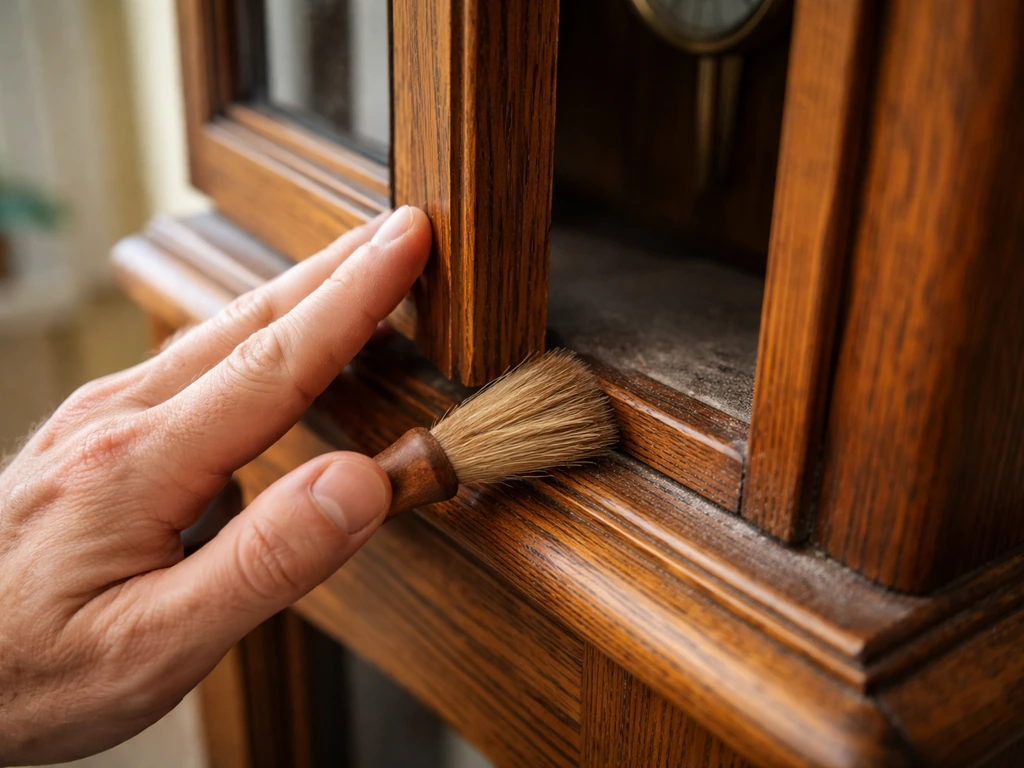
Most stuck bird door problems are preventable with basic annual maintenance. Humidity and dust are the two biggest environmental factors: wood swells in humid summers (which can warp the door frame), and dust accumulates in the door path and on the wires over time, especially in homes with pets or fireplaces. A few minutes of attention twice a year keeps these problems from developing.
| Task | Frequency | Notes |
|---|---|---|
| Visually inspect door path and frame for debris | Every 3 months | Use a flashlight; clear with a soft brush |
| Check lift wire position and return motion | Every 6 months | Move bird by hand and watch the wire return fully |
| Inspect return spring for connection and tension | Every 6 months | Should be under light tension when door is open |
| Clean chains with a dry cloth | Every 6 months | Do not oil chains |
| Oil pivot points with proper clock oil | Every 1-2 years | One drop per pivot; use horological oil only |
| Check movement alignment inside back panel | Every year | Movement should sit squarely in its brackets |
| Check for humidity-related door swelling | Spring and fall | In humid climates, consider a nearby silica desiccant |
| Full professional service | Every 3-5 years | Especially important for clocks over 20 years old |
Seasonal timing matters more than people expect. In spring, rising indoor humidity can cause wood to swell just enough to make the door path tight. Running the clock through a few cuckoo cycles after any significant weather change and listening for a sluggish or incomplete door close is a good early warning habit. In winter, dry air can cause wood to contract, which occasionally loosens the door frame or lets the door rattle. Either way, catching the problem early means you're doing a quick wire check rather than a full disassembly.
If the clock is stored seasonally, always remove the weights and stop the pendulum before storage, and store it in a location with stable temperature and moderate humidity, away from exterior walls, basements, or attics where temperature swings are extreme. Dust the door opening and wire area before restarting it each season. That one step alone prevents most of the debris-caused sticking that brings people to this problem in the first place.
FAQ
How can I tell whether the lift wire is misaligned or the linkage is disconnected?
With the clock stopped, move the bird forward and back by hand. If the door moves with the bird but does not seat fully, the lift wire geometry or neutral rest position is the issue. If the door does not move at all while the bird moves, the linkage between the bird and door release is likely separated or not engaging.
What should I do if the door closes partway but never fully latches?
Check the latch function and the return spring together. A door that swings toward the frame but does not “catch” usually means the spring is weak or slightly off its anchor point, or the latch catch is stuck with old residue. Clean and lightly oil the latch pivot only, then verify the spring still pulls the door through the final seating motion.
Is it safe to keep the clock running if the bird door seems stuck open?
No. Even if the door is only partially open, the mechanism is under continuous resistance. Stop it (pendulum off and weights removed or lowered) before you diagnose, because sustained strain can bend lift wire components or damage bellows connections.
Can I use WD-40 or a household oil to free a sticking latch or hinge?
Avoid it. Penetrating and household oils can leave sticky residue that traps dust and worsens precision sticking, and they can migrate into small pivot holes. Use dedicated clock or watch oil, applied in tiny amounts only to pivots that are stiff, never on the lift wire if it is rubbing.
How do I clean old gunk or WD-40 residue before applying clock oil?
Don’t try to “oil over” residue. Clean with a clock-safe cleaning solution until the contaminated film is removed, then allow it to dry fully before adding a single drop of clock oil to the specific pivot points that need it (latch pivot, hinge pivot, bellows pivot).
If I bend the lift wire, will that permanently fix the problem?
Bending can work only if the wire returns to its true neutral rest position and the geometry matches the original movement. If you are unsure of the correct shape, avoid trial-and-error bends, because a slightly wrong length or angle can hold the door open again or cause misfires.
What should I look for if the case humidity warped the door frame?
Check whether the door opening is visibly tighter on one side and whether the hinge sits off-center. If swelling is present, the fix may involve addressing the environmental humidity first, then re-centering the hinge and removing debris. If the wood movement is significant, plan on deeper service rather than repeated force adjustments.
How do I know whether I should open the back panel or stop and call a professional?
Escalate if you see pivot play (looseness you can feel), ovalized pivot holes, or visible gear or movement movement beyond simple wire and spring issues. Also call for help if the movement feels detached or loose, since oil will not restore worn metal and forcing can worsen the damage.
Does my specific clock model matter (for example, Regula 25)?
Yes for alignment checks. For movements like Regula 25, the movement plate can shift slightly on its brackets, which changes how all levers line up with the door. When the back is open, confirm the movement plate sits squarely and that mounting screws are snug before testing again.
What if there is no debris and the door still sticks, but the wire looks straight?
Look for three non-obvious causes: a latch catch that is bent or gunked up, a return spring that is partially disengaged or fatigued, and a movement that has shifted a few degrees in its mounting. These can keep the door from seating even when the lift wire appears correct.
How can I prevent the same stuck door from coming back?
Do seasonal checks and keep the door path clean. After humidity changes or storage, dust the door opening and wire area, then run a few cuckoo cycles while watching for sluggish or incomplete closing. This is especially helpful in homes with pets, fireplaces, or frequent airborne dust.
What should I do if I suspect a real bird is involved instead of a mechanical stuck door?
Treat it as a wildlife issue. Do not trap, handle, or harm the bird or disturb a nest. Focus on humane exclusion approaches (creating an exit opportunity and blocking re-entry after the bird leaves), and get guidance from local wildlife authorities. Legal status can vary by species, and some are protected.
Next Articles
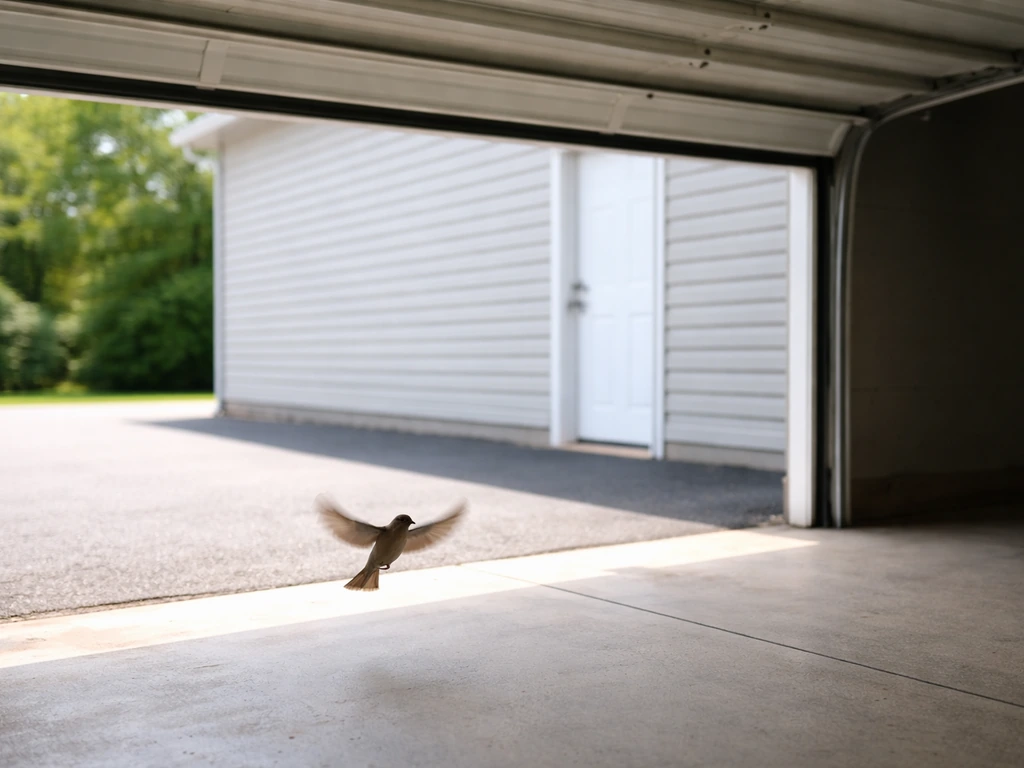
How to Get a Bird Out of a Garage: Reddit-Style Guide
Humane, safety-first steps to get a bird out of a garage, what not to do, troubleshooting, and prevention tips.
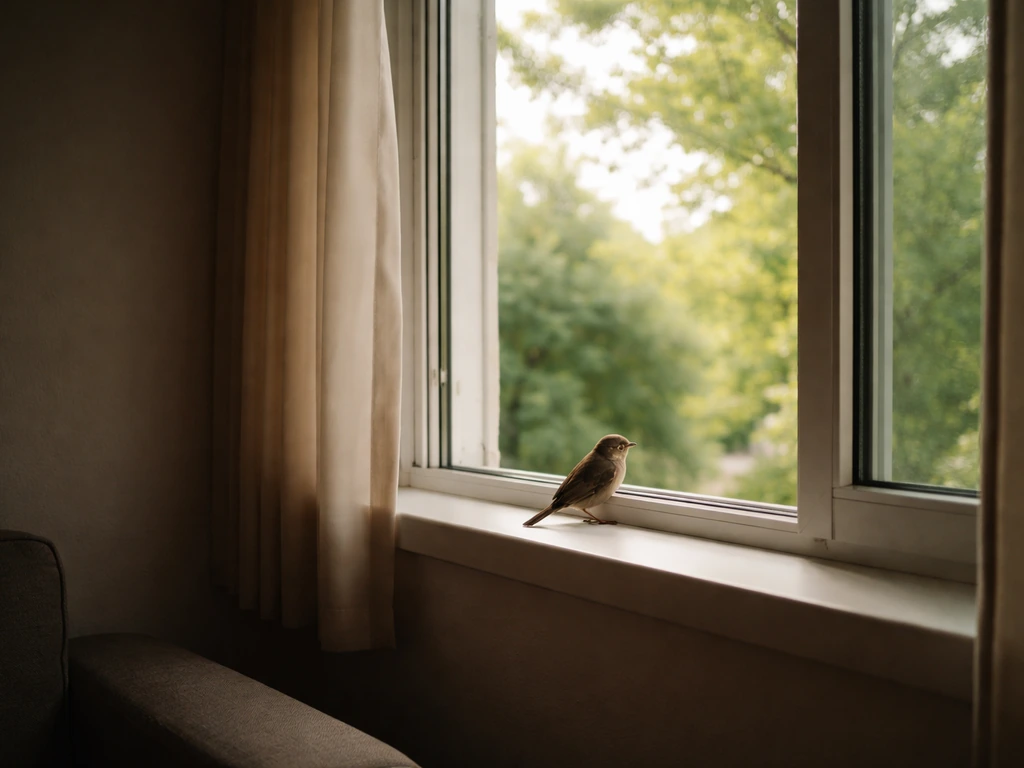
How to Get a Trapped Bird Out of Your House Safely
Humane, step-by-step guide to get a trapped bird out safely, handle injuries, and prevent future entry.
How to Get a Bird Out of Your House Reddit Guide
Step-by-step humane bird escape, DIY fixes, prevention tips, and when to call wildlife experts for indoor bird incidents