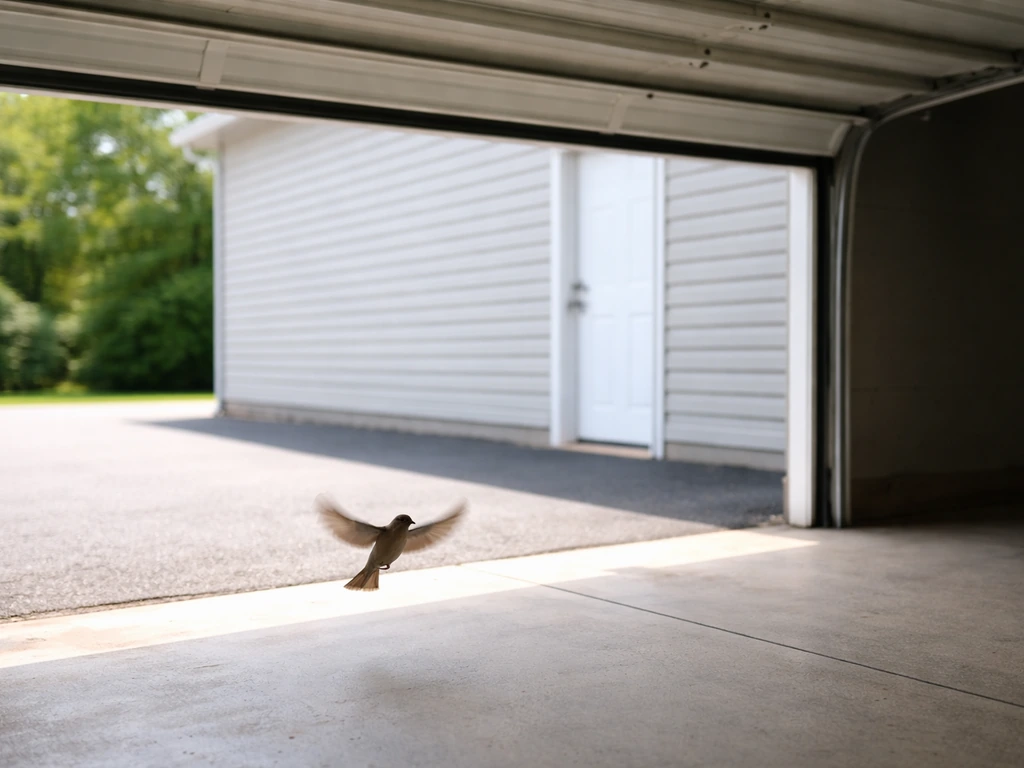
Open your largest garage door or any door leading outside, turn off every interior light, and then step back and leave the bird alone for 15 to 30 minutes. That single move solves the problem the majority of the time. The bird navigates toward the brightest opening, finds the exit, and flies out without any chasing required. Everything else in this guide is for when that basic approach doesn't work, the bird is injured, or you want to make sure it never happens again.
How to Get a Bird Out of a Garage: Reddit-Style Guide
Maya Carver
22 May 2026
First few minutes: what to do (and what not to do)
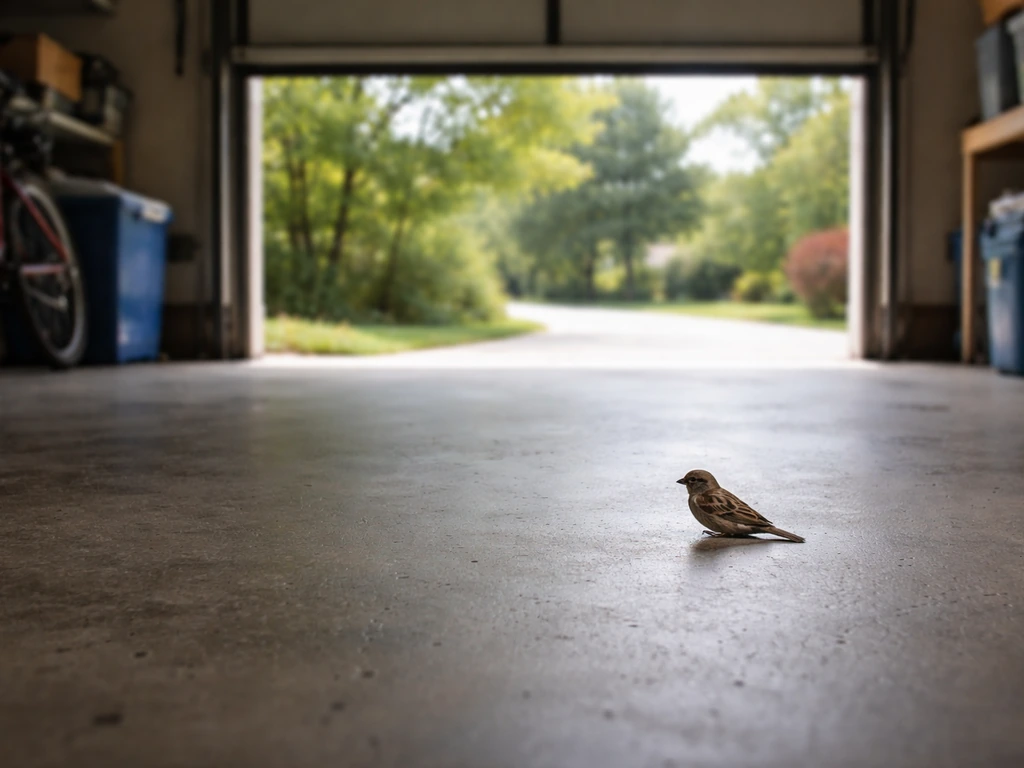
Before you do anything else, take a breath. A panicked bird bouncing off walls and rafters is not in immediate danger unless it's already injured. Your job in the first few minutes is to create a clear exit path and then get out of the way.
- Open the main garage door fully, or open any exterior door or window that leads directly outside.
- Turn off all interior lights, including fluorescent overheads, so the open exit is the brightest thing in the space.
- Close every interior door leading into the house so the bird can't wander further inside.
- Move pets and children out of the garage and stay quiet.
- Step back at least 10 feet from the bird and wait. Give it a minimum of 15 to 30 minutes.
What you should not do is equally important. Do not chase the bird, wave your arms, or throw anything at it. Do not use a broom to try to bat it toward the door. Do not set a glue trap or any adhesive device. Under U.S. federal law (50 CFR § 21.14), methods likely to harm migratory birds, including adhesive traps, are explicitly prohibited. Beyond the legal issue, glue traps cause wing and leg dislocations and permanently damage feathers, which can end a bird's ability to fly. If someone you know suggests a glue trap, ignore that advice completely.
Step-by-step: guiding a bird out of your garage
If the light-and-exit method hasn't worked after 30 minutes, you can move to a more active guiding approach. The goal is still to coax the bird toward the exit, not to catch it.
- Choose one exit point and commit to it. The main garage door is usually best because it's the largest opening. If you have windows, cover them with a towel or cardboard so the bird doesn't keep flying at the glass.
- Block off the path you don't want the bird to take. Close interior doors, use a sheet hung across an open doorway, or stack cardboard boxes to funnel the bird toward your chosen exit.
- Darken the rest of the space. If the garage has side windows letting light in, cover them temporarily. The open exterior door should be the only bright spot.
- Position yourself behind and to the side of the bird, not between it and the exit. Move slowly and calmly, making a gentle sweeping motion with your arm or a long-handled broom held low, as if you're herding, not swatting.
- If the bird lands on a rafter or high shelf and won't move, stop and wait another 10 to 15 minutes before trying again. Repeated attempts exhaust the bird unnecessarily.
- Once it flies toward the exit, freeze. Any movement from you can redirect it back inside.
- After it leaves, check that it's flying normally before closing the garage door.
If the bird keeps heading toward the back of the garage and away from the exit, you've likely got too many visual distractions or light sources pulling it the wrong way. Recheck that all interior lights are off and that the only open exit is clearly brighter than the rest of the space. Sometimes just adding a flashlight or a clip light pointed at the open door from inside the garage is enough to redirect a confused bird.
Birds stuck in rafters are a specific challenge. Birds that are stuck high up in garage rafters often need the same light-and-exit approach first, with extra waiting and better exit visibility Birds stuck in rafters. If you suspect a cuckoo clock mechanism is involved, check whether the bird door is stuck open and correct the issue before trying another release step cuckoo clock bird door stuck open. If you're dealing with a bird that has settled high up and won't come down, there's a separate approach worth reading about for that situation, but the core principle is the same: remove interior light, maximize exit light, and wait.
When it won't leave or something seems wrong
The bird keeps circling but not leaving
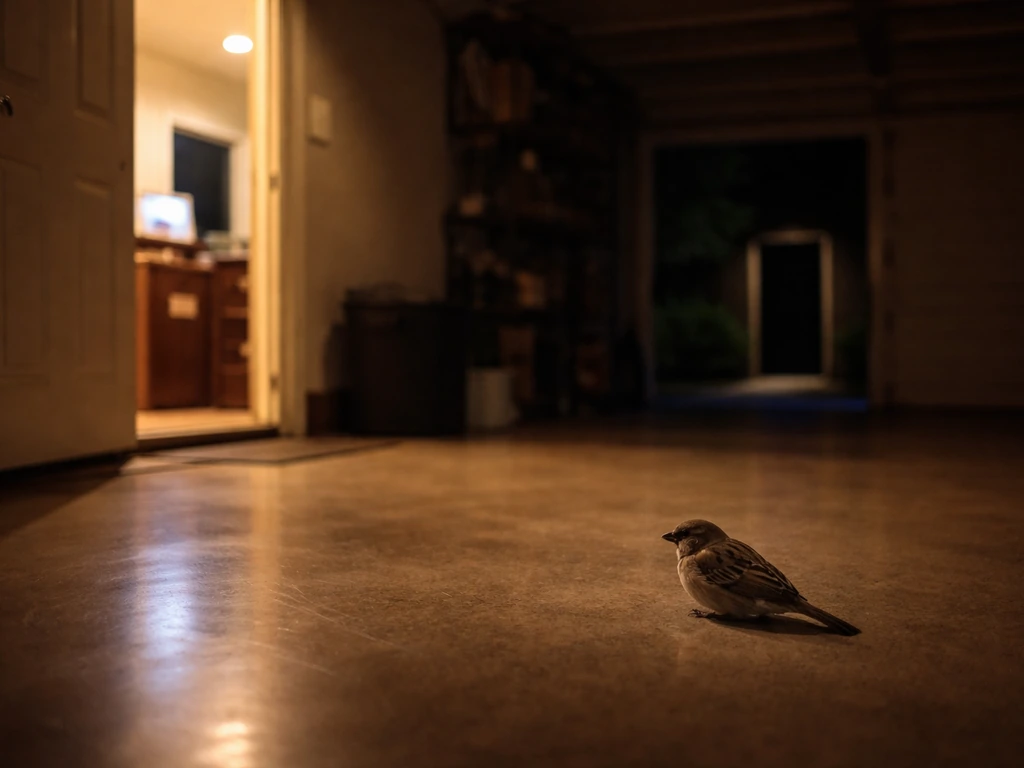
If the bird has been active for more than an hour and still hasn't found the exit, check whether any artificial lights or lit screens inside the garage are pulling it off course. Also confirm that the exit opening is fully unobstructed from the outside, including no shrubs or overhanging objects blocking the view of open sky. If those are fine and the bird is still circling, try a full reset: close the garage door for five minutes, let the bird settle, then reopen and repeat the process.
The bird looks injured or is on the ground
A bird sitting on the floor, unable to fly, or holding a wing at an odd angle needs a different response. Do not attempt to guide it out. Instead, gently place a lightweight towel over it to reduce stress and carefully pick it up, supporting its body. Place it in a shoebox or similar small container lined with a cloth or paper towel. Keep the box in a warm, dark, quiet place and do not give it food or water. Then contact a licensed wildlife rehabilitator as soon as possible. The Tufts Wildlife Clinic and the Golden Gate Bird Alliance both emphasize the same protocol: warmth, dark, quiet, no food, no water, get professional help quickly.
A bird that hit a window or wall and is dazed may recover on its own in 15 to 30 minutes. Keep it contained and quiet during that time. If it doesn't recover or seems unable to stand, treat it as an injury and call a rehabilitator. Audubon notes that laypeople often can't recognize the full extent of a collision injury, so when in doubt, escalate.
The bird keeps coming back
If you've had a bird in your garage more than once, something is attracting it. Common draws include open pet food, a water source, insects around interior lights left on at night, or an existing nest nearby. A bird coming back repeatedly may also have a nest inside your garage, which changes the situation significantly. The Building America Solution Center at PNNL notes that birds may nest in unprotected vent openings, and if birds are already present in vent openings or attics, you should consult a nuisance wildlife control operator for appropriate removal procedures blank" rel="noopener noreferrer">a bird coming back repeatedly may also have a nest inside your garage. If a bird keeps returning, you may also need to remove an existing nest so it stops coming back nest inside your garage. Disturbing an active nest with eggs or chicks requires checking local and federal rules first, especially for protected species.
What kind of bird is it, and why that matters
You don't need to be a birder to make a useful identification. A rough size and behavior assessment is enough to decide how to handle the situation and whether you need outside help.
| Bird type | Common garage visitors | Key behavior clue | Changes your approach? |
|---|---|---|---|
| Small songbird | Sparrow, wren, finch, swallow | Fast, erratic flight; may panic easily | Standard light-and-exit method works well; very sensitive to stress |
| Medium bird | Pigeon, dove, starling, robin | Steadier flight; may roost on ledges | Usually guides out well; check for nests in eaves or rafters |
| Large bird | Crow, jay, grackle | Loud, strong flier; may be aggressive if cornered | Give more space; do not approach closely |
| Raptor (hawk, owl) | Red-tailed hawk, barn owl, screech owl | Perches high; may be calm but will strike if grabbed | Do not attempt to handle; call wildlife control if it won't leave |
| Waterfowl | Duck, goose | Walks on floor; rarely flies up | Open the door fully and herd gently from behind at ground level |
Audubon's identification guidance is useful here: don't rely on color alone, since lighting inside a garage distorts color perception. Instead, look at body size relative to familiar objects, tail length, and how the bird holds itself when perched. A bird the size of a robin or smaller can almost always be handled with a standard DIY approach. A raptor perched in your rafters is a different situation that often needs professional help, both because of the bird's strength and because birds of prey have additional legal protections.
The federal Migratory Bird Treaty Act protects most wild birds in the U.S., and some species have additional protections under the Endangered Species Act. Eagles, for example, require specific federal authorization even for non-lethal removal. If you're looking at a bird that appears to be a hawk, eagle, owl, or any species you're uncertain about, check before you act. If the situation is urgent and you can't identify the bird, call your state wildlife agency or a licensed wildlife control operator for guidance.
Cleanup after the bird leaves
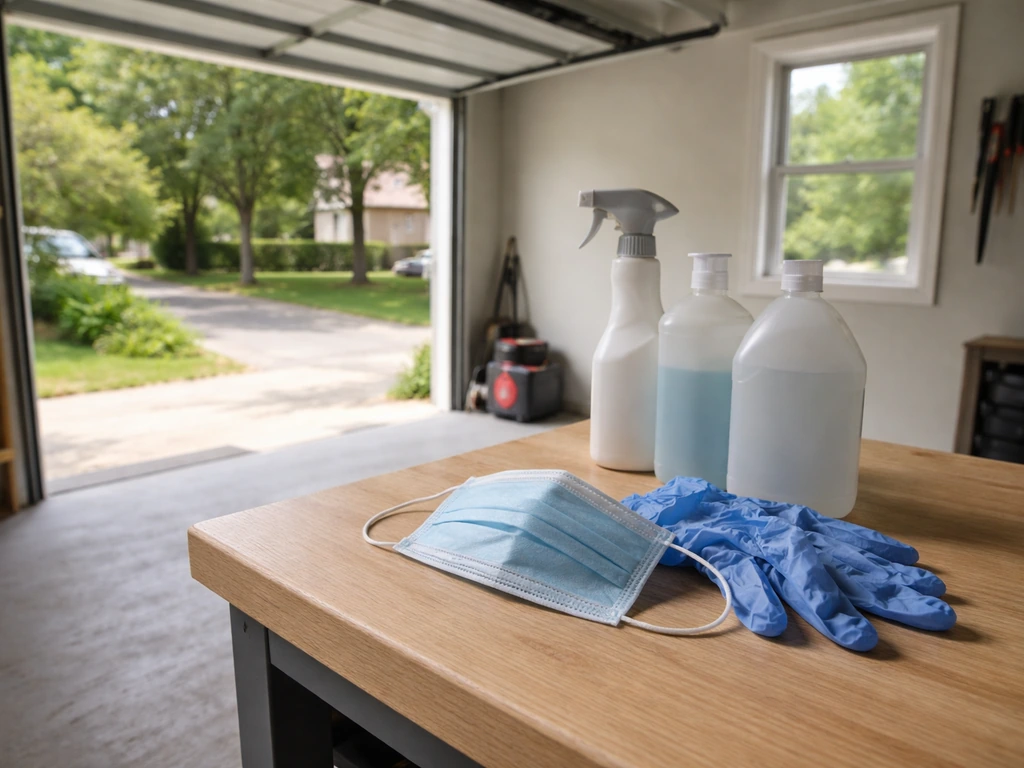
Once the bird is out, don't just sweep up and move on. Bird droppings can carry pathogens including Histoplasma capsulatum, the fungus responsible for histoplasmosis, which becomes a respiratory risk when dried droppings are disturbed and become airborne. This isn't a reason to panic, but it is a reason to clean carefully.
- Ventilate the garage first. Open all doors and windows and let fresh air circulate for at least 30 minutes before you start cleaning.
- Put on an N95 respirator if you have one, or at minimum a well-fitting face mask. Add disposable gloves.
- Do not dry-sweep droppings. Instead, spray them with a diluted bleach solution (approximately 1 part bleach to 9 parts water) or an EPA-registered disinfectant and let them soak until thoroughly wet. This prevents the material from becoming airborne dust.
- Wipe up with damp paper towels or disposable cloths and bag everything immediately.
- Wash your hands thoroughly with soap and water after removing gloves.
- Discard any open food items, pet food bags, or water bowls that may have been contaminated.
If there was a significant roost situation with large amounts of accumulated droppings, that's a different level of cleanup. The CDC and NIOSH flag heavy bird and bat roost droppings as a meaningful histoplasmosis risk and recommend a HEPA-filter vacuum rather than standard vacuuming, along with professional remediation for large accumulations. A single bird overnight is unlikely to create that level of hazard, but a bird that roosted in your garage for weeks undetected might.
Also be aware of bird flu considerations if the bird appeared sick or dead. The CDC recommends avoiding contact with sick or dead birds without PPE and using soap-and-water cleaning followed by an EPA-approved disinfectant effective against influenza A viruses. If the bird died in your garage, bag it in a sealed plastic bag before disposal and follow your local health department's guidance.
Stopping it from happening again
A bird getting into your garage once is bad luck. A second time is a gap in your building envelope. Here's how to find and fix the entry points.
Find the entry points first
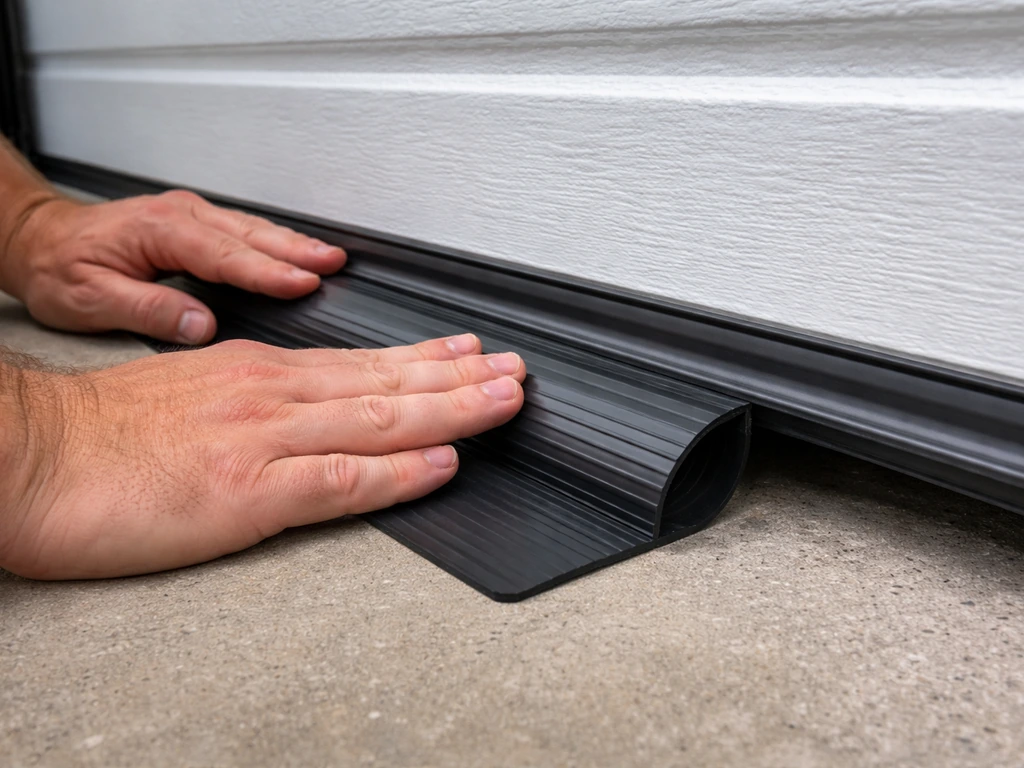
On a bright day, close the garage completely, turn off the lights, and look for light coming through. Any gap that lets light in is large enough for a small bird. Pay particular attention to the gap under the garage door, the roofline where the roof meets the wall, any vent openings, and the corners where the garage door track meets the framing.
Common entry points and how to seal them
| Entry point | Typical gap size | Fix |
|---|---|---|
| Bottom of garage door | Up to 1–2 inches | Replace or add a rubber bottom seal / threshold seal |
| Roof or attic vents | Full vent width if unscreened | Install 1/4-inch hardware cloth mesh on the outside of the vent cover |
| Eave gaps and fascia gaps | Variable | Seal with hardware cloth or foam backer rod plus exterior caulk |
| Pipe and conduit penetrations | 1/4 inch and up | Seal with expanding foam or hardware cloth plus silicone caulk |
| Gaps in walls near rafters | Any size | Seal with silicone caulk or hardware cloth depending on gap size |
| Chimney or roof penetrations | Variable | Install a commercial chimney cap or screening over the opening |
One critical rule: never seal a gap that currently has an active nest behind it. Oklahoma Wildlife Authority makes this point clearly. Sealing a nest inside a wall or vent traps the birds and is both inhumane and, for migratory species, potentially illegal. If you suspect an active nest, wait until the nesting season is over or get professional help to remove the nest first, then seal the gap.
Roof and attic vents are best addressed from the outside, with hardware cloth secured tightly over the vent opening. Check them seasonally, especially in late winter before nesting season starts, because birds will probe these areas and can dislodge or nest on top of poorly secured screens. UF/IFAS Extension recommends hardware cloth and silicone caulk for sealing edges around signs and structural gaps that pigeons and similar birds exploit, and the same approach works for garage structures.
Reduce what's attracting birds in the first place
- Move bird feeders at least 30 feet from the garage, and consider whether you need them near the building at all.
- Store pet food in sealed containers and don't leave bowls out overnight.
- Turn off or redirect exterior lights at night, since lights attract insects, which attract birds.
- Clear out any debris, old boxes, or stored items near the roofline where birds might see nesting opportunities.
- Check for standing water sources near the garage and eliminate them.
When to call wildlife control and what to tell them
Most single-bird garage situations resolve with DIY methods. When in doubt, this can be as simple as the light-and-exit approach described earlier, which is why won't bird fly out of garage readers often start with. Call a wildlife professional when any of the following are true:
- The bird is a raptor (hawk, owl, eagle) and won't leave on its own.
- The bird is injured and you can't safely contain it.
- You've found a nest with eggs or chicks inside the garage.
- The bird is a protected or endangered species and you're unsure of your legal obligations.
- Multiple birds have entered or you suspect an active roost situation.
- You've tried the DIY methods for more than a few hours without success.
- There's a public safety concern, such as an aggressive bird near a school or business entrance.
When you call, have this information ready: the type of bird if you know it (or a description of its size and color), how long it has been in the garage, whether it appears injured, whether you've seen a nest, and the approximate location inside the garage. The Washington Department of Fish and Wildlife notes that for immediate public safety issues, you can also call local animal control or, in serious situations, 911. For injured songbirds and small non-dangerous birds, your first call should be to a licensed wildlife rehabilitator, not a pest control company.
If you're working with a wildlife control operator for exclusion work, ask specifically for humane exclusion methods: sealing, screening, and one-way exclusion devices where birds can exit but not re-enter. Reputable operators focus on natural, non-lethal approaches. Avoid any company that recommends glue traps, poisons, or lethal removal for a standard bird-in-building situation, since these methods are both inhumane and potentially illegal under federal and state rules.
San Diego Humane Society also offers humane law enforcement contacts for situations where a bird is stuck and you need additional guidance quickly. Your local humane society is a useful starting point if you're not sure who to call in your area.
FAQ
Should I open the garage door all the way or just crack it open to get the bird out?
Open the largest practical exit fully. A fully open door creates a clearer, brighter landing corridor, and it reduces the chance the bird keeps bouncing against partially lit edges or door hardware.
How long should I wait before trying something more active?
Try the light-and-exit approach first for 15 to 30 minutes. If the bird is still inside after that, switch to redirecting with controlled lighting, for example using a flashlight or clip light aimed at the open door, while keeping all other interior lights off.
What if I’m worried the bird will hide behind clutter and I cannot see it?
Do not start chasing. Instead, reduce distractions where possible, keep the exit open and bright, and wait. If you cannot confirm the bird is moving toward the exit after repeated checks (about an hour), it may be safer to call a rehabilitator or wildlife control operator to avoid prolonged disturbance.
Can I use a towel, net, or carrier to grab the bird if it seems stuck?
Avoid grabbing a healthy, perched bird, since sudden capture can injure wings and legs and cause additional stress. Only handle a bird when it appears clearly grounded or injured, and even then use the low-stress towel plus a lined container, then contact a licensed rehabilitator.
Is it okay to try to herd the bird with a broom toward the door?
No. Broom or arm-waving herding often escalates panic and can cause collisions or wing damage. The safer approach is eliminating interior lights, maximizing exit light, and letting the bird choose the route.
What if the bird is trapped in a high rafter and keeps panicking?
Use the same light-and-exit principle, but expect longer waiting. Improve visibility of the exit from inside (for example, an aimed light toward the open door) and avoid repeated attempts to physically reach the bird, especially if it is in an area you cannot access safely.
How can I tell if the bird is injured versus just exhausted?
If it can perch and move normally, it may be able to self-escape with proper lighting. If it is on the floor, cannot maintain balance, has a wing held at an odd angle, or will not stand, treat it as potentially injured and use the towel-and-container method before contacting a rehabilitator.
What should I do if it hit a window or wall and seems dazed?
Keep it contained and quiet for about 15 to 30 minutes so it can recover. If it does not improve or appears unable to stand, treat it as injury and call a rehabilitator, since people often underestimate internal trauma.
Do I need to worry about bird droppings right away after it leaves?
Yes, clean carefully even if it was only there overnight. Disturbing dried droppings can aerosolize pathogens, so use appropriate cleaning methods and avoid dry sweeping. If it looks like heavy, long-term roosting, upgrade to higher-safety cleanup practices such as HEPA vacuuming and consider professional remediation.
If it keeps coming back, what’s the fastest way to find the entry point?
Do a “light test” on a bright day: close the garage completely, turn off interior lights, and look for any light leaks around the under-door gap, roofline where materials meet, vents, and track-to-framing corners. Mark the gaps for repair after the bird situation is resolved.
Can I seal the gap immediately if I think there’s a nest?
Do not seal a gap that might contain an active nest. Trapping birds inside walls or vents can be inhumane and may violate migratory bird protections. If you suspect an active nest, wait until the nesting season is over or get professional help to remove the nest first.
Should I call pest control or a wildlife rehabilitator?
For injured birds or small, non-dangerous birds, start with a licensed wildlife rehabilitator. For exclusion work related to preventing re-entry, work with a wildlife control operator and ask for humane exclusion methods only, such as screening or one-way exit devices.
What info should I provide when I call for help?
Share the bird type or a clear size and color description, how long it has been in the garage, whether you saw it injured or drooping, whether you suspect a nest, and the approximate location (floor, rafters, near vents). If you see repeated visits, mention that too, since it changes the plan.
What should I do if the bird looks like a hawk, owl, or eagle, or I’m not sure of the species?
Do not attempt removal on your own. Many raptors have special legal protections, and incorrect handling can be risky. If identification is uncertain or the situation is urgent, contact your state wildlife agency or a licensed wildlife control operator for guidance.
How should I handle cleanup if the bird appeared sick or died inside?
Avoid direct contact without appropriate protection. Bag a deceased bird in a sealed plastic bag for disposal, then disinfect the area using an influenza-appropriate disinfectant approach and follow your local health department guidance, especially if it seemed lethargic or ill.