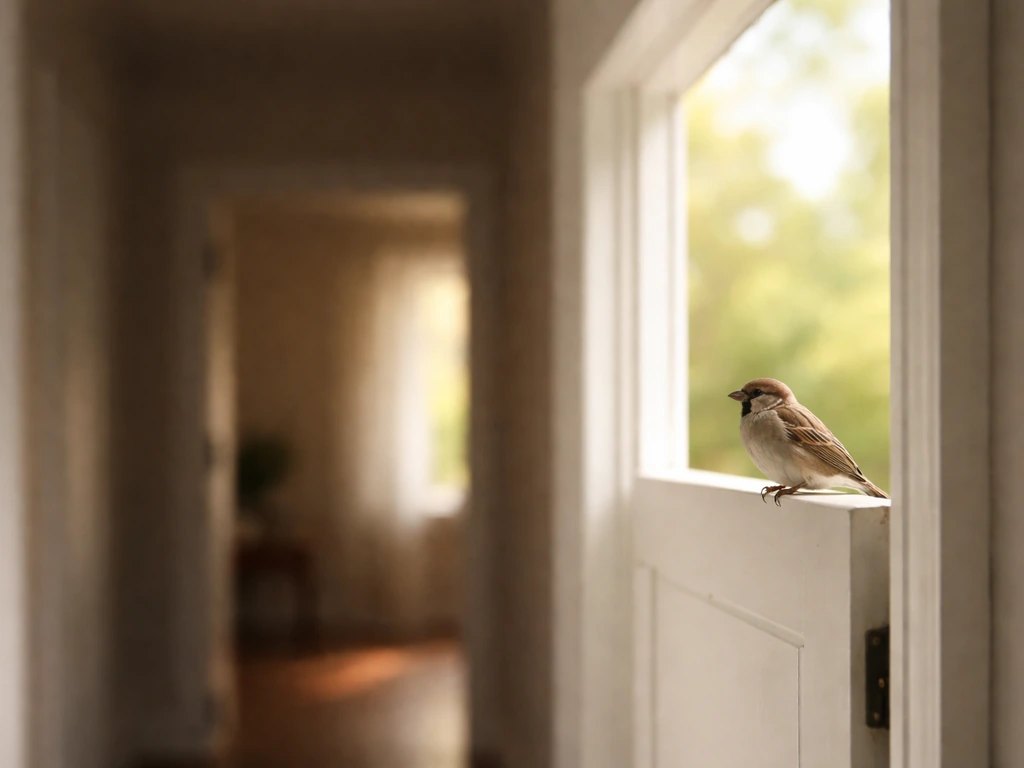
For a healthy bird that just flew in, your first call should be a local wildlife removal or wildlife control company. If the bird looks injured, call a licensed wildlife rehabilitator instead. Animal control handles birds only in limited situations (mostly stray poultry or public safety threats), and pest control companies vary widely on whether they do live bird work humanely. The right call depends on three things: the bird's condition, whether there's a nest involved, and how it got in.
Who to Call to Get a Bird Out of Your House
Maya Carver
18 May 2026
What to do right now (emergency triage)
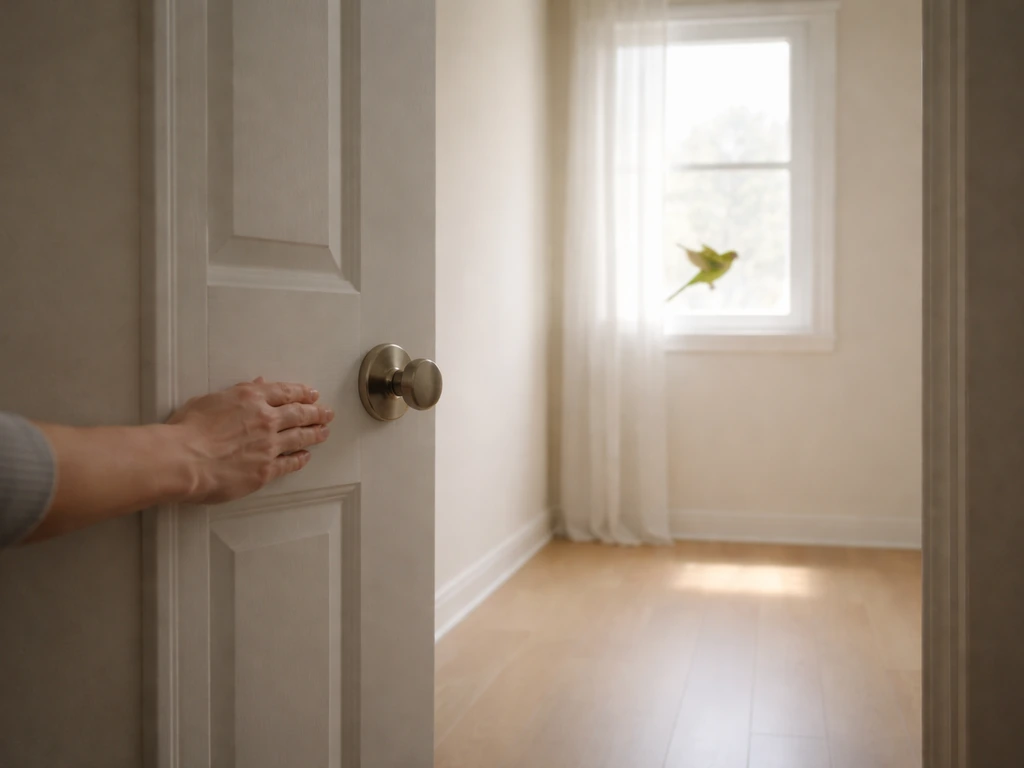
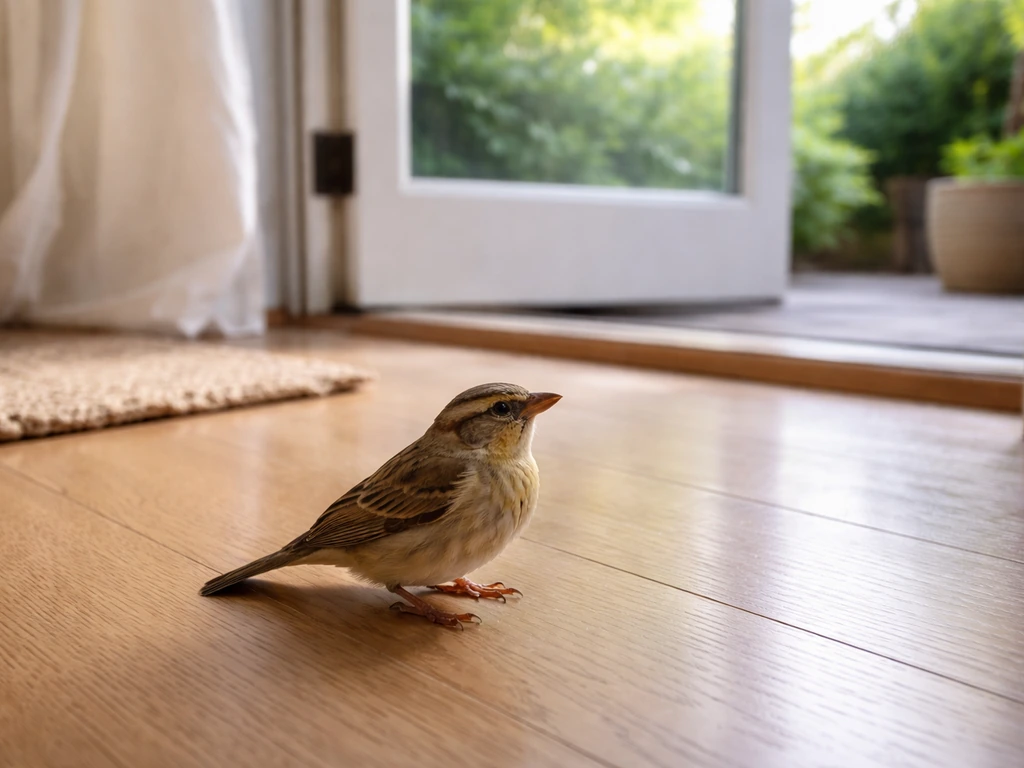
Before you pick up the phone, spend two minutes making the situation safer. A panicking bird is going to fly at windows, exhaust itself, and potentially injure itself further. Your job right now is to slow things down.
- Get people and pets out of the room. Dogs and cats are a serious threat to a bird, and extra movement makes the bird panic harder.
- Close interior doors so the bird is contained to one room or one section of the house.
- Open every exterior window and door in that room as wide as possible. Remove screens if you can do it quickly.
- Turn off or dim artificial lights. Pull curtains on windows you can't open. Natural light from open exits is what draws the bird out.
- Leave the room and give it 15 to 30 minutes. Most healthy birds find their own way out once they calm down and see the exit.
- If the bird is hitting windows repeatedly, cover the glass with a sheet or towel to eliminate that hazard.
- Do not chase, swat at, or try to grab the bird. This almost always makes things worse.
If the bird is clearly injured (not flying, tilting to one side, bleeding, or was caught by a cat), don't wait for it to find an exit. Gently place a lightweight towel or shirt over it to calm it, then carefully scoop it into a cardboard box with air holes punched in the top. Line the bottom with crumpled paper towels, keep the box in a warm quiet spot away from pets and noise, and call a wildlife rehabilitator. Do not offer food or water while you wait.
Who to call and when
This is the part most people get wrong. There isn't one universal number. Here's how to match your situation to the right contact. If you want real-world experiences and advice, searching for how to get a bird out of your house on Reddit can help you compare what worked for other people how to get a bird out of your house reddit.
Wildlife removal or wildlife control companies
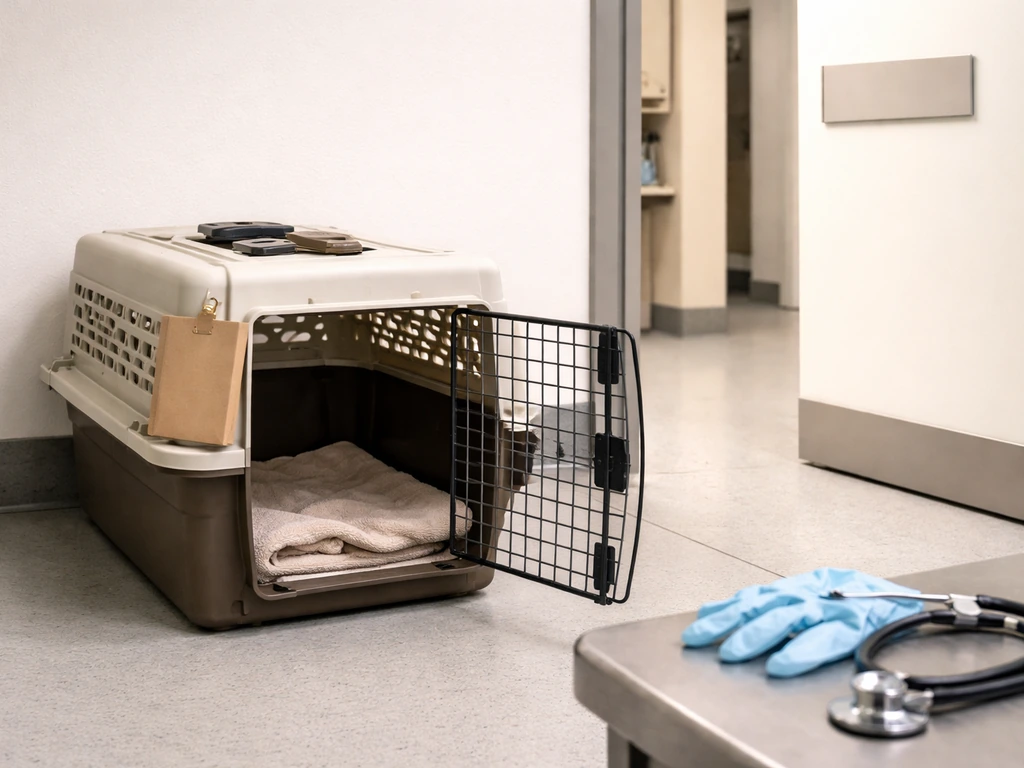
This is your best first call for a healthy, mobile bird in the house. Licensed wildlife control operators (sometimes called nuisance wildlife control operators or NWCOs) are trained in live capture, exclusion techniques, and legal handling of wild birds. They know how to identify protected species and won't do anything that puts you at legal risk. Look for someone who specifically lists bird removal and exclusion in their services, and ask upfront whether they use humane live-capture methods.
Wildlife rehabilitators
Call a licensed wildlife rehabilitator any time the bird appears injured. Signs that warrant this call include broken or drooping wings, bleeding, a bird that can't stand or keep its head upright, maggots or wounds, or any bird that was caught by a cat or dog (puncture wounds from claws or teeth cause internal damage that isn't always visible). The finder's directory at the National Wildlife Rehabilitators Association website or a quick search for your state plus 'wildlife rehabilitator' will get you a local contact fast.
Animal control
Animal control departments typically don't handle wild birds unless there's an immediate public safety concern (like a large aggressive bird, or a bird that poses a disease risk in a public space). They're the right call for escaped domestic birds like chickens, ducks, or pet parrots. For most wild bird situations in a home, they'll refer you elsewhere, but calling them first doesn't hurt if you can't identify the bird or aren't sure who to contact.
Pest control companies
Some pest control companies do bird exclusion and deterrent work, but quality varies significantly. The better ones focus on exclusion (blocking entry points, installing netting, one-way doors) rather than trapping. Avoid any company that suggests lethal removal for a protected species, or that can't tell you specifically what method they'll use. For unprotected species like pigeons, starlings, and house sparrows, pest control is a reasonable option. For any native songbird or hawk, stick with a wildlife control operator or rehabilitator.
Building maintenance or facilities managers
If you're in an apartment, office, or commercial building, your first contact should be building management or your facilities team. They have relationships with contractors, are responsible for structural entry points, and handle the liability question. Frame it as both an immediate removal need and a building integrity issue. Bring photos of where the bird got in if you can find the entry point.
U.S. Fish & Wildlife Service or state wildlife agency
You don't call them for emergency removal, but you do contact your state wildlife agency if you're dealing with a protected species nest, if a contractor suggests anything that might violate the Migratory Bird Treaty Act, or if you need a permit for exclusion work near an active nest. The MBTA makes it illegal to disturb, destroy, or relocate the nest of most native wild birds when eggs or dependent chicks are present, and that applies to you as a homeowner too.
| Situation | Who to call first |
|---|---|
| Healthy wild bird flying around inside | Wildlife removal/control company |
| Injured or cat-caught bird | Licensed wildlife rehabilitator |
| Escaped chicken, duck, or pet bird | Animal control |
| Pigeon, starling, or house sparrow problem | Pest control or wildlife control |
| Bird in apartment or commercial building | Building management/facilities |
| Active nest with eggs or chicks | State wildlife agency for guidance first |
| Protected species (hawk, owl, songbird) | Wildlife control operator or rehabilitator |
DIY steps you can handle today
If the bird is healthy and contained in one room, you can often get it out without any outside help. The exclusion-by-light method (open exits, kill interior lights, leave the room) works for most small songbirds within an hour. If the bird won't leave on its own, focus on helping a bird get out of your house safely before you seal any entry points help a bird get out of your house. Here's a fuller DIY sequence for situations where that doesn't work on its own.
Getting the bird out
- Contain the bird to one room by closing all interior doors.
- Open every exterior window and exterior door in that room fully. Remove screens if possible.
- Block or cover any windows that don't open (birds will target light and keep flying at glass).
- Turn off all interior lights and draw curtains on non-exit windows. Let natural light from open exits do the work.
- Leave the room quietly and wait 20 to 30 minutes.
- If the bird is still inside after 30 minutes, enter slowly and try gently herding it toward the open exit using a large sheet or piece of cardboard held low, moving toward the bird's back, not its face.
- For larger birds or birds in hard-to-reach spaces (ceiling beams, skylights, attics), stop here and call a professional.
Finding and temporarily sealing the entry point
Once the bird is out, find out how it got in before you go to bed. Common entry points include gaps around roof vents, uncapped chimneys, torn soffit screens, open garage doors or attic vents, and gaps where utility lines enter the building. Walk the exterior perimeter and check the roofline from the ground with binoculars. You're looking for gaps larger than about half an inch for small birds, or larger than two or three inches for starlings and pigeons.
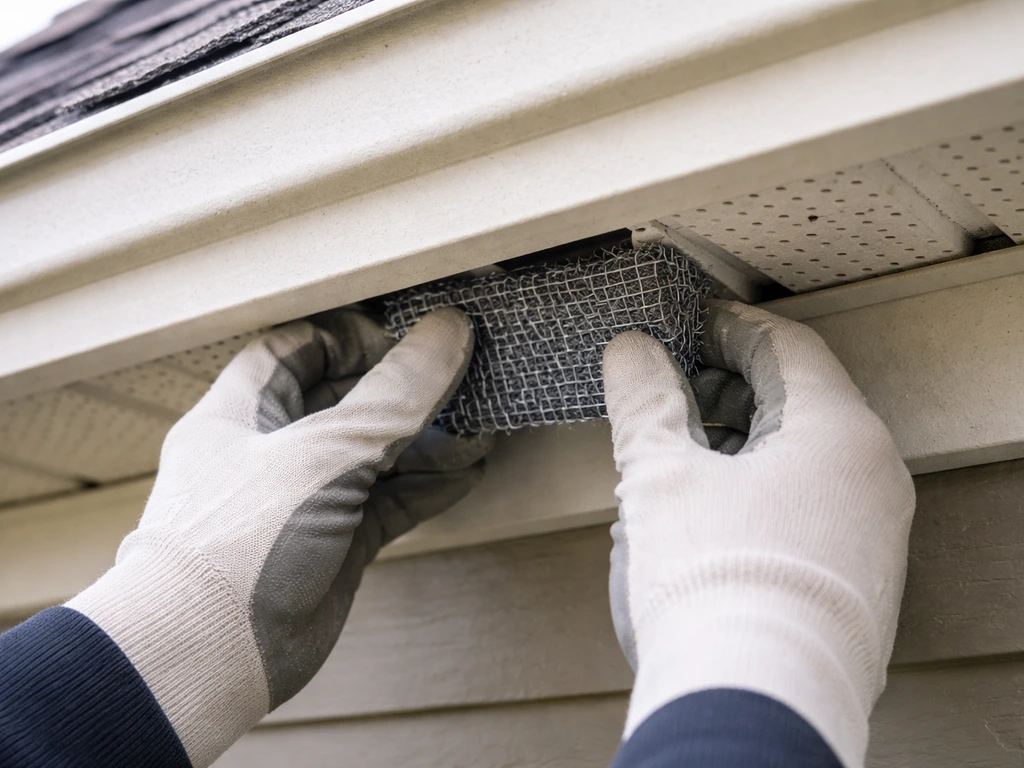
Temporary fixes you can do today: stuff gaps with hardware cloth or steel wool secured with duct tape, attach a piece of window screen over a torn vent with staples, or cover an open attic vent with a temporary screen panel. These are stopgap measures. You'll want proper permanent sealing done within a few weeks, but this prevents a repeat tonight.
Cleaning up droppings safely
Bird droppings carry pathogens including histoplasma, which can cause lung infections when droppings are disturbed and dried particles become airborne. For a single fresh dropping or two, clean it up damp with a paper towel and disinfectant, wash your hands thoroughly, and you're done. If you're dealing with accumulated droppings from a bird or birds that have been roosting for a long time, the risk profile is higher. In those cases, wear an N95 or HEPA respirator (not just a dust mask), gloves, and eye protection. Wet the droppings before disturbing them to keep particles from going airborne, and bag everything in sealed plastic bags. If you're looking at more than a small area of accumulation, call a professional biohazard or wildlife cleanup service.
How to keep birds from getting back in
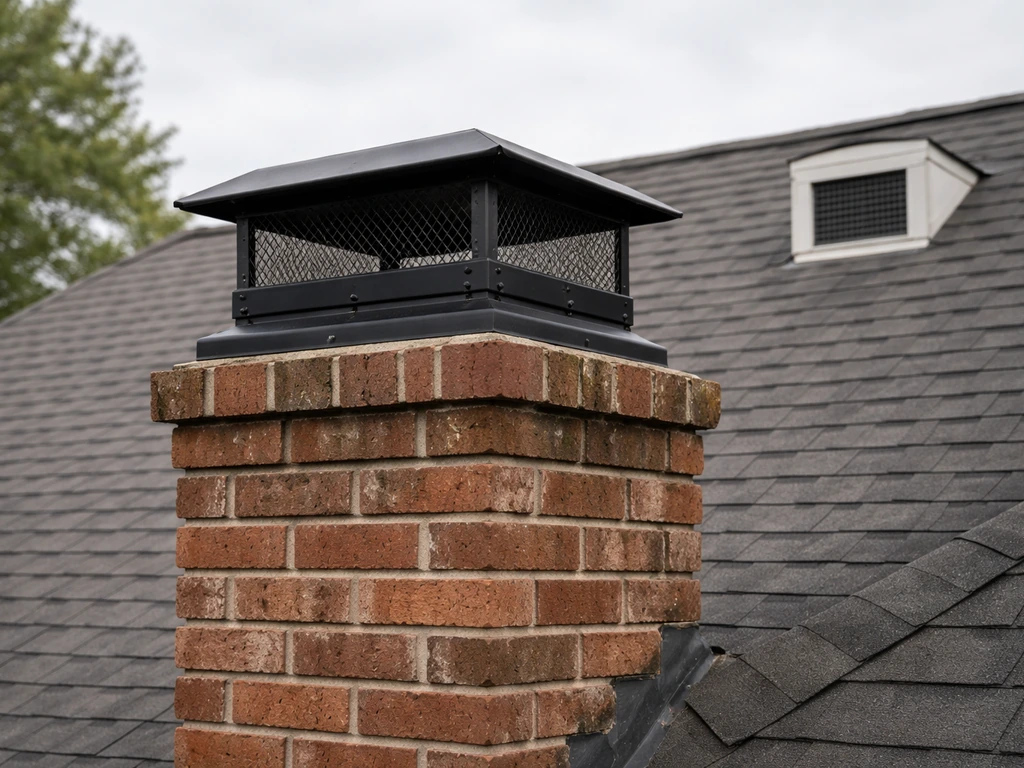
Getting the bird out is the easy part. If the bird is still inside or you are dealing with a nest, follow the professional guidance for how to get a bird out of a building safely and legally how to get bird out of building. The entry point will keep inviting birds back unless you seal it properly. Here's what durable, long-term exclusion actually looks like.
- Cap or screen all chimney openings with a UL-listed chimney cap with mesh sides. This is the single most common bird entry point in older homes.
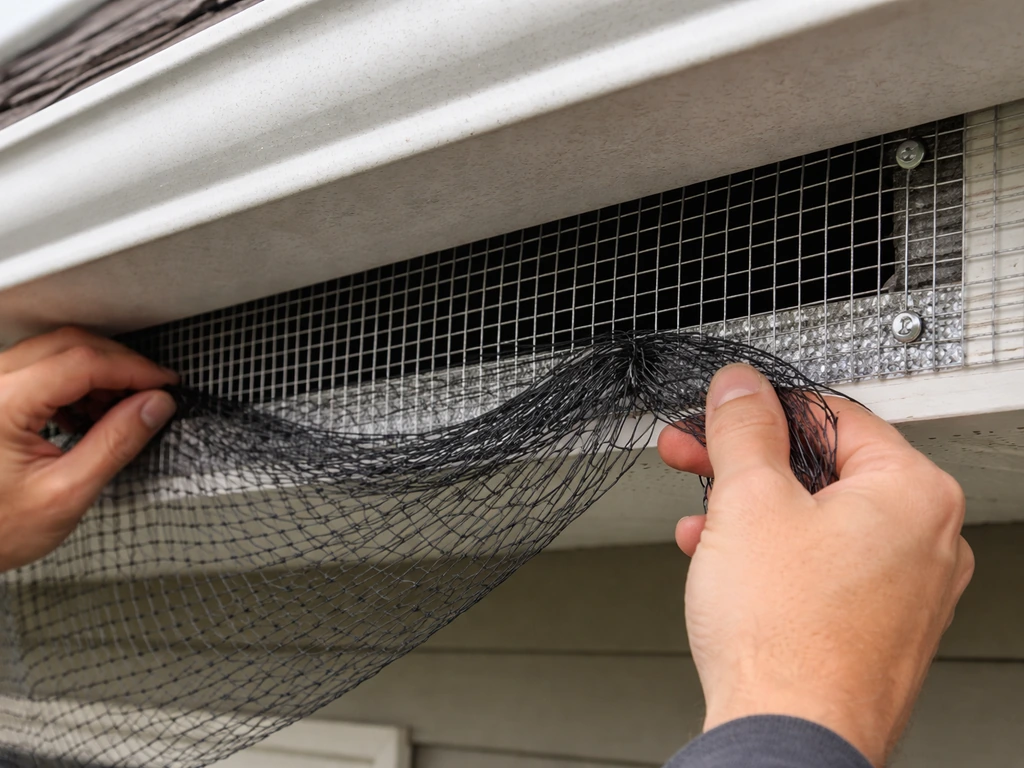
- Cover attic and soffit vents with heavy-gauge hardware cloth (1/4 inch or 1/2 inch mesh depending on bird size). Replace deteriorated plastic vent covers with metal ones.
- Install bird netting over large open areas like warehouse rafters, loading dock ceilings, or barn lofts where birds roost. This is a job for a contractor if the area is large or high.
- Use one-way exclusion doors for active entry points where you're not sure if birds are still inside. These let birds exit but not reenter. Leave them in place for three to five days, then confirm the area is clear before sealing permanently.
- Seal gaps around utility penetrations (pipes, conduit, cables) with copper mesh and caulk, or with foam backer rod and paintable sealant.
- Remove food attractants near the building: uncovered trash, spilled birdseed under feeders, standing water in gutters.
- Install physical deterrents like stainless steel bird spikes or slope guards on ledges and sill areas where birds land or roost repeatedly.
- Trim tree branches within six to eight feet of rooflines where possible, especially near vent or soffit locations.
One important note on one-way doors: don't permanently seal the opening until you've confirmed the bird (or birds) are fully out. Trapping an animal inside is inhumane, creates a worse mess, and can cause structural damage as the animal tries to escape. Give it a minimum of three to five days with the one-way door in place before closing the gap for good.
When to stop DIYing and call a wildlife pro
There are clear situations where doing it yourself is either unsafe, illegal, or unlikely to work. Here's when to put the phone in your hand instead of the sheet.
- The bird is injured (see symptoms above). You risk making injuries worse and the bird needs medical evaluation, not just a quiet box.
- You've found an active nest with eggs or chicks. Touching or relocating it without a permit likely violates the Migratory Bird Treaty Act for most native species. House sparrows, European starlings, and rock pigeons (common pigeons) are the exceptions and are not protected under the MBTA.
- The bird is a hawk, owl, heron, or any species you can't quickly identify as a common unprotected species. Protected status changes everything about what's legally allowed.
- The entry point is in the chimney, attic, or roof, and you don't have safe access or the right equipment. Falls from roofs are a leading cause of homeowner injury.
- There's a large accumulation of droppings suggesting a long-term roost. This is a biohazard situation that warrants professional cleanup.
- The bird is still inside after several hours and your DIY efforts haven't worked. Prolonged stress is harmful to the bird and increases the risk of injury.
- You're in a commercial or multi-family building where liability, permits, or building codes are involved.
Costs, timelines, and what to ask any contractor
Wildlife removal and bird exclusion pricing varies a lot by region, company, species, and scope of work, but here's a realistic framework to calibrate your expectations.
| Service | Typical cost range | Timeline |
|---|---|---|
| Single bird removal (healthy, accessible) | $100 to $300 | Same day, 1 to 2 hours |
| Exclusion with one-way door installation | $200 to $600+ | 3 to 5 days for door phase, then permanent seal |
| Full chimney cap installation | $150 to $400 | Same day or next day |
| Attic or vent exclusion and sealing | $400 to $1,500+ | 1 to 3 days depending on scope |
| Biohazard droppings cleanup (large accumulation) | $500 to $2,000+ | 1 to 2 days |
| Wildlife rehabilitator intake | Usually free or donation-based | Drop-off same day |
Before you hire anyone, ask these questions directly. A professional with nothing to hide will answer all of them without hesitation.
- Are you licensed for wildlife removal or pest control in this state, and are your technicians trained on the Migratory Bird Treaty Act?
- What specific method will you use to remove or exclude the bird, and is it humane and live-capture only?
- Will you identify and seal the entry point as part of this job, or is that a separate quote?
- How do you confirm the animal is fully out before permanently sealing?
- Do you offer any guarantee on exclusion work, and for how long?
- Can you provide documentation of the work done (useful for insurance claims, facility records, or permit compliance)?
- If a nest or protected species is involved, how will you handle the legal requirements?
Seasonal planning and a simple maintenance checklist
Birds get into buildings year-round, but the risk spikes at predictable times. Early spring (March through May) is when birds are actively scouting nesting sites, and an uncapped chimney or open attic vent looks ideal. Late summer through fall is when juveniles are dispersing and finding new territory, and winter brings birds seeking warmth. If you inspect and seal in late winter, before nesting season starts, you eliminate the most common problem before it starts.
Annual maintenance checklist
| Season | Task |
|---|---|
| Late winter (Feb to early March) | Inspect chimney caps, attic vents, soffit screens, and roof gaps before nesting season. Repair or replace anything damaged over winter. |
| Spring (March to May) | Check for active nests before doing any exterior work on eaves, vents, or rooflines. Do not disturb nests with eggs or chicks. |
| Summer (June to August) | Walk the exterior and look for new gaps or signs of bird activity (feathers, droppings on siding below an entry point, noise in walls). Address before fall. |
| Fall (September to November) | Second full inspection of chimney, vents, and roof penetrations. Clear gutters of debris that can hold water and attract birds. Add deterrents on any ledges or rafters showing new roosting activity. |
| Year-round | Keep exterior garbage secured, clean up spilled birdseed from feeders promptly, and address any standing water in gutters or near the building. |
If you manage a commercial or multi-unit building, build these inspections into your regular property maintenance schedule and document them. That paper trail matters if a protected species situation ever requires you to demonstrate due diligence to a wildlife agency.
The good news is that once you've identified the entry point, sealed it properly, and added one or two deterrents to the most vulnerable spots, repeat intrusions become rare. Most bird-in-the-house situations are a one-time event tied to a specific gap. Close the gap, and the problem is solved.
FAQ
What if I cannot tell whether the bird is injured or healthy?
If the bird is actively injured or a cat or dog may have been involved, the safest order is wildlife rehabilitator first. If it is healthy and you can’t confidently identify the species, start with a licensed wildlife control operator (NWCO) because they can advise on legal handling and next steps for exclusion.
Should I call animal control first if I am unsure who to call?
Not always. If the bird is a native wild bird and it might involve an active nest or dependent chicks, a wildlife control operator or rehabilitator will typically advise you and then you may need the state wildlife agency for permit guidance. If you call animal control, ask whether they can dispatch someone for wild bird exclusion or if they will refer you to a wildlife operator.
Who should I contact in an apartment or multi-unit building, and what should I ask them?
Use building management or facilities for any shared-wall or multi-unit property, and ask who holds responsibility for structural entry points and liability. Provide photos and the suspected entry location, then request that they coordinate a contractor that does live capture and exclusion rather than one that promises “trap and kill.”
What should I do if I discover a nest while the bird is in the house?
If you see eggs, nestlings, or a nest under active use, do not try to seal, remove, or “relocate” anything yourself. Contact your state wildlife agency for the correct timing and permitting, and if you need immediate guidance, contact a licensed wildlife rehabilitator who can help interpret what is active and what is not.
When is it unsafe or a bad idea to try to remove the bird yourself?
Yes, in some cases DIY can be inappropriate even when the bird looks mobile. Examples include repeated intrusions from the same gap (suggesting ongoing access), an uncertain species (possible protection), or a bird stuck in a high, dangerous area like behind walls or near electrical wiring.
How long should I wait before permanently sealing the entry point after the bird leaves?
Do not seal the opening until you confirm the bird is fully out, because a one-way door can trap the bird inside and worsen injuries or mess. A practical decision rule is to leave the one-way door in place for at least three to five days after the last confirmed sighting of the bird inside.
Do I need to feed or water the bird while waiting for the right helper to arrive?
For a healthy bird already in one room, you generally should not feed it while you wait for the exit, and you should avoid handling unless injured. If you must intervene, the towel method is the safer approach because it reduces flapping and eye injuries compared with grabbing without calming.
My cat grabbed the bird but it seems alert, who should I call?
If you suspect the bird was caught by a pet, treat it like a rehabilitator-level issue even if it looks okay at first. Internal injuries from claws or teeth can be present without obvious bleeding, and fast triage improves survival.
What questions should I ask a wildlife control operator about the exclusion process?
Ask any provider how they will confirm the bird is out before closing the gap (for example, checking the area over multiple days). Also ask what exclusion method they use (netting, one-way doors, hardware cloth) and whether they will leave entry points open temporarily for verification.
When do bird droppings go from simple cleanup to a job for a biohazard or wildlife cleanup service?
Yes. Droppings from long-term roosting can increase risk beyond a one-time cleanup, so the decision aid is the size and duration of accumulation. If there is more than a small spot, odor, heavy dust, or lots of dried material, call a wildlife cleanup or biohazard service and avoid dry sweeping.
Citations
Audubon advises that if a bird is injured (e.g., broken wing, unable to stand, or wounded), you should secure it in a box or paper bag with air holes and crumpled paper towels, place it somewhere quiet, and call a local wildlife rehabilitator.
https://www.audubon.org/debs-park/about-us/what-do-if-you-find-injured-or-orphaned-bird
The U.S. Fish & Wildlife Service explains that the Migratory Bird Treaty Act protects most bird nests and makes it illegal to collect and keep them (i.e., nesting material/young can be protected).
https://www.fws.gov/program/migratory-bird-permits/living-around-birds
USFWS states that most bird nests are protected under the Migratory Bird Treaty Act, and it is illegal to destroy a nest with eggs or chicks (or where young are still dependent), except under permitted terms.
https://www.fws.gov/story/bird-nests
The federal regulation states that if birds are removed by trapping, they must be immediately released humanely and healthfully, and it also requires preventing re-entry by patching holes/using bird exclusion devices to the degree feasible.
https://www.law.cornell.edu/cfr/text/50/21.14
Illinois IDPH notes that only house sparrows, starlings, and pigeons are not protected by state or federal law (implying other wild birds are protected and exclusion/handling rules differ by species).
https://dph.illinois.gov/topics-services/environmental-health-protection/structural-pest-control/bird-exclusion-dispersal.html
Virginia DWR instructs that any bird with broken bones, bleeding, deformity, cat bites/other puncture wounds, maggots/warbles, tilting head, or large bubbles under the skin needs to be taken to a wildlife veterinarian or wildlife rehabilitator for diagnosis/treatment.
https://dwr.virginia.gov/wildlife/injured/birds/
Mass.gov advises against trying to capture wild animals without first seeking advice from a wildlife professional and reiterates that birds are protected by law (i.e., illegal to take from the wild to keep as pets).
https://www.mass.gov/info-details/what-to-do-if-you-find-a-wild-animal-that-might-be-sick-or-hurt
The NWRA/IWRC minimum-standards document describes rehabilitation care that includes providing a warm, quiet, dark place and reducing stress for wildlife awaiting exam/treatment.
https://www.nwrawildlife.org/resource/resmgr/min_standards/minimumstandards3rdedition.pdf
Audubon says that a small adult bird that has just hit a window may simply need time to regain its senses; keep it secure in an appropriate container and follow up with a wildlife rehabilitator when needed.
https://www.audubon.org/debs-park/about-us/what-do-if-you-find-injured-or-orphaned-bird
NWCO training materials state that one-way doors are effective only if the animal can find and use the exit but cannot find/force its way back through the door or find another way into the building.
https://nwco.net/training-modules/wildlife-control-methods/
Maine wildlife conflict guidance describes that an active entry can be fitted with a one-way door so an animal can exit but not reenter, and emphasizes correct installation/time needed for effective eviction.
https://www.maine.gov/ifw/fish-wildlife/wildlife/living-with-wildlife/avoid-resolve-conflict/evicting-animals.html
Illinois IDPH instructs that cleaning up droppings accumulated for two or more years involves higher health risk and recommends personal protective equipment including HEPA respirators and wetting droppings during removal.
https://dph.illinois.gov/topics-services/environmental-health-protection/structural-pest-control/bird-exclusion-dispersal.html
Kentucky DFW says the appropriate legal recourse for injured/orphaned wildlife is prompt transfer to a permitted wildlife rehabilitator rather than keeping it yourself.
https://fw.ky.gov/Wildlife/Pages/Injured-and-Orphaned-Wildlife.aspx
Wisconsin Humane Society advises not to use a one-way door unless you are sure all animals have exited; and not to do permanent repairs/install a permanent barrier until you confirm none will be trapped inside.
https://www.wihumane.org/resource/wildlife-under-my-porch-or-deck/
Mass.gov’s DCR guidance states it is illegal to destroy, relocate, or possess wild birds, their nests, or eggs for many situations, and notes birds are protected under federal (MBTA) and state laws.
https://www.mass.gov/doc/human-wildlife-conflicts/download
Maryland DNR explains that MBTA makes it illegal to disturb the nest of a native bird without a permit and extends beyond birds to eggs/nests/related activities in captivity.
https://dnr.maryland.gov/wildlife/Pages/plants_wildlife/MBirdTreatyAct.aspx
A DOI MBTA memo describes MBTA prohibitions on taking/hunting/shooting/wounding/killing/trapping/capturing/collecting migratory birds except as authorized under the law’s permitting framework.
https://www.doi.gov/sites/default/files/m-37041-incidental-take-prohibited-under-the-migratory-bird-treaty-act-011017.pdf
USFWS’s 2024 Migratory Bird Permitting Handbook discusses that certain nest-related activities constitute “nest take,” and that permits/authorizations may be needed depending on the activity.
https://www.fws.gov/sites/default/files/policy/files/migratory_bird_permitting_handbook_2024.pdf
Michigan DNR advises keeping dogs, cats, and kids away from nests because birds, nests, and eggs are protected by federal law and must be left alone; it also recommends removing attractants like food sources and securing garbage.
https://www.michigan.gov/dnr/managing-resources/wildlife/nuisance-wildlife
No additional high-authority cost/timeline sources were successfully retrieved in the above searches for this specific slot, beyond limited contractor estimate pages.
null
Skedaddle states that one-way doors typically mean a multi-day process (example given: “three to five days”) because exclusion timelines are planned around safe exit behavior and confirmation of exit.
https://www.skedaddlewildlife.com/location/ajax/blog/how-long-does-wildlife-removal-take/
Next Article
How to Get a Bird Out of a Building Safely and Fast
Step-by-step safe methods to get a bird out fast, reduce stress, and seal entry points to prevent repeat visits.