A bird inside a building needs to get out quickly, and the good news is that in most cases you can handle it yourself in under an hour using nothing but open doors, a darkened room, and a little patience. The core method is simple: reduce interior light, create one obvious bright exit, and give the bird space to find it. Everything else in this guide builds on that foundation and covers what to do when the simple approach doesn't work.
How to Get a Bird Out of a Building Safely and Fast
Maya Carver
19 Apr 2026
Quick safety steps before you start
Before you do anything else, get people and pets out of the room. A panicked bird will fly erratically, and a dog or cat in the same space will make the situation far worse. Children should leave too. This isn't about danger to you from the bird itself, it's about reducing chaos so the bird calms down enough to find the exit.
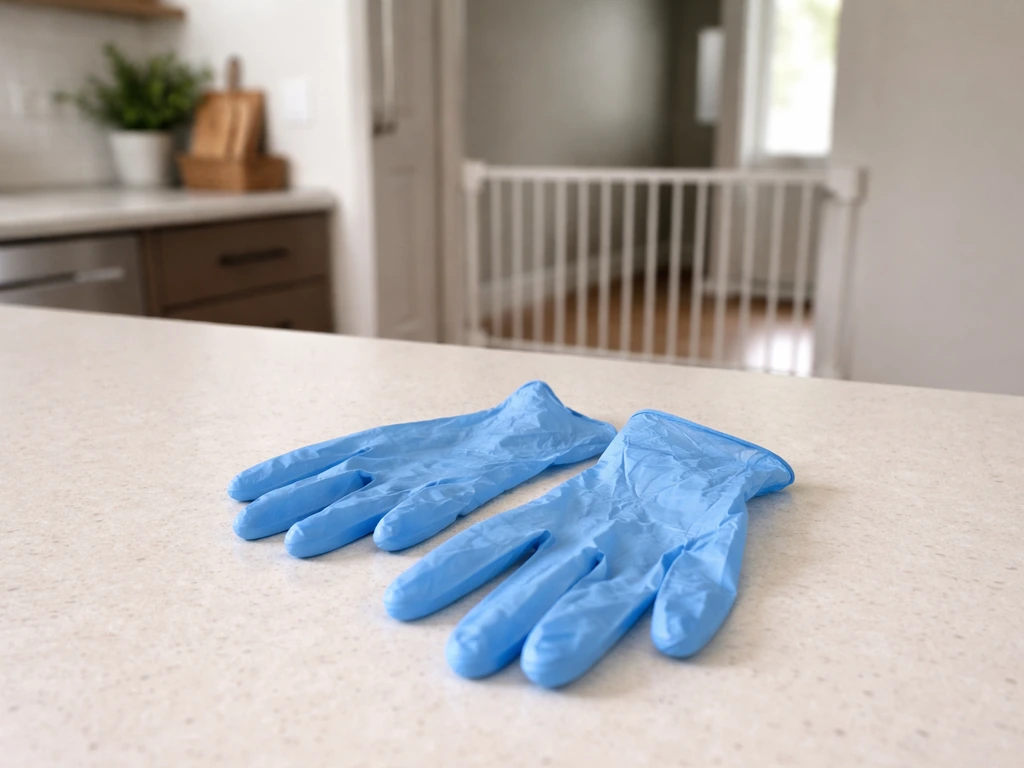
Put on a pair of disposable gloves if you think you might end up handling the bird directly. The CDC is clear that direct contact with wild birds, their droppings, or body fluids carries real disease risk, including avian influenza and psittacosis (sometimes called parrot fever). You don't need a full hazmat setup for a single robin in your living room, but blank" rel="noopener noreferrer">gloves and handwashing afterward are non-negotiable. If there's a significant amount of dried droppings anywhere (an attic situation, for example), wear an N95 mask too, since disturbing dried feces can aerosolize pathogens.
- Clear the room of all people and pets before attempting anything
- Put on disposable gloves before any potential bird contact
- Wear an N95 mask if dried droppings are present in the space
- Do not attempt to chase, grab, or corner the bird — this causes panic and injury
- Wash hands thoroughly with soap and water after the situation is resolved
- Discard or disinfect any PPE used during the process
Find the bird, map the exits, and check for injury
Before opening anything, take 60 seconds to assess the situation. Locate the bird visually without approaching it. Note which room it's in, how high it's perching or flying, and whether it appears alert and mobile or is sitting still on the floor. A bird perched high and moving its head is a good sign. A bird sitting on the floor, not moving, or holding one wing at an odd angle needs different handling entirely (more on that below).
Next, identify every potential exit in the building. Windows and doors that lead directly outside are ideal. Also note what's confusing the bird: mirrors, glass walls, skylights, and multiple lit windows all create disorientation because birds instinctively move toward light. Your job is to eliminate false exits and create one clear real one. Finally, try to figure out how the bird got in. A propped door, a broken vent screen, a gap around a rooftop HVAC unit, knowing the entry point tells you whether there might be more birds inside and gives you a head start on prevention.
How to guide the bird out humanely
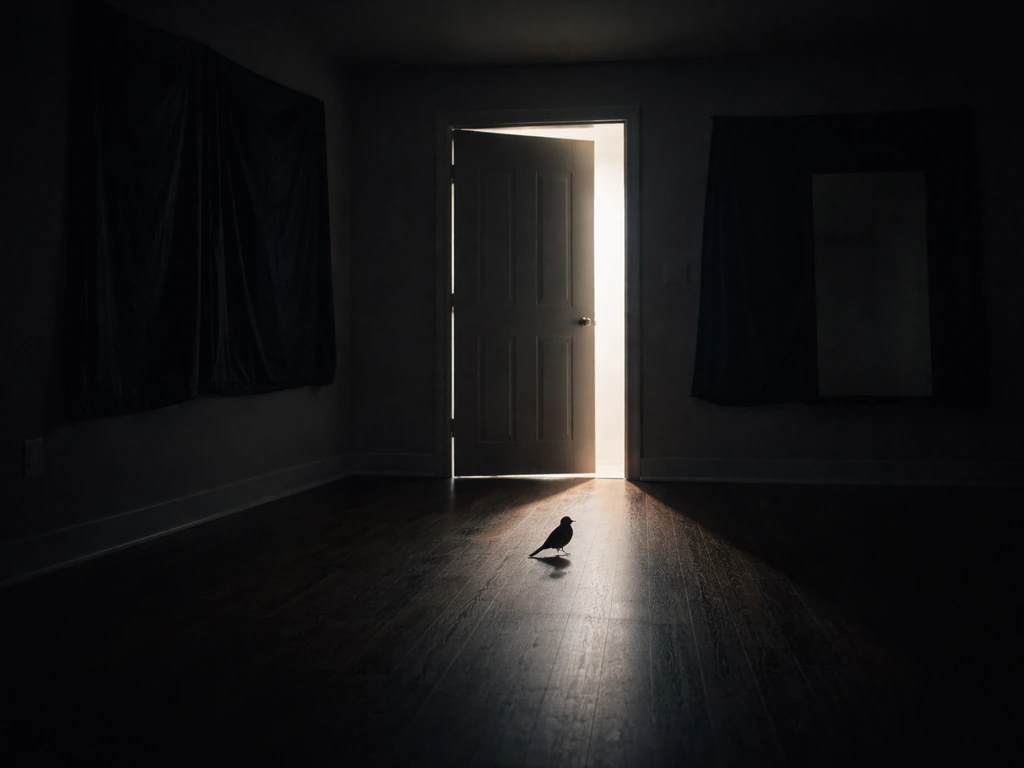
Bird in a single room
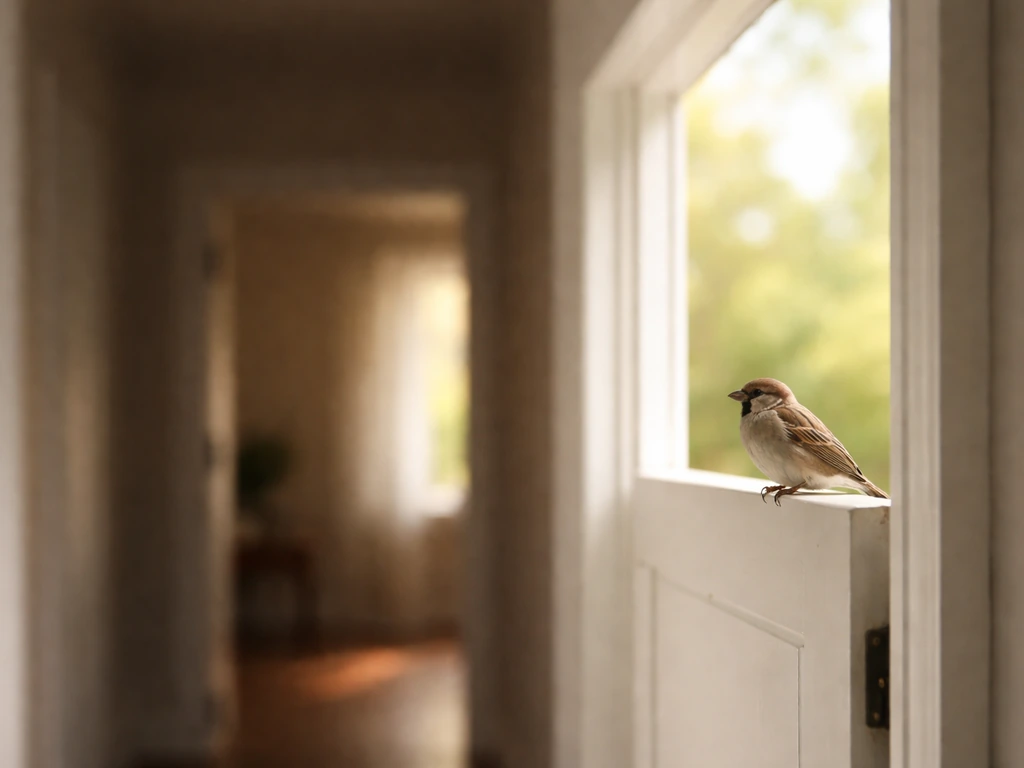
This is the easiest scenario. Turn off every interior light in the room. Close or cover any windows and mirrors that don't lead outside, drape a sheet over a mirror or pull the blinds on a window that faces an interior wall or courtyard. Then open one external window or door as wide as it will go. Once the bird is out, focus on preventing another indoor visit by finding and sealing the entry point prevention by sealing the entry point.
If possible, choose the exit closest to where the bird is perching. Stand back, stay quiet, and wait. Birds move toward light, so a single bright opening in an otherwise dark room acts as a beacon. The San Diego Humane Society, the RSPCA, and the Avian Wildlife Center all recommend this same core technique, and it works the majority of the time within 15 to 30 minutes.
Position yourself against the wall opposite the exit so the bird's natural flight path isn't blocked. Don't wave your arms or make noise. If the bird is flying erratically around the room, sit down or crouch, your standing silhouette feels threatening. Once the bird exits, close the window or door immediately before it can return.
Bird moving through multiple rooms
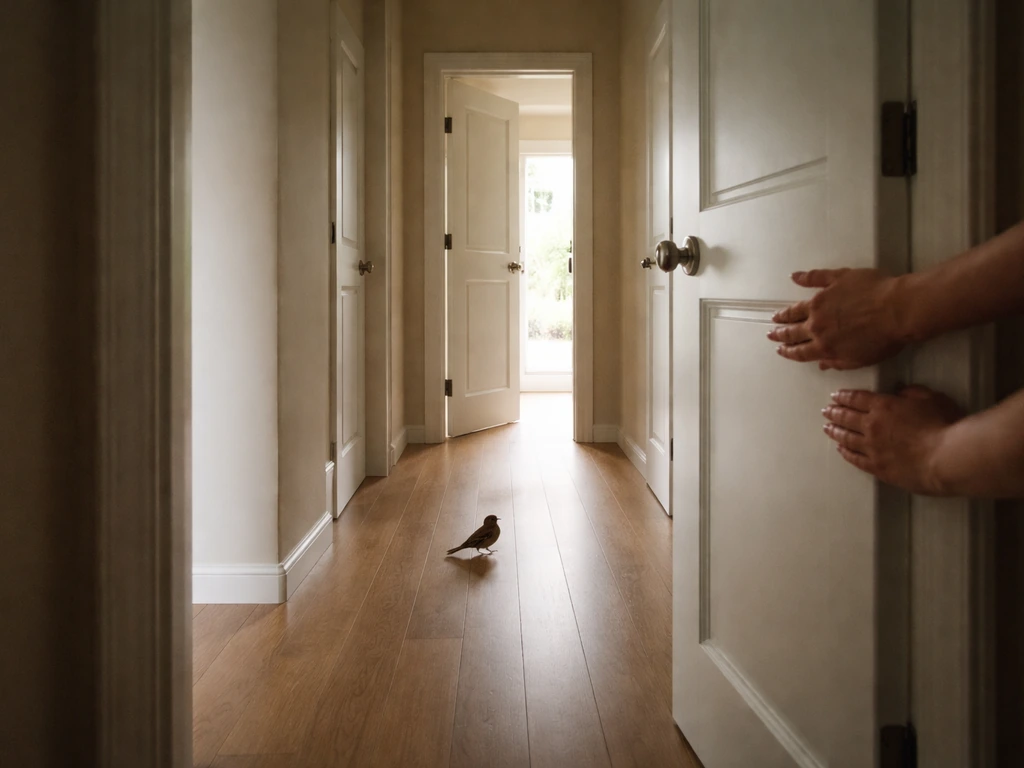
If the bird has access to several rooms, your first job is to confine it. Quietly close interior doors one by one to reduce the area it can access, working toward the room that has the best exterior exit. Don't rush this, moving too fast will spook the bird into a harder-to-reach area. Once it's limited to one or two rooms, apply the same darkening technique described above. The San Diego Humane Society specifically recommends narrowing the bird's accessible space and getting it as close to the open exit as possible before backing off.
Bird near an open door or window but not leaving
This happens often. The bird can see outside but something is stopping it. Usually the problem is competing light sources: another lit window, a reflective surface, or interior lights that are still on. Double-check that every other light source in the room is blocked or turned off. If the bird is near a large glass door or window and keeps hitting the glass, cover the glass temporarily with a sheet or cardboard, leaving only the actual opening clear. This removes the reflection trap and redirects the bird toward the real exit.
Getting the bird out at night
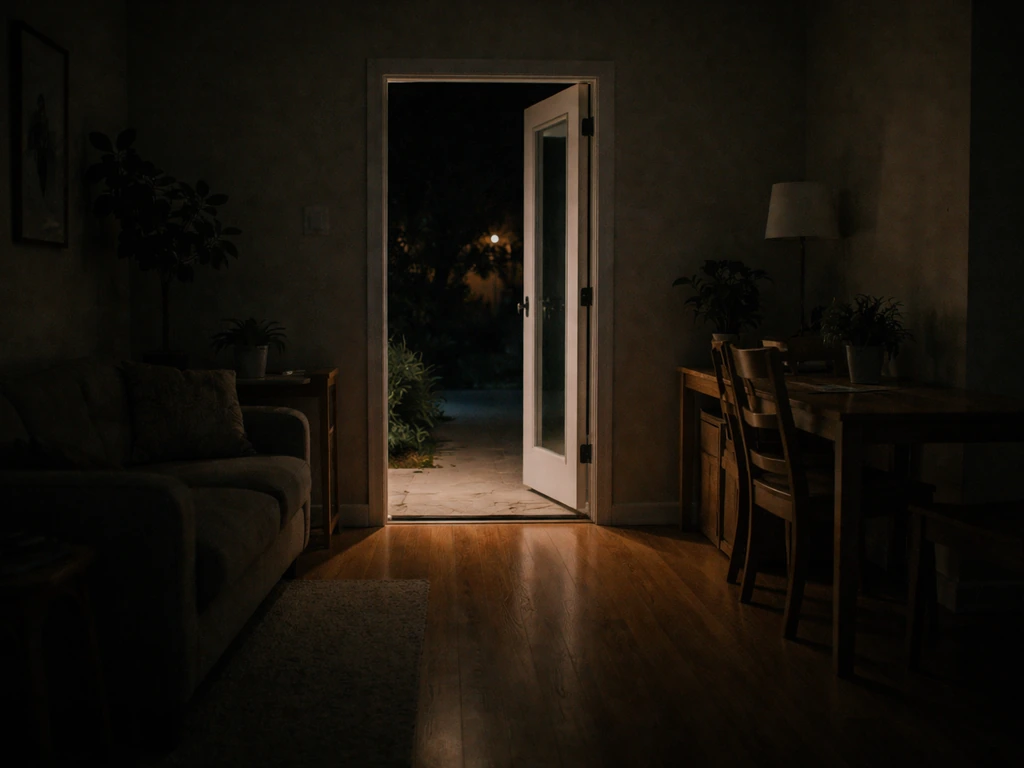
Nighttime removals are trickier. Nighttime removal is trickier, but using the right light and creating a clear exit are still the keys to getting a bird out safely how to get bird out of house at night. Birds are more disoriented in the dark and may perch and freeze rather than fly toward an exit. The U.
S. Fish & Wildlife Service notes that birds are strongly attracted to artificial lighting at night, which is actually useful here: a single well-lit exterior doorway in an otherwise dark building can draw a bird out effectively. If the bird is perched and stationary, you may be able to gently encourage it with a slow, quiet approach using a flashlight pointed toward the exit rather than at the bird.
If you have the option, sometimes the safest nighttime strategy is to leave the bird secure in a closed room with one exit available and return at first light when the bird will be naturally more alert and motivated to fly toward daylight.
When the bird won't leave or is stuck somewhere hard to reach
If the standard darkroom-plus-one-exit approach isn't working after 30 to 45 minutes, something is wrong with your setup before you conclude the method has failed. Run through this checklist first:
- Are all interior lights actually off? Even a small lamp or indicator light can compete with the exit
- Are mirrors and reflective surfaces covered?
- Is the exit opening large enough? A cracked window may not be enough — fully open it or use a door
- Is something blocking the bird's path to the exit (furniture, a hanging plant, a half-open interior door)?
- Are pets or people still visible to the bird, keeping it stressed and stationary?
If everything checks out and the bird still won't move, you can try a gentle herding approach. Use a large, flat object like a bed sheet or a piece of cardboard held vertically (not waved aggressively) to slowly close off the space behind the bird and direct it toward the exit. Move in small increments, pausing when the bird shows agitation. This works best in hallways or rooms without a lot of furniture. Never try to use a broom or throw anything at the bird.
Bird in the ceiling, attic, or wall cavity
This is where the situation escalates. If you can hear but not see the bird, or if it's gotten into a ceiling void or wall space, DIY options become limited quickly. First, check whether there's a vent, soffit gap, or access panel that could serve as an exit if left open temporarily.
A bird in an attic will often find its own way out through the same gap it entered if you open it and leave the attic dark with one lit exterior exit point available. If you can identify the entry gap, you can also install a temporary one-way exclusion funnel (a cone of mesh or hardware cloth that lets the bird exit but not re-enter) and then inspect after 48 hours.
If the bird is trapped in a wall cavity with no accessible exit, that is a job for a wildlife professional.
What to do if the bird is injured or might be a protected species
A bird sitting on the floor, not flying, or showing an asymmetric wing posture is likely injured. Do not try to guide it toward an exit, it can't use one safely. Don't leave it loose either, since a ground-level injured bird is vulnerable to cats, dogs, and further stress. Instead, gently place it in a cardboard box lined with a paper towel or tissue, put the lid on with ventilation holes, and keep it in a quiet, dark, room-temperature space.
The San Diego Humane Society recommends this approach for birds that appear uninjured but are not fully alert, such as after a window collision. Then contact a licensed wildlife rehabilitator in your area. Organizations like Audubon Texas connect callers to licensed rehabilitators, and most states have a wildlife agency hotline that can direct you quickly.
Protected species are a separate legal matter. In the U. S. , nearly all wild bird species are protected under the Migratory Bird Treaty Act (MBTA).
This means that if the bird has built an active nest with eggs or chicks inside your building, you generally cannot disturb, move, or destroy that nest without a federal permit, and the penalties for violations can be significant. The USFWS 2025 “[Migratory Bird Permit Memorandum (MBPM-2 Nest Memorandum 2025)](https://www. fws. gov/sites/default/files/documents/2025-01/mbpm-2-nest-memorandum-2025.
pdf)” explains how the Migratory Bird Treaty Act applies to take of migratory bird nests and replaces the earlier MBPM-2. The U. S. Fish and Wildlife Service is clear on this: even well-intentioned actions like removing a nest can trigger federal enforcement.
If you find an active nest during your inspection, stop and contact your regional USFWS office or a licensed wildlife professional before doing anything else. The bird isn't going anywhere until those young fledge anyway, and acting illegally won't speed the process up.
| Situation | What to do | Who to call |
|---|---|---|
| Bird is alert and flying normally | Use darkroom/exit method described above | No call needed in most cases |
| Bird hit a window and is stunned but no visible injury | Box it, keep quiet and dark, monitor for 1-2 hours | Wildlife rehabilitator if no recovery |
| Bird has visible injury (wing, leg) | Box it immediately, do not attempt to guide it out | Wildlife rehabilitator right away |
| Active nest with eggs or chicks found | Stop all exclusion work immediately | USFWS regional office or wildlife professional |
| Bird in wall/ceiling, no accessible exit | Do not attempt DIY | Wildlife removal professional |
| Unsure of species (may be protected) | Stop and assess before acting | USFWS or local wildlife agency |
Seal it up: proofing your building after the bird is out
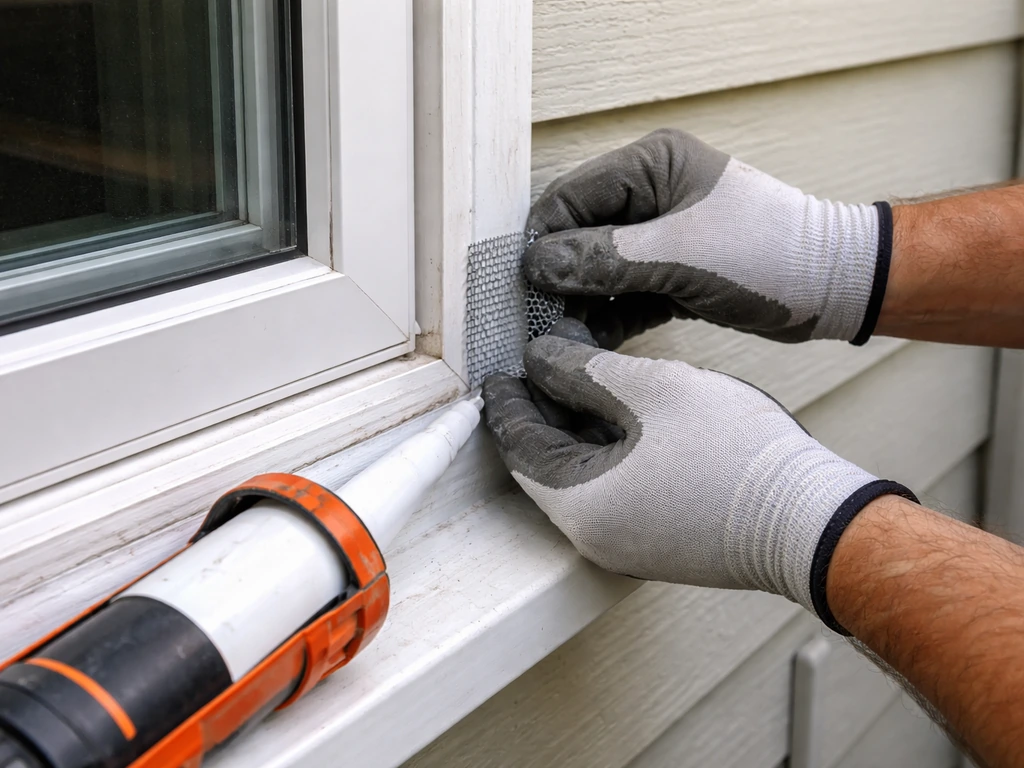
Getting the bird out is only half the job. If you don't find and seal the entry point, you'll be doing this again within days. Start your inspection within 24 hours of removal, while the entry point is still fresh in your mind. Walk the exterior of the building systematically, looking at the roofline, soffits, fascia boards, vents, gaps around pipes and conduit, and any damaged screens or weatherstripping. Birds can squeeze through surprisingly small gaps, and even a 1-inch opening around a dryer vent or roof vent is enough for a small sparrow.
Permanent sealing
For gaps and cracks, use hardware cloth (half-inch galvanized mesh), caulk, or steel wool backed with caulk depending on the size and location. Avoid foam alone near exterior gaps, since birds and other animals can chew through it. Replace damaged vent covers with covers that have built-in mesh. For larger openings like open eaves or deteriorated soffits, you may need a contractor, but the temporary fix is to staple hardware cloth over the opening until permanent repairs can be made. The Washington Department of Fish and Wildlife recommends frequent follow-up inspections for several weeks after exclusion work to verify no re-entry is occurring.
One-way exclusion devices
If you're not certain the bird has fully vacated (for example, in an attic situation where you heard scratching but never confirmed departure), use a one-way exclusion device rather than sealing the entry point closed immediately. A one-way funnel or tube made from lightweight mesh allows the bird to push out but not return. Install it over the suspected entry point, leave all other gaps sealed, and after 48 to 72 hours of no activity, remove the device and permanently seal the opening. Important: if a one-way device is installed and you notice persistent scratching or a bird repeatedly trying to re-enter, stop and check for a nest or dependent young inside, as the Wisconsin Humane Society notes this pattern is a strong sign that young animals are still inside.
Managing attractants and lighting
Bird feeders placed close to buildings significantly increase the chance of window collisions and indoor entry incidents, according to U.S. Fish and Wildlife Service guidance. Moving feeders more than 30 feet from the building face reduces this risk substantially. Exterior lighting is also a factor: the Audubon Lights Out program and FWS bird-friendly building guidelines both document that bright exterior and interior lighting attracts birds during migration windows (typically spring and fall), increasing the likelihood of collisions and entry events. Reducing light leakage from large windows at night, using motion-sensor lights rather than all-night fixtures, and applying window films or decals on large glass surfaces are all practical steps for facilities with repeated bird problems.
Seasonal inspection schedule
Bird problems have predictable seasonal patterns. Most entry incidents spike during spring migration (March through May) and fall migration (August through October) when large numbers of disoriented birds are moving through. Nesting attempts typically peak from April through July in most of North America. Run a full building exterior inspection in late February before nesting season begins, and again in late October after migration winds down. This timing lets you identify and seal new gaps before birds establish nests inside, which is far easier to deal with than an active nesting situation.
When to call a wildlife professional (and what to tell them)
Most single-bird situations in accessible rooms are genuinely DIY-friendly. But there are clear situations where calling a licensed wildlife removal professional or wildlife rehabilitator is the right call, not a last resort. If you need help figuring out who to call to get a bird out of your house, the best option is typically a licensed wildlife rehabilitator or wildlife removal professional wildlife professional.
- The bird is injured or not recovering after a window collision
- You've found an active nest with eggs or chicks (stop all work and call before doing anything)
- The bird is in a wall cavity, ceiling void, or inaccessible attic space
- You're dealing with a large flock or repeated entry by multiple birds
- The entry point requires rooftop or elevated access — fall risk makes DIY dangerous
- You suspect a protected or threatened species is involved
- The bird has been inside for more than 24 hours and appears weakened
When you call, have the following information ready so the professional can assess the situation quickly and bring the right equipment:
- The type of building (residential home, commercial facility, warehouse, etc.) and approximate size
- Where in the building the bird is located (which room, attic, wall, ceiling void)
- How long the bird has been inside, if known
- A description of the bird if you can see it (size, color, any markings)
- Whether you've found a nest, eggs, or chicks
- The suspected entry point and how accessible it is
- Whether you've already attempted any exclusion or removal steps
For injured birds specifically, contact a licensed wildlife rehabilitator rather than a general pest control company. Organizations like the Humane Society Wildlife Center and Audubon affiliate groups maintain referral networks to connect you with the right help quickly. Your state's fish and wildlife agency website will also have a list of permitted rehabilitators. If you're dealing with a commercial or institutional building and need a comprehensive exclusion plan for recurring bird problems, a professional who specializes in bird-proofing will save you significant time and money compared to patching gaps reactively after each incident.
One final note on related situations: getting a bird out of a house, handling a night scenario, or dealing with a bird that's truly trapped with no clear exit each have their own nuances beyond what a single building removal guide can cover in depth. If your bird seems trapped inside, follow the steps in this guide to learn how to get trapped bird out of house safely bird out of a house.
The core techniques here apply across those situations, but the specifics matter, and those topics are worth exploring separately if your situation doesn't fit the standard scenario. If you want more tailored steps for your exact situation, start with how to help a bird get out of house. For more tailored steps, you can also search for how to get a bird out of your house on Reddit and compare common advice how to get a bird out of house. If you’re also looking for the detailed approach others discuss online, you can compare this guide with advice from posts on how to get a bird out of your house on Reddit.
FAQ
Should I open the windows and doors everywhere to let the bird choose?
No, you generally want one obvious outside exit. If you create multiple competing openings and lights, the bird may keep circling and never commit. Pick the exit that is closest to where the bird is perching, keep the rest of the room dark and closed off, then wait.
What if the bird keeps flying to the same interior window or mirror?
That usually means a reflection or false bright spot is confusing it. Cover mirrors and any glass that does not lead outside with a sheet or cardboard, then confirm there are no other lit windows or lamps in the room competing with the single exit.
How long should I wait before trying something different?
If the dark room plus one clear exit setup is correct, you should usually see movement within 15 to 30 minutes. If nothing changes after 30 to 45 minutes, re-check the light sources, the exit being truly bright, and whether the bird is confined to the intended room. If it is still stuck, switch to a gentle herding approach or consider a hidden entry issue.
Is it safe to use a broom, vacuum, or towels to push the bird out?
Avoid those. Do not throw objects or use a broom to strike or chase. For herding, use a large flat item held vertically (cardboard or a sheet) and move slowly in small increments, pausing when the bird shows agitation.
What should I do if the bird lands on the floor and will not fly?
Treat it as possibly injured. Do not try to guide it toward an exit, and do not leave it loose in an open area. Place it in a ventilated cardboard box lined with tissue or paper towel, keep the box in a quiet, dark, room-temperature spot, then contact a licensed wildlife rehabilitator.
Can I catch the bird to get it outside faster?
Only as a last resort, and direct handling increases health and injury risk. Gloves and handwashing are important if contact is unavoidable, but in most situations the light exit method is safer and less stressful for the bird.
What if the bird seems to be trapped in the attic, between floors, or in a wall?
First look for access points like a vent, soffit opening, or removable panel. If you can’t confirm an exit path, DIY efforts can fail and may spread the problem. If the bird is in a wall cavity with no accessible route, contact a wildlife professional rather than trying to open cavities broadly.
Do I need a one-way exclusion device every time after the bird leaves?
Not always, but use it when you are not confident the bird fully vacated, especially in attic or ceiling situations where you still hear activity. Install a temporary one-way funnel over the suspected entry, keep other gaps sealed, then remove and permanently seal after 48 to 72 hours of no re-entry.
How quickly should I seal the entry point after removal?
Start your inspection within 24 hours of removal while the likely entry point is still fresh and activity patterns are easier to interpret. If you are unsure the bird is gone, use a one-way exclusion first, then permanently seal when re-entry stops.
What materials should I use to block gaps, and what should I avoid?
For many exterior gaps, hardware cloth, caulk, or steel wool backed with caulk work depending on the size and location. Avoid foam as the only barrier near exterior gaps because animals can chew through it. Replace vent covers with ones that include built-in mesh.
How can I prevent birds from getting in again during migration season?
Reduce attractive light sources and close up access points before peak times. If you have repeated events, consider moving feeders more than 30 feet from the building, reducing light leakage at night, and using motion-sensor lighting instead of all-night fixtures during spring and fall migration windows.
When should I stop DIY and call a professional?
Call a wildlife removal professional or wildlife rehabilitator if the bird is injured, you cannot locate an exit path, the bird is in a ceiling or wall with no accessible route, or you have repeated bird entries and need a comprehensive exclusion plan. For a true injury situation, a rehabilitator is usually the right first call, not general pest control.