Whether you can remove a bird nest in your garage today depends on one thing: whether the nest is active. If there are eggs or live chicks in it, you legally cannot touch it in most cases (more on that below). If the nest is empty and the season is over, you can remove it right now, clean up, seal the entry points, and install deterrents to stop birds from coming back. This guide walks you through each step in order, so you can handle the situation safely, legally, and for good.
How to Get Rid of Bird Nest in Garage Safely

Maya Carver
8 Jun 2026
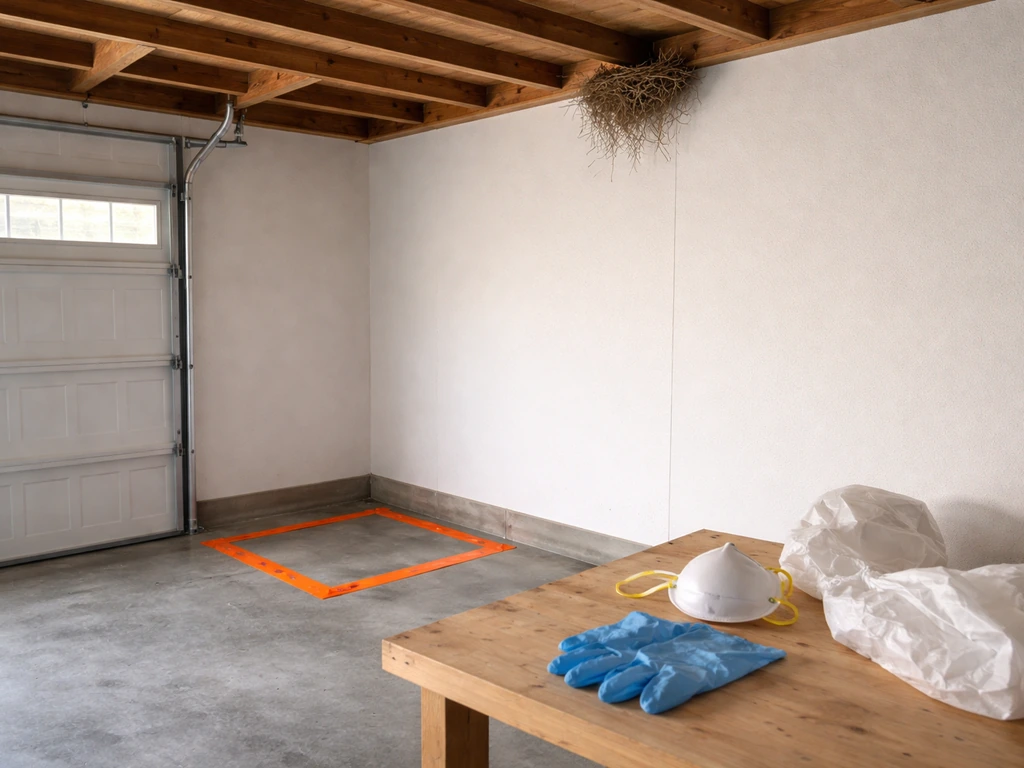
First: Figure Out What You're Dealing With
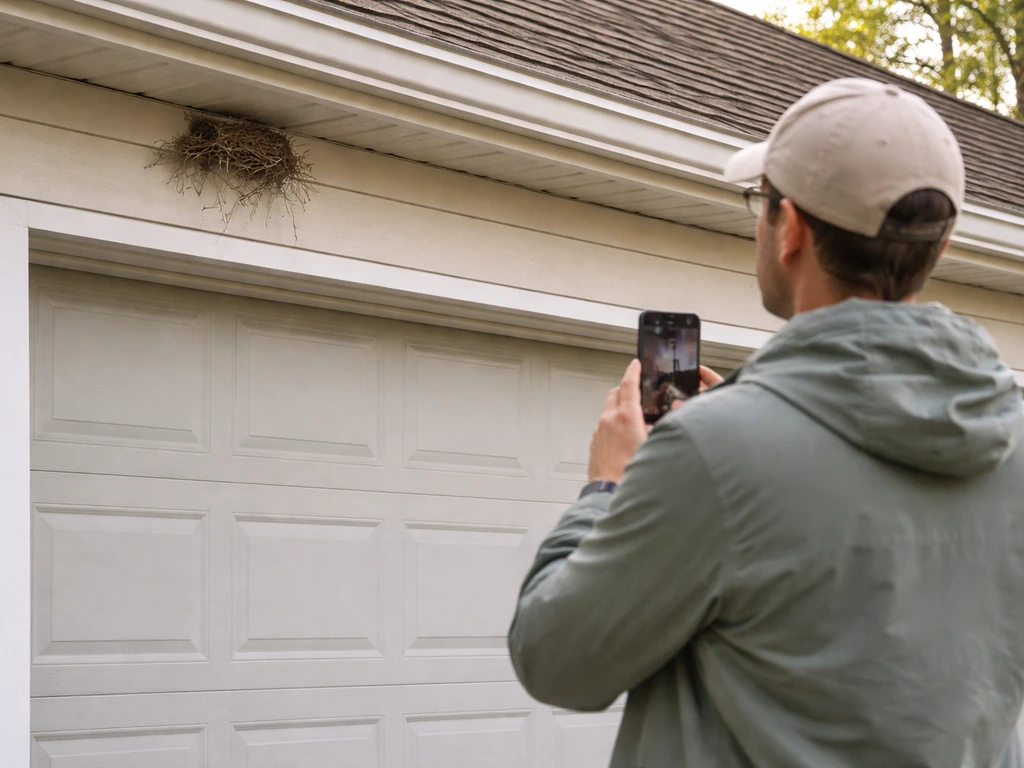
Before you touch anything, spend a few minutes assessing the nest. You need to know two things: whether the nest is active, and what kind of bird built it. These two factors determine every step that follows.
Active vs. inactive: how to tell
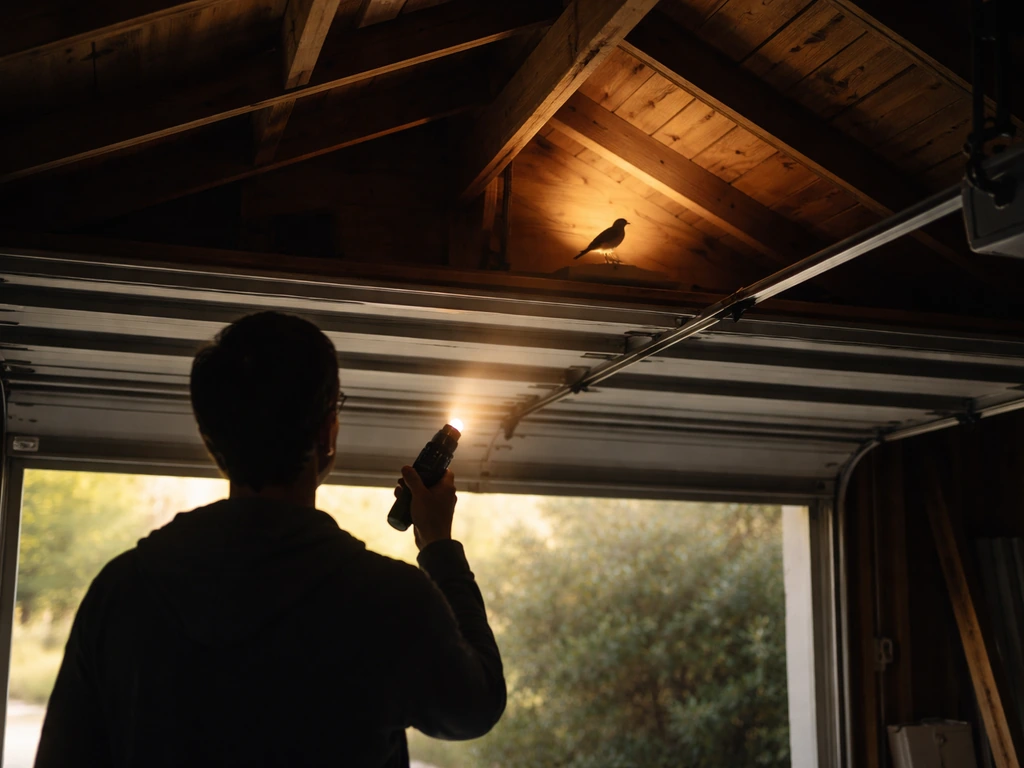
An active nest has eggs, chicks, or a parent bird returning to it regularly. Watch from a distance for 15 to 20 minutes. If you see a bird flying in and out, assume the nest is active. If a bird is staying in the garage, you can also use the same exclusion timing to answer why it won’t fly out flying in and out. If the nest looks worn, collapsed, or has debris falling from it, and no bird visits, it's likely inactive. In spring and early summer (roughly March through July in most of the U.S.), assume any nest you find could be active until you've confirmed otherwise.
Identify the bird species if you can
You don't need to be an ornithologist, but it helps to narrow it down. Common garage nesters include house sparrows, European starlings, barn swallows, and pigeons. This matters because house sparrows are one of the very few common species not protected under federal law, while nearly every other bird you'll encounter, including swallows, robins, and starlings, is protected under the Migratory Bird Treaty Act. If you're not sure, look up the bird in a free app like Merlin or eBird before acting. Treat any unidentified bird as protected until you know otherwise.
Quick assessment checklist
- Eggs or chicks visible? Stop and read the legal section below before doing anything else.
- Parent bird returning within 20 minutes of you stepping back? Nest is active.
- Nest empty, dry, and no bird activity for several days? You can proceed with removal.
- Bird species identified? If it's a house sparrow or pigeon, you have more flexibility. Any songbird, swallow, or swift: treat as federally protected.
- Large accumulation of droppings under or around the nest? Plan for PPE before you get close.
Immediate Steps: Safety First, Before You Touch Anything
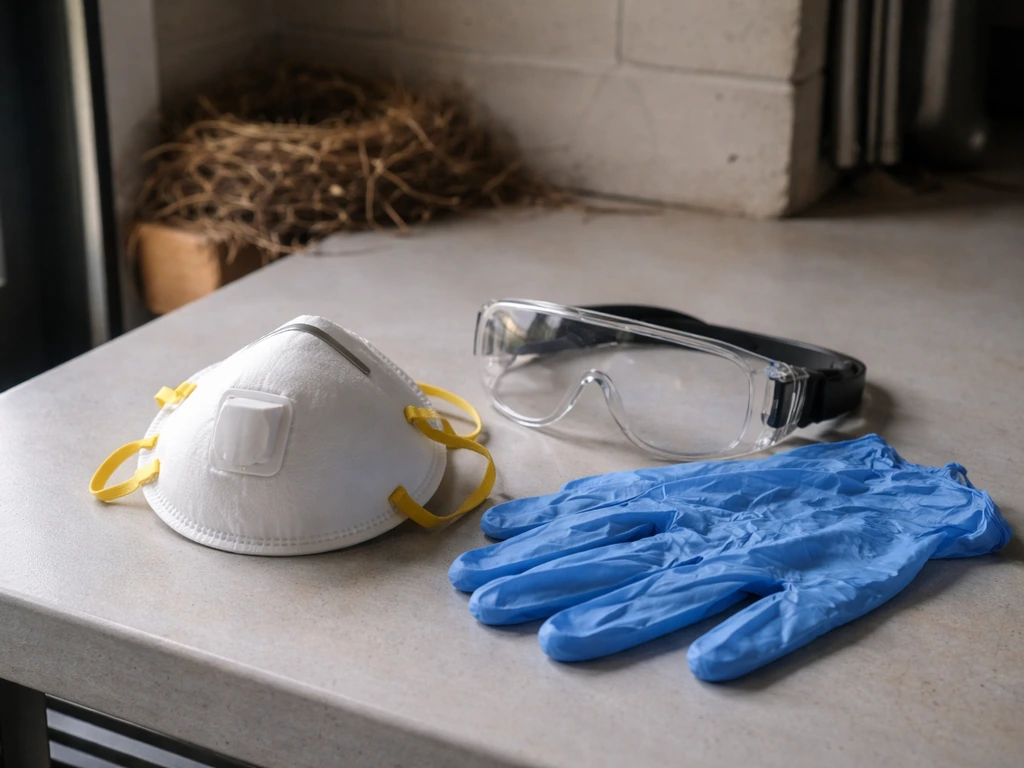
Bird nests in garages come with two real hazards that most people underestimate: the health risk from droppings and the legal risk from disturbing a protected nest. Handle both before you pick up a broom.
Protect yourself from droppings
Bird droppings can carry Histoplasma, the fungus that causes histoplasmosis, as well as bacteria linked to psittacosis. Both diseases are contracted by breathing in dust from dried droppings. The CDC and NIOSH are clear: if you're disturbing or cleaning up a significant accumulation of bird waste, wear an N95 respirator at minimum, plus gloves and eye protection. Before you sweep or scrape anything, lightly mist the droppings and nesting debris with water or a diluted disinfectant spray.
During work that may disturb droppings, NIOSH recommends reducing aerosolization by spraying water or using other dust suppression techniques spray water or use other dust suppression techniques.
This wets the material and prevents spores from becoming airborne. Do not dry-sweep. Bag the wet material in a sealed plastic bag and dispose of it in your outdoor trash.
If the nest is active: pause and protect the area
If there are eggs or chicks in the nest, your job right now is to leave the nest alone and manage the space around it. Keep vehicle and foot traffic near the nest to a minimum to reduce stress on the birds. If you have another entry to the garage, use it. The CDC advises avoiding stirring up dust, bird waste, and feathers during depopulation, cleaning, and disinfecting to help prevent dispersal into the air [Reduce stress on the birds](https://www.
cdc. gov/bird-flu/caring/). Mark the area so others know not to disturb it. Wildlife Illinois suggests a useful rule of thumb: from the time the first egg is laid, it typically takes four to five weeks for the young to fledge and leave.
Mark a date on your calendar and plan your removal for after that window.
Secure against physical hazards
- Park vehicles away from directly under the nest to avoid droppings on paint and surfaces.
- Cover any stored items below the nest with a tarp or drop cloth.
- If the nest is in rafters, don't use a tall ladder alone. Use a stable step ladder and have someone spot you.
- Keep children and pets out of the immediate area until cleanup is complete.
- If a bird is trapped inside the garage (not nesting, just stuck), that's a slightly different situation covered in guides on getting a bird out of a garage and out of garage rafters specifically.
Removing the Nest and Cleaning Up (When It's Safe and Legal to Do So)
Once you've confirmed the nest is inactive and empty, you're clear to remove it. Work methodically and don't rush the cleanup phase, because incomplete cleanup is what attracts birds back.
Removal step by step
- Put on your PPE: N95 respirator, disposable gloves, and safety glasses.
- Lightly mist the nest and any droppings below it with water or a diluted enzymatic cleaner. Wait two minutes.
- Carefully place the entire nest into a heavy-duty plastic bag. Seal it immediately.
- Scrape or wipe away any droppings using a damp cloth or paper towels. Bag the waste.
- Spray the surface where the nest sat with a bird-safe disinfectant or a 10% bleach solution. Let it sit for 10 minutes, then wipe clean.
- Remove and bag your gloves. Wash hands thoroughly. If you wore disposable coveralls, bag those too.
- Shower and change clothes if you had significant exposure to dust or droppings.
Quick deterrents to put in place right after cleanup
Birds have a strong homing instinct and will try to rebuild in the same spot, sometimes within days. Once the area is clean and dry, immediately make that spot less attractive. A few things that actually work at this stage:
- Hang reflective tape, old CDs, or Mylar strips near the former nest site. The moving light bothers birds.
- Place a plastic owl or hawk decoy nearby, but move it every few days or birds learn to ignore it.
- Apply a bird repellent gel (like Tanglefoot or similar) to the ledge or beam where the nest was built. Birds dislike the sticky texture.
- If barn swallows were the nesters, attach a physical barrier like a piece of cardboard or foam temporarily over the exact spot they used. They are creatures of habit and will keep returning to the same inch of beam.
- Remove any loose material nearby that could serve as nesting material: string, twigs, insulation scraps, shredded paper.
Seal the Entry Points Before Another Bird Moves In
Deterrents slow birds down. Exclusion stops them. If you don't close the gaps that birds are using to get into your garage, you'll be dealing with this again in a few weeks. This is the step most homeowners skip, and it's the reason birds keep coming back.
Find the entry points
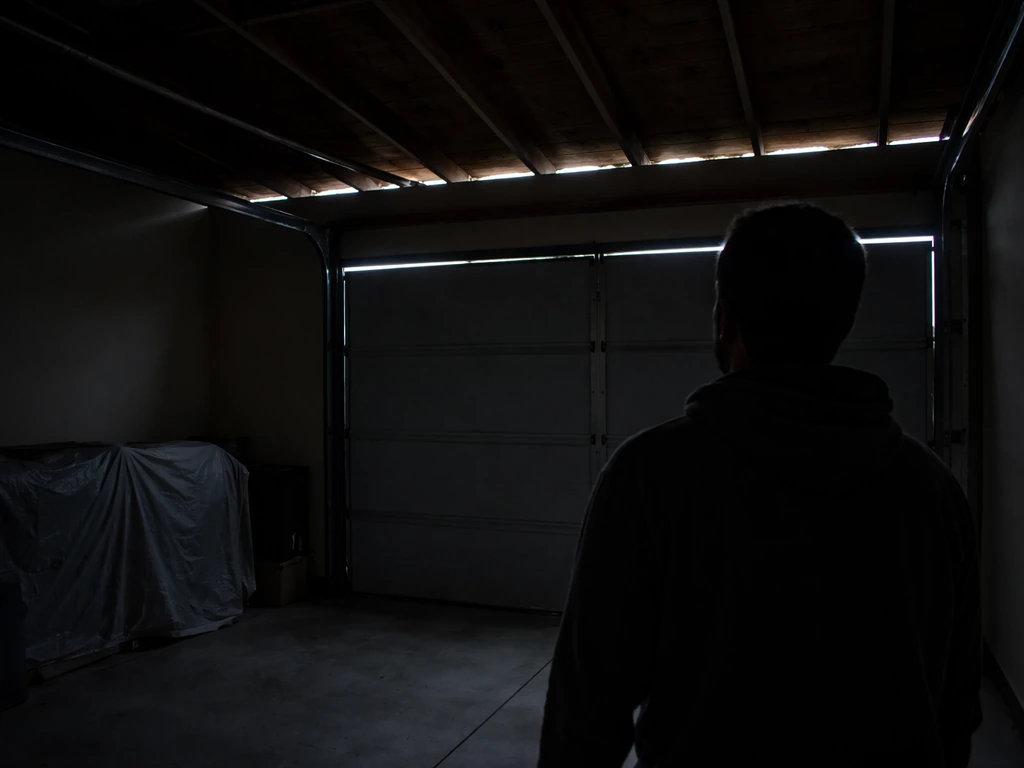
Stand inside your garage with the main doors closed and the lights off. Look for any spots where daylight is visible: gaps around the roofline, spaces above the garage door, vents without screens, broken panels, or gaps between the wall and roof structure. Common problem areas in garages include the gap at the top of the garage door when it's closed, unscreened soffit vents, and open spaces between rafters at the eave line.
Timing matters for exclusion
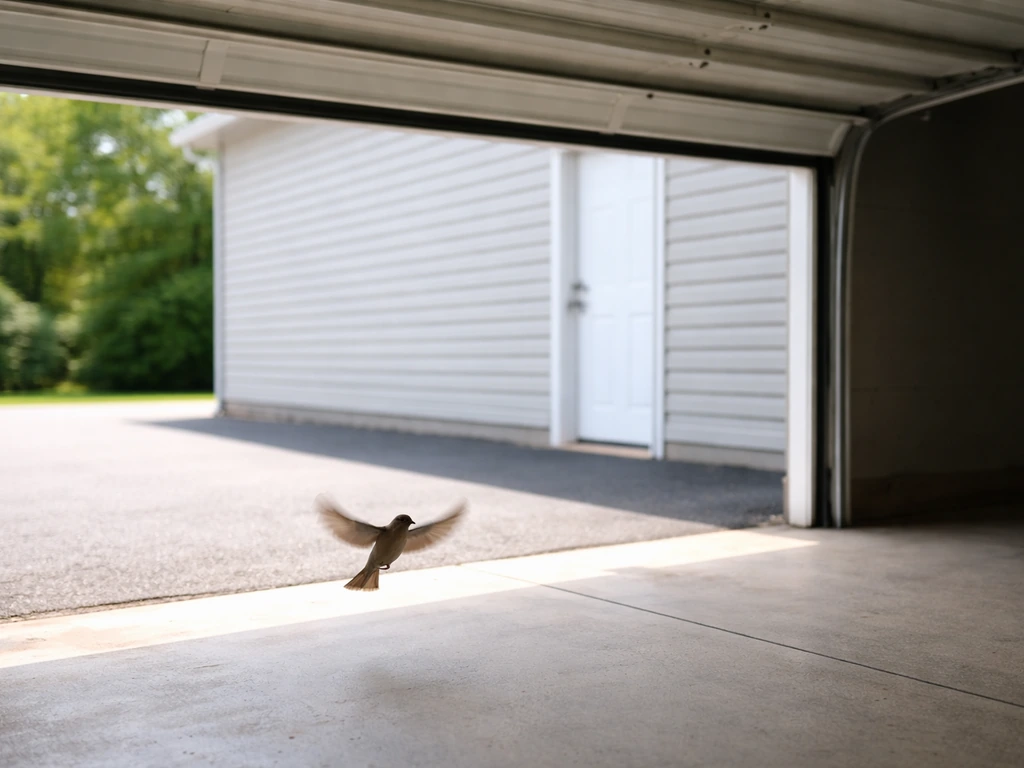
Never seal an entry point while birds may still be inside. How to get bird out of garage rafters usually requires a one-way exclusion step instead of sealing right away one-way method. If you block an exit with a bird inside, you've created a worse problem.
The right approach, adapted from Maine Department of Inland Fisheries and Wildlife guidance on evicting animals, is to use a one-way method: install a piece of netting or heavy plastic strip curtain over the gap that allows a bird to push through from the inside but blocks re-entry from the outside. Leave it in place for two to three days, then confirm no birds remain before sealing permanently.
Do your sealing work in the morning when birds are most active, so you can watch for exit activity during the day.
Materials that work
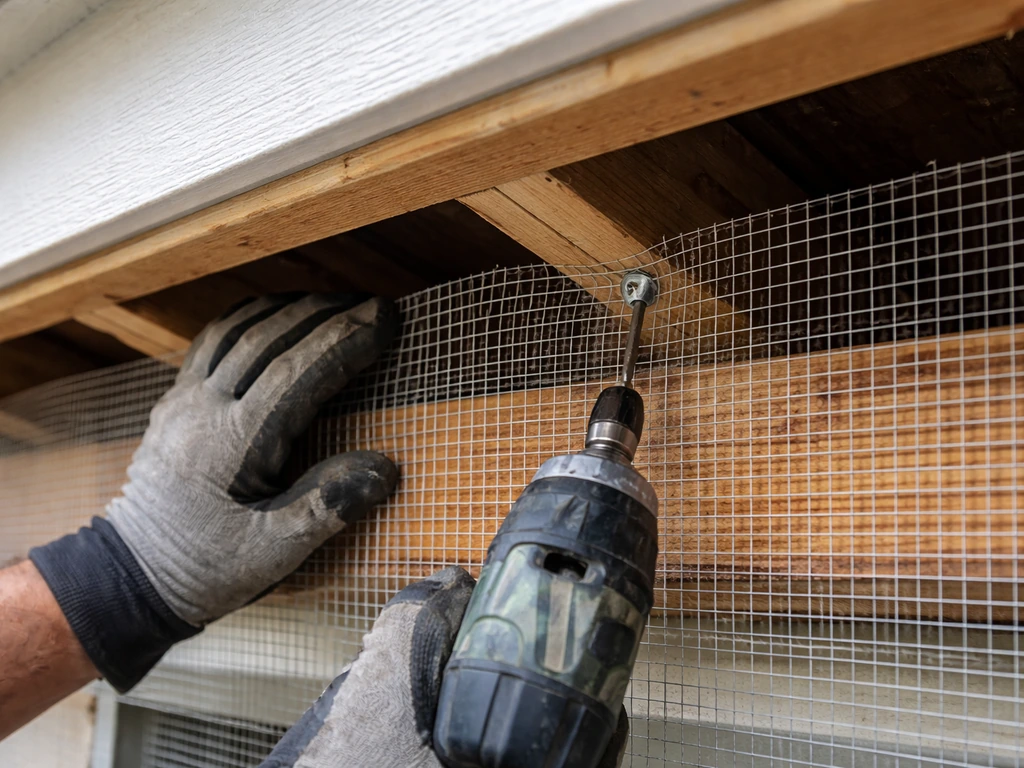
| Entry point type | Best exclusion material | Notes |
|---|---|---|
| Rafter gaps and open eaves | 1/4-inch hardware cloth or bird netting | Staple or screw flush to the framing; no gaps larger than 1 inch |
| Above garage door | Foam weatherstripping + door brush seal | Replace worn seals; choose a brush-type bottom seal for the door itself |
| Soffit and gable vents | Fine mesh vent covers (1/4-inch galvanized mesh) | Check existing screens; many are too coarse to stop small birds |
| Large open areas under roof | Heavy-gauge nylon bird netting suspended from rafters | Used widely for pigeon exclusion; netting must be taut with no sag |
| Small gaps in siding or fascia | Copper mesh or steel wool packed in, then sealed with caulk | Copper mesh doesn't rust and birds won't chew through it |
USDA-APHIS research on bird dispersal consistently emphasizes that effective exclusion requires the right combination of materials and timing. A patch job done in the wrong season, or with the wrong material, usually fails within a year. Do it right once and you won't need to redo it.
The Legal Reality: Protected Species and When You Must Call a Professional
This is the part of the process where people get into trouble by acting too fast. The Migratory Bird Treaty Act makes it illegal to destroy a nest that contains eggs or chicks, or where young birds are still dependent on the nest. This covers the vast majority of bird species you'll encounter in a garage, including swallows, robins, starlings, and most songbirds. The U.S. Fish and Wildlife Service can issue permits for removal when a nest is causing a genuine health or safety risk, but those permits are not easy to get and are not issued just because the nest is inconvenient.
The exceptions you should know
House sparrows are one of the few common species not protected under the MBTA. If you can confidently identify the bird as a house sparrow, you have legal flexibility to remove an active nest, though doing so humanely is still the right approach. Pigeons (rock doves) are also generally not covered under federal migratory bird protections, though local ordinances vary. If you're in any doubt about the species, treat the nest as protected.
When to call a wildlife professional
Call a licensed wildlife control operator or contact your state wildlife agency when any of these apply: If you are stuck on what to do next, you can also search for how to get a bird out of a garage on Reddit for real homeowner experiences and advice how to get bird out of garage reddit.
- The nest is active with eggs or chicks and the situation poses a genuine safety hazard (e.g., the nest is directly above electrical wiring, a fire risk, or creating significant contamination).
- You cannot identify the species and need confirmation before acting.
- There is a large accumulation of droppings indicating long-term roosting, which may require professional remediation.
- The nest is in a location you cannot safely access without fall risk or structural disturbance.
- You've tried basic deterrents and exclusion but birds keep returning, which may indicate a more systematic entry problem a professional can diagnose.
- You suspect protected raptors (hawks, owls) or chimney swifts are involved. Chimney swifts are federally protected and their nests cannot be touched.
When you call, have this information ready: the bird species if you know it, whether the nest is active or empty, the location in the garage (rafters, wall cavity, corner), the approximate size of the accumulation, and how long the birds have been present. This helps the professional advise you quickly and accurately.
Stop Them Coming Back: Long-Term Proofing and a Seasonal Plan
Removing the nest and sealing gaps gets you most of the way there. The final piece is making your garage consistently unattractive to birds across seasons, because nesting pressure is highest in spring and birds will probe for new entry points every year.
Remove what attracts birds in the first place
Birds nest where they feel safe and have access to food and water nearby. Walk around your garage and remove anything that contributes to this: pet food stored in open bins, water pooling on the floor or in containers, open trash, and any loose organic material (straw, cardboard, rope, dried leaves) that makes good nesting material. The Michigan DNR specifically calls out reducing food access and sealing roosting areas as the two most effective long-term strategies for reducing bird conflicts.
Physical deterrents that hold up over time
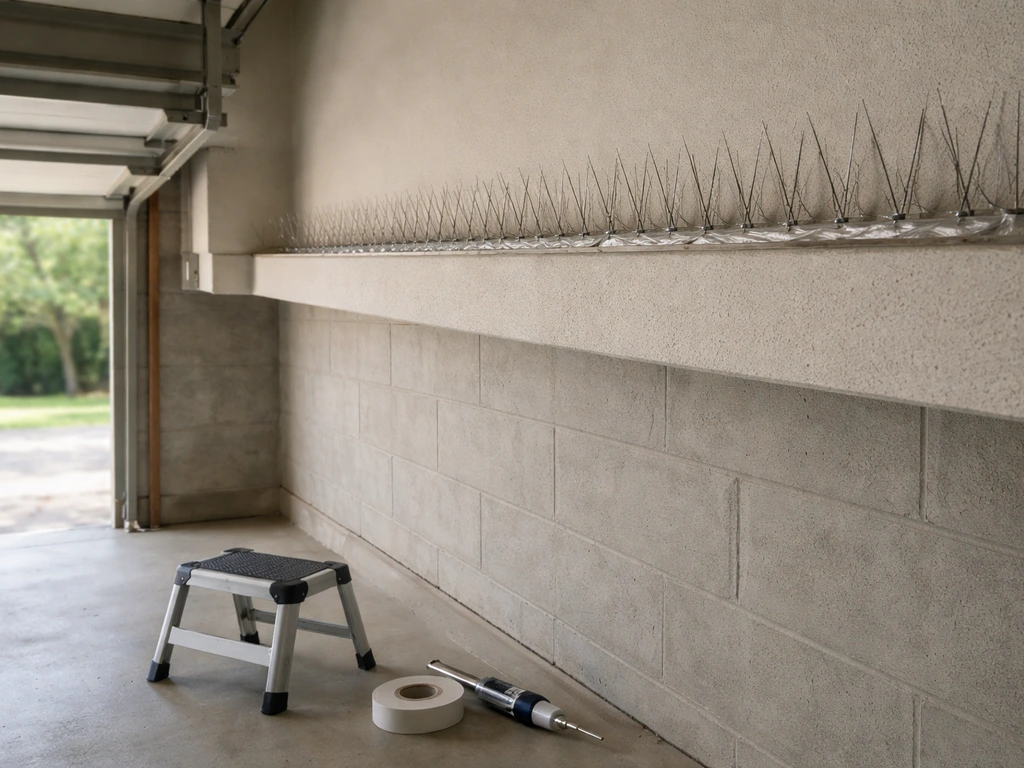
- Bird spike strips on ledges, beams, and flat surfaces where birds like to perch before entering. These are humane and very effective on pigeons and starlings.
- Heavy-gauge nylon netting under open rafters. This is the most reliable solution for garages with high ceilings and open rafter bays. It blocks access entirely without harming birds.
- Sloped boards or foam wedges on flat ledges, so birds can't land and settle.
- Motion-activated deterrents (lights or sound) near known entry points, especially effective during the first few weeks after nest removal when birds are trying to re-establish.
Seasonal maintenance schedule
| Time of year | What to do |
|---|---|
| Late winter (February) | Inspect and repair all exclusion materials before nesting season begins. This is the best window for sealing gaps because no birds are nesting yet. |
| Early spring (March to April) | Watch for early nesting activity. If you spot a bird carrying material into the garage, intervene immediately before a nest is established. |
| Spring to midsummer (May to July) | If an active nest is found, leave it alone and mark the fledge date. Keep the area protected. Plan exclusion work for after fledging. |
| Late summer (August to September) | Nest removal window for empty nests. Complete exclusion sealing now while weather is good and before any fall migration roosting begins. |
| Fall (October to November) | Final inspection of all entry points. Add or replace deterrents. Clean up any droppings from summer roosting. |
| Winter (December to January) | Low-risk period. Good time to install netting under rafters or make structural repairs without bird activity pressure. |
Keep a simple record
Take a few photos of where the nest was, which entry points you sealed, and what materials you used. If birds return next season, you'll know exactly where to check first. If you ever need to call a professional or file a permit request, this documentation saves time. It takes five minutes and is genuinely worth it.
Your Next Steps Today
Here's how to prioritize based on what you found:
- Active nest with eggs or chicks: Don't touch it. Protect the area, use another entrance, and count four to five weeks from when you first noticed eggs. Set a calendar reminder. If there's a genuine safety hazard like a fire risk or major contamination, call a licensed wildlife professional today.
- Active nest, no eggs yet (bird is building but hasn't laid): This is your best window to act. You can remove the in-progress nest of a non-protected species (like house sparrows) immediately. For protected species, check your state's guidance, but removal at this stage before eggs are laid is generally considered a gray area and many wildlife agencies advise acting quickly.
- Empty, inactive nest: Remove it today using the steps above. Clean and disinfect the area. Install immediate deterrents, then work on permanent exclusion within the next week.
- Not sure what you've got: Do the 20-minute observation, try to ID the species, and treat it as protected until you know otherwise. When in doubt, call your state wildlife agency for a free consultation before acting.
The honest truth is that most garage bird problems are solved permanently with two things: sealing the entry points properly and removing the attractants that brought birds there in the first place. The deterrents help in the short term, but exclusion is the lasting fix. If you notice a cuckoo clock bird door stuck open, pause use of the mechanism and check for the same kind of buildup or obstruction that can trap parts in place exclusion. Do both, follow the seasonal schedule, and you'll likely be done with this problem for good.
FAQ
I found a bird nest in my garage, but I’m not sure if it’s active. What should I do?
If you find a nest in spring or early summer and you cannot confirm it is empty, treat it as active. Wait at least long enough for young to fledge, typically 4 to 5 weeks from the first egg laid, then re-check from a distance before removal. If you see any bird entering or lingering, pause and use an exclusion approach rather than sealing or ripping out the nest.
Can I seal the entry points immediately after I remove the nest?
Do not seal gaps or close off entry points while any bird might still be inside. The safe sequence is one-way exclusion first (netting or a strip-curtain that lets birds exit), confirm no birds remain for 2 to 3 days, then seal permanently. This prevents trapping birds behind new barriers.
What’s the best way to find which gaps to seal in a garage?
Yes, but only after you have confirmed the nest is inactive and empty, and you know which openings to address. Focus on visible daylight gaps, missing vent screens, broken panels, and gaps around the garage door top. If you seal without fixing the actual access points, birds will probe and return within weeks.
What should I do if I already disturbed droppings or feel unwell after cleanup?
If you have health symptoms after cleanup, stop sweeping further and avoid disturbing any remaining droppings. A key step is wetting debris before you touch it, then bagging it sealed. If you already stirred dust, monitor symptoms and contact a clinician, especially if you had significant droppings cleanup or multiple cleanups.
When should I stop DIY and call a wildlife control operator?
If you cannot safely reach the nest without climbing or entering an attic or wall cavity, don’t DIY. Licensed wildlife operators can access the area, confirm activity, perform exclusion correctly, and handle protected-species situations. DIY risk increases most with nests in rafters, eaves, vents, or enclosed cavities.
What if I’m dealing with birds in the garage but I never see a nest with eggs?
If you see a bird that is not obviously nest-related, like one sitting on the floor or roosting, it still may be tied to a nest nearby. Give it time to exit (with lights off and doors closed) and avoid blocking areas it uses. For persistent birds in rafters or repeated returns, use exclusion rather than just shooing.
Are the deterrents and exclusion steps different for vents versus gaps around the door?
Use exclusion that matches the access point. For gaps you can cover, install netting or a curtain that allows one-way exit. For vents, the long-term fix is properly screened openings, but screening should be installed only after the nest is inactive. Putting mesh over an active nesting site can trap birds.
How long should I watch after sealing to make sure birds won’t return?
A common mistake is replacing sealed areas too early, leaving another hidden entry point. After sealing, watch for fresh entry activity for a couple of days, especially in daytime when birds are most active. Also check for storm damage, missing screen corners, and new probing around recently repaired spots.
Does legal permission for house sparrows change how I should do cleanup and sealing?
If you can clearly identify a house sparrow, you may have more legal flexibility under federal rules. However, you should still be humane and avoid disturbing during the active period. If you cannot confidently identify the species, treat it as protected and use the same cautious exclusion and timing plan.
Besides food and open water, what garage items most often encourage birds to build again?
Storing materials near nesting sites matters, but also remove “nest structure” items that birds can reuse immediately, like hanging cords, rope, loose insulation, and cardboard stored against walls. Birds also like calm ledges, so clear clutter from rafters, eaves, and corners, not just the floor.
What’s the safest way to dispose of droppings and nesting debris from a garage?
Before disposal, take photos, then bag wetened debris in a sealed plastic bag and place it in outdoor trash. If you left any materials dry or swept them, you may have aerosolized dust, so avoid re-cleaning with dry tools. For large accumulations, a professional may be safer due to the dust load.