The fastest way to get a bird out of a building is to darken the room, open one clear exit to the outside, confine the bird to a small area near that exit, and let it find its own way out. If you’re trying to identify a bird in your backyard, start by observing size, color patterns, and distinctive behavior before you decide what to do next how do i identify a bird in my backyard.
How to Trap a Bird in a Building Safely and Humanely
Maya Carver
15 May 2026
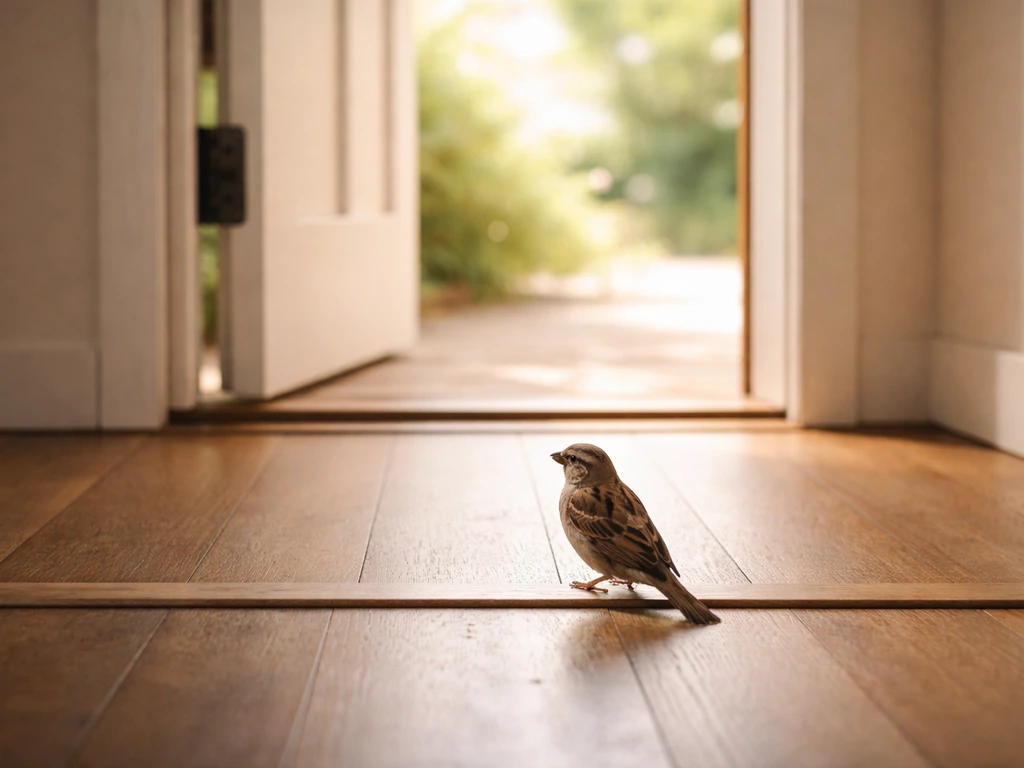
If you also need options for safely controlling where the bird goes outdoors, the outdoor trapping approaches in this guide can help you do it humanely and effectively how to trap a bird outside. That works in about 80% of cases within 15 to 30 minutes.
When it doesn't work, the bird is injured, trapped in a space without a direct exit, or just refuses to cooperate, you have a short list of humane containment and guiding techniques that will handle the rest. This guide walks you through both: what to do right now, and what to fix so it never happens again.
Quick safety check and when to call a pro
Before you do anything else, take 60 seconds to assess the situation. The answers to three questions determine everything that follows: Is the bird injured or just panicked? What species is it? And where exactly is it in the building?
If the bird is standing upright, moving around, and hitting windows or walls, it's almost certainly just stressed and healthy enough to leave on its own with your help. If it's sitting on the floor, not moving, or has an obviously drooping wing, treat it as injured and skip straight to the containment section below. Do not chase or grab an injured bird without reading that section first.
Species matters legally. In the United States, nearly every wild bird is protected under the Migratory Bird Treaty Act (50 CFR Part 21). That includes common sparrows, starlings, pigeons (feral rock doves are an exception), swallows, and most songbirds. Guiding a healthy bird out of a building is fine.
But handling, transporting, or keeping a migratory bird, even briefly for rehabilitation, technically requires a federal rehabilitation permit under 50 CFR § 21. 76 unless you immediately hand it off to a permitted wildlife rehabilitator. In practice, gently placing an injured bird in a box and driving it to a vet or rehabilitator within an hour is widely accepted as an emergency action, but prolonged holding or relocation without a permit puts you in a gray legal area.
When in doubt, call a licensed wildlife rehabilitator or your state wildlife agency before handling.
When to call a professional immediately
- The bird appears sick, not just stunned: labored breathing, discharge from eyes or beak, inability to stand after several minutes
- It's a raptor (hawk, owl, falcon) — talons and beaks can cause serious injury and these birds stress badly when handled
- There are visible signs of bird flu risk: the bird is part of a flock die-off, or you're in a confirmed outbreak area
- Large accumulations of droppings are present — professional hazmat cleanup may be needed (CDC/NIOSH recommends professional cleanup companies for large droppings accumulations due to Histoplasma risk)
- The bird is in a hard-to-reach space like a ceiling void, HVAC duct, or large warehouse, and you can't safely access the area
- You're in California or another state with strict wildlife handling laws — CDFW explicitly advises not to intervene with sick or injured wildlife without guidance from a trained professional
When you call, have this information ready: the species or a description, whether it appears injured, where exactly it is in the building, how long it's been there, and any entry point you've already identified. That saves time and helps the rehabilitator or wildlife control officer come prepared.
Immediate emergency steps to get the bird out
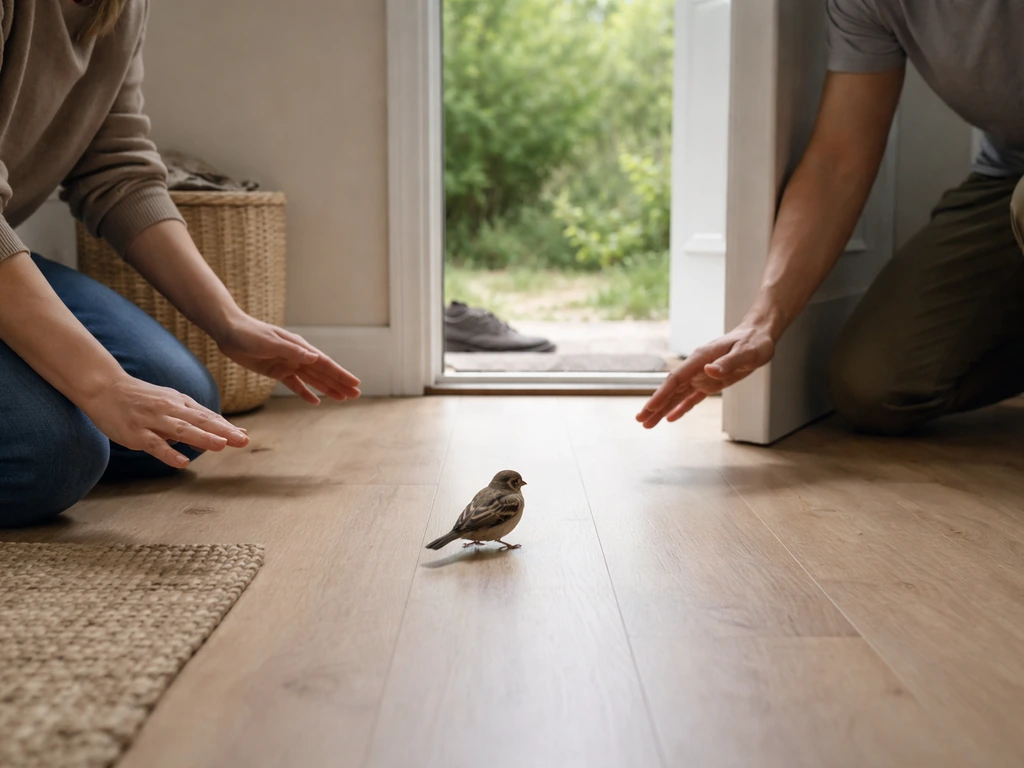
Speed matters here, the longer the bird is inside, the more exhausted and stressed it becomes, and the harder it is to move. Follow these steps in order.
- Stop and be quiet. Movement and noise cause the bird to panic and fly into walls and windows. Get everyone else out of the room, including pets.
- Identify one exit to the outside — a window that opens fully, a door to the exterior, or a large garage door. This is the only exit you'll use.
- Open that exit wide and remove any screens.
- Close every interior door, including closets, to confine the bird to one room. If you can herd it into a smaller room that has an exterior window or door, do that first.
- Turn off all interior lights in that room. Birds are attracted to natural light and will move toward it if artificial light isn't competing.
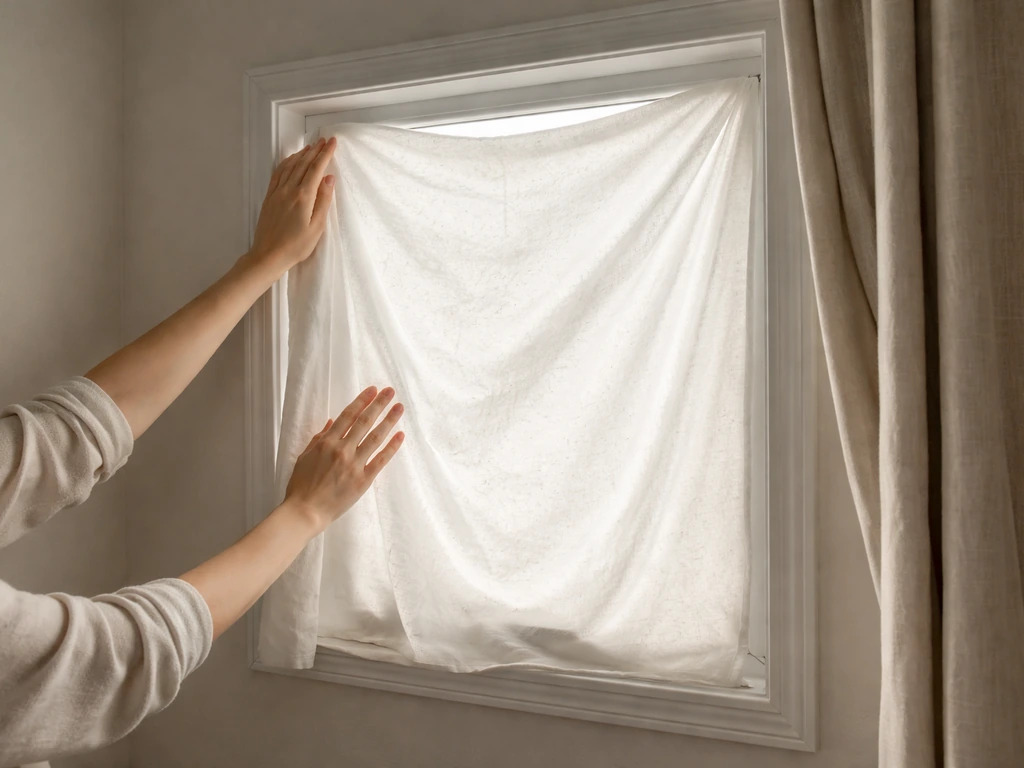
- Draw blinds or cover any other windows with a sheet, towel, or cardboard so the bird doesn't mistake glass for an exit — a common source of repeated window collisions.
- Step back and wait 15 to 30 minutes. In most cases, the bird will find the open exit on its own.
If the bird is in a garage, the Wisconsin Humane Society's approach works well: turn off all garage lights, open the main garage door fully, and let the bird navigate toward the brightest opening. Don't stand in the doorway, you'll block the light signal the bird is following.
If it's stuck in a brightly lit commercial building or warehouse where interior lights can't be shut off easily, the U.S. Fish & Wildlife Service recommends turning off lights for 15 to 20 minutes. This breaks the bird's disorientation from artificial lighting and gives it a chance to regain normal behavior. The Audubon Lights Out program corroborates this: even a 20 to 30-minute darkness interval significantly reduces light-induced entrapment.
Humane capture and containment options
Sometimes guiding doesn't work fast enough or the situation requires you to safely contain the bird, for example, it's injured, it keeps moving into a new room, or you need to transport it to a rehabilitator. None of these methods require commercial traps, and all of them prioritize the bird's safety. If the bird got stuck on a sticky trap, use a humane approach to remove the bird safely and avoid contact with the adhesive.
The towel method (best for small, grounded birds)
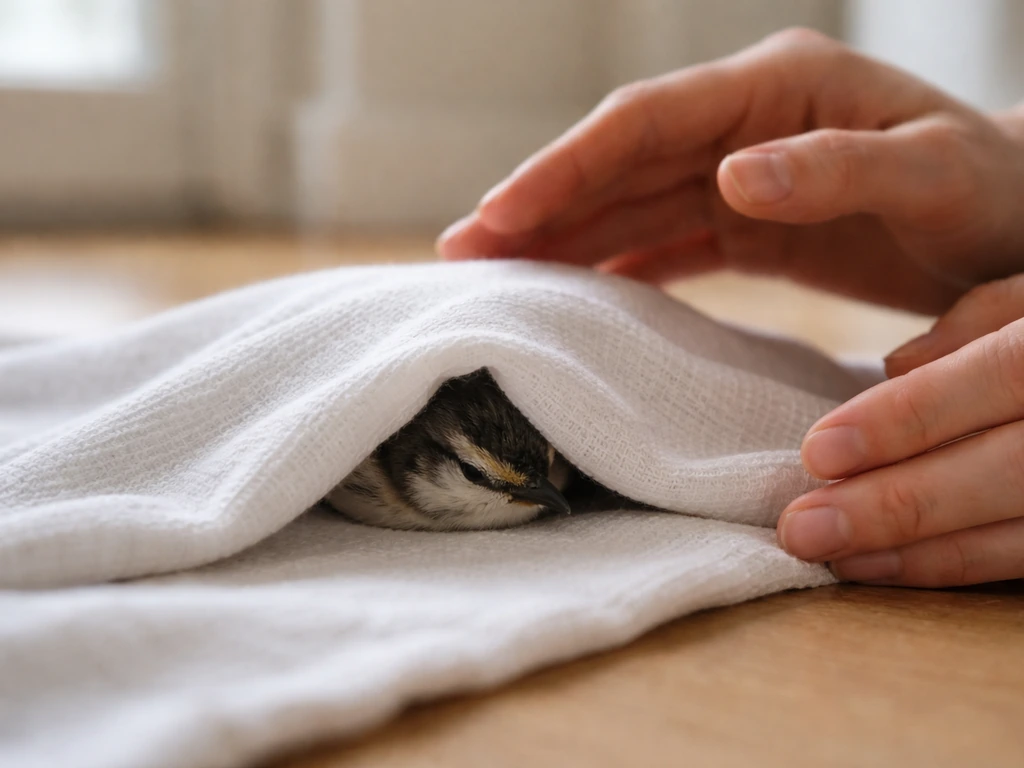
If the bird has landed on the floor or a low surface and is not flying, drape a light towel or cloth gently over it. The darkness calms it almost immediately. Once covered, cup both hands around the bird through the towel, pick it up with light, firm pressure (not squeezing), and transfer it to a ventilated box. Wildlife Victoria recommends this towel-and-box approach as the standard containment method for birds trapped in buildings. If the bird is stuck to a glue trap, remove it with a gentle, safe technique first, then use the towel-and-box containment until help arrives how to get a bird off a glue trap.
The box and broom method (for birds that are still mobile)
Hold an open cardboard box in one hand and use a broom or long flat board in the other as a gentle guide. Slowly herd the bird toward a corner, then lower the box over it. Slide a piece of cardboard under the box to close the bottom. Flip the box right-side up and add ventilation holes if they aren't there. The San Diego Humane Society recommends confining the bird as close to an open door as possible before attempting this, to minimize the distance you need to carry it.
Temporary holding box setup
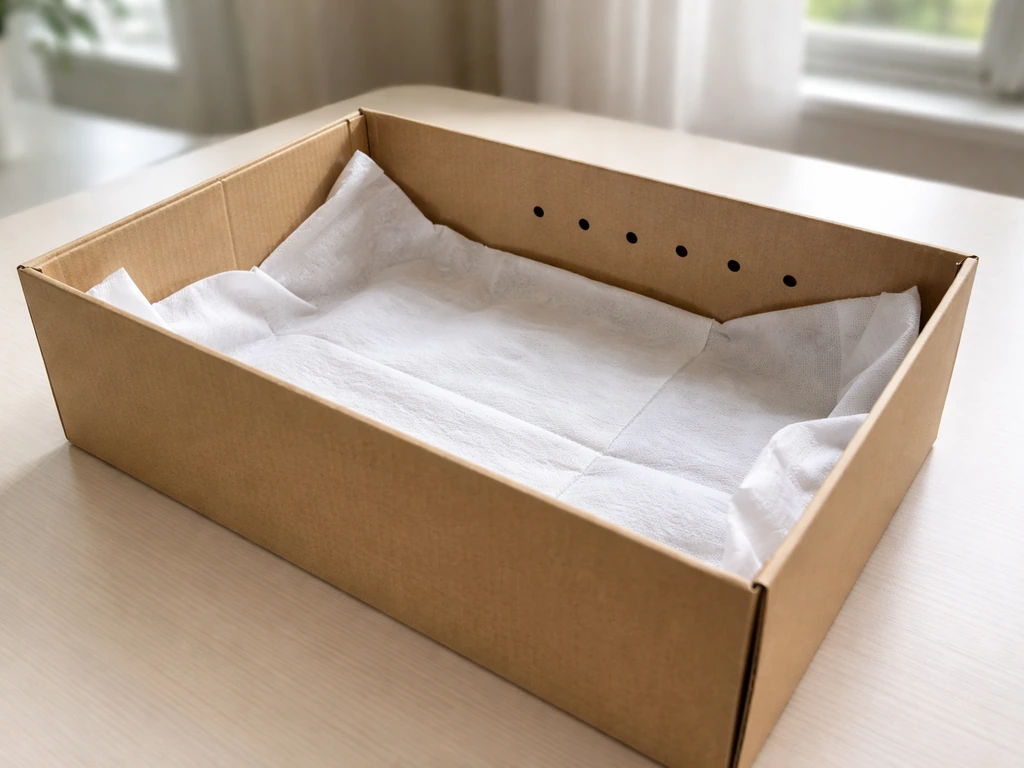
If the bird needs to wait for a rehabilitator, set up a holding box correctly. Use a shoebox or similar container lined with tissue or a paper towel. Punch a few small air holes in the lid. Place the box in a warm, quiet area away from noise, pets, and direct sunlight. Do not feed or give water to the bird, this is critical. Improper feeding can cause aspiration or metabolic problems. Tufts Wildlife Clinic and the Toronto Wildlife Centre both advise keeping the bird in a dark, quiet space and not attempting to feed it while waiting for professional help. Call a licensed wildlife rehabilitator and arrange transport as soon as possible.
PPE reminder for handling
Wear gloves any time you handle a wild bird. The blank" rel="noopener noreferrer">CDC advises against bare-hand contact with birds or their droppings due to disease risk, including avian influenza and Histoplasma from accumulated feces. If there are significant droppings in the area, blank" rel="noopener noreferrer">wet them lightly before any cleanup to reduce aerosolization of spores, a CDC/NIOSH-recommended technique, and wear an N95 respirator. For large accumulations, call a professional hazardous waste cleanup company rather than handling it yourself.
How to guide the bird to an exit, room by room
The biggest mistake people make is chasing the bird through multiple rooms, which spreads the problem and exhausts the bird. Instead, work systematically to funnel it toward a single exit point.
The funnel approach
- Map the building mentally: identify which room has the most accessible exterior exit (door or window).
- Start from the room farthest from that exit. Close its interior door. The bird can no longer retreat there.
- Move to the next room, open its door toward the exit room, and create a 'light path' — open the exit window or door, darken everything else.
- Use a bedsheet held between two people as a gentle moving 'wall' to herd the bird from behind, as recommended by the Canadian Wildlife Federation. Move slowly — fast movement causes the bird to fly upward and panic.
- Once the bird is in the final room with the open exit, stay back and give it time to leave on its own.
In large open-plan commercial spaces like warehouses or atriums, this room-by-room approach still applies conceptually: use portable light sources or open loading dock doors to create a strong directional light cue, and use staff positioned at intervals (standing still, not waving) to block routes away from the exit.
Room-type quick reference
| Room type | Best exit option | Key technique |
|---|---|---|
| Bedroom / living room | Window opened fully, screen removed | Darken room, cover other windows with a sheet |
| Kitchen | Back door to exterior | Remove pets, darken room, open door wide |
| Garage | Main garage door | Turn off all lights, open door, stand clear |
| Warehouse / large hall | Loading dock door or emergency exit | Turn off lights 15–20 min, use a directional light at exit |
| Attic | Gable vent or roof access hatch | Open one vent fully; may need one-way door if bird is nesting |
Troubleshooting when the bird won't leave or seems injured
The bird keeps flying to a different room
This usually means there's a light source or gap pulling it the wrong direction. Check for cracked doors, interior windows between rooms, or skylights. Close them off. Return to the funnel approach from the beginning, making sure every path except the exit is blocked.
The bird is hitting the same window repeatedly
Cover the inside of that window immediately with a blanket, sheet, or cardboard. The bird is reading it as an exit because of light transmission. Once that visual cue is removed, it will stop targeting it. Then re-establish the correct exit as the only light source.
The bird has stopped moving and is sitting on the floor
This means it's either stunned (common after a window collision) or injured. Give it 10 to 15 minutes undisturbed in a darkened room. A stunned bird often recovers and flies off on its own. If it hasn't moved after 15 minutes, or if it's holding a wing at an odd angle, panting, or has discharge from its eyes, it needs a rehabilitator. Follow the temporary holding box instructions above and make that call.
You suspect the bird is sick, not just injured
Do not handle it without full PPE (gloves, N95 mask). Sick wild birds can carry avian influenza, and the OSHA and CDC guidance is clear: avoid unprotected contact with sick birds or their secretions. Isolate the area if possible, contact your local animal control or state wildlife agency, and if you're in an area with a known bird flu outbreak, call your state department of agriculture or USDA APHIS.
The bird is in a space you can't access
HVAC ducts, ceiling voids, and wall cavities are all beyond DIY territory. A bird in a duct can be guided out by opening access panels and creating a light path, but if you can't do that safely, call a wildlife control operator. Don't seal the space with the bird inside, that's both inhumane and will create a serious odor and contamination problem.
Preventing re-entry: sealing, screening, and managing attractants
Once the bird is out, your immediate priority is figuring out how it got in. Most birds enter through a surprisingly small list of vulnerabilities. Fix these and you solve 90% of future incidents.
Find the entry point first
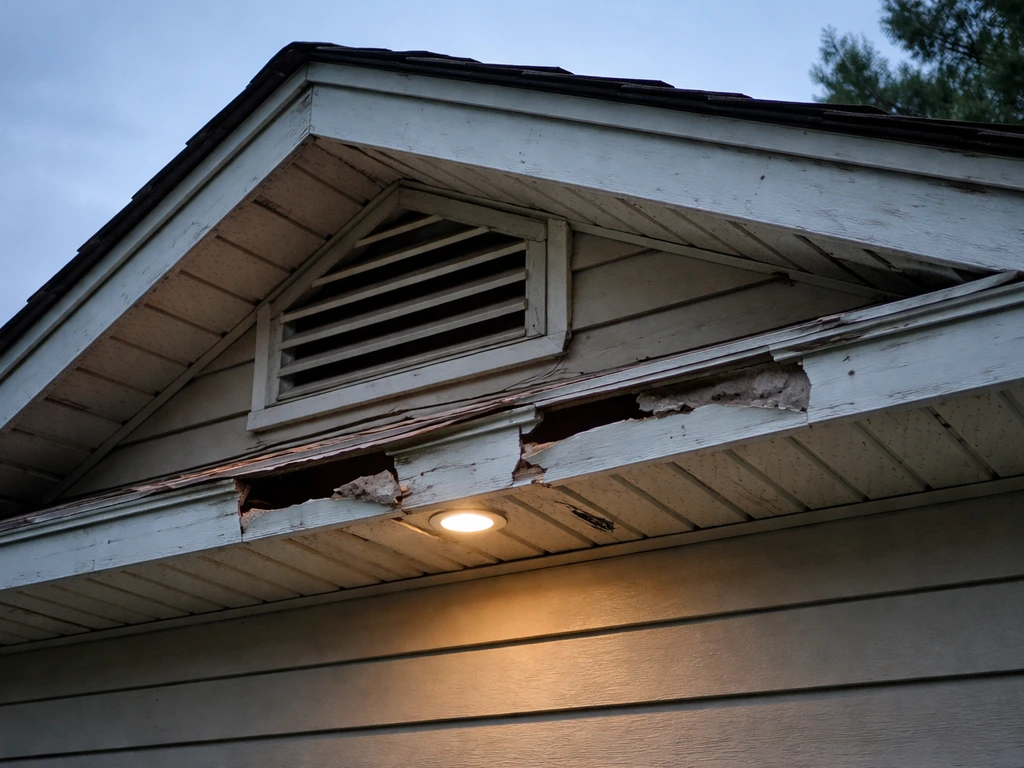
Walk the exterior of the building and look for gaps at rooflines, damaged soffit panels, open or unscreened gable vents, broken chimney caps, loose fascia boards, and any gap wider than about 3/4 of an inch. Once you identify the attic bird entry points, you can focus on sealing the right gaps so the bird cannot get back inside. Most songbirds can squeeze through an opening that size. Larger openings, 2 inches or more, will admit pigeons, starlings, and doves.
Screening and sealing
Cover all vents, soffit vents, attic end louvers, gable vents, dryer exhaust vents, with 1/2-inch by 1/2-inch hardware cloth mesh. That's the size recommended by Wildlife Illinois and confirmed by PNNL Building America Solution Center as appropriate for excluding small birds. For larger openings and general bird exclusion, 3/4-inch to 1-inch mesh also works well. Mechanically attach mesh covers to framing, don't just staple them to the vent cover itself, since birds and weather will eventually work them loose.
For chimneys, install a commercial chimney cap with a spark arrestor screen. For dryer and bath fan vents, use vent covers with spring-loaded or louvered flaps that open only when the fan runs. Check these covers annually, debris and corrosion are the main failure modes.
Managing light as an attractant
Light is the biggest overlooked attractant, especially for migratory birds at night. Buildings with large illuminated windows or rooftop lighting during spring and fall migration draw birds in and disorient them. Participating in a Lights Out program, turning off or shielding non-essential exterior and interior lighting from roughly 11 PM to 6 AM during peak migration (late April through May, and August through October), directly reduces bird entrapment incidents. The Audubon Lights Out program has documented clear results from this simple behavioral change.
Food and water sources
Bird feeders near building entrances increase the chance of birds entering through open doors. Move feeders at least 30 feet from any entrance. Standing water near loading docks or HVAC condensate drains also attracts birds, manage drainage so water doesn't pool.
Seasonal planning, long-term exclusion, and legal notes
Time exclusion work correctly
This is where a lot of homeowners make a costly mistake: they seal entry points while birds are actively nesting inside. Under the Migratory Bird Treaty Act, disturbing an active nest with eggs or young is a federal violation. Before you seal any gap or vent, confirm there are no active nests inside. The safe windows for exclusion work are late fall and winter (after breeding season, roughly November through February in most of the continental US) and very early spring before nesting begins. If you discover an active nest during peak season, leave it alone until the young have fledged, then seal the entry point immediately after.
One-way exclusion doors
If birds are roosting or repeatedly entering an attic or outbuilding, a one-way exclusion door is the cleanest solution. These devices let a bird exit through the entry point but prevent re-entry. The Maine Department of Inland Fisheries and Wildlife and the Washington Department of Fish and Wildlife both describe this as a standard exclusion tool. Install it over the active entry point and leave all other gaps sealed. After 3 to 5 days with no activity inside (check by listening and looking for fresh droppings), remove the one-way door and permanently seal the opening.
Annual maintenance schedule
| Season | Task |
|---|---|
| Late winter (Feb–Mar) | Inspect all vents, soffit, fascia, and chimney caps before nesting season begins. Repair or replace damaged mesh. |
| Spring (Apr–May) | Implement Lights Out measures during peak migration. Check that exclusion devices from last year are intact. |
| Summer (Jun–Aug) | Do not disturb active nests. Monitor for new entry points or damage to existing screening. |
| Fall (Sep–Oct) | Second Lights Out period for fall migration. Document any new entry attempts. |
| Early winter (Nov–Jan) | Safest window for exclusion work. Seal all identified gaps, install or replace hardware cloth, clean up any accumulated droppings with proper PPE. |
Legal notes you need to know
Almost every wild bird you'll encounter in a building is protected under federal law. The Migratory Bird Treaty Act makes it unlawful to take, possess, or harm migratory birds without federal authorization, and 'take' includes capture, even for well-intentioned relocation. Guiding a healthy bird to an exit is not a legal issue. Temporarily boxing an injured bird for emergency transport to a rehabilitator is a practical exception most agencies don't pursue.
But keeping a bird, attempting to relocate it yourself, or handling a nest with eggs or young without a permit crosses into regulated territory. If your building has a recurring, large-scale bird problem requiring active trapping or nest removal, like a pigeon colony or starling roost, a USDA APHIS migratory bird depredation permit may be required, and a licensed wildlife control operator is the right call.
For facility managers dealing with recurring issues in commercial buildings, documenting every incident (date, species, entry point, resolution) creates a useful record if you later need to apply for a depredation permit or demonstrate due diligence to regulators. It also makes your annual exclusion planning much more targeted.
FAQ
Can I catch the bird to move it somewhere safer instead of guiding it out?
If the bird appears healthy, avoid grabbing it, because capture can be considered “take” under federal protections, even if your goal is relocation. For injured birds, you may temporarily contain and transport for emergency care, but still use gloves and PPE and call a licensed rehabilitator as soon as possible.
What should I do if the bird keeps flying into the same room when I darken the area?
Re-check that only one direct exit has light, and close interior gaps like cracked doors, open interior windows, or stairwell openings that create alternate “bright” targets. Also block competing visual cues, for example cover the inside of windows or skylights that transmit daylight, then re-establish the correct exit as the only path.
Is it safe to use a towel and then just carry the bird in my arms without a box?
It’s safer to place the bird into a ventilated container immediately after covering, because open-air carrying increases escape attempts and wing injury. Keep the bird calm by minimizing handling time, and ensure the box has air holes and stays in a warm, quiet spot away from people and pets.
How long can a bird stay in the holding box before calling help?
Treat time as urgent, call a licensed wildlife rehabilitator as soon as the situation is stable (especially if it is injured or not moving after the initial waiting period). If you cannot transport quickly, keep it dark, quiet, ventilated, and do not feed or give water until a professional advises.
What if the bird is stuck behind a ceiling, in a wall cavity, or in an HVAC duct I cannot access?
Do not seal the building space with the bird inside, it worsens distress and can create odor and contamination. If you cannot create a safe light path by opening access panels, call a wildlife control operator who can work safely with the building envelope and access points.
Should I put food or water out while I’m trying to trap or guide the bird out?
No, do not feed or offer water to a bird you have contained, especially an injured one, because feeding mistakes can cause aspiration or metabolic issues. For a healthy bird being guided, your role is to provide an exit and reduce confusion, not to provide diet.
What if the bird appears injured but I cannot tell whether it is injured or stunned?
Use a short observation window in a darkened area (about 10 to 15 minutes) without disturbance. If it regains normal movement and tries to escape, you can guide it out. If it stays down, holds a wing oddly, pants, or shows eye discharge, switch to containment and contact a rehabilitator.
What PPE is actually necessary, and what if I only have bare hands and no mask?
Bare-hand contact is discouraged, especially where droppings may be present. If there are significant droppings, wear gloves and an N95 respirator (and wet droppings lightly before cleanup to reduce airborne particles). If you have no PPE, focus on isolating the area and calling animal control or a wildlife cleanup professional.
I found a bird on a sticky glue trap, how do I avoid injuring it?
Do not yank or pull the bird free. Use a dedicated, gentle removal approach first (as advised for glue-trap incidents), then move it into the towel-and-box containment method. Minimize handling time and contact help immediately.
When should I seal entry points after the bird is out?
Do not seal while there is active nesting with eggs or young, because disturbing nests is federally regulated. Use late fall through winter (and sometimes very early spring before nesting), and if birds are roosting or repeatedly entering, prefer a one-way exclusion door with a follow-up check after 3 to 5 days before permanent sealing.
How can I reduce the chance of another bird incident without re-trapping?
Fix attractants and entry routes together: move bird feeders at least 30 feet from entrances, manage standing water near drains and loading docks, and reduce nighttime light during peak migration by turning off or shielding non-essential lights. Then seal gaps using appropriate mesh size, installed mechanically to framing so it doesn’t loosen.