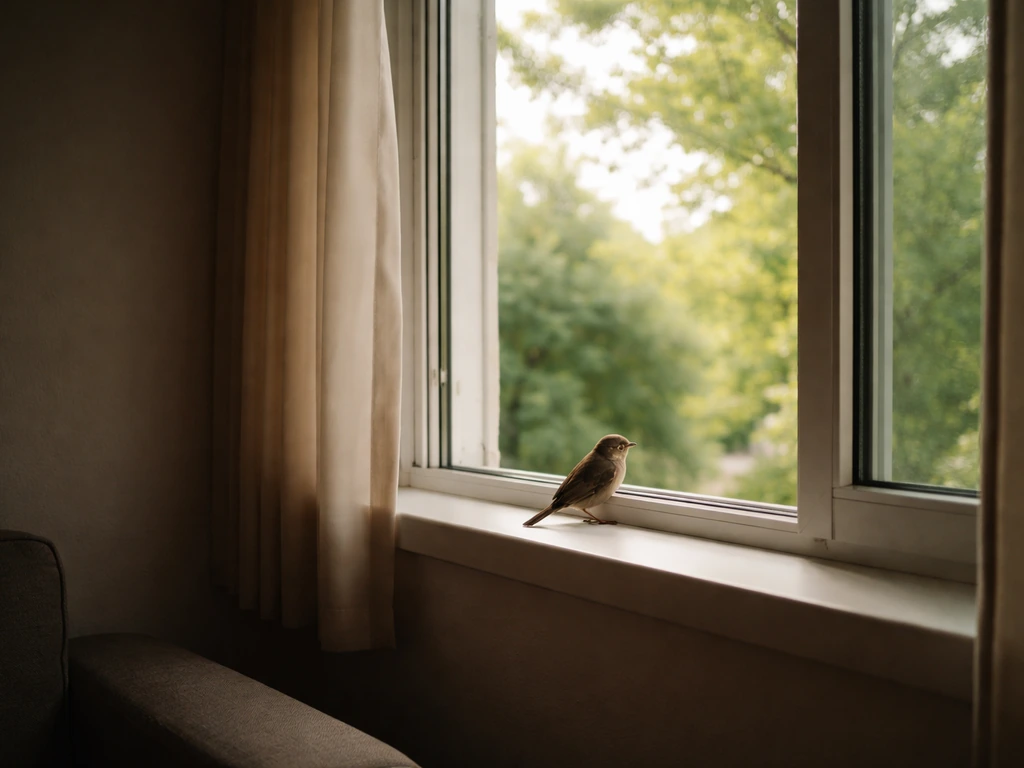
For most outdoor bird situations, the safest move is to assess before you act. If the bird is grounded but alert, you can often herd it toward a release point or use a lightweight towel to gently contain it. If it looks injured, bleeding, or completely unresponsive, stop and call a licensed wildlife rehabilitator before touching it. For birds that keep re-entering a garage, porch, or outbuilding, a live-capture cage trap with the right bait and placement will usually solve the problem within a day or two. The step-by-step process below covers all three scenarios, including the legal lines you cannot cross without a permit.
How to Trap a Bird Outside Safely and Humanely
Maya Carver
23 Apr 2026
Quick safety triage: what to do in the first five minutes
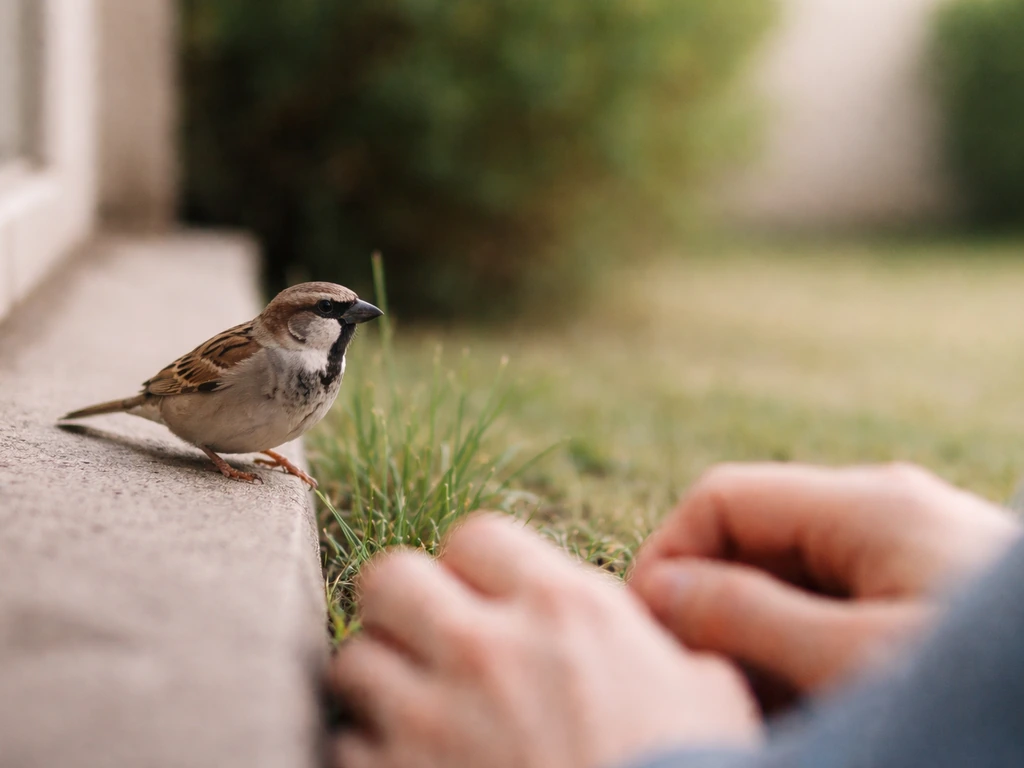
Before you grab a box or a trap, spend 60 seconds observing. How the bird is behaving tells you almost everything about what to do next.
- Alert and moving, no obvious wounds: the bird is likely a fledgling or a window-strike victim that needs a short rest, not immediate capture.
- Visible bleeding, drooping wing, or unable to hold its head up: do not attempt home rehabilitation. Contain it once using a towel, place it in a ventilated shoebox or paper bag in a dark, quiet room, and call a wildlife rehabilitator within the hour.
- Shivering, seized/stiff, or clearly unresponsive: signs of serious injury or illness. Do not offer food or water. Contact a rehabilitator immediately.
- Multiple birds sick or dead in the same area: possible disease event. Do not handle any bird without gloves; contact your state wildlife agency.
- Deceased parent nearby and a baby bird on the ground: the nestling or fledgling is almost certainly orphaned. Call a rehabilitator before doing anything else.
If the bird hits any of those injured/orphaned flags, DIY trapping is off the table. The American Bird Conservancy points out that a bird that looks capable of flying may still have internal injuries that will kill it without proper care. The one exception: briefly containing the bird to get it to a rehabilitator is acceptable and is covered in the handling section below.
When to stop DIY immediately
- The bird is a raptor (hawk, owl, falcon) or a wading bird (heron, egret): talons and bills can cause serious injury, and most are federally protected.
- You cannot identify the species and it does not look like a common house sparrow or European starling.
- The bird has been in the same spot for more than 24 hours without moving.
- You or anyone nearby has been scratched or bitten.
- Children or pets are actively interacting with the bird.
Identify your scenario before choosing a method
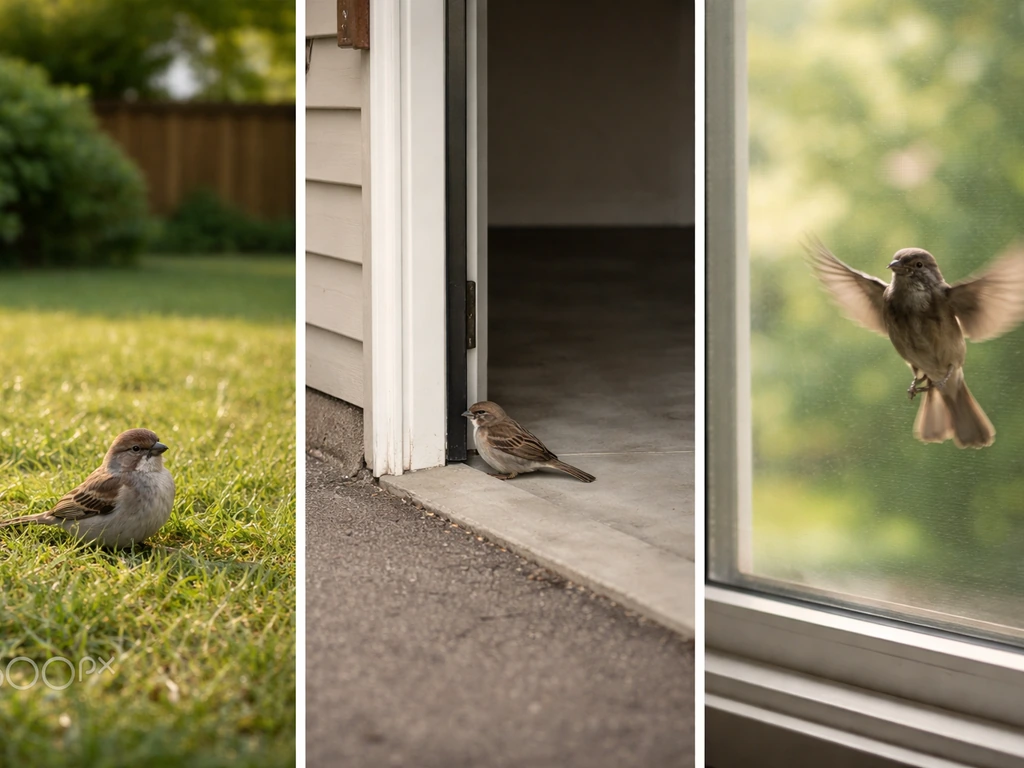
Not every outdoor bird problem calls for a trap. Matching the right tool to the right situation saves you time and reduces stress on the bird. There are three common outdoor scenarios, and each has its own best response.
Scenario 1: bird grounded in the yard
A bird sitting quietly on the ground is not always in trouble. Fledglings leave the nest before they can fly well, and their parents are usually watching from a nearby branch. Audubon's guidance is clear: keep pets and children away and give the bird a few hours. If it is still in the same spot by the next morning, or if you know a parent is dead or missing, call a rehabilitator. Do not try to put a fledgling back in the nest using a ladder unless you are certain of the exact nest location and can do so safely.
Scenario 2: bird trapped near or inside a structure
This covers birds stuck under a deck, wedged in a fence gap, sheltering in a covered porch, or repeatedly flying into an open garage or outbuilding. Here the bird is not necessarily injured; it is confused or looking for shelter. These cases are strong candidates for the herding and live-capture methods described below. For birds that have actually made it inside a building, the approach is somewhat different and is covered in detail in the companion guide on how to trap a bird in a building.
Scenario 3: bird repeatedly entering the same opening
A bird that keeps coming back to the same window, vent gap, garage door, or eave is usually either nesting or defending a territory. Capturing it once and releasing it elsewhere rarely fixes the problem unless you also seal the entry point or remove the attractant. This scenario calls for a combination of temporary capture and a longer-term exclusion plan (covered in the prevention section at the end of this guide).
How to set up a humane live-capture trap outdoors
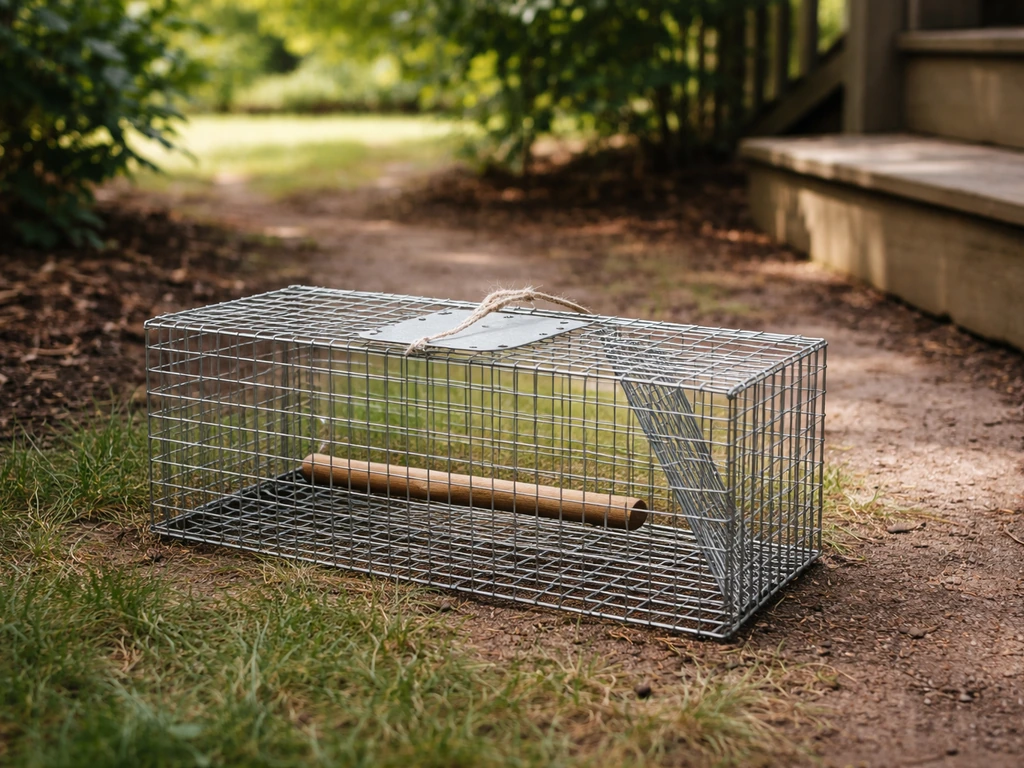
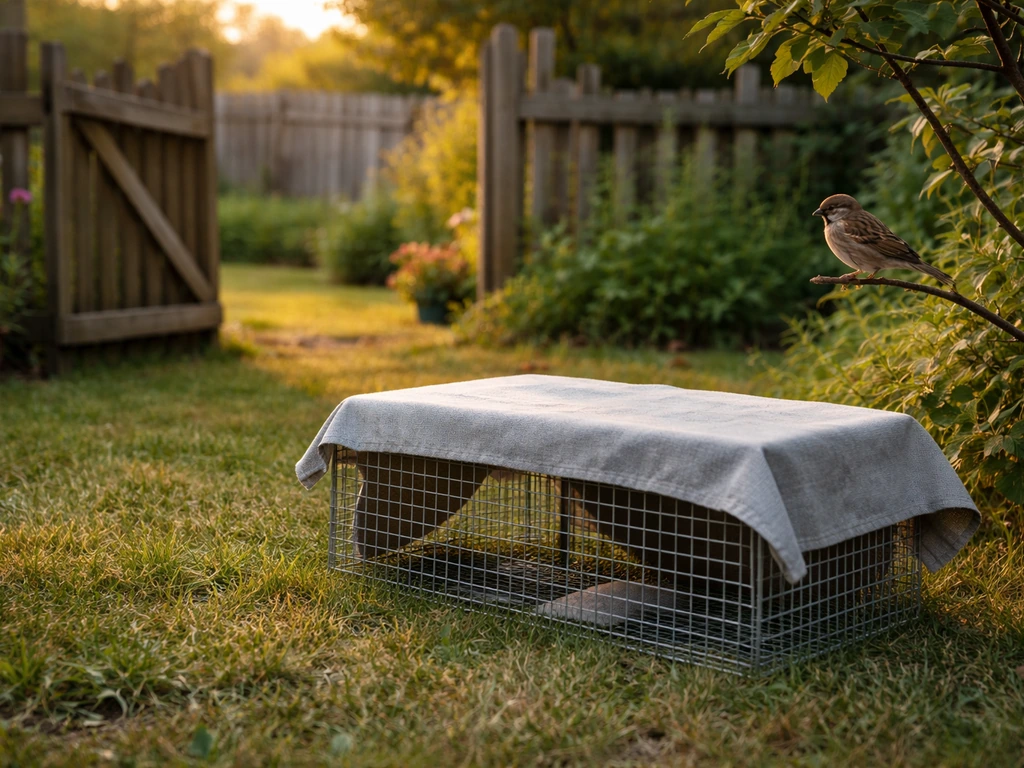
For birds that need to be removed from a yard, porch, or outbuilding entrance, a wire or mesh live-capture trap is the most humane DIY option. The goal is to get the bird inside the trap voluntarily, with minimal chase or stress. Here is what you need and how to set it up correctly.
Tools and materials
- A wire mesh live trap sized appropriately for the bird: a small sparrow or starling trap (roughly 10x10x24 inches) for small songbirds; a larger raccoon-sized cage (around 10x12x32 inches) for pigeons or larger birds.
- Appropriate bait: cracked corn or millet for sparrows and doves; bread crumbs or grain for pigeons; fruit pieces for robins or thrushes.
- A dark cloth or tarp to drape over most of the trap once the bird is inside (reduces panic).
- Thin gloves (nitrile or lightweight leather) for handling.
- A cardboard box or ventilated carrier for transport if you need to move the bird to a rehabilitator.
- A lightweight towel or pillowcase for gentle hand-capture if the bird cannot be baited into a trap.
Placement and timing
Place the trap in a shaded spot close to where the bird has been spending time, but not so close that your scent causes it to avoid the area. Birds are most active and most willing to enter a new food source in the early morning, roughly one to two hours after sunrise. Set the trap before dawn, check it every 30 to 60 minutes, and never leave a set trap unattended for more than two hours in warm weather. Heat stress inside a small wire cage can kill a bird quickly. Avoid placing traps near areas where children or pets roam freely, and put up a simple barrier or sign so no one accidentally triggers the trap.
For a bird repeatedly entering a garage or shed, you can skip bait altogether and use the opening itself as the trap entrance. Position the cage with its open door aligned with the doorway or gap the bird is using, drape the sides with mesh or cardboard so the cage entrance is the only obvious passage, and the bird will often walk straight in.
Step-by-step trapping and handling
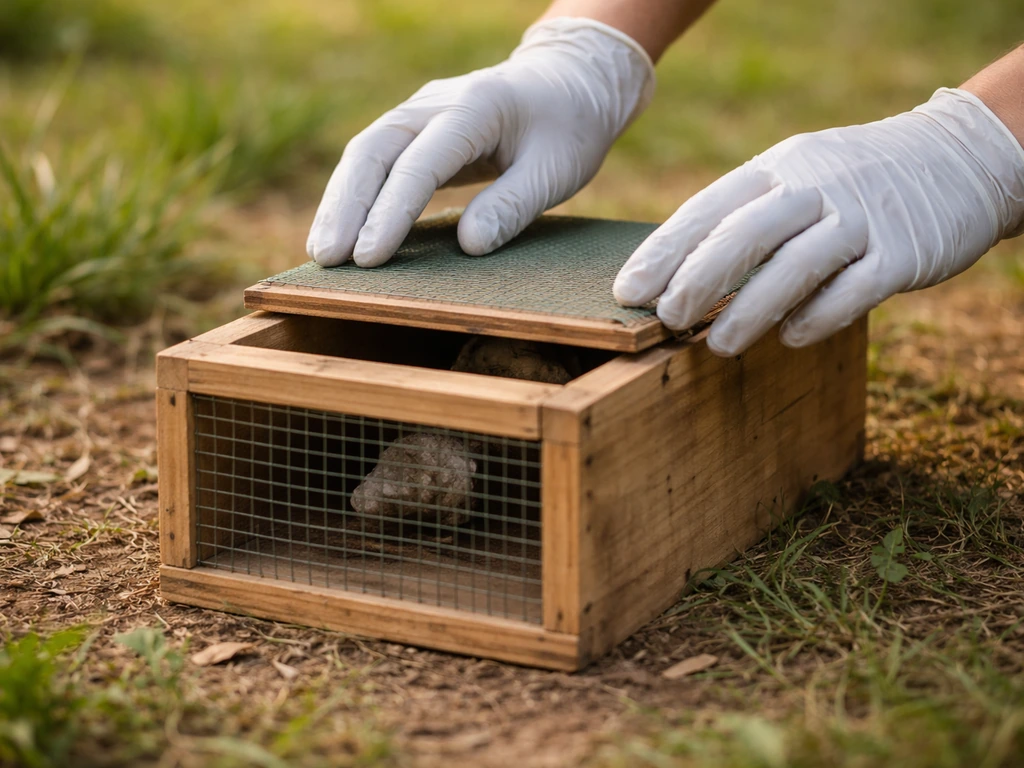
- Put on your gloves before approaching the bird or the trap. Even small songbirds can scratch, and some carry salmonella.
- Move slowly and stay low. Approach from the side, not directly head-on, which birds read as a predator charge.
- If the bird is in the trap: cover the trap immediately with the dark cloth to calm the bird, then move it to a quiet area away from noise, pets, and direct sun.
- If you are doing a hand-capture: toss a lightweight towel gently over the bird from about two to three feet away, then scoop the towel and bird together into both hands. Wrap loosely so the wings are held against the body but the chest can expand. Birds have more difficulty breathing when on their back, so keep the bird upright.
- Hold the bird only as long as necessary. Place it into a ventilated cardboard box or shoebox with air holes, lined with a thin cloth. Do not use a plastic container without ventilation.
- Keep the container in a dark, quiet, warm room. Audubon recommends about one hour of undisturbed rest for window-strike birds. Do not offer food or water during this time.
- Check on the bird after 60 minutes. If it is alert, standing, and responding to sounds, it is likely ready for release. If it is still lethargic or cannot stand, call a wildlife rehabilitator.
Release and relocation: doing it right
Where and how you release the bird matters more than most people realize, and in many states it is regulated. Washington state law, for example, requires wildlife to be released in the same area it was captured unless doing so creates a health or safety risk. New York prohibits releasing a trapped animal in any state park, on state land, or anywhere other than the property where it was captured. Check your state's wildlife agency rules before you drive a bird to a distant location.
For most small songbirds that simply needed rest after a window strike or a short period of confusion, release where you found them (or within the same yard or block) is the right call. Open the box or towel at ground level in a sheltered spot with nearby shrubs or trees, then step back and give the bird space. Do not toss it into the air. Most birds will orient for a few seconds and then fly off on their own. Audubon’s FAQ notes that a window-strike bird that is still alive may just need time to regain its senses before it can fly away.
For nuisance birds like house sparrows or European starlings that you have legally trapped and want to relocate, a distance of at least one mile is generally recommended so they do not find their way back. Confirm this is permitted in your jurisdiction before relocating. For any protected migratory species, do not attempt relocation yourself. The Migratory Bird Treaty Act prohibits take, possession, and transport of migratory birds without a federal permit, and that includes well-intentioned relocation.
After release: monitor briefly
- Watch the bird for five to ten minutes after release to confirm it can fly and navigate normally.
- If it cannot get off the ground or is being attacked by other birds, re-contain it and call a rehabilitator.
- Clean and disinfect the trap, carrier, and your gloves before storing.
- Keep pets indoors or supervised for at least an hour after releasing a bird in the yard.
Troubleshooting: why the bird won't enter the trap
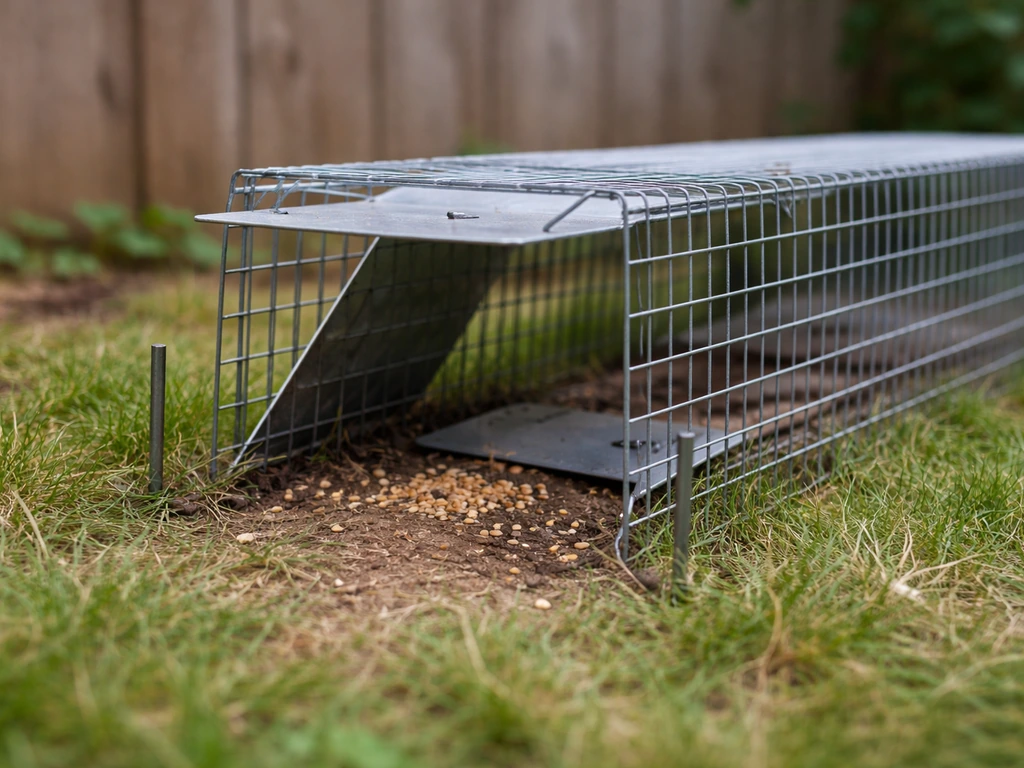
A bird ignoring your trap is one of the most common frustrations, and it is almost always fixable with one or two adjustments.
| Problem | Likely Cause | Fix |
|---|---|---|
| Bird approaches but won't enter | Trigger mechanism is too sensitive or the trap looks unstable | Test the trigger and secure the trap so it does not wobble; try propping the door slightly higher |
| Bird ignores trap completely | Wrong bait for the species, or bait is too close to entrance | Switch to a different seed or grain; scatter a small trail of bait leading up to and inside the trap |
| Bird enters but escapes before trigger fires | Bait placed too near the entrance | Move bait deeper into the back third of the trap so the bird has to fully enter to reach it |
| No bird activity near the trap at all | Trap placed in wrong location or set too late in the day | Move to the spot where the bird was last seen; reset before sunrise the next day |
| Bird visits at the wrong time | Activity peak missed | Birds are most active at dawn; set the trap 30 minutes before sunrise and check within an hour |
| Bird is skittish around new objects | Trap is unfamiliar | Leave the trap unset and unbaited for 24 hours so the bird can investigate it without pressure |
If you are dealing with a pigeon or dove that refuses a cage trap, a funnel trap or drop-net can be more effective, but these require more setup skill and are generally better left to a nuisance wildlife control operator. For birds in tight spaces under a deck or fence, try herding first: use a large piece of cardboard as a gentle barrier to guide the bird toward an open exit rather than forcing it toward a trap.
Legal rules and when you must call a professional
This is the part most homeowners skip, and it can create real legal exposure. The Migratory Bird Treaty Act covers the vast majority of wild bird species in the United States, including virtually all songbirds, raptors, shorebirds, and waterfowl. Under the MBTA, it is unlawful to take, possess, transport, or sell any migratory bird without a federal permit. That means capturing and releasing a robin, a mourning dove, or a red-tailed hawk in your backyard, however well-intentioned, is technically a federal violation unless it falls within narrow exceptions for immediate emergency care.
The two species not protected under the MBTA are the European starling and the house sparrow, both non-native. Rock pigeons (common city pigeons) are also unprotected federally, though some states have additional rules. If you are not certain of the species, do not trap. Use the four identification keys (size and shape, color pattern, behavior, and habitat) to narrow it down, or use a free tool like the Cornell Lab's Merlin app before deciding on an approach.
Call a licensed wildlife professional when:
- The bird is visibly injured, bleeding, or cannot stand or fly after one hour of rest.
- The bird is a raptor, wading bird, waterfowl, or any species you cannot confidently identify as a starling, house sparrow, or rock pigeon.
- The bird is a nestling (no feathers or only pin feathers) rather than a fledgling.
- You are seeing multiple sick or dead birds in the same area (possible disease event, report to your state wildlife agency).
- The problem involves a large flock that has established a roost on or near your building.
- You have attempted capture twice without success and the bird appears stressed.
- Your state requires a permit for live trapping (check with your state fish and wildlife agency before setting any trap).
- The bird has been in contact with a pet or child and a bite or scratch occurred.
When you call a wildlife rehabilitator or nuisance wildlife control operator, tell them the species if known, the bird's condition and behavior, how long it has been there, and whether it has been handled or contained. This helps them prepare the right response before they arrive.
Long-term prevention: exclude, deter, and proof your building seasonally
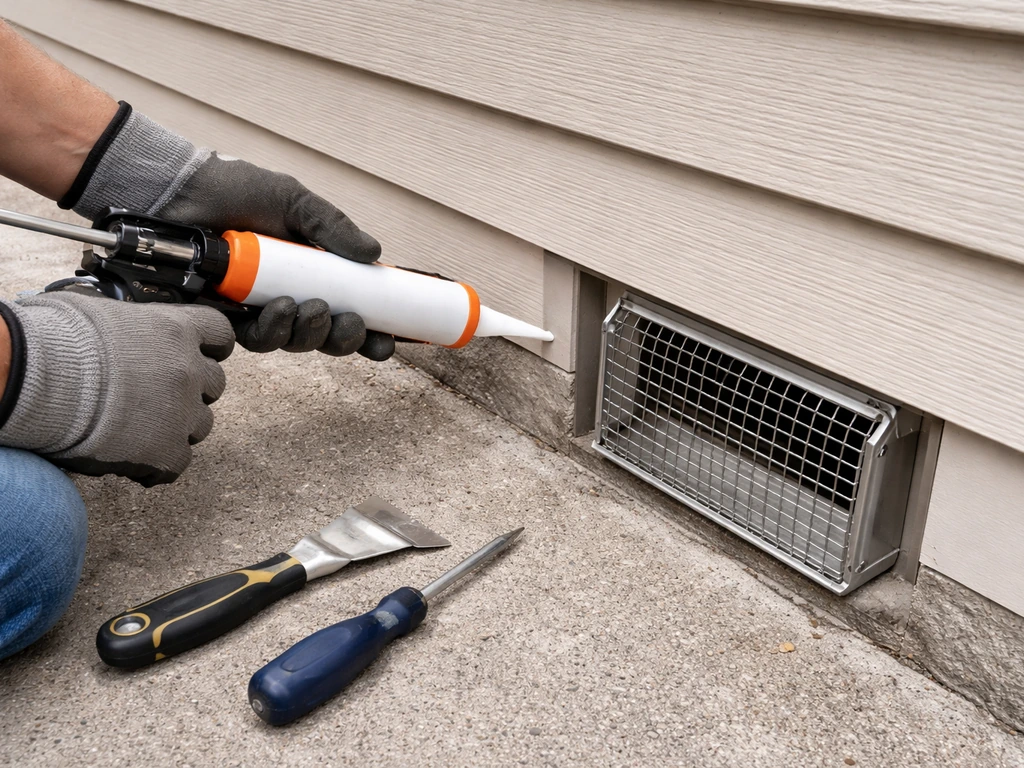
Catching one bird does not stop the next one from showing up. The birds that become repeat problems are almost always responding to something your property is offering: a gap to nest in, a food source, a reflective window they keep flying into, or a sheltered ledge. Removing those attractants is how you end the cycle.
Seal entry points (fall and winter are the best time)
Walk the perimeter of your home and outbuildings and look for any gap larger than about half an inch, including roof-soffit intersections, open vents, gaps around utility penetrations, and deteriorating fascia boards. Use hardware cloth (quarter-inch mesh), foam backer and caulk, or vent covers rated for wildlife exclusion. Do all exclusion work outside of nesting season. In most of the continental United States, active nesting runs from roughly April through August. Sealing an opening with active nests inside is illegal and inhumane. If you find an active nest, wait until the young have fledged, then seal.
Manage food and water attractants
- Move bird feeders and birdbaths either within three feet of windows or more than 30 feet away. The three-foot rule limits injury from window strikes because birds cannot build up fatal speed in that distance.
- Clean feeders weekly to prevent mold and salmonella, especially during spring and summer when bird density is highest.
- Remove standing water sources that are not intentional (saucers under pots, clogged gutters, low spots in gravel) to reduce attractants for nuisance species.
- Secure garbage, pet food, and compost bins so they do not attract ground-feeding birds like starlings and pigeons.
Deter birds from problem surfaces
- Window film, exterior screens, or closely spaced vertical tape strips (two-inch spacing) on glass surfaces to break up reflections that cause window strikes.
- Bird slope or anti-perching strips on ledges, rooflines, and AC units to eliminate flat landing surfaces.
- Reflective tape or predator silhouettes on outbuilding entrances where birds repeatedly enter.
- Motion-activated sprinklers or ultrasonic deterrents in garden areas where ground-feeding birds are a persistent issue.
Seasonal planning calendar
| Season | Key Bird Activity | Recommended Action |
|---|---|---|
| Late winter (Feb-Mar) | Scout birds looking for nesting sites | Inspect and seal all gaps before nesting begins; install vent covers |
| Spring (Apr-Jun) | Peak nesting; migratory arrivals; highest window-strike risk | Do not disturb active nests; add window film; check feeder placement |
| Summer (Jul-Aug) | Fledglings on the ground; continued nesting for some species | Keep pets supervised; hold off on exclusion work until nests are vacated |
| Fall (Sep-Nov) | Migration; flock roost formation begins | Seal entry points after nesting season ends; check rooflines and outbuildings for new gaps |
| Winter (Dec-Jan) | Roosting birds seeking warmth in structures | Maintain sealed entry points; keep garage and shed doors closed when not in use |
If you are dealing with a bird that has already made it inside a structure rather than one in the yard or near an entrance, the tactics shift significantly. If the bird is in your attic, focus on interior herding and exclusion steps rather than outdoor live-capture methods tactics shift significantly. The guides on how to catch a bird in your attic and how to trap a bird in a building go into detail on interior scenarios, including darkness-based herding and exit-funnel methods that work better in enclosed spaces.
<a data-article-id="DDD8E4AC-6458-4540-8450-71BC66605F6B">Glue traps are sometimes marketed for bird control but should never be used outdoors for birds.</a> They cause severe injury, trap non-target animals, and cannot distinguish protected species from nuisance ones. If you ever encounter a bird caught on a glue trap, the priority is immediate and careful removal, which requires a specific process to avoid compounding the injury. If you are dealing with a bird caught on a glue trap, follow the steps in how to get bird off sticky trap before you handle it further glue trap caught bird removal.
The overall approach here comes down to three steps: identify the scenario accurately, use the least-invasive method that safely resolves it, and fix whatever attracted the bird in the first place. Most outdoor bird problems can be resolved in a day with the right setup. The ones that cannot are almost always cases for a licensed professional, and calling one early saves both you and the bird a lot of stress.
FAQ
What if the bird keeps avoiding the live-capture trap and never goes inside?
If the bird won’t enter the cage, stop chasing and reduce the “obviousness” of the trap. Move it a few feet closer to where the bird hangs out, switch to plain bait (for seed or sunflower eaters) or none (if it keeps using the same doorway), and darken the trap sides so the entrance is the only clear route inside.
How often should I check a cage trap, and what’s the safest timing in hot weather?
In warm weather, use shorter checks and a shaded setup. Check every 15 to 30 minutes at the hottest part of the day, keep the cage in full shade, and provide ventilation by not covering the entire trap. If you cannot monitor frequently, do not set the trap.
What should I do if a window-strike bird looks “okay” but is still unsteady?
For window-strike birds you should not relocate right away if they seem dazed for more than a few minutes. If the bird remains upright but uncoordinated, keep it contained briefly in a quiet box at room temperature and contact a rehabilitator. Wait to release until it can stand and orient, otherwise it may fail to recover outdoors.
Is it ever okay to keep a bird overnight in order to release it later?
Her briefly containing a grounded bird is acceptable, but “holding” it for hours without proper conditions is not. Use a ventilated box or towel at the bird’s lowest stress level, keep it in a dark, quiet area, and contact a rehabilitator promptly so the bird is evaluated rather than kept overnight.
Can I use herding instead of a trap when the bird is inside my yard or under a deck?
Yes, but only if you do not injure it and you have a safe, legal reason. In practice, you can gently guide the bird toward an exit using a barrier or lined pathway, especially when it is confused rather than injured. If you suspect injury (blood, inability to stand, limp wing), switch to containment and call a professional.
What counts as a safe release location if laws require release in the same area?
Do not release a trapped bird “nearby” if you cannot ensure the same general safety conditions as the capture site. If the capture was near traffic, predators, or unsafe structures, you may need a different release spot, but regulations vary, so confirm same-area requirements with your state wildlife agency before transporting.
After I relocate or release one bird, how do I stop more from coming back?
If the bird is not nesting, a quick release may still fail because the attractant remains. To prevent repeats, combine capture with exclusion: seal gaps larger than about half an inch, add wildlife-rated vent covers, and remove standing food sources such as spilled seed or unsecured trash. If nesting is active, postpone exclusion until fledging is complete.
What should I do if I cannot confidently identify the bird species before trapping?
Do not handle protected species with bare hands, and avoid any attempt to “relocate” after capturing. If you cannot confidently identify the species, treat it as protected, do not transport, and instead call a wildlife rehabilitator or nuisance wildlife control operator for guidance.
Are there local rules that could still make trapping and relocating “nuisance” birds illegal?
Yes. Even for nuisance species, trapping can be illegal in certain places or seasons, and relocation can be prohibited or restricted by local ordinance. Check local rules, and if you are not sure whether relocation is allowed where you live, use exclusion to solve the attractant problem rather than moving the bird.
What handling mistakes most often cause a bird to get worse after capture?
Wear gloves to reduce direct contact, keep kids and pets away, and avoid actions that cause additional injury such as shaking, flipping, or prolonged restraint. If the bird is bleeding or struggling to breathe, do not attempt to “fix” it yourself. Call a rehabilitator and keep the bird in a dark, quiet, ventilated container while waiting.
What should I do if a non-target animal or unexpected species gets caught in the cage?
If the trap is triggered or a non-target animal is caught, stop any attempts to relocate the animal yourself. Use a cautious, minimal-stress removal approach and contact the appropriate local authority or wildlife professional, since the correct next steps depend on whether it is injured and what species it is.
Next Article
How to Get a Trapped Bird Out of Your House Safely
Humane, step-by-step guide to get a trapped bird out safely, handle injuries, and prevent future entry.