Start with size, shape, and the most obvious color or pattern you can see right now. Those three things alone will narrow a backyard bird down to a handful of candidates in most cases. From there, bill shape, tail length, and behavior will usually clinch it. If you can get a photo, even a blurry one on your phone, apps like Merlin Bird ID or Audubon Bird ID can confirm your ID in under a minute using your location and today's date.
How Do I Identify a Bird in My Backyard Step by Step
Maya Carver
7 May 2026
Quick observation checklist for your yard (first 30–60 seconds)
Birds don't sit still for long, so train yourself to work through this list fast the moment you spot one. You don't need every answer, but the more you can tick off before the bird moves, the less guesswork you'll do later.
- Size: Is it sparrow-sized, robin-sized, crow-sized, or larger? Compare it mentally to a bird you already know.
- Shape: Plump and round (like a dove), slim and upright (like a starling), or long-tailed and sleek?
- Posture: Does it stand horizontally like a thrush, or more upright like a flycatcher?
- Movement: Hopping on the ground, creeping up a trunk, hovering at a feeder, or diving from a fence post?
- Location: In the canopy, mid-shrub, on the lawn, at the feeder, or on a building ledge or roofline?
- Sound: Is it singing, calling in short chips, or silent? Even a rough description helps.
- Flock or solo: Some species almost always travel in groups; others are strongly territorial and solitary.
Run through that list before you reach for your phone. Once you open an app, you tend to stop watching the bird.
Key field marks: what to look at on the bird itself
Field marks are the specific physical details that separate species. Birders lean on a consistent set of them, and once you know what to look for, identification gets much faster. Focus on the bird while it's perched or foraging, not in flight. Movement makes detail harder to catch.
Size and overall silhouette
Get a rough size first: sparrow (about 6 inches), robin (10 inches), crow (17–21 inches). Then note the body silhouette. A chunky, short-tailed bird reads very differently from a long, slim one even at a distance. Silhouette alone rules out dozens of species.
Bill shape and size
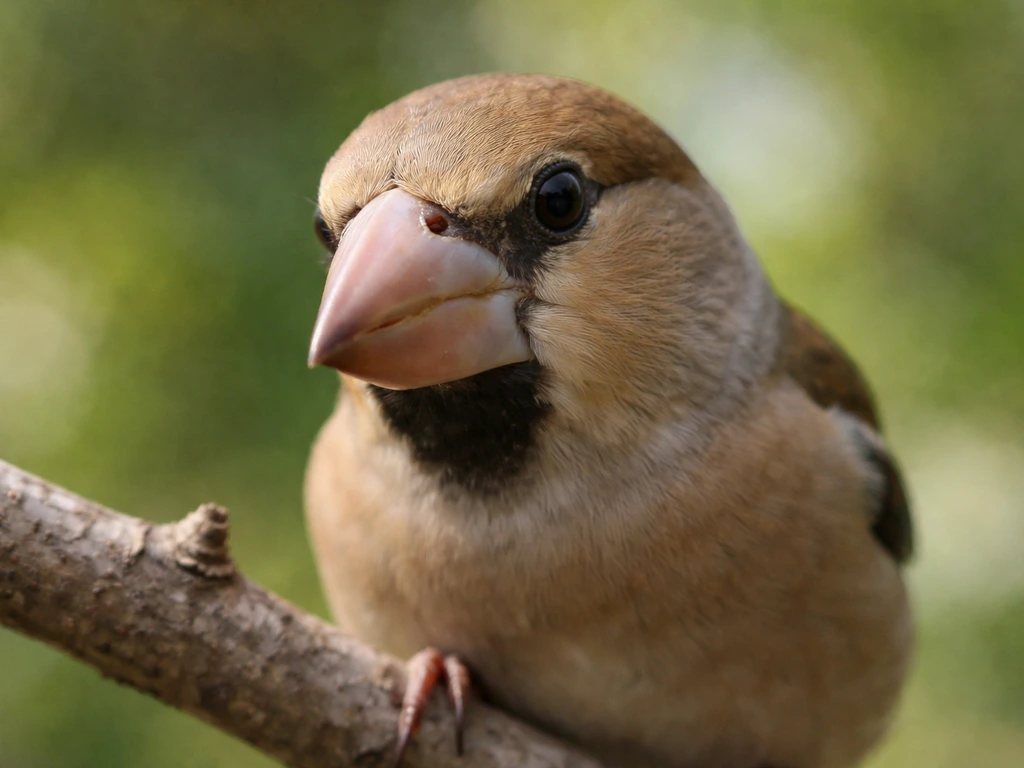
Bill shape is one of the most reliable field marks there is. A thick, conical bill means a seed-eater (finches, sparrows, cardinals). A thin, pointed bill means an insect hunter (warblers, wrens). A curved, downward bill is typical of thrashers or creepers. A hooked tip suggests a raptor or shrike. Long and dagger-like points to kingfishers or herons.
Head pattern
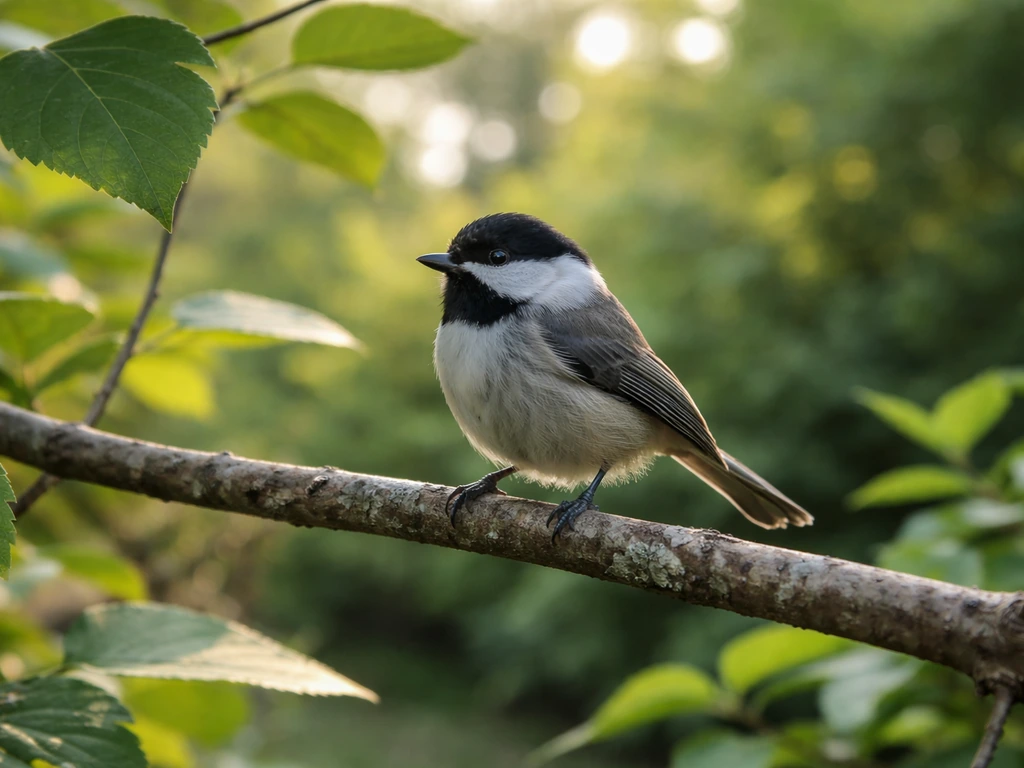
Look for a crest (Northern Cardinal, Blue Jay), a stripe through or over the eye (White-throated Sparrow, Yellow-rumped Warbler), a solid dark cap (Black-capped Chickadee, Dark-eyed Junco), or a plain unmarked head. Head pattern is often the fastest shortcut to the right family of birds.
Wing bars, color patches, and body pattern
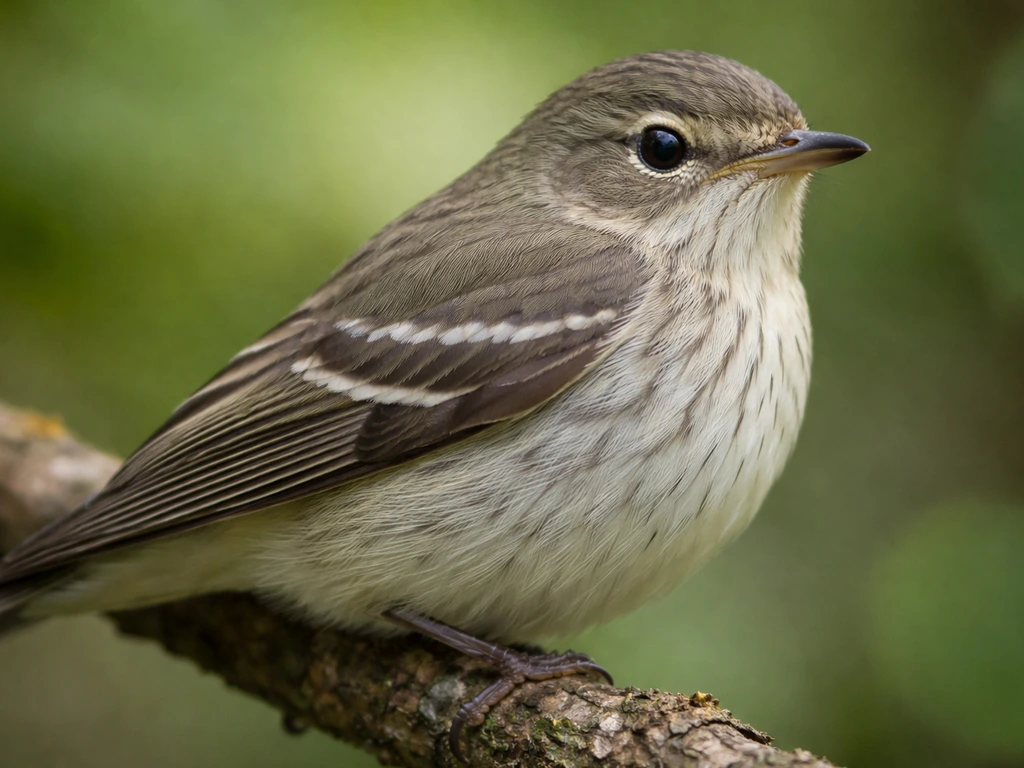
Wing bars are thin pale stripes across the folded wing. Two wing bars versus one versus none significantly narrows your options. Also note: streaking on the breast, a white or yellow rump, a spotted or plain belly, and any bold color patches on the wings or tail. Even a small detail like a yellow eyebrow or a rufous (rusty-red) tail can be decisive.
Tail length and shape
Is the tail short and squared, long and rounded, or notched and forked? Tail shape matters most in flight but is often visible when perched. A mockingbird's long tail, a House Wren's stubby cocked tail, and a Barn Swallow's deeply forked tail are all instant identifiers.
Legs and feet
Leg length and color matter less often than bill or plumage, but they help. Long pink legs on a medium-sized brown bird suggest a thrush. Very short legs and a tiny body that clings to surfaces suggest a swift or swallow. Raptors have powerful taloned feet that are visible even when perched.
Using behavior and habitat to narrow your ID
A bird's behavior tells you almost as much as its feathers. Two birds that look nearly identical can be separated instantly if one creeps down a tree headfirst and the other only goes up. Pay attention to what the bird is doing, not just what it looks like.
- Feeder preference: Sunflower seeds attract cardinals, finches, and chickadees. Nyjer (thistle) draws goldfinches and siskins. Suet brings woodpeckers, nuthatches, and wrens. Ground feeders (millet, cracked corn) attract sparrows, doves, and juncos.
- Foraging style: Robins run-stop-run on open lawns. Woodpeckers hammer bark in a spiral pattern up trunks. Towhees scratch noisily in leaf litter with both feet. Flycatchers dart out from a perch, grab an insect, and return.
- Time of day: Owls and nighthawks are active at dusk and dawn. Most songbirds peak in the first two hours after sunrise. Raptors often don't start soaring until mid-morning thermals develop.
- Structural location: A bird roosting or nesting under your eaves, on a ledge, or inside a vent is most likely a House Sparrow, European Starling, or Rock Pigeon in most of North America and Europe. These non-native species are responsible for the majority of building-related bird conflicts.
- Nesting signs: Nest material being carried (twigs, grass, moss, string) is a clear signal of active breeding nearby. Note where the bird disappears to.
- Seasonal context: It's early May 2026 right now, which means spring migration is in full swing across much of North America. You may see warblers, tanagers, or orioles that are just passing through, not residents.
Common backyard birds vs. their confusing look-alikes
Misidentification almost always happens because two birds share one or two obvious features (color, size) while differing in more subtle ones. This table covers the most common mix-ups at North American backyard feeders and buildings.
| Bird | Common look-alike | How to tell them apart |
|---|---|---|
| House Sparrow (male) | Song Sparrow | House Sparrow has a gray crown and black bib. Song Sparrow has heavy breast streaking with a central spot and a striped brown crown. |
| European Starling (non-breeding) | Brown-headed Cowbird (female) | Starling has a long pointed yellow bill and iridescent plumage with white spots in winter. Cowbird is plain brown with a shorter, conical finch-like bill. |
| Rock Pigeon | Eurasian Collared-Dove or Mourning Dove | Pigeon is stocky with a rounded tail and iridescent neck. Mourning Dove is slender with a long pointed tail. Collared-Dove has a distinct black collar on the back of the neck. |
| House Finch (male) | Purple Finch (male) | House Finch has red concentrated on the head and breast with streaked flanks. Purple Finch is more raspberry-red overall with an unstreaked belly. |
| American Robin | Varied Thrush (western US) | Robin has a plain orange-red breast. Varied Thrush has an orange breast plus a dark band across the chest and orange wing bars. |
| Downy Woodpecker | Hairy Woodpecker | Downy is sparrow-sized with a small stubby bill. Hairy is robin-sized with a bill as long as its head is wide. Both have black-and-white plumage. |
| Cooper's Hawk | Sharp-shinned Hawk | Cooper's is crow-sized with a rounded tail. Sharp-shinned is smaller (jay-sized) with a squared or slightly notched tail. Both hunt songbirds at feeders. |
If you're seeing a bird at or on your building rather than just in the garden, the most likely candidates in most regions are Rock Pigeon, European Starling, and House Sparrow. All three are non-native in North America and are not protected under the Migratory Bird Treaty Act (MBTA), which matters when you get to the management step below.
How to document the bird and use ID tools to confirm
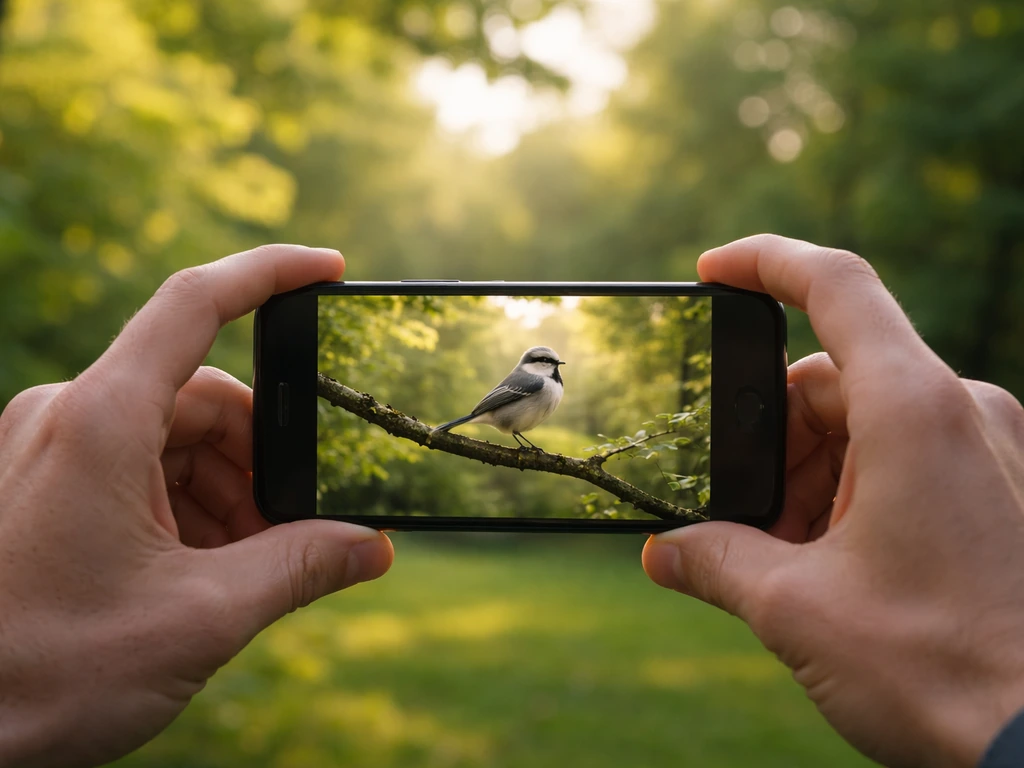
Getting a useful photo
You don't need a telephoto lens. A phone photo is enough if you follow a few simple rules. Shoot with the sun behind you so the bird is lit from the front. Get as close as the bird allows without flushing it. Try to capture: the full body from the side, the head (face and bill) clearly, the tail, and if possible the bird from behind to show wing and rump patterns. Multiple angles beat one perfect shot. Even a blurry photo with the right color and shape will work in a photo-ID app.
What to write down
Jot a few notes while the observation is fresh. You want: date, time, your exact address or location, size and shape impression, colors and patterns you noticed, what the bird was doing, and the habitat (open lawn, dense shrubs, building ledge, tree canopy). This information also feeds directly into ID apps and is exactly what a wildlife professional will ask if you need to escalate.
Using Merlin Bird ID
Merlin (from Cornell Lab of Ornithology) is the fastest photo-based tool available right now. Open the app, tap Photo ID, and upload your photo. Merlin works offline and will display a shortlist of the most likely species matches. It uses your location and today's date to prioritize local species, but it can still suggest IDs even if you skip that step. The Sound ID feature, which listens to birdsong through your phone's microphone, is genuinely excellent and often confirms an ID faster than looking at a photo. Cornell Lab says Merlin Sound ID is trained on very large amounts of bird-sound data, including 750,000 recordings Sound ID feature.
Using Audubon Bird ID
The Audubon Society's Bird ID app takes a different approach: you enter characteristics manually (size, color, activity, habitat, voice, wing shape, tail shape) and it filters the species list. It also uses your location and the current date to prioritize what's likely in your area. This approach is more deliberate and works well if you didn't get a photo but took good notes.
Other resources worth knowing
- eBird (Cornell Lab): Log your sighting and see what other birders have reported in your exact area this week. Extremely useful for confirming whether a species is expected locally right now.
- iNaturalist: Upload photos and get AI-suggested IDs confirmed by a community of naturalists. Good for unusual or hard-to-place birds.
- Local Audubon chapter or birding club: Post your photo in a local Facebook group or on the chapter's website. Local birders know the regional variants and rarities better than any app.
- All About Birds (allaboutbirds.org): Full species accounts with range maps, behavior notes, sounds, and seasonal presence. Use it to confirm after you have a candidate species.
Once you've identified the bird: humane next steps and when to escalate
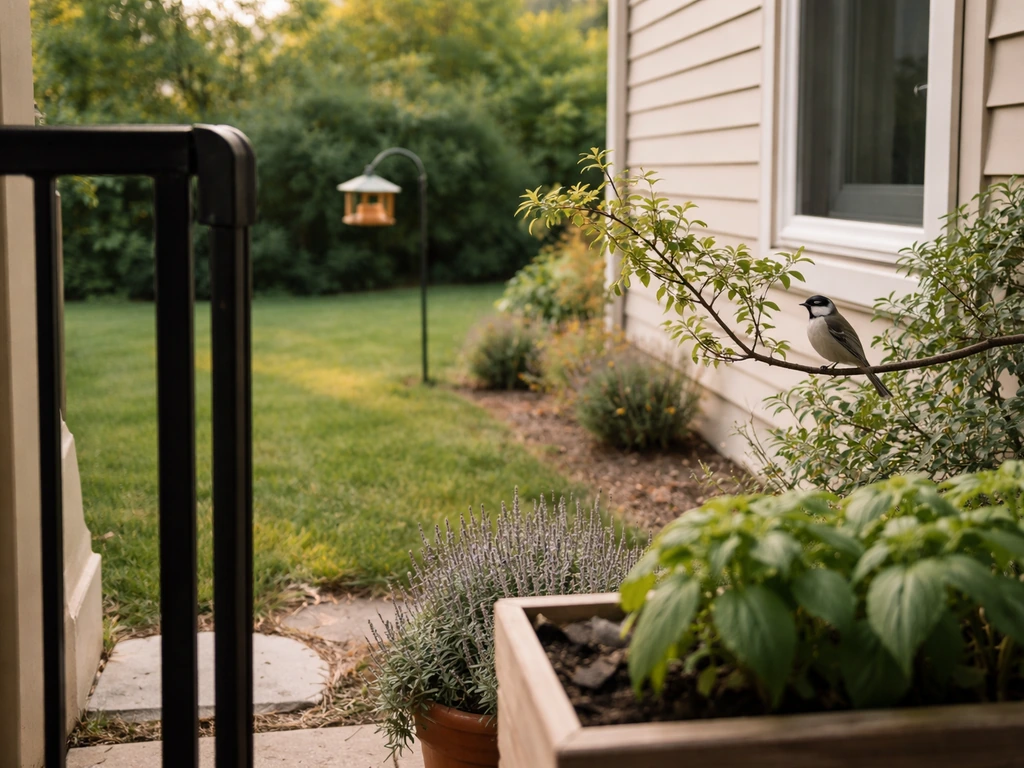
Identification is the starting point, not the end point, especially if the bird is near or inside a structure. What you do next depends on the species, whether it's protected, and whether it poses any active risk to your property or to itself.
If the bird is just visiting your yard
No action is needed beyond enjoying the sighting. If you want to encourage or discourage visits from that species, now that you know what it is, you can adjust feeders, feeder placement, or landscaping accordingly. If you’re dealing with a bird that keeps coming indoors or won't leave outside, you can use safe methods for how to trap a bird outside. Removing a feeder type, switching seed, or adding a baffle to a pole are all low-effort deterrents that don't harm birds.
If the bird is nesting on or in your building
Stop and check the species before doing anything. This is the most important legal and safety note in this entire guide. If you're dealing with how to trap a bird in a building, treat it as a last resort and follow the humane, legal guidance in this section instead. If a bird is stuck on a glue trap, you should treat it as an emergency and get help that focuses on humane removal and safety how to get a bird off a glue trap. Most wild birds in the United States, Canada, and the UK are blank" rel="noopener noreferrer">protected by federal law (in the US, the Migratory Bird Treaty Act). Disturbing an active nest, removing eggs, or killing a protected bird without a permit is a federal offense. European Starlings, House Sparrows, and Rock Pigeons are the main exceptions in North America and are not protected. If you have identified a protected species nesting in your eaves, vent, or attic, your options during active breeding are very limited: wait until the young fledge (typically 2–6 weeks depending on species), then seal the entry point immediately after. If the bird is trapped in your attic, approach from the safest side, let it exit on its own, and then seal entry points after it’s gone.
Quick-response steps if there's an active nuisance or safety concern
- Identify the species and confirm whether it is protected (check the MBTA species list or your regional wildlife authority website).
- If non-protected (Starling, House Sparrow, Pigeon): you can act immediately. Remove nesting material before it's established, install physical exclusion (bird spikes, netting, wire mesh over openings), and clean up droppings using gloves and an N95 mask (dried bird droppings carry Histoplasma and Cryptococcus).
- If protected: do not disturb the active nest. Document the entry point, note any structural damage, and plan exclusion work for after fledging.
- If a bird is inside a building (attic, warehouse, retail space): open one exit point and darken the rest of the space to guide the bird toward light. Do not chase or corner it. For birds trapped inside, the trapping and removal steps depend on species and situation.
Long-term prevention and proofing
Once the immediate situation is resolved, identification tells you exactly what proofing measures to prioritize. Pigeons need ledge spikes or anti-roosting wire. Starlings and sparrows nest inside vents and gaps, so mesh vent covers and gap sealing are the fix. Woodpeckers drilling into siding require a different approach entirely (visual deterrents, sound devices, or surface hardening). The species dictates the solution.
When to call a wildlife professional
Call a licensed wildlife control operator or your regional wildlife agency if: you cannot identify the species and suspect it may be a bird of prey or other protected species; the bird or its nest is in a location that creates a fall or access risk (roof edge, high-rise ledge, active HVAC unit); there is a large colony roosting situation involving dozens or hundreds of birds; you have a sick or injured bird that may need a licensed wildlife rehabilitator; or you are a facility manager with a liability concern around bird droppings near food handling or public areas. When you call, have your notes and photos ready: species (or your best guess), location on the property, how long it has been present, and any active nesting or breeding signs you observed. That information cuts the assessment time in half.
Identification is genuinely the most valuable thing you can do before anything else. If you find a bird stuck on a sticky trap, focus first on safe removal and cleaning before you decide what to do next how to get bird off sticky trap. It determines what's legal, what's practical, and how urgently you need to act. Take 60 seconds to observe properly, snap a photo, run it through Merlin, and you'll have a confident answer and a clear path forward.
FAQ
What if the bird won’t perch, and all I can see is it flying past?
Prioritize features that show in motion, like wing shape (broad vs narrow), tail shape (long and rounded vs short and squared), and flight style (gliding vs flapping, direct vs wavering). Take a short video rather than a single still, then use an ID app with the clearest frame. If you truly cannot get bill or head marks, rely more on silhouette and behavior, and be ready to accept a “likely species” rather than a certainty.
How do I tell a similar species pair when the color and size look the same?
Use field marks that are usually overlooked, like the wing bar count (two, one, or none), the exact eyebrow shape (thick stripe vs thin line, color and extent), and the rump color. Also compare posture, for example whether it bobs like a chickadee, creeps like a nuthatch, or probes like a wren. If two species share most plumage, the head pattern and behavior often resolve it.
Does “bird behavior” mean what it is doing in the feeder, or in general?
Use both, but start with what it is doing right now (foraging method, climbing orientation, how it searches). For example, a bird that moves headfirst down a tree trunk is telling you something different than one that hops on the ground. Then note general context, like whether it is in shrubs, near water, or high canopy, since that habitat preference narrows the search.
What notes should I write down if I can’t take a photo?
Write down at least five things while the bird is fresh: (1) estimated size compared to something nearby (squirrel, sparrow, robin), (2) key colors (especially head and throat), (3) any stripe or patch location (over eye, nape, wings, rump), (4) bill shape description (thick conical, thin pointed, hooked), and (5) activity and exact location (ground, feeder, under eaves, fence top, shrub interior). Even without a photo, good notes work well with manual-criteria ID tools.
I used Merlin or another app, but it gives multiple possible species. How do I choose the right one?
Cross-check the top candidates against the field marks you observed, especially bill shape, wing bars, tail pattern, and head markings. If the app assumes a likely match based on location and date, still verify those visual details. If your photo is blurry, look for one crisp confirmable element (like eyebrow color or wing bar count) and compare it to each candidate’s expected field marks.
When should I use Sound ID instead of photo ID?
Use Sound ID first when the bird is calling and you cannot see the bill clearly, or when multiple species look similar visually. If you can, record a short period of calls from close range, then compare results with the time of day and your habitat (open lawn vs dense trees). Weather and distance can affect audio quality, so prefer moments with clear, repeated calls.
How close should I get for a useful phone photo without causing the bird to flush?
Get as close as you can while keeping the bird calm, then shoot from the first stable position you can hold. If the bird hops away or changes posture abruptly, you are too close. Use zoom rather than stepping closer, and capture several angles quickly, side profile first, then tail and head if available.
Are wing bars always visible, and what if I can’t see them?
Wing bars are clearest when the bird is perched and the wings are folded, but they can be hidden if the bird is turning or the lighting is harsh. If you cannot see them, don’t force it, switch to other reliable marks like head pattern, rump color, breast streaking, and tail shape. Also note whether the bird is in molt or has worn feathers, since that can blur contrast.
How can I avoid misidentifying birds because of lighting or distance?
Sun angle matters, aim for even front lighting when possible, and compare colors under similar light for repeat visits. Distance also affects perceived size and head detail, so treat estimates as rough and focus on structural traits (silhouette, bill and tail shapes). If the bird is very far, capture a video to pull out sharper frames later instead of relying on one distant snapshot.
What if the bird is on my building, should I assume it’s not native or not protected?
Don’t assume that. The article’s non-native exceptions apply to common backyard invaders in North America, but many native birds also nest or perch on buildings. The safest approach is to identify first, then treat any uncertain species as potentially protected until confirmed, especially during nesting season.
At what point should I stop trying to ID and call a pro?
If you have no confidence after using notes and a reliable app, or if there are safety and access concerns (roof edge, high ledges, HVAC units, or a bird in an unsafe location), contact a wildlife professional. Also call promptly for injured or sick birds, or if you suspect a raptor. Bring your notes, photos, and how long it has been present so they can assess urgency.
If I identify a protected species, what’s the first practical next step?
Confirm whether there are active nesting signs (carrying food, frequent traffic to a cavity, visible nestlings, or persistent presence at an entry point). If it is active, avoid sealing or removing access points immediately. Instead, plan timing around fledging and coordinate with local wildlife authorities if you are unsure, since the “when” determines what actions are permitted.