Stop what you are doing and treat this as an emergency. A bird stuck on a glue trap can die from stress, dehydration, or self-inflicted injuries within hours. The safest immediate move is to put on thick gloves, gently cover the bird with a towel to calm it, and stop it from struggling further while you gather your supplies.
How to Get a Bird Off a Glue Trap: Safe Steps Now
Maya Carver
27 Apr 2026
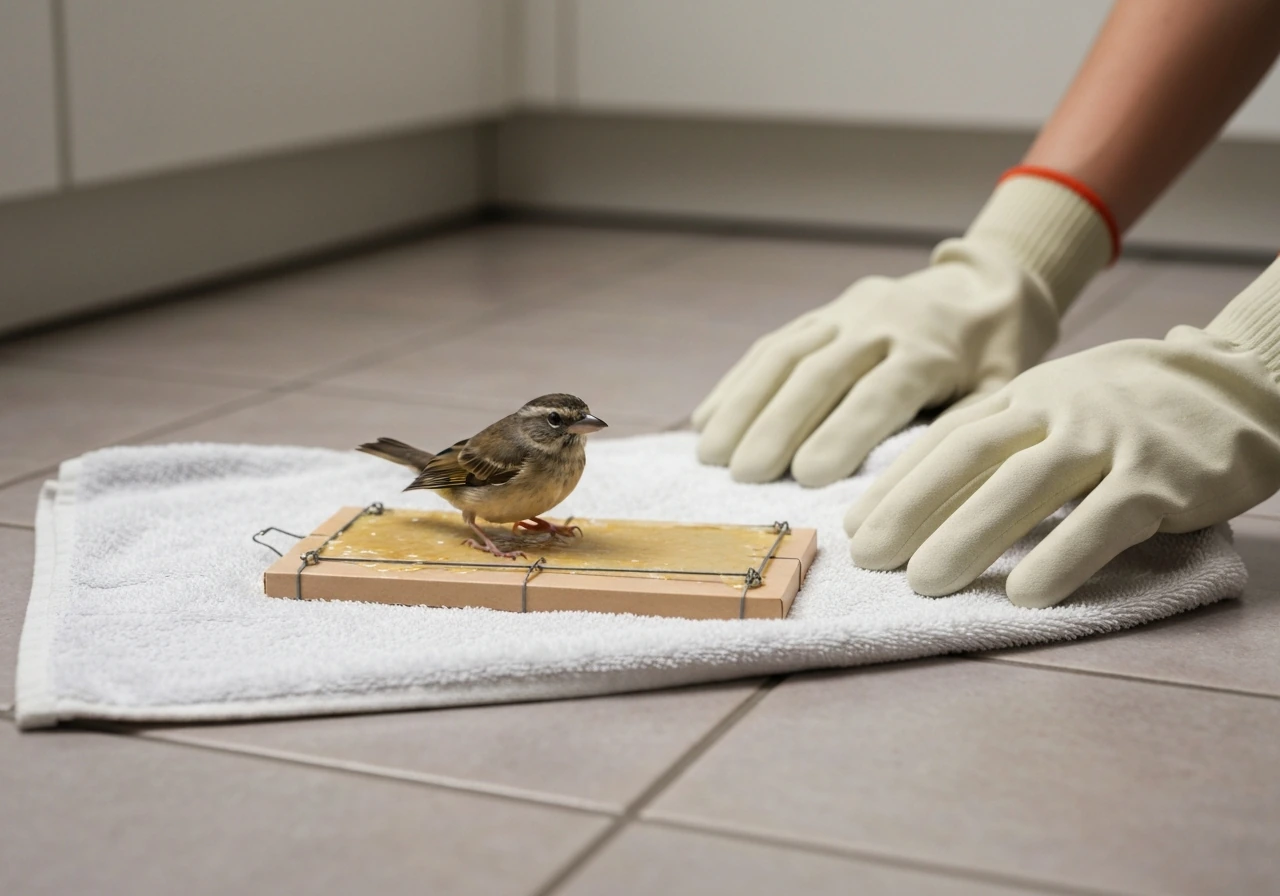
If the bird is a protected species, badly injured, or you are unsure of what you are doing at any point, box it up (trap and all) and call a local wildlife rehabilitator right now rather than attempting full removal yourself. If you find an animal trapped on a glue board, the MSPCA-Angell advises bringing it to the nearest licensed wildlife rehabilitator rather than trying to remove it yourself bring it to the nearest licensed wildlife rehabilitator.
Immediate safety and triage before you touch the bird
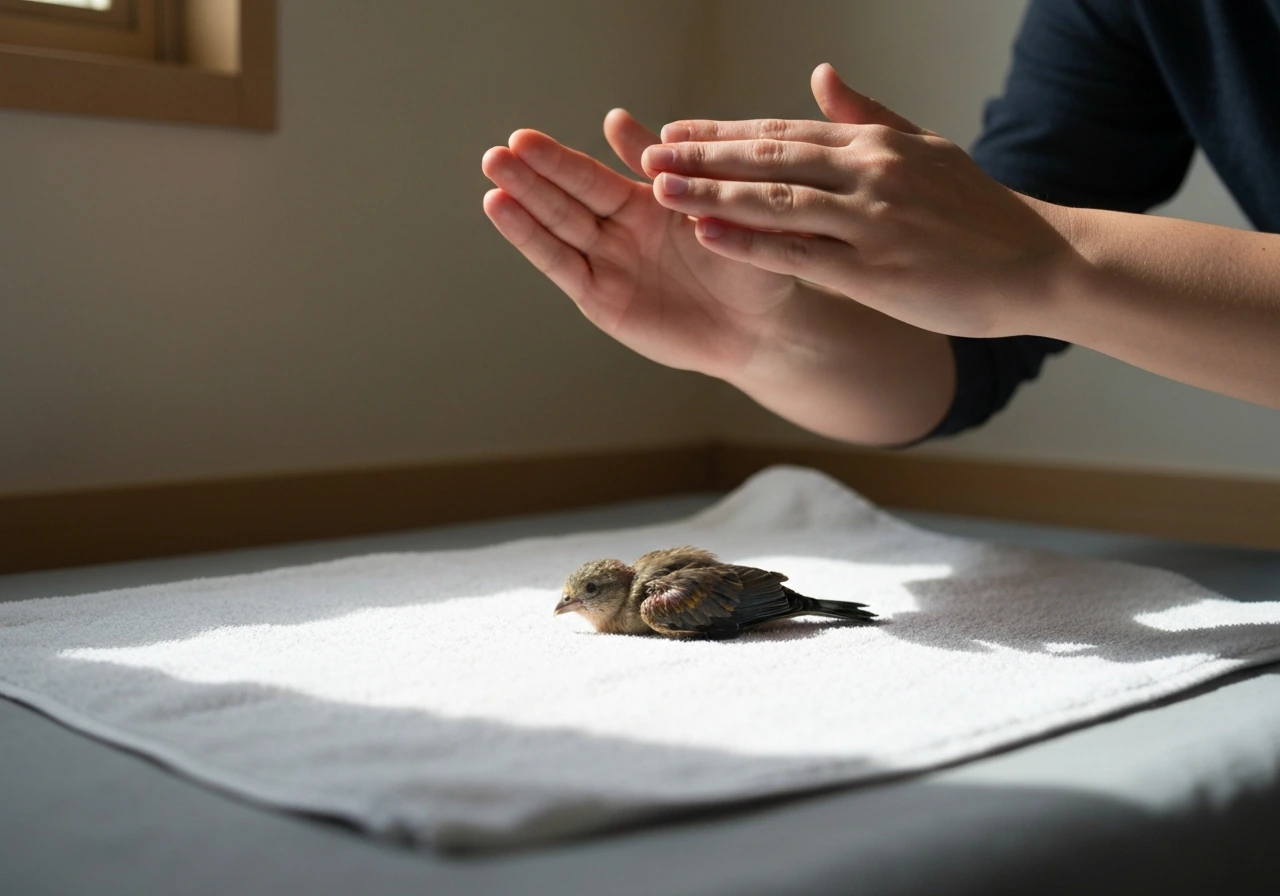
Your first job is to slow the situation down. A panicking bird will thrash, pull out feathers, break bones, and exhaust itself fast. Before you touch anything, take thirty seconds to assess what you are dealing with.
- Is the bird conscious and responsive? If it is limp, eyes closed, or unresponsive, it is likely in shock. Do not attempt full oil removal yet. Box it and call wildlife rescue.
- Is it bleeding actively? A small amount of blood from a pulled feather is common. Visible wounds, broken wing angles, or a leg hanging at an odd angle are signs you need professional help urgently.
- How much of the bird is stuck? A single foot trapped is very different from a bird with both wings, the breast, and head pressed into the board. Partial contact is manageable at home. Full-body contact warrants a professional.
- Can you identify the species? Many songbirds, raptors, and waterbirds are federally protected in the US under the Migratory Bird Treaty Act. Handling protected birds without authorization is technically illegal, though a genuine rescue situation is generally treated differently. Either way, a wildlife rehabilitator should be your end destination.
- Protect yourself: put on thick gloves before touching the bird or the trap. Even small birds bite and scratch hard when frightened, and glue-trap adhesive is extremely difficult to remove from skin and clothing.
Once you have done your triage, drape a light towel over the bird (leave its beak and nostrils clear). Darkness calms birds almost instantly and greatly reduces struggling. Keep children and pets out of the area. Now you are ready to work.
Supplies to have on hand and what to avoid
Gather everything before you start the removal process. Stopping mid-removal to hunt for supplies causes the bird to struggle and re-stick. Here is exactly what you need and what to keep away from the bird.
What to get
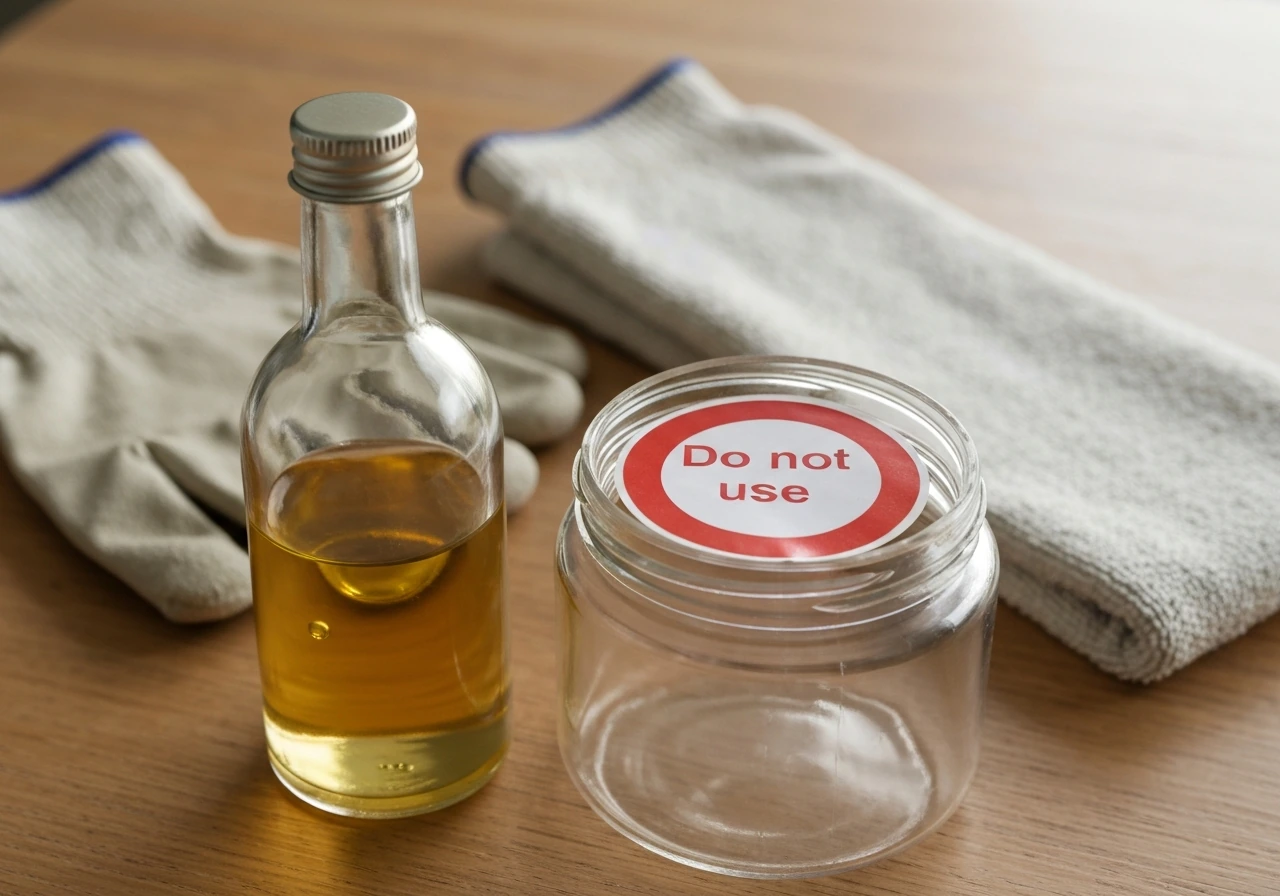
- Thick protective gloves (leather or heavy rubber work gloves)
- A soft towel or cloth to drape over the bird and to grip the trap
- Cooking oil: rapeseed (canola), vegetable, or sunflower oil. Baby oil also works well. Warm it slightly so it is body temperature, not hot.
- Cotton swabs or a soft paintbrush for applying oil to small or delicate contact points
- A cardboard box with ventilation holes punched in the sides (at least a dozen small holes). It should be just large enough for the bird to stand upright but small enough that it cannot thrash around.
- A light sheet or second towel to drape over the box
- Paper towels or rags for cleanup
- Dish soap (a small squirt of Dawn or similar mild dish soap) for the post-removal oil cleanup stage
- Contact number for your nearest wildlife rehabilitator or vet, pulled up and ready on your phone
What to avoid
- WD-40, acetone, nail polish remover, paint thinner, or any solvent. These will strip the natural oils from feathers and skin and are toxic if ingested during preening.
- Water on its own. Water does not dissolve glue-trap adhesive and can chill the bird rapidly.
- Pulling or peeling the trap away without first using oil. This causes lacerations, broken feathers, and fractures.
- Scissors. Cutting feathers or skin in an attempt to free the bird quickly almost always causes more harm.
- Wearing thin latex gloves or no gloves at all. Glue-trap adhesive is extremely sticky and you risk the bird becoming re-stuck to you.
Step-by-step: how to remove the bird from the glue trap
These steps are for removing a live bird from a glue trap while it is still attached to the board. If you are trying to remove a bird safely, focus on humane alternatives and avoid actions that trap a bird outside. If you are not sure what species it is, use this guide on how do i identify a bird in my backyard before you decide on next steps.
If you still need a clear sequence for how to get bird off sticky trap, follow the step-by-step guidance in this section carefully. Work slowly, pause if the bird struggles hard, and re-drape the towel to calm it before continuing. Have a second person help if possible, one to hold the trap steady and one to apply oil and work the bird free.
In a r/snakes Reddit discussion about a snake stuck on a glue trap, people also swap practical rescue ideas and use oil-like products to help free the animal from the adhesive apply oil and work the bird free.
- Put your gloves on. Drape the towel over the bird, leaving its beak clear. This calms it and gives you something to grip.
- Place the glue trap (with the bird still on it) on a flat, stable surface at a comfortable working height. Do not hold it in the air while working.
- Warm your oil to roughly body temperature by placing the container in warm water for a couple of minutes. It should feel slightly warm, not hot, on the inside of your wrist.
- Using a cotton swab, soft brush, or your gloved fingertip, apply a generous amount of oil directly to each contact point where the bird's body touches the glue. Work around the edges of each stuck area, not from the center outward.
- Let the oil soak in for one to two minutes. You will see the glue begin to change color slightly and the feathers or skin start to loosen.
- With your non-dominant hand, hold the trap flat and still. With your dominant hand, use gentle, slow rolling pressure to ease the bird's body away from the adhesive. Never pull straight up. Use a rocking, rolling motion parallel to the trap surface.
- If a limb or wing is stuck, work that area specifically with more oil before attempting to move it. Free the legs first if possible so the bird can stand and stop pressing its body weight down onto the glue.
- Reapply oil as many times as needed. Patience here prevents broken bones and torn skin. A partial removal where you stop and re-oil is always better than one fast, forceful pull.
- Once the bird is free of the board, keep it wrapped loosely in the towel. Do not release it outdoors yet. Even if it looks fine, it needs assessment. Move immediately to the aftercare steps below.
Step-by-step: how to remove the glue from the bird after it is free
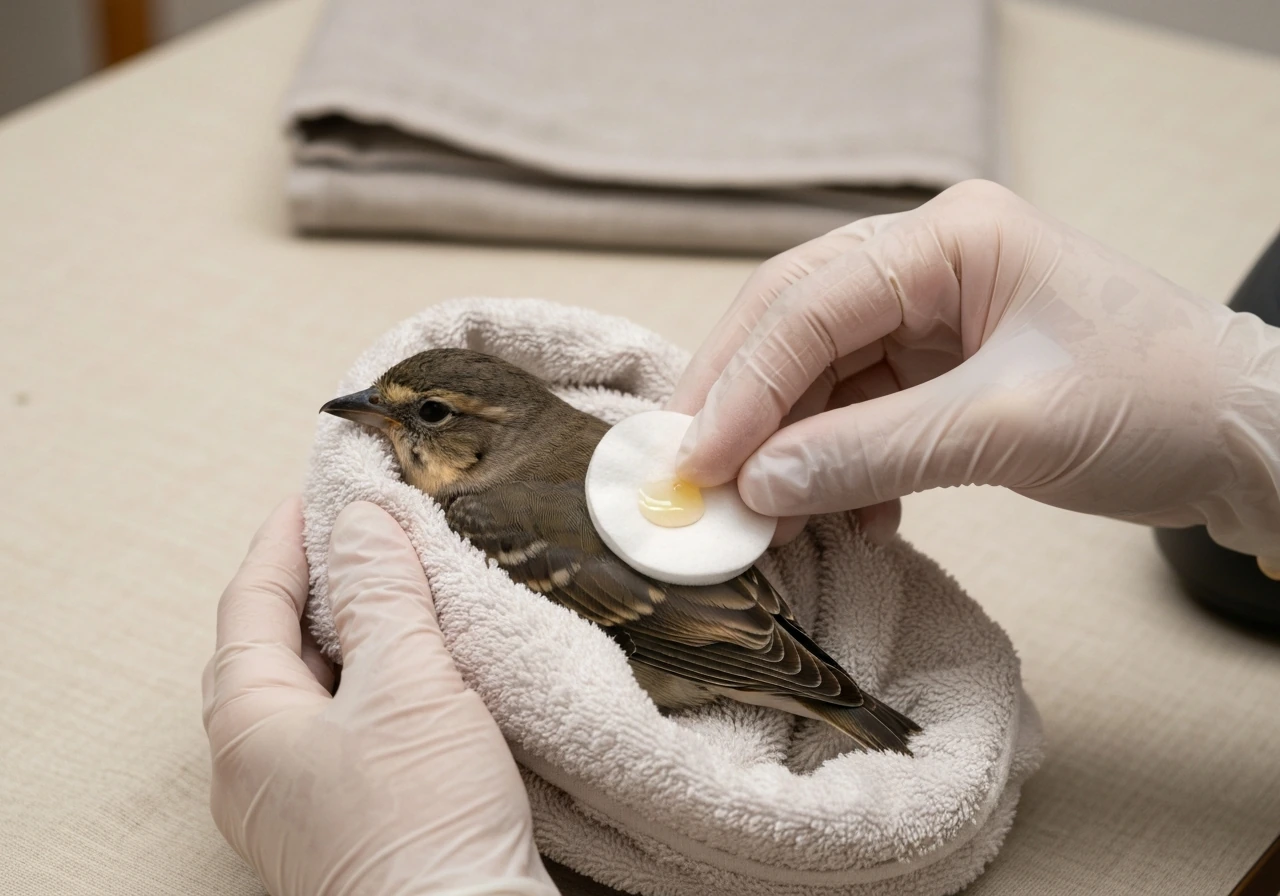
Getting the bird off the trap is only half the job. Oil-saturated feathers lose their insulating and waterproofing properties, and sticky glue residue left on the bird will cause it to re-tangle or pull out more feathers during preening. This stage should ideally be handled by a wildlife rehabilitator, but if you cannot get to one quickly, here is the field approach.
- Keep the bird loosely wrapped in the towel. Work on one stuck area at a time.
- Apply a small additional amount of warm oil to any remaining glue patches on the feathers or skin. Use a cotton swab and work gently. Do not saturate the entire bird in oil.
- After the glue residue has softened (one to two minutes), use a second dry cotton swab or soft cloth to gently wipe the dissolved glue away. Work with the direction of the feathers, not against them.
- Once the glue is removed from that area, apply one tiny drop of mild dish soap (like Dawn) directly to the oiled area and gently work it in with your fingertip to begin removing the oil from the feather shafts. Do not rinse with water at this stage if the bird is showing any signs of cold or shock.
- Do not attempt a full bath or rinse unless you are in a warm environment, you have a heat lamp or warm towel immediately available, and the bird is stable and alert. A chilled wet bird can die very quickly.
- The thorough oil and glue removal, including any full wash, should happen at a wildlife rehabilitation facility. Box the bird and get moving. The facility will have incubators, proper drying equipment, and experienced hands.
- If you used cornstarch or chinchilla dust (a dry approach sometimes used by wildlife handlers for light adhesive contact), gently brush it away with a soft natural-bristle brush before boxing the bird.
Handling injuries, shock, and aftercare
Even a bird that looks physically intact after removal may be in serious trouble. Stress alone can kill a small bird. Dehydration, exhaustion, and shock are the immediate risks. A real-world case documented by Cornell showed that a bird removed from a glue trap suffered a leg injury and lost most of its primary flight feathers during the entanglement, even though it had survived the initial ordeal. That kind of hidden damage is common.
Signs of shock
- Sitting very still with feathers fluffed up
- Eyes partially closed or half-open
- Rapid shallow breathing or open-mouth breathing
- Cold to the touch, especially feet and legs
- No attempt to flee or escape when handled
If the bird shows any of these signs, place it in the ventilated cardboard box, drape a towel over the box, and put it somewhere warm, dark, and completely quiet. A bathroom with the door closed works well. A temperature of around 85 to 90 degrees Fahrenheit is ideal for a small shocked bird. A heating pad on its lowest setting placed under half the box (so the bird can move off the heat if needed) is a reasonable improvised incubator. Do not offer food or water directly. Aspirating water into the lungs is a serious risk with a disoriented bird.
When to stop DIY and call wildlife rescue right now
- The bird is limp, unresponsive, or unconscious
- There is active bleeding that does not slow within a minute or two
- A wing or leg is visibly broken or hanging at an abnormal angle
- More than half the bird's body surface was stuck to the trap
- The bird is a raptor, owl, waterfowl, or any species you cannot identify as a common house sparrow or starling
- You have done the oil removal and the bird still cannot stand or hold its head up
- More than one hour has passed since the bird was found stuck
- You feel at any point that you are out of your depth
To find a wildlife rehabilitator near you in the US, call the National Wildlife Rehabilitators Association hotline or search the NWRA or IWRC directories online. Your state wildlife agency can also direct you. In the UK, contact the RSPCA. When you call, tell them: the species if known, how long it was stuck, which body parts were involved, whether oil was applied, and the bird's current behavior. That information helps them triage over the phone.
Cleanup, trap disposal, and preventing re-entanglement
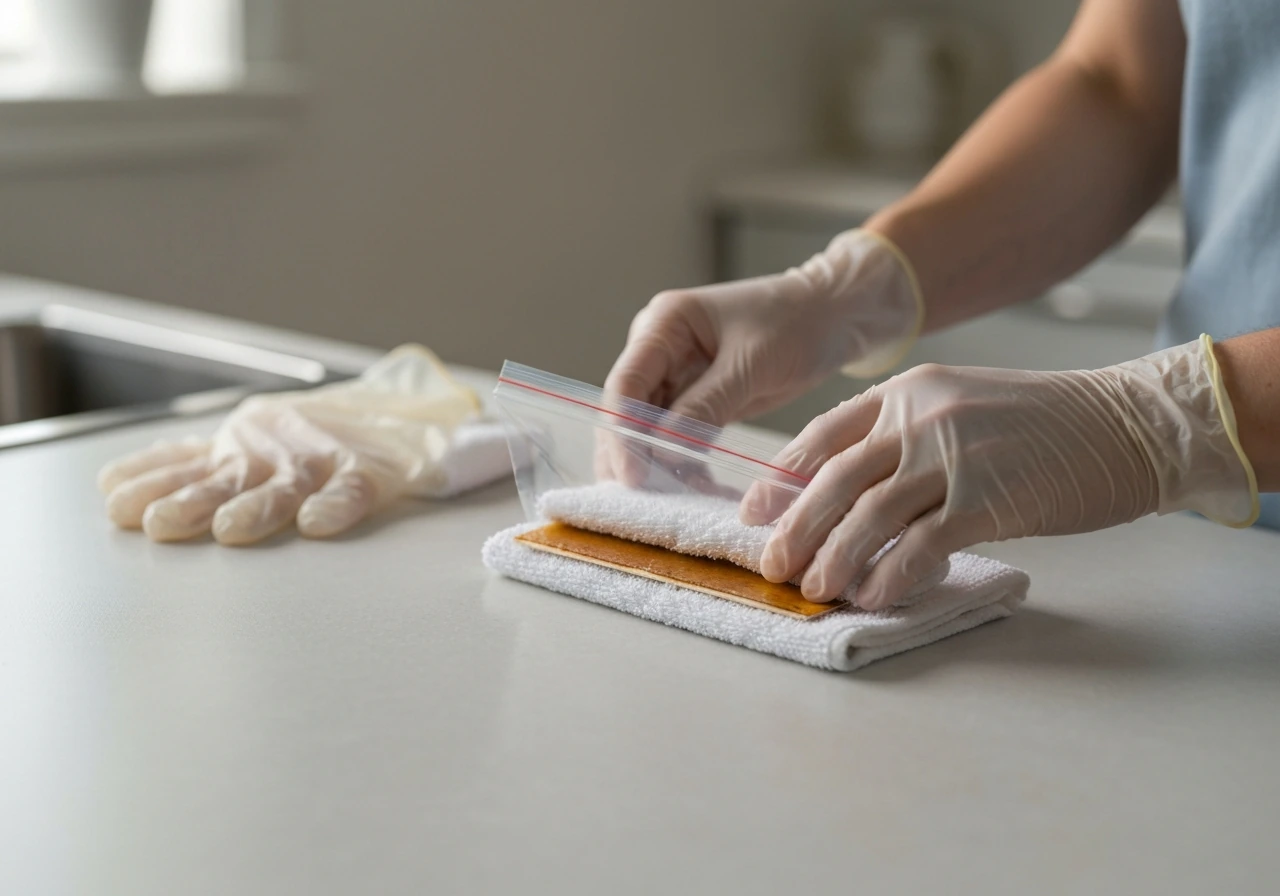
After the bird is safe, deal with the trap and the area immediately so no other animal gets stuck.
- Fold the used glue trap sticky-side-in using the towel or a paper bag. Do not handle it with bare hands. Seal it in a plastic bag before putting it in the trash.
- Dispose of any oil-soaked rags or cotton swabs in a sealed bag as well.
- Wash your gloves, any tools used, and the work surface with warm soapy water. Glue-trap adhesive spreads easily and can trap insects, feathers, or small animals if left on surfaces.
- Wash your hands thoroughly even if you wore gloves.
- If there are more traps in the area, remove them all. A bird that escapes one trap may blunder into another. If you are a facility manager and the traps are part of a pest control contract, flag this incident and request that glue traps be replaced with enclosed snap traps or live-capture alternatives in areas where birds have access.
Glue traps are non-selective. They catch whatever walks, hops, or flies into them, including songbirds, bats, lizards, and beneficial insects. In England, the Glue Traps (Offences) Act 2022 came into force in July 2024 and made it a criminal offence for unlicensed individuals to set glue traps in a way that risks catching non-target animals. Even in jurisdictions without specific legislation, any bird caught on a trap you set is your legal and ethical responsibility under general animal welfare frameworks.
Long-term bird-proofing for buildings
If a bird ended up on a glue trap, something brought it indoors or into close proximity to the trap in the first place. Fixing that root cause is how you prevent the next emergency. If you are dealing with a bird that keeps getting inside, this will help you compare safer options for how to trap a bird in a building without repeating the same mistake.
After you’ve removed the bird safely, you should avoid setting new glue traps and focus on humane ways to keep birds out so you do not need to trap a bird outside again. If you need help deciding what to do next in a similar situation, see our guide on how to catch a bird in your attic.
Find and seal the entry points
Walk the building perimeter and roof line at least once a year, ideally in late winter before nesting season begins. Look for gaps around HVAC vents, roof soffits, broken fascia boards, gaps where utility lines enter the building, and damaged roof tiles. A bird can enter through a gap as small as 1.5 inches. Seal openings with galvanized wire mesh (half-inch hardware cloth is ideal), metal flashing, or foam backer rod plus exterior caulk for very small gaps. Avoid stuffing openings with steel wool alone as it rusts and compresses over time.
Remove attractants
- Secure or remove indoor food sources: open grain bins, pet food, unsecured trash, and spilled seed around loading docks all draw birds indoors.
- Address water sources: birds are drawn to standing water from leaks, drip pans, and puddles near entrances.
- Reduce roosting opportunities: install physical deterrents like bird spikes, coiled wire, or slope guards on ledges, beams, and pipe runs where birds perch inside the building.
- Install door strips or fast-close doors on loading bays, warehouses, and processing areas where large openings stay open for extended periods.
Netting and visual deterrents
For large interior spaces like warehouses, agricultural sheds, or atria where birds have already established a presence, heavy-duty bird netting installed to section off rafters and beams is the most effective long-term solution. This is a job for a professional installer if the space is large or the ceiling is high. Visual deterrents like reflective tape, predator decoys, and laser systems can supplement exclusion but will not substitute for physical sealing.
Seasonal planning
| Season | Priority action |
|---|---|
| Late winter (Feb-Mar) | Full perimeter inspection before nesting season. Seal gaps found over winter. |
| Spring (Apr-May) | Check for active nests before sealing. Active nests with eggs or chicks of protected species cannot be disturbed legally. Contact a wildlife professional. |
| Summer (Jun-Aug) | Monitor previously sealed areas after storm damage. Check door seals and vent covers. |
| Autumn (Sep-Oct) | Second full inspection. Seal any gaps before birds seek winter roosts indoors. Clear gutters and remove food debris. |
| Winter (Nov-Jan) | Check indoor spaces for signs of roosting birds (droppings, feathers, noise). Note entry points for spring repair. |
Legal notes on protected species
In the US, almost all wild bird species are protected under the Migratory Bird Treaty Act. This means you cannot legally trap, relocate, or disturb nesting birds without a permit, even indoors. The exceptions are non-native species like European starlings, house sparrows, and pigeons (rock doves). If you are dealing with a protected species roosting or nesting inside your building, the correct path is to contact a licensed wildlife control operator or your state wildlife agency and work with them on a compliant exclusion plan. Trying to handle this yourself with traps or deterrents during active nesting can expose you to significant fines.
Quick-reference: DIY now or call wildlife rescue?
Use this as a fast decision guide when you are standing in front of a bird on a glue trap and need to act in the next sixty seconds.
| Situation | What to do |
|---|---|
| Bird is alert, struggling, one or two feet stuck | DIY removal with oil is appropriate. Follow the step-by-step above. Still plan to contact a rehabilitator for follow-up. |
| Bird is calm but stuck across most of its body | Cover with towel to calm, apply oil to loosen, box it (trap included), and call wildlife rescue. Attempt oil removal while waiting if you are confident. |
| Bird is limp, unresponsive, or in obvious shock | Box it immediately with the trap attached. Keep warm, dark, quiet. Call wildlife rescue right now. |
| Visible bleeding, broken wing or leg angle, open wounds | Do not attempt full removal. Box it and call wildlife rescue urgently. |
| Bird is a raptor, owl, waterfowl, or unknown species | Thick gloves essential. Cover and box immediately. Call wildlife rescue. Do not attempt extended handling. |
| Bird appears fine after removal but was stuck for over an hour | Still box and transport to a wildlife rehabilitator. Hidden dehydration, exhaustion, and feather damage are common. |
Emergency action checklist
- Put on thick gloves before touching the bird or trap
- Drape a towel over the bird to stop struggling (keep beak clear)
- Assess: alert vs. in shock, partial vs. full-body contact, visible injuries
- If in doubt at any point: box it up and call wildlife rescue
- Warm oil to body temperature, apply to contact points, wait one to two minutes
- Use gentle rolling pressure (not pulling) to free the bird from the board
- Once free, address remaining glue residue with additional oil and mild dish soap
- Place bird in ventilated cardboard box, dark and warm, while arranging transport
- Call your nearest wildlife rehabilitator and provide species, duration stuck, and current condition
- Fold and bag the used glue trap, wash surfaces and gloves, remove remaining traps from the area
- After the emergency: audit and seal building entry points to prevent future incidents
FAQ
What should I do if the bird is stuck to the glue trap and keeps trying to pull free?
Keep the towel over the bird to reduce panic, work in short pauses, and re-drape the towel immediately if it thrashes again. If you cannot keep it calm while you apply release oil and free it safely, stop and box up the trap, then call a wildlife rehabilitator or wildlife control for next steps.
Can I use household cooking oils to remove the bird from the glue trap?
In most cases, oils meant for use on skin or hair are safer than harsher household products. Avoid solvents, gasoline, or cleaners, and do not apply anything that can burn or irritate. If you only have kitchen items, choose a mild oil (like vegetable or canola) and use minimal amounts to wet the glue, aiming to free feathers without soaking the bird’s skin.
Is it safe to offer water or food to the bird once it is off the trap?
Do not force-feed or give water directly. A disoriented bird can aspirate liquid into the lungs, which can quickly become fatal. Focus on calm containment (warm, dark, quiet) and get professional help as soon as possible.
What if the bird’s feet or legs are badly glued down?
Do not yank, peel, or cut off the glue. Wet the glue area gradually with release oil while keeping the bird’s body supported and the beak and nostrils clear, then continue until the bird releases on its own. If legs appear trapped in a way that prevents safe release, box it with the trap and call for help.
How do I box the bird for transport without making injuries worse?
Use a ventilated cardboard box, place a towel over it to maintain darkness, and keep it warm and quiet. Avoid a wire cage or anything tight enough to let the bird hit surfaces. Keep the box upright and secure it so it does not slide during transport.
Can I remove the bird without keeping it attached to the board?
If you are not confident, it is usually safer to leave the bird attached while you release the glue, because moving the body too early can tear feathers and skin. The priority is to calm the bird, prevent re-sticking, and free it with minimal pulling.
Should I cut off feathers that are stuck to the glue?
Do not cut through glued feathers unless a wildlife professional instructs you. Cutting too early can worsen bleeding and remove critical insulation. If feathers are heavily coated, handle with extra care to avoid pulling, and prioritize professional treatment when possible.
Do I need to call help even if the bird looks okay after removal?
Yes. Stress and hidden injury are common, even when outwardly the bird seems intact. Watch for abnormal posture, inability to stand, labored breathing, or disorientation, and if any signs are present, keep it warm and quiet and contact a rehabilitator promptly.
What should I do with the glue trap and glue after the emergency is over?
Wear gloves and handle the trap as contaminated waste. Remove and bag it so it cannot injure people or pets, then clean nearby surfaces to prevent residue from sticking to fur or feathers. Keep children and pets away from the area until cleanup is complete.
If I set glue traps at all, how can I reduce the chance this happens again?
The most reliable prevention is to switch to humane bird exclusion (sealing entry gaps, installing netting for large spaces, and using physical barriers). If you are still using any capture device, ensure it cannot be accessed by birds and that it is checked frequently, since glue traps are non-selective and can catch non-target wildlife.
What if the bird is a protected species and the rescue requires more handling?
If you suspect a protected species or nesting activity, avoid DIY relocation or prolonged attempts. Box the bird and contact a licensed wildlife control operator or your state wildlife agency so the rescue and any exclusion plan can be done legally and in a way that prevents repeat incidents.
Next Articles
How to Trap a Bird Outside Safely and Humanely
Humane, safe steps to trap a bird outside, release properly, prevent return, and know when to call wildlife help.
How to Get a Trapped Bird Out of Your House Safely
Humane, step-by-step guide to get a trapped bird out safely, handle injuries, and prevent future entry.
How to Get a Bird Out of Your House Reddit Guide
Step-by-step humane bird escape, DIY fixes, prevention tips, and when to call wildlife experts for indoor bird incidents