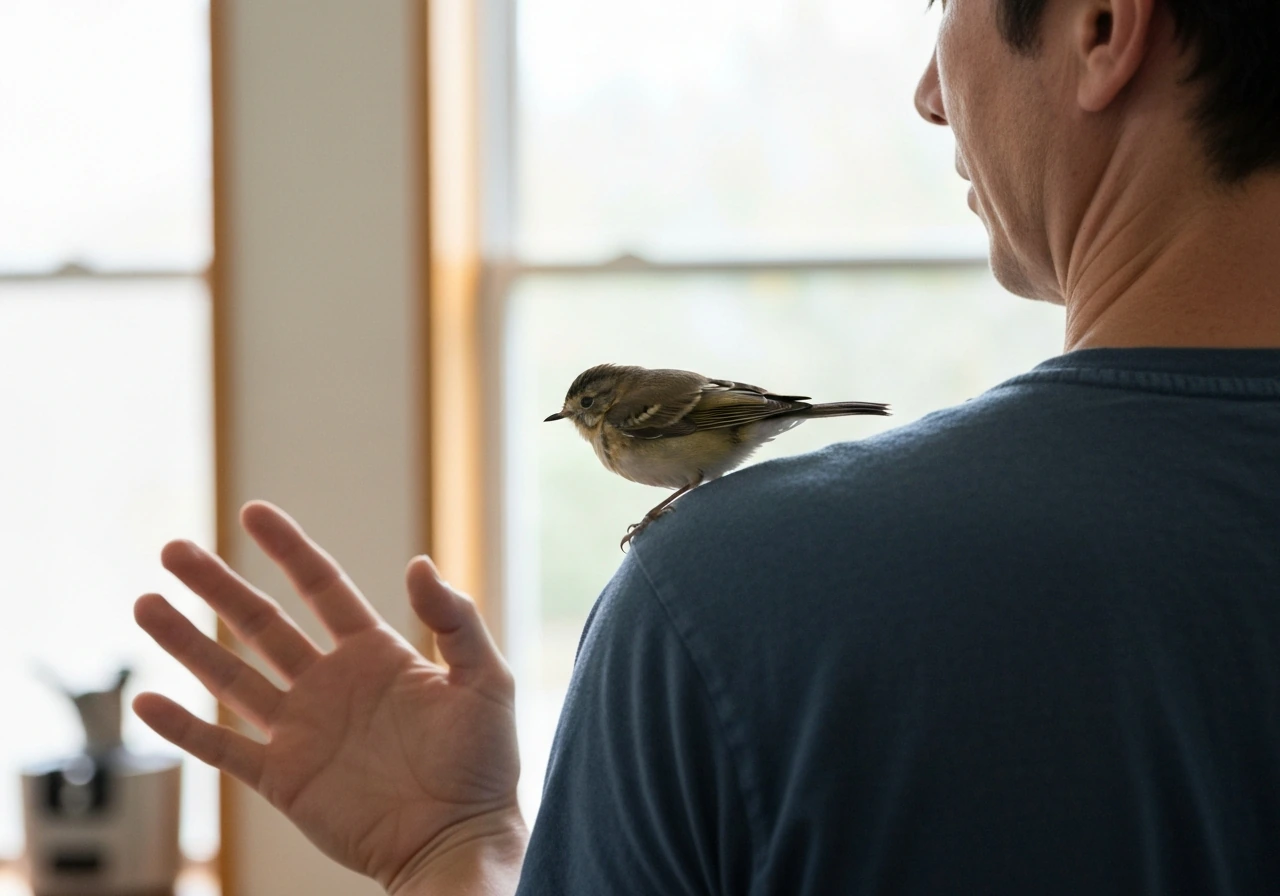
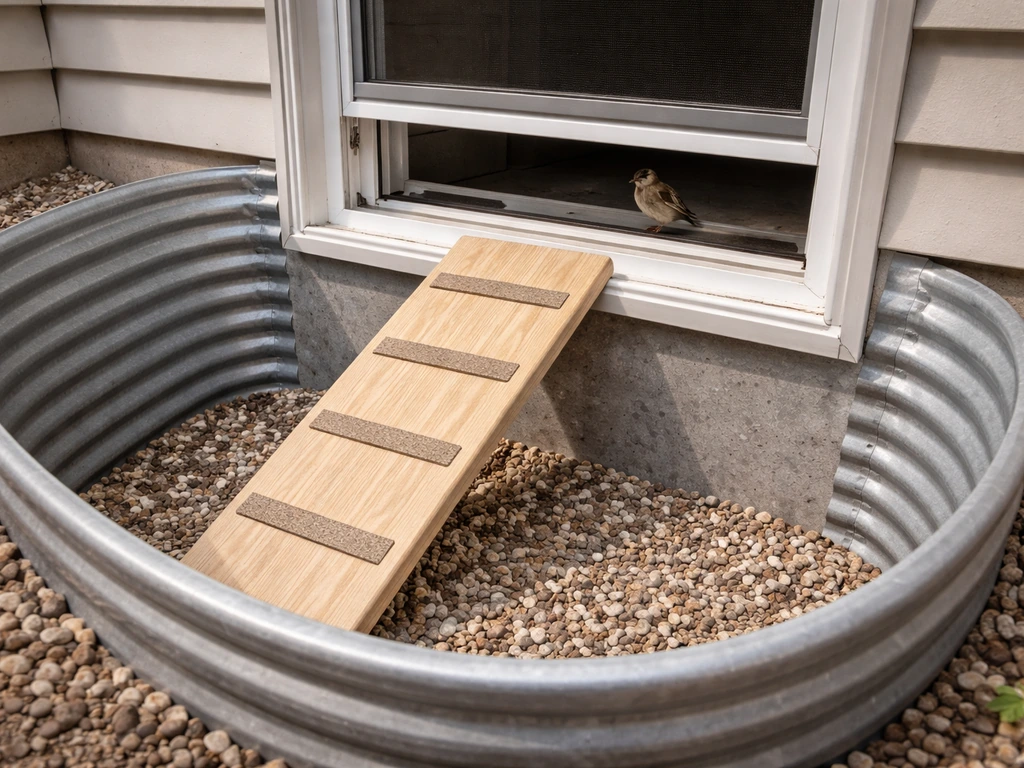
blank" rel="noopener noreferrer">Lower a rough-surfaced board into the window well at no steeper than a 45-degree angle so the bird can walk up and out on its own. That single step solves the majority of window-well bird situations in under 10 minutes. Everything else in this guide is about doing it safely, handling the cases where it doesn't work right away, and making sure it never happens again.
How to Get a Bird Out of a Window Well Safely Now
Maya Carver
3 Jun 2026
Quick emergency steps to keep the situation safe
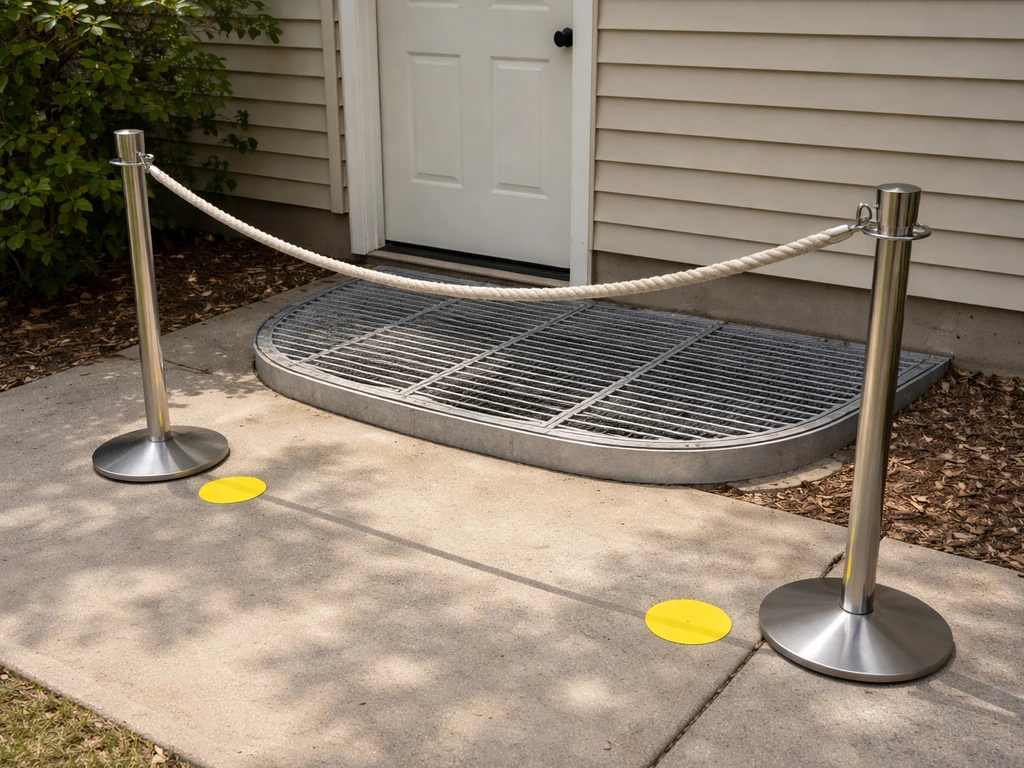
Before you touch anything or lean over the well, run through this short checklist. A panicked bird can hurt itself badly in 60 seconds of thrashing, and some species carry risks you should know about before getting close.
- Keep people and pets back from the well immediately. Dogs and cats escalate the bird's panic and can injure it fast.
- Do not shout, clap, or make sudden movements near the well.
- Put on thin work gloves before you handle anything near the bird. If the bird appears sick or dead, wear disposable gloves and a mask. State health officials caution against unprotected contact with wild birds due to avian influenza risk.
- Look before you reach. Check whether the bird is a raptor (hawk, owl, falcon). Columbus Audubon explicitly advises against attempting to capture or handle a trapped hawk or large bird yourself.
- If the bird is visibly injured (blood, drooping wing, open-beak labored breathing), stop the DIY process and skip ahead to the wildlife professional section now.
- Note the species if you can. Most songbirds and common backyard birds are covered by the Migratory Bird Treaty Act (MBTA), which means handling them without cause is restricted. The 'rescue transport' exception applies only when you are moving the bird directly to a licensed rehabilitator.
- Check whether the basement window below the well is accessible. You may need it open later as an exit path.
How to remove the bird from a window well step by step
This process works for most small-to-medium wild birds: sparrows, robins, starlings, pigeons, doves, and similar species. It relies on giving the bird a way to escape on its own rather than chasing or catching it.
- Clear the area. Send everyone inside and close any nearby doors so the bird has only one obvious direction to go: up.
- Find a board with a rough surface. An old piece of scrap lumber, a wooden plank with carpet stapled to it, or even a sturdy branch works. The bird needs traction, so smooth plywood alone isn't ideal. A 'cleated' board (thin wood strips nailed across it as steps) is even better if you have a few minutes.
- Lower the board into the well at a gentle angle, no steeper than 45 degrees, with the bottom resting near the bird and the top leaning against the well's far edge at ground level. You want the bird to walk uphill, not feel like it's climbing a wall.
- Step back at least 10 feet and wait quietly. Most birds orient toward light and will start moving toward the top of the board within a few minutes.
- If the bird is pressed against the window below, crack that window slightly so the interior light goes off (close interior blinds or turn off lights in that room). This reduces the 'light trap' effect where the bird keeps flying at the glass instead of going up.
- Give it 15 to 20 minutes undisturbed. Resist checking every 2 minutes. Your presence is the biggest barrier to the bird calming down.
- Once the bird reaches the top of the board and is at ground level, it will almost always fly away on its own. Don't try to help it take off.
- If the bird reaches the top but seems dazed and stays on the ground, place a ventilated cardboard box loosely over it for 15 to 30 minutes in a quiet spot. This lets it recover from shock. Check again, and it will usually fly when ready.
Humane release methods without injuring the bird
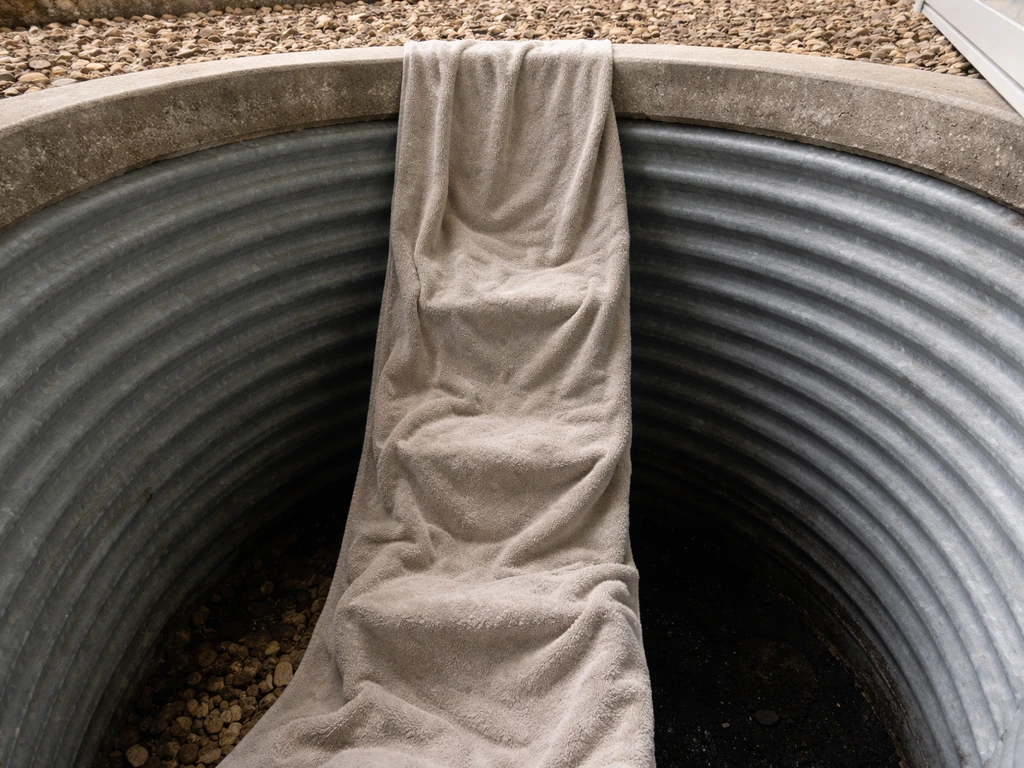
The ramp method above is always the first choice because you never have to touch the bird. But if the well is deep, oddly shaped, or the board trick isn't getting traction, here are a few backup approaches that are still hands-off.
The towel guide method
Drape a large lightweight towel or sheet loosely down one side of the well. The fabric gives the bird something to grip and climb, and many birds will scramble up fabric more readily than a hard surface. Once it's near the top, lift the edge of the towel up and over the rim slowly and the bird usually takes off from there.
The light-and-open-window method
If the window below the well opens inward and you have access to that room, open the window fully, darken the room entirely (close all other windows, turn off all lights), and then walk away. Birds move toward the brightest available light. With the well being the only light source, the bird will often fly into the room and then you can guide it out through a door or window using the Columbus Audubon approach: turn off the ceiling fan, open windows and exterior doors, close the interior door to the room, turn out lights, and leave it alone. Do not chase it.
If you must handle the bird
Only attempt this for a small, clearly non-raptor bird that has been in the well for a long time and is too exhausted to self-rescue. Wear gloves. Gently drape a light cloth over the bird to cover its eyes (this calms birds immediately), then cup it in both hands firmly but not squeezing. Place it in a ventilated cardboard box and take it to a shaded, quiet outdoor area. Set the box on its side with the flap open and step back. Wait. Do not throw it into the air or force flight. The goal is always to tire out the situation, not scare the bird into injuring itself.
Preventing re-entry: window well covers and deterrents
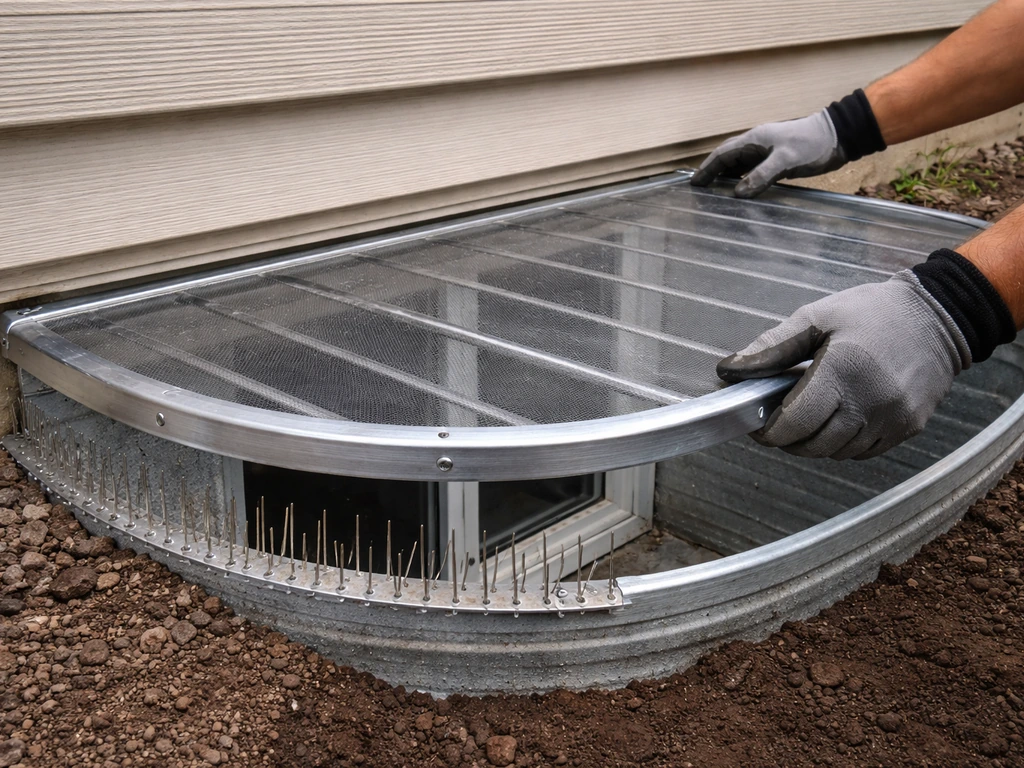
Once the bird is out, give yourself 30 minutes to put basic prevention in place. Window wells are basically perfect bird traps: open at the top, surrounded by walls, with a shiny window at the bottom that looks like sky. Every wildlife agency that addresses this problem agrees on the same fix.
Window well covers
A properly secured cover is the single most effective prevention tool. Both Wildlife Illinois and the ICWDM specifically cite covered window wells as the primary way to prevent wildlife entrapment. Covers come in polycarbonate (clear, lets light in), metal grate, and mesh versions. For birds specifically, any grate or mesh with openings smaller than 1 inch works well. Make sure the cover is anchored, not just resting on top. An unsecured cover can shift in wind and create a gap that's enough for a small bird to fall through.
Comparison of cover types
| Cover Type | Light Transmission | Bird Protection | Durability | Best For |
|---|---|---|---|---|
| Polycarbonate dome | High (clear) | Good if vented gaps are small | High | Egress wells where light matters |
| Metal grate (steel/aluminum) | Moderate | Excellent | Very high | Most residential wells |
| Fiberglass mesh | Moderate | Excellent | Medium | Budget-conscious installs |
| DIY hardware cloth | Moderate | Excellent if 1/2 inch mesh or finer | Low to medium | Temporary fix or odd-shaped wells |
Landscaping and access changes
- Trim shrubs and low branches within 3 feet of the well rim. Birds often land on branches and then drop in.
- Install a gravel border around the well so there's no soft soil that rodents (which attract hunting birds) can use.
- Apply bird-deterrent tape or reflective scare tape around the perimeter above the well. These help for smaller songbirds but wear off in sun and rain, so check them seasonally.
- Avoid placing bird feeders within 15 feet of a window well. Feeding activity near the well increases the chance that a startled bird flies down into it.
Seasonal maintenance schedule
Check your cover anchors in spring (after frost heave can shift them), clean debris out of covered wells in fall so birds aren't attracted to nesting material, and inspect mesh for tears or corrosion once a year. Reflective deterrents and repellent sprays degrade in rain and UV exposure and typically need refreshing every 60 to 90 days during active seasons.
Troubleshooting if the bird won't come out
Sometimes the standard approach stalls. Here's how to work through the most common stuck situations.
| Situation | Likely Cause | What To Do |
|---|---|---|
| Bird keeps flying at the window glass | Light trap: interior light looks like escape route | Darken the room below, close blinds, cover the window from inside with a towel temporarily |
| Bird won't approach the board ramp | Ramp is too steep or surface too smooth | Reduce the angle below 45 degrees; add a towel or fabric strips for grip |
| It's nighttime and the bird is frozen in place | Birds are mostly inactive and disoriented at night | Leave the ramp in place, clear the area, come back at first light. Most birds self-rescue at dawn. |
| Multiple birds are trapped | Nesting or a flock incident | Use the same ramp method; remove birds one at a time by blocking access back in; call a professional if more than 3 to 4 birds are involved |
| Bird has been in the well more than 4 hours | Stress, dehydration, possible injury | Check carefully for injury signs. If none, place a small shallow dish of water near (not under) the ramp and give more time. Call a rehabilitator if still not moving after another hour. |
| Well is too deep for a standard board | Deep egress wells can be 4+ feet | Extend the ramp by tying two boards together; alternatively open the basement window and use the light method |
When to call a wildlife professional and what the law says
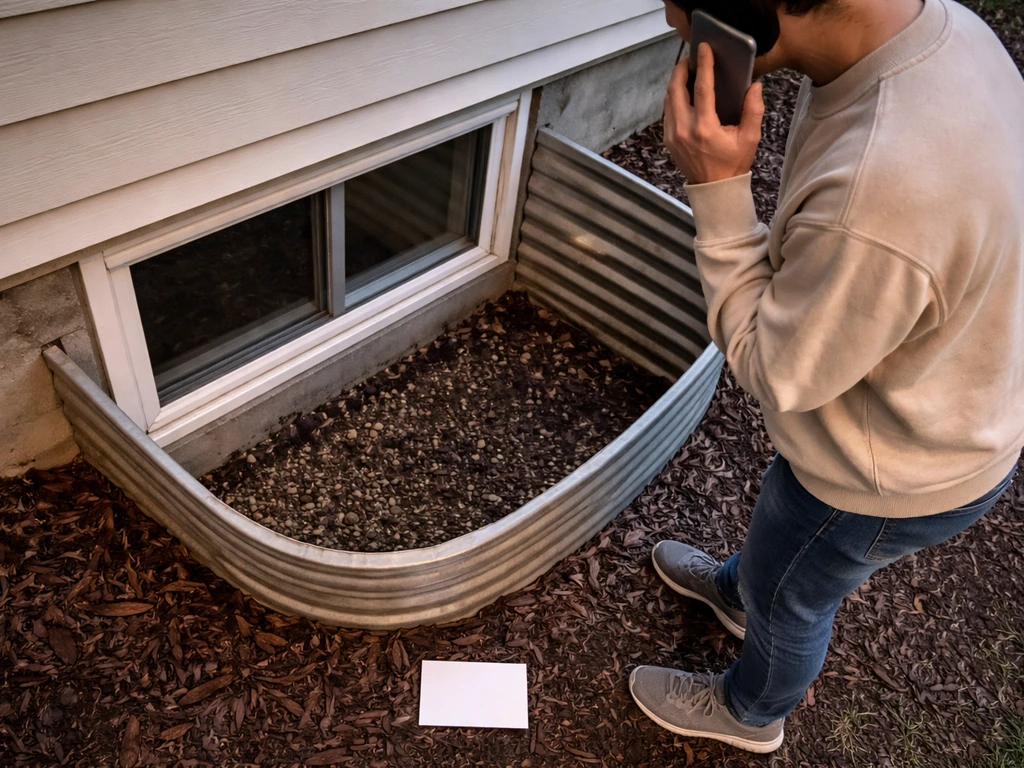
Most window-well bird situations are solved in under 30 minutes with the ramp method. Using the ramp method is often the fastest way to get a bird down from a high place safely. But some require a professional, and pushing past those situations yourself can injure the bird, injure you, or create legal problems. If you find a sick or dead bird, blank" rel="noopener noreferrer">do not touch it; call your state wildlife agency or a wildlife rehabilitator for guidance.
Stop the DIY approach and call a rehabilitator if:
- There is visible blood, a drooping or hanging wing, or an open-mouthed breathing pattern that sounds hoarse or labored. Northwoods Wildlife Center is clear: do not attempt to release a bird showing these signs.
- The bird is a hawk, owl, falcon, or other raptor. Columbus Audubon specifically advises against capturing or releasing these birds yourself.
- The bird appears sick (unable to stand, eyes closed, unresponsive to your presence). The CDC and Washington DOH advise avoiding unprotected contact with sick wild birds due to avian influenza risk. Call your state wildlife agency first.
- You find a baby bird (no feathers or very short feathers) that could not have flown in on its own. WDFW notes that there is almost never a reason to remove a baby wild animal from its environment without consulting a licensed rehabilitator first.
- The bird has been trapped for more than several hours and is completely unresponsive.
How to find help fast
Animal Help Now (animalhelpnow.org) connects you to the nearest licensed wildlife rehabilitator based on your location. Your state wildlife agency (Iowa DNR, WDFW, CDFW, etc.) also maintains rehabilitator lists. When you call, tell them the species if you know it, the bird's condition, how long it has been trapped, and your location. Not all rehabilitators handle all species, so having this information ready speeds up the referral.
Legal notes you should know
Nearly all wild birds in North America, including common backyard songbirds, are protected under the Migratory Bird Treaty Act. That means possessing one, even temporarily, without cause is federally restricted. The law does include a Good Samaritan provision (50 CFR 21.31(a)) that allows any person who finds a sick, injured, or orphaned migratory bird to pick it up and transport it directly to a licensed rehabilitator. That provision covers the transport step only. It does not give you permission to keep the bird, attempt treatment, or release it if it's injured. Some states also require their own state permit for anyone rehabilitating migratory birds, layered on top of the federal requirement. The practical takeaway: if the bird can self-rescue with your help (the ramp method), great. If it needs more than that, your job is to safely contain it and hand it to someone licensed to help.
Window wells are a surprisingly common hazard for birds, and the fix is genuinely simple once you know it. A rough-surface ramp, a calm environment, and a few minutes of patience handle the majority of cases. Get the cover on afterward, and you likely won't deal with this again. If you run into birds in other outdoor spots around the property, similar calm-and-guide approaches apply whether the bird is stuck near a gutter, down a downspout, or high up and disoriented after a collision. If the bird is stuck near a gutter instead of a window well, use the same calm-and-guide mindset from this how to get bird out of gutter approach. If the bird has fallen into a downspout, the cleanup steps and safe release approach are a bit different, so follow our guide on how to get a bird out of a downspout. If you are dealing with a pet bird stuck in a tree, the approach can differ from a window-well rescue how to get a pet bird out of a tree. After you get the bird off your shoulder, keep it calm and avoid sudden movements so it can leave safely.
FAQ
What should I do if the ramp method doesn’t work right away?
If you do not see the bird climb toward the ramp within about 5 to 10 minutes, stop and switch tactics rather than increasing pressure. Change the setup first (angle the board slightly less steep, relocate to a spot where the bird can reach the ramp, or add the towel to improve traction), then reassess. If the bird looks exhausted, has stopped moving, or you are unsure it is a non-raptor, contain it safely and call a licensed wildlife rehabilitator.
Should I lean over the window well or try to shoo the bird?
Yes, you should avoid leaning over the well or using loud noises. Many window-well rescues fail because the rescuer keeps repositioning or “helps” by reaching down, which can trigger a panic cycle. Instead, use dimming steps (turn off nearby bright lights that may be confusing) and keep your movements slow and to the side so the bird can move without constantly being startled.
Can I catch the bird and move it myself?
Do not use a blanket to wrap or trap the bird, and do not attempt to force it onto a board by grabbing it. The only hands-on exception in the guide is when the bird is clearly a non-raptor, non-self-rescuing, and you are prepared to place it in a ventilated box for transfer. If you cannot meet those conditions, hands-off self-rescue methods are safer and reduce injury risk.
What if my window well is too deep or oddly shaped for the board ramp?
If the window well is deep, has vertical walls with no natural footholds, or the board cannot stay stable, use a traction aid (the towel down one side) or the inward-opening window light-draw method if you can safely access the room. A key detail is stability, do not prop anything in a way that could shift and fall into the well.
How long should I wait before trying a different approach?
Avoid “rocking” the ramp or repeatedly changing its position while the bird is trying to move. Once you place the ramp, hold it steady and allow a quiet window of time (usually several minutes). Frequent adjustments often interrupt climbing and cause the bird to thrash again at the bottom.
How do I know when the bird is too injured or exhausted for DIY help?
If the bird is injured, breathing heavily, bleeding, lying on its side, or shows no effort to climb, treat that as a time-to-call situation. In that case, your safe step is to reduce stress and contain it for transport to a licensed rehabilitator, rather than trying repeated self-rescue setups that may prolong suffering.
What if the bird looks disoriented after a collision and won’t climb?
Some birds, especially after a collision, may not respond to ramp access at first because they are disoriented. In those cases, darkening the room and using the brightest available light to guide movement can still work, but do not keep reopening doors or chasing, give it a calm, still window of time.
What makes a window-well cover “good enough,” and how do I test it?
A common mistake is placing a cover that is only weighted on top. Even small gaps can let birds fall in, so you want an anchored cover with openings under 1 inch for birds. After installing, do a simple check by gently nudging the cover from multiple spots to confirm it cannot shift.
How often should I inspect or maintain the cover to prevent it from failing later?
Yes, check after seasonal ground shifts. Frost heave can move anchors, and debris can make the cover sit unevenly or leave edges lifted. A practical routine is spring anchor inspection, fall debris removal, and a yearly tear or corrosion check on mesh or grate covers.
Are deterrents like spray or reflective tape enough by themselves?
Repellent sprays and reflective deterrents can help as a secondary layer, but they do not replace a properly secured physical cover. If you rely on deterrents, plan for reapplication during active seasons because weather exposure reduces effectiveness, and still install a cover to stop entrapment events.
If I have to temporarily handle the bird, what’s the safest setup after placing it in a box?
For the hands-on “non-self-rescuing” scenario, use a ventilated cardboard box, place it on its side with the flap open, and step back so it is not forced into flight. You should also keep the box in shade and quiet to lower stress, and avoid throwing, shaking, or physically repositioning it repeatedly.
What if the bird ends up in the same window well again the next day?
If the bird keeps trying to enter again after you remove it, do not repeat the rescue steps. Focus immediately on prevention, install or repair the cover, and remove nearby attractants like nesting debris or accessible ledges around the well.
When should I stop and call a professional instead of trying again?
If you cannot safely access the well, cannot place a stable ramp, or the species appears to be a raptor, stop and call for help. In those cases, the safest path is to contain only if you can do so without escalating the situation, then contact a licensed wildlife rehabilitator.
Next Article
How to Get a Bird Off Your Shoulder Safely and Humanely
Step-by-step, humane ways to get a bird off your shoulder safely, plus aftercare, prevention, and when to call wildlife