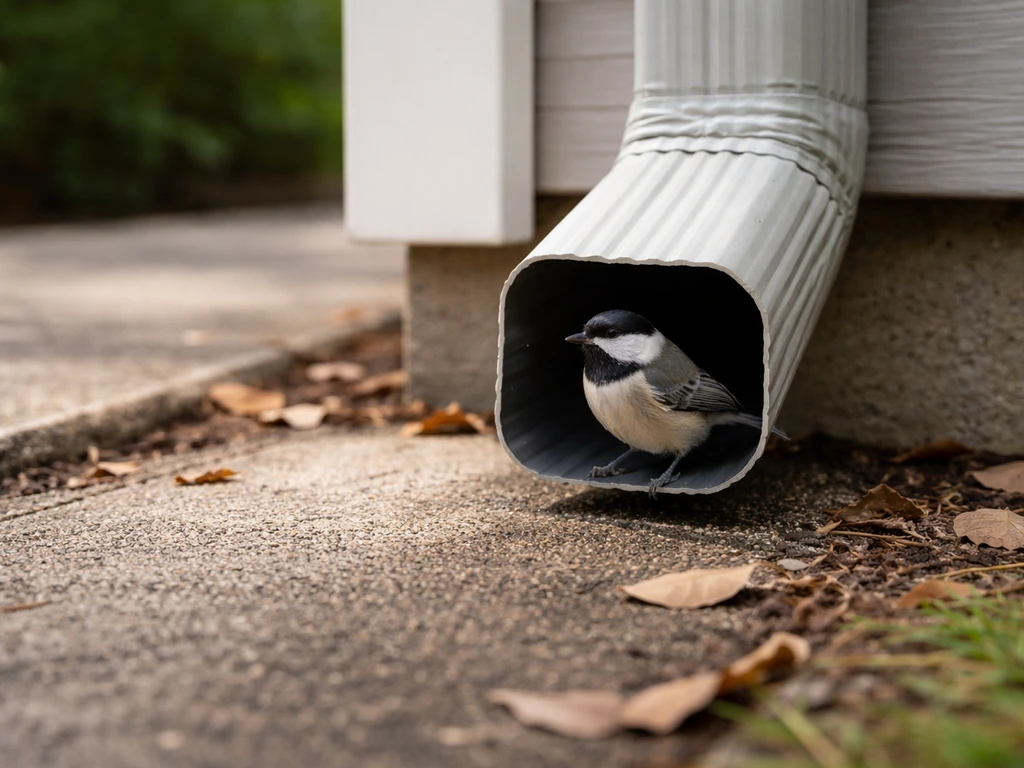
If you can hear a bird flapping or chirping inside your downspout right now, stop what you're doing and don't pour water down it. The fastest and safest approach is to disconnect the bottom elbow of the downspout (if you can reach it safely), point the open end toward a shrub or low cover, then step back and wait. Most birds will crawl or fly out within 15 to 30 minutes once they can see daylight and have a clear exit. If the bird is deeper in the pipe or appears injured, the rest of this guide walks you through exactly what to do next. If the bird is stuck higher up than you can reach, you can still use the same humane removal approach to get a bird down from a high place safely exactly what to do next.
How to Get a Bird Out of a Downspout Safely and Humanely

Maya Carver
27 May 2026
Quick emergency assessment and safety precautions
Before you touch anything, take two minutes to assess the situation. A rushed attempt can injure the bird, injure you, or push the bird deeper into the pipe. Here's what to check first.
- Listen carefully: Is the bird still moving? Steady flapping or chirping means it's alive and alert, which is good. Silence could mean it's exhausted, injured, or has already found its own way out.
- Look at both ends of the downspout: Can you see the bird from the top opening or the bottom elbow? If it's within arm's reach from a safe standing position, removal is straightforward. If it's deep in a multi-story run, you'll need a different strategy.
- Identify the bird if you can: Size matters for choosing your method. A small sparrow or wren behaves very differently from a larger starling or woodpecker. Also note whether it could be a migratory species (more on the legal side below).
- Keep children, pets, and bystanders back: An agitated bird may fly directly into a face when it exits. Give it at least 10 feet of clear space.
- Don't flush it out with water: This is the most common mistake. Water disorients the bird, can cause hypothermia, and may push it deeper into a clogged section.
- Check for nesting material: If you see twigs, grass, or feathers packed in or around the downspout opening, there may be a nest. Removing an active nest containing eggs or chicks requires a permit under the Migratory Bird Treaty Act. If in doubt, stop and call a wildlife professional before proceeding.
Personal protective equipment you should have ready
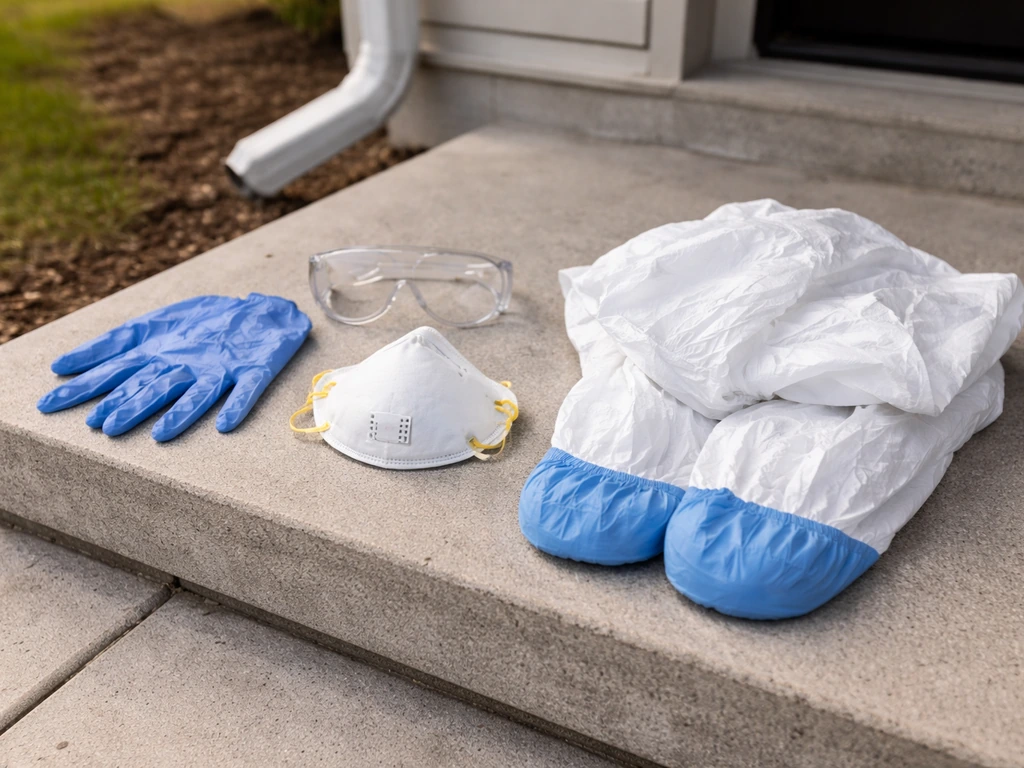
You don't need a hazmat suit, but bird droppings carry real health risks including Histoplasma fungus and avian influenza. Before you handle any part of the downspout or clean up afterward, put on disposable gloves, safety glasses, and an N95 respirator or better. If the downspout has accumulated significant droppings, a disposable coverall is worth the few dollars it costs. Wash your hands thoroughly with soap and water after you're done, even if you wore gloves.
Step-by-step humane removal: the DIY approach
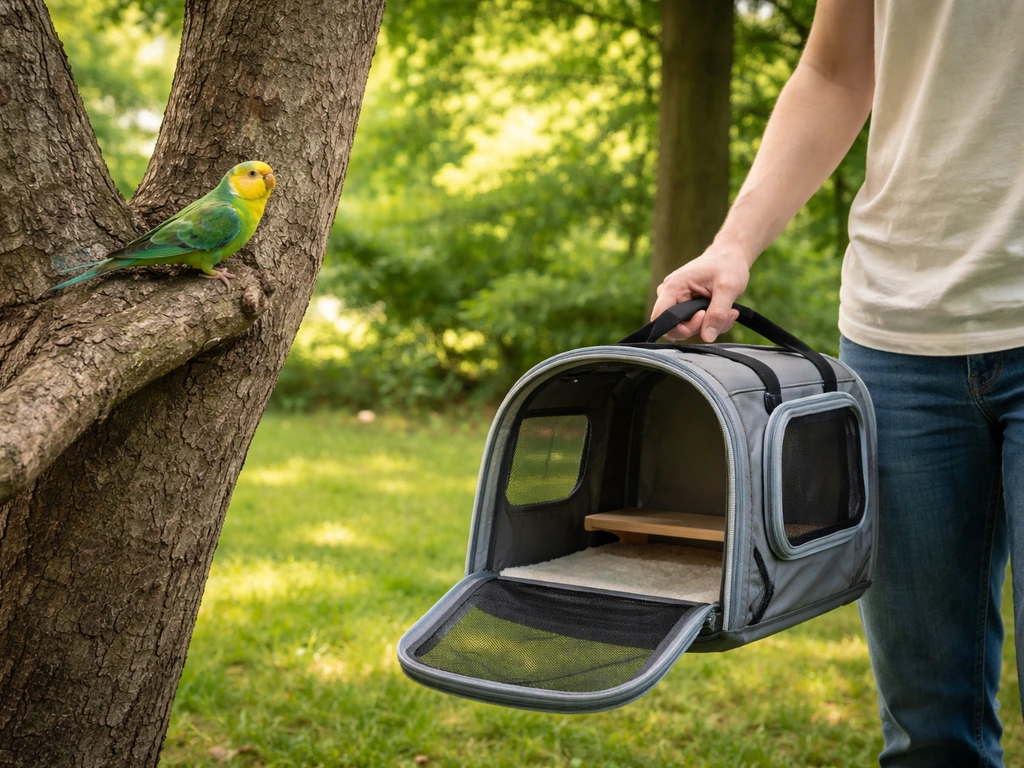
The goal throughout every step is to create an obvious, unobstructed exit path and then get out of the bird's way. If the bird is already in a tree, the approach is similar but you will focus on clearing escape space and using gentle encouragement rather than downspout-specific steps how to get a pet bird out of a tree. Birds don't respond well to being chased. They respond to light, open space, and calm. Follow these steps in order. These cover-and-wait, light, and escape-path ideas also work when you need to get a bird out of a tree without causing injury.
- Turn off any power tools, lawnmowers, or other noise sources nearby. A quiet environment reduces the bird's panic level and helps you hear what's happening inside the pipe.
- Disconnect the bottom elbow or extension: Most residential downspouts attach to a lower elbow or splash block extension with simple sheet-metal screws or friction clips. Remove this piece to expose the bottom opening of the vertical pipe. Point the open end toward low shrubs, a garden bed, or the ground — somewhere the bird can land safely and find cover quickly.
- Move away from the downspout: Step back at least 10 feet. If you're standing right there, the bird won't come out. Give it 15 to 30 minutes. Many birds exit on their own at this point.
- If the bird doesn't emerge, go to the top of the downspout (from a safely positioned ladder): Remove the downspout from the gutter outlet or loosen the top bracket so there's a visible gap. Sunlight entering from the top can trigger the bird to move downward toward the open bottom. Do not prod, poke, or shine a flashlight into the pipe — that's the one light trick that backfires, as it can disorient the bird.
- If it still hasn't moved after another 15 minutes, try a gentle tap: Use the flat of your hand to tap rhythmically on the outside of the pipe, working from the top down. This mimics the vibration of a nearby predator and often motivates the bird to move toward the open exit.
- If the pipe is accessible along its length, disconnect an additional section: Downspouts are joined in sections. You can remove one mid-section carefully to directly access and gently guide the bird out with a soft cloth or gloved hand, only if you can do this safely and without squeezing or compressing the bird.
Bird escape methods: cover-and-wait, light and sound cues, one-way exits
Cover-and-wait
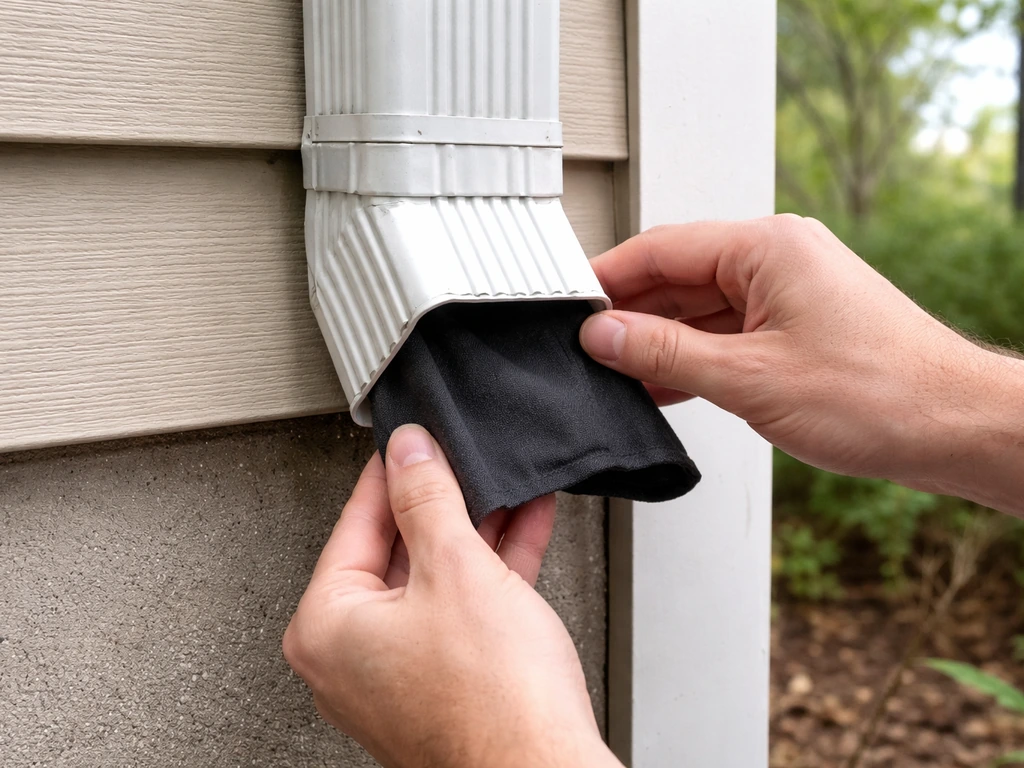
This is the lowest-stress option and it works more often than people expect. Once you've opened the bottom of the downspout, drape a lightweight dark cloth or cardboard loosely over the nearby area so the immediate surroundings feel sheltered. The covered, dim environment is less threatening to the bird than open space, and it will often crawl out and tuck itself into the cover. Check back every 15 to 30 minutes. Users who have tried this approach report success within half an hour in most cases, as long as nobody disturbs the area.
Using light and sound cues
Birds move toward natural daylight. If you can create a strong light differential by opening the bottom completely and keeping the top end shaded, the bird will typically head down and out. Avoid artificial light sources like flashlights pointed directly into the pipe. For nocturnal species (owls are rare in downspouts but possible), Wildlife Victoria's guidance is to wait until night-time, keep surrounding lights off, and let the bird become active on its own schedule. For diurnal birds like sparrows, starlings, and finches, working during daylight hours is most effective.
One-way exit devices
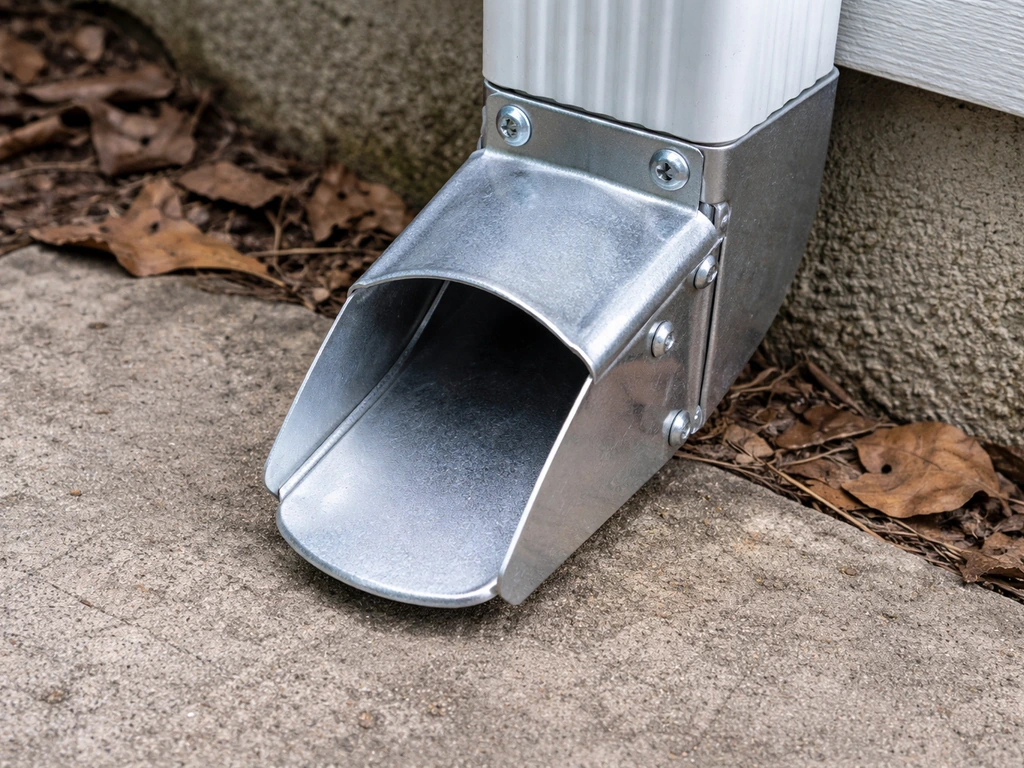
For a bird that is reluctant to exit but physically capable of moving, a one-way door attached to the bottom opening is an excellent humane solution. Products like the BirdChute One Way Door and the Rhino ProChute are designed exactly for this scenario: a hinged door lets the bird push through from the inside and exit, but the flap closes behind it so the bird can't re-enter. Washington Department of Fish and Wildlife and USDA APHIS both endorse one-way door exclusion as a standard humane removal technique. To use one on a downspout, fit the device over the open bottom end so it's snug, leave it in place for several hours, then return to check that the bird has exited before removing the device and reconnecting the pipe.
Aftercare: confirm the bird is safe, clean up, and block re-entry
Confirming the bird is okay
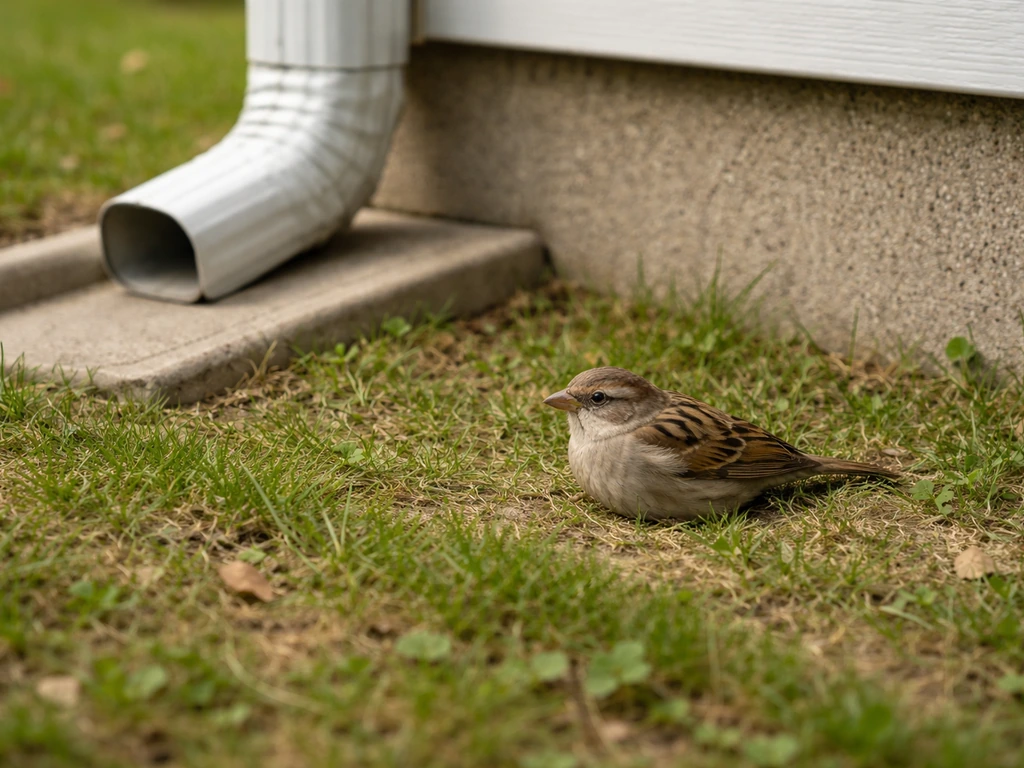
Once the bird has exited, observe it from a distance for five to ten minutes before approaching. A healthy bird will right itself quickly, look around, and either fly off or hop toward cover within a minute or two. If it's sitting still with fluffed feathers, unable to stand, or holding a wing at an odd angle, it's likely injured or exhausted. In that case, place it gently in a ventilated cardboard box lined with a paper towel and contact your nearest licensed wildlife rehabilitator. Don't offer food or water to an injured bird unless instructed to by a professional.
Cleaning up safely
Bird droppings inside a downspout are a genuine health hazard if you inhale aerosolized particles. Never dry-sweep, blow out, or use a leaf blower to clear residue. The right approach, per CDC and WSU Environmental Health and Safety guidance, is to wet the material first using a spray bottle or damp cloth so it doesn't become airborne, then wipe or mop it up using rags or a sponge soaked in a disinfectant solution. Finish by cleaning visible surfaces with soap and water, followed by an EPA-approved disinfectant that carries label claims against influenza A viruses. Follow the contact time listed on the disinfectant label, usually one to ten minutes of wet surface time. Seal used rags and disposable materials in a plastic bag before disposing of them.
Immediate re-entry prevention while you plan a permanent fix
Before you reconnect the elbow, stuff a loose wad of wire mesh or hardware cloth into the bottom opening as a temporary plug. This keeps the pipe functional for drainage while you source the proper bird screen for a permanent installation. Don't leave the bottom open overnight or you'll likely have the same problem by morning.
Preventing it from happening again: downspout proofing that actually works
A single afternoon spent on downspout proofing will save you from repeating this process every spring. Here's what works at each point of entry.
Bottom openings and elbows
The most common entry point is the open bottom of the downspout or the elbow that directs water away from the foundation. Downspout nozzle bird screens, like those from End Metal Theft, are sized by trade size (2-inch and 3-inch are the most common residential dimensions) and fasten directly over the nozzle opening using stainless-steel fasteners. They're inexpensive, easy to install, and effective. Just confirm the mesh opening is small enough for your target bird: half-inch diamond mesh openings are a standard spec that excludes sparrows, finches, and starlings while still passing water and small debris.
Top openings at the gutter outlet
The gutter outlet where water enters the top of the downspout is a less obvious but equally important entry point for birds. Gutter mesh products, including products like Screen Tech's GutterMesh, sit over the entire gutter trough and cover the outlet as a side effect. These products are specifically positioned as bird-proofing solutions that still allow heavy rain to flow through. If you're already dealing with leaf debris in your gutters, a full gutter guard system is the most efficient two-for-one fix.
Gaps at joints, brackets, and roofline connections
Walk the entire downspout run and look for gaps where sections join, where the pipe connects to the fascia or soffit, and where the top outlet meets the gutter. Small birds can enter a gap as narrow as 1.5 inches. Use sheet-metal screws to tighten loose joints, and seal any gap at the roofline with a flexible exterior-grade sealant or aluminum flashing. Pay special attention in spring (March through June) and again in early fall, which are the peak nesting and roosting periods in most of North America.
A quick seasonal proofing checklist
- February/March: Inspect all downspout openings before nesting season begins. Install or replace bottom screens. Check gutter outlets.
- May/June: Walk the roofline after heavy rain. Look for displaced screens or new gaps at downspout joints.
- September: Clear debris from gutters and screens before fall migration brings increased bird activity near structures.
- November: Final inspection before winter. Confirm all screens are seated tightly so ice and wind haven't loosened them.
Troubleshooting common scenarios
| Scenario | What's likely happening | What to do |
|---|---|---|
| Small bird (sparrow, wren, finch) | Usually entered through the top gutter outlet; may be disoriented but physically okay | Open the bottom elbow, step back, wait 20 to 30 minutes. Cover-and-wait works well for small birds. |
| Larger bird (starling, woodpecker, small pigeon) | May be genuinely stuck at a joint or bend; larger body can't reverse easily | Remove a mid-section if accessible. If not, use a one-way exit device at the bottom. Do not try to push it through from above. |
| Bird not responding to any cues | Possibly exhausted, injured, or wedged at a bend | Stop DIY attempts. This is a professional wildlife control call. See the escalation section below. |
| Deep downspout on multi-story building | Bird is inaccessible from either end without equipment | One-way door at the bottom is your best option. If the building is more than one story, don't attempt ladder work alone — call a professional. |
| Recurring entries (same bird or species) | Missing or inadequate screen, or a gap you haven't found yet | Do a full downspout audit. Consider that birds are actively prospecting this location for nesting. Install permanent screens and check roofline connections. |
| Nesting material present inside downspout | An active or recent nest; may contain eggs or chicks not visible from outside | Do not remove the nest. Federal law (Migratory Bird Treaty Act) requires a USFWS permit to disturb an active migratory bird nest. Call wildlife control. |
When to stop DIYing and call wildlife control
Most birds-in-downspout situations are solvable in an afternoon with the steps above. But there are specific situations where DIY stops being safe or legal, and knowing the line before you cross it saves time and potential legal trouble. Active nest removal or disturbance can require a blank" rel="noopener noreferrer">permit from the U.S. Fish and Wildlife Service, according to ADOT’s Migratory Bird Treaty Act mitigation guidance update.
- The bird appears injured: Visible wing droop, inability to stand, or labored breathing all mean the bird needs a licensed wildlife rehabilitator, not a homeowner with gloves.
- You can see or suspect a nest with eggs or chicks: Under federal regulation (50 CFR §21.14), the authorization to humanely remove migratory birds applies to the interior of occupied buildings, not exterior surfaces like siding, eaves, or the outside of downspouts. Disturbing an active nest on or outside a structure without a USFWS permit is a federal violation under the Migratory Bird Treaty Act.
- The downspout is on a multi-story building and you'd need to climb higher than a single-story ladder safely allows: Fall risk is real. Wildlife control companies have the rigging and experience; a hospital visit costs far more than a professional service call.
- You've tried the steps above for two or more hours with no results: At that point the bird is likely stuck at a bend, too exhausted to move, or needs hands-on guidance that goes beyond what's safe without training.
- You're in a jurisdiction with additional state or local wildlife protection laws: Some states layer additional protections on top of federal law. If you're unsure, a quick call to your state wildlife agency costs nothing and protects you.
What to tell wildlife control when you call
The more information you give them upfront, the faster and cheaper the job goes. Have the following ready: the approximate size and species of the bird if you know it, where on the building the downspout is located and how many stories up, whether you can see nesting material, how long the bird has been in there, and what you've already tried. If there's any sign of injury, say so immediately so they can route a rehabilitator rather than just a removal technician. Facility managers should also note whether the building has any current active pest control contracts that might overlap with wildlife service, since that can affect liability and billing.
Birds in downspouts are a specific problem that overlaps with birds in gutters, birds stuck in tight vertical spaces, and birds caught near roofline structures. If a bird is already stuck in your gutter instead of a downspout, the basic humane goal is the same: create an escape route and avoid chasing it how to get bird out of gutter. The techniques here share common ground with those situations, but the confined vertical tube of a downspout creates unique challenges that the cover-and-wait and one-way door methods handle especially well. The same humane, patience-first approach applies any time a bird is trapped in or near a structure. If you are dealing with a bird trapped in a window well instead, use the same humane principles but adjust your approach to the open-grate and escape path. If you need a quick, step-by-step way to get a bird off your shoulder, the same calm, low-stress approach helps prevent panicked flapping and minor injuries humane, patience-first approach.
FAQ
What should I do if the bird stops flapping or chirping after I open the downspout?
If you cannot see the bird and it is silent for several hours, still keep an eye on the downspout area. Birds may pause to conserve energy or reposition inside the pipe. Return to check every 15 to 30 minutes, and treat the situation as “possibly stuck” if you notice renewed chirping later.
Can I just block the downspout opening right away so the bird has to get out?
Do not use spray foam, caulk, or sealant to “plug” the downspout while the bird might still be inside. Temporary plugging should be loose mesh only, because a fully blocked pipe can trap an exhausted or injured bird and increase stress.
Is it okay to place a box or covering under the downspout while waiting?
Yes, you can place a cardboard sheet or loose dark cloth in the general area to help create a calmer, shaded landing zone, but avoid trapping the bird under the covering. The cover should be for the surrounding area, not a closed tunnel that can funnel the bird into a corner.
What if the bird looks injured but it is still inside the downspout?
If the bird appears injured, do not attempt to pull it out of the pipe with your hands or tools. Even if it seems “close,” forcing contact can break wings or dislocate joints. Use a ventilated cardboard box for any bird you can safely remove, then contact a licensed wildlife rehabilitator.
How can I reduce stress for the bird if I live in a busy area?
For noisy birds or when neighbors are close, it can help to reduce disturbances rather than increasing light. Keep bystanders back, avoid banging on gutters, and do not point bright flashlights into the pipe, especially at night.
Can I leave the area and come back later, or do I need to finish immediately?
If you have to step away to get help, leave the downspout accessible and maintain the cover-and-wait setup. Do not fully reconnect the elbow immediately, because the bird may still be working its way out over time.
How do I know if a one-way door is installed correctly on a downspout?
One-way doors work best when installed snugly over the open bottom so the bird cannot slip around the sides. If the fit is loose, the bird can re-enter through the gap, so measure the opening and confirm a tight seal before leaving it in place for several hours.
Should I put out food or water while the bird is still trapped in the downspout?
Do not feed or offer water “just in case” for a bird that is still in the structure. It can attract other animals or worsen dehydration stress if the bird ends up needing capture by a rehabilitator. Only provide food or water if a professional instructs you after assessing injury.
What if the bird is too high up for me to disconnect the bottom elbow safely?
If the downspout is higher than you can reach safely, the safest option is to stop and call wildlife professionals rather than using improvised ladders or reaching tools. The article’s humane goal is escape-path first, so avoid actions that could push the bird deeper into the pipe.
What if I see nesting material or suspect babies inside the downspout?
If you suspect a nest inside the downspout or you see nesting material, do not attempt DIY removal during active nesting periods. Contact a wildlife rehabilitator or wildlife control provider so they can determine whether young are involved and apply the appropriate legal, humane approach.
How soon should I install permanent bird screening after the removal?
After cleanup, seal the temporary plug area and finish permanent bird-proofing the same day if possible. Leaving the pipe loosely open increases the chance of re-entry, especially during spring roosting and nesting windows.
Should I try to identify the bird species, and does it matter for next steps?
If you can identify the species, it can guide expectations and proofing mesh size choices. Even when you cannot be certain, noting behaviors (clinging, frequent chirps, or repeated attempts to move toward light) helps a wildlife professional decide whether the bird is likely injured versus simply trapped.
Next Article
How to Get a Pet Bird Out of a Tree: Safe Steps
Step-by-step safe rescue for a pet bird stuck in a tree, what to do now, stop risks, and prevent repeats.