Stay calm, move slowly, and give the bird some space first. Most pet birds that escape into a tree are frightened but not injured, and many will come down on their own if you reduce the chaos around them and use familiar cues. PetPlace, citing a parrot rescue and recovery director, also recommends using an empty bird cage set out with seed or nuts as a familiar lure to attract the bird use familiar cues. Your best tools right now are your bird's own cage, its favorite food, a familiar voice, and patience. The sections below walk you through exactly what to do in the next few minutes, what to try over the next hour or two, and when to stop DIY attempts and call for backup.
How to Get a Pet Bird Out of a Tree: Safe Steps
Maya Carver
27 May 2026
Immediate safety and triage checklist
Before you do anything else, run through this quick triage in the first two to three minutes. It tells you whether you have time to coax the bird down yourself or whether you need to move straight to calling a vet or wildlife rescue.
- Spot the bird and confirm it is your pet. Note the branch height, which direction it is facing, and whether it is moving normally.
- Check for visible injury: is it holding a wing at an odd angle, bleeding, sitting on the ground instead of a branch, or breathing with its beak open? Open-mouth breathing, tail bobbing, and a fluffed-up posture are signs of respiratory distress and require urgent veterinary contact.
- Check for immediate environmental dangers: traffic nearby, neighborhood cats or dogs loose in the yard, a rainstorm rolling in, or dusk approaching. These affect your timeline.
- Keep everyone else back. Crowds, shouting, and fast movement are the single biggest reason birds climb higher instead of coming down.
- If the bird looks uninjured and alert, you have time to try the calm-and-coax methods below. If it looks injured or is showing breathing distress, skip to the 'When to call wildlife rescue' section and make that call now while you keep watch.
- Note the time. If two to three hours pass with no progress, it is time to escalate regardless of how the bird looks.
Quick actions to calm and entice the bird down
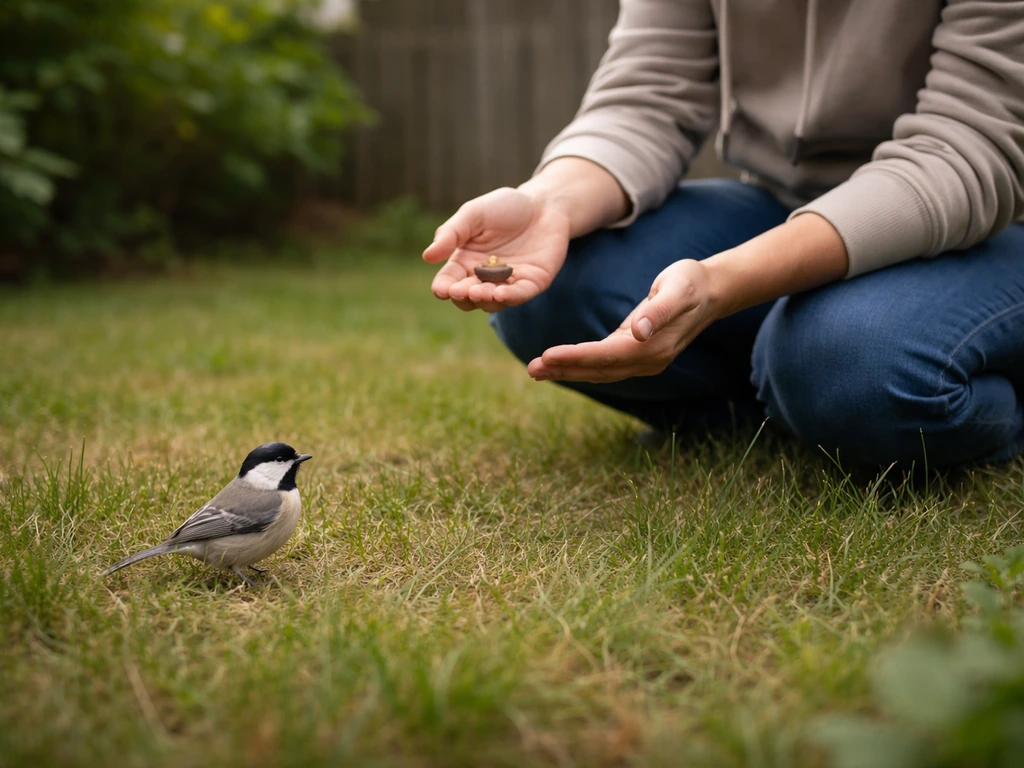
The instinct to chase, call loudly, or wave something at the bird feels natural, but it almost always backfires. A frightened bird's response to pressure is to fly away from it. Your job in these first minutes is to make coming toward you feel safe and rewarding. If the bird ended up in a window well, use specific window-well retrieval steps to keep it from panicking or injuring itself how to get bird out of window well. If a bird ends up perched on your shoulder, the same calm, low-pressure approach can help you get it off safely get a bird off your shoulder.
- Lower your voice and slow your movements. Crouch or sit rather than standing tall and looming.
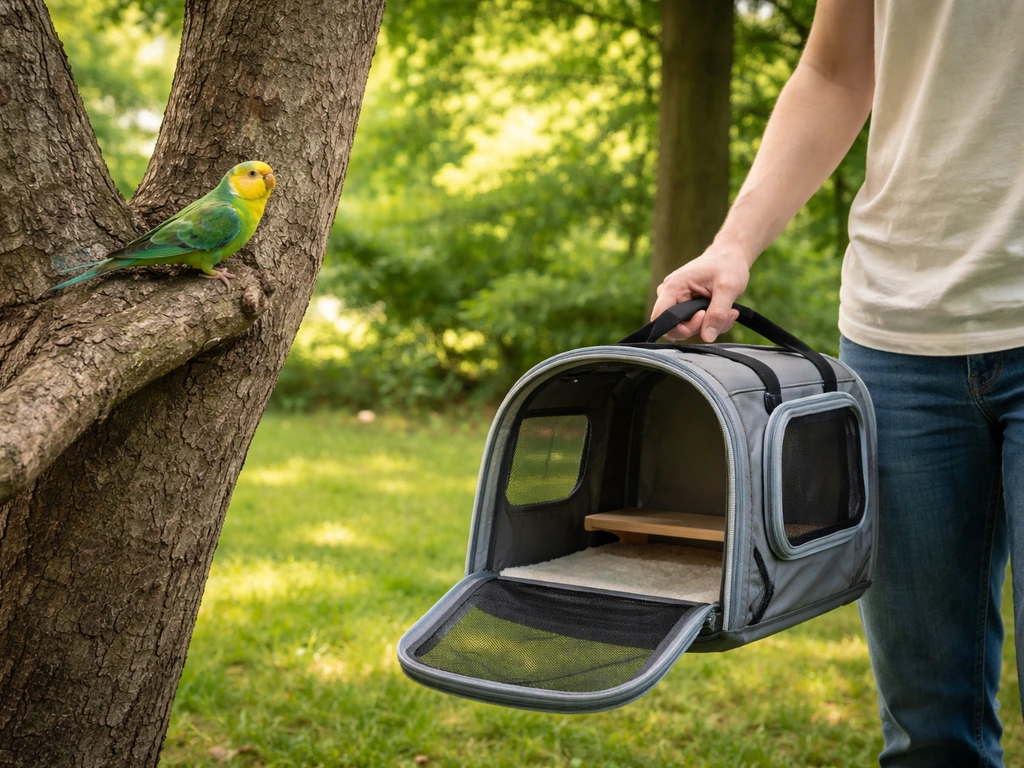
- Bring the bird's own cage outside and place it at the base of the tree or on a nearby surface the bird can see. Put its favorite food, treats, or a familiar toy inside and leave the door open.
- If you have a cage mate or companion bird, place that bird (safely in a smaller travel carrier) near the base of the tree. The sound and sight of a familiar companion is one of the most effective lures there is.
- Use your normal voice cues: the specific words, whistles, or sounds your bird already responds to at home. Keep them quiet and spaced out, not frantic and continuous.
- Hold a familiar perch (a T-stand or just a dowel) above your head if the bird is watching you. Some birds, especially parrots, will step down onto a raised perch when they feel ready.
- If you have them, scatter some favorite treats or seeds on a flat surface near the tree base. This creates a landing target and a reward.
- Step back at least three to five meters after placing the lures and wait quietly. Monitor from a distance rather than standing directly under the bird.
Step-by-step DIY retrieval methods by situation
Different situations call for slightly different approaches. If the bird is stuck in a downspout, use gentle coaxing and avoid tools that could injure its feet or wings get a bird out of a downspout. Here are the most common scenarios and what to do in each one.
Bird is on a low, reachable branch (under 3 meters)
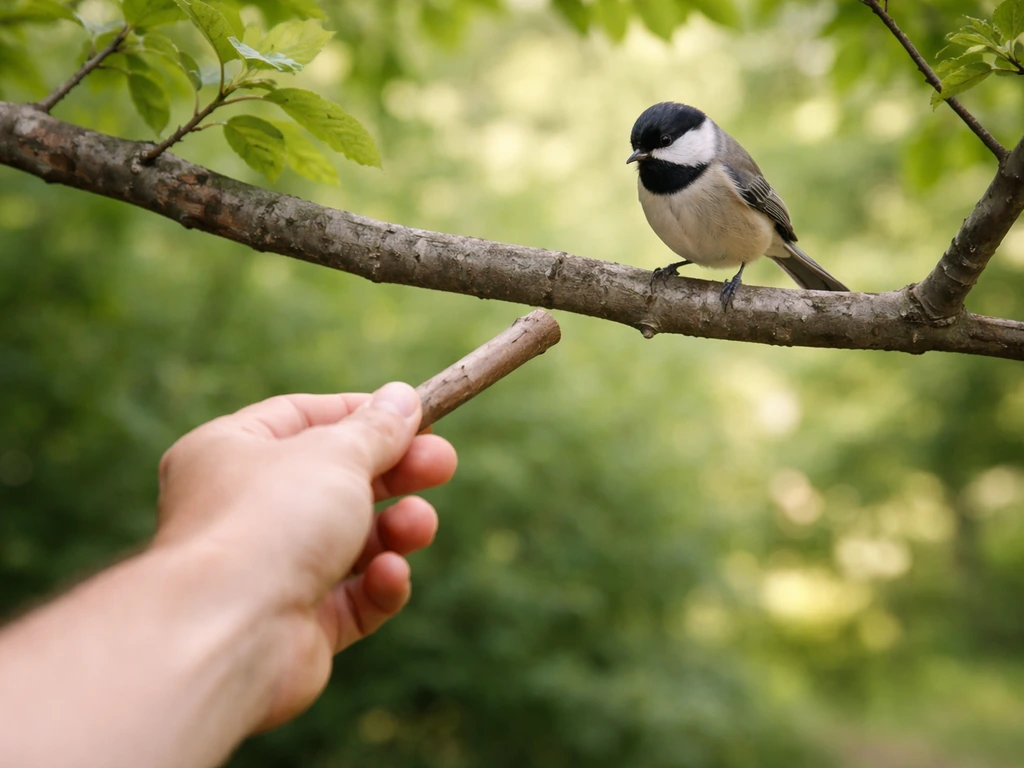
- Clear the area of people and pets and keep noise to a minimum.
- Hold your arm or a familiar perch up toward the branch and use your step-up command in a calm, steady voice.
- If the bird steps onto your arm, hold it gently against your body and walk slowly back toward the house or cage. Do not celebrate loudly until you are inside.
- If it refuses to step up, place the open cage on a ladder or raised surface closer to the bird's level, put food inside, and back away.
Bird is high up (above 3 meters) and alert
- Do not attempt to climb after it. Chasing a bird up a tree almost always causes it to fly further away, and ladder climbing in a hurry is a real fall risk.
- Set the cage lure as high as safely possible (on a garden table, patio furniture, or a stable surface near the tree base).
- Play a recording of your bird's own calls or familiar household sounds on a phone placed near the cage lure.
- Wait at least 30 minutes in a calm, stationary position. Birds often descend gradually when the environment feels safe.
- If the bird is climbing rather than descending as dusk approaches, consider leaving the cage lure out overnight with a dim light near it so the bird can find it, while you monitor from a window if possible.
Bird is tired or grounded but not obviously injured

- Approach very slowly from the side, not head-on. Avoid direct eye contact.
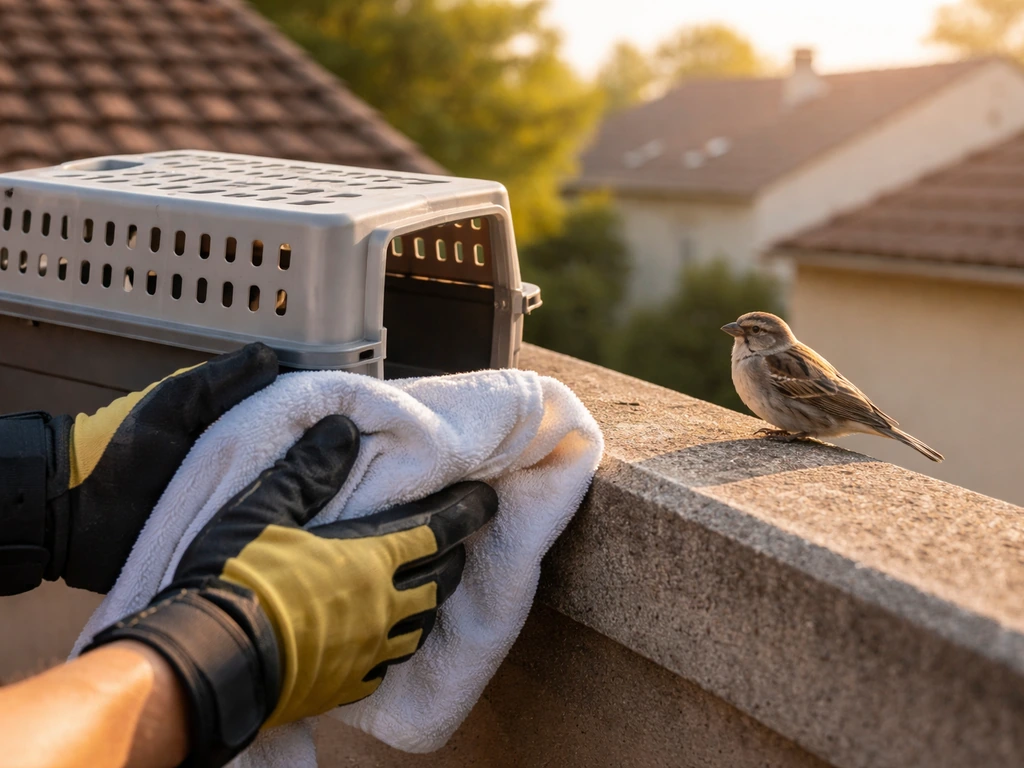
- Use a large, light-colored towel held in front of you. Gently drape it over the bird and scoop it up in both hands, keeping the towel wrapped loosely to prevent wing flapping.
- Transfer the bird carefully into its carrier or cage and cover part of the carrier with a light towel to reduce visual stress while still allowing airflow.
- Bring the bird inside to a warm, quiet room immediately.
It is dark, windy, or raining
- If it is already dark, the bird is unlikely to fly voluntarily and may actually be easier to approach on its branch.
- Use a soft, low-intensity flashlight or headlamp aimed slightly away from the bird, not directly at its eyes.
- Move to the branch slowly and attempt the towel-scoop method. Birds roost at night and are much calmer once settled.
- In strong wind or heavy rain, prioritize getting the bird indoors quickly using the towel method over any coaxing approach.
- If the bird is very high and weather is bad, focus on keeping visual contact and calling for help rather than climbing.
There are obstacles around the property (fences, outbuildings, neighboring yards)
If the bird moves to a neighboring property, knock on the neighbor's door immediately and explain the situation. If you need a quick refresher on how to get a bird out of a tree, follow the calm, cage-lure steps outlined earlier how to get bird out of tree. Ask permission before entering their yard. This is both a courtesy and, in most jurisdictions, a legal requirement. Move calmly through the new area and repeat the cage-lure and quiet-voice approach from the beginning. If the bird has moved to a roof or gutter, the guidance for getting a bird out of a gutter or down from a high place applies and involves different considerations than a tree retrieval.
Things to stop doing right now
These actions are well-intentioned but consistently make the situation worse or put you and the bird at risk.
- Do not throw objects (sticks, balls, soft toys) at or near the bird to startle it down. Birds do not land predictably when panicked, and they can injure themselves or fly into traffic.
- Do not use a hose or spray water. It soaks the bird, drops its body temperature fast, and causes extreme stress.
- Do not chase the bird by running or making loud noises. Every fast movement or loud sound is a predator signal that sends it higher.
- Do not attempt to climb high into a tree quickly. Rapid movement near a bird causes immediate flight. You also risk a serious fall.
- Do not try to grab a stressed, flapping bird with bare hands from directly above. A frightened bird can bite hard and injure itself breaking free.
- Do not use poles, brooms, or sticks to prod the bird off a branch. This almost always causes a panicked, uncontrolled flight.
What to do if the bird won't come down or seems injured
If an hour or more has passed and the bird is not responding to any cues, or if you can see signs of distress, it is time to shift your approach. If the bird still will not come down and you are wondering how to get a bird down from a high place, switch to a calmer, safety-first plan and call for help if it is not improving. Do not exhaust yourself or the bird with repeated failed attempts. Continued pressure will only make the bird more agitated.
If the bird is showing any of the following, stop DIY retrieval and move directly to calling an avian vet or wildlife rescue: open-mouth breathing or gasping, tail bobbing with each breath, wings drooping or held away from the body, visible bleeding, inability to grip a branch, or sitting on the ground and not moving. Severe bleeding is immediately life-threatening in birds because their total blood volume is very small. These are not wait-and-see situations.
If the bird seems physically okay but just will not come down after two to three hours, keep the cage lure in place, mark the tree location, and check back every 30 minutes. A bird that is simply scared (rather than injured) often descends on its own once it realizes no threat is present and hunger or thirst kicks in. Keep the area around the cage lure as quiet as possible and limit foot traffic near the tree.
Safe cleanup and immediate aftercare once the bird is retrieved
Getting the bird back is only half the job. What you do in the next 30 to 60 minutes matters a lot for its recovery.
- Bring the bird to a warm, quiet indoor room immediately. Avoid bright lights, TV noise, and other pets.
- If you suspect shock (the bird is very still, fluffed up, and barely responsive), apply the warm-dark-quiet approach: place it in a covered carrier with gentle warmth underneath. A heating pad set to low, covered with a towel, placed under one half of the carrier works well. Never cover the entire carrier, as the bird needs airflow.
- Check the bird carefully but quickly for cuts, feather damage, bleeding, or swelling. Do this with minimal handling.
- Do not force food or water if the bird is unstable, breathing hard, or very lethargic. Offer water once the bird is calm and alert.
- Monitor breathing for the first 30 minutes. Normal resting breathing in a bird should be quiet and effortless. If you see open-mouth breathing, tail bobbing, or hear clicking or wheezing, call an avian vet immediately.
- Watch for signs of heat stress too, especially in hot weather: panting, wings held out from the body, and labored breathing can indicate overheating rather than cold shock.
- If the bird appears normal after 30 to 60 minutes of quiet rest, offer familiar food and water, and keep it in a calm environment for the rest of the day. A vet check the following morning is still worth booking, especially if the bird was outside for more than an hour in hot, cold, or wet weather.
When to call wildlife or animal rescue and what to tell them
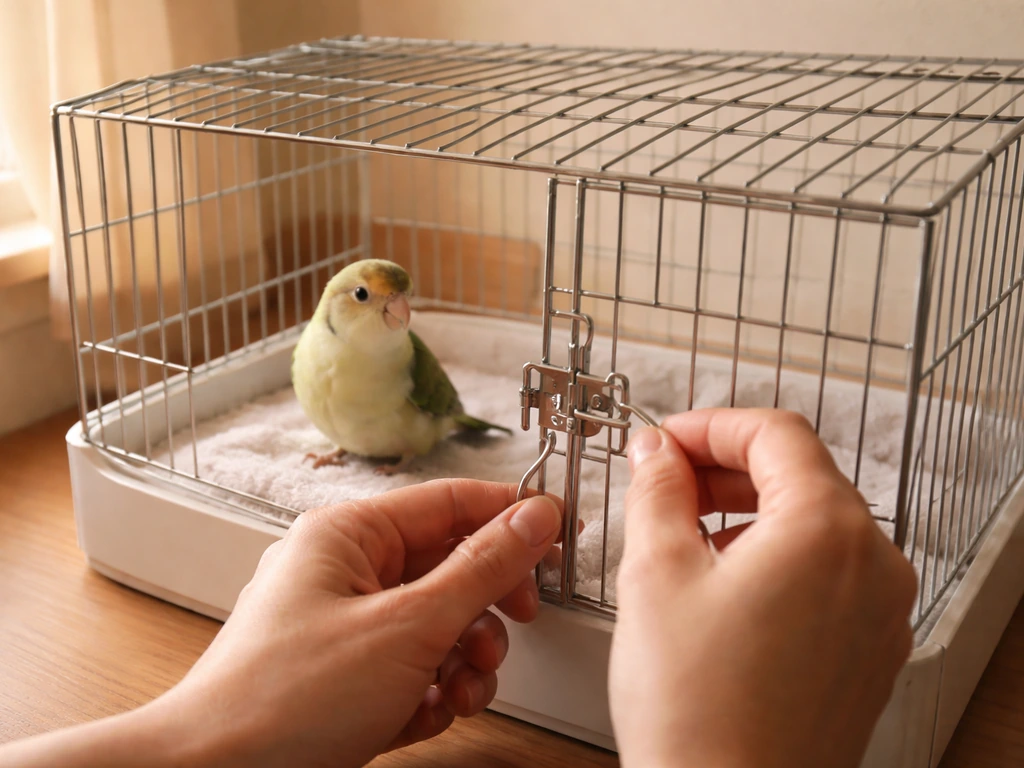
Call an avian vet or wildlife rehabilitator immediately if: the bird is injured or bleeding, it is showing respiratory distress (open-mouth breathing, tail bobbing), it has been on the ground and cannot fly, it is unresponsive to familiar cues after two to three hours, or you cannot reach it safely yourself.
On the call, be ready to give them the following information:
- Species and size of the bird (for example: green-cheeked conure, medium-sized parrot, budgerigar)
- How long it has been in the tree
- Current height and visible behavior (alert, lethargic, breathing normally or not)
- Any visible injuries
- Your exact address and the location of the tree on your property
- Whether the bird is a pet or potentially a wild bird
A quick note on legal considerations: pet birds are your property and you are legally entitled to retrieve them. However, if you are unsure whether a bird is truly your escaped pet or a protected wild species, do not attempt to capture and keep it. In the United States, migratory wild birds are federally protected, and most states have additional laws making it illegal to possess a wild bird without a permit. If you find an injured wild bird incidentally during your search, U.S. Fish and Wildlife Service guidance allows you to pick it up and transport it directly to a permitted wildlife rehabilitator under a Good Samaritan provision, but only for immediate transport, not for keeping it at home. When in doubt about species identification, call your local wildlife rehabilitator before touching the bird.
Prevention and property-proofing plan for the next escape
Once your bird is safely back inside, block out an hour this week to address the escape route. Most pet bird escapes are preventable, and the same fixes that stop the first escape stop the second and third.
Cage and aviary security
- Inspect every latch, door hinge, and cage panel for looseness or damage. Replace any latch that can be opened with one motion, as many parrots figure these out quickly.
- Add secondary locks (carabiners or aviary-specific spring locks) to doors that birds can manipulate.
- Check for gaps wider than the bird's head in wire panels and repair or replace them.
- If the bird escaped during cleaning or feeding, consider a secondary safety door or a closed-room protocol: always close the room door before opening the cage.
Outdoor and building escape routes
- If your bird spends time in an outdoor aviary, check the roof mesh and any joins at least monthly. Birds and weather both stress mesh over time.
- Identify the trees nearest to your property that an escaped bird would likely land in first, and make note of which ones are accessible without climbing. This shortens your response time.
- Trim or net overhanging branches directly above or adjacent to outdoor cage enclosures to reduce an easy escape route if a door is opened accidentally.
- During warm months when doors and windows are left open, use mesh screens or keep a dedicated 'bird-safe room' for out-of-cage time.
Seasonal planning
Spring and summer (especially late spring, which is the current season) are the highest-risk period for bird escapes because windows and doors are opened more frequently and outdoor time increases. Set a calendar reminder each spring to do a full cage and aviary security check. In autumn, shorter days mean a bird that escapes later in the afternoon has less time before dark, making retrieval harder. Factor this into how much outdoor time you allow as the days shorten.
Training your bird for easier retrieval
The single best long-term investment is recall training: teaching your bird to fly to you on a specific cue. Even basic step-up and come-when-called training done consistently at home dramatically improves your chances of getting a bird down from a tree quickly if it does escape. Practice the cue daily as part of normal handling so it is automatic for the bird when stress is high.
Quick-reference prevention checklist
| Task | When to do it | Priority |
|---|---|---|
| Inspect all cage latches and locks | This week, then monthly | High |
| Add secondary carabiner locks to accessible doors | This week | High |
| Check outdoor aviary mesh and joins | Monthly, every spring | High |
| Fit window and door screens in rooms used for bird time | Before warm season each year | High |
| Trim branches overhanging outdoor enclosures | Spring and autumn | Medium |
| Practice recall/step-up training | Daily during normal handling | High |
| Photograph your bird and note identifying features | Now, update annually | Medium |
| Save avian vet and local wildlife rehabilitator numbers to your phone | Today | High |
FAQ
What should I do if the bird seems terrified and ignores the cage lure?
Use your bird’s regular call cues instead of new noises, and offer only one feeding option (its usual favorite treat), placed where it can see it from the branch. If the bird won’t look toward the cage, try raising the cage slightly and angling it so the latch opening faces the tree, which often helps a scared bird orient to the “safe” location.
Is it okay to climb up to reach the bird, or use a net or ladder?
Do not use a ladder unless you can do it safely without running toward the bird or causing sudden movements. If you must approach, stay below the bird’s line of sight, move slowly, and pause frequently to let it settle. For any tool use, avoid anything that can catch toes or wing tips (netting, sticky items, ropes), because foot or wing injuries can turn a simple scare into an emergency.
How do I tell the difference between “just scared” and “injured but not obvious”?
If the bird is quiet but won’t come down, prioritize safety over speed: keep the cage lure set, minimize people and pets nearby, and check every 30 minutes rather than repeatedly restarting the process. Also note whether the bird is favoring one side or keeping a wing lifted, because that can be a subtle injury sign even without visible bleeding.
Once the bird gets close, when should I open the cage?
Don’t open the cage door while you are still trying to lure it unless a competent helper can watch and secure the area. A newly arrived bird can bolt immediately to the nearest exit or window, so it is safer to open the door only once you can keep the bird inside the room or aviary and close escape routes right after.
What if the bird is calling to me from the tree, but still won’t descend?
If the bird starts calling back to you, the best move is to respond in a calm, low voice and keep your body still, so the bird experiences “no chase.” Avoid waving hands near it or standing directly under the branch, which can look like a threat and cause it to hop higher.
Can I throw a towel or place a perch to coax the bird down?
Yes, but do it only if you can do so without startling the bird. Place the towel or perch near the cage lure as a “resting option,” not as an attempt to cover the bird. If the bird shows stress, stop and switch back to quiet voice plus the cage, because contact attempts can trigger a sudden fly-away.
What should I do if the bird flies into a neighbor’s yard or a hard-to-access area?
If it lands on a neighbor’s property, knock quickly but avoid entering through gates or locked areas without permission. If you cannot safely reach or the neighbor cannot help, call a local animal control or wildlife rehabilitator for guidance, especially if the bird moves toward brush, tree canopies, or areas where it could become trapped again.
What if I lose sight of the bird in the tree for a while?
If it has been out of sight, assume it may have shifted height or location. Use binoculars or a slow visual sweep from your original area, then re-establish the cage lure at the last known spot and keep note of changing sounds or calls. Retrieving works best when you reduce variables, so keep the setup consistent rather than moving the cage repeatedly.
What are the emergency signs that mean I should call immediately, not keep trying?
If it has stopped moving, is sitting low and not reacting, or is breathing with open mouth or tail-bobbing, contact an avian vet or wildlife rehab immediately. For bleeding, wrap loosely with clean gauze and apply gentle pressure only if you see active bleeding, then get professional help right away, because birds can deteriorate quickly.
What should I do after I get the bird back to help it recover safely?
After retrieval, keep the bird in a warm, quiet, low-traffic room, and avoid immediate handling or “checks” that require catching. If you see any breathing changes, persistent lethargy, refusal to perch, or continued bleeding, contact an avian vet the same day, even if the bird seems okay at first.
How can I handle it legally if I am not sure the bird is definitely my pet?
If you suspect it might be a wild bird rather than your pet (different species, unknown banding, or you have no recent escape), do not attempt to capture it yourself. In that case, call a local wildlife rehabilitator or animal control to confirm species and advise next steps, because handling protected wild birds can create legal risk and also increases stress for the animal.
How do I build recall training so I can prevent future tree escapes?
The best quick next step is recall training, but do it only when the bird is calm and safe. Start with short, repeatable sessions indoors using the same cue and reward your bird already trusts, then gradually practice near doors and windows once it reliably responds. This turns “get down now” stress into a trained, predictable response.
Next Article
How to Get a Bird Down From a High Place Safely
Safety-first steps to rescue a trapped bird from roofs, balconies, or trees, plus legal tips and prevention.