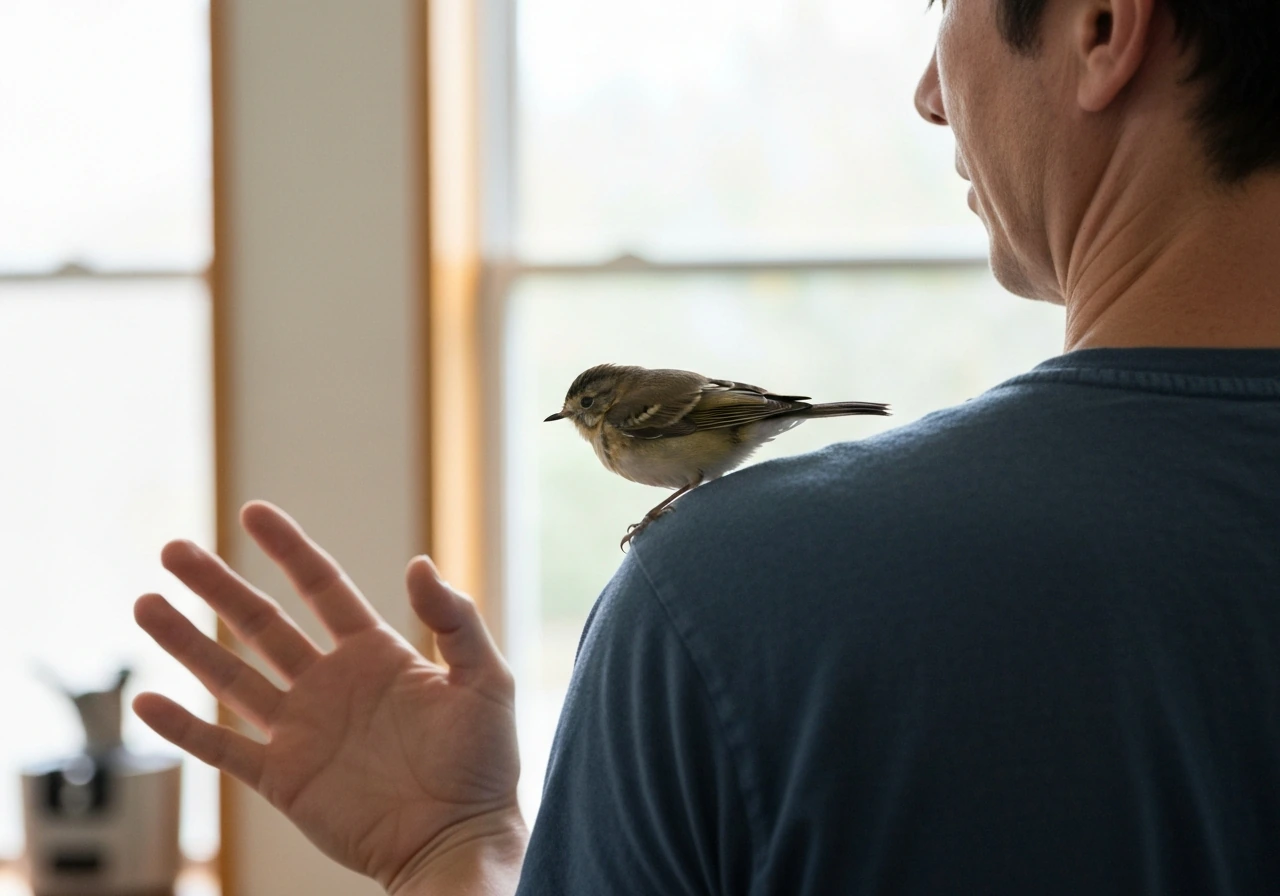
Stay completely still, keep your voice low, and do not grab the bird. Most wild birds land on people by accident or curiosity and will leave on their own within seconds if you avoid sudden movements. The fastest way to get a bird off your shoulder is to slowly extend your arm parallel to the ground, hold very still, and let the bird step onto your hand or forearm as a perch, then gently lower your arm and tilt it slightly so the bird walks or flies off. If that does not work, a slow, calm turn toward an open window or door often does the trick. If the bird has ended up in a window well, keep calm and use slow, controlled movements to guide it back out rather than chasing it how to get bird out of window well. If the bird landed in a tree instead of on you, you can use a different approach for how to get a bird out of a tree. What you must not do is grab, swat, or startle it. That is how people get scratched, and that is how birds get hurt.
How to Get a Bird Off Your Shoulder Safely and Humanely
Immediate safety first on the shoulder
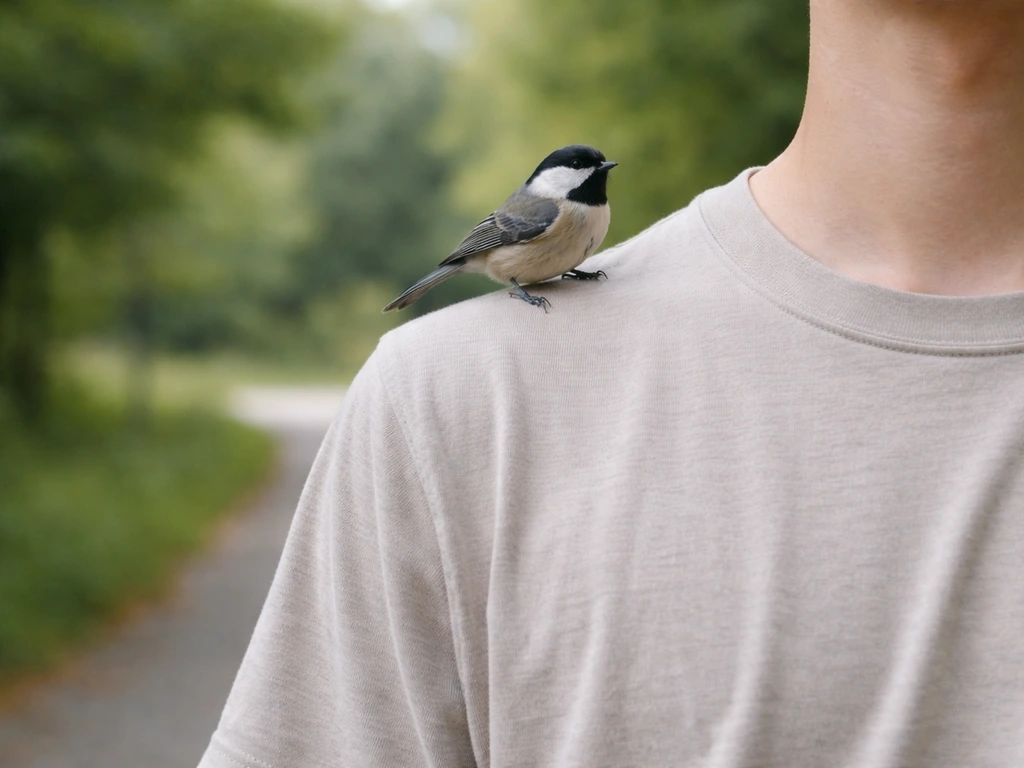
The first ten seconds matter most. Your instinct will be to flinch or brush the bird off, but that is exactly what causes a scratch or bite. Any animal can bite or scratch when it feels threatened, and a panicked bird on your shoulder is already in a vulnerable state. Protect yourself by doing the following immediately.
- Freeze your upper body. Keep your head straight. Do not turn quickly to look at the bird.
- Drop your shoulders slightly and breathe slowly. Tension in your muscles transmits through your body and agitates the bird.
- Keep your hands down and away from the bird. Do not reach up.
- If the bird is near your face or neck, tuck your chin slightly to protect your eyes and mouth from any accidental contact.
- Do not make loud noises or alert bystanders dramatically. Ask others nearby to stay calm and quiet.
- If you are outdoors, position yourself near an open space so the bird has a clear flight path away from you.
If the bird is a small songbird or pigeon, your risk of real injury is low as long as you stay calm. Larger birds like crows, gulls, or raptors deserve more caution because their beaks and talons can cause meaningful wounds. For raptors especially, do not try to handle them yourself. Wait and give the bird space to leave.
Quick, humane ways to get the bird to step off or fly away
Use the gentlest method first and only escalate if it fails. Here is a step-by-step approach, ordered from least to most hands-on. If the issue involves a pet bird stuck above ground, focus on staying calm and using gentle prompts so it steps down or flies to safety.
- Wait it out (30 to 60 seconds). Many birds will simply fly off once they realize you are not a tree branch or feeder. Stay still and give it that chance.
- Offer a perch. Slowly raise your forearm in front of your body at a slight upward angle, hold it close to the bird's feet, and say nothing. The bird may step onto your arm and then fly away once it has a more stable platform.
- Walk slowly toward an open door or window. Move in small, smooth steps. Birds often take flight when they spot an opening or a change in environment. Do not rush.
- Use a long stick or broom handle as a perch alternative. If you have someone nearby, have them slowly bring a stick close to the bird's feet from the front. The bird may step onto the stick and can then be carried outdoors.
- Dim or redirect light. Indoors, turning off overhead lights and opening one well-lit exit point (a window or door) encourages a bird to fly toward the light and out. This is the classic Columbus Audubon approach for trapped birds and works on the shoulder too if you are inside.
- Gently shrug the shoulder (last resort, calm birds only). If the bird is relaxed and still perched after all of the above, a very slow, minimal shrug of the shoulder can encourage it to fly. Do this once, slowly, and stop immediately if the bird grips tighter or opens its beak.
What you should never do: do not swat, grab, or flick the bird. Do not spray it with water. Do not spin around. Do not let a bystander rush over or clap their hands near you. These actions spike the bird's stress response and dramatically increase your chance of getting scratched or bitten.
Relaxed bird vs. agitated bird: read the signs
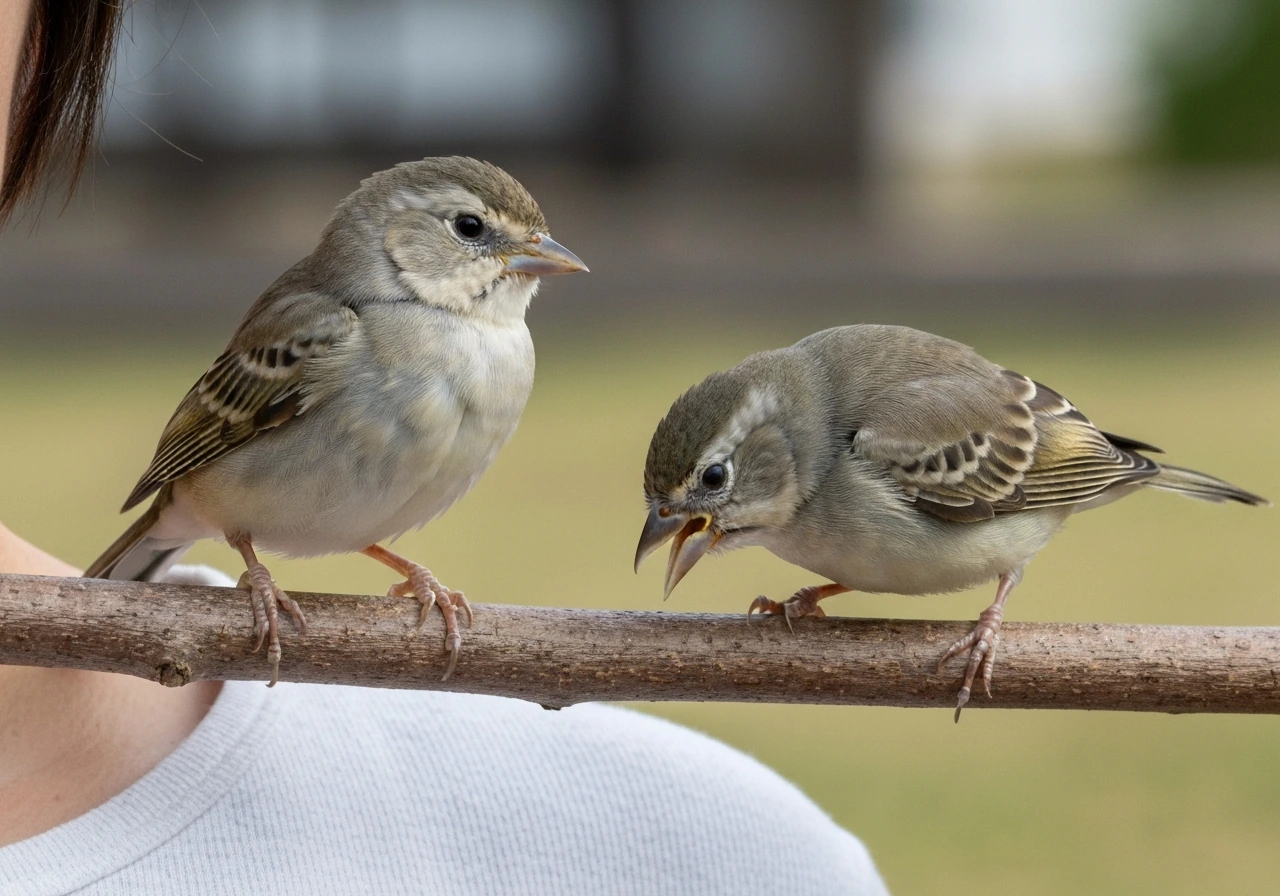
| Sign | Relaxed bird | Agitated bird |
|---|---|---|
| Body posture | Feathers slightly fluffed, sitting calmly | Feathers slicked tight, crouching or leaning forward |
| Beak | Closed or slightly open | Open, clicking, or pointing at you |
| Feet | Loosely gripping | Gripping tightly, shifting weight |
| Vocalizations | Quiet or soft chirping | Loud alarm calls, hissing, clicking |
| Best approach | Offer arm perch, walk to exit | Stay still, do not touch, wait for it to leave on its own |
When not to touch: injuries, aggression, and baby birds
Some situations call for hands-off completely, no matter how urgent it feels to remove the bird. Trying to handle the wrong bird in the wrong situation makes things worse for both of you.
Injured birds
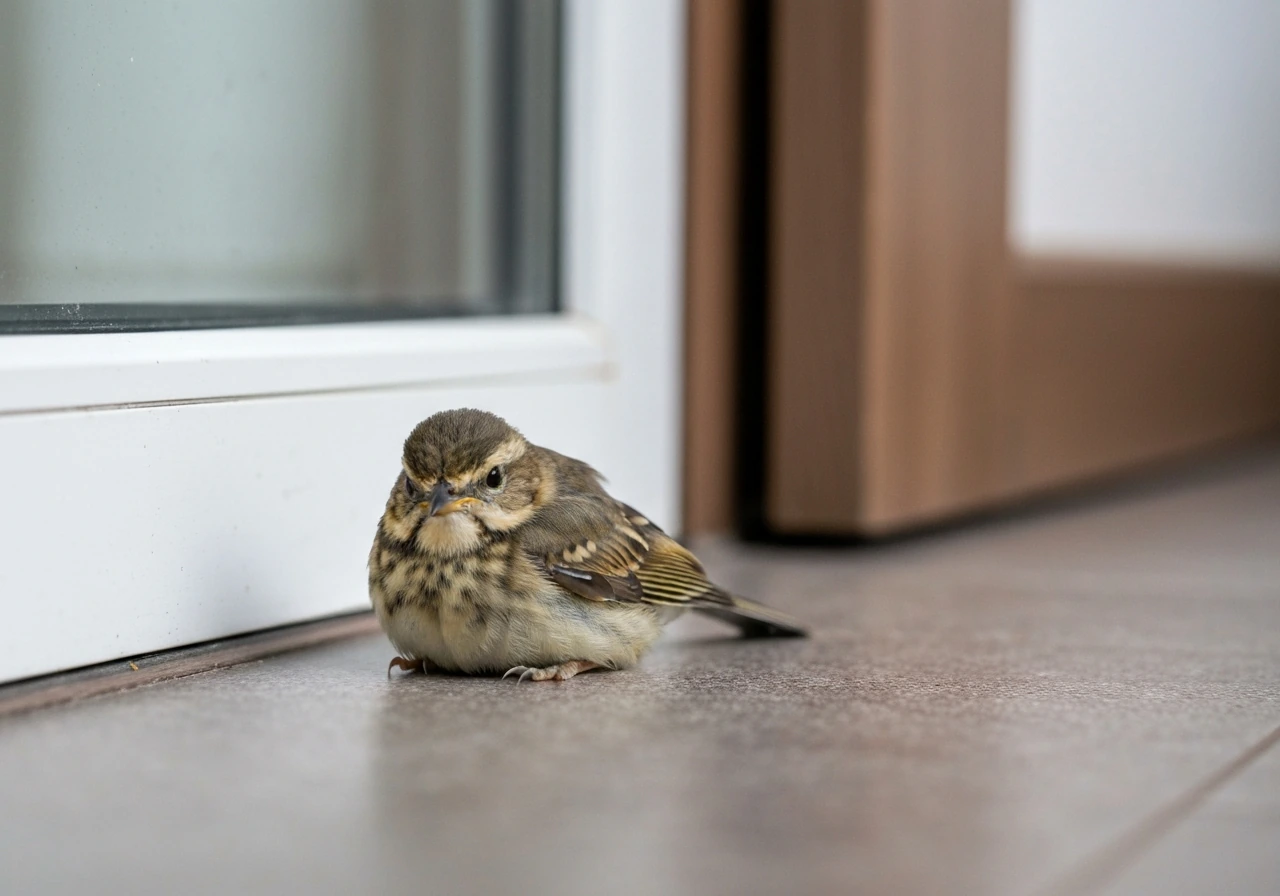
If the bird landed on you after a window strike or appears dazed, droopy, or unable to hold its head up, it is likely injured. An injured bird on your shoulder is unpredictable. It may bite without warning as a pain reflex. Do not try the arm perch method. Instead, have someone bring a small cardboard box or a folded towel. Place the towel gently over the bird to reduce visual stimuli, then carefully guide it into the box without gripping it. Per Tufts Wildlife Clinic guidance, place the box in a warm, quiet, dark place away from pets and children while you contact a wildlife rehabilitator. If you must handle the bird briefly, avoid letting a loose towel loop around its talons because fibers can catch and injure feet.
Aggressive birds
Nesting season brings aggressive behavior from otherwise calm birds. Crows, mockingbirds, and red-winged blackbirds in particular will defend territory by landing on or near people and attacking. If the bird on your shoulder is biting repeatedly, making alarm calls, or is large enough to cause real injury (think gull or crow), protect your face and neck first. Walk steadily toward a sheltered area like a doorway, car, or building overhang. Do not run. Once you have cover, the bird will usually disengage. Report persistent aggression near your building entrance to facility management so deterrents can be installed before the problem repeats.
Baby birds
A baby bird that lands or falls onto you is a different situation from a wild adult. According to U.S. Fish and Wildlife Service guidance, a baby bird likely does not need help unless it is featherless or has its eyes closed. A fledgling (partially feathered, hopping around) is often just learning to fly and its parents are nearby. If a fledgling lands on you, use the slow arm perch method to transfer it to a nearby bush or low branch, then move away so the parents can return. Do not bring it inside and do not attempt to feed it. If the bird is featherless or eyes-closed, it has fallen too early from the nest. Transfer it to a box as described above and call a rehabilitator. Do not try to return it to a nest that is high up or inaccessible, and do not handle it more than absolutely necessary.
Aftercare: what to do once the bird is off
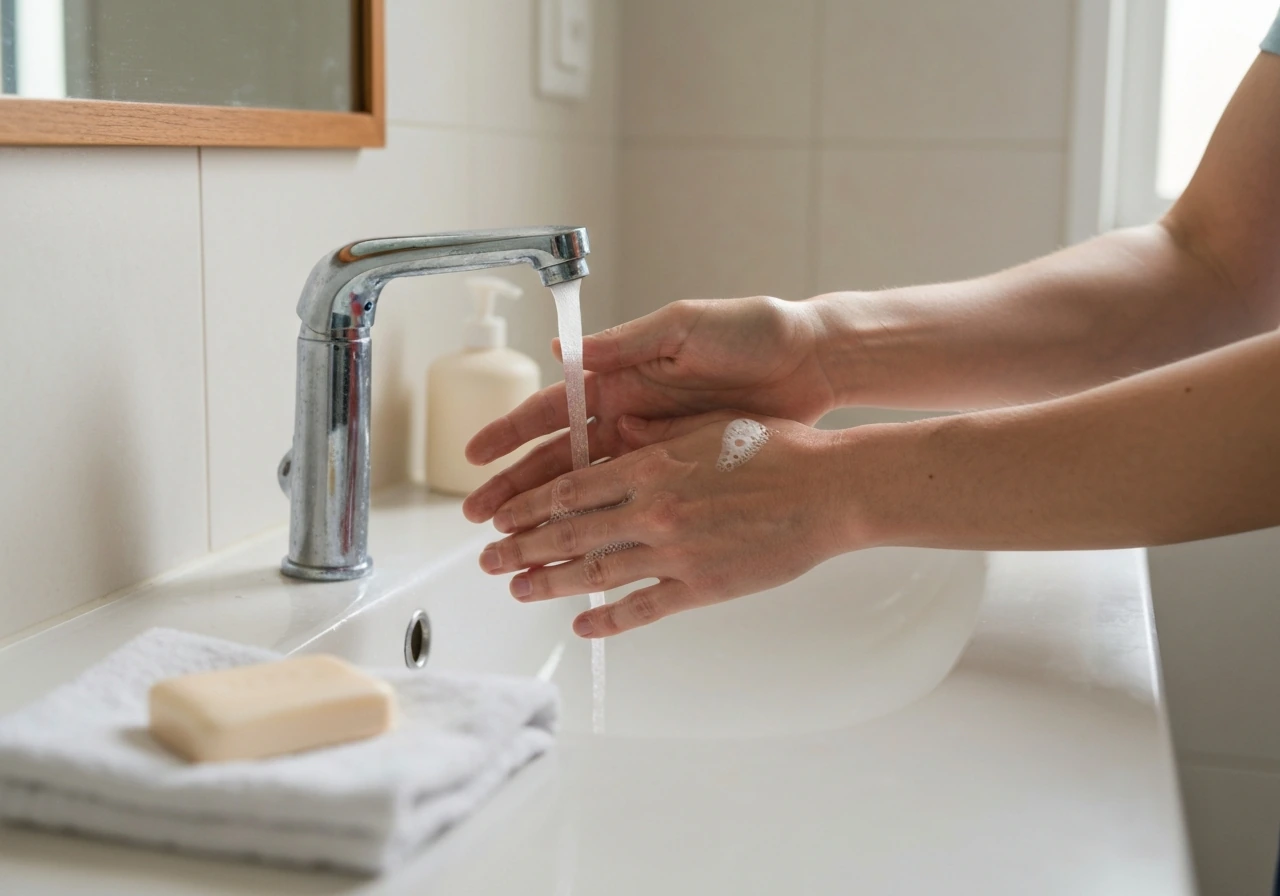
Once the bird is gone, your job is not quite finished. Birds can carry bacteria, fungi, and viruses transmissible to humans, including avian influenza, histoplasmosis (from droppings), and Salmonella. The risk from a brief landing is generally low, but the hygiene steps below are quick and worth doing every time. OSHA emphasizes hand hygiene after contact with infected or exposed poultry and after touching surfaces contaminated with bird mucus, saliva, or feces and after removing PPE hygiene steps below are quick and worth doing every time.
Check yourself for bites and scratches
- Inspect your shoulder, neck, and any exposed skin where the bird was sitting or gripping.
- If you find a scratch or puncture wound, wash it immediately with soap and water. Mayo Clinic recommends thorough washing as the key first aid step for any animal bite or claw wound.
- If the wound is deep, bleeding heavily, or near your face, contact a medical professional. Also seek medical advice if you are immunocompromised or if the bird appeared sick or injured.
- Watch the wound over the next 48 to 72 hours for signs of infection: increasing redness, swelling, warmth, or discharge.
Clean the area and yourself
- Wash your hands thoroughly with soap and water immediately after any contact with a wild bird or its droppings. The CDC makes this a consistent recommendation across all wild bird contact scenarios.
- If the bird left droppings on your clothing, remove and wash the clothing before wearing it again.
- If droppings landed on a hard surface, do not dry sweep or vacuum without first wetting the area. Per CDC and NIOSH guidance, dry sweeping can aerosolize fungal spores and virus particles. Lightly spray the droppings with water or a diluted disinfectant, then wipe with disposable paper towels and discard.
- For surfaces that need further disinfection, use an EPA-approved disinfectant with label claims against influenza A viruses, following the manufacturer's contact time instructions. This is particularly relevant in facility settings where multiple people may come into contact with the surface.
Preventing repeat landings and roosting on and around people
If birds are landing on facility staff, visitors, or yourself more than once, there is something about your building's environment that is attracting them. Fixing the cause is more effective than any one-time removal. Here is how to think about it.
Environmental changes that reduce bird contact with people
- Remove food attractants. Open trash, outdoor eating areas, loading dock spills, and vending machine areas are the top culprits. Use lidded bins, clean up food spills promptly, and post reminders where staff eat outside.
- Eliminate roosting ledges near building entrances and walkways. Birds that perch above doorways become bold over time and may start landing on people passing below. Install sloped ledge covers, anti-roosting spikes, or bird wire on favored ledges.
- Reduce nesting opportunities near high-traffic areas. Block off gaps in soffits, HVAC intakes, and window ledges before nesting season (typically February through July for most North American species). Once a nest is active, you generally must wait until chicks have fledged before sealing the gap.
- Address reflective windows and glass near walkways. Birds drawn to their own reflection in glass can become territorial and aggressive toward people. Window films, external mesh screens, or stick-on raptor silhouettes (as recommended by the RSPCA) reduce reflection and redirect bird attention.
- Use motion-activated deterrents in high-problem zones. Ultrasonic devices, reflective tape, and motion-activated water sprinklers can discourage birds from loitering in areas where people congregate.
- Brief staff and visitors during problem seasons. In spring and early summer, post simple signage near known nesting areas: no eating in this zone, nest nearby, please keep moving.
Seasonal planning for facility managers
| Season | Key risk | Recommended action |
|---|---|---|
| Late winter (Jan–Feb) | Pre-nesting scouting by birds | Inspect and seal gaps in building envelope, install ledge deterrents before birds commit to nesting sites |
| Spring (Mar–Jun) | Active nesting, aggressive territorial behavior | Avoid disturbing active nests, post staff alerts near known nest sites, increase cleaning frequency near entry points |
| Summer (Jul–Aug) | Fledglings on the ground, juveniles exploring | Educate staff not to handle fledglings, keep entrance areas clear of food, monitor for injured birds |
| Fall (Sep–Nov) | Migration brings new species, increased window strikes | Apply window collision deterrents, check for dazed birds near glass facades, review entry point sealing |
| Winter (Dec–Jan) | Roosting flocks seeking warm building features | Inspect roost sites, clean up droppings before they accumulate, consider professional exclusion if colony roosting begins |
When to call wildlife control or facility staff
Most single-bird shoulder landings do not require professional intervention. But there are clear thresholds where you should stop DIY attempts and call in a professional.
Call a wildlife rehabilitator when
- The bird is clearly injured: bleeding, dragging a wing, unable to stand, or unresponsive to your presence.
- The bird is a featherless or closed-eye baby and cannot be safely returned near its nest.
- The bird will not leave after 20 to 30 minutes of calm, gentle attempts using the methods above.
- You suspect the bird may be sick (discharge from eyes or nostrils, labored breathing, unusual stillness).
- The bird has gotten tangled in your clothing, hair, or jewelry and cannot free itself without force.
Call facility management or a pest control specialist when
- Multiple staff members or visitors report birds landing on them in the same area repeatedly over several days.
- You have identified an active roost or nest colony near a high-traffic entrance, HVAC intake, or food service area.
- Bird droppings are accumulating on surfaces where people work, eat, or walk regularly.
- A bird has entered the building and cannot be coaxed out using the light-and-exit method within a reasonable time.
What to tell them when you call
- Species or description of the bird (size, coloring, beak shape) if you can identify it.
- Whether the bird appeared injured, aggressive, or otherwise abnormal.
- The location: indoors or outdoors, approximate height if the bird is stuck in a high place.
- How long the situation has been ongoing.
- Any steps you have already tried.
- Whether there are active nests, eggs, or chicks nearby.
If the bird is injured or orphaned and you need to transport it to a rehabilitator yourself, the U.S. Fish and Wildlife Service Good Samaritan provision allows any person to briefly take possession of a sick, injured, or orphaned migratory bird for the sole purpose of immediately transporting it to a permitted rehabilitator. You cannot keep it. Get it to a licensed facility as quickly as possible.
Legal and ethical basics for protected species
Almost every wild bird you are likely to encounter in North America is protected under the Migratory Bird Treaty Act, which is enforced by the U.S. Fish and Wildlife Service. In the UK and EU, equivalent protections apply under the Wildlife and Countryside Act 1981 and the EU Birds Directive respectively. In the UK, all wild birds are protected under the relevant legal framework, including offences under the Wildlife and Countryside Act 1981 (as amended) in relevant marine or coastal contexts. These laws matter practically, not just legally.
- You cannot legally capture, kill, injure, or possess a wild migratory bird without a permit. Removing a bird from your shoulder without harming it is not an issue, but trapping or confining it is.
- Under the Migratory Bird Treaty Act, even disturbing an active nest (containing eggs or chicks) can be a federal offense. If a bird nesting near your building entrance is causing the shoulder-landing problem, do not remove the nest yourself mid-season.
- In the UK, intentionally killing, injuring, or taking any wild bird is a criminal offense under the Wildlife and Countryside Act 1981. Deliberate nest disturbance during active use is also prohibited.
- Humane methods are required and expected. Exclusion (blocking access), deterrents (spikes, netting, visual repellents), and habitat modification are all legally sound approaches. Glue traps, toxic baits, and indiscriminate netting that could trap birds are prohibited under multiple frameworks.
- If you are unsure whether a species you are dealing with has additional protection (Schedule 1 in the UK, or listed under the Endangered Species Act in the US), photograph the bird and consult a wildlife professional before taking any action beyond passive deterrence.
- When in doubt, take pictures or video of the bird and the situation and call your regional wildlife authority or a licensed rehabilitator for guidance before acting. This is the approach both the RSPCA and USFWS recommend.
Quick-reference troubleshooting: what to try first
Use this flow the next time a bird lands on you or on someone nearby. If the bird got into a downspout instead of landing on a person, use the same calm, low-stress approach to coax it back out how to get a bird out of a downspout. Work through it in order and stop as soon as the bird is safely off.
- Freeze and assess. Is the bird calm or agitated? Is it injured? Is it a baby? Answer those three questions before doing anything.
- If calm adult bird: wait 30 to 60 seconds. Offer your forearm as a step-off perch. Walk slowly toward an open exit.
- If agitated adult bird: stay still, protect your face, walk calmly to shelter. Do not attempt to handle it. Let it leave on its own.
- If injured bird: drape a light towel over it, guide it gently into a cardboard box, keep it dark and quiet, call a rehabilitator.
- If baby bird (feathered fledgling): use the arm perch to transfer it to a low branch nearby and back away so parents can return.
- If baby bird (featherless or eyes closed): box it as you would an injured bird and call a rehabilitator immediately.
- Once bird is off: check for scratches, wash hands with soap and water, clean any droppings with wet-wipe method, monitor your skin for 72 hours.
If birds are landing on people repeatedly in and around your building, the fix is environmental, not reactive. Audit your building's ledges, food waste management, and window reflections, then schedule deterrent installation before the next nesting season begins. A problem that seems like a one-off encounter is usually a facility management issue in disguise, and the earlier you address the root cause, the easier and cheaper the solution. If you notice birds roosting or getting stuck in a gutter, the same calm, humane principles can help you figure out how to get the bird out of the gutter safely how to get bird out of gutter.
FAQ
What should I do if the bird won’t step onto my hand and keeps shifting on my shoulder?
If it is still calm, stay still and let it choose to leave, then slowly lower your arm only after it has stepped onto you. If it is repeatedly trying to bite, making loud alarm calls, or you cannot keep your posture steady, stop and switch to moving toward an open door or sheltered cover instead of trying to “hold” it off your shoulder.
Does my breathing or voice matter when I’m trying to get a bird off my shoulder?
Avoid blowing on it or making big breaths near its face, those vibrations can startle birds. Instead, focus on quiet, steady breathing and keep your head turned slightly away while you use the slow arm or slow walk-to-cover method.
What if I’m outdoors with no window or door in sight?
If you are outside and have no door or window nearby, create a “destination” by standing near a tree line, overhang, or fence and pausing. The bird often leaves once it sees a clear path and you stop moving for a moment.
I think it might be a crow or a raptor. Should I still try the arm perch method?
If it is a raptor or larger bird, do not attempt to transfer it with an arm perch. Protect your face and neck, move slowly toward cover, and ask someone to give space rather than try to grab or “help” from behind.
The bird looks injured, but I can still reach it. Is it ever okay to try to brush it off quickly?
Do not try to shake it off or flick it, even lightly. For an injured-looking bird, switching to a hands-off approach is safer, use a towel or folded cardboard to reduce visual stimuli and guide it into a box without gripping the body or talons.
Can I bring a bird home briefly if it is injured and I need to drive to a rehabber?
Yes. If the bird is injured and you need to transport it, you can temporarily possess it only to immediately move it to a permitted rehabilitator. Bring it to a warm, quiet, dark place right away, and keep pets and children away during transport and intake.
What’s the safest way to clean up after a bird lands on me?
Handle your hygiene like it is a higher-risk encounter: wash hands with soap and water, avoid touching your face until after washing, and wipe any areas where droppings may have landed. If the bird was on you longer than a few seconds, a full hand wash is worth doing even if you do not see droppings.
What should I change if birds keep landing on me or my coworkers day after day?
If it is repeatedly landing on your shoulder or others, treat it as an attraction problem. Check for visual lures (window reflections, glossy surfaces), food sources (waste bins, pet food left outside), and nearby nesting spots, then adjust lighting, coverings, or waste management before the next nesting window.
How do I stop bystanders from rushing over and making the situation worse?
If a passerby is nearby, ask them to hold position and keep their hands down, clapping and rushing often makes things worse. Give one clear instruction, “Please don’t approach, I’m guiding it away,” then let you handle the calm method while they create space.
I had a bag or umbrella when the bird landed. Should I set things down?
If you are carrying something (a bag, umbrella, stroller), keep it still and avoid sudden swings. Put the item down only if you can do it slowly without startling the bird, then use the same slow arm or slow turn method.
How can I tell whether a baby bird on my shoulder is a fledgling I can place outside or something that needs rescue?
A fledgling is usually fine to move outdoors and away from you, but a featherless or eyes-closed chick usually needs professional help. Don’t give food, and don’t return it to a difficult or inaccessible nest location, use a box transfer and contact a rehabilitator.