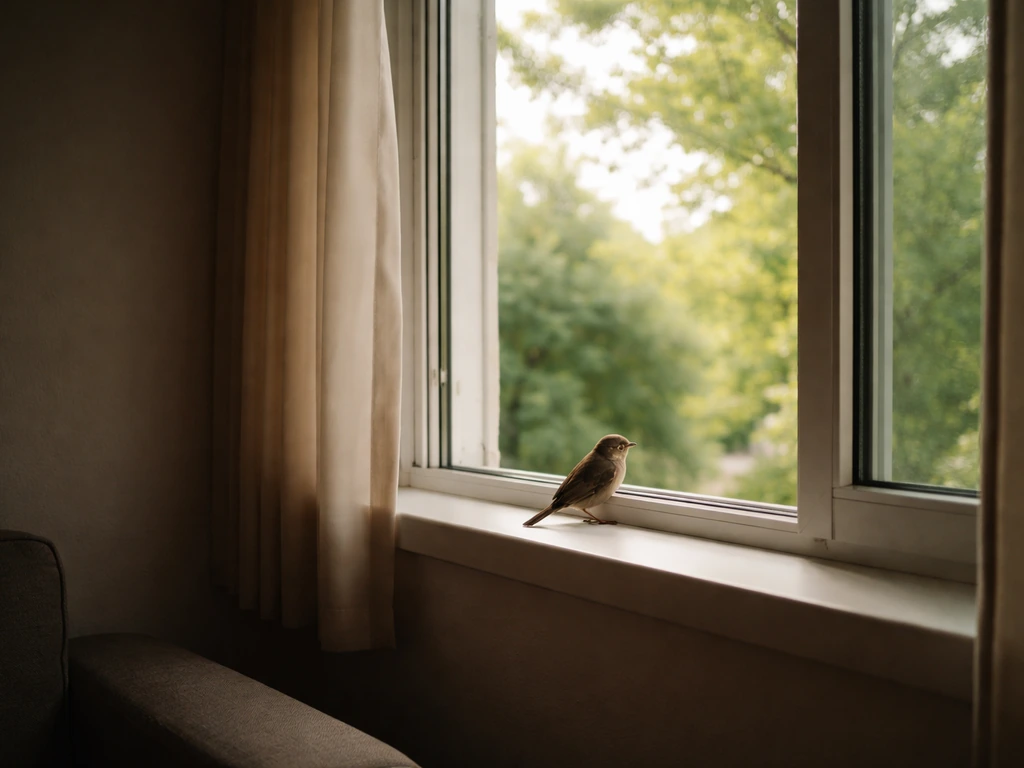
Most of the time, the best thing you can do to get a bird out of a tree is nothing. Step back, keep pets and kids away, and watch quietly from a distance. If the bird is perched on your shoulder, stay calm, gently guide it off, and keep it from panicking while you create a safe path away get a bird off your shoulder.
How to Get a Bird Out of a Tree Safely and Humanely
Maya Carver
25 Apr 2026
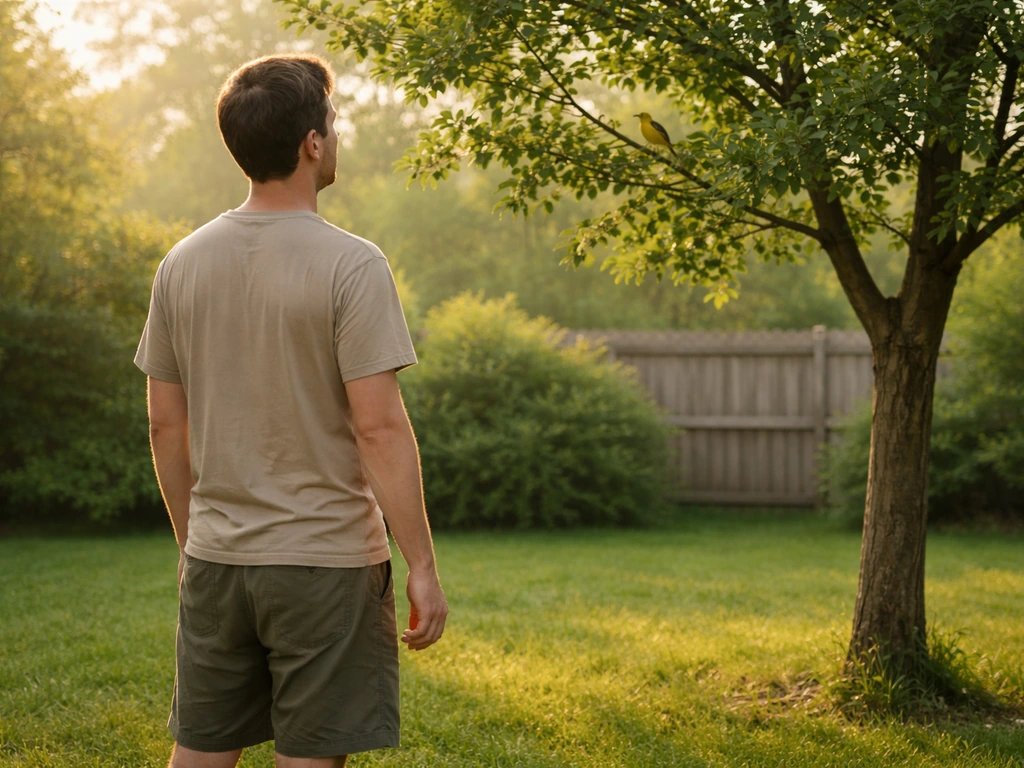
Healthy birds, including fledglings hopping around on branches, almost always leave on their own once the area feels safe. Where you actually need to act is when the bird is visibly injured, genuinely stuck in branches or netting, too young to fend for itself, or in immediate danger from a predator. Even then, your job is mostly to reduce stress and clear the way, not to grab the bird.
Quick safety steps before you try anything
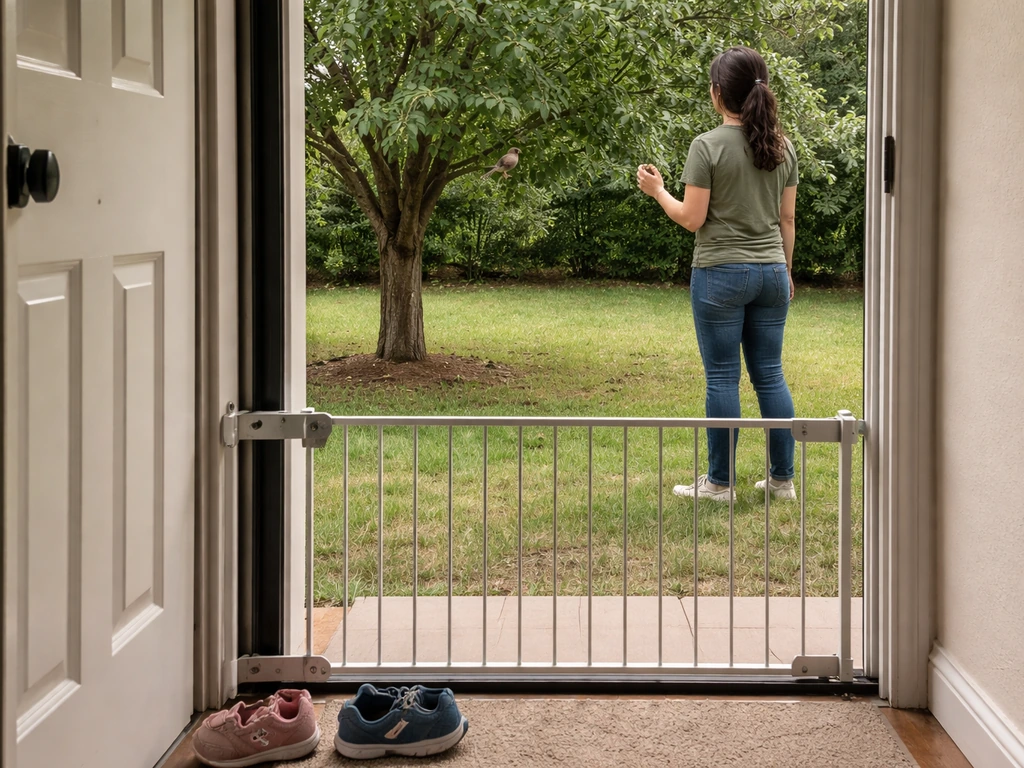
Before you do a single thing, run through this short checklist. Rushing in without it is how people get hurt or make the situation worse for the bird.
- Remove pets and send children inside immediately. A dog or cat nearby keeps the bird panicked and prevents parents from returning.
- Check whether the tree or branches are near overhead power lines. If wires are within reach of the work zone, stop completely and call your electric utility before proceeding.
- Scan for nests. Disturbing an active nest with eggs or nestlings may violate the Migratory Bird Treaty Act, which makes it unlawful to take, capture, or disturb migratory birds, their nests, or eggs without a federal permit.
- Put on thin work gloves before any physical contact. They protect you from bites and scratches and reduce the amount of human scent transferred to the bird.
- Do not attempt to feed or give water to any wild bird. It causes more harm than help, and rehab organizations specifically advise against it.
- Decide right now whether this is a watch-and-wait situation or a genuine emergency. That assessment is the next step.
How to read the situation before you act
The right response depends heavily on what kind of bird you're looking at and what it's actually doing. Spend two to five minutes observing from at least 20 to 30 feet away before drawing any conclusions.
Is it a fledgling, a nestling, or an adult?
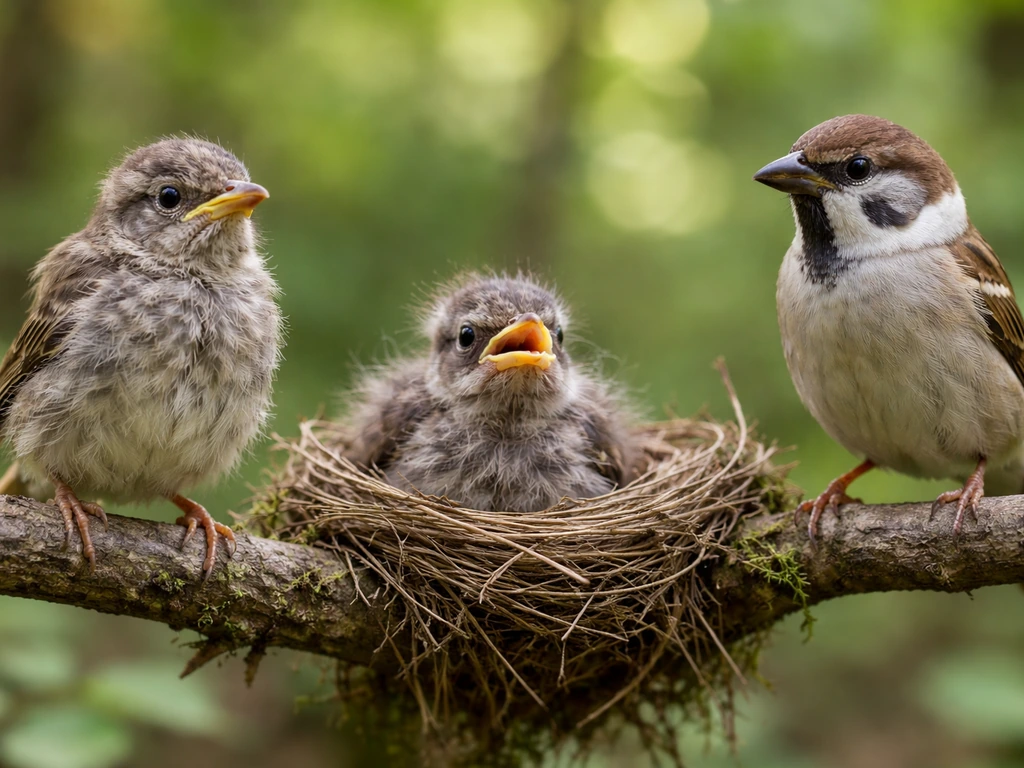
This single distinction changes everything. A fledgling has most of its feathers, can hop from branch to branch, and is supposed to be out of the nest. It looks clumsy, but that's normal. Its parents are almost certainly nearby, waiting for you to leave. A nestling, by contrast, is mostly bare or downy, cannot perch or hop normally, and has no business being in a tree on its own. If you see a nestling clinging awkwardly or fallen to a low branch it can't leave, it likely fell from the nest above. An adult bird sitting unusually still, unable to fly, or holding one wing oddly is a completely different scenario and probably injured.
Look for signs of injury and assess the height
From your safe distance, look for visible bleeding, a drooping or misshapen wing, or a bird that's gripping a branch but swaying rather than sitting steadily. These are injury red flags. Also note the height. If the bird is above roughly 10 to 12 feet, a standard 6-foot stepladder won't reach it safely, and an extension ladder becomes a real fall hazard without a second person and a stable setup. If the bird is high up and you cannot reach it safely, use the proper steps for how to get a bird down from a high place or call a professional. Height combined with injury is usually the combination that pushes this into professional territory.
Is it actually stuck, or just resting?
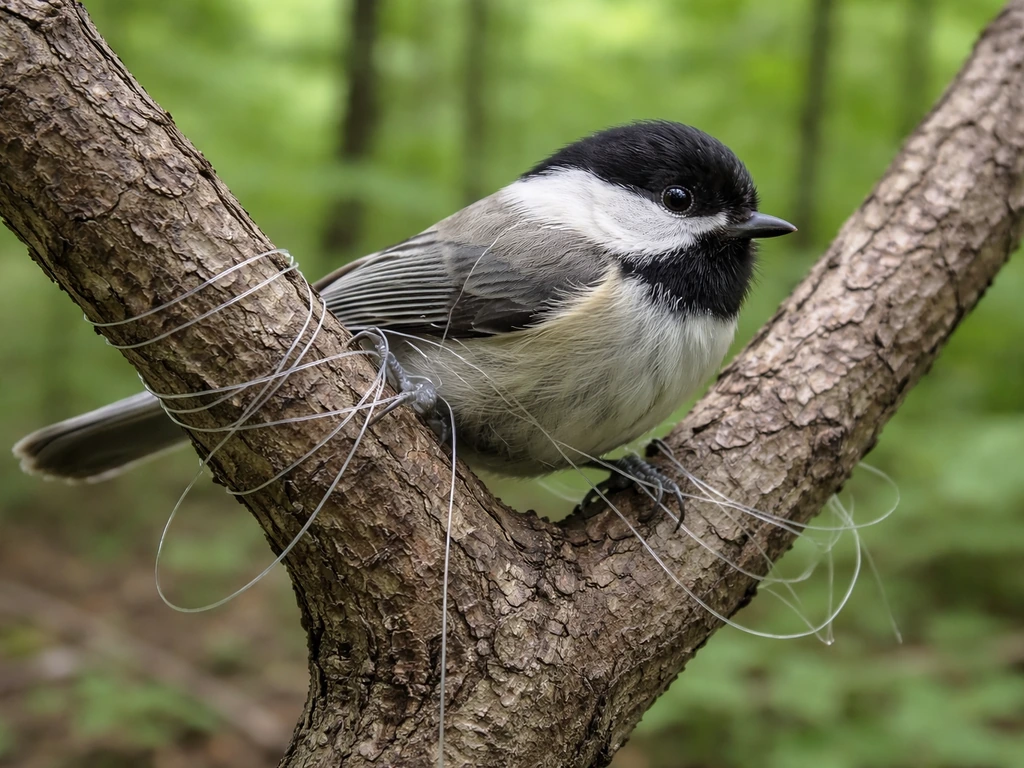
Birds that are trapped in netting, fishing line, or tightly forked branches need intervention. Birds that are simply perched, even very high up, almost certainly do not. Birds that are simply perched, even very high up, almost certainly do not how to get a pet bird out of a tree. Watch for repeated attempts to move combined with clear inability to do so. If the bird is struggling against something physical, that's a stuck bird. If it's sitting quietly and looking around, it's resting or regrouping, and patience is your best tool.
Humane ways to encourage the bird to leave on its own
The most effective first move is always reducing the threats the bird perceives. Once it feels safe, most birds self-rescue quickly.
- Move everyone, including yourself, well away from the tree. Stand at a minimum of 20 to 30 feet and stay quiet.
- Secure all pets indoors or on leash. Even a calm dog sitting nearby is enough to keep a bird frozen.
- Turn off any sprinklers, machinery, or noise sources near the tree that might be adding to the bird's stress.
- If the bird is in shade and the sun has moved, wait. Birds often move when light conditions change.
- If it's getting dark and the bird has not moved but seems healthy, leave it overnight. Healthy birds almost always move at first light.
- If the bird is low enough to be visible but seems calm, try playing the species' own calls softly from a phone about 15 feet away. This can trigger a flock response and encourage movement in songbirds, though it doesn't work for every species.
- If you suspect the bird is attracted to a food source nearby (a feeder, fruit tree, or similar), temporarily remove or cover that source so the area feels less rewarding to stay in.
DIY retrieval when the bird is genuinely stuck
If the bird is visibly entangled in netting, fishing line, or forked branches and cannot free itself, passive encouragement won't help. This is when careful physical intervention is appropriate, but only if you can reach the bird safely and legally.
Ladder safety first
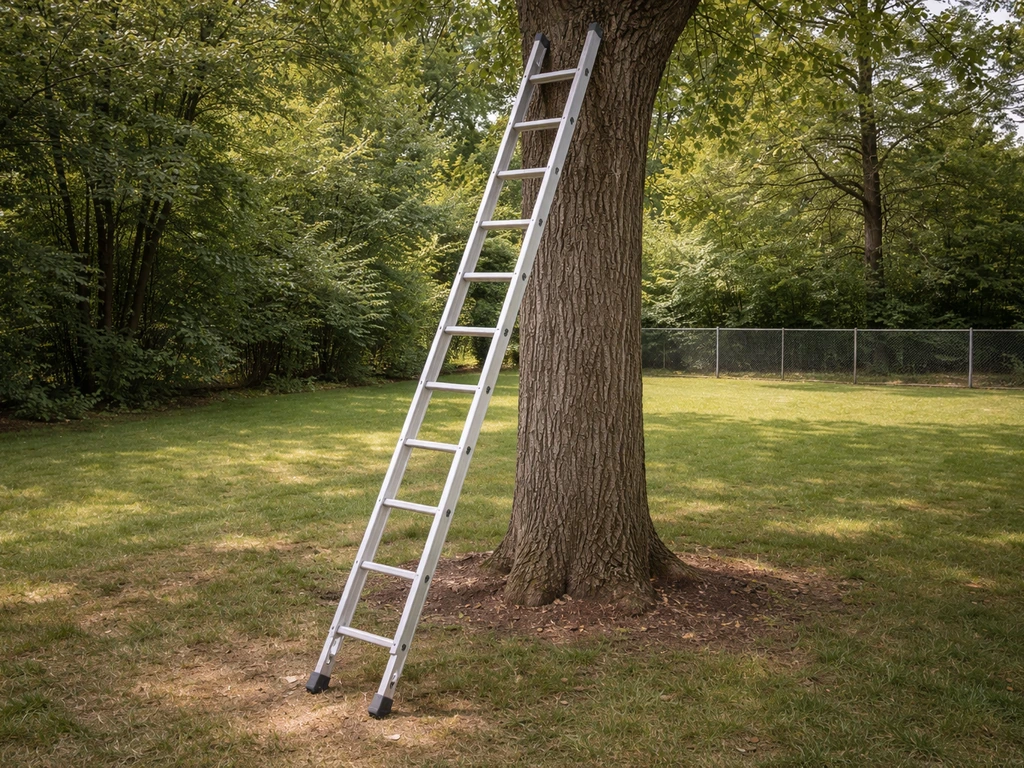
OSHA's guidance on portable ladder use is clear: set up only on a stable, level surface and follow the 4-to-1 rule for extension ladders, meaning for every 4 feet of working height, the base should be 1 foot out from the support. Always have a second person footing the ladder. Never lean out past your hips from a ladder rung. If the ground under the tree is uneven, sloped, or soft after rain, don't use a ladder. The risk of a fall is not worth it for a bird rescue.
Tools for safely reaching a stuck bird
- Blunt-tipped scissors or small wire cutters for cutting netting or fishing line, wrapped in tape at the cutting end to reduce risk of nicking the bird
- A small cardboard box or paper bag with ventilation holes punched in the sides, used to hold the bird briefly after retrieval
- A lightweight towel or small pillowcase to drape gently over the bird before handling, which calms it and prevents flapping injuries
- A headlamp if working in low light, keeping both hands free
- Thin leather or rubber-grip work gloves for hand protection
How to handle the bird minimally and correctly
Drape the towel over the bird before you try to hold it. Use both hands and hold it firmly but gently around the body with the wings folded naturally against its sides. Do not squeeze the chest, because birds breathe by expanding their chest and compression can suffocate them within minutes. Cut away any entangling material before trying to pull the bird free.
If the line or netting is wrapped around a leg or wing, cut toward the tree, not toward the bird. Place the bird in the ventilated box with crumpled paper towels forming a shallow nest shape, then close the box. Now reassess: if it's clearly healthy and can grip and stand, move to the post-retrieval section. If it's limp, bleeding, or cannot support itself, call a wildlife rehabber immediately.
One hard limit: if the bird is higher than you can safely reach from a properly set ladder, stop. No bird rescue is worth a fall from height. This is when you call for professional help.
What to do after the bird is down
Watch before you decide it's fine
Once the bird is on the ground or a low branch and you've stepped well back, watch for 30 to 60 minutes. A healthy adult bird will typically fly off within that window once it feels safe. If a fledgling you placed somewhere safe doesn't move at all after you've given it space, call a wildlife rehabber. Audubon's guidance is direct on this: if the bird doesn't fly away after you've placed it in a safe location, professional help is the next step.
Legal and wildlife rehabilitation rules
The Migratory Bird Treaty Act covers the vast majority of wild birds you'll encounter in North America. Under this law, holding, transporting, or attempting to rehabilitate a wild migratory bird without a federal permit is illegal, even with good intentions. You cannot rehabilitate wildlife at home without a permit, and those permits are not available to the general public for keeping wild animals. Your legal and practical role is to provide safe, temporary containment (a dark, quiet, ventilated box) and then get the bird to a licensed wildlife rehabilitator as quickly as possible. Find your nearest rehabber through the National Wildlife Rehabilitators Association or your state wildlife agency.
Temporary containment if transport is needed
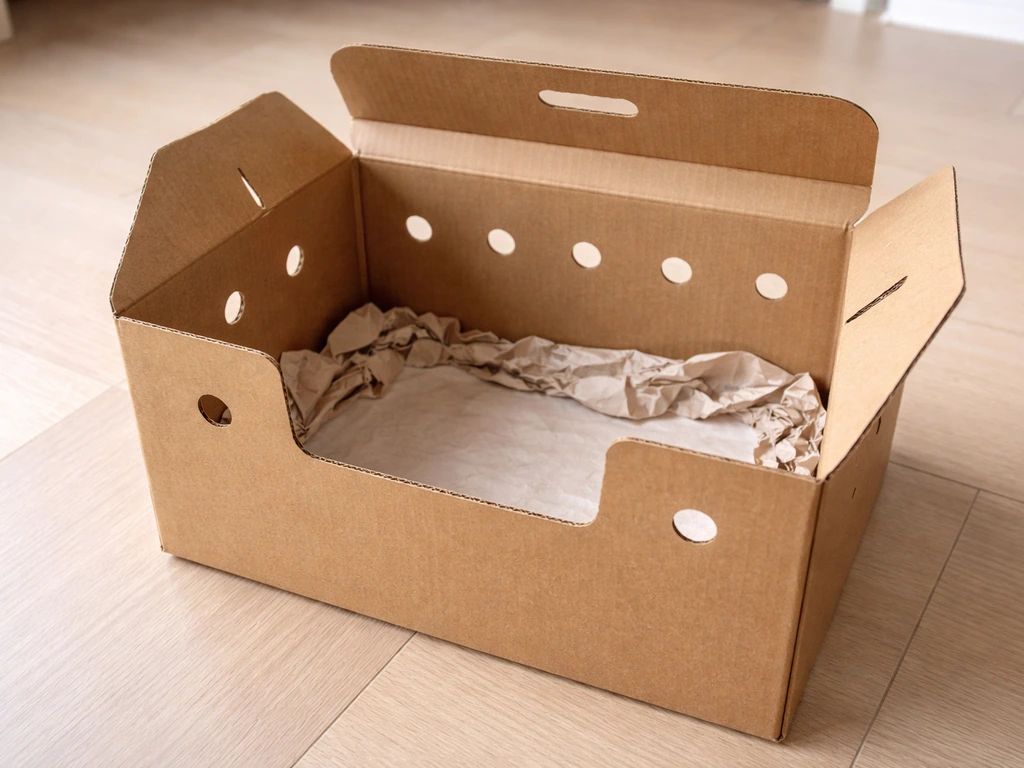
- Use a cardboard box with ventilation holes. Make it just large enough for the bird to stand; too much space means it can injure itself flapping.
- Line the bottom with crumpled paper towels to form a soft, shallow depression.
- Keep the box in a warm, dark, quiet location, away from pets, children, loud sounds, and air conditioning vents.
- Do not give food, water, or any medication. Do not open the box repeatedly to check on the bird.
- Transport to the rehabber as calmly and directly as possible, keeping the car radio off and the box upright.
When to call a wildlife professional instead of DIY
Some situations are outside the scope of what you should handle yourself, no matter how well-intentioned. Call a licensed wildlife rehabilitator or, in an emergency, your local animal control or wildlife agency if any of these apply. City Wildlife also notes that feeding or giving water can do more harm than good, so wildlife rehabilitators should be the ones to assess the situation and provide appropriate care.
- The bird is visibly bleeding, has a broken or drooping wing, or cannot support its own weight
- The bird is a nestling (bare or mostly downy, unable to hop or perch) and you cannot locate or safely reach its original nest to return it
- The bird is entangled at a height you cannot safely reach from a properly set ladder
- The bird has been on the ground or in the same spot for more than a few hours without any movement or response
- You suspect the bird is a protected raptor such as a hawk, owl, falcon, or eagle. These birds require specialized handling and are strictly protected
- The tree is near power lines and any part of the rescue would put you in proximity to those lines
- You're at a facility or commercial property where liability and safety protocols require professional response rather than staff DIY action
- You have any doubt about the species or its legal protection status
When you call, be ready to describe: the species if you can identify it, the bird's behavior and any visible injuries, how long it's been in the tree, and the exact location including tree height and proximity to structures or wires. The more specific you are, the faster the rehabber can assess and respond.
Preventing birds from getting stuck near your home or building
Once you've handled the immediate situation, it's worth thinking about what drew the bird into that tree in that way, and whether your property is set up to reduce the chances of it happening again. This is especially relevant for facility managers dealing with repeat incidents.
Tree and vegetation management
Regular pruning is your most practical long-term tool. Removing up to one-third of a tree's branches reduces dense canopy cover that birds use for roosting and nesting in high concentrations near buildings. The goal isn't to eliminate birds from your property but to make large-scale roosting near structures less attractive. Prune in late fall or early winter when nesting season is over (typically October through January in most of North America), so you're not disturbing active nests. If branches extend over the roof, gutters, or HVAC equipment, keep those cut back to at least a few feet of clearance.
Removing attractants around the property
- Relocate or temporarily remove bird feeders during peak nesting season if you're having repeated issues with birds congregating in specific trees near your building
- Clean up fallen fruit from ornamental or fruit-bearing trees promptly, because rotting fruit is a major attractant for starlings, cedar waxwings, and similar species
- Secure compost bins and outdoor waste containers that might be attracting birds to the yard in the first place
- Fix standing water sources near trees, since birds are drawn to reliable water as strongly as food
Physical exclusion near structures
For buildings, exclusion netting installed under eaves, in light wells, and around recessed architectural features prevents birds from roosting or nesting in those spots adjacent to trees. This same idea also applies to birds trapped in window wells, where you want to keep the bird calm and clear a safe exit path light wells. This is particularly valuable for facility managers dealing with starlings, pigeons, or sparrows that treat the building-tree interface as prime territory. Netting should be properly tensioned and inspected twice a year, in early spring before nesting begins and again in fall, to make sure it hasn't sagged or been breached.
Lighting and glass hazards
Bright artificial lighting near trees attracts insects, which in turn draws birds in at night. Switching to motion-activated or downward-directed lighting reduces this effect. Large glass surfaces near trees are a collision hazard that can leave birds injured and in need of rescue. Applying window film, decals spaced no more than 2 to 4 inches apart, or exterior screens on problem windows significantly cuts down on bird strikes near your property.
Power line proximity: a step you shouldn't skip
If trees on your property are growing into or near power lines, contact your electric utility. They typically offer free or low-cost trimming for trees that pose a line hazard, and getting them to manage that growth removes both a bird entanglement risk and a serious safety issue for anyone who might try to intervene in a future incident.
A simple seasonal maintenance schedule
| Season | Action |
|---|---|
| Late fall / early winter (Oct–Jan) | Prune up to 1/3 of dense canopy near structures; inspect and repair exclusion netting |
| Early spring (Feb–Mar) | Check netting before nesting season starts; remove or reposition feeders if needed; inspect gutters cleared of debris birds might use as nesting material |
| Spring / summer (Apr–Aug) | Avoid pruning (active nesting season in most regions); monitor for fledgling activity and keep pets managed accordingly |
| Late summer / early fall (Sep–Oct) | Clear fallen fruit; address glass hazards before fall migration increases window strikes; assess lighting |
Your quick decision checklist
Use this flow when you first find a bird in a tree and aren't sure what to do next.
- Secure pets and children away from the area immediately.
- Observe the bird from 20 to 30 feet away for at least 10 minutes before approaching.
- Is the bird moving normally, hopping, or perching steadily? If yes, step away, give it an hour, and let it self-rescue.
- Is it a fledgling (feathered, hopping, clumsy but mobile)? If yes, leave it alone. Parents are likely nearby.
- Is it a nestling (bare or downy, cannot perch)? If you can safely reach the original nest, return it. If not, call a wildlife rehabber.
- Is it visibly injured (bleeding, drooping wing, unresponsive)? Call a wildlife rehabber now. Do not attempt further DIY.
- Is it physically stuck in netting or line and you can safely reach it from a properly set ladder with a second person present? Proceed with minimal-contact retrieval using gloves and a towel, then reassess.
- Is the bird too high to safely reach, or near power lines? Call a wildlife professional. Do not improvise.
- After retrieval, place in a ventilated box, keep it dark and quiet, do not feed or water it, and contact your nearest licensed wildlife rehabilitator.
If you're dealing with a bird that has fallen or is stuck somewhere else on your property, the approach is similar but the specific tactics shift depending on location. A bird in a gutter or downspout, for example, requires different access considerations than one lodged high in open branches. A downspout can trap birds when they are seeking shelter or food, so use the same calm, safety-first approach as in a gutter rescue how to get a bird out of a downspout. The core principles, observe first, minimize contact, and call a professional when in doubt, apply across all of those scenarios.
FAQ
What if the bird is in the tree for a long time, do I still just watch it?
If the bird looks healthy and you can reach it without climbing, keep your distance and offer an easy escape route, usually by clearing nearby obstacles and staying still. If the bird is bleeding, unable to grip, repeatedly flailing without making progress, or you suspect entanglement, do not wait, call a licensed wildlife rehabilitator instead of trying repeated “shooing.”
Should I feed or spray the bird to get it down faster?
Do not offer food or water in an open area to “lure” it down, especially if it is a fledgling or may be injured. Food can delay self-rescue, increase handling, and can worsen stress. Provide only a calm, clear path away and contact rehab if it does not leave after you’ve given it space.
When is it safe to use a towel or blanket, and when should I avoid it?
A towel is appropriate when you must physically secure an entangled or injured bird. For “simply perched” birds, avoid towel or net approaches that block sightlines and trap the bird in closer contact. Instead, give the bird a calm perimeter, keep pets away, and allow it to choose its own exit.
What should I do if the bird is near power lines or wires in the tree?
If the bird is touching or entangled with wiring, stop and contact the utility or emergency services rather than attempting a tree rescue. For your safety, keep people away and do not use ladders or poles near electrical hazards. Even a “small” bird can become conductive if wet or stressed, creating an escalation risk.
What if the bird falls from the tree, is it always a nestling problem?
If a fledgling is on the ground, place it in a protected, nearby safe spot only if you can do so without forcing it to run into danger, then keep watching from a distance. If it cannot stand, is bleeding, or is in immediate threat from traffic or predators, treat it as potentially injured and contact a wildlife rehabilitator.
I see fishing line or netting, can I just cut it loose right away?
If a bird is stuck in a thick tangle of fishing line or netting, cutting is sometimes necessary, but only when you can reach safely. Use scissors or wire cutters and cut toward the tree, remove only what is needed to free the bird, then put it in a ventilated, dark box. If the line is tight around a wing or you cannot free it without reaching higher than you can safely reach, call for help.
How long should I wait after moving a bird before calling a rehabber?
If it will not leave after you have relocated it to a safe low spot or offered a clear exit, the next step is professional help. Signs like limpness, repeated disorientation, inability to perch, or ongoing bleeding also mean you should call immediately instead of extending the wait.
Is it ever okay to grab a healthy-looking adult bird to speed things up?
Handling adult birds can increase stress and is often unnecessary when there is no injury. If an adult bird is grounded or cannot fly, keep handling minimal: dark, quiet containment for transport, then rehab. If it is perched and alert, avoid grabbing, because that can turn a non-injury situation into one.
What are the practical “stop climbing” signs for ladder rescues?
For a ladder rescue, only proceed if you have a stable, level setup, a second person footing the ladder, and safe reach from the base. Do not climb on uneven ground, do not lean out past your hips, and stop if the bird is higher than you can reach safely from a properly set ladder. If you cannot meet these constraints, call a professional.
Who do I call if I cannot reach a wildlife rehabilitator right away?
In an emergency, contact animal control or your local wildlife agency if a licensed wildlife rehabilitator is not reachable quickly, especially when the bird is bleeding, trapped and struggling, or at immediate risk. If you can, include the exact location (tree height, nearby structures), estimated time stuck, and what you observed about injury or entanglement.
Next Article
How to Get a Trapped Bird Out of Your House Safely
Humane, step-by-step guide to get a trapped bird out safely, handle injuries, and prevent future entry.