If a bird is actively attacking your cat right now, get your cat indoors immediately, check for injuries, and call your vet. Once that's handled, the longer-term fix is a combination of supervised outdoor access, humane deterrents, and sealing off the spots around your building where birds and cats keep crossing paths. Both steps matter: stopping the immediate danger and making sure it doesn't happen again.
How to Stop a Bird Murdering a Cat: Immediate and Long-Term Steps

Maya Carver
2 Jun 2026
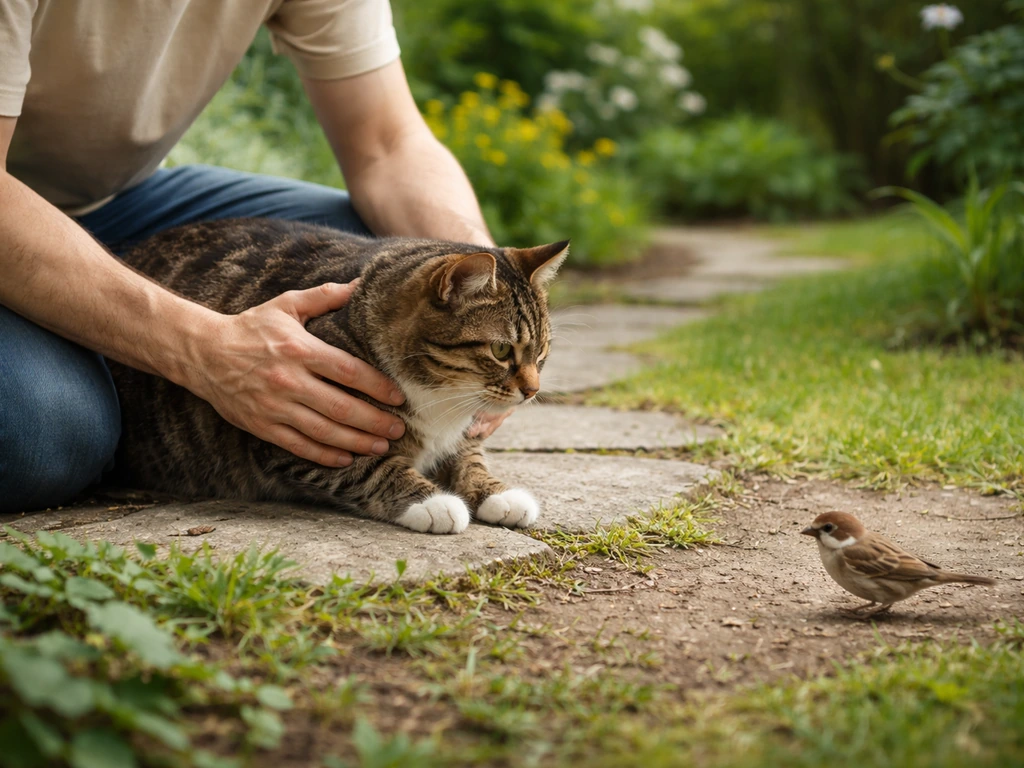
Quick emergency steps to stop the attack today
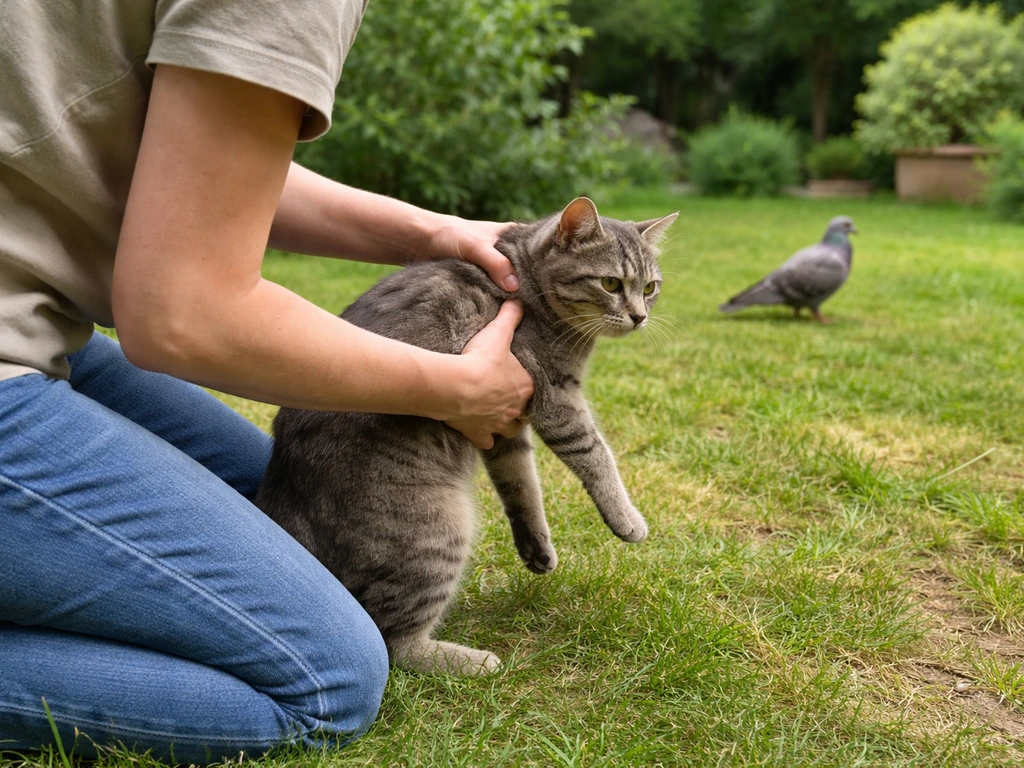
Birds attacking cats is less common than the reverse, but it does happen, especially with large territorial species like magpies, crows, mockingbirds, and raptors during nesting season. The first 10 minutes matter most.
- Separate them immediately. Call your cat or physically carry them inside. Don't try to shoo or grab the bird — focus on the cat.
- Confine the cat to one room. Close doors, windows, and cat flaps to prevent them going back out.
- Check your cat for injuries. Look for puncture marks, swelling, bleeding, or bruising. Pay close attention to the head, neck, and back.
- Call your vet. Even small puncture wounds from bird talons or beaks can introduce bacteria deep into tissue. Prompt evaluation is strongly recommended — don't wait to see if it gets worse.
- Watch for red flags that need emergency care: uncontrolled bleeding, inability to walk, extreme pain, visible muscle or bone, or wounds over a joint. These need urgent veterinary attention, not a wait-and-see approach.
- Note what bird was involved if you can safely do so from a distance. This matters for identifying the species and understanding the legal protections that may apply.
Once your cat is safe and being cared for, don't let them back outside unsupervised until you've worked through the steps below. The attack almost certainly happened because of overlapping territory, your cat was near a nest, a feeding area, or a regular bird patrol route. That situation won't fix itself. For more targeted guidance on how to stop your cat from attacking your bird, work through separation, supervision, and access control step by step stop the attack.
Make the cat safe: reduce access and secure the area
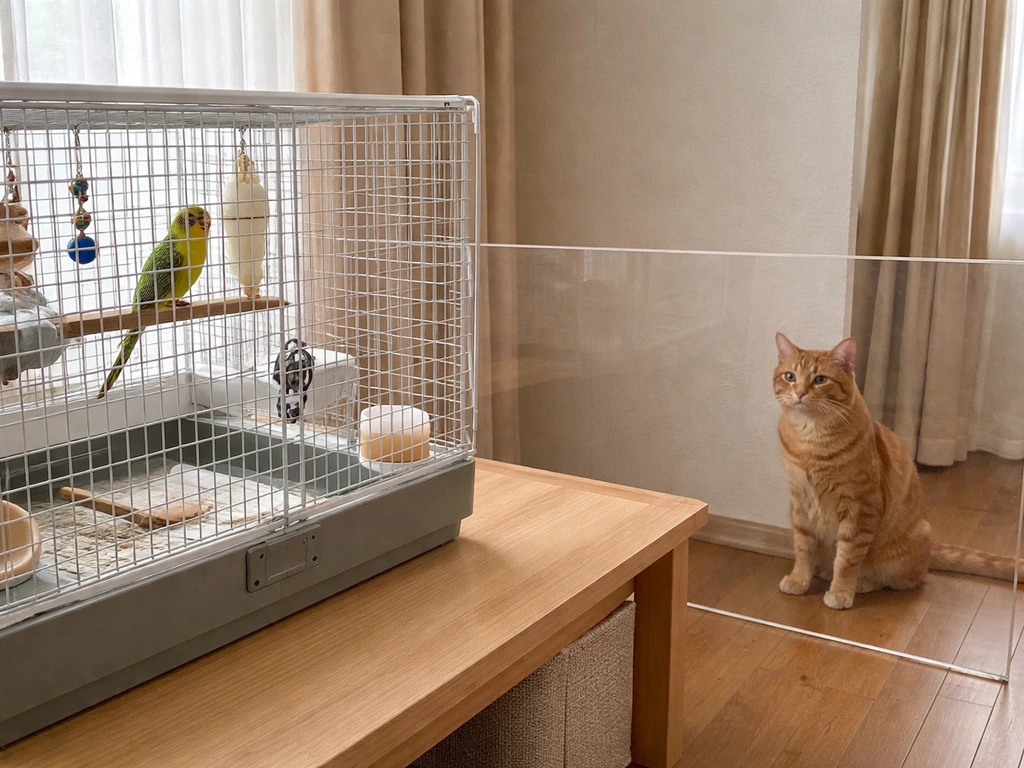
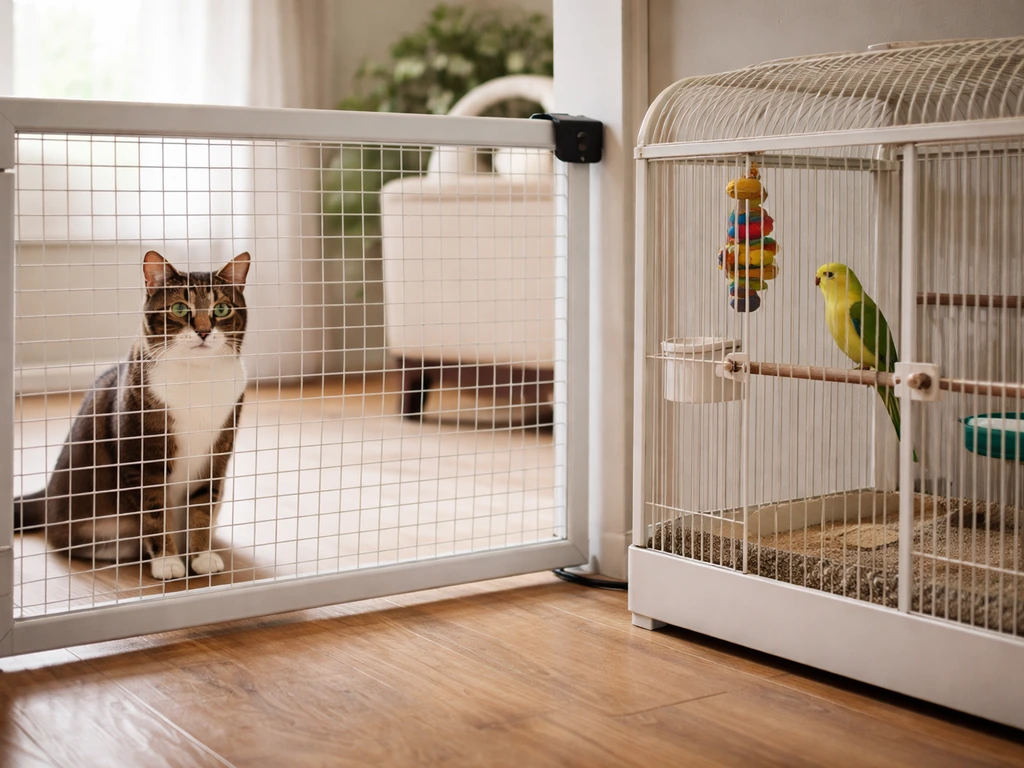
The single most effective thing you can do to prevent future attacks is to keep your cat indoors, or at the very least, supervise all outdoor time. A big part of preventing the issue is to keep your cat indoors or supervise outdoor time so you can stop any bird-chasing before it starts. If your cat keeps testing the perimeter, you can combine indoor time with smarter setup around the bird enclosure to make jumping less likely cat jumping on bird cage. The American Bird Conservancy, the BC SPCA, and virtually every humane organization that has studied cat-wildlife conflict says the same thing. It protects the cat from birds, and it protects birds from the cat.
If keeping your cat fully indoors isn't possible or isn't something you're willing to do right now, here's a practical middle ground:
- Supervised outdoor time only. Go out with your cat, especially during dawn and dusk when bird activity and territorial behavior peaks.
- Use a cat enclosure or 'catio'. Enclosed outdoor runs let cats get fresh air and stimulation without free-roaming access to the areas where bird conflicts happen.
- Block cat flaps temporarily. During active nesting season (roughly March through July in the Northern Hemisphere), restrict unsupervised outdoor access entirely.
- Keep cats indoors during known high-risk periods: fledgling season (May to July), when young birds are on the ground and both birds and cats are most active in the same zones.
- Use a Birdsbesafe collar cover or CatBib. These are collar-mounted devices that reduce a cat's ability to stalk and pounce. Research published by USGS and peer-reviewed studies show the Birdsbesafe collar cover reduces bird catches by around 87%, and the CatBib by around 81%. These won't stop an incoming bird attack, but they reduce the overall predation dynamic that creates territorial conflict.
Identify what's happening: bird type and attack location checks
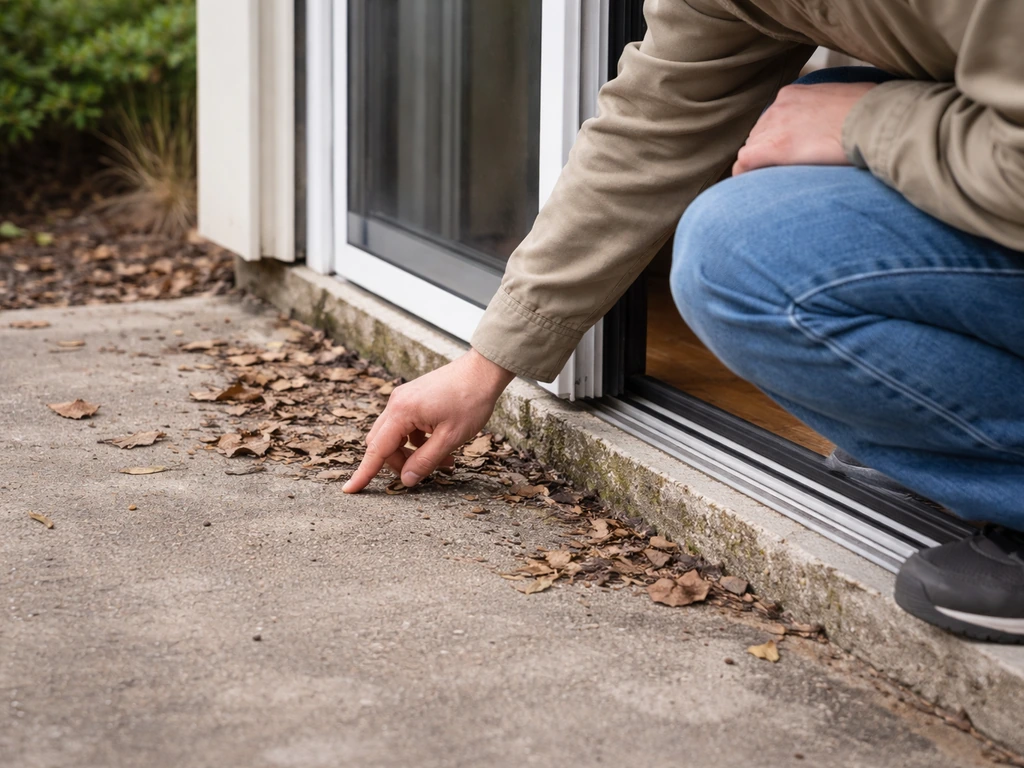
Not all bird attacks on cats are the same situation, and the fix depends on which bird is involved and where the conflict is happening. If a bird has been caught by a dog or cat, the UK RSPCA warns there is a risk of infection, so avoid self-treating and seek appropriate help or reporting risk the bird could develop infection. Before you buy deterrents or start blocking things off, take 10 minutes to assess.
What bird is it?
| Bird Type | Typical Behavior | Peak Risk Period | Key Consideration |
|---|---|---|---|
| Crows / Magpies / Jays | Mob and dive-bomb cats near nests; rarely make direct contact but can | March – July (nesting) | Highly intelligent; respond well to deterrents but adapt quickly |
| Mockingbirds | Aggressively chase cats from a wide perimeter around nest sites | April – August | Very persistent; relocating the cat's access route often works |
| Raptors (hawks, falcons, owls) | Potential to injure or kill smaller cats or kittens; talons are the danger | Year-round, peak breeding varies by species | Protected under federal law; never harass, trap, or harm |
| Gulls (coastal/facility areas) | Aggressive dive-bombing near nesting rooftops and ledges | April – July | Common issue at commercial buildings and flat rooftops |
| Geese / Swans | Ground-level chase and wing strike if cat gets too close to nests | March – June | Usually avoidable by keeping cats away from ponds/water edges |
Where is the conflict happening?
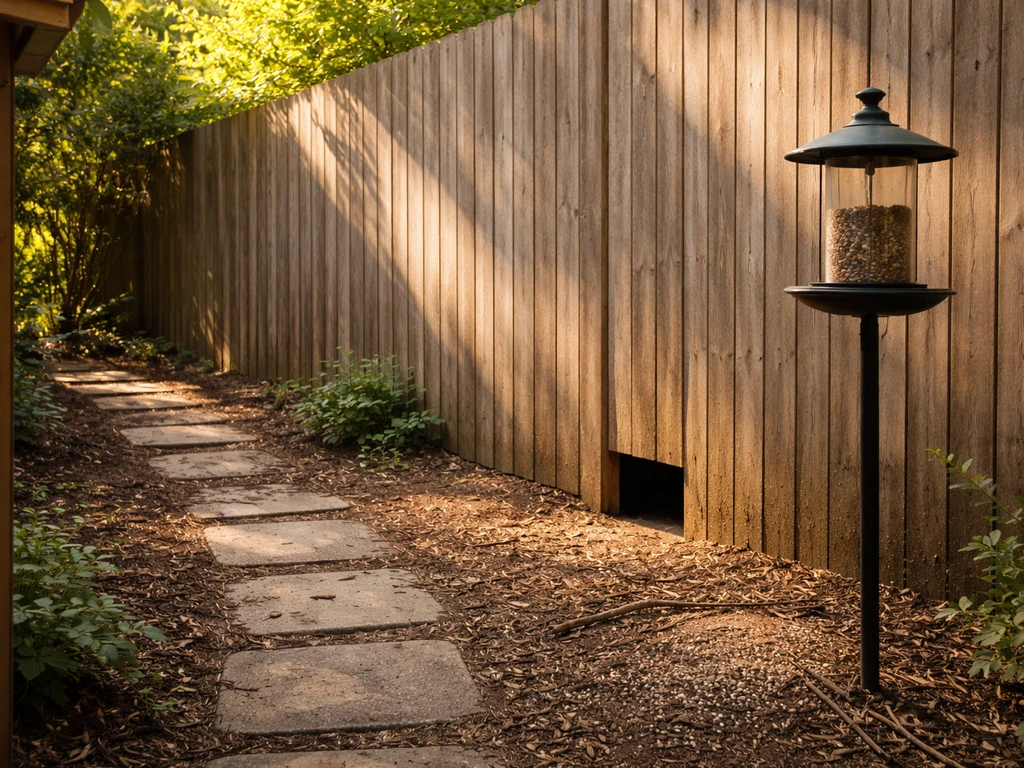
Walk the area and identify the specific location. Common hotspots include: the area around bird feeders (ground-feeding species like dark-eyed juncos and spotted towhees are particularly vulnerable, and feeder areas naturally concentrate birds in one zone), porches and balconies where birds perch or nest overhead, rooflines and gutters with active nests, garden borders and hedgerows during fledgling season, and anywhere near a vent, eave, or soffit where birds are nesting. Knowing the hotspot tells you exactly what to seal, move, or modify.
Humane bird deterrents that work around buildings
The goal here is to reduce bird presence in the zones where your cat has access, without harming the birds. There's a clear line between what works humanely and what doesn't.
Deterrents worth using
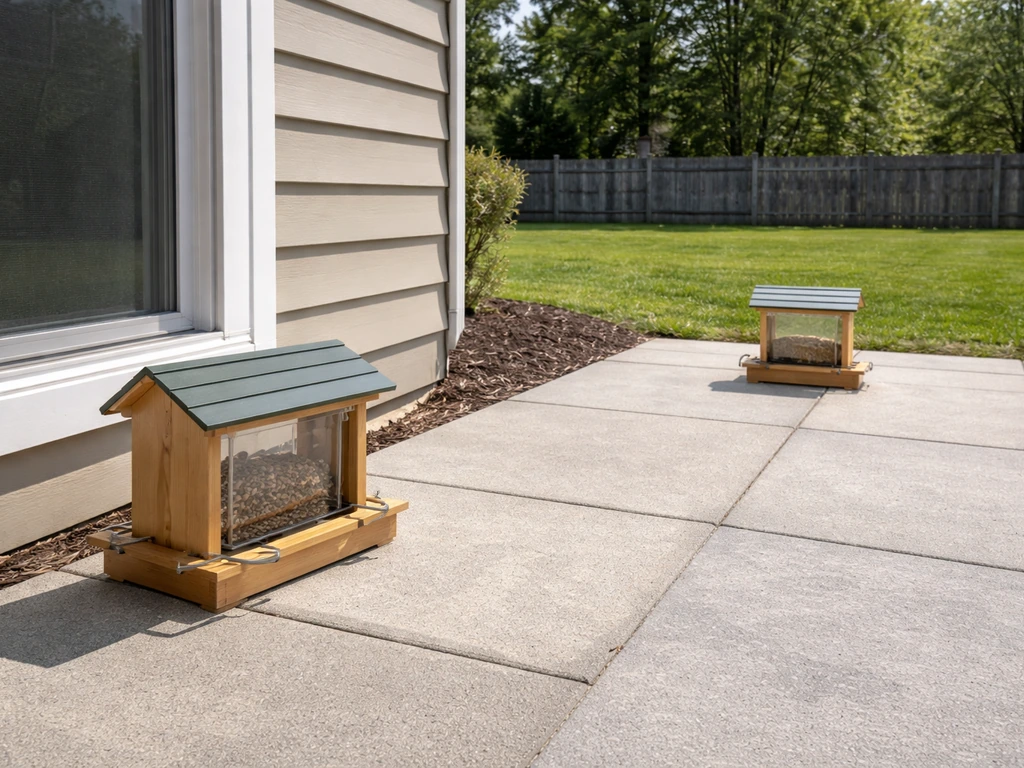
- Bird feeder relocation. If you have a feeder, move it well away from areas your cat accesses. WDFW recommends placing feeders either within 3 feet of windows (too close for fatal collision speed) or at least 30 feet away. Move feeders away from ground level where possible to reduce ground-feeding bird concentration in cat territory.
- Visual deterrents. Reflective tape, predator silhouettes, and holographic deterrent strips work reasonably well on balconies, eaves, and ledges to discourage roosting and nesting. They need to move in the breeze to remain effective — static versions stop working quickly.
- Physical perch deterrents. Bird spikes, slope systems, and bird wire on ledges, sills, and rooflines prevent perching and nesting at specific spots. These are particularly useful for gulls, pigeons, and starlings at commercial buildings.
- Motion-activated sprinklers or air-jet deterrents. These can discourage birds from ground-level areas and garden borders without causing harm. They have the added benefit of discouraging your own cat from certain zones too.
- Habitat modification. Remove dense low shrubs or brush piles near high-traffic cat zones if they're acting as bird habitat. This reduces the overlap between bird feeding/nesting areas and cat patrol routes.
- Supervised feeding schedules. If you're feeding birds, do it at set times and remove leftover food promptly so you're not maintaining a permanent bird congregation near cat zones.
What to avoid
- Glue traps and sticky boards. These are cruel, indiscriminate, and illegal to use on wild birds in many jurisdictions. They cause prolonged suffering and can kill birds slowly. Do not use them.
- Poorly installed or unmaintained netting. Netting that isn't correctly fitted or regularly checked can entangle and kill birds. If you're using netting, installation must be tight, gap-free, and inspected monthly.
- Ultrasonic devices marketed as bird deterrents. The evidence base for these is very weak for most bird species. Don't spend money on them.
- Anything designed to trap, poison, or harm a wild bird. In the US, this is a federal offense under the Migratory Bird Treaty Act. In the UK, the Wildlife and Countryside Act 1981 provides equivalent protection. The legal exposure is serious.
Seal and proof the building: entry points, nesting hotspots, and hardware fixes
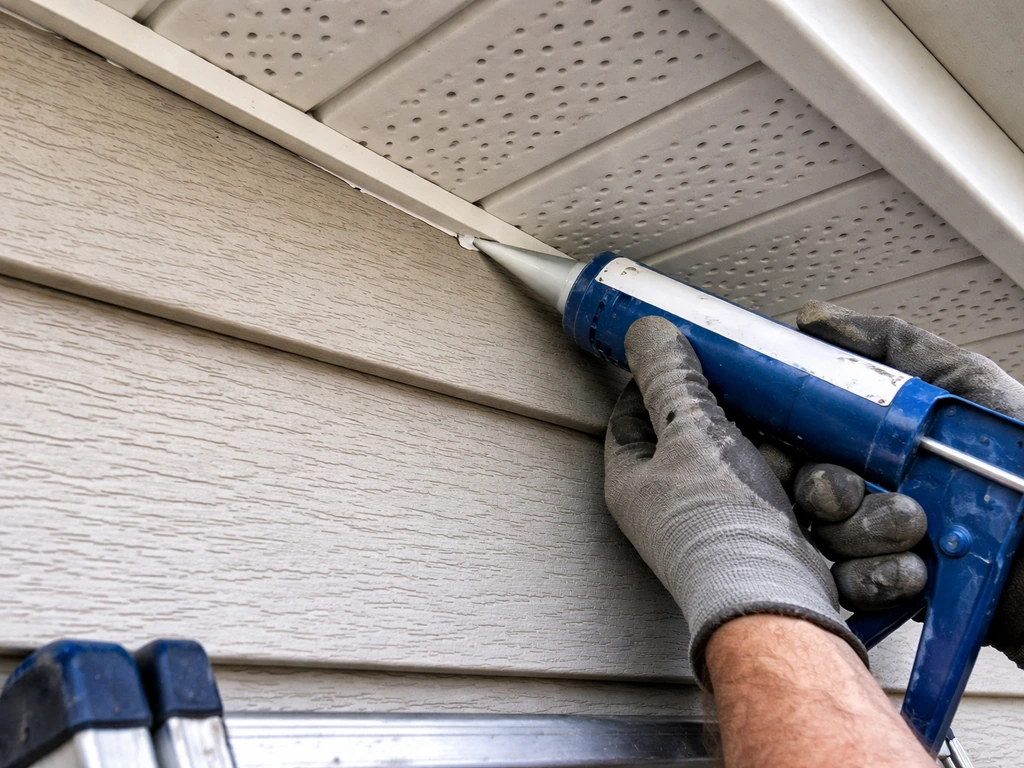
Exclusion is the most reliable long-term fix for buildings where birds are roosting or nesting in zones that create ongoing cat conflict. The principle is simple: if birds can't access the spot, they can't nest there, and the territorial aggression that drives attacks goes away. But the timing and method matter a lot, especially with protected species.
Check these spots first
- Roof vents and soffit gaps: common entry points for starlings, sparrows, and swifts
- Eaves and fascia board gaps: favored by house sparrows and starlings for nesting
- Broken or missing roof tiles: accessed by jackdaws, pigeons, and starlings
- Flat roof edges and parapet walls: prime gull nesting territory at commercial buildings
- Open wall cavities, chimneys, or unused flues: used by a range of species
- Under solar panels: a common new nesting spot for pigeons and starlings
How to seal effectively
- Check for active nests BEFORE sealing anything. Look for nesting material, eggs, or chicks. If a nest is active, you legally cannot block the entry point in the US or UK until the nest is completely inactive (no eggs, no chicks, no ongoing use).
- Choose the right mesh. For small birds like sparrows or starlings, use hardware cloth or welded wire mesh with a maximum 19mm (3/4 inch) opening. For larger birds like pigeons or gulls, 50mm (2 inch) mesh is acceptable. USDA APHIS materials confirm mesh size should match the species wingspan and access pattern.
- Fix all gaps in eaves and fascia boards using galvanized mesh or purpose-made bird-proof foam. Avoid standard expanding foam alone — birds can pull it apart.
- Install vent covers with mesh backing on all roof vents, gable vents, and extractor fan outlets. These are the most overlooked entry points.
- For flat roofs and ledges at commercial facilities, install gull-grade bird spikes or a taut wire system along the perimeter before the nesting season starts (ideally by late February).
- Under solar panels: purpose-made solar panel bird-proofing mesh kits clip directly to the panel frame and close the gap around the perimeter. This is now one of the most common exclusion jobs at residential properties.
- Check all repairs monthly for the first season to ensure no new gaps have opened and no birds have found a workaround.
A note on netting for large areas like warehouses, loading bays, or open-sided agricultural buildings: netting works well when professionally installed and maintained, but the RSPB and RSPCA are clear that incorrectly installed netting can trap and kill birds. If birds become entangled in your netting, do not attempt DIY removal if you're not trained, contact a wildlife rehabilitator.
Troubleshooting and prevention planning
If you've tried some of these steps before and the problem came back, here's why it usually happens and what to do differently.
Why previous attempts probably didn't work
- Wrong timing. Deterrents installed after nesting started don't help — birds are already committed to the location and will aggressively defend it regardless of what you put up.
- One entry point sealed, others missed. Birds will find the next gap. You need a full-perimeter check, not just one patch.
- Static deterrents. Visual deterrents stop working once birds recognize they're not a real threat. They need to move, change, or be rotated.
- Feeder left in the wrong place. A bird feeder near where your cat roams is continuously pulling birds into the conflict zone. Relocate it or remove it temporarily.
- Cat still going out unsupervised. No amount of building proofing compensates for a free-roaming cat in an active bird territory during nesting season.
Seasonal planning calendar
| Season / Period | Key Risks | Priority Actions |
|---|---|---|
| Late winter (Feb – early Mar) | Pre-nesting site selection; gulls and corvids claim territory early | Install physical deterrents on ledges, rooflines, and flat roofs before birds commit to sites |
| Spring (Mar – May) | Peak nesting begins; territorial attacks most aggressive | Restrict cat outdoor access; check all exclusion work; don't block active nests |
| Early summer (May – Jul) | Fledgling season; ground-level birds at maximum risk; mobbing attacks peak | Supervised-only outdoor access; remove ground-level feeders; mow grass to reduce ground cover for fledglings near cat zones |
| Late summer (Aug – Sep) | Most chicks fledged; aggression decreasing | Good window to seal entry points while nests are inactive; inspect and repair damage |
| Autumn / Winter (Oct – Jan) | Migratory species passing through; winter feeding increases bird concentration | Reposition feeders away from cat zones; maintain exclusion seals; plan for next nesting season |
Ongoing maintenance checklist
- Monthly: inspect all mesh, netting, vent covers, and perch deterrents for gaps or damage
- Monthly: check that visual deterrents are still moving freely and replace if faded or static
- Each February: walk the full roofline and eave perimeter before nesting season starts
- Each August: inspect for new entry points and seal any that opened during summer; this is the best legal window for nest-site exclusion
- Annually: review where birds are concentrating around your property and adjust feeder placement accordingly
When to call wildlife professionals and what the law says
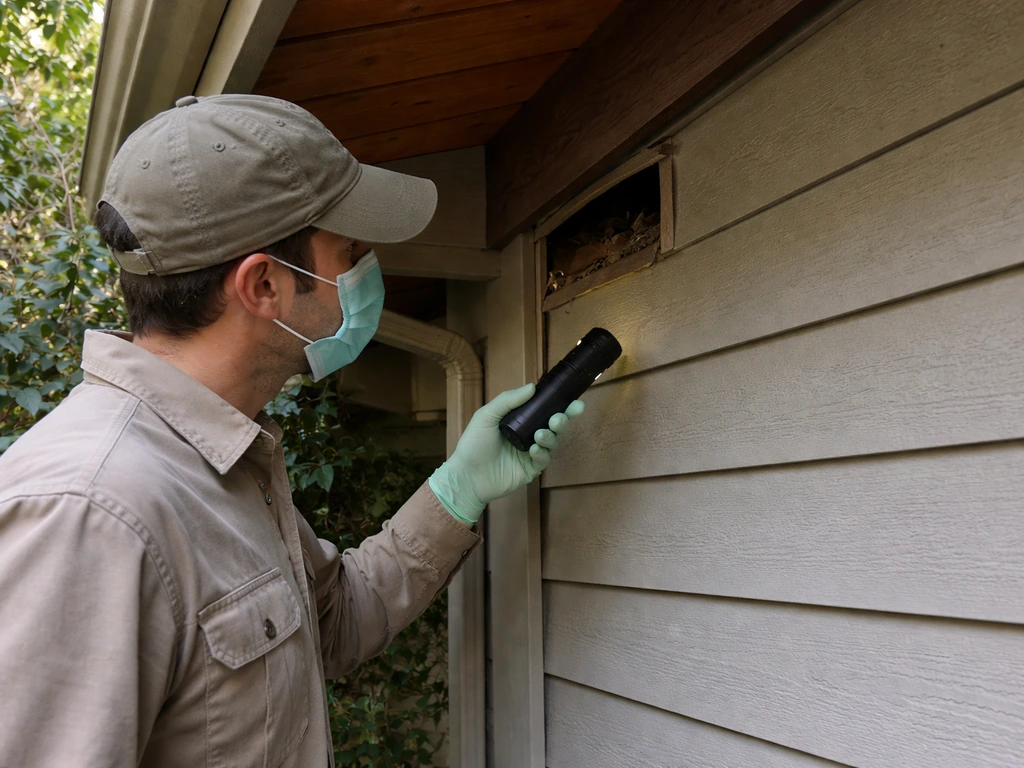
There are situations where DIY isn't the right answer, either because it won't work or because it could land you in legal trouble. Know the line.
Call a wildlife professional when:
- There is an active nest with eggs or chicks inside an entry point you need to seal. You must wait for it to become inactive — a professional can confirm when this has happened and help you seal immediately after.
- A raptor (hawk, falcon, owl, eagle) is involved in repeated attacks on your cat. These birds are federally protected in the US under the Migratory Bird Treaty Act and under the Bald and Golden Eagle Protection Act for eagles. Do not attempt to trap, relocate, or deter them in ways that could cause harm — call your state wildlife agency.
- Birds are trapped or entangled in netting or exclusion hardware. Call a wildlife rehabilitator rather than attempting removal yourself.
- An injured bird is on your property as a result of a cat interaction. The RSPCA notes these birds are at high risk of infection and need professional care, not home treatment.
- You have a large-scale facility with a persistent gull, pigeon, or starling problem that has resisted repeated DIY exclusion attempts.
- You're unsure whether a species is protected before starting any nest removal or deterrent installation.
The legal picture in brief
In the US, the Migratory Bird Treaty Act makes it unlawful to take, kill, or possess migratory birds, their nests, eggs, or parts without a federal permit. This covers the vast majority of wild bird species you're likely dealing with. Nest removal permits are typically only issued for active health or safety concerns, and even then, the US Fish and Wildlife Service generally requires waiting until a nest is inactive. blank" rel="noopener noreferrer">Bald and golden eagles have an additional layer of protection under a separate federal act.
In the UK, the Wildlife and Countryside Act 1981 provides equivalent broad protection for wild birds, their nests, and eggs across England, Scotland, and Wales. The Animal Welfare Act 2006 also means that any deterrent causing unnecessary suffering to an animal is a criminal offence, this applies to both birds and cats, so anything cruel is both unethical and illegal.
The practical upshot: stick to physical exclusion of inactive nest sites, non-harmful deterrents, and supervised cat management. If you're ever unsure whether something is legal, contact your local wildlife agency before you act. The fines for MBTA violations in particular are significant, and the intent to protect the bird is not a defense.
If you're also dealing with the cat-bird conflict from the other direction, managing a cat that is hunting birds, or trying to protect a pet bird indoors from your cat, the same core principles of separation, supervised access, and environmental modification apply across all those scenarios.
If you are seeing behavior like “what to do when your cat kills a bird,” the first steps are similar: separate the animals, check for injuries, and then shift to supervised cat access and environmental prevention managing a cat that is hunting birds. how to keep a cat away from. a bird cage.
If you want the practical next steps for stopping attacks, focus on separation, supervision, and making your bird’s space less accessible managing a cat that is hunting birds.
FAQ
After an attack, should I do anything specific besides bringing my cat inside?
Yes. After you get your cat indoors, keep the cat away from any bird carcass you find (use gloves and dispose of it promptly). If your cat was actively hunting, check for puncture wounds, eye injuries, and lacerations, and contact your vet the same day, because bites or peck injuries can hide under fur and still need treatment.
What should I do if the bird is inside the house while my cat is out?
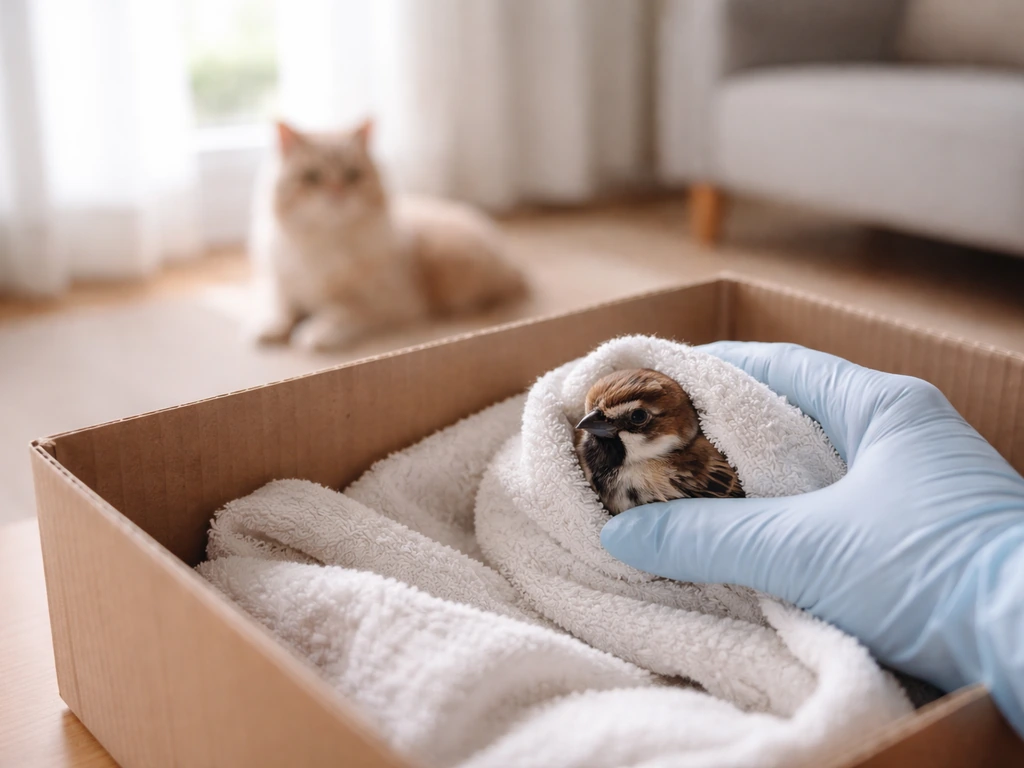
If a bird is inside your home, treat it as a rescue situation. Close interior doors to prevent it from reaching windows where your cat could ambush it, move the cat to a separate room, then allow the bird to exit or use a box and towel only if needed. Avoid cornering a bird near your cat, because startled birds may panic and increase risk of both injury and repeated pursuit.
What deterrents should I avoid when trying to stop cat and bird conflict?
Avoid DIY trapping, poisoning, sticky/glue products, or anything that could injure or trap birds. Instead, use cat management (indoor time, supervision) plus bird access changes like closing gaps under decks, removing accessible nesting materials, and covering specific entry points with approved exclusion methods. If you suspect a protected nesting spot, pause and get guidance from your local wildlife agency before you block anything.
If attacks happen at certain times, how do I adjust my plan?
Watch the bird behavior pattern. If the bird only appears during certain hours, you can temporarily intensify supervision during that window and focus exclusion on the exact approach route it uses (for example, a consistent perch, eave line, or feeder side). This is usually more effective than random deterrents, which birds often adapt to quickly.
How do I stop attacks when they seem linked to my feeder, balcony, or garden border?
Yes, and it affects the fix. If your cat is mostly targeting birds around a feeder, the immediate win is removing or repositioning the feeder so it is not in the cat’s line of access, ideally placing it farther away from doors, stairs, and low walls. If the hotspot is a hedge or balcony perch, create a physical barrier so your cat cannot reach windowsills, railing tops, or planting edges.
What’s the safest alternative if I cannot keep my cat indoors all day?
If you cannot keep your cat indoors full time, treat outdoor time like a supervised “run,” not free roaming. Use a secure enclosure (catio) or a leash system, and supervise every minute, especially at dawn and dusk when many birds are active. Never rely on “short checks” because cat pursuit can start in seconds.
How can I identify the specific entry routes so I can seal the right spots?
Look for repeat routes. If a specific door, stairwell, window, or fence gap is where birds and your cat overlap, seal or block those exact access points first. Birds also use predictable perches, so removing one perch line can reduce bird presence more than general changes like sound or visual scare devices.
My cat seems to “wait for the moment,” what should I do when I notice stalking behavior?
Use supervision cues. If you see stalking, crouching, tail-flicking, or staring at a particular window or hedge, bring the cat in immediately and reset the environment. Training helps, but it is not fast enough for a high-drive hunting situation, so the practical approach is prevention during high-alert moments.
Can I exclude birds right away if I suspect there is a nest nearby?
If the bird is nesting or roosting, removal timing matters. In many places, you should avoid disturbing active nests and you should not block access during active nesting without local wildlife guidance. A common humane approach is to exclude only from areas that are inactive and schedule exclusion for after the nesting period, once the area is confirmed inactive.
Is netting a good solution, and when should I hire someone instead of doing it myself?
RSPB and RSPCA guidance is to avoid poorly installed netting, because entanglement can injure or kill birds. For anything beyond small, controlled areas, use professionals who can design the correct mesh size, tensioning, and maintenance schedule, and ensure escape routes are not blocked.
What should I do if I find a bird entangled in netting or a barrier?
Don’t attempt to remove entangled birds yourself if you are not trained. Keep your cat secured, contact a licensed wildlife rehabilitator or local wildlife rescue, and document the location (for example, where the entanglement occurred) so they can advise on the correct exclusion repair.
If the problem comes back after I tried deterrents, what’s the most common reason?
Some cats learn quickly to adapt. If attacks return, it often means the cat’s access has not actually changed, or the birds are using a new path you did not seal. Re-walk the perimeter at the times of day the attacks occur, check for new perches, and compare “where the cat can reach” versus “where the birds can land.”
What legal issues should I know about moving nests or doing exclusion work?
Check legal constraints before changing nest sites or handling birds. Laws often prohibit taking or destroying nests or eggs, and in many jurisdictions the rules are strict even if your intention is to protect your cat. If you are unsure, contact your local wildlife agency or wildlife licensing authority before you remove, relocate, or block an active nesting area.