Put the bird cage in a separate room, close the door, and keep it closed, that one step fixes the problem immediately. Everything else in this guide builds on that foundation, adding layers of physical barriers, room design, deterrents, and cat management so your birds stay safe whether you're home or not.
How to Keep a Cat Away From a Bird Cage: Humane Steps

Maya Carver
30 Apr 2026
Quick emergency steps to secure your birds right now
If your cat has already reached the cage or made contact with a bird, treat it as a medical emergency. After presentation for blank" rel="noopener noreferrer">cat or dog bite wounds in pet birds, place the bird in a warm, oxygenated incubator and observe for respiratory distress, ability to perch, and bleeding; diagnostic and extensive treatment can be postponed until the bird is stable. Cat saliva and claws carry bacteria, Pasteurella multocida in particular, that can kill a bird within 24 to 48 hours even when the wound looks minor. Get the bird to an avian vet or emergency animal clinic immediately. Do not wait to see if it seems fine.
- Remove the cat from the room immediately and close the door behind it.
- Check the bird visually without handling it more than necessary — look for punctures, bleeding, missing feathers, labored breathing, or inability to perch.
- If there is any wound, even a small scratch, call an avian vet right now. Flush the wound gently with saline if you can do so without stressing the bird further.
- Keep the bird warm (around 85–90°F) using a heating pad on low under half the cage or a heat lamp positioned to one side — the bird must be able to move away from heat.
- Stay calm. Birds read your stress and it worsens theirs. Speak quietly and move slowly around the cage.
- Cover the cage partially with a light cloth to reduce visual stimulation while you organize transport to the vet.
Once the bird is safe and being cared for, the cat needs to be physically separated from all bird areas until you have a proper proofing plan in place. A stressed or injured bird has a compromised immune system, so reducing every possible threat during recovery matters as much as the antibiotics.
Immediate deterrents that are humane and safe
If no contact has been made but your cat is actively stalking, pawing at, or sitting near the cage, you need deterrents today while you set up a longer-term solution. If you are specifically trying to stop cat jumping on bird cage, this same deterrent strategy pairs well with the longer-term room and barrier setup later in the guide. The goal is to make the area around the cage unrewarding and mildly unpleasant for the cat without causing it any harm.
- Double-sided sticky tape placed on surfaces the cat uses to approach or jump toward the cage — cats dislike the texture intensely and will avoid it.
- A motion-activated air spray deterrent (like a PetSafe SSSCAT) placed near the cage. These release a harmless burst of compressed air when the cat enters the zone and are very effective for training avoidance.
- Citrus peel or citrus-scented cotton balls placed near the cage base — cats are aversive to citrus smell. Replace every two to three days.
- A physical barrier such as a large cardboard box, piece of furniture, or baby gate positioned to block the cat's usual approach angle while you arrange a permanent setup.
- Move the cat's food bowl, water, and litter box to a completely different area of the home if they are currently near the bird room — proximity to the cage increases motivation to linger.
Avoid any deterrent that startles or frightens the bird as well as the cat. Loud noise devices, for example, can cause cardiac stress in smaller birds like finches or canaries. Stick to methods that discourage the cat without introducing new stressors into the bird's environment. If your goal is to stop cat kills bird behavior, avoid anything that adds stress to the bird while you deter the cat.
Room setup: relocating the cage and blocking sightlines
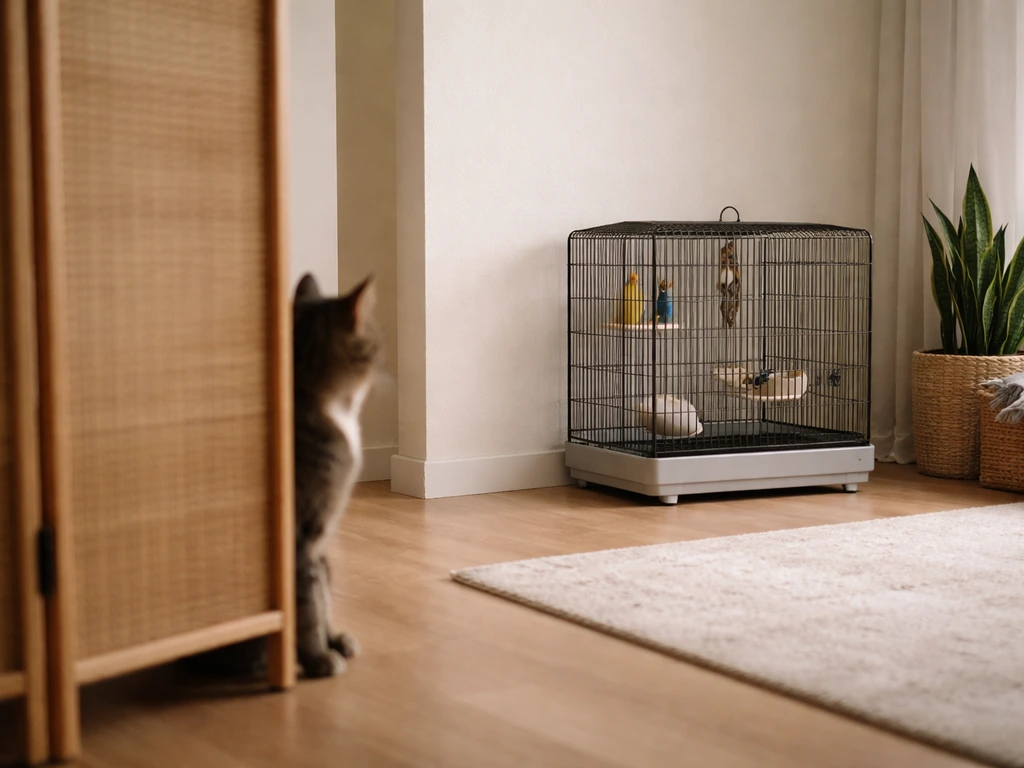
Where you put the cage matters enormously. A bird that can see a cat staring at it from across the room is a bird under constant stress, even if the cat never touches the cage. Chronic stress suppresses a bird's immune system, disrupts normal behavior, and can cause feather destruction or illness over time.
Ideal cage placement
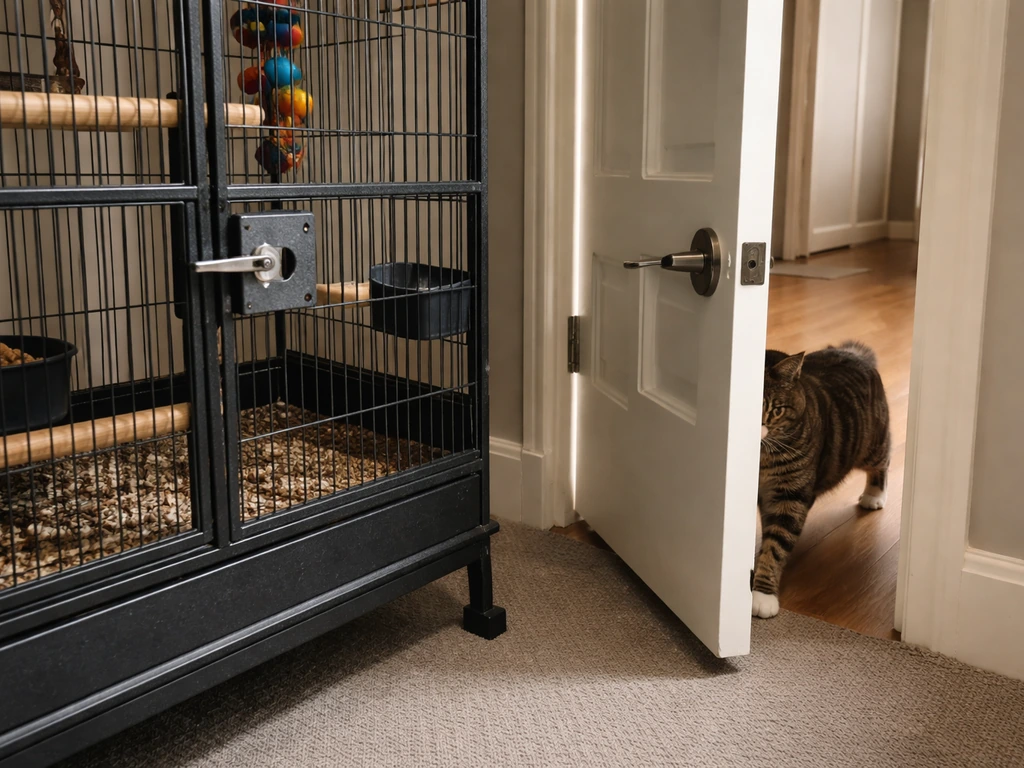
- Place the cage in a room with a door that can be fully closed and latched — not just pulled shut, since cats learn to push doors open.
- Position the cage against a wall or in a corner so the bird has solid backing and feels secure, with only one or two open sides exposed.
- Raise the cage onto a stand or table at least 4 to 5 feet off the ground. This reduces the cat's ability to reach in from below and forces it to jump, which is easier to deter.
- Keep the cage at least 2 to 3 feet away from any furniture, shelving, or counter the cat could use as a launch point.
- Avoid placing the cage near windows that are accessible to outdoor cats — even an outdoor cat visible through glass causes measurable stress in caged birds.
Blocking sightlines in shared spaces
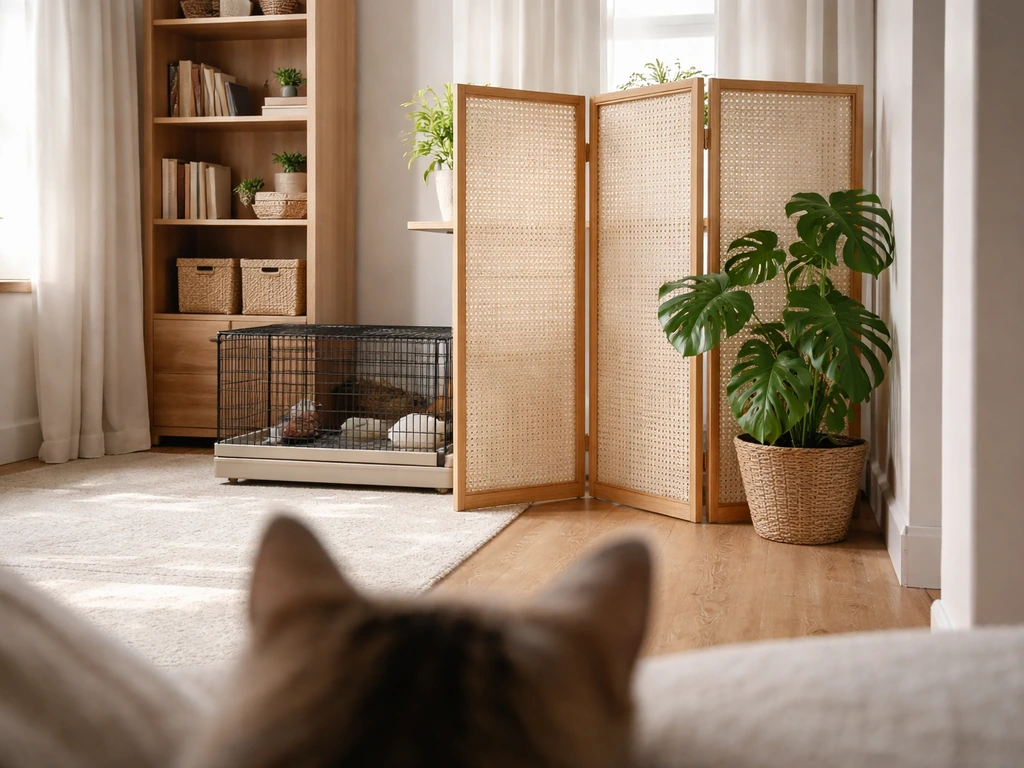
If a dedicated bird room is not possible and the cage must share living space with the cat, use partial visual barriers. A bookshelf, decorative screen, or even a well-placed plant can break the direct sightline from the cat's usual resting spots to the cage. The aim is to prevent the cat from being able to fix a sustained predatory stare at the bird. Even a partial visual break significantly reduces harassment behavior.
Physical cat-proof barriers for cages and enclosures
Standard bird cages are not cat-proof. The bar spacing on many cages is wide enough for a cat's paw to reach through, and latches designed for birds are often easy for a determined cat to manipulate. You need to upgrade the physical security of the cage itself and the area immediately around it.
Cage hardening
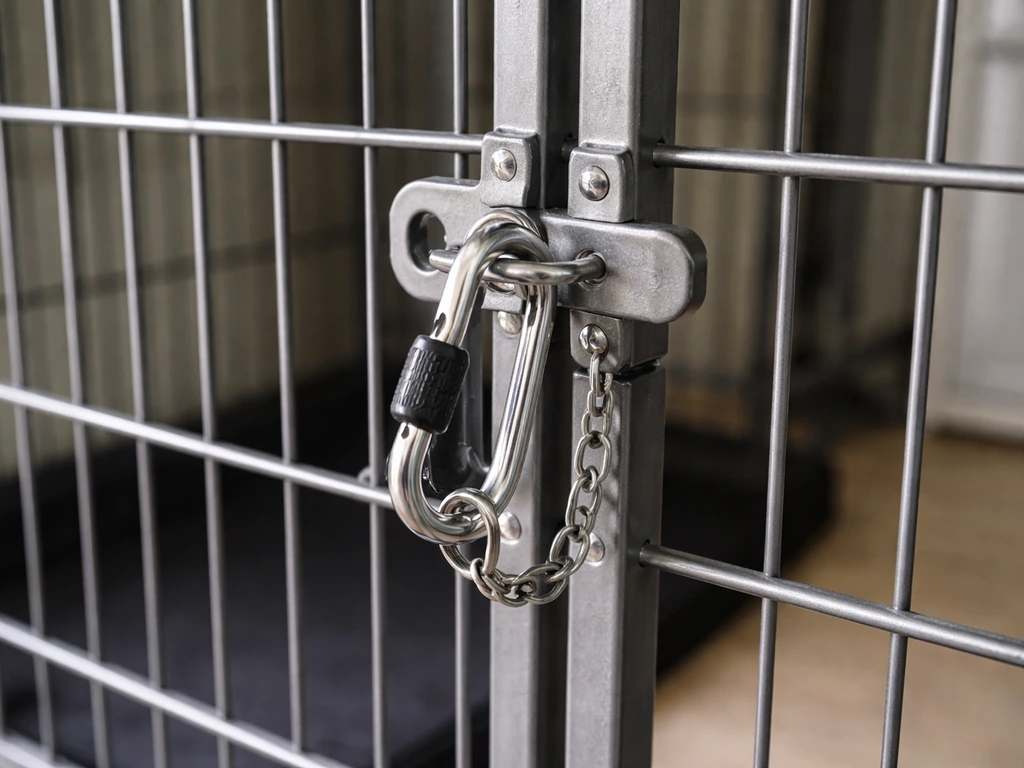
- Check all latches and replace simple spring clips with locking carabiners or dual-action cage locks that require a squeeze-and-twist motion.
- If bar spacing is wider than 0.5 inches on smaller bird cages, consider wrapping the exterior with a fine hardware cloth (1/4-inch galvanized mesh) secured with zip ties — this prevents paw insertion while maintaining ventilation.
- Ensure the cage door has a secondary latch or is secured with a lock clip at all times, not just when you are away.
- Check that the cage tray slides in securely and cannot be pulled out from the bottom, since cats sometimes target the base of cages.
Zone barriers around the cage
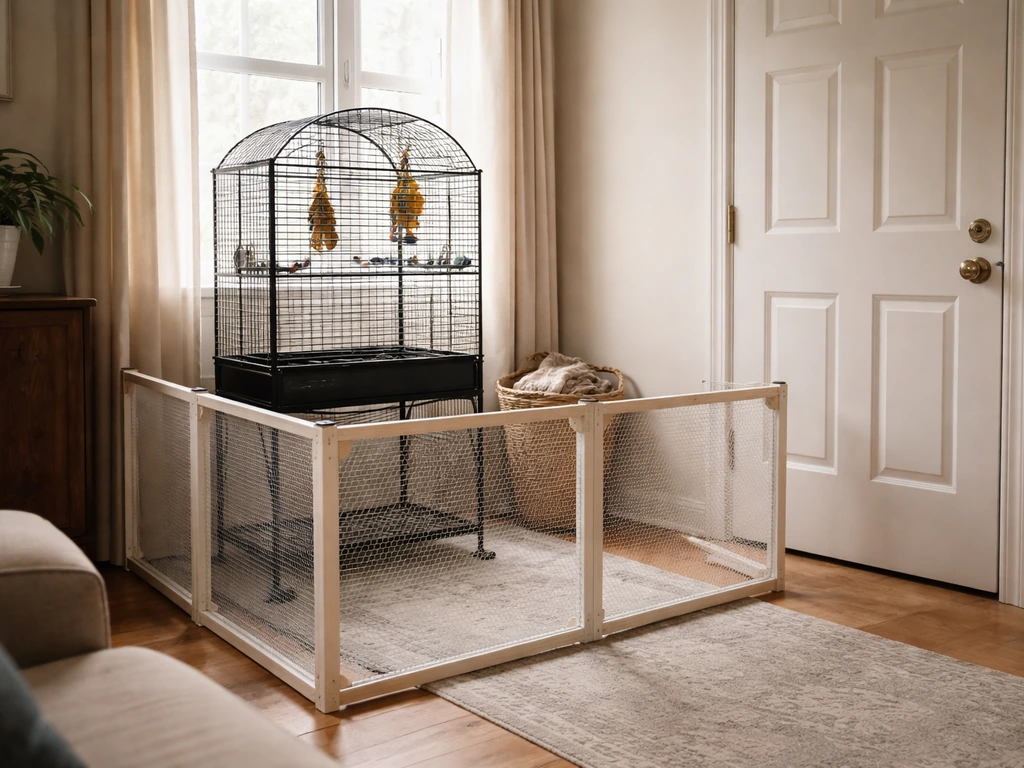
A cat-exclusion zone around the cage is your best physical layer. A freestanding pet gate with a small pet door (that the cat is too large to use) can surround the cage area if a full room separation is not available. Purpose-built bird room enclosures use 16-gauge welded wire panels assembled into a floor-to-ceiling aviary that keeps the cat entirely out. For facility settings with multiple cages, this kind of modular panel system is the most effective long-term solution and is worth the upfront cost.
| Barrier type | Effectiveness | Cost range | Best for |
|---|---|---|---|
| Closed, latched room door | Very high | Free | Homes with a spare room |
| Motion-activated air deterrent | High | $30–$50 | Quick temporary use |
| Double-sided sticky tape | Moderate | $5–$15 | Specific jump surfaces |
| Freestanding pet gate enclosure | High | $60–$150 | Shared living spaces |
| Welded wire aviary panels | Very high | $200–$600+ | Facilities, multi-cage setups |
| Cage latch upgrades (carabiners) | Very high | $5–$20 | All caged bird owners |
Behavior and management: training, supervision, and enrichment
Physical barriers do most of the work, but managing the cat's behavior reduces baseline stress for everyone in the household. The goal is not to punish the cat for being a predator, it is acting on instinct, but to redirect its attention and reduce unsupervised access to the bird area.
Supervision rules
- Never leave the cat and bird in the same room unsupervised, even if they have coexisted calmly before. Predatory behavior can escalate without warning.
- If you allow supervised co-presence, keep sessions short (under 10 minutes), stay within arm's reach of the cat, and watch the bird for signs of stress: panting, feather fluffing, crouching, or silent freezing.
- End supervised sessions on a calm note and reward the cat with a treat or play session away from the bird area immediately after.
Redirecting the cat's prey drive
A cat that is well-exercised and mentally stimulated is significantly less fixated on the bird. Schedule two or three active play sessions per day using wand toys, laser pointers, or motorized toys, ideally just before the times the bird is most active (morning and early evening). Puzzle feeders and food-dispensing toys occupy the cat's brain during downtime. If the cat is indoor-only, a window perch with a bird feeder outside gives it a sanctioned outlet for watching birds without threatening your caged birds. For readers dealing with cats that go outdoors and attack wild birds, that is a separate but related challenge worth addressing. If you need more help with how to stop a bird murdering cat situations, focus on consistent separation and cat-proofing every access point around the bird area.
Basic desensitization (for calm cats only)
Some cats can be gradually desensitized to the bird's presence through counter-conditioning. Start with the cat on the opposite side of a closed baby gate from the bird room, rewarding calm behavior with high-value treats. Over weeks, slowly reduce the distance, always keeping a physical barrier present and always ending the session before the cat shows any predatory focus. This approach works for mildly curious cats but is not appropriate for cats that actively stalk, charge, or have already attacked a bird. If stopping a cat from jumping on or at the cage is a specific issue you are dealing with, the desensitization approach ties directly into that challenge.
Long-term proofing plan for homes vs. facility bird areas
The right long-term setup depends on your space. A homeowner with one parrot and one cat needs a different plan than a facility manager overseeing a bird rehabilitation area or aviary building. Here is how to think about each scenario.
Homeowner plan
- Designate one room as the permanent bird room with a self-closing, latching door. Install a door latch or hook-and-eye at the top of the door frame so the cat cannot push or paw it open.
- Upgrade all cage latches to locking carabiners or double-action locks this week.
- Set up the cat's enrichment zone (perches, toys, puzzle feeders) in a different part of the home, well away from the bird room.
- Run daily play sessions for the cat at least 20 minutes per day, split across two sessions.
- Do a monthly cage inspection: check latch integrity, bar spacing, and whether the cat has found a new route to approach the cage.
- Seasonal note: Cats tend to be more active and alert in spring (March to May) and again in early fall. Increase play and enrichment during these periods and tighten supervision.
Facility or multi-bird area plan
- Establish a strict no-cat policy in all bird housing areas and post clear signage at entry points.
- Install self-closing door mechanisms (spring hinges or automatic closers) on all bird room doors so they cannot accidentally be left open.
- Use welded wire aviary panels to create a secondary perimeter around all bird enclosures — this is especially important in rehabilitation facilities where wild birds under care are legally protected and highly stress-sensitive.
- Brief all staff and volunteers: anyone entering the bird area must confirm the door is fully latched before and after entry.
- Conduct quarterly inspections of all barriers, latches, and exclusion zones. Log any cat sightings in or near bird areas and address the access point immediately.
- If the facility also manages feral or community cats on site, work with a local TNR (trap-neuter-return) program to reduce the population and coordinate with animal welfare staff to keep managed cats in designated areas away from bird housing.
Seasonal maintenance checklist
| Season | Key action |
|---|---|
| Spring (Mar–May) | Increase cat enrichment and play; audit all cage latches after winter; check that window screens are intact if bird room has windows |
| Summer (Jun–Aug) | Ensure bird room ventilation does not require leaving doors or windows open to cats; monitor heat stress in birds |
| Fall (Sep–Nov) | Cats become more active again; tighten supervision; re-apply sticky tape deterrents if worn |
| Winter (Dec–Feb) | Cats spend more time indoors and may refocus on the bird; maintain daily play sessions; check heating in bird room does not overheat the space |
When to escalate and what the law says
Most cat-and-bird conflicts can be managed at home with the steps above, but there are situations where you need professional help or where legal obligations apply. If your main concern is how to stop your cat from attacking your bird, the earlier steps in this guide give the practical home approach before you consider escalation.
Escalate to a professional if:
- A bird has been bitten, scratched, or was in direct contact with a cat — go to an avian vet immediately, same day. Do not monitor and wait.
- The cat's stalking or predatory behavior is so intense that it cannot be redirected with enrichment and the barriers you have put in place are not holding — a certified applied animal behaviorist (CAAB) or veterinary behaviorist can assess the situation and may recommend medication alongside behavior modification.
- You are managing a facility where a stray or feral cat is accessing bird enclosures — contact your local animal control or a licensed wildlife removal professional. Do not attempt to trap and relocate wildlife or feral cats yourself without checking local laws first.
- A wild bird has been injured by a cat on your property or at a facility — contact a licensed wildlife rehabilitator. In most countries, native wild birds are legally protected, and keeping or treating an injured wild bird without a permit is illegal regardless of your intentions.
Legal and safety notes
In the United States, most native wild bird species are protected under the Migratory Bird Treaty Act. If a cat injures a protected species, you are legally required to contact a licensed wildlife rehabilitator rather than attempt home treatment. Facilities that house birds in a professional or semi-public capacity (sanctuaries, rehab centers, aviaries) may have additional permit and care obligations under state and federal law, check with your state wildlife agency if you are unsure.
On the safety side: never use glue traps, snap traps, or any device that could injure either the cat or the bird in an attempt to keep them apart. These are ineffective, often illegal for use with non-target animals, and can cause serious harm. Stick to humane deterrents, physical separation, and professional consultation when the situation is beyond your control.
If you are dealing with a cat that has already killed a bird and you need to decide how to handle that event and prevent it from happening again, that requires a slightly different response than proactive prevention, the approach to stopping a cat from attacking birds repeatedly overlaps closely with the steps here but has some additional considerations worth working through separately.
FAQ
What should I do if my cat can still reach the cage even after I close the bird room door?
Confirm the cat cannot access that space at all, not just that it cannot enter the cage. Check for gaps under doors, cat doors, unlocked screens, and windows the cat can climb to. If the bird room door is not fully secure, add a pet gate immediately outside the door or install a solid barrier so the cat never has line of access to the cage area.
Are there any safe deterrents I can use right next to the cage that will not scare the bird?
Avoid anything that uses loud sound, sudden movement, or airborne sprays near the bird. Prefer barrier-first tactics, such as a gate/exclusion zone that physically blocks the cat from approaching, or a cage-enclosure setup that denies access to the cage entirely. If you use a learned deterrent (like a visual barrier), keep it consistent and avoid changes that could increase the bird’s stress.
Can I cover the cage with a blanket or put it under a cover to stop the cat’s staring?
Sometimes partial visual coverage can help, but do not fully block airflow or heat dissipation. Use breathable, secure covers only if the bird remains comfortable, and keep covers from becoming chewable or snag hazards. If the cat’s predatory behavior is triggered by the bird being visible, a safer option is a fixed screen or furniture barrier positioned to interrupt sightlines.
Is it okay to let the cat and bird interact briefly if I am watching closely?
Not as a training strategy for prevention. Even short unsupervised gaps can be dangerous because cat predatory focus can escalate quickly, especially if the bird is stressed or moving. Use controlled separation with barriers, and only progress to any desensitization steps if the cat shows calm, non-predatory behavior consistently.
How do I know if my bird is too stressed after cat exposure, even if it has no visible injuries?
Watch for changes in breathing effort, hiding, refusal to eat, tail bobbing, fluffed posture held for long periods, or unusual droppings. Any sudden behavior shift after a cat incident is a reason to contact an avian vet promptly. Stress can worsen immunity, so “no blood” does not always mean “no impact.”
What is the best way to upgrade a cage so a cat cannot put a paw through or open latches?
Look at bar spacing and latch design, then block both points of access. Consider adding an additional secure guard around the cage entrance area and using hardware that a cat cannot manipulate easily. If your cage has access doors, ensure they close with mechanisms that require deliberate bird-only operation and add reinforcement if the frame flexes.
If my cat keeps sleeping near the bird cage, does that mean my plan is failing?
It can mean the cat has found the area rewarding or comfortable, not necessarily that it is intent to attack. However, repeated proximity still stresses the bird visually, so you should treat it as a prompt to tighten the separation. Increase the visual barrier, increase the distance, and make the exclusion zone around the cage consistently off-limits.
My cat is chasing the cage when the bird moves, is desensitization appropriate?
If the cat is stalking, charging, or reacting aggressively to the bird’s movement, do not use gradual counter-conditioning as your primary solution. Switch to strict physical separation and behavior redirection with more exercise, then consider professional help from a qualified trainer or behavior specialist after safety measures are in place.
What should I do immediately after a cat makes contact with the bird to reduce risk without delaying care?
Treat it as urgent. Keep the bird warm and minimally handled, then go to an avian vet or emergency clinic right away rather than waiting for symptoms. While transporting, avoid applying home remedies to wounds unless instructed by a veterinarian, because delays and improper treatment can worsen outcomes.
Are there legal or housing rules I should think about if my bird is in a shared or semi-public space?
Yes, obligations can change depending on the setting and the bird species. If you are in the United States and the bird is a protected wild species, injury from a cat may trigger requirements to contact a licensed wildlife rehabilitator instead of handling it yourself. In sanctuaries or rehab settings, permits and reporting rules can add additional steps, so check with your state wildlife agency.
Should I punish the cat for stalking or chasing the bird?
Avoid punishment. It does not reliably reduce predatory instinct and can increase stress for both animals, which can make the bird more reactive. Use humane redirection, increase engagement and enrichment, and make access to the bird area reliably unavailable so the cat learns there is no safe, repeatable way to reach the cage.
What enrichment schedule is most effective if my bird is active at dawn and evening?
Time the cat’s high-energy play to those peak periods, with structured sessions lasting long enough for the cat to engage and settle (often a few rounds rather than one short burst). Use puzzle feeders during quieter times and keep feeding and play routines predictable, because fluctuations can increase fixation on the cage during boredom.
My cat is an outdoor hunter and sometimes brings wild birds. How is this different from indoor bird cage prevention?
Outdoor hunting adds a higher risk of serious injury and can introduce pathogens from other animals. Prevention focuses on secure outdoor access, deterrents that keep the cat from targeting birds, and immediate response protocols if a wild bird is brought inside. It also warrants extra caution around cleaning and handling to avoid spreading contaminants.
What should I avoid using entirely when trying to separate a cat and bird?
Do not use glue traps, snap traps, or any device that could injure either animal. These methods can cause serious harm, may be ineffective, and can carry legal and welfare risks for non-target animals. Stick with barriers, humane deterrents, and professional guidance when the situation is beyond your control.