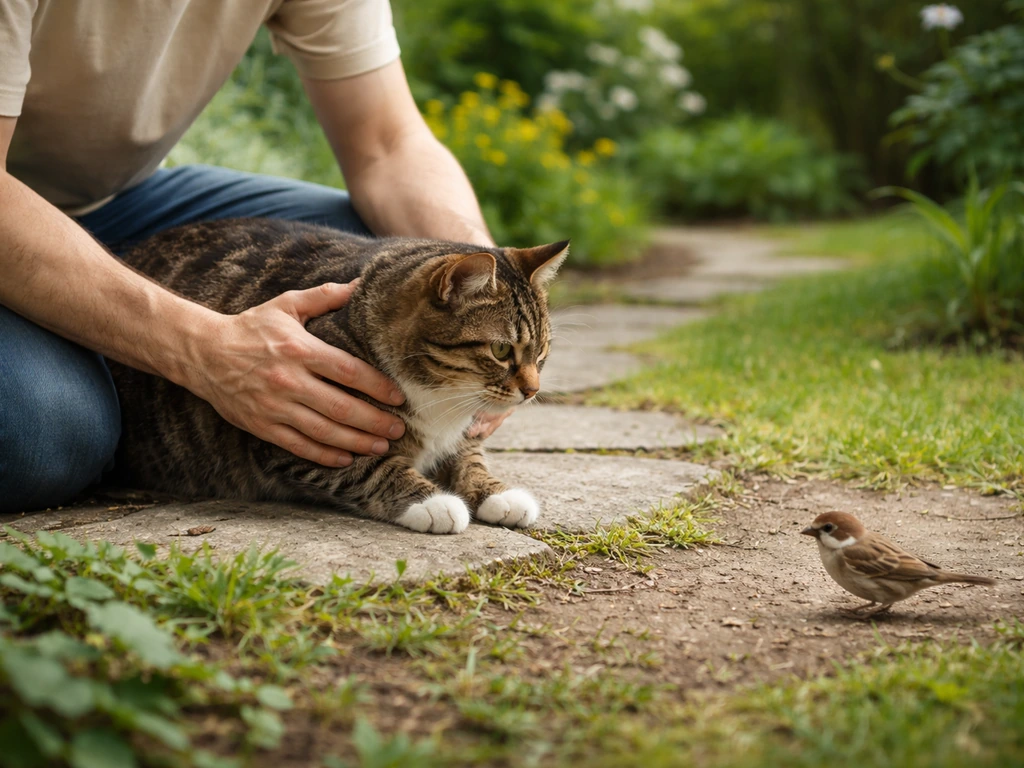
The most effective way to stop your cat from killing birds is to keep the cat indoors, full stop. To stop your cat from attacking your bird, start with the highest-impact changes first, like keeping your cat indoors and using secure barriers when birds are present stop your cat from killing birds. Every other measure, from collar covers to deterrent sprays, reduces the risk but cannot eliminate it. If you are dealing with a kill right now, the next few minutes matter: secure the area, handle the bird safely, check for injured survivors, and then work through the longer fixes below. If this is happening frequently, the best long-term plan is to keep your cat indoors or use supervised, cat-proof outdoor options to prevent future kills what to do when your cat kills a bird. This guide covers everything from the next 60 minutes to a full seasonal prevention plan.
Cat Kills Bird How to Stop It: Humane, Safe Steps

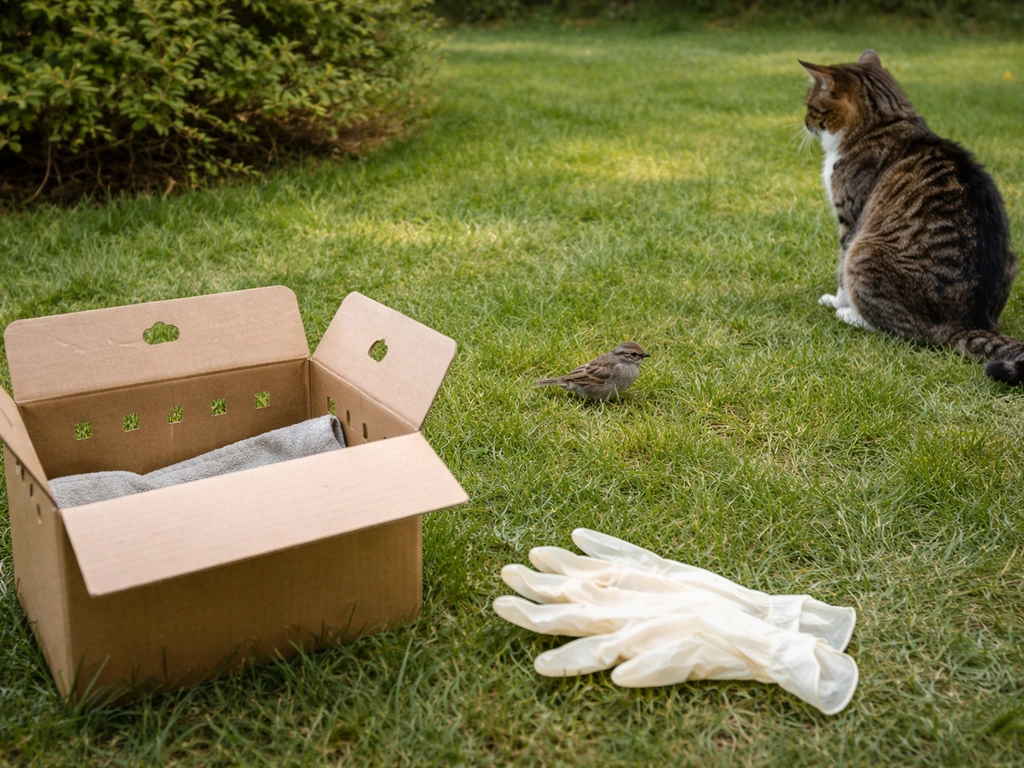
Immediate steps when a cat kills a bird
Stay calm and move quickly. Your first job is to protect yourself, contain the cat, and assess whether any bird is still alive and needs help.
In the next 60 minutes
- Remove the cat from the area immediately. Bring it inside or into a separate room. A cat that has made one kill is often still in high-drive hunting mode and will pursue injured birds.
- Protect your hands before touching anything. Use thick work gloves for any live or injured bird, and a plastic bag or disposable glove (turned inside-out) to pick up a dead bird without bare-hand contact. Never handle either with uncovered hands.
- Scan the surrounding area. Look under shrubs, along fence lines, and near cover for additional injured birds. A cat can strike more than once in a short window.
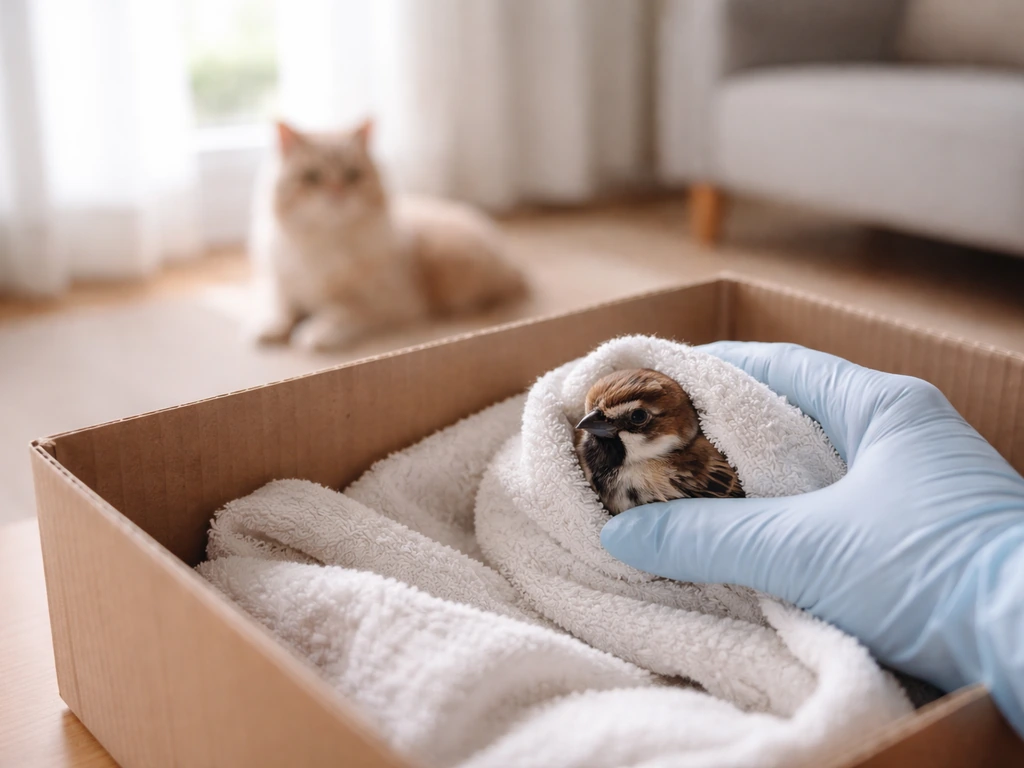
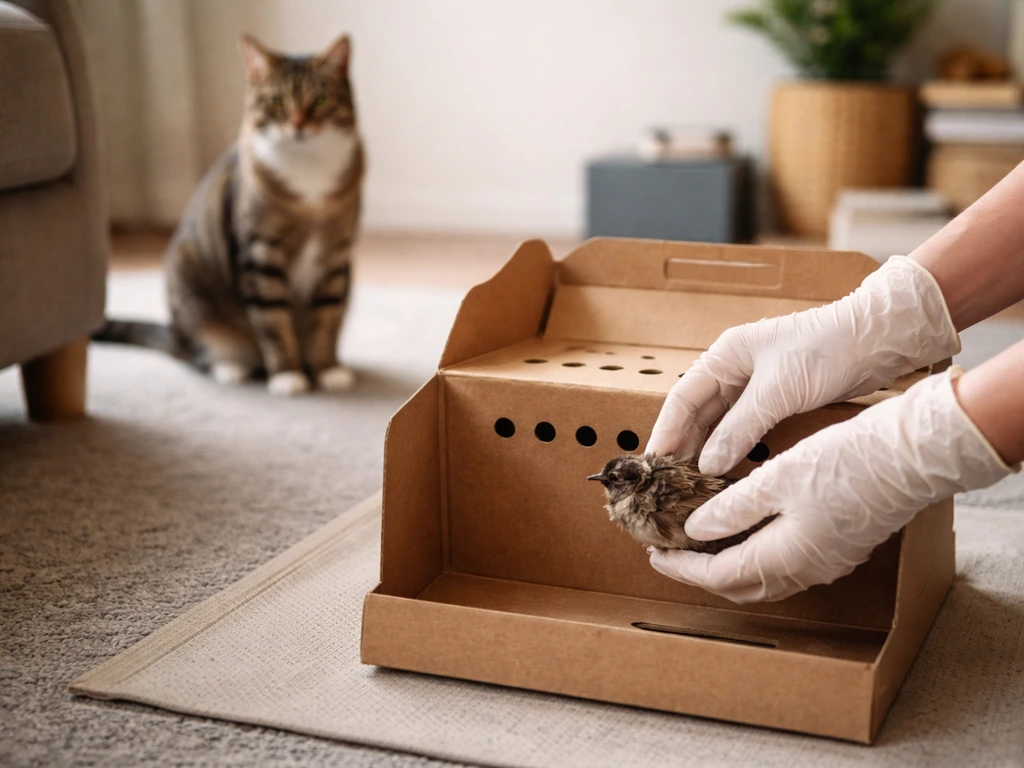
- If you find an injured bird: cover it gently with a dark towel or cloth to reduce stress, place it in a ventilated cardboard box in a quiet, warm, dark spot, and contact a local wildlife rehabilitator immediately. Do not attempt to feed or water it.
- If the bird is dead: place it in a sealed bag, dispose of it in your outdoor bin, and disinfect any contaminated surface (concrete, decking, feeding tray) with a household disinfectant. Wash your hands thoroughly with soap and water afterward.
- Check your cat for injuries. Even a 'winning' cat can pick up puncture wounds or bites. Cat-scratch disease (Bartonella henselae) is a real risk to you if the cat scratches or bites you during handling; wash any wound immediately with soap and water for at least 15 minutes and seek medical advice if the skin is broken.
- Keep the cat indoors for the rest of the day at minimum while you assess your setup.
If you cannot reach a wildlife rehabilitator, call your local animal control or humane society. They can advise or redirect you. Note that keeping a wild bird in your home without proper permits is illegal under federal law (the Migratory Bird Treaty Act of 1918 in the US) and under equivalent legislation in other countries such as the UK's Wildlife and Countryside Act 1981. Your job is to stabilize and hand off, not to rehabilitate yourself.
Keep the cat from hunting: indoor and outdoor management options
Cat predation is hunting behavior, not aggression, and it cannot be trained away. For a practical, step-by-step approach to stop your cat from killing birds and reduce the chance of a cat murdering a bird, see the full guidance in how to stop a bird murdering cat. The only way to fully stop a cat from killing birds is to remove access. Every option below exists on a spectrum from full protection (keeping the cat indoors entirely) to partial risk reduction (supervised outdoor time with added safeguards).
Full indoor management
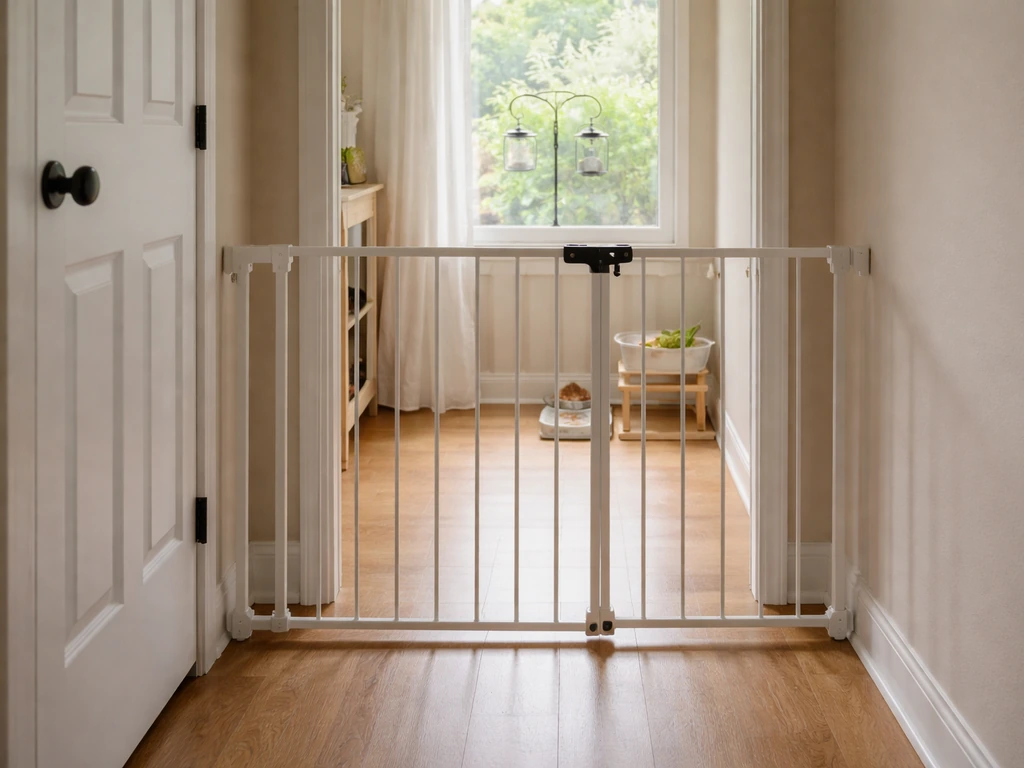
This is the recommendation from the American Bird Conservancy, Audubon, the NWF, the ASPCA, and nearly every wildlife organization that has weighed in on cat predation. Indoor-only cats live longer on average and pose zero predation risk to birds outside. If your cat has been going outdoors, transition gradually: increase play sessions (especially hunting-style wand toys) to redirect the instinct, provide window perches and bird-watching opportunities through glass, and use puzzle feeders. Most cats adapt within a few weeks.
Supervised outdoor time
If full indoor management is not feasible, supervised outdoor time is the next best option. This means you are present and actively watching, not just nearby. Harness and leash training is effective for many cats and allows outdoor enrichment without free-roaming predation opportunities. Never leave a harnessed cat unattended outside.
Enclosed outdoor runs (catios)
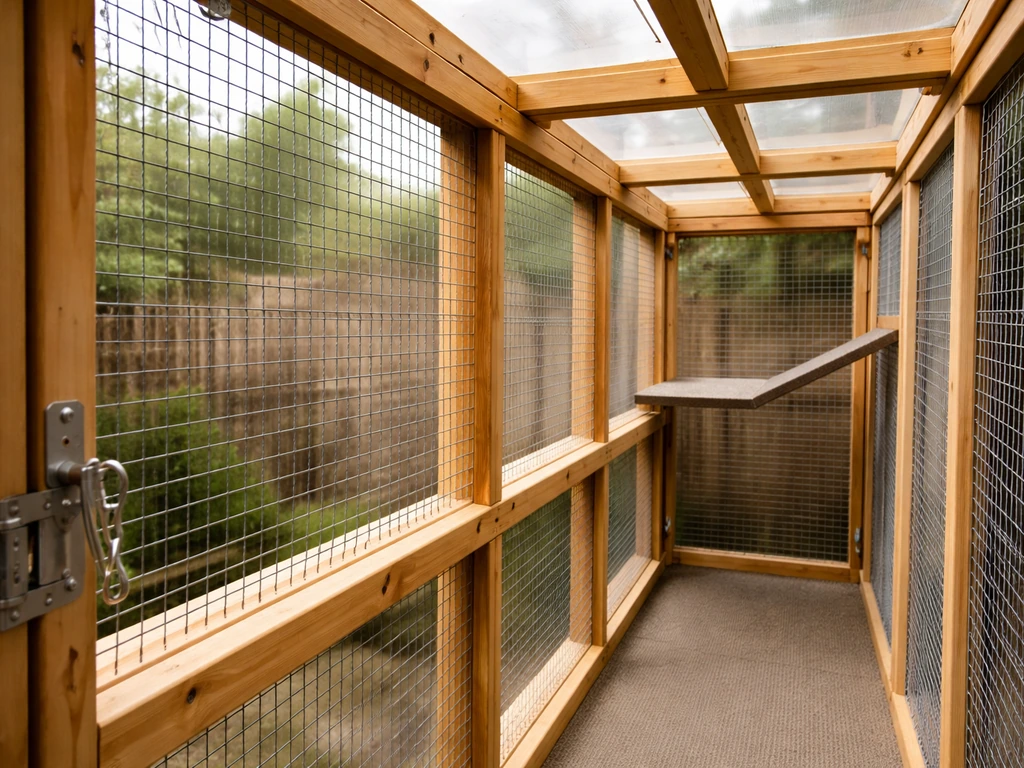
A catio is a fully enclosed outdoor structure, either attached to the house (via a cat door through a window or wall) or freestanding in the yard. When properly built with sturdy mesh and a secure top, a catio gives cats outdoor air, stimulation, and sun while making predation on wild birds physically impossible. Sizes range from a window-box style (roughly 2 feet deep) up to large walk-in enclosures. This is one of the most practical long-term solutions for homeowners who want their cat to have genuine outdoor time.
Collar-based deterrents: what works and what doesn't
Bells on collars are widely used but largely ineffective. McGill’s Office for Science and Society characterizes ultrasonic pest repellers as “ultra-shaky” and notes limited evidence for commercially available devices. Research summarized by McGill University's Office for Science and Society found that cats often complete attacks before the bell becomes a useful warning. The Birdsbesafe collar cover, a brightly colored fabric sleeve worn over a breakaway collar, has stronger evidence behind it: a trial published via St Andrews Research Repository found a 78% reduction in bird kills over an 8-week period. The bright pattern makes the cat visible to birds before the strike. A study by USGS also frames it as a meaningful risk-reduction tool. It works best during the day on birds with good color vision and is less effective on small mammals or at dusk. Use a breakaway safety collar underneath so the cat cannot get caught. This is a reasonable add-on measure but should not be treated as a replacement for access management.
What does not work reliably
- Ultrasonic repellers: McGill University characterizes the science as 'ultra-shaky' with very limited evidence that commercially available devices deter cats consistently.
- Punishment or spray bottles: these create fear without eliminating the hunting drive and can damage your relationship with the cat.
- Declawing: ethically problematic and still leaves cats able to injure birds with their mouth.
- Bells alone: see the collar section above.
Humane ways to make your property less hunt-friendly for cats

Even if you manage your own cat well, neighboring or stray cats can still cause problems. Making your yard or building perimeter less attractive to hunting cats helps regardless of where the cat comes from.
- Remove dense, low ground cover near feeding areas: cats use shrubs and tall grass as stalking cover. Keep a clear 2 to 3 metre buffer around bird feeding stations.
- Use motion-activated sprinklers: these are humane, effective for many cats, and do not harm wildlife. Place them at entry points and along fence lines.
- Apply scent deterrents at garden entry points: citrus peel, commercial cat-repellent granules, or coleus canina plantings have some evidence behind them. Reapply after rain. The RSPB references scent deterrents as part of a combined approach.
- Secure compost bins and outdoor waste: food smells attract rodents, which attract cats. Cats Protection specifically recommends keeping bins and compost secure to reduce the attraction.
- Remove or secure any food left on the ground, including fallen birdseed: ground-level food attracts birds to vulnerable foraging positions that cats exploit.
- Block sheltered spots under decking, sheds, and low structures where cats can hide and wait: use mesh or boards to close off these ambush points.
Bird-side adjustments around the building
Reducing cat predation is not just about the cat. You can also adjust how and where birds feed, roost, and nest so they are less exposed to ambush.
Bird feeder placement and setup
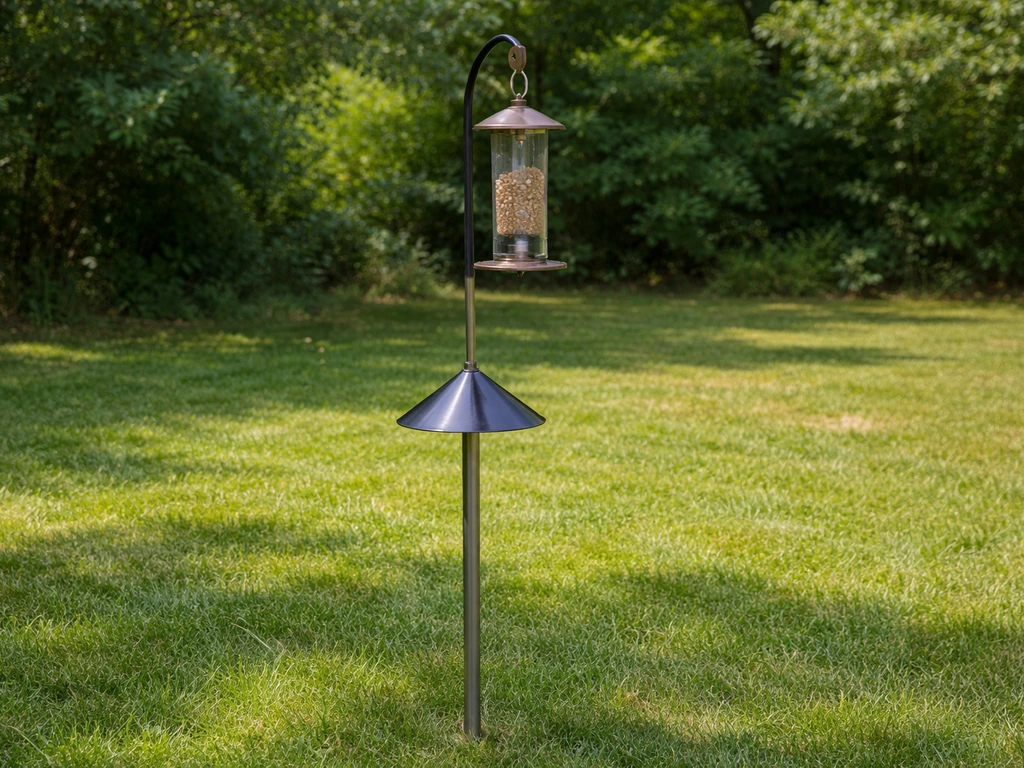
Feeder placement is one of the highest-impact changes you can make. Mount feeders on smooth metal poles at least 1.5 metres (5 feet) off the ground, well away from fences, walls, or tree branches that cats can use to jump. All About Birds suggests around 10 feet of clear space from cover as a workable starting point, adjusted for your specific layout. Add a predator baffle (a cone or cylinder-shaped guard) on the pole below the feeder: Maryland DNR explains these are designed to prevent cats and other animals from climbing the support post. No guard is 100% effective, but combined with placement distance they significantly reduce risk.
Consider removing ground feeders entirely if cat predation is a recurring problem. Ground feeding is the highest-risk setup because birds are at their most vulnerable and cats can approach under cover. If you want to support ground-feeding species, switch to a low tray mounted at least 60 cm off the ground with a clear sightline all around.
Nesting and roosting sites
Nest boxes should be mounted high (at least 2 metres for most species) on smooth poles with predator guards, or on walls where cats cannot approach from above. If you have an active nest box that cats have been accessing, add a predator guard to the pole immediately but do not disturb the nest itself while it is occupied as this may be a legal offence. The entry-hole extender (a short wooden tunnel over the hole) also makes it harder for cats to reach in with a paw.
Rooftop and building access points
For facility managers or homeowners with birds roosting on rooflines, check whether cats are accessing the roof via drainpipes, adjacent trees, or low outbuildings. Wrap drainpipes with smooth metal sheeting or cat-proof collars (similar in principle to a predator guard), and trim back any tree branches within jumping distance of rooflines where birds roost. This is especially relevant if you are also managing building bird-proofing for pest species such as pigeons, where cats may be pursuing them at roof level.
DIY cat-proofing for balconies, windows, and doors
If your cat has access to a balcony, or birds are entering through windows and doors, physical barriers are your most reliable tool.
Balconies
- Install cat-containment mesh or netting across the full opening of the balcony. Purpose-made cat balcony netting is available in various mesh sizes and can be tensioned across railings. Make sure coverage includes the top if birds roost above.
- Check railing height and spacing. Cats can squeeze through gaps wider than about 5 cm and jump heights up to 1.8 metres from a standing position. Vertical mesh barriers attached to existing railings close both gaps.
- If birds are landing on the balcony railing and the cat has access, add bird deterrent strips (pigeon spikes, gel strips, or angled barriers) to the railing top. This discourages birds from landing rather than relying on keeping the cat away.
- Keep the balcony door closed when the cat is unsupervised, or fit a mesh screen door so the cat cannot push through.
Windows
Standard fly screens are not cat-proof. If you want to leave windows open, use reinforced pet screening such as Phifer's PetScreen, which is marketed specifically as tear- and puncture-resistant to withstand cats pushing or clawing through it. These fit into standard window frames and maintain visibility. For windows where birds fly into the glass (a separate but related hazard), apply window decals or tape in a pattern no more than 5 to 10 cm apart across the full pane. Single small decals in the centre of a large window are not effective for collision prevention.
Doors and entry points
- Replace standard cat flaps with microchip-controlled or magnet-collar flaps set to exit-only, so the cat cannot let itself back out at night without supervision.
- Fit a porch or hallway airlock: a second door or mesh gate between the cat flap and the outside so the cat cannot bolt directly into the yard without you present.
- Seal gaps under gates, sheds, and fences at ground level to prevent cat entry into enclosed garden areas where birds nest at low levels.
Troubleshooting by scenario
| Scenario | Most likely cause | Priority action |
|---|---|---|
| Your own indoor/outdoor cat, yard, first incident | Free roaming access during dawn/dusk peak predation hours | Restrict outdoor access to midday only, add Birdsbesafe collar cover, reposition feeders |
| Your own cat, balcony, recurring kills | Balcony left open unsupervised, birds attracted by feeder on railing | Install balcony netting, remove railing feeder, keep balcony door closed when unattended |
| Neighbor or stray cat, your yard | Open yard perimeter, dense cover near feeders | Motion-activated sprinkler, scent deterrents at entry points, raise and guard feeders, contact neighbor or local animal control for repeat stray problems |
| Multiple bird species affected, high kill rate | Year-round free roaming, high local bird density from feeders | Full indoor management for owned cat; if stray, contact local animal control. Consider temporarily removing feeders to reduce bird congregation at high-risk spot |
| One-off kill, cat normally indoors, bird got inside | Open window or door without adequate screening | Fit reinforced pet screen on all openable windows, check door gaps |
| Protected or rare bird species involved | Cat accessing habitat near nesting or roosting site | Do not disturb nest site. Contact local wildlife authority immediately. Document any repeat incidents. |
Dawn and dusk are the highest-risk windows. Cats hunt most actively in the hour after sunrise and the hour before and after sunset. If you do only one thing immediately, restrict outdoor access during those windows.
Prevention plan and seasonal maintenance checklist
Cat predation on birds spikes during spring (nesting season) and in late summer when juvenile birds are learning to fly and are less agile. Build your checks around these high-risk periods.
Today (first 24 hours)
- Keep the cat indoors for the rest of the day.
- Handle any dead or injured bird safely (gloves, bag, box) and contact a wildlife rehabilitator if needed.
- Remove any ground-level feeders or food scraps that are attracting birds to dangerous spots.
- Check balcony and window screens for gaps or tears.
This week
- Reposition all bird feeders onto guarded poles, at least 3 metres from any fence, wall, or tree branch.
- Install or repair window pet screening on any openable window the cat uses.
- Order or fit a Birdsbesafe collar cover if the cat continues to have outdoor access.
- Set up a motion-activated sprinkler at main cat entry points in the garden.
- Identify and block ambush cover (low shrubs, gaps under decking) within 3 metres of feeding areas.
- If using a cat flap, switch to a microchip or timed model and set it to restrict overnight exit.
Spring (February to May)
- Check all nest boxes for predator guard integrity before the breeding season starts.
- Trim back branches within 2 metres of rooflines and nest box poles.
- Increase indoor time for owned cats during peak nesting months.
- Inspect balcony netting and mesh for winter damage and re-tension or repair.
Summer (June to August)
- Watch for fledglings on the ground: this is when predation risk peaks. Keep cats fully indoors for the fledgling season (typically June to August in the northern hemisphere).
- Check and top up scent deterrents monthly (or after rain).
- Supervise any cat with outdoor access closely during early morning hours.
Autumn and winter (September to January)
- Predation risk is lower but not zero; maintain access restrictions.
- Clean and inspect feeders and poles; check predator guards for damage.
- Ensure cat enclosures or catios are weatherproof for winter use.
- Review whether any changes from the warmer months should be made permanent.
Legal and safety notes, and when to call in professionals
Protected species: know the law
In the United States, the Migratory Bird Treaty Act (MBTA) of 1918 protects nearly all native migratory bird species. You cannot legally keep, transport, or rehabilitate a protected bird without proper authorization. If a cat kills or injures a protected species, your legal obligation is to contact a licensed wildlife rehabilitator or your state wildlife agency, not to attempt care yourself. In the UK, the Wildlife and Countryside Act 1981 similarly protects all wild birds and creates offences related to disturbing nesting birds. If you are unsure whether a bird is protected, assume it is and contact the appropriate authority.
Health and safety for you
- Always wear thick work gloves when handling an injured bird. Wild birds can bite and scratch, and their claws carry bacteria.
- Wash hands with soap and water after any contact with a bird, dead or alive, and after handling soiled surfaces.
- If your cat scratches or bites you during handling, wash the wound immediately for at least 15 minutes with soap and water. Cat-scratch disease (Bartonella henselae) is transmitted via scratches from infected cats and is a genuine health risk. Seek medical advice if the wound breaks skin or becomes red and swollen.
- Do not touch a dead bird with bare hands. Use a plastic bag or disposable gloves, seal the bird in the bag before binning, and disinfect any surface it touched.
- When working at height (balconies, rooflines), use appropriate fall protection. Do not lean out over railings to fit mesh or netting.
When to call a wildlife professional
- The injured bird cannot be safely contained or is showing signs of serious injury (bleeding, unable to stand, wing hanging).
- You believe the bird is a protected or rare species.
- You are finding multiple dead birds over a short period, which may indicate a larger predation problem or a disease issue.
- A stray or feral cat is causing repeat kills and you cannot identify the owner. Contact local animal control with dates, times, and descriptions.
- The cat has been injured in a predation encounter and needs veterinary attention.
When to call a building or pest professional
If birds are roosting or nesting on your building in significant numbers (a common scenario for facility managers dealing with pigeons, starlings, or sparrows), and cats are accessing rooflines or ledges to prey on them, the root issue may be the bird infestation itself. A licensed pest control professional or bird management specialist can assess exclusion options, netting, and roosting deterrents that address both the bird access problem and the cat predation risk at the same time, within legal limits. Never attempt to remove an active nest during breeding season without professional guidance, as this is likely illegal.
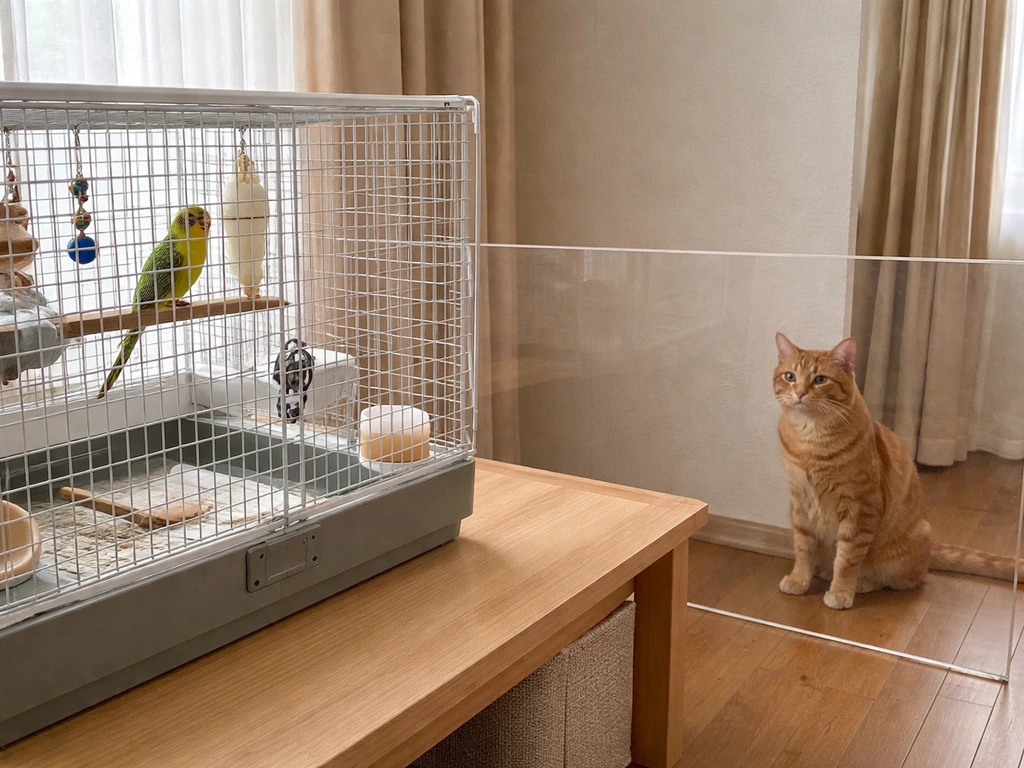
If you are also managing a pet bird indoors and concerned about your cat's behavior around the cage or aviary, the management principles above still apply but the indoor dynamic requires additional steps that go beyond the scope of this outdoor predation guide. To prevent jumps toward a bird cage, use physical barriers like a cat-proof enclosure and manage access during feeding and play time how to stop cat jumping on bird cage. If you have a pet bird indoors, you can still use the same access-management principles to keep your cat away from the bird cage.
FAQ
What should I do if I find a wounded bird that my cat attacked, but I am not sure if it’s still alive?
Keep the cat contained first, then assess the bird from a distance. If the bird shows breathing, movement, or an open eye, it is likely still alive, handle it as little as possible, and place it in a secure box with ventilation and minimal light. If you cannot get a licensed rehabilitator, contact animal control or your local humane society for direction, rather than attempting care yourself, especially if it could be a protected species.
My cat only kills birds occasionally. Do I still need indoor-only management?
Yes, because even infrequent kills mean your cat has the access and opportunity to succeed. Bells and sprays can reduce risk, but they do not remove the possibility. The safest approach is to treat it as hunting access until you can confirm the cat never has a pathway to birds, including during dawn and dusk.
Will training or punishment stop hunting behavior?
Usually, no. Cat predation is hunting behavior, not a controllable aggression pattern, so punishment often increases stress without reducing the instinct. The most reliable “training” is redirecting hunting energy into supervised play and then removing bird access with barriers, supervision, or indoor-only management.
How can I redirect my cat’s hunting instinct without increasing bird risk?
Use structured play that mimics hunting (wand toys, feather teasers) in multiple short sessions, then feed or offer a puzzle feeder to satisfy foraging. Do this indoors, before any outdoor time. If your cat becomes more keyed up after play, increase the indoors-only portion and only allow outdoor exposure when you can actively supervise.
Is a harness and leash enough to prevent bird kills outdoors?
It helps, but you must prevent sudden lunging toward birds. Use a secure harness, keep the session short at first, and avoid areas with active bird activity until your cat is reliably responsive. Also never leave a harnessed cat unattended outside, because a brief lapse can still end in an attack.
What’s the safest way to make a balcony or yard bird-proof when my cat can access it?
Prioritize physical containment. Use cat-proof, reinforced screening for any openings where birds can enter or where the cat can reach outward. If you have gaps near ledges, vents, or drainage areas, seal or guard them because cats can exploit small routes. Restrict access during the highest-risk hours, even after installing barriers.
Do predator baffles and guards fully solve the problem if I still have open feeders and nest boxes?
They significantly reduce risk but are not a guarantee. Cats can sometimes bypass guards, especially if there are nearby jump-off points like fences, branches, or outbuildings. Combine guard use with correct spacing from cover, avoid ground feeding, and monitor whether birds are still being accessed from unexpected angles.
My cat is catching birds near the house, but I can’t find how it’s getting to them. What should I check first?
Look for “third access routes” besides doors and windows: low trees touching the roofline, drainpipes or downspouts, adjacent shed or patio structures, and any wall-to-roof paths. Wrap drainpipes with smooth metal sheeting or equivalent cat-proofing and trim branches within jumping distance. If birds are roosting on rooflines, address both cat access and the roosting spots.
Are collar bells or collar covers worth trying if I already do some indoor management?
They can be an add-on, especially for daytime hunting and when the cat still has limited outdoor exposure, but they should not replace access control. Bells often fail as a reliable warning because cats may complete the strike quickly. If you use a brightly patterned sleeve cover over a breakaway collar, continue focusing on indoor-only windows and supervised limits.
How do I handle the legal part if the bird was likely a protected species?
Assume it is protected unless you are certain otherwise. In many places, keeping or rehabilitating wild birds without authorization can be illegal. If a cat kills or injures a bird, contact a licensed wildlife rehabilitator or your state wildlife agency, and avoid taking the bird into your home for care.
Can I keep feeding birds if my cat is determined to hunt them anyway?
You can, but shift the setup to reduce ambush. Avoid ground feeders, mount feeders higher on smooth poles with predator baffles, and place them far from any cover the cat could use. If predation continues, temporarily pause feeding during peak risk periods to break the cat-bird encounter pattern while you improve barriers.
What are the highest-risk times and seasons I should plan around for prevention checks?
Plan around dawn and dusk, because cats hunt most actively around those times. Also intensify your checks in spring (nesting season) and late summer when juveniles are less agile. If you only change one thing, restrict outdoor access during those peak windows until you can confirm your cat cannot reach birds.
I have nests or roosting on my building, and cats keep accessing ledges. What’s the safest next step?
Treat the problem as two linked issues: bird access and cat access. If cats are reaching rooflines or ledges to prey, consider a professional bird management or pest control assessment for exclusion and roost prevention within legal limits. Do not disturb active nests during breeding season without professional guidance.
If my cat is attacking a bird around a cage or aviary, is outdoor prevention guidance enough?
The principles are similar, but you may need additional interior containment. Use a cat-proof enclosure for the cage, control access during feeding and play, and add barriers so the cat cannot jump toward or paw at the bird. Monitor closely during transitions, because indoor dynamics often escalate faster than outdoor behavior.