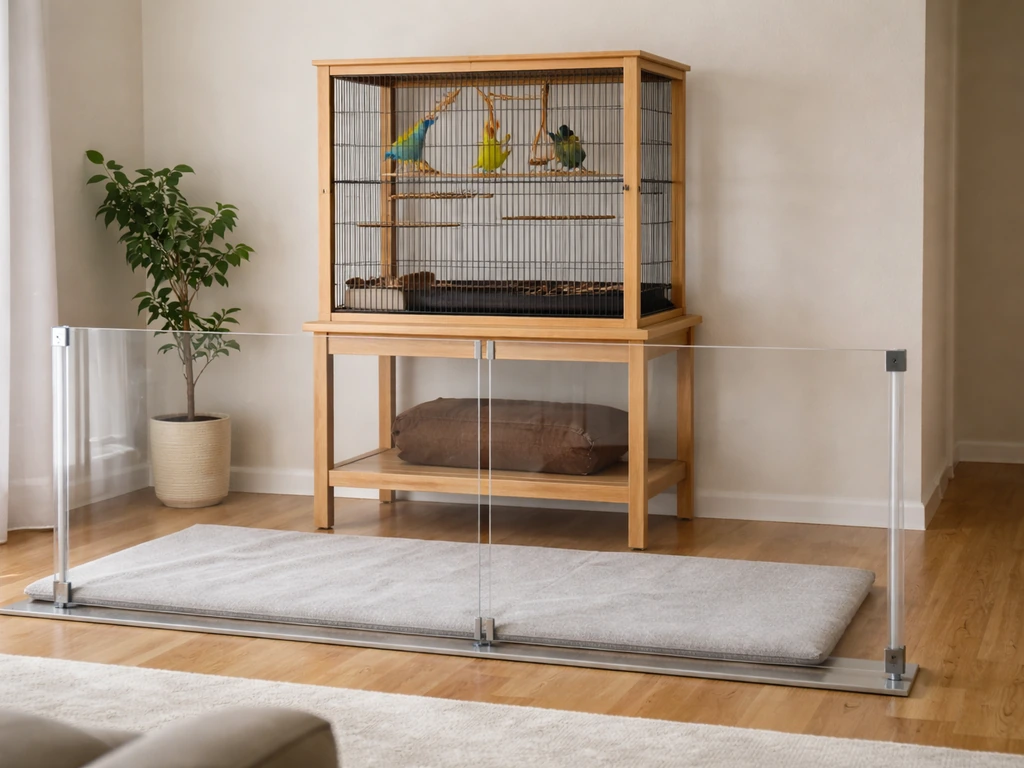
If your cat is actively attacking your bird right now, separate them immediately: toss a towel over the cat to break its focus, use a firm verbal command, and get the bird into a secure, closed room or cage before you do anything else. Once everyone is physically separated and the immediate danger is gone, get your bird to a vet the same day even if it looks fine. If your cat killed a bird, follow the same immediate vet and injury check steps and focus on how to prevent another attack what to do when your cat kills a bird. A bird that has been grabbed by a cat can appear perfectly normal and then deteriorate fast from hidden puncture wounds or shock. blank" rel="noopener noreferrer">Deeper puncture wounds from bite injuries, or bites where seriousness is uncertain, may require medical treatment and antibiotics to fight infection (Mayo Clinic). After that, the rest of this guide walks you through setting up your home so this doesn't happen again.
How to Stop Your Cat From Attacking Your Bird
Why cats attack birds in the first place
The single most important thing to understand is that your cat is not being mean or disobedient. A well-fed, affectionate, indoor cat will still go after a bird because the hunting drive is hardwired and doesn't switch off when the cat is full. Cats cycle through a predatory sequence: orient, stalk, pounce, grab. Once a bird's movement triggers the stalk phase, that sequence can run to completion in seconds, especially if the cat has been watching the bird for a while and is already aroused.
Specific triggers that make attacks more likely include: sudden wing flaps or quick movements from the bird, the sounds birds make (chirping, rustling), the bird's scent drifting from the cage, sight lines where the cat can watch the bird from close range for extended periods, and moments when the bird is out of its cage. One subtle scenario worth knowing: a cat can spend twenty minutes calmly watching a bird through a cage or window, then redirect that pent-up predatory arousal onto the first person or pet that walks past. The bird didn't get hurt, but something did. That same arousal is what turns a routine moment into an attack if the bird is accessible.
Birds, for their part, don't always pick up on the threat. A bird may flap, bob, or chirp at the cat, which from the cat's perspective looks exactly like prey behavior. Unexpected movement or even a playful nip from the bird can trigger an explosive grab response that ends badly very quickly. This is why passive supervision (being in the same room but not actively watching) is never enough.
If an attack is happening right now
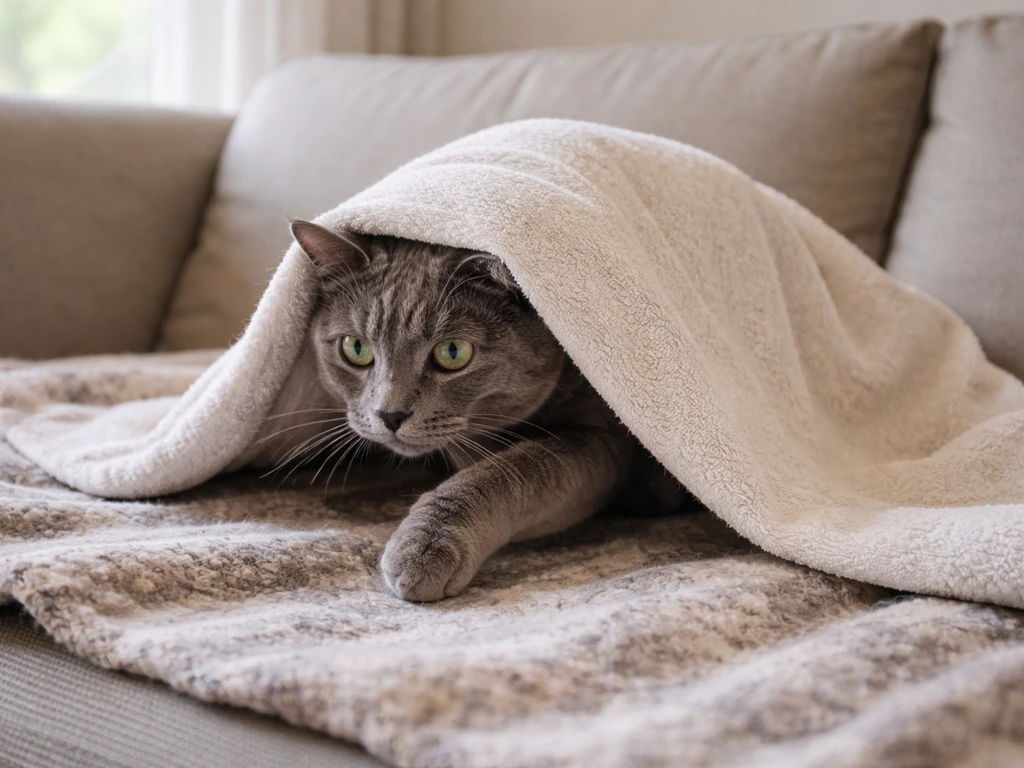
Do not grab the cat bare-handed when it is in full predatory mode. You will get bitten or scratched badly, and the cat bite or scratch will need medical attention too. Cat bites are typically small, penetrating wounds that frequently become infected and may need treatment as an abscess, including culture, debridement, antibiotics, and wound drainage cat bite or scratch will need medical attention too. Here is what to do in order:
- Throw a towel, jacket, or cushion over the cat to interrupt its focus and give yourself a safe barrier.
- Use a loud, sharp verbal command or clap to startle the cat into releasing or pausing.
- Scoop the bird gently using a folded towel (not bare hands, both for your safety and to reduce additional handling stress on the bird) and place it immediately into a secure cage or carry box in a separate room.
- Close the door. Do not leave the bird in a room the cat can access.
- Confine the cat to a different room with water and a litter box.
- Assess the bird for visible injuries: bleeding, wing droop, inability to grip a perch, open-mouth breathing, or sitting fluffed on the cage floor. Any of these signs mean you need an emergency vet right now.
- Even if you see no obvious injury, call an avian vet within the hour. Hidden puncture wounds from claws or teeth are common and cause infections and internal damage that become life-threatening within 24 to 48 hours.
While you wait for the vet appointment, keep the bird in a quiet, warm, dimly lit space. Avoid unnecessary handling. Stress on top of physical trauma is its own risk factor. Do not offer food or water if the bird is showing signs of shock (unresponsive, limp, labored breathing) because an impaired bird can aspirate. Let the vet guide you on supportive care.
Immediate setup changes to make before anything else
Before you think about training or long-term prevention, you need to physically re-engineer your space so that another attack is structurally impossible. This is non-negotiable. Training and enrichment help a lot, but they are not reliable enough on their own to stand in for physical barriers.
The one rule that matters most
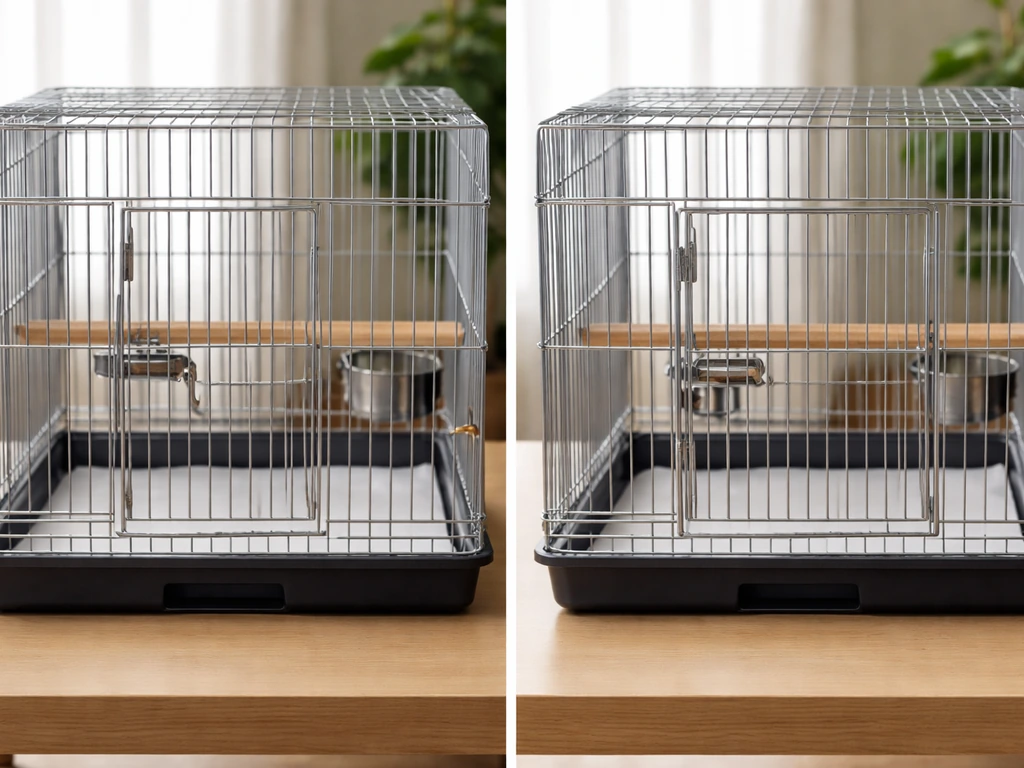
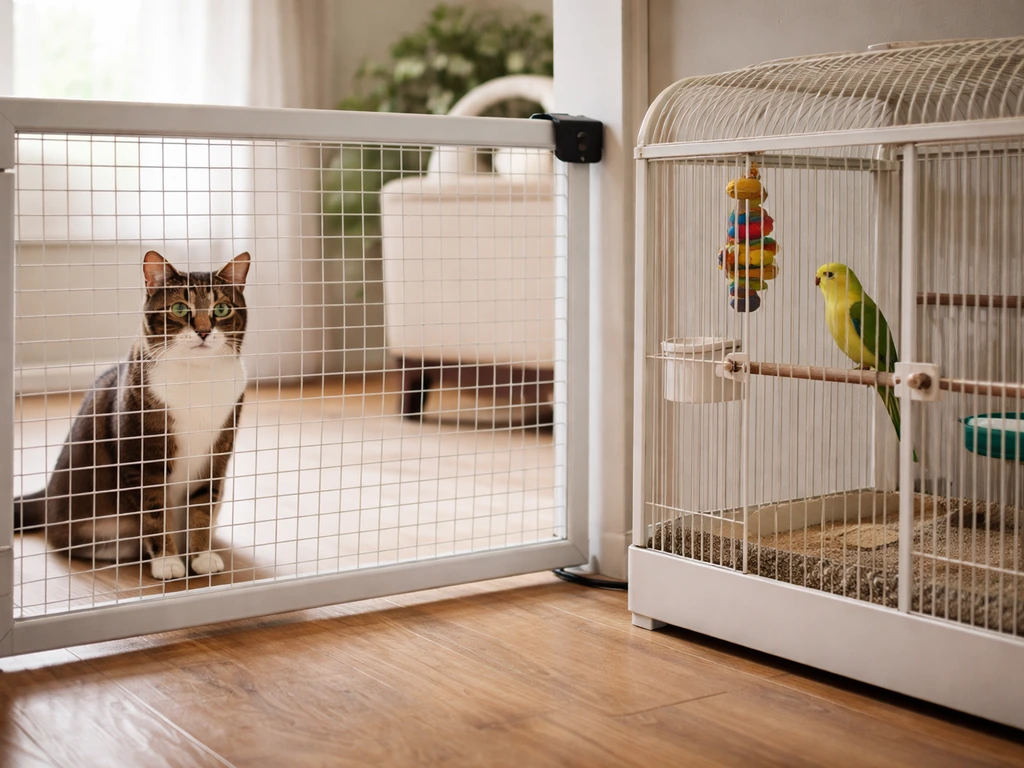
The cat and the bird should never be in the same unsupervised space, and the bird should never be out of its cage in a room where the cat can enter. That is the baseline. Everything else builds on top of it. Even a calm, apparently habituated cat can flip to attack mode in an instant, so the rule holds even for cats that have coexisted peacefully with a bird for months.
Cage and enclosure requirements
A standard pet cage with a simple latch is not secure enough if your cat is motivated. Check every closure point. The cage door and any side panels should have secondary locking mechanisms (carabiner clips or locking latches) that a cat cannot paw open. Bar spacing matters too: a cat can reach a paw through wide-spaced bars and injure a bird that is sitting near the cage wall. For smaller birds especially, bar spacing should be narrow enough that a cat paw cannot get through. If your current cage fails either of these tests, relocate the bird to a safer enclosure before you go to bed tonight.
Cage placement
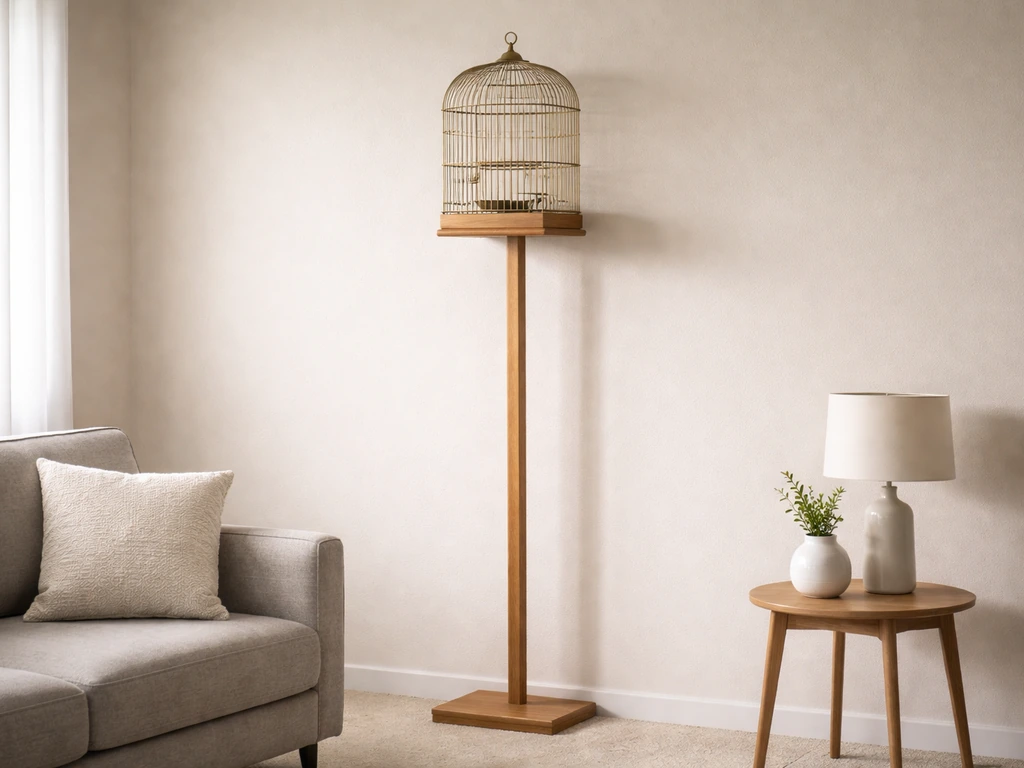
Where you put the cage makes a significant difference. A cage on a low stand or table is much easier for a cat to get on top of or lean against than one mounted high on a wall bracket or placed inside a dedicated room with a door that closes and latches. Move the cage so the cat cannot jump onto it or sit pressed against its sides. Even a cat that is just sitting and staring is stressing the bird and rehearsing predatory focus that will eventually find an outlet. Height alone is not enough if the cat can jump there: the goal is physical inaccessibility combined with visual separation when possible.
Dedicated bird room
If your home layout allows it, designating one room as the bird's space with a door that latches properly is the single most reliable long-term setup. The cat simply never has access to that room. For balconies or outdoor aviaries, this means a sturdy aviary with predator-proof wire (welded wire mesh, not chicken wire), buried or overlap-flashed base edges so the cat cannot dig under, and a secure latching door. Check the structure for any gaps a paw can fit through.
Out-of-cage time rules
Birds need time out of their cage for exercise and mental health. During that time, the cat must be physically separated in another room with the door closed, not just distracted or in another part of the house. Cover windows if the bird is flying near glass where the cat might be watching from outside. Remove or block any routes the cat could use to burst into the bird's flight area unexpectedly.
Training your cat to disengage from the bird
Physical management keeps your bird safe immediately, but working on your cat's behavior reduces the underlying predatory arousal over time and makes the overall household calmer. This is not about punishing the cat for being a predator. It is about redirecting that drive onto appropriate outlets and reducing the triggers that fuel fixation on the bird.
Drain predatory energy before exposure
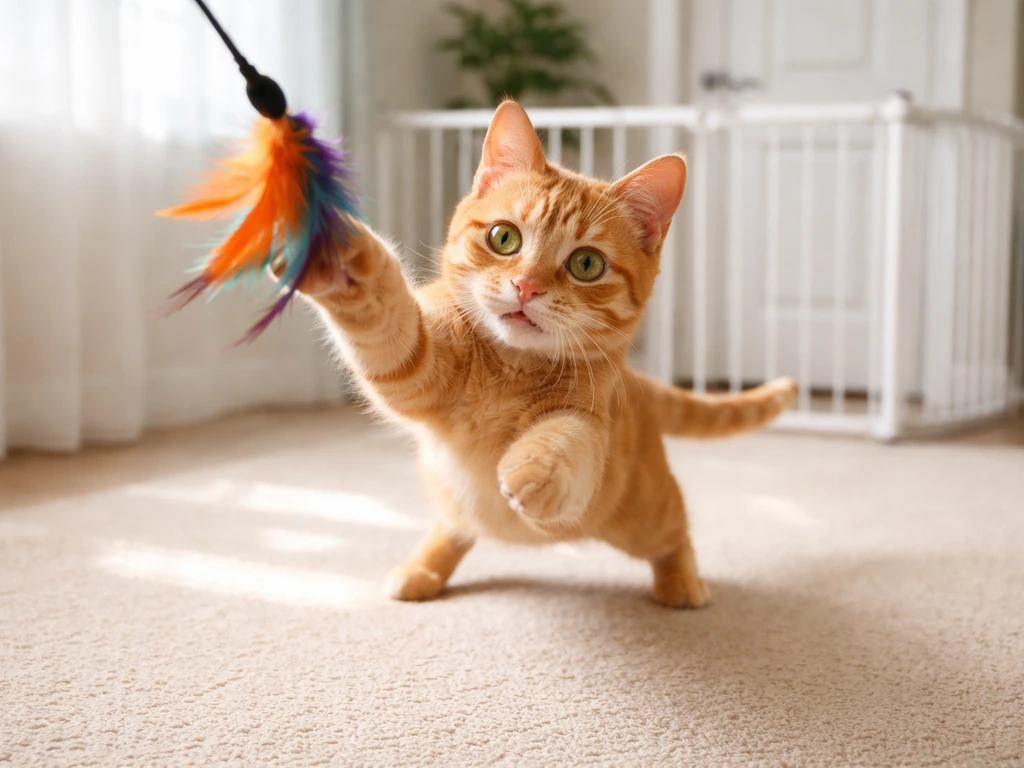
One of the most effective things you can do is run an intensive interactive play session with the cat before any moment when the bird might be visible or audible. Use a wand toy, feather teaser, or motorized prey toy and play hard for 10 to 15 minutes until the cat is genuinely tired and has completed a full hunt-catch-groom-sleep cycle. A cat that has just discharged its predatory energy through play is significantly less reactive than one that has been sitting idle watching the bird. The key is to always let the cat actually catch the toy at the end of the session so it doesn't stay in a frustrated, aroused state.
Desensitization and counterconditioning
Desensitization means gradually exposing the cat to bird sights and sounds at a low enough intensity that it stays calm, then very slowly increasing the intensity over weeks. Counterconditioning pairs that exposure with something the cat loves (high-value treats, play) to build a positive association with the bird's presence rather than a predatory one. In practice, this might look like: cat is calm in a room where it can faintly hear bird sounds from another room, cat gets a treat. Next week: cat can see the cage from a distance, stays relaxed, gets a treat. The moment the cat starts to stalk, stare intensely, or crouch, you have gone too far, too fast. Back up to the previous distance and pace. Never rush this process.
Interrupt stalking calmly and redirect
If you catch your cat going into a stalk (low body, focused stare, slow tail movement, dilated pupils), interrupt it calmly before it reaches the pounce phase. A quiet clap or a soft noise is enough at this stage. Then immediately redirect with a toy or a food puzzle to give the cat something appropriate to focus on. Do not yell or physically punish the cat: this adds fear and stress to the situation and can make aggression worse, plus it damages your relationship with the cat without addressing the underlying drive.
Enrich the cat's environment consistently
A bored cat with nothing to do is a cat that fixates on the bird. Rotate toys every few days so novelty stays high. Use puzzle feeders so the cat has to work for some of its meals, which satisfies the hunt-for-food aspect of predatory behavior. Wall-mounted shelves, cat trees, and window perches with bird feeder views (outside, not inside) give the cat an enriching alternative. The goal is a cat that is mentally and physically engaged enough throughout the day that the indoor bird is not the most interesting thing in the environment.
Protecting your bird every day
Cage placement and predator guards
Place the cage in a room the cat cannot access passively. If that is not possible, mount the cage high enough and far enough from any jump-off point that the cat physically cannot reach it, and use a stand with a wide, cat-deterrent base (some owners use baffles similar to squirrel guards on bird feeders). Smooth-sided stands are harder to climb than cage legs with horizontal rungs.
Indoor flight safety
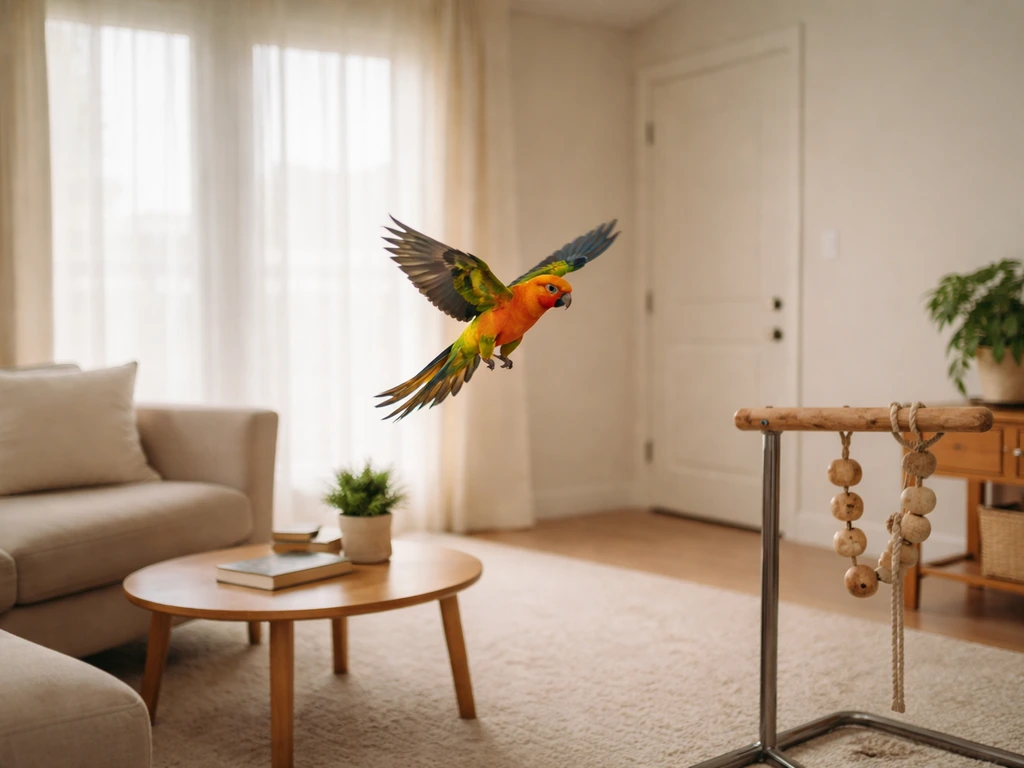
When your bird is flying free indoors, the cat is in a different room with the door closed. Cover windows in the flight area if the cat is visible from outside, because the sight of the cat stalking through glass can trigger panicked flight that leads to impact injuries for the bird. Secure any gaps around doors and check that windows in the bird's room are closed or have properly fitted screens the cat cannot push through.
Outdoor aviaries and balconies
For outdoor setups, use welded wire mesh rather than chicken wire: chicken wire has openings a cat can reach through and is not strong enough to resist sustained pulling or chewing. The aviary frame should be robust enough that a cat jumping against or climbing on the exterior cannot shift panels or pop fastenings. Consider a double-door entry system (a small airlock chamber between the outer and inner door) so the bird cannot escape and a cat cannot dart in when you open the main door. Check the entire structure monthly for rust, bent panels, and loose fastenings.
Stress reduction for the bird
Even when no attack occurs, a bird that can constantly see or smell a cat is under chronic stress, which suppresses immune function and causes behavioral problems over time. Provide visual barriers: a partial cage cover, cage placement against a wall so the bird's back is protected, or a dedicated room. This matters as much for the bird's long-term welfare as physical security does.
Keeping it from happening again
Once the immediate situation is managed, preventing future incidents comes down to consistent routines and regular checks on your physical setup. If you want the best chance of success, focus on managing your cat's hunting drive and using physical barriers every day preventing future incidents.
Daily habits that reduce risk
- Play with the cat for 10 to 15 minutes before any bird out-of-cage time, every time.
- Confirm the cat is behind a closed, latched door before letting the bird out.
- Check cage latches and lock points every morning as part of a feeding routine.
- Watch for stalking behavior (fixed stare, crouching, slow approach) during any supervised interaction time and interrupt early.
- Rotate the cat's toys and puzzle feeders at least twice a week.
- Observe the bird daily for signs of stress: feather plucking, decreased vocalization, abnormal posture, or loss of appetite.
Monthly setup checks
- Inspect cage bars, welds, and fastenings for damage or loosening.
- Check that no new furniture has been added that gives the cat a jump route to the cage.
- Review door and window seals in the bird's room.
- Assess the outdoor aviary (if applicable) for rust, bent panels, digging signs under edges, and loose hinges.
- Evaluate whether current enrichment is still engaging the cat, and update if the cat seems bored or has resumed fixating on the bird.
Environmental proofing comparison
| Measure | Protection level | Effort/cost | Best for |
|---|---|---|---|
| Dedicated bird room with latching door | High | Low to medium (existing room) | Most home setups, all bird sizes |
| Cage with secondary locking latches | Medium-high | Low (hardware addition) | All setups as a baseline minimum |
| High-mounted cage on cat-proof stand | Medium | Low to medium | Homes where a dedicated room isn't possible |
| Welded-wire outdoor aviary with double door | High | High (construction) | Outdoor or balcony birds, larger collections |
| Cat confined during all out-of-cage time | Very high | Low (behavioral routine) | All setups, non-negotiable layer |
When to bring in a professional
Most cat-and-bird households can be managed safely with the steps above, but there are situations where you genuinely need professional help and trying to handle it alone puts both animals at ongoing risk.
Get your bird to a vet right away if
- The bird was physically grabbed, clawed, or bitten, even if it looks uninjured. Cat bacteria (especially Pasteurella) cause serious infections in birds within 24 to 48 hours of a wound, and internal injuries may not be visible.
- The bird is fluffed, quiet, sitting low, or has any change in breathing.
- The bird is not gripping its perch normally or has a wing held at an odd angle.
- You are not sure whether contact was made: treat it as an exposure and get a vet opinion the same day.
Get your cat to a vet if
- The predatory behavior is sudden, new, or much more intense than before, which can indicate pain, neurological changes, or illness driving the aggression.
- The cat has bitten or scratched you or another person during an attack or redirection incident. Cat bites to humans carry serious infection risk and may require medical attention.
- Any standard first-line management has not reduced the fixation after four to six weeks of consistent effort.
When to call a certified animal behaviorist
If your cat's predatory behavior is severe, escalating, or not responding to the environmental and training strategies in this guide, consult a Certified Applied Animal Behaviorist (CAAB) or a board-certified veterinary behaviorist. These professionals can design a structured behavior modification program tailored to your specific cat, home layout, and bird species. Your avian vet may also be able to refer you to a specialist who works with multi-species households. This is not a failure: some cats have a prey drive that is simply too strong and too reinforced to manage safely with DIY methods alone, and a professional assessment protects both animals.
Legal and safety notes
If the bird involved is a wild bird rather than a pet, different rules apply. Many wild bird species in the US, UK, Canada, and Australia are protected under federal or national law, and a cat that repeatedly injures or kills protected wildlife can create legal liability for the owner. If a wild bird has been injured by your cat on your property, contact a licensed wildlife rehabilitator rather than attempting home care. Handling injured wild birds without a permit is illegal in many jurisdictions. For pet birds, standard veterinary pathways apply, but check local regulations if you keep exotic or CITES-listed species, as some require documentation of legal ownership that may be relevant if an injury leads to a vet visit or insurance claim.
The bottom line is that cats and birds can coexist in the same home, but it requires consistent physical barriers, active behavioral management of the cat, and zero reliance on supervision alone to keep the bird safe. The rules are simple; the follow-through is what matters.
FAQ
Can I separate them by putting the bird in a different room but leaving the cat in the same room where it can still see the bird?
Not reliably. Even if the cat cannot access the bird, visual and scent access can keep the cat fixated and trigger a sudden pounce attempt if a doorway opens or the cat finds a route. Use a room-with-a-latching-door setup for the bird, and add visual barriers (partial cage cover or positioning with a protected back) so the cat cannot continuously watch from close range.
What should I do if my cat only corners or stalks the bird but never actually grabs it?
Treat it as an active hunting episode. Stalking behaviors often progress quickly once the prey item is accessible, especially when the cat is aroused or has had time to rehearse focus. Interrupt at the earliest signs (crouch, intense staring, slow tail movement, dilated pupils), then immediately redirect with an appropriate toy or puzzle, and tighten physical barriers so the bird cannot be reached.
Is it safe to give the cat a treat while the bird is in the same room as long as the cat seems calm?
It can help for desensitization, but only at distances where the cat stays relaxed, not when it starts orienting, staring intensely, or moving into a stalk. If the cat shows predatory body language, that is your cutoff point. Also, never do this in a shared space where the cat could physically reach the bird, even if you think the cat will behave.
How do I know whether my bird’s cage is secure enough if my cat is motivated?
Do a paw-access test: check every closure point, ensure there is no way to paw the latch open, and confirm the bird is not positioned where a cat paw can reach through bars. Also check for climb routes, such as nearby furniture that lets the cat get higher, and verify the cage cannot be tipped or slid. If you cannot confidently rule these out, move the bird to a different enclosure before any time you sleep or leave the room.
My bird gets stressed in a dim, quiet recovery area, what’s the safest approach after an attack or a near miss?
Reduce handling and keep the bird in a warm, quiet, dim space to lower shock risk, but avoid forcing food or water if the bird seems weak or has abnormal breathing. If you do not see obvious injuries, a same-day avian vet exam is still important because puncture wounds can be hidden. Use only what your vet instructs for supportive care.
What if I don’t know whether my cat injured the bird but the bird seems fine afterward?
Assume there can be internal injury. Even when a bird looks normal, it can deteriorate quickly due to shock or hidden puncture wounds. Get the bird to an avian vet the same day, and monitor for lethargy, fluffed posture, labored breathing, or reduced responsiveness.
Can training replace physical separation over time?
No, not as a safety plan. Training and enrichment can reduce fixation and improve predictability, but physical barriers must still prevent access to the bird. Cats can switch from calm watching to instant predatory action, so the baseline rule remains, bird never out with cat in the same unsupervised space.
How should I handle daily enrichment when the cat is most interested in the bird during my bird’s out-of-cage time?
Schedule cat play and puzzle feeding so the cat is physically and mentally satisfied before bird out time. Keep the cat in a closed, separate area during the bird’s free-flight window, and cover or block any outside sight lines that let the cat track the bird through glass. When the bird is out, cat needs true room separation, not just distraction.
What are signs my cat is getting close to the “pounce” stage that I should interrupt immediately?
Look for low body posture, focused intense staring, slow tail movement or a moving “targeting” focus, and dilated pupils. Once you see these cues, intervene before the cat reaches full commitment, then redirect to a toy or puzzle. If you repeatedly need to interrupt, it usually means your physical setup still allows too much access or too much time watching.
Should I punish or scold my cat when it attacks or stalks?
Avoid punishment. Physical or loud punishment increases stress and can make future incidents worse by escalating fear or confusion. Instead, manage the environment (so the bird cannot be reached) and address the hunting drive with structured play, enrichment, and gradual desensitization at safe distances.
Do outdoor aviaries count as “safe” if the cat cannot enter, but can still stand near the barrier?
They can still be risky if the cat can touch, pull, or reach through weak spots. Use welded wire mesh instead of chicken wire, reinforce the frame so panels cannot shift, bury or overlap-flash the base to prevent digging, and check monthly for gaps. Also consider a double-door entry to prevent the bird from escaping and prevent a cat from darting in during access.
My bird is sometimes visible through a window, can I just close curtains to prevent problems?
Curtains can reduce visual triggers, but they are not a complete substitute for proper separation if the cat can still access the bird room. Use curtains or window coverings to reduce stalking-through-glass moments, and also secure screens, door gaps, and any routes into the bird’s flight area.
When should I contact a professional instead of continuing DIY changes?
Get help if attacks are severe, escalating, or the cat remains highly fixated despite improved barriers, structured play, and gradual conditioning. A Certified Applied Animal Behaviorist or a board-certified veterinary behaviorist can create a plan tailored to your cat, your home layout, and your bird’s needs, and your avian vet can help with referrals.
Does the advice change if the bird is wild or you’re dealing with a wild bird injury?
Yes. If a wild bird is injured, contact a licensed wildlife rehabilitator rather than attempting home care, because permits and legal requirements vary and handling can be illegal in many places. For pet birds, veterinary care pathways apply, but check local rules if you keep species with special documentation requirements.
How to Stop Cat Jumping on Bird Cage: Safe Steps
Humane steps to stop a cat jumping on a bird cage fast, with barriers, deterrents, and prevention for indoor or outdoor