Move the cage to a room the cat cannot access, add a physical barrier around the base and top of the cage, and redirect the cat's hunting energy with at least two structured play sessions every day. Those three steps alone will solve the problem for most households. Everything below builds on that foundation with specifics, backup options, and a maintenance plan to keep it working long-term. If you are looking for more tailored steps on training and prevention, this guide explains exactly how to get my cat to leave my bird alone.
How to Stop Cat Jumping on Bird Cage: Safe Steps

Maya Carver
11 May 2026
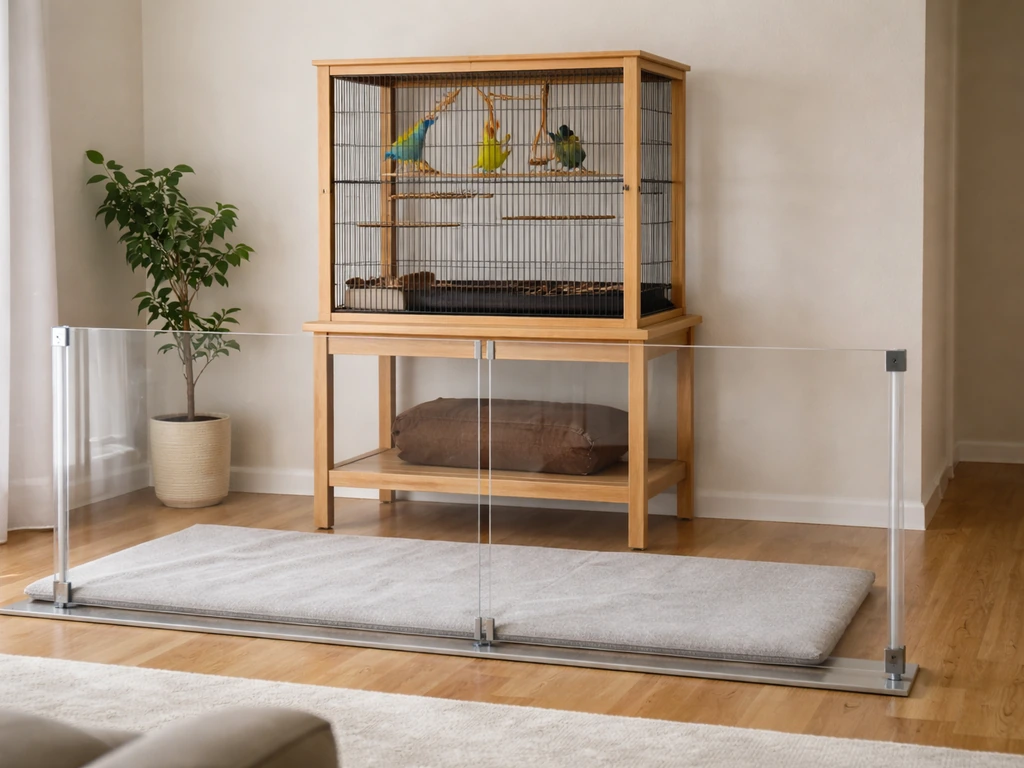
Why your cat keeps going back to the cage
Understanding the pull is the first step to breaking it. Cats are hardwired predators, and the ASPCA describes their predatory sequence as silent stalking, watching, waiting, and then striking. A bird in a cage is an almost perfect trigger: it moves unpredictably, makes noise, and smells like prey. Your cat is not being bad. It is doing exactly what its instincts are telling it to do.
Height plays into this too. Cats seek elevated spots because those positions give them a security advantage and a clear view of the room. A tall bird cage sitting on a stand is essentially advertising itself as the ideal vantage point. The cage is high up, it vibrates slightly, and there is something interesting inside. From the cat's perspective, it is the best seat in the house.
Setup issues often make the problem worse. If the cage is near a couch, counter, bookshelf, or windowsill, the cat has a launchpad. If the cage stand wobbles, the cat may have learned that jumping on it causes exciting movement. And if the bird is visible from anywhere in the room, the cat's focus stays locked on it all day. Fixing those environmental factors is more reliable than relying on training or deterrents alone.
Watch for the warning signs: tail twitching, rear-end wiggling before a pounce, ears turned outward or flattened, and a low crouching posture. Those signals mean the cat has shifted from casual curiosity into active hunting mode, and you need to act before contact happens.
Stop it right now: quick actions for today
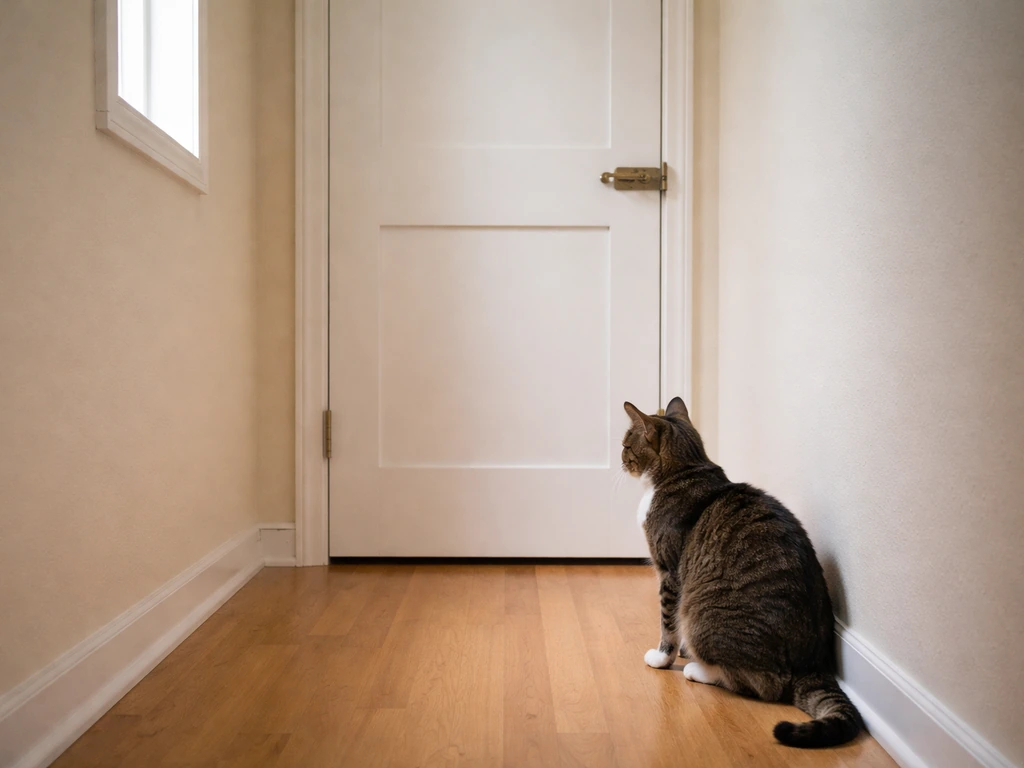
If your cat is currently jumping on or harassing the cage, do these things immediately. This is your emergency checklist before you work on the longer-term fixes.
- Close the cat out of the bird's room and shut the door. This is the single most effective thing you can do right now. Physical separation removes all risk instantly.
- If a closed door is not possible, move the cage to a high shelf or closet with a latch the cat cannot open, even temporarily.
- Check the bird for stress signs: fluffed feathers, hiding in a corner, loss of appetite, or labored breathing. A highly stressed bird can deteriorate quickly, so contact an avian vet if these signs are present.
- Remove every launchpad near the cage. Push furniture at least 3 feet away from the cage on all sides. Cats can jump surprising distances horizontally, so be generous.
- Place a scat mat or double-sided tape strips on the floor directly around the cage stand. The cat needs to step on or near the mat to reach the cage, so position it as close as possible.
- Make a loud noise (clap, shake a can of coins) or use a short burst of compressed air spray the moment the cat approaches the cage, then immediately redirect it to a toy. Repeat consistently.
One important safety note for today: do not use aerosol sprays, essential oils, scented plugins, or any air freshener near the bird's room as deterrents. Birds have highly sensitive respiratory systems, and aerosol products including spray deodorant and scented diffusers can cause serious harm or death. Stick to physical deterrents and separation.
Humane cage-proofing: physical barriers and blocking access
Physical proofing is the most reliable category of solutions because it does not depend on the cat learning anything or a deterrent staying effective over time. The goal is to make it physically impossible, or at least very difficult, to reach the cage.
Blocking every route to the cage
Map out every surface a cat could use to reach the cage. Counters, bookshelves, window ledges, chair backs, and the top of the fridge all count as potential launch points. Remove or block any surface within about 4 feet of the cage. That means pushing furniture back, removing chairs from the room, and if needed, placing inverted carpet runner (nubby side up) on any remaining surfaces near the cage.
Cage enclosures and barrier panels
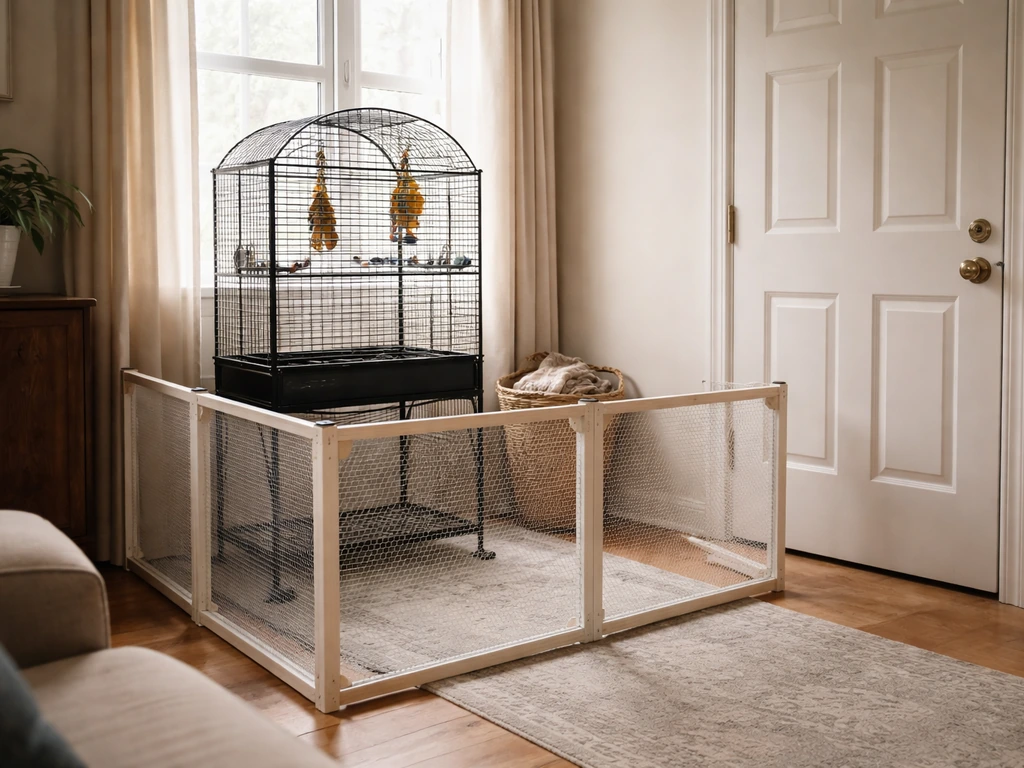
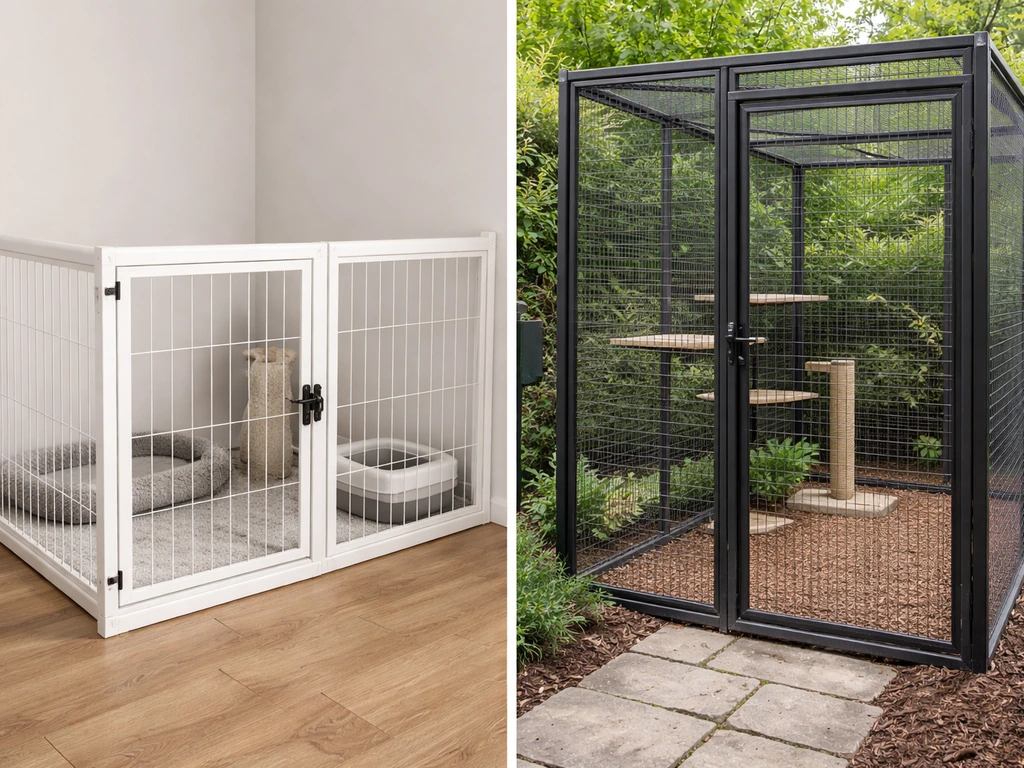
Consider enclosing the cage area with a freestanding pet playpen or a baby gate system that forms a perimeter around the bird's space. Metal wire playpens designed for dogs or rabbits work well because they are too tall for most cats to jump and too flimsy to support the cat's weight on top. Wire panels can be zip-tied together and arranged in a rectangle or square around the cage stand, giving the bird a buffer zone of at least 2 feet on every side.
Cage stand stability
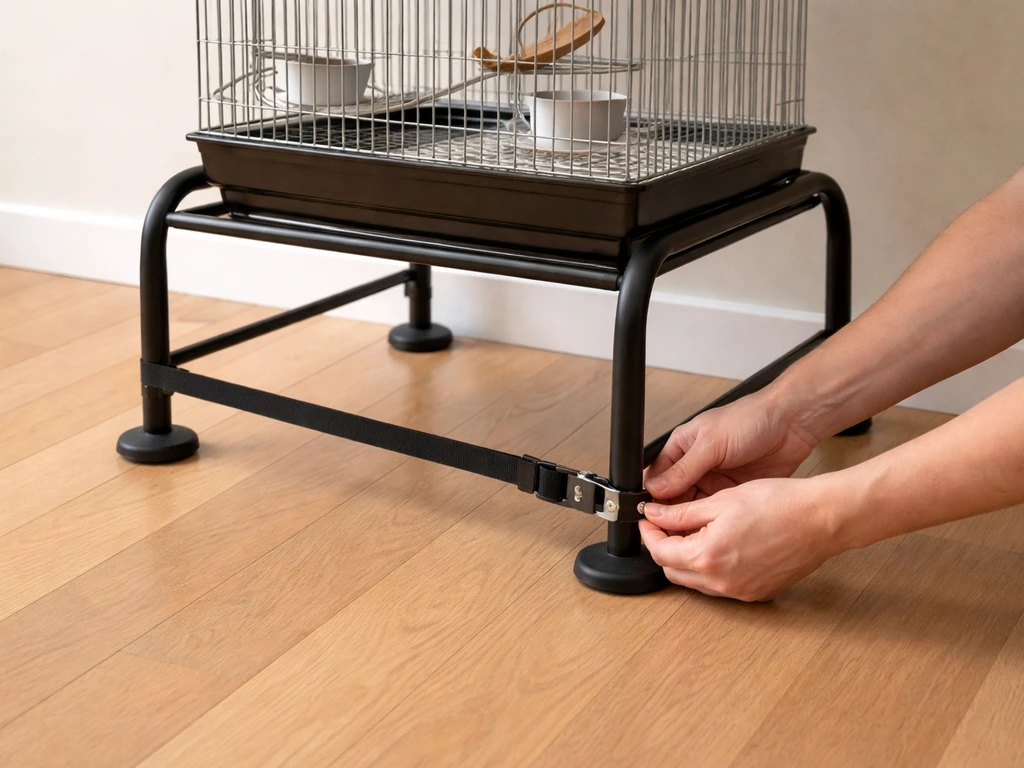
If the cage stand rocks or slides, secure it. Bolt it to the wall or place non-slip furniture pads under the feet. A wobbly cage is dangerous for the bird if the cat successfully knocks it, and the movement can be an additional stimulation trigger. Stability also matters if the cage is outdoors: stake the stand into the ground or anchor it to a wall bracket.
Dedicated bird room with a door latch
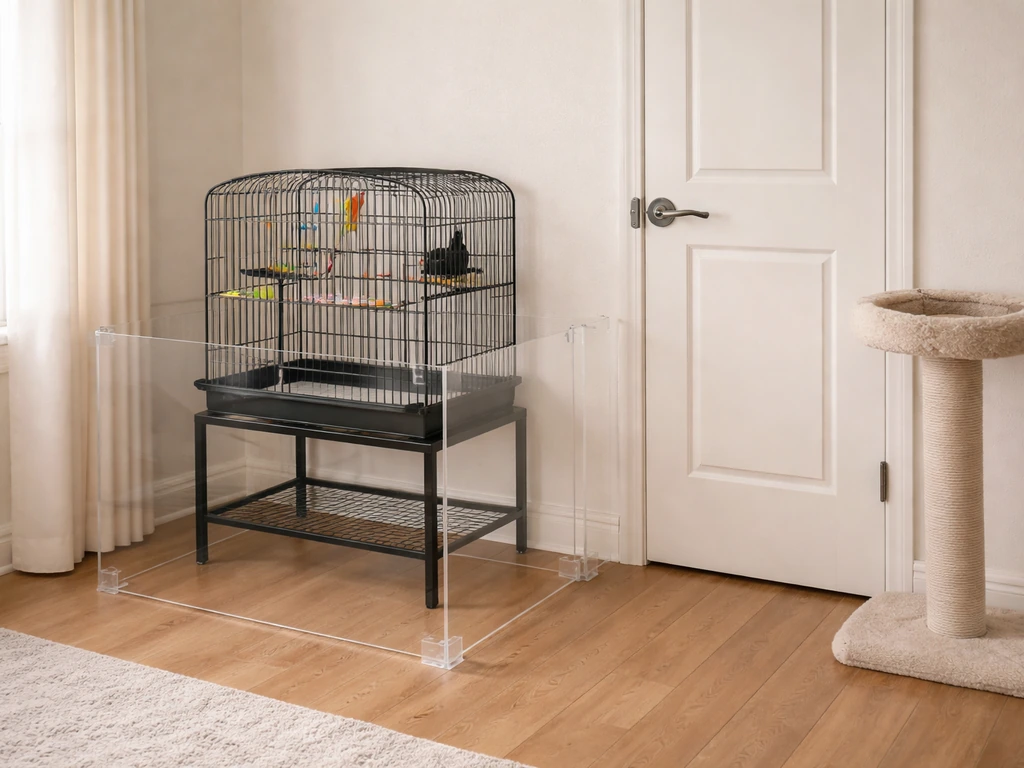
Long-term, a dedicated room with a closing door and a cat-proof latch is the gold standard. It completely removes the predator-prey dynamic from the bird's daily environment, which means less chronic stress for the bird. If a spare room is not available, even a large walk-in closet converted for the bird works. Make sure the room has ventilation, natural or artificial light, and climate control before committing to it.
Make the area unattractive and redirect the cat's hunting drive
Physical barriers are the backbone, but combining them with deterrents and enrichment gives you a much stronger result. The goal here is two-pronged: make the cage area unappealing to approach, and give the cat something better to do with its predatory energy.
Safe deterrents near the cage
- Scat mats or electronic deterrent mats: place these on the floor around the cage stand and on any nearby furniture the cat uses as a launchpad. The cat steps on the mat, gets a mild static pulse or vibration, and associates the area with discomfort.
- Double-sided tape on surfaces: applied to the top edge of furniture near the cage. Cats dislike the sticky feeling and will avoid surfaces treated this way.
- Inverted plastic carpet runner: cut to fit shelves or countertops. The plastic nubs are uncomfortable on paws and discourage landing.
- Motion-activated compressed air canisters (like PetSafe SSSCAT): these spray a short burst of air when the sensor is triggered. Position them at the entry point to the cage area, not near the bird itself.
Scent deterrents are a common suggestion but need careful handling here. Many scented items, including citrus oils, lavender, lemongrass, and citronella, can irritate or harm birds through inhalation or contact. Do not place any scented deterrents in the same room as the bird. If you want to use a scent boundary, apply it outside the bird's room, at the door threshold, to discourage the cat from approaching that area at all.
Ultrasonic repellers are widely sold as a solution, but the science behind them is weak. Reviews from researchers at institutions like McGill have concluded that ultrasonic pest repellers do not reliably modify animal behavior. Save your money and put it toward physical deterrents instead.
Redirect the hunting drive with enrichment
A bored or under-stimulated cat is far more likely to fixate on the bird cage. The ASPCA recommends making a cat's environment as exciting and stimulating as possible to satisfy instinctual needs. Practically, that means at least two 10 to 15 minute interactive play sessions per day using wand toys or feather teasers that mimic prey movement. Schedule one session in the morning before the cat has a chance to start stalking the cage, and one in the evening.
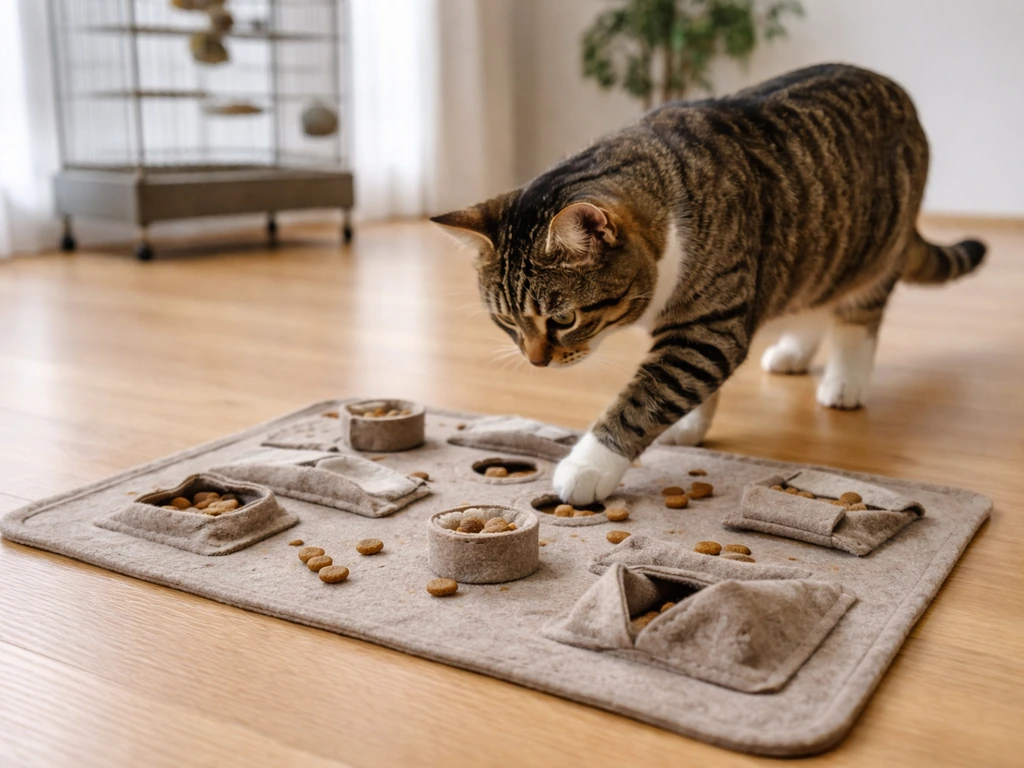
Food puzzles and foraging activities also help. Hiding a portion of the cat's daily kibble around the house encourages investigation and burns mental energy that might otherwise go toward the bird. Puzzle feeders, treat-dispensing balls, and snuffle mats all work. The goal is to give the cat a legitimate hunting outlet that does not involve your bird.
Provide the cat with its own dedicated high perch or cat tree placed away from the bird's room. Cats choose elevated spots for security and surveying, so giving them an alternative that is taller than the cage stand reduces the appeal of the cage as a vantage point. Put the cat tree near a window with outdoor views to keep the cat occupied.
Cage placement and environment: indoors vs. outdoors
Indoor placement
The safest indoor placement puts the cage in a room the cat cannot enter. If that is not possible, place the cage against a wall in a corner so access is limited to two sides rather than four, then block those two sides with barrier panels or a playpen enclosure. Avoid placing the cage near windows where the cat also likes to sit, since that creates direct proximity and visual contact. If you still see cat activity after making the cage secure, follow a dedicated routine for how to keep a cat away from.a bird cage and adjust placement accordingly. Height matters less than access control: a cage on the floor inside a playpen enclosure is safer than an unprotected cage on a high shelf with launchpads nearby.
Outdoor placement
Outdoor cages or aviaries present additional challenges because cats from your household and neighboring properties can approach. Anchor the cage structure to a wall or post so it cannot be knocked or tipped. Use hardware cloth with no larger than half-inch openings, because cat claws can reach through standard wire mesh and injure birds. Surround the cage with a secondary perimeter barrier: a second layer of fencing or a PVC pipe and netting enclosure at least 2 feet away from the cage on all sides. Keep in mind that any outdoor bird setup also needs to account for protected wild species that may interact with the cage, and local regulations may apply to how you manage wildlife in your yard.
Side-by-side comparison: indoor vs. outdoor setups
| Factor | Indoor cage | Outdoor cage/aviary |
|---|---|---|
| Cat access control | Easier: close a door, use a latch | Harder: requires physical perimeter barrier |
| Air quality / deterrent safety | Critical: no aerosols or scents near bird | Better ventilation, but more cat exposure risk |
| Cage stability | Anti-slip pads and wall anchors | Ground stakes or wall-mounted brackets required |
| Predator exposure | Only your own cat (manageable) | Multiple cats and other predators possible |
| Bird stress levels | Lower with dedicated room | Higher without double-barrier perimeter |
| Recommended barrier | Playpen enclosure or closed room | Double-layer hardware cloth and secondary fence |
Long-term prevention plan
Getting the situation under control today is the start. If you need a deeper step-by-step approach, you can also follow our guide on how to stop your cat from attacking your bird. Keeping it under control requires a routine. Here is how to build one.
Daily routine
- Morning: structured play session with the cat (10 to 15 minutes) before you open the bird's room or interact with the bird.
- Before leaving the house: confirm the bird's room door is latched, or that the barrier enclosure is fully closed and the cat is on the other side.
- Evening: second play session followed by a food puzzle or foraging activity to occupy the cat overnight.
- Each day: visually check the deterrent mats and barriers for displacement, wear, or bypassed gaps.
Weekly and monthly maintenance checks
- Check double-sided tape: replace when it loses stickiness, usually every one to two weeks.
- Check scat mat battery or power connection once a week.
- Inspect cage stand stability monthly and re-tighten any bolts or anchors.
- Reassess furniture layout monthly. A new piece of furniture or rearranged room can create a new launchpad you have not accounted for.
- If using a playpen enclosure, check zip ties and panel connections monthly for gaps or loosening.
Seasonal tweaks
Cats tend to be more active and prey-focused in spring and fall, which aligns with seasonal increases in outdoor bird activity. During these months, increase play sessions to three times per day and double-check that outdoor cages have intact perimeter barriers after winter weather damage. In summer, outdoor aviaries may need shade structures that could also provide unintended climbing access, so check those additions for cat-accessibility before installing them.
Troubleshooting when the cat still finds a way
If the cat is still reaching the cage after you have done the basics, work through this sequence. For more specific steps on how to stop a bird murdering a cat, follow a sequence of separation and prevention that matches your layout How to stop a bird murdering cat. First, identify the exact route: watch where the cat approaches from and trace the path back to its launch point. Second, block that specific route rather than adding more general deterrents. Third, if the cat has become familiar with a deterrent and is ignoring it, rotate to a different type, because habituation to a single deterrent is common. Fourth, increase daily play to three sessions and add food puzzles. If none of that works after two weeks of consistent effort, move to the escalation options below.
When to bring in professional help
Most households can solve this problem with physical separation and enrichment. But there are situations where you genuinely need expert help, and recognizing them early saves your bird from ongoing stress and potential injury.
Get veterinary help for the bird
Contact an avian vet immediately if the bird has been physically contacted by the cat, even briefly. If your cat kills a bird, getting an avian vet involved right away is important even if you think the bird is already gone, because there can still be safety and disease concerns Contact an avian vet immediately. Cat saliva contains bacteria (particularly Pasteurella multocida) that is toxic to birds, and a bird that has been scratched or bitten can develop a fatal infection within 24 to 48 hours even if it looks fine at first. Also consult an avian vet if the bird shows prolonged stress signs: feather plucking, loss of appetite lasting more than a day, labored breathing, or sitting at the bottom of the cage.
Get behavioral help for the cat
If your cat's predatory fixation on the bird is extreme, including constant pacing near the room, redirected aggression toward people or other pets, or any aggression that cannot be managed with enrichment and deterrents, consult a Certified Applied Animal Behaviorist (CAAB) or a board-certified veterinary behaviorist (Diplomate ACVB). These are not the same as a general dog trainer. The ASPCA specifically recommends this level of expertise for escalated behavior problems. Your regular vet can provide a referral.
Legal and safety notes
If your bird cage is part of an outdoor aviary and wild birds are nesting in or near the structure, many native bird species are protected under federal law in the United States, specifically the Migratory Bird Treaty Act. Do not disturb active nests, and do not use traps or harmful deterrents that could injure protected species. If a wild bird has entered an enclosure or is in distress because of cat activity, contact a licensed wildlife rehabilitator rather than trying to handle it yourself.
On the deterrent side, always verify that any product or substance you use near the cage area is safe for birds. This site's broader guidance on keeping birds safe in and around buildings covers chemical and toxin hazards in detail, but the short version is: no aerosols, no scented oils, no non-stick cookware fumes, and no cleaning sprays anywhere near the bird's space. For outdoor setups, the same rules about harmful deterrents apply. Devices intended to repel cats should never pose a hazard to the bird itself, including through fumes, contact, or tipping the cage.
If you are managing a multi-unit building or facility with both domestic animals and birds on the premises, document your deterrent setup and consult with a facility manager or animal control officer to make sure your approach aligns with local animal management ordinances. Situations involving cats from neighboring properties may require engagement with local animal control rather than DIY deterrence alone.
FAQ
Is it okay to spray water or use a shock collar to stop my cat from jumping on the bird cage?
Avoid punishment-based methods like spraying water, yelling, or shock collars. They can increase stress for both animals and may escalate predatory behavior, especially when the cat sees the bird as a moving trigger. Use separation, blocking the launch route, and enrichment instead.
My cat only jumps when the bird makes noise. Should I try to silence the bird?
You can reduce triggers by managing placement and access, not by trying to mute the bird’s natural behavior. If sound is the cue, the fix is to keep the bird’s room fully cat-proof (door closed, no gaps, secure latches) or place a perimeter enclosure so the cat never reaches the viewing height that keeps the focus locked.
Will covering the cage with a sheet or blanket help?
It may help temporarily with visibility, but it does not stop jumping or reaching, and it can create unsafe airflow or overheating if the material blocks ventilation. If you use any cover, confirm it does not restrict airflow, does not snag claws, and still keeps the cage fully physically protected from the cat’s launch points.
Can I train my cat with treats to stop approaching the cage?
Treat-based training can work for discouraging general approach, but it is not a reliable substitute for physical separation when a cat is in hunting mode. If you start training, do it only when the bird is in a room the cat cannot enter, and keep sessions short so you do not accidentally reinforce stalking or pouncing near the cage.
What if my cat learned the barrier and can still reach the top of the cage?
Recheck your “launch map” and add height or distance to the barrier. Common misses include chair backs, bookcases, and window ledges, plus gaps at corners where wire panels do not fully cover. If the cage top is reachable, extend the enclosure to cover the top access path, or place the cage inside a closed, cat-proof space.
How do I know if the cat is actually in hunting mode versus curiosity?
Hunting mode often shows a shift into stillness and readiness, look for tail twitching with a low crouch, ears flattened or turned outward, slow stalking, then a sudden pounce posture. If you see this pattern, treat it like an emergency and interrupt before contact, by stepping up separation or blocking the exact approach route.
What should I do if the cat got to the cage but didn’t harm the bird?
Assume risk and increase safeguards immediately. Move to stronger separation that same day, double-check that the enclosure has no climbable gaps, and observe the bird closely for stress signs (continued calling, feather plucking, breathing changes, appetite drop). If any bite, scratch, or visible saliva contact occurred, contact an avian vet right away.
Are ultrasonic repellers safe around birds, even if they do not work well?
Bird respiratory systems are sensitive, so do not rely on an ultrasonic device as your main solution, and do not place any electronic deterrent in a way that could interfere with airflow or cause the cage to shift. If you try one, treat it as optional, and prioritize physical barriers, secure placement, and enrichment.
Which plants, essential oils, or cleaners are safest to avoid around the cage?
Do not use essential oils, scented diffusers, citrus-based scents, citronella products, aerosol sprays, or air fresheners in the bird’s space. Also be cautious with any strong-smelling cleaners, because fumes can linger. For cleaning nearby, choose bird-safe, unscented methods and ventilate the area before the bird returns.
What barrier material works best for indoor enclosures around the cage?
Freestanding wire playpens with tall sides are often effective because many cats cannot safely support their weight on top. Make sure the panels form a complete perimeter, with zip ties or secure connections so there is no gap the cat can exploit. Also confirm the enclosure is stable and does not tip if the cat presses against it.
How long should I keep the cat separated before expecting the behavior to improve?
Expect improvement after consistent, protected routines, usually over one to two weeks, but it depends on how entrenched the stalking route is. Keep the bird secured during daily enrichment and route-blocking. If you see repeated escalation after two weeks, switch deterrent style, intensify play and foraging, and consult a CAAB or veterinary behaviorist.
For outdoor aviaries, can I use smaller wire mesh to keep cats out?
Do not use overly large openings. Cat claws can reach through standard wire mesh and injure birds, so use hardware cloth sized to prevent claw entry. Also double up with a secondary perimeter so the cat cannot access the cage structure directly.
My cat keeps trying the same path to the aviary, what is the best next step?
Block that specific route, rather than adding more general deterrents. Watch approach angles, then physically eliminate the easiest entry points with gating, playpen panels, or tightened perimeter fencing, and re-check after weather changes, since rain or wind can loosen barriers.
When should I involve an avian vet or a behavior professional?
Call an avian vet immediately if the cat made contact, even briefly, or if the bird shows serious prolonged stress signs like labored breathing, loss of appetite lasting more than a day, or persistent feather plucking. For extreme fixation, constant pacing near the room, redirected aggression, or inability to manage with enrichment and barriers, consult a CAAB or board-certified veterinary behaviorist.